
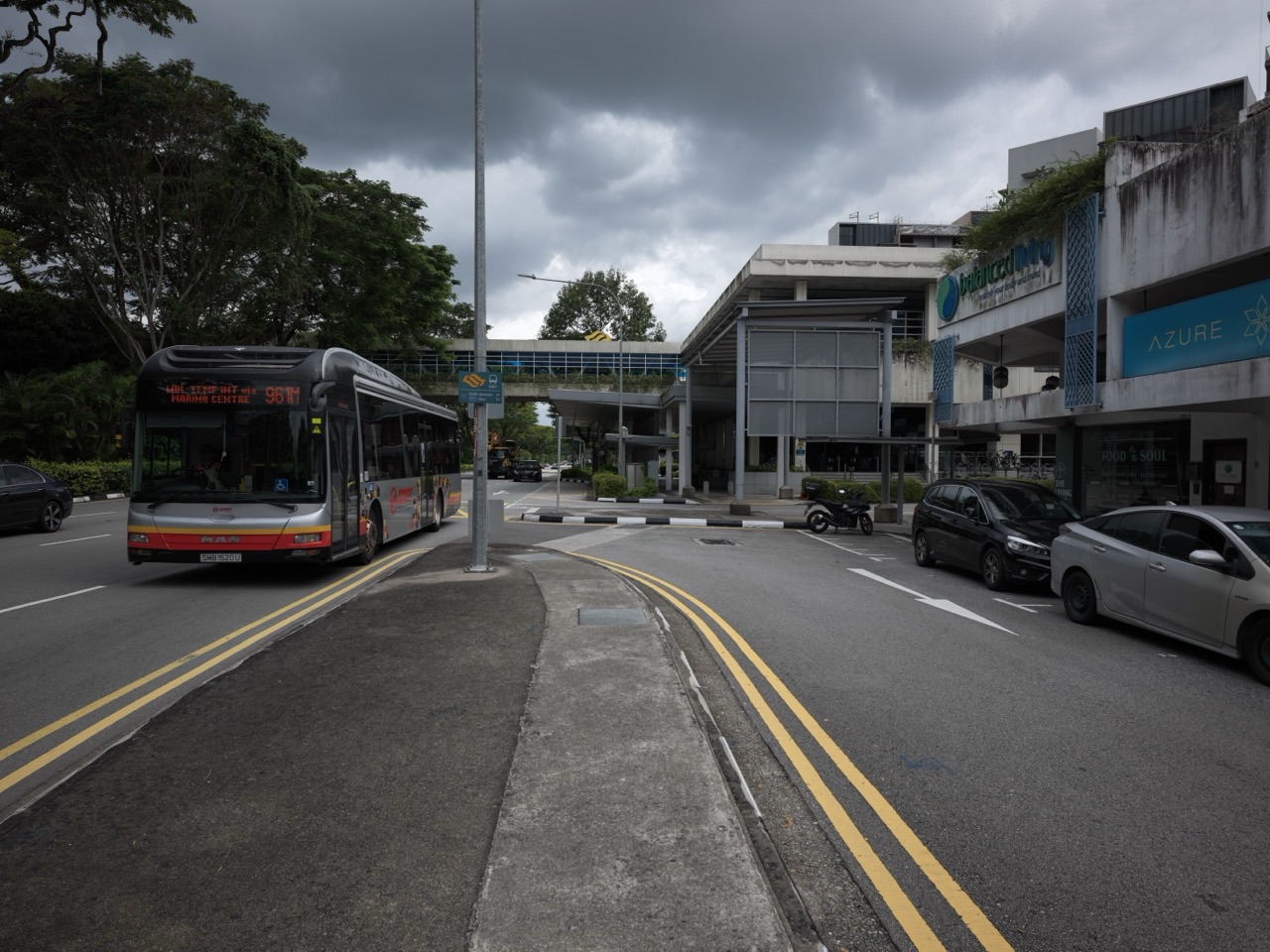
Dunearn Estate is one of the private residential neighbourhoods selected for Singapore’s latest Estate Upgrading Programme (EUP). The Ministry of National Development (MND) announced an expanded S$135 million programme for 32 private estates in February 2025. Dunearn appears in the regular EUP group, funded from an overall S$124 million allocation for 25 estate groups.
For a Dunearn resident planning for 2027, the most important point is to distinguish a confirmed estate-selection decision from an individual worksite schedule. The government has announced that the programme will be delivered across a five-year nationwide horizon, but it has not provided a single verified completion date in 2027 for every proposed Dunearn footpath, ramp or gathering space.
This guide is about what families living around Dunearn, Bukit Timah Road, Sixth Avenue and neighbouring residential streets can usefully prepare for: safer walking routes, more accessible kerbs, lighting, green space, consultation, and how to interpret notices if work begins on a particular road.
In this guide
- The quick facts: Dunearn in 2027
- What is Dunearn Estate EUP?
- Why private estates need a distinct programme
- When was Dunearn selected?
- How S$135 million is allocated nationally
- Is Dunearn the same as a Silver Estate?
- What types of works may be considered?
- Safer footpaths: continuity matters
- How would covered drains help?
- Barrier-free ramps and kerbs
- Lighting along residential streets
- Recreational spaces and fitness corners
- Greenery and mature estate identity
- Senior-friendly infrastructure in a regular estate
- Why residents’ opinions may differ
- What makes feedback actionable?
- Construction work: what might happen?
- What is the difference between Dunearn EUP and Dunearn Road widening?
It is based on the 8 February 2025 EUP announcement, Holland–Bukit Panjang Town Council’s Bukit Timah future plans and the official Age Well SG infrastructure programme. Information reviewed 31 October 2026; site-specific works are not described as completed without an actual agency announcement.
The quick facts: Dunearn in 2027
- Confirmed: Dunearn Estate is among the 25 regular EUP groupings selected in the 2025 nationwide expansion.
- National budget: S$124 million for the 25 regular estate groups. That is not the approved budget for Dunearn alone.
- Overall package: S$135 million across 32 private estate groups including seven separately selected Silver Estates.
- Time horizon: upgrades to be implemented over five years nationally, rather than every project opening in 2027.
- Potential improvement categories: pedestrian paths, safer kerbs, drainage covers, barrier-free ramps, lighting, recreational corners, small parks and communal spaces, depending on approved estate designs.
- Residents’ input: MND says consultation and feedback will help shape the specific improvements.
- Not established: a full Dunearn-specific list of approved facilities, a road-by-road construction calendar, an individual budget or a confirmed 2027 handover.
- Different from Mayfair: nearby Mayfair Park is under the special Silver Estate programme, not the same regular EUP grouping.
- Different from Turf City: strategic road-widening studies for future housing are separate from the neighbourhood upgrading of an existing private estate.
What is Dunearn Estate EUP?
The Estate Upgrading Programme is a government initiative introduced in 2000 to improve older private residential estates’ shared physical environment.
Rather than renovating the inside of every individual house, EUP focuses on neighbourhood facilities and infrastructure that serve the public or the wider community.
Examples can include safer walking routes, better drainage details, more comfortable communal spaces and recreational opportunities.
The aim is to make a mature place more convenient and pleasant as residents’ needs change over time.
A homeowner should not mistake an estate-upgrading announcement for a promise of grants towards private kitchen renovations or a blanket subsidy for household repairs.
Why private estates need a distinct programme
HDB neighbourhoods can access various established improvement programmes through public housing and town-council arrangements.
Mature private estates do not necessarily fit those same frameworks, yet residents still use local public roads, footpaths and shared spaces.
An estate can contain well-maintained private houses while the connections between homes need improvement.
For instance, a resident may have a safe front entrance but still encounter a narrow pedestrian path between the house and nearest bus stop.
The EUP addresses that broader shared environment, not merely the condition of private buildings.
When was Dunearn selected?
On 8 February 2025, MND announced the expanded EUP group and listed Dunearn among the regular selected estates.
In April 2025, the Bukit Timah community’s future-plan publication also identified Dunearn Estate’s EUP.
These are two dated references establishing that the location is on the programme list.
Neither publication, by itself, establishes that a named contractor has finished works on a particular residential street.
When writing about 2027, a source from 2025 is useful evidence of the original intention, but a new notice is needed to confirm progress, schedule or handover.
How S$135 million is allocated nationally
The programme distinguishes two components.
Regular EUP: approximately S$124 million allocated to 25 selected private-estate groups, including Dunearn.
Silver Estate EUP: approximately S$11 million allocated to seven selected groups, including Mayfair Park and other neighbourhoods with higher concentrations of seniors.
The combined envelope is S$135 million.
It would be inaccurate to call the whole sum Dunearn’s budget or divide it equally among all estates as though the resulting arithmetic amount were a confirmed project award.
Different sites have different needs, sizes, works and consultation outcomes.
Is Dunearn the same as a Silver Estate?
No. Dunearn is in the regular EUP selection.
The new Silver Estate category focuses particularly on senior-friendly improvements in older private estates that previously received upgrading.
But MND says the regular EUP is also being expanded to include senior-friendly design where suitable.
That means Dunearn residents can reasonably ask about access for older people without claiming the estate has been placed in the separate Silver category.
For the nearby comparison, see Bukit Timah 2027: Mayfair Park Silver Estate upgrading.
What types of works may be considered?
MND’s national descriptions include examples such as footpath upgrades, covered roadside drains, barrier-free ramps, lighting, park improvements and fitness facilities.
These are categories the programme can support.
They do not establish that every Dunearn street will receive all those features, nor that a particular house frontage has been selected for excavation.
The specific works must follow local design and consultation.
An informative 2027 article should separate the programme menu from the final Dunearn project scope.
Safer footpaths: continuity matters
A footpath is only useful when people can follow it safely between the places they need to visit.
A resident may leave a home through a comfortable path but encounter a narrow verge, an uneven section or a missing ramp near the road.
Fixing one segment can help, but an improvement should be considered in relation to the whole walking journey.
Residents can identify places where a stroller, wheelchair or walking frame would struggle, and where children are forced too close to moving vehicles.
These observations can support a consultation without pretending to constitute a formal engineering survey.
How would covered drains help?
In some older estates, open roadside drains or narrow verges may limit pedestrian walking space.
Where appropriate, covering or modifying a drain can potentially provide a more continuous footpath or make access easier.
However, drainage changes require engineering assessment. A cover must be safe, maintainable and compatible with stormwater flow.
It is not appropriate for residents to cover public drains independently or place makeshift boards across them.
Any approved EUP works must preserve drainage function while improving human access.
Barrier-free ramps and kerbs
A kerb may be easy for a young adult but difficult for someone using a walking aid.
A suitable ramp can reduce the need to step down into traffic or lift a stroller.
Yet its usefulness depends on gradient, surface, drainage, width and how it joins the next section of the route.
MND has identified barrier-free access as an important upgrading outcome.
Residents should suggest specific crossings or approaches rather than request ramps indiscriminately at every corner.
The final location and technical design belong to the relevant authorities and qualified professionals.
Lighting along residential streets
Some private estate roads have quiet footpaths where visibility changes after sunset.
Improved lighting can make signs, kerbs and people easier to see.
But a light fitting should be selected and positioned with attention to glare into homes, energy consumption and surrounding trees.
A general request for brighter lights may not identify where the real visibility problem occurs.
It is better to describe the particular corner, time and nature of the issue.
A Dunearn lighting replacement is not confirmed until it appears in an approved estate-specific scope.
Recreational spaces and fitness corners
The regular EUP can support appropriate improvements to community recreation.
A small landscaped area, playground or fitness corner may become a useful place to meet neighbours.
Its value depends on who will use it, access routes, available land and long-term maintenance.
A playground cannot be assumed necessary at every site, while a fitness facility should suit the community’s actual abilities.
Residents should have space to express different priorities before a design is finalised.
The goal is a sustainable local amenity rather than the largest number of installations.
Greenery and mature estate identity
Dunearn’s mature neighbourhood character includes existing trees, planted verges and established homes.
New work should consider the benefits of shade and greenery alongside safe road and footpath access.
Roots, drains, buried services and visibility at junctions can create technical trade-offs.
A path may need a different alignment to protect mature planting or maintain safe distances.
It would be misleading to promise that no trees will be affected without an approved design.
Local observations and suitable professional assessment should guide the balance.
Senior-friendly infrastructure in a regular estate
Although Dunearn is not a Silver Estate, MND has expanded regular EUP’s scope to include more senior-friendly enhancements.
These could involve clearer signs, safer access or facilities that help people remain socially active.
For an older person, the difference between being able to take a short independent walk and depending on a family member for every errand can be significant.
The improvement should preserve dignity and flexibility rather than assume seniors all have the same physical limitations.
Families can contribute examples of daily routes and practical obstacles without publicly disclosing anyone’s medical details.
Why residents’ opinions may differ
One household may prioritise a footpath to public transport; another may want more shade or seating.
A homeowner may worry that a proposed adjustment affects access to their driveway.
Parents may prefer play space, while other residents may value a quiet garden.
A consultation cannot simply satisfy every request at every site. It must weigh competing uses, budgets, engineering restrictions and maintenance needs.
Good feedback is specific, courteous and willing to consider the wider community.
What makes feedback actionable?
An effective resident observation can identify:
- The road name and precise location of the problem.
- Whether it affects pedestrians, cyclists, people using mobility aids or vehicles.
- The time or weather conditions under which it becomes a problem.
- The actual access or safety consequence.
- A reasonable request for the project team to examine the issue.
- Any effect on trees, drainage or existing services.
- A safe photograph or diagram, without unnecessary personal data.
The purpose is to describe the problem so the implementing agency can investigate, not to demand a predetermined technical solution.
Construction work: what might happen?
If upgrades proceed, some locations may require temporary excavation, short diversions or barriers.
These are typical possibilities, not proof that any named Dunearn road will be closed on a particular date.
Residents should follow actual site notices once published.
Drivers must respect worksite controls and avoid blocking another property’s entrance.
Parents should help children understand any changed walking route, while mobility-aid users may need a clearly signed alternative.
The source announcing the EUP is not sufficient to predict day-to-day traffic delays.
What is the difference between Dunearn EUP and Dunearn Road widening?
Dunearn Estate Upgrading Programme concerns improvements to an existing residential estate.
URA has separately identified possible widening or upgrading of Dunearn Road, Bukit Timah Road and Eng Neo Avenue for the much longer-term Turf City housing development.
Those are strategic transport and land-use proposals with different scope and decision processes.
A roadside estate footpath project should not be described as proof that the full arterial road is being widened in 2027.
Equally, a housing-related future road study does not automatically specify what happens to a particular Dunearn private-estate walkway.
How Turf City changes relate to Dunearn
The former Turf City is planned to become a major residential neighbourhood over decades.
URA describes eventual public and private housing, nature, heritage and community amenities.
As that area changes, people living in nearby existing estates may have questions about road use and future services.
Those future impacts deserve attention, but the EUP selection itself is not dependent on all Turf City housing being finished in 2027.
Keep the timelines separate: near-term EUP planning for an existing estate versus long-term building of a new neighbourhood.
See Bukit Timah 2027: Turf City neighbourhood plans.
What about Watten Estate upgrading?
Watten is another mature Bukit Timah neighbourhood with separately reported upgrading and drainage work.
PUB’s 2025 drainage schedule identified the Watten, Soo Chow and Adelphi roadside-drain package with an indicative Q2 2027 completion target.
That is a specific drainage contract, not the timetable for Dunearn’s regular EUP.
A contractor operating at Watten does not establish that Dunearn’s EUP has begun.
Use the exact estate name and contract reference before attributing an observed worksite to the wrong programme.
How road drainage relates to pedestrian comfort
In a rainy city, paths and drains are closely connected.
A footpath may be slippery near a blocked inlet or difficult to traverse where rainwater accumulates.
Residents can highlight those observations, but must not assume every ponding issue can be solved by a new bench or a cosmetic paving change.
PUB and the relevant estate programme authorities may have different responsibilities for the drainage and surface works.
When a specific site is affected, ask the responsible agency for an integrated response rather than invent one project covering the whole district.
What does 2027 actually mean for Dunearn?
The national EUP was announced in February 2025 with an implementation horizon over the next five years.
A 2027 checkpoint is therefore a reasonable time to seek evidence of consultation, final design, contractor appointment or actual works.
But the programme announcement alone does not commit to a 2027 Dunearn-wide completion.
It is possible for one work item to be at design stage while another private estate is already constructing.
The right information comes from the most recent local agency notices.
How to check an announced contractor
If a worksite notice appears, look for the named agency, contractor, project title, work period and contact channel.
Confirm the work really relates to Dunearn Estate EUP, not a nearby utility permit or a different estate.
For a potentially affected driveway or walkway, ask about the specific access arrangements.
A notice about the national S$135 million programme is not the same as a site-specific contract schedule.
Residents should preserve the date and source when sharing updates.
How to monitor progress without spreading rumours
A project can move through consultation, design, approvals, procurement, construction, inspection and handover.
Progress at one stage is useful news but should not be presented as completion of all stages.
If an agency says a design is being considered, write proposed. If a contractor has been appointed, write awarded. If the public may use the facility, write open only when that is verified.
These distinctions prevent a neighbourhood update from overpromising.
They are also useful for interpreting other major Bukit Timah developments.
A family route audit
Choose an everyday journey from home towards a shop, public transport stop or community facility.
Observe where the route becomes narrow, confusing or difficult for someone using a stroller or walking frame.
Note crossings, kerbs, surface condition, shade and any nearby open drain.
Do not enter private property or worksite areas and do not photograph people unnecessarily.
The result is a simple, precise set of observations that could be useful during consultation.
A student’s urban planning exercise
A Secondary-school student can study why public infrastructure in an old private estate may require upgrading even though individual houses appear well maintained.
Ask what problem a proposed ramp solves, who benefits, what trade-offs exist and how the success of the improvement could be observed.
Then compare a regular EUP with a Silver Estate EUP and a future major road project.
These are three distinct policy tools, serving different scales and resident groups.
The exercise develops evidence-based thinking rather than treating every construction notice as a sign of overall urban redevelopment.
What happens after facilities are installed?
A public path or exercise area needs ongoing maintenance.
Residents should know which body is responsible for lighting repairs, damaged paving, drainage covers or unsafe equipment.
A new feature is useful only if it remains safe and accessible over time.
When a project is handed over, the responsible agency should provide appropriate channels for reporting problems.
Residents can evaluate real outcomes without expecting the same design to satisfy every household equally.
A useful 2027 calendar
Early 2027: check whether a Dunearn-specific consultation or detailed project notice has been published.
Mid-2027: look for any approved local scope, contractor appointment or genuine worksite stage.
Later 2027: if works are underway, monitor safe access and whether the documented implementation date has changed.
After completion of an actual stage: check its usability and maintenance arrangements.
This is a proposed way for residents to track progress, not a government timetable promising one milestone each quarter.
Frequently asked questions
Has Dunearn Estate been selected for upgrading?
Yes. It is among the 25 regular EUP estate groups announced by MND on 8 February 2025.
How much funding was announced?
S$124 million across the 25 regular groups, as part of a S$135 million package covering 32 estate groups nationally.
Is Dunearn one of the seven Silver Estates?
No. Mayfair Park is in the Silver Estate category; Dunearn is selected under the regular EUP.
Is every Dunearn road receiving new lighting, ramps and playgrounds?
Those are possible programme measures. A complete Dunearn-specific approved inventory has not been established by the national announcement.
Is a 2027 completion guaranteed?
No confirmed estate-wide 2027 completion date has been identified in the official programme sources.
Will private houses receive free interior renovations?
EUP concerns shared estate infrastructure and facilities, not unrestricted renovations inside individual homes.
Does the programme mean Dunearn Road will be widened in 2027?
No. Strategic road-widening studies tied to future Turf City housing are separate from Dunearn Estate EUP.
How can a homeowner give useful feedback?
Provide the exact road location, type of difficulty, affected users and possible impacts on safe access.
Can a new walkway help senior residents?
It can, particularly if the route is genuinely continuous and accessible. The specific design must be evaluated at the site.
Where can residents seek project confirmation?
Check MND and relevant town council or public agency notices for a Dunearn-specific plan and works timetable.
Official sources and related reading
- MND: Expanded S$135 million Estate Upgrading Programme and Dunearn selection
- Bukit Timah: Town Council commemorative future-plan publication
- MOH and MND: Age Well SG accessibility for private estates
- CNA: February 2025 breakdown of all 32 estates
- URA: Accessible amenities and age-friendly planning
- eduKateSG: Earlier Dunearn upgrading programme overview
- eduKateSG: Mayfair Park Silver Estate EUP guide
- eduKateSG: 2027 Eng Kong, Yarwood and Watten drainage targets
- eduKateSG: 2027 Bukit Timah transport and MRT plans
The takeaway: Dunearn is a confirmed regular EUP estate within Singapore’s expanded upgrading programme. In 2027, residents should seek accurate local design and construction notices, prioritise accessible continuous routes and distinguish the national five-year programme from a specific completion date that has not yet been announced.