
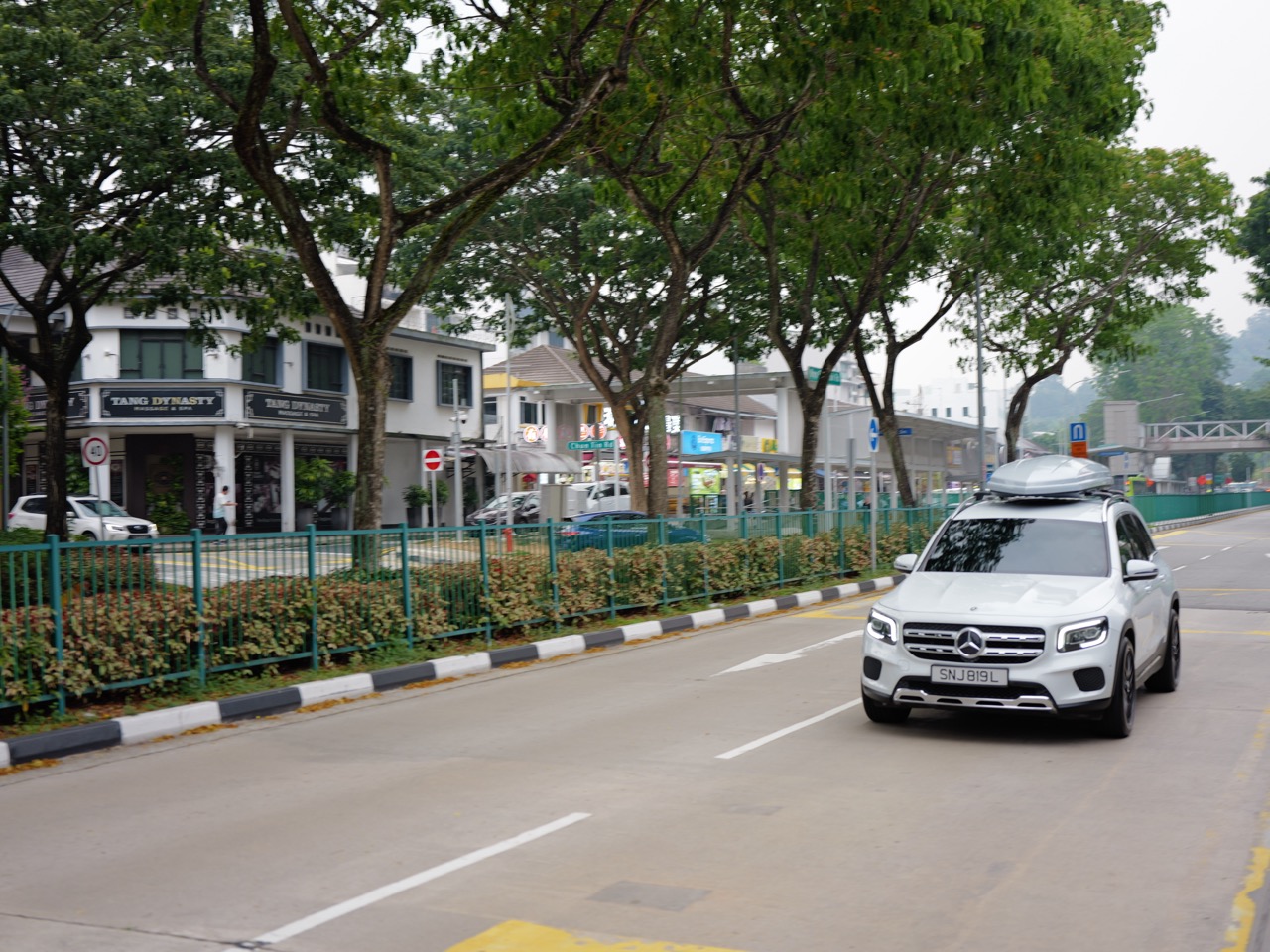
If you drive through Bukit Timah Road, Upper Bukit Timah Road, Dunearn Road or Singapore’s expressways in 2027, one of the most important nationwide transport changes is the launch of Electronic Road Pricing 2 (ERP 2) on 1 January 2027. Vehicles will move to satellite-based electronic charging, with On-Board Units (OBUs) replacing the function of the older in-vehicle devices.
This is particularly relevant to households with school-run routines, private cars, motorcycles, delivery vehicles or regular trips through the city. The change involves more than a new box inside a vehicle: LTA has announced blue oval ERP road symbols, new road signs, progressive removal or modification of gantries, and a simplified process for missed payments.
However, a new electronic system does not automatically mean distance-based charging starts in January 2027, nor does it establish new ERP locations or rates for every Bukit Timah street. Those are separate policy decisions. This guide explains what is confirmed and what motorists should verify.
In this guide
- Bukit Timah motorists: what changes in 2027?
- Why is Singapore replacing the original ERP system?
- What is an On-Board Unit?
- Which vehicles need an OBU from 1 January 2027?
- How far along was the OBU installation programme in 2026?
- What happens if the free installation window was missed?
- Why the new oval blue ERP markings matter
- What did LTA’s 2026 testing establish?
- What happens to the old ERP gantries?
- Does satellite charging mean motorists will pay per kilometre?
- Will ERP charges rise at every existing location?
- A practical Bukit Timah morning commute example
- What if a payment method has insufficient funds?
- What happens after the five-day grace period?
- Does an OBU tell the driver about an unpaid charge?
- A special rule for classic and vintage vehicles
- What about foreign-registered vehicles?
- Will ERP 2 immediately issue speeding fines by satellite?
- What does the system mean for privacy?
Information reviewed 28 October 2026 from the Land Transport Authority, Ministry of Transport and OneMotoring. Future ERP rates and traffic arrangements should be checked from the latest official notices.
Bukit Timah motorists: what changes in 2027?
- 1 January 2027: ERP 2 becomes the operating road-pricing system, and the On-Board Unit is mandatory for Singapore-registered motor vehicles using public roads, subject to specified exemptions.
- Satellite-based operation: the new system uses Global Navigation Satellite System (GNSS) technology, so physical overhead gantries are no longer needed for charging in the old way.
- New blue symbols: an oval blue “ERP” road marking identifies charging locations, alongside new signs and OBU notifications.
- Road marking detail: LTA plans two oval symbols on each lane of arterial and slip roads and three on each lane of expressways to improve visibility.
- October 2026 onwards: rollout of road markings and gantry modifications began ahead of the 2027 transition.
- By June 2027: LTA targets completion of the removal or modification of all 95 existing ERP gantry structures; some may retain equipment used for satellite connectivity.
- Missed payment: the vehicle owner has a five-day grace period after LTA’s SMS to settle a missed charge without the additional administrative fee.
- After the grace period: an unpaid charge leads to a S$10 administrative fee and a hold on certain LTA vehicle transactions until the debt is settled.
- No immediate distance-based charging: government guidance says the initial ERP 2 rollout does not begin charging simply by distance travelled.
- Fees and operating times: remain subject to official ERP notices, and motorists should not infer a new rate from a blue painted symbol.
The two principal sources are LTA’s September 2026 road marking announcement and MOT’s ERP information.
Why is Singapore replacing the original ERP system?
Singapore’s earlier ERP system began operating in 1998, building on the country’s experience with road pricing to manage congestion. It charged vehicles at physical gantries at specified locations and times.
The original equipment is nearing the end of its operational life. ERP 2 uses a different technology for identifying a vehicle’s passage through a charging location, while retaining the policy purpose of managing demand on roads.
LTA says the new system can improve operational flexibility, allow clearer driver notifications and reduce the infrastructure required at physical gantry locations. It may support aggregated traffic data for transport planning.
These advantages do not remove the need for a clear public explanation of how much a journey costs. Drivers still need to know the charging place, applicable operating time and how a charge is deducted or settled.
What is an On-Board Unit?
An On-Board Unit (OBU) is the equipment installed inside a vehicle to support ERP 2. The equipment differs from the older In-Vehicle Unit (IU) associated with gantry-based charging.
The OBU works with satellite-based location information and the system’s charging arrangements. Depending on vehicle and installation configuration, it can support a driver-facing display and relevant payment and notification functions.
Motorists should not assume every vehicle has the same physical component layout. Follow LTA’s official installation and equipment information for the type of vehicle being used.
A driver should also remember that an in-car display is an aid, not a reason to divert attention from traffic. Do not operate payment menus while moving.
Which vehicles need an OBU from 1 January 2027?
The government’s transport law explainer states that OBUs are mandatory from 1 January 2027 for Singapore-registered motor vehicles travelling on public roads, subject to specified exemptions.
Some vehicles under arrangements such as the Restricted Use Scheme, Keeping Scheme and Classic/Vintage schemes have special provisions. Do not assume that because a vehicle is rarely driven it automatically qualifies for an exemption.
Owners should check the vehicle category and official installation notice. If an OBU is required, a driver cannot safely treat an old IU as a substitute after the transition.
For exemptions and booking conditions, use the current OneMotoring ERP 2 guidance.
How far along was the OBU installation programme in 2026?
In September 2026, LTA reported that more than 98% of eligible Singapore-registered vehicles had been fitted with an OBU. That figure reflects the position when its road-marking release was published; it should not be presented as a live percentage for every day in 2027.
If a Bukit Timah household still has an older vehicle without an OBU, it should not assume the remaining minority will be given an unlimited extension. The statutory transition date is clear.
Check the specific vehicle’s invitation, any reminder notices and available appointments at LTA-authorised workshops. Do not rely on a private social-media advertiser offering to bypass the official installation process.
For many households, the practical benefit of early installation is simply avoiding an unexpected interruption to normal driving.
What happens if the free installation window was missed?
LTA’s published transition guidance gave eligible vehicle owners a six-month free installation period after invitation. Owners who missed it were to receive a reminder with an additional three-month window.
After the applicable free window, published installation charges were S$35 for motorcycles and S$70 for other vehicles, excluding GST. The exact present charges and arrangements should be checked on OneMotoring before booking.
The free installation opportunity is not universally open indefinitely, and not every owner has the same invitation timeline.
A family planning to replace or sell a vehicle should also check whether an OBU is already installed and how the current registration or vehicle-transfer rules apply.
Why the new oval blue ERP markings matter
Without a large overhead gantry at every charging location, drivers need another way to recognise where ERP applies. LTA tested several designs and selected oval blue “ERP” symbols as a clear visual cue.
Under the announced plan, the symbols appear twice per lane on arterial roads and slip roads and three times per lane on expressways, alongside an ERP Charge Zone sign at the start of the relevant location.
These markings are intended to complement notifications from the OBU and help motorists understand that a charging point is approaching.
A blue marking does not by itself tell a driver the full charge, time period or vehicle category. Those are still determined by the applicable official pricing rules and displayed notices.
What did LTA’s 2026 testing establish?
LTA ran user-experience studies on different road signs and markings during March–July 2026, including a second phase with about 1,000 motorists on five expressway and arterial road locations.
The objective was to test whether drivers could identify charging locations in a setting without traditional overhead gantries. LTA reported that the blue oval ERP symbol was the preferred marking because it was visible under different road and weather conditions.
This is useful evidence about wayfinding, not proof that the trial established a new fare for Bukit Timah or a national speeding-detection service.
The study informs the selected visual cues; the actual implementation is still governed by official LTA charging and traffic arrangements.
What happens to the old ERP gantries?
LTA said there were 95 ERP gantry structures to remove or modify. It planned to address 62 non-operational gantries first, with the remaining 33 operational gantries removed after traditional gantry-based charging stopped at the end of 2026.
The target was to complete gantry removal or modification by June 2027. Some existing structures may be retained or adapted with roadside equipment to support satellite connectivity.
Therefore the change will not necessarily look like every overhead structure vanishing overnight on 1 January. A site can stop using a gantry for charging while its physical equipment is still being removed or modified.
Do not interpret an old gantry frame remaining above a road in early 2027 as evidence that ERP 2 did not launch. Check the actual official system status.
Does satellite charging mean motorists will pay per kilometre?
No, not under the immediate rollout. The government’s Land Transport and Related Matters Act explainer states there is no distance-based charging in the immediate term.
This distinction is essential because satellite technology can potentially support different kinds of road-pricing systems. A technical capability does not automatically mean that a particular policy has been implemented.
Under the transition, charges continue to be associated with designated ERP charging locations and the applicable pricing framework. Any future change in how charges are calculated would require separate official communication.
Do not share a viral claim that “every kilometre driven in Bukit Timah will have a new ERP fee from January 2027” without a valid government source.
Will ERP charges rise at every existing location?
The ERP 2 launch is not in itself an announcement of a blanket increase in all ERP charges. Charges depend on the relevant location, vehicle category, operational period and official rate revisions.
Singapore periodically reviews ERP rates to manage congestion. Those adjustments are separate from the change of technology.
A driver heading from Bukit Timah towards the city should check the current applicable rate rather than guess that a new blue marker carries a fixed amount across all times of day.
The correct place for rate and operational information is OneMotoring’s ERP guidance and relevant LTA announcements.
A practical Bukit Timah morning commute example
Imagine a parent who drives a child to school before continuing towards the city. The usual route may involve Bukit Timah Road, a turn onto another arterial road and, later, an ERP charging location.
In 2027, the parent should distinguish the school-zone route and crossings, the charging location, and whether the charge actually operates at that time. Seeing a new marker earlier in the journey does not prove there is a charge on every street.
The driver should ensure the OBU is properly installed and the payment method is usable, then concentrate on the road. An OBU notification is not a substitute for safe driving around school buses and pedestrians.
This is an illustrative journey, not a claim that a specified Bukit Timah junction has a newly introduced charge.
What if a payment method has insufficient funds?
A missed ERP payment can arise if the applicable payment method does not settle a charge correctly. The new framework provides a simpler route to resolve this without immediately treating it as a criminal matter.
From 1 January 2027, LTA says the vehicle owner is responsible for clearing an outstanding ERP payment. It will notify the owner, and a five-day grace period from the SMS notification allows the missed charge to be settled without the additional S$10 administrative fee.
The important part is to respond through legitimate payment channels, rather than ignore a genuine notice or follow a fraudulent link.
If an in-vehicle notification appears, do not attempt to pay while driving. Pull over or wait until the vehicle is stationary and use the authorised process.
What happens after the five-day grace period?
Under the new policy, a vehicle owner who does not pay within the grace period must pay the outstanding charge plus a S$10 administrative fee. Certain transactions with LTA are restricted until the matter is settled.
LTA lists services affected by an unresolved charge, including road-tax renewal, vehicle-registration transfers and some related rebate or refund transactions.
This differs from the older process where unresolved missed ERP payments could escalate as a traffic offence. Decriminalisation does not mean the fee is optional or that it can be ignored indefinitely.
The February 2026 LTA legal transition announcement provides the authoritative summary.
Does an OBU tell the driver about an unpaid charge?
LTA’s OneMotoring guidance describes OBU display notifications for relevant missed payments and other functions. Depending on the installation configuration, drivers may be able to see outstanding charges and settle them through supported methods while stationary.
The presence or absence of a particular touchscreen configuration should not be used to infer that no payment obligation exists. Vehicle owners can also check official payment and notification information through the relevant government channels.
Never trust a random caller claiming to have detected an outstanding ERP charge through a private system.
If someone receives a suspicious SMS, they should navigate independently to OneMotoring instead of supplying banking details through an unsolicited link.
A special rule for classic and vintage vehicles
LTA provides special options for vehicles covered by Classic and Vintage Vehicle (CVV) arrangements. Qualifying owners may be able to opt for OBU installation, while those operating under the permitted special arrangement can face a daily flat-rate ERP fee.
The February 2026 LTA release lists an ERP fee of S$3 for qualifying motorcycles and S$10 for other qualifying CVV vehicles for every relevant ERP operational day they are used on Singapore roads, where no OBU is installed.
This is not a universal daily pass available to ordinary cars that simply failed to install an OBU.
A Bukit Timah collector should check the exact registration scheme and official instructions before choosing an arrangement.
What about foreign-registered vehicles?
Foreign-registered vehicles follow separate ERP and border-payment arrangements. The OBU requirement described for Singapore-registered vehicles should not automatically be copied onto every visiting foreign car without examining LTA’s rules.
OneMotoring explains how applicable fees may be deducted through the Autopass card for foreign vehicles without an OBU, subject to current cross-border provisions.
This is relevant to residents who regularly host or travel with visitors from Malaysia. A friend’s overseas-plated vehicle may have a different payment process from a locally registered family car.
Check the latest OneMotoring rules before crossing the border and avoid presenting old VEP or toll instructions as timeless.
Will ERP 2 immediately issue speeding fines by satellite?
LTA has noted that ERP 2 may potentially support enforcement against certain additional offences in future, but further development would be needed for some uses.
The September 2026 source says further enhancements are required before ERP 2 can be used for speeding enforcement. It would therefore be inaccurate to announce, as a fact, that every 2027 ERP point automatically performs satellite-based speeding enforcement.
The system is primarily introduced for road-pricing and related transport administration. Existing road traffic laws still apply, of course, and motorists must obey speed limits and other traffic rules.
Distinguish between a current stated capability and a future possibility under study or development.
What does the system mean for privacy?
Any satellite-based transport system raises understandable questions about what data is used, why it is collected and how it is protected.
LTA says access to ERP 2 data is restricted to authorised purposes, subject to safeguards governing collection, use and security. The Ministry of Transport also describes the value of aggregated traffic data in improving transport management.
A resident should not conclude that the system has unlimited surveillance powers, nor assume that location-based technology never handles data. Both assertions go beyond the published facts.
For specific personal-data questions, refer to the official privacy and system information from LTA and OneMotoring rather than guess about backend architecture.
If an OBU stops working, what should the owner do?
A malfunctioning unit is different from deliberately failing to install equipment or tampering with it. Owners should consult LTA-authorised workshops and the relevant OneMotoring troubleshooting and service channels.
Do not remove, open, rewire or reposition OBU components through an unauthorised provider. The regulations introduce serious penalties for deliberate misuse and unauthorised services.
If the equipment is displaying an error or a payment issue, note the exact message safely when stationary and ask for guidance. Avoid sharing personal vehicle identification data publicly on social media.
Official support is more reliable than experimental fixes recommended by strangers.
What about school buses, private-hire cars and deliveries?
Professional drivers may make many trips each day and require dependable payment arrangements. Some operators have several vehicles, each with a different driver at different times.
The new system places payment responsibility on the vehicle owner for missed charges. Business operators should therefore check fleet records, billing arrangements and how drivers report equipment faults.
School-bus operators and parents also need to pay attention to traffic safety and pickup locations, which are separate from ERP charging. An ERP change should not lead to hurried driving or unsafe stopping near children.
For a service provider using Bukit Timah routes, the useful preparation is operational: verify installations, assign responsibility for notices and keep contact information current.
How does ERP 2 relate to Cross Island Line works?
Bukit Timah residents may also hear about major rail construction near King Albert Park, Turf City and other future stations. But the Cross Island Line Phase 2 is a separate long-term project, currently targeted for 2032, while ERP 2 goes live in 2027.
Drivers should not treat the future interchange as present transport capacity. Any roadworks or pedestrian diversion related to rail construction requires its own LTA notices.
A family may choose to shift some journeys to existing Downtown Line services, but that is an individual travel decision based on available routes, not an automatic effect of ERP 2.
For the neighbourhood context, see Bukit Timah 2027: MRT and transport changes.
A 2027 motorist checklist
- Confirm that the vehicle requires an OBU and that it has been installed through an authorised arrangement.
- Understand where the payment card or approved payment service is used and how to check a failed deduction.
- Recognise the oval blue ERP markings and the ERP Charge Zone signs.
- Do not mistake the new symbols for an announcement of distance-based charging or a fixed new rate.
- Check official ERP rates and operating hours for any planned regular route.
- If a payment is missed, respond within five days of LTA’s SMS through official channels.
- Do not operate the OBU interface while driving.
- Follow roadwork and school-zone signs, even when the navigation route looks shorter.
- Avoid any unauthorised modifications to the OBU.
- Review site-specific changes as old gantries are removed or modified through the targeted June 2027 programme.
This list is a preparation guide, not a promise of particular ERP rates on any Bukit Timah road.
Frequently asked questions
When does ERP 2 begin?
LTA and MOT have announced 1 January 2027 as the nationwide ERP 2 transition date.
Is an OBU mandatory for Singapore-registered cars?
Generally yes, for Singapore-registered motor vehicles using public roads, with specified exempt vehicle categories. Verify your registration and vehicle type with OneMotoring.
Does ERP 2 start charging for distance travelled?
Not in the immediate rollout. The government says the initial ERP 2 implementation maintains the current congestion-pricing framework rather than imposing universal distance-based charges.
What do the blue oval ERP road markings mean?
They identify charging locations and complement road signs and in-vehicle notifications. The actual fee depends on official pricing rules, not the paint itself.
Will every old gantry disappear by 1 January 2027?
Not necessarily. LTA plans progressive removal or modification, with a June 2027 completion target, and some structures may support satellite connectivity equipment.
What if a driver misses an ERP charge?
The vehicle owner is responsible for settling it. A five-day grace period after LTA’s SMS applies before the extra administrative fee and transaction restrictions.
What happens after the grace period?
The outstanding charge becomes payable with a S$10 administrative fee, and certain LTA vehicle transactions may be restricted until settlement.
Is an ordinary car allowed to pay the S$10 daily classic-vehicle fee instead of installing an OBU?
No. That special rule concerns qualifying vehicles under the stated Classic or Vintage Vehicle arrangements, not ordinary cars.
Can I use my OBU touchscreen while driving?
Do not operate payment functions while moving. The supported payment interface is for safe use while stationary.
Will ERP 2 change the opening date of King Albert Park’s future Cross Island Line interchange?
No. The rail project is separate, with a current 2032 target for Cross Island Line Phase 2.
Official sources and related Bukit Timah reading
- LTA: 28 September 2026 ERP 2 signs, blue road markings and gantry removal plan
- LTA: February 2026 ERP 2 mandatory OBU and missed-payment rules
- MOT: ERP system and GNSS transition
- gov.sg: ERP 2 legal transition and no immediate distance-based charging
- OneMotoring: OBU installation, appointments and FAQ
- OneMotoring: ERP charges and payments
- eduKateSG: Bukit Timah 2027 Beauty World and Cross Island Line
- eduKateSG: Bukit Timah roadworks, drainage and resident safety
- eduKateSG: Bukit Timah school routes and 2027 SEC transition
The takeaway: ERP 2 is an actual 1 January 2027 motoring change. Bukit Timah residents need to verify their OBU, payment method, current rates and safe travel routes, while understanding that no immediate distance-based charging is being introduced simply by changing technology.