
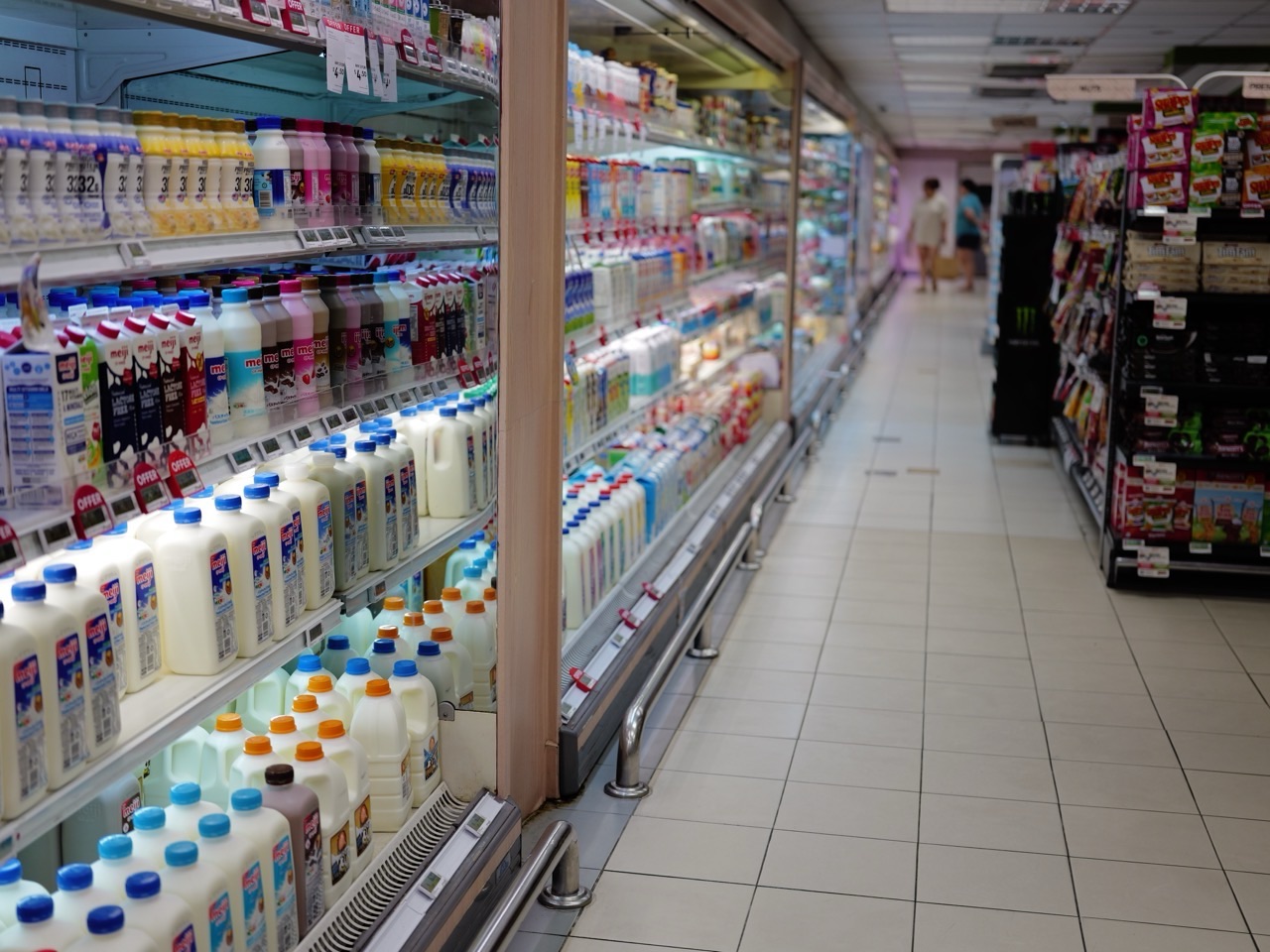
Why does milk look reasonably uniform even though it contains fat and water? Why can mayonnaise remain thick instead of turning into a separate oil layer and water layer? Both are excellent starting points for learning emulsion Chemistry—the science of tiny droplets, interfaces, molecular interactions and what it takes to keep a mixture useful over time.
This Chemistry Hougang article explains emulsions, oil-in-water mixtures, water-in-oil mixtures, emulsifiers, lecithin, milk, mayonnaise, droplet size, creaming, coalescence, and food stability. It is designed for Secondary Science students learning mixtures and particles, JC Chemistry learners developing surface and colloid concepts, and parents looking for a Chemistry tutor in Hougang who makes familiar products scientifically understandable.
For a quick overview:
- An emulsion consists of droplets of one liquid dispersed in another immiscible or partially miscible liquid.
- Emulsifiers help form or stabilise interfaces, but do not necessarily make two liquids truly miscible at the molecular level.
- Oil-in-water and water-in-oil are different structures that can have different textures, conductivity and flow properties.
- Stability is not permanent: droplets may cream, sediment, flocculate, coalesce or experience other changes.
- A stable-looking food is not automatically safe: microbiological and chemical safety require separate evidence.
- Real products are engineered systems, involving ingredients, processing, packaging, temperature and quality testing.
What is an emulsion?
An emulsion is a dispersion in which droplets of one liquid are distributed in another liquid that does not readily mix with it on a molecular scale.
Two familiar examples are oil dispersed as droplets in water, and water dispersed as droplets in oil. The liquid forming the droplets is called the dispersed phase; the liquid surrounding them is the continuous phase.
The American Chemical Society’s educational article on food emulsions uses milk, sauces and dressings to introduce how observable texture and stability connect to molecular properties.
The first distinction I teach is dispersion versus dissolution. An oil droplet surrounded by water is not identical to an individual oil molecule dissolving in water.
A microscope or suitable scattering method can reveal droplets, while a truly molecular solution has a different kind of organisation.
Why oil and water often separate
Water is a highly polar molecular liquid with extensive hydrogen bonding. Many food oils contain largely nonpolar triglyceride molecules.
Mixing these liquids extensively can create a large oil–water interface, which is not automatically thermodynamically favourable.
Under suitable circumstances, droplets may merge so that less total interface remains, producing larger droplets or eventually separate bulk layers.
It is not correct to say the liquids repel one another because of an invisible magnetic force. The actual explanation involves intermolecular interactions, interfacial free energy and the way molecules organise near the boundary.
Our Soap and Detergents guide explains why amphiphilic molecules interact with water and oil differently. In this page, we focus specifically on droplets and liquid–liquid interfaces rather than cleaning soils from a surface.
Why an emulsion looks uniform
An emulsion may contain so many small droplets that the mixture appears uniform to the naked eye.
That does not prove the composition is identical at every molecular scale. Each droplet remains a distinct region, even when droplets are too small to distinguish individually.
Light scattering contributes to the characteristic white or opaque appearance of many emulsions. The effect depends on droplet size, concentration, refractive index and wavelength.
A student who sees an opaque milk sample should not infer the droplets are necessarily all the same size.
The visible appearance is useful evidence, but quantitative characterisation requires additional methods.
That is a recurring scientific theme: a smooth-looking mixture is not necessarily a single molecular phase.
Milk is more complicated than a simple emulsion
Milk contains water, fat globules, proteins, lactose, minerals and other constituents.
Its fat can exist as dispersed globules in an aqueous environment, but milk is not exclusively an oil-and-water emulsion. It is a complex colloidal food system containing several kinds of structures.
The ACS food-emulsion educational article describes dairy foods as useful examples precisely because several properties can be observed and investigated.
It is scientifically incomplete to claim that every substance in milk is inside fat droplets. Lactose and various dissolved constituents belong to the aqueous phase, while proteins can exist in dispersed or dissolved forms.
This is why a reliable scientific description names the relevant phase and component rather than treating the whole product as one chemical.
What makes mayonnaise different?
Mayonnaise is typically an oil-in-water emulsion containing a high proportion of oil droplets stabilised by suitable ingredients.
Egg yolk contributes emulsifying components, including phospholipid-related substances and proteins. Different products can use different recipes or substitutes.
The ACS Omega study on mayonnaise microstructure describes the oil-in-water droplet system and its behaviour during a laboratory digestion model.
This article expands on our Secondary 1 Chemistry lesson on why mayonnaise does not separate. That lesson focuses on the immediate everyday question; here we develop quantitative stability, industrial processing and the broader world of emulsion science.
The fact that mayonnaise can remain thick does not mean the oil has chemically disappeared or become water.
Its behaviour follows from the droplet structure and the interactions among ingredients.
What is an emulsifier?
An emulsifier is a substance that helps form or stabilise an emulsion under suitable conditions.
Many emulsifiers contain both water-compatible and oil-compatible structural regions. Such materials are often described as amphiphilic.
At an oil–water interface, an amphiphilic molecule can have favourable interactions with the two different environments and change the interface’s properties.
But it is misleading to claim that every emulsifier works only by one simple arrow diagram, or that adding any surfactant makes every emulsion stable forever.
The ingredient’s chemical structure, concentration, droplet size and surrounding solution all matter.
An effective emulsion is an engineered material system, not a one-ingredient miracle.
What is lecithin?
Lecithin commonly refers to mixtures of phospholipids and related components obtained from sources such as egg yolk or plant materials.
Phospholipids have structures that can help them interact at interfaces between water and oil.
In food systems, lecithin-containing formulations may improve the formation or behaviour of emulsions under suitable conditions.
The ACS Omega paper on egg-free mayonnaise and sunflower lecithin investigates the relationship between phospholipid-mediated stabilisation, oil composition and product texture.
This research illustrates an important point: a similar function can sometimes be supported by different ingredient systems, but their performance needs testing.
A student should not assume the word lecithin refers to one perfectly pure molecule with one fixed formula.
Why emulsifiers often sit at interfaces
An amphiphilic molecule has regions with different affinities for its surroundings.
At the oil–water boundary, it may align so that more polar groups interact with water and more nonpolar groups interact with oil.
This can reduce interfacial tension and affect the tendency of newly formed droplets to merge.
But an emulsifier does not necessarily transform oil and water into one truly homogeneous molecular solution.
The droplets still have an interface that can be measured and changed.
I ask students to draw an oil droplet, surrounding water and representative emulsifier molecules, then label the two sides of the boundary.
A correct diagram makes the essential structure visible without pretending to show the exact position of every molecule.
What is interfacial tension?
Interfacial tension describes the energetic effect associated with a boundary between phases, often expressed as force per length or energy per area under the appropriate thermodynamic definition.
When two liquids form many small droplets, the total interfacial area can become large.
That is relevant because making new interface requires or changes free energy.
Emulsifiers can lower interfacial tension and make it easier to create a fine dispersion under controlled processing.
However, reducing interfacial tension is not always sufficient for long-term stability. Electrostatic or steric barriers, viscosity and droplet interactions can also matter.
This distinction is one reason a surface-chemistry explanation must go beyond the simple statement “soap makes liquids mix”.
Worked example 1: droplet surface area
Consider a hypothetical spherical oil droplet with radius r = 1.0 µm.
Its surface area is:
A = 4πr² = 4π(1.0 µm)² ≈ 12.6 µm².
Its volume is:
V = (4/3)πr³ ≈ 4.19 µm³.
The area-to-volume ratio is:
A/V = 3/r = 3.0 µm⁻¹.
Now reduce the radius to 0.5 µm. The ratio becomes 6.0 µm⁻¹.
Smaller droplets have more surface area relative to their volume under the spherical idealisation.
This is why droplet size can affect how much interfacial material is needed and how the emulsion behaves.
Worked example 2: the same oil volume in smaller droplets
Imagine a fictional emulsion containing the same total volume of oil in two designs.
Design A consists of spherical droplets with radius 2 µm; design B uses radius 1 µm.
Because volume per droplet scales with r³, design B requires eight times as many droplets to contain the same total oil volume.
Since area per droplet scales with r², the total droplet surface area of design B is twice that of design A.
That does not mean B is automatically twice as stable. The interfacial chemistry, viscosity, particle distribution and product conditions matter.
The calculation establishes geometry, not a complete food-quality prediction.
This is a direct connection to our Nanotechnology guide.
How processing creates droplets
A food manufacturer may use controlled mixing, homogenisation or other processing methods to disperse one liquid into another.
Mechanical energy can help break larger droplets into smaller ones, while emulsifiers and other ingredients affect whether the new droplet structure persists.
Not every mixer produces identical droplet sizes. Equipment design, viscosity, flow and ingredient composition influence the distribution.
The ACS Journal of Chemical Education article on emulsions uses food examples to show why method matters as much as ingredients.
A small sample mixed in a kitchen and an industrial emulsion produced continuously may behave differently even if the headline recipe is similar.
This is the bridge from Chemistry to chemical engineering.
What does homogenisation do to milk?
Homogenisation can reduce and redistribute fat globules in milk, altering physical stability and appearance.
It does not automatically remove all fat or turn the fat chemically into protein.
The final dairy product remains a multi-component system whose behaviour depends on processing conditions and formulation.
A student should distinguish homogenisation from pasteurisation. The former principally addresses physical dispersion; the latter is a controlled heat treatment related to microbial safety and product requirements.
They are different processes and answer different questions.
The important lesson is that a product’s appearance and safety depend on separate mechanisms.
Why droplets can cream
Creaming occurs when droplets move upward or downward in a liquid because of density differences, under appropriate conditions.
In many oil-in-water emulsions, oil droplets can be less dense than the surrounding aqueous phase and move upward over time.
This does not necessarily mean the droplets have chemically reacted or permanently merged.
A concentrated upper region can form while the droplets remain relatively intact.
Students should distinguish droplet migration from droplet coalescence.
That distinction is especially valuable when evaluating a product that appears to have developed a creamy surface layer.
Worked example 3: density-driven direction
Imagine an idealised emulsion with oil droplets of density 0.90 g/cm³ suspended in an aqueous liquid of density 1.00 g/cm³.
The density difference is:
1.00 − 0.90 = 0.10 g/cm³.
Under the stated buoyancy conditions, the less dense oil droplets tend to move upward.
The difference tells us the likely direction of buoyant migration. It does not tell us the exact speed.
Speed also depends on droplet size, viscosity, fluid motion and interactions among droplets.
A student who simply calculates the density difference and declares a precise separation time has extended the model beyond its evidence.
What is coalescence?
Coalescence occurs when droplets merge into larger droplets.
The process reduces the number of individual droplets and may ultimately contribute to a separation of bulk liquid phases.
It differs from creaming: droplets can cream without necessarily merging, and they can merge without a visible upper cream layer appearing immediately.
These distinctions matter when a manufacturer evaluates whether a product can remain stable during storage and transport.
A photograph alone may not reveal which process dominated.
Microscopy or other suitable measurements can help determine whether the droplet-size distribution changed.
This is the same scientific habit used throughout Chemistry: identify the mechanism before drawing a conclusion.
What is flocculation?
Flocculation describes droplets gathering into clusters while often retaining individual droplet identities.
If the droplets remain separate, the process is not automatically the same as coalescence.
Flocculation can alter the appearance, flow behaviour or separation rate of an emulsion.
In some formulations, droplet clusters may break apart when disturbed; in others, the system changes more permanently.
The outcome depends on interfacial forces and product composition.
I ask students to draw three pictures: separate droplets, a cluster of distinct droplets and one larger merged droplet.
Those drawings are simple but can diagnose whether the learner understands the difference among dispersion, flocculation and coalescence.
What is Ostwald ripening?
Ostwald ripening describes a process in which smaller droplets or particles can lose material to larger ones through molecular transfer under relevant conditions.
It is a different mechanism from two droplets directly colliding and merging.
Whether it matters in a particular emulsion depends on the solubility of the dispersed material and other conditions.
Some highly water-insoluble oils show different behaviour from materials with greater molecular solubility in the surrounding phase.
This term is more advanced than ordinary Secondary Science, but it offers a valuable extension: droplet size can change even without a visible collision.
The same broad concept appears in crystal growth and other dispersed systems.
What is viscosity?
Viscosity describes a fluid’s resistance to flow under appropriate conditions.
A thicker-looking emulsion may have a higher apparent viscosity, but its exact behaviour can depend on shear rate and material structure.
Many foods are non-Newtonian, meaning their flow properties cannot be represented by one constant viscosity across every deformation condition.
Mayonnaise can be thick because of a concentrated, interacting droplet network, not because the oil has transformed into a crystalline solid.
The ACS Omega study on egg-free mayonnaise examines how the oil and phospholipid ingredients influence physicochemical properties and rheology.
Students should distinguish thickness, droplet stability and microbial safety as three different characteristics.
Why mayonnaise can be thick while milk flows
Both can include fat droplets dispersed in an aqueous phase, but their droplet concentrations, droplet sizes and interactions are very different.
Mayonnaise commonly contains a high dispersed-oil fraction that contributes to its structured, thick consistency.
Milk typically contains a different fraction and a broader mixture of proteins, sugars and dissolved substances.
It is not correct to treat all oil-in-water emulsions as having the same texture.
The phase identity tells us something about organisation, while concentration, composition and droplet interactions help determine flow.
This is a good lesson in the importance of quantity, not only category.
Worked example 4: oil fraction by volume
Imagine a fictional emulsion made from 600 mL oil and other ingredients such that the measured final volume is 800 mL.
The oil volume fraction is:
600/800 = 0.75, or 75% by volume.
That is not the same as 75% by mass unless the relevant densities and composition happen to make it so.
In real systems, liquid volumes may not be exactly additive, so the measured final volume must be used when defining this quantity.
The exercise teaches what the denominator represents.
A student should not assume that a formulation containing 75% oil must behave like every other 75%-oil emulsion.
Emulsifier chemistry and droplet arrangement still matter.
Worked example 5: convert oil volume to mass
Suppose the same fictional system contains 600 mL oil with density 0.90 g/mL.
The oil mass is:
m = 600 × 0.90 = 540 g.
If the measured entire emulsion mass is 760 g, the oil mass fraction is:
540/760 × 100% ≈ 71.1%.
The oil volume fraction in the previous exercise was 75%, while the mass fraction here is about 71.1%.
Both can describe the same formulation, but they are based on different measurements.
A learner who mixes these two percentages will make errors in materials and food calculations.
I ask students to write by mass or by volume beside every percentage.
Why an emulsion is not necessarily a foam
A foam contains gas bubbles dispersed in a liquid or solid matrix.
An emulsion involves liquid droplets dispersed in another liquid.
A suspension may involve solid particles dispersed in a fluid.
These categories can overlap in complex real foods containing several dispersed phases, but they are not synonymous.
Whipped cream, for example, is a complex aerated food system with gas bubbles and fat-containing structures rather than only an ordinary two-liquid emulsion.
The distinction helps students build accurate particle models.
A kitchen product can appear creamy without belonging to exactly one simple category.
How surfactants differ from thickeners
A surfactant or emulsifier can act at an interface and influence droplet formation or stabilisation.
A thickener may increase the viscosity of the continuous phase and change how quickly droplets move or interact.
Some ingredients perform several functions, and formulation categories are not always mutually exclusive.
But it is misleading to claim that every ingredient improving emulsion stability works by lowering interfacial tension.
A high-viscosity phase can slow movement even if it does not make a particular droplet interface thermodynamically stable.
This is a subtle but important Science lesson: the same visible outcome can arise through different mechanisms.
Stability and shelf life are separate questions
An emulsion can remain physically uniform while becoming unsuitable for consumption because of microbial or chemical changes.
Likewise, a food can show visible separation without every kind of food-safety hazard being present.
A professional shelf-life assessment considers the particular product, processing, storage, packaging and relevant quality or safety criteria.
Our Food Packaging guide explains why oxygen and moisture movement can influence product stability.
Do not use a school emulsion explanation to decide whether a particular perishable food is safe to eat after storage.
Follow manufacturer instructions and established food-safety guidance.
The Chemistry is an explanation of physical structure, not a replacement for health protection.
Why milk is not safe merely because its emulsion is stable
Microorganisms can grow under relevant conditions without producing an obvious visible separation.
Some chemical deterioration processes also occur before a dramatic appearance change.
Milk and other dairy products have product-specific handling and storage requirements.
Students should not perform uncontrolled home spoilage tests or taste an unknown food to determine whether its emulsion has remained stable.
An effective Science education can use published information, conceptual drawings and fictional data.
This respects the distinction between observable texture and validated microbiological safety.
Heat can change an emulsion
Temperature influences molecular motion, viscosity, ingredient solubility and interactions at droplet surfaces.
Heating can also change proteins or other ingredients in complex food systems.
But a higher temperature does not necessarily cause every emulsion to break through one identical process.
Depending on formulation and conditions, heating may alter droplet movement, aggregation, interfacial films or chemical reactions.
Our Thermodynamics guide explains why temperature influences phase and energetic behaviour.
The educational question is what property changes under the stated conditions?
A school explanation should not jump from “heat increased” to “all emulsifiers failed” without evidence.
Cold storage can also influence emulsion structure
Cooling changes viscosity and may affect the phase of fat constituents or the arrangement of certain ingredients.
Some emulsion systems experience crystallisation of dispersed fats, while others remain liquid over the relevant temperature range.
The effects depend on fatty-acid composition, processing and storage history.
A learner should not assume that cooling always improves an emulsion’s stability.
In some products, freezing and thawing can damage the emulsion structure by altering the arrangement of water, fats or the interfacial material.
This connects to our Crystallisation guide and our Why Ice Floats guide.
The same phase-change concepts have surprisingly broad consequences.
Emulsions and food nutrition
A product’s nutritional composition cannot be inferred from emulsion type alone.
Milk, mayonnaise and a low-fat dressing may all be oil-in-water structures while containing very different amounts and kinds of ingredients.
Some research examines how the organisation of oil droplets affects interactions with digestive enzymes.
The ACS Omega mayonnaise digestion study investigates nanoscale structures formed during a simulated digestion process.
But an in-vitro result does not by itself establish a personalised nutrition outcome or guarantee better health.
The useful Chemistry lesson is that molecular arrangement can influence access to ingredients, while biological interpretation requires broader evidence.
Why products can use egg-free emulsifiers
Egg yolk is one route to stabilising certain foods, but food engineers also investigate other ingredients.
Plant-derived lecithin or other suitable stabilisers can perform relevant roles in specially designed systems.
The 2026 ACS Omega work on sunflower lecithin in egg-free mayonnaise illustrates how researchers evaluate particular formulations rather than merely substitute an ingredient and assume identical performance.
A different emulsifier can affect texture, oxidation and sensory qualities.
A strong student distinguishes ingredient replacement from proved functional equivalence.
The same principle is useful in studying sustainable materials and medicine formulations.
Emulsions in cosmetic products
Certain cosmetic creams and lotions are emulsions, including oil-in-water and water-in-oil designs.
However, the fact that a product is an emulsion does not establish that it is suitable for a person’s skin or clinically effective.
Product quality depends on ingredients, preservation, stability and other relevant testing.
The chemical mechanism may involve surfactants, polymer thickeners and interactions at the oil–water interface.
Our Perfume Chemistry guide explains why fragrance ingredients may also be included in such products and why volatility and sensitivity are separate questions.
A student should distinguish formulation chemistry from personal health advice.
Emulsions can appear in pharmaceutical formulations
Some medicines use lipid-containing dispersed systems as part of a carefully designed formulation.
But a medical emulsion is not interchangeable with food mayonnaise or a homemade cream.
Product purity, droplet size, compatibility, stability and professional quality requirements can be critical.
Our How Medicines Work guide explains the progression from chemical formulation to product testing and approved use.
I want students to recognise that similar physical structures can appear across industries while requiring very different safety standards.
The word emulsion is a structural description, not a certification for medical use.
Droplet size and measurement
Scientists may use optical microscopy, light scattering or other methods to evaluate droplet-size distributions, depending on the size range and purpose.
Each method has assumptions and uncertainties.
A reported mean droplet diameter is incomplete without knowing whether it is a number-weighted, volume-weighted or another kind of average.
The same distribution can produce very different averages depending on which particles are given more weight.
Our Chemical Analysis guide explains why the method and measurement basis must be reported together.
A student should not compare a number-average diameter with a volume-weighted result as though they were the same quantity.
Worked example 6: a number-average droplet diameter
Suppose a fictional population has 80 droplets of diameter 2 µm and 20 droplets of diameter 6 µm.
The number-average diameter is:
(80 × 2 + 20 × 6) / 100 = 2.8 µm.
But those larger droplets have much greater individual volumes.
For spherical droplets, a 6 µm droplet has:
(6/2)³ = 27 times the volume of a 2 µm droplet.
Therefore a minority of large droplets can account for much of the dispersed liquid volume.
The numerical average alone does not describe the complete distribution.
This is a useful preparation for nanotechnology and particle-size analysis.
Worked example 7: a simple creaming-time comparison
Imagine a fictional simplified model where an isolated droplet’s upward speed under certain conditions is proportional to the square of its radius.
If droplet A has radius 1 µm and droplet B has radius 2 µm, the model predicts:
v_B/v_A = (2/1)² = 4.
The larger droplet moves upward four times as fast under these assumptions.
This is not a universal rule for concentrated, non-Newtonian mayonnaise or every dairy food.
Real droplet interactions, viscosity, flow and interfacial effects complicate the behaviour.
The exercise illustrates how geometry and physical assumptions influence a predicted rate.
A thoughtful student always identifies the domain of a model before applying it.
Why higher viscosity can slow separation
A droplet moving through a viscous continuous phase experiences resistance.
Under appropriate simplified conditions, increasing viscosity can reduce its migration speed.
That can help explain why some thick emulsions separate slowly.
But a product may still undergo droplet coalescence or other structural changes despite high viscosity.
The phrase “thick means stable” is therefore incomplete.
A good design may need interfacial stabilisation and suitable bulk flow behaviour together.
This is a useful example of several mechanisms contributing to one observable property.
Emulsions and oxidation
Oil droplets contain molecules that can undergo oxidation under suitable conditions, including certain unsaturated lipids.
An emulsion’s interfacial composition and environment may influence the exposure of some molecules to oxygen, water-phase constituents and catalysts.
But physical emulsion stability and chemical oxidation stability are not the same measurement.
A product can remain finely dispersed while developing unwanted flavour changes, or undergo visible separation without the specific oxidation reaction being dominant.
The ACS Omega 2026 study evaluates both physicochemical properties and oxidative stability.
This is why an industrial product must be tested against the actual quality attributes that matter.
Interfacial area and oxidation are not a universal equation
Smaller droplets create more interface per unit dispersed volume in a geometric model.
That might influence contact among reactants or catalysts, but the resulting oxidation rate depends on detailed chemistry.
It would be misleading to claim that halving droplet diameter must double the food’s oxidation rate in every circumstance.
The interface may contain protective ingredients or other substances that change reaction pathways.
Our Kinetics guide explains why a rate law must be established from evidence rather than guessed from geometry.
Students should separate surface area, transport and chemical reaction rate.
They are related variables, not synonyms.
How emulsion science supports the global food system
Food manufacturers must produce consistent textures and quality for products transported and stored in varied environments.
A sauce or drink may need to survive temperature changes, movement and a specified shelf life.
The practical success of an emulsion depends on ingredient supplies, manufacturing equipment, packaging and quality-control systems.
The ACS Journal of Chemical Education article shows how ordinary food examples can support scientific learning, while industrial work extends the same concepts into repeatable processes.
A student should recognise the difference between a successful one-time food preparation and a commercial product tested for consistent performance.
That distinction connects Chemistry to agriculture, industrial engineering and consumer safety.
Why sustainable emulsifiers need evidence
Replacing an animal-derived ingredient with a plant-derived alternative may have advantages under particular circumstances.
But the environmental outcome also depends on crop production, processing, transport, product stability and waste.
A formulation that spoils or separates too quickly may generate additional food loss, while another may require more resources to produce.
Our Green Chemistry guide explains why sustainability claims need a meaningful comparison of whole systems.
The correct question is not simply whether a product is plant-based, but what function it delivers and with what verified impacts.
This is a good lesson for reading marketing responsibly.
Distinguishing emulsions from micelles
A micelle is an organised aggregate of suitable amphiphilic molecules in a liquid environment.
An emulsion droplet is a region of one liquid dispersed within another.
The structures can coexist in a formulation, but they are not automatically the same thing.
Our Soap and Detergents guide explains micelle formation and cleaning.
A useful classroom diagram should show how a micelle can have an organised amphiphilic structure even when no large oil droplet is present.
This prevents the misconception that every small object containing hydrophobic groups must be a tiny oil droplet.
Precise vocabulary makes the physical Chemistry clearer.
Why a product can separate without a chemical reaction
Creaming and droplet migration can occur even if the component molecules remain chemically unchanged.
Coalescence also need not involve converting one element into another.
The change is primarily in how the phases are organised.
A student should distinguish physical instability from chemical decomposition.
The same principle applies to colloids, suspensions, gels and mixed-phase materials.
A visually dramatic separation can therefore be a physical change, though real products may also undergo chemical deterioration at the same time.
How students can design a safe paper investigation
Imagine three fictional emulsion formulations with the same oil fraction but different droplet sizes and viscosity values.
A student can predict which might cream faster under a selected simplified physical model.
Then they should identify why the predicted ranking might fail in a real concentrated system.
This teaches both calculation and scientific judgement.
There is no need to prepare raw-egg products, leave food at unsafe temperatures or perform unsupervised spoilage experiments.
A published research graph and a hypothetical dataset are sufficient for rigorous school learning.
A four-week study plan
Week 1 — Identify phases. Draw oil-in-water and water-in-oil emulsions. Label the dispersed and continuous phases and explain why an emulsion is not necessarily a molecular solution.
Week 2 — Interfaces. Use amphiphilic molecular diagrams to explain lecithin’s role. Distinguish interfacial tension, droplet separation and viscosity.
Week 3 — Calculations. Solve the droplet area-to-volume, 75% oil-volume fraction and 71.1% oil-mass fraction examples. State all denominators and assumptions.
Week 4 — Science and society. Read the ACS food-emulsion article and the 2026 egg-free mayonnaise study. Write 300 words explaining why a stable texture is not the same as tested food safety or a complete environmental benefit.
The final checkpoint is whether the learner can identify creaming, coalescence and chemical deterioration as different processes.
Six misconceptions to repair
- “Oil and water become one molecular liquid if enough emulsifier is added.” Emulsion droplets normally remain dispersed phases.
- “Every cloudy liquid is an emulsion.” Other colloids and suspensions can also scatter light.
- “Creaming means the droplets have all fused.” Migration and coalescence are distinct.
- “Thicker always means safer.” Physical texture does not establish microbiological safety.
- “The smallest droplets always make the most stable product.” Interfacial and formulation effects matter.
- “Every product with lecithin is made of the same pure compound.” Lecithin generally describes a mixture of related components.
Another common mistake is equating an oil volume percentage with a mass percentage without using density.
Diagnostic questions with answers
In oil-in-water mayonnaise, which phase forms the droplets?
The oil phase, under the familiar oil-in-water formulation.
Why can lecithin help an emulsion?
Its amphiphilic components can interact at oil–water interfaces and contribute to droplet stabilisation.
What is coalescence?
The merging of droplets into larger ones.
What is creaming?
Density-related migration of droplets into a concentrated region under suitable conditions.
A mixture has 400 mL oil in a final total volume of 500 mL. What is the oil volume fraction?
400/500 = 0.80, or 80% by volume.
Does that establish 80% oil by mass?
No. We need appropriate mass or density data.
Does a product remaining physically uniform prove it is safe to consume?
No. Microbial and chemical safety require separate evidence.
From Secondary Chemistry to university
At Lower Secondary, begin with pure substances, mixtures, droplets and phase diagrams.
At Upper Secondary, extend to intermolecular interactions, surface properties, concentration and simple ratios.
At JC H1/H2, connect physical Chemistry, thermodynamics, kinetics, polymers and measurement as the syllabus permits.
At polytechnic and university, explore colloids, food science, rheology, surface chemistry, process engineering, pharmaceutical formulation and materials analysis.
The same learning habit works throughout: name the phases, explain the interface, quantify what was measured and state the limitation.
Questions parents and students ask
Is emulsion Chemistry required for Secondary examinations?
The underlying particle, mixture, bonding and separation concepts may be relevant. Detailed droplet stability is often enrichment depending on the subject syllabus.
Is mayonnaise the same as milk?
They can both be oil-in-water dispersions, but their compositions, droplet concentrations and material properties differ substantially.
Is making a mayonnaise experiment essential?
No. The Science can be understood through diagrams, peer-reviewed research and paper calculations. Avoid unsafe food handling.
Can emulsion Chemistry lead to careers?
Yes. Food science, pharmaceutical formulation, cosmetics, chemical engineering, polymer science and quality assurance use related principles.
What should an effective Chemistry tutor ask?
Ask the student what is moving, what is merging and what is chemically reacting when an emulsion changes. Those are three different questions.
Sources and further reading
- ACS Journal of Chemical Education — Showing Emulsion Properties with Common Dairy Foods
- ACS Omega — Mayonnaise Microstructure During Digestion
- ACS Omega — Sunflower Lecithin and Egg-Free Mayonnaise, 2026
- Chemistry LibreTexts — Colloids and Dispersed Systems
Continue the Chemistry Hougang learning library
- PFAS: Molecular Bonds, Water and Exposure Evidence
- Aerogels: Porous Silica and Insulation
- Perfume Chemistry: Fragrance Molecules and Volatility
- Soap and Detergents: Surfactants and Micelles
- Food Chemistry: Fermentation, Enzymes and Browning
- Polymer Chemistry: Plastics and Recycling
- Chemical Sensors: Measurements and Signals
- Nanotechnology: Particle Size and Surface Area
- Food Packaging: Oxygen and Moisture Barriers
- Chemical Engineering: Manufacturing and Scale-Up
- Secondary 1 Chemistry: Why Mayonnaise Does Not Separate
- Secondary-to-University Chemistry Roadmap
If a student says a mayonnaise mixture is stable because it is thick but cannot distinguish droplet size from viscosity, begin by drawing the two phases and what each component does. Families considering focused Chemistry learning can arrange an eduKate Singapore consultation.