
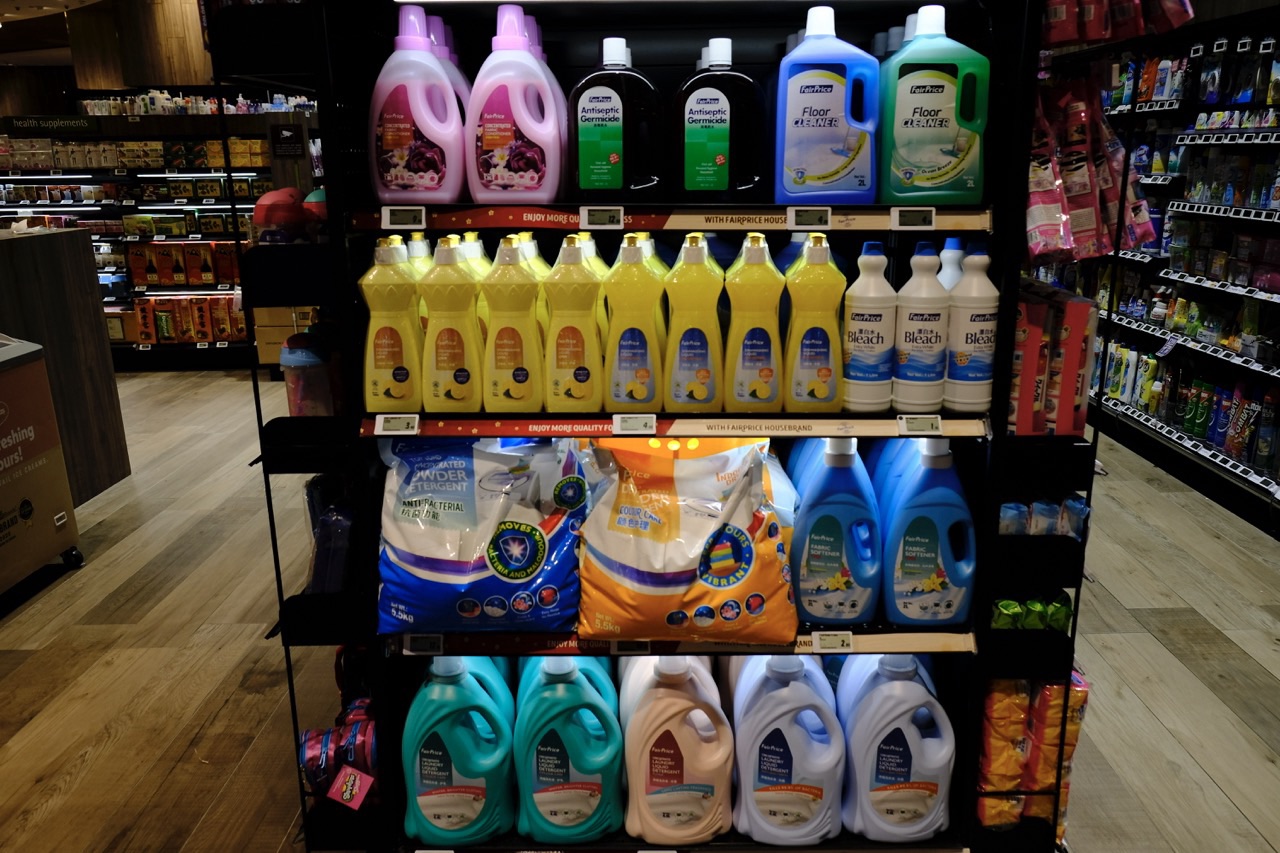
I like asking a student to explain something we almost never think about: why does washing greasy hands with plain water often achieve less than washing with an appropriate soap? The answer sounds simple until we look more closely. Oil and water interact differently, molecules can have two chemically distinct regions, and a surface changes its behaviour when the right substances collect there.
This Chemistry Hougang guide explains how soap and detergents work, surfactants, micelles, hard water, soap scum, emulsification and the difference between cleaning and disinfecting. It is written for Secondary Science and Chemistry students, JC learners, university-minded readers and parents looking for a Chemistry tutor in Hougang who can teach more than the usual model answer.
I want the student to do three things by the end: draw a particle-level explanation of why grease can be removed; use an equation to predict what happens when soap meets calcium-rich water; and recognise that visible bubbles or a pleasant smell are not proof of microbiological safety. These skills carry far beyond a kitchen sink into biochemistry, formulation, manufacturing, water treatment and public health.
First, what is a surfactant?
A surfactant is a substance capable of modifying interfacial behaviour—for example, the interface between water and air, or between water and oil. Many surfactant molecules are amphiphilic, meaning that different parts interact differently with water.
In an introductory picture, one region is hydrophilic, meaning it interacts favourably with water, while another is hydrophobic, meaning it avoids interaction with water and is often more compatible with nonpolar materials. This is a useful teaching model, though molecular interactions are more complex than a cartoon of a little head and tail.
The American Cleaning Institute’s explanation of cleaning chemistry describes how surfactants reduce surface tension and can help loosen oily soils. I teach students to identify the relevant interface, not merely repeat that soap “attracts dirt”.
When a liquid must spread across a greasy surface, the behaviour of the interface can be as important as the liquid’s bulk composition. This is why wetting, emulsification and soil removal are related but not interchangeable.
Why plain water struggles with oily dirt
Water molecules are polar and form extensive hydrogen-bonding interactions with one another. Many oils consist largely of nonpolar molecules. Mixing them would disrupt favourable interactions without enough compensating interactions under ordinary conditions, so they often separate into distinct phases.
A student sometimes says, “Oil is heavier than water, so the two cannot mix.” That is not the chemical explanation. Density influences which phase sits above the other, but miscibility concerns molecular interactions and thermodynamics.
In a glass of water and oil, the oil phase may float because of its lower density, yet the reason the liquids remain as distinct phases is not simply that one is on top. If two immiscible liquids had different densities, the layering could change without making them miscible.
This distinction matters for emulsions in food, pharmaceutical formulations, paints and cosmetics. Density determines some physical arrangements; molecular interactions help explain why a single homogeneous phase does or does not form.
What does a micelle actually do?
At suitable concentrations and conditions, some surfactant molecules can associate into aggregates called micelles. A common simplified diagram of a spherical micelle in water places the hydrophobic regions toward the interior and the hydrophilic regions toward the surrounding water.
Oil-compatible materials can become associated with micelles or be dispersed into droplets whose surfaces are stabilised by surfactants. This makes it easier for oily soil to be carried away when water is removed.
But the statement “every dirty particle sits inside a perfect sphere” is too literal. Surfactants may adsorb to surfaces, stabilize emulsified droplets, form aggregates with different shapes, and participate in several processes at once. The mechanism depends on the particular formulation, concentration, temperature and type of soil.
The American Cleaning Institute’s guide uses micelle illustrations as a first explanation. I recommend treating that picture as a model: it shows the useful orientation of molecular regions, not a photograph of every cleaning event.
An exercise I use in class
I draw three separate sketches: (1) water and a large oily droplet; (2) surfactant molecules collected around the water–oil boundary; and (3) smaller dispersed droplets being transported in the surrounding water.
Then I ask which parts describe wetting, emulsification, and transport of soil away from the surface. Many learners can repeat “soap makes micelles”, but fewer can explain why rinsing and mechanical movement are also important.
A strong explanation uses a connected chain: surfactant changes interfacial behaviour → oily material can detach or become dispersed → water and movement carry it away. That is an account of how a product works rather than a memorised result.
Soap and detergent are not identical chemical categories
Traditional soap is commonly made of salts of long-chain fatty acids. Those compounds can be produced through saponification, involving reactions of fats or oils with suitable alkalis in industrial or controlled settings.
A synthetic detergent can use many kinds of surfactants, not necessarily fatty-acid salts. Formulations can also contain builders, enzymes, water-conditioning components, solvents and other ingredients selected for a particular job.
The American Cleaning Institute differentiates soap and detergent chemistry. A useful comparison asks about the active ingredients and formulation rather than treating “soap” and “detergent” as simply competing brand names.
Some students think every detergent must be stronger or more hazardous than soap. That cannot be concluded from the broad categories alone. The chemical identity, concentration, product purpose, exposure and directions matter.
I would never ask children to make soap with strong alkalis at home. Saponification can be discussed on paper, through diagrams and teacher-approved material without handling caustic substances.
The first great obstacle: hard water
Hard water typically contains elevated concentrations of dissolved calcium and magnesium ions. These ions can interact with traditional soap anions, forming less-soluble compounds often described as soap scum.
Using a generic long-chain fatty-acid anion, RCOO⁻, a simplified reaction with calcium is:
2 RCOO⁻(aq) + Ca²⁺(aq) → Ca(RCOO)₂(s).
The charges balance. Two singly negative carboxylate anions combine with one doubly positive calcium ion to produce a neutral calcium soap precipitate.
Notice what this equation actually establishes: certain dissolved soap species can be removed from solution through a precipitation reaction. It does not imply that all soap instantly becomes solid in every sample of hard water.
A research overview of ionic surfactants and their solubility shows that behaviour depends on surfactant type, counterions, temperature and formulation. For our school-level explanation, the important idea is ionic species and solubility, not a blanket rule that every cleaner behaves identically.
Worked example: predicting calcium soap formation
Suppose a purely hypothetical question supplies 0.020 mol Ca²⁺ and a sufficient amount of a monovalent soap anion RCOO⁻. The balanced relation requires two moles of soap anions for every mole of Ca²⁺:
0.020 mol Ca²⁺ × 2 = 0.040 mol RCOO⁻.
Therefore, up to 0.040 mol of soap anions could be consumed according to the idealised complete-precipitation model.
Now imagine only 0.030 mol RCOO⁻ is available. The soap anion becomes the limiting reactant, and the maximum amount of Ca²⁺ consumed is:
0.030 ÷ 2 = 0.015 mol Ca²⁺.
The amount of calcium left under these simplified assumptions is 0.020 − 0.015 = 0.005 mol.
The calculation is about stoichiometric constraints, not a claim that a real household washing solution always reaches complete precipitation. Solubility, mixed surfactants, other dissolved ions and product ingredients can change the actual result.
For Secondary students, this is charge balance and mole ratio. At JC, it can become a problem of ionic equilibria. At university, it can develop into colloid and formulation science.
Are bubbles a valid measure of cleaning?
Foam can be useful in certain applications, but bubbles are not a universal measure of soil removal. Foam formation, stability and appearance depend on formulation and conditions. A product that produces many bubbles is not automatically better at removing oil from a specific surface.
Likewise, a cleaning product may be highly effective in one context and inappropriate in another. Fabric, cookware, skin, laboratory surfaces and medical equipment have different requirements.
I encourage students to ask what the experiment is actually measuring. Is it foam volume, surface tension, residual grease, microbial contamination or something else? A foam-height result is evidence about foam under the tested conditions—not automatically about every aspect of cleanliness.
A well-designed comparison needs consistent materials, water conditions, temperature, agitation and a defined cleaning outcome. The exact scientific question matters more than choosing the most visually dramatic demonstration.
Cleaning is not the same claim as disinfecting
Cleaning removes soil and can remove many microorganisms from a surface; disinfection aims to inactivate or kill relevant microorganisms using an appropriate method under defined conditions. A visible surface can look clean without establishing the absence of pathogens.
Public-health agencies explain these distinctions. For example, CDC guidance on cleaning and disinfecting describes cleaning as reducing germs and contaminants through removal, and disinfection as using suitable products to kill remaining germs when indicated.
A student should not infer that every household detergent is a disinfectant, or that every disinfectant is suitable for skin, food-contact surfaces or any other use. Follow the actual product’s authorised instructions.
Never mix household cleaning products to test whether they work together. Dangerous vapours and reactions can result. This learning exercise is about interpreting published information and understanding chemistry, not conducting unsupervised cleaning-agent experiments.
Why temperature and concentration change the answer
Increasing temperature may alter viscosity, solubility, rates of soil removal and aggregation behaviour. But hotter water is not always necessary or appropriate; the optimum depends on the product, material and type of contamination.
Surfactants can form micelles above characteristic concentration ranges under particular conditions. The critical micelle concentration (CMC) describes a concentration scale associated with aggregation, but it is not one universal number for all surfactants or a simple guarantee that every additional molecule is used to trap grease.
I use this topic to explain why scientific models have boundaries. An introductory micelle picture gives a useful mechanism. It does not establish how an entire formulation behaves in all waters, at all temperatures and for all soils.
University Chemistry may explore surface thermodynamics, adsorption isotherms, molecular simulations and colloidal interactions. Every advanced method grows from the basic school habit of identifying the species, concentration and measured quantity.
A worked example in concentration and dilution
Consider a hypothetical non-hazardous classroom tracer X, not an actual detergent recipe. A prepared solution contains 0.060 mol of X in a final volume of 0.300 L. Its amount concentration is:
c = n/V = 0.060/0.300 = 0.20 mol L⁻¹.
If the entire solution is hypothetically diluted to a final volume of 0.600 L without changing the amount of X, its new concentration is:
0.060/0.600 = 0.10 mol L⁻¹.
Doubling the volume has halved the amount concentration under the stated model. It does not tell us whether a real cleaning product has become safer, more effective or suitable for a particular surface.
That last sentence is important. Concentration is a measured or calculated property; performance and safety are separate questions. A student who remembers this will be less likely to misuse formulas in everyday life.
Why an environmental label deserves scrutiny
Surfactants and other cleaning-product ingredients can enter wastewater after use. Their effects depend on composition, degradation, treatment processes, concentrations and exposure pathways. A formulation described as “plant-based” is not automatically harmless to aquatic ecosystems.
Similarly, a synthetic ingredient is not automatically persistent. Modern products use many substances with varied environmental fates, and life-cycle assessment can include raw materials, manufacturing, packaging, transport and use.
I ask: what exactly does a label claim—biodegradability under a specified test, lower packaging mass, reduced energy in manufacture or something else? Are the conditions and comparison defined?
This is where the basic chemistry of amphiphilic molecules joins environmental science, product engineering and public responsibility. Rather than demanding a perfect answer from one word on the label, learn to ask for evidence.
Five misunderstandings that reveal gaps in chemical thinking
- “Oil does not mix because it is lighter than water.” Density explains layering; molecular interactions explain miscibility.
- “Every dirt particle goes inside a micelle.” Surfactant action includes adsorption, emulsification and other mechanisms.
- “More foam always means better cleaning.” Foam is a particular observable property and is not identical to soil removal.
- “Soap and all detergents are the same substance.” Their active surfactant chemistries and formulations can differ.
- “Washing always disinfects.” Cleaning and disinfection are different claims with different evidence.
A learner who can diagnose all five misconceptions is prepared for more advanced separation, bonding, solution and formulation questions.
A Secondary-to-university learning pathway
Secondary 1–2: mixtures, particles and observation
Distinguish oil droplets, dissolved molecules and suspended particles. Learn why a drawing of a mixture may not represent a chemical reaction. Practise describing what a liquid looks like before explaining why.
Secondary 3–4: ions and chemical formulas
Connect calcium, magnesium, charges, solubility and precipitation. Write a balanced ionic equation and interpret why hard water changes soap behaviour. Strengthen mole ratios and concentration calculations where applicable to the syllabus.
JC H1/H2: molecular interactions and quantitative reasoning
Deepen concepts such as bonding, polarity, energy, kinetics, equilibria and practical evaluation. Avoid relying on slogans such as “like dissolves like” when a more precise mechanism is required.
Polytechnic, university and practice: interfaces and product performance
Explore colloid Chemistry, polymer formulation, analytical measurement, environmental fate, industrial process design and surface science. A professional must connect molecular properties to reproducible product performance and responsible use.
I want a teenager to know that understanding a greasy plate is not beneath a chemist. It is a compact route into one of the most important themes in materials science: what happens at an interface.
A four-week plan without a home chemistry experiment
Week 1: draw a particle diagram of water, oil and a surfactant, labelling the hydrophilic and hydrophobic regions. Explain what the drawing simplifies.
Week 2: balance the generic calcium-soap precipitation reaction and solve the 0.020 mol problem. State what information would be needed to predict actual precipitation in real water.
Week 3: compare the claims “removes grease”, “forms foam” and “disinfects” from published educational material. Explain why they are not interchangeable performance tests.
Week 4: read the American Cleaning Institute explanation and the CDC cleaning guidance. Write a 250-word explanation connecting molecular behaviour, surface cleaning and the limits of a hygiene claim.
No household liquids need to be mixed or opened for these exercises. A learner can practise real Chemistry using diagrams, equations and credible information.
Diagnostic questions with model answers
Why is soap useful for oily soils?
Surfactants can interact with both watery and oily environments and change the behaviour of the interface, helping disperse or detach oily material so it can be washed away.
Is a micelle a new chemical element?
No. It is an aggregate of molecules, not a new chemical element. Its formation is generally a self-assembly process.
What causes scum in hard water with traditional soap?
Dissolved Ca²⁺ and Mg²⁺ can form less-soluble fatty-acid salts with soap anions under suitable conditions.
How many moles of monovalent soap anion are needed to form the idealised calcium soap from 0.10 mol Ca²⁺?
0.20 mol according to the reaction ratio of two anions per calcium ion.
Does a high foam level prove a surface is disinfected?
No. Foam formation and microbiological disinfection are distinct outcomes.
Does “natural” automatically mean safe for the environment?
No. The chemical identities, quantity, exposure and environment determine the relevant evidence.
Questions parents frequently ask
Does Secondary Chemistry require memorising all types of surfactants?
No single answer applies to every level or examination year. Focus on the syllabus foundations first; the wider chemistry is a useful application where it deepens understanding.
Is soap Chemistry a good way to introduce organic Chemistry?
Yes. Long hydrocarbon chains, carboxylate ions, polarity and molecular interactions provide a practical way to connect structure with properties.
Can this lead to a career?
Formulation Chemistry, materials science, environmental analysis, cosmetics, pharmaceuticals and consumer-product research all use related scientific principles.
What should I look for in a Chemistry tutor?
Ask whether the tutor can diagnose the student’s underlying particle-level misconception, use a worked example and test whether the student can explain a new situation without relying on memorised words.
Sources and further reading
- American Cleaning Institute — The Chemistry of Cleaning
- American Chemical Society — Soap and Detergent Science Activity
- CDC — When and How to Clean and Disinfect Your Home
- Research on ionic surfactant solubility and mixed micelles
- eduKateSG — Why Study Science: How Soap and Detergents Clean
- eduKateSingapore — Soap and Detergent Chemistry: Micelles and Hard Water
Continue the Chemistry Hougang library
- Sunscreen Chemistry: UV Filters, SPF and Photostability
- Solar Cells and Photovoltaics: Silicon, Photons and Electricity
- Rare Earth Elements: Magnets, Mining and Recycling
- Water Treatment, NEWater and Desalination
- Food Chemistry: Fermentation and Enzymes
- Polymer Chemistry: Plastics and Microplastics
- Chemical Safety: Hazards, Labels and Laboratory Practice
- Chemical Analysis: Reliable Experimental Evidence
When a student struggles, bring a real written explanation rather than simply asking for a longer worksheet. We can identify whether the problem concerns particle models, charge, calculation or scientific language. Families comparing learning support can arrange a consultation with eduKate Singapore.