
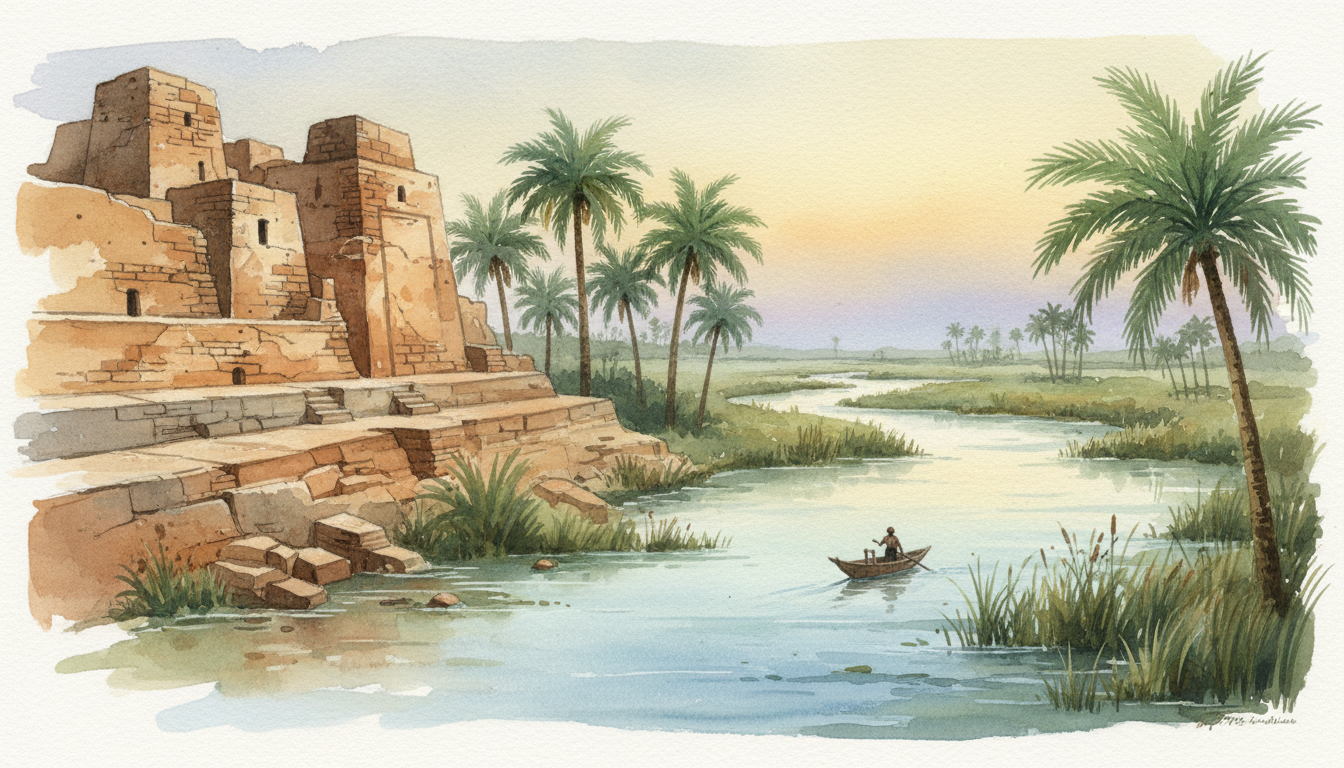
Did you know that some ancient governments could collect grain instead of money? A farmer’s harvest, a scribe’s list and a storehouse could form part of a government finance system thousands of years before electronic banking.
Ancient states collected resources through different combinations of taxes, tribute, rents and labour obligations. Officials counted households, land or produce, recorded liabilities, received payments and moved supplies. Those resources could support administrations, soldiers, religious institutions and major building projects, although the arrangements varied greatly by place and period.
It sounds like a financial story, but it is also a civilisation story. When a society becomes large enough that specialists do not all grow their own food, somebody must work out how resources move from producers to the people and institutions using them.
The quick answer
How did ancient taxes work? Discover grain payments, Egyptian scribes, Roman-period records and how governments managed resources, labour and public works.
What to know in 60 seconds
- Ancient taxes were not always paid in coins: grain, produce and other commodities could matter greatly.
- Egyptian scribes recorded quantities, responsibilities and transfers; these records help historians reconstruct administration.
- Collecting resources can fund important activity but also create coercion, inequality and public resentment.
What did a tax mean in the ancient world?
A tax is a compulsory claim on resources or income imposed by an authority. But not every ancient payment has the same meaning. A tenant’s rent, a defeated ruler’s tribute, a worker’s required labour and a farmer’s produce tax could operate through different relationships.
If we call all these things ‘taxes’, the story becomes convenient and misleading. Ancient rulers often combined several types of obligation, and the balance could change during war, crop failure or a change of dynasty.
Imagine a village that delivers sacks of grain to a royal collection centre. Some of that grain may be stored, moved, allocated to particular workers or sent to another institution. Its value is not just a number on a ledger; the sacks are physical food that someone had to grow, carry and protect.
The mechanism is production → assessment → collection → record → storage or redistribution → use. Each step needs people and decisions. Each step can produce mistakes, delays or abuse.
Why would a government collect grain instead of coins?
Coinage was not universal across ancient history. For much of pharaonic Egypt’s earlier history, material goods and accounting units were important to economic exchange without a coin-based tax system identical to a modern one.
Grain was particularly significant because it was widely produced, could be measured and stored, and could sustain workers and households. The practical difficulty was that the state needed buildings, guards, carriers and record-keepers to handle a physical commodity.
A sack of grain has a weight, storage cost and risk of spoilage. If a road floods or a boat is delayed, the resources do not reach their destination just because someone has marked them in a register.
Did you know? Collecting a crop is only the beginning of its administrative journey. One of the biggest challenges is ensuring that what was assessed, what actually arrived and what was later distributed agree with one another.
A tiny model from ancient Egypt reveals a large system
The Metropolitan Museum of Art’s model of a granary with scribes, dated around 1981–1975 BCE, came from the tomb of the Egyptian official Meketre.
Inside the model, workers carry sacks of grain while other figures measure and record supplies. The museum notes that the granary is divided into storage and accounting areas, with six men carrying grain and nine involved in measuring or keeping accounts.
This was a model made for a tomb, not a photograph of one historical workday. Nevertheless, its detailed depiction reveals which tasks mattered in the imagined operation of a granary.
The striking lesson is that counting and custody are work. Food does not become an accountable public resource simply by entering a storehouse; somebody has to check quantities and keep track of what comes in and out.
Compare the picture with any modern warehouse. Although the tools differ, reliable stock control still means documenting arrivals, identifying losses, assigning responsibility and checking departures.
New Kingdom Egypt: how historians reconstruct taxation
A peer-reviewed study by Mahmoud Ezzamel at Cardiff University examines translated Egyptian New Kingdom documents and identifies a cycle of tax assessment, collection, transportation and storage.
Officials’ records could specify people, places, quantities, dates and responsibilities. That detail allowed authorities to monitor obligations at more than one stage. It also helps modern researchers understand how the administration represented its work.
But records show the state’s perspective particularly well; they do not automatically tell us whether an assessment felt fair to the household paying it or how every local official behaved.
We should also avoid applying one ‘Egyptian tax rate’ across thousands of years. The kingdom’s political boundaries, institutions, land arrangements and methods of collection changed repeatedly.
A responsible history therefore asks which dynasty, which region, which document and which kind of payment?
Later Egypt: why coins did not immediately replace everything
In the Ptolemaic period, from 332 to 30 BCE, coinage played a much larger role in state administration and some transactions. Yet grain assessments, granaries and payments in kind remained important.
A scholarly account of the Ptolemaic Egyptian economy describes field surveys, tax documentation, grain accounting and changing administrative responsibilities. Some receipts preserve evidence of what was assessed or paid.
The presence of money does not eliminate the physical needs of an army or a city. Grain still has to be grown and delivered. The distinction is between a unit for measuring value and the actual resources moving through the system.
This also explains why administrative changes matter. If officials alter how much is owed, how payment is measured or where it is stored, everyday households can feel the difference even if the broader landscape has not changed.
Could taxation pay for public works?
Some collected resources could support officials, armies, construction and the maintenance of institutions. Large projects also required access to labour, materials, technical knowledge and transport.
But an ancient public project should not be described as if it had a modern itemised government budget. Labour could be required by authorities, assigned through social hierarchies or obtained under forms of obligation that were not freely negotiated employment.
Nor should we claim that all taxes benefited everyone equally. A fortification might protect one centre while placing the burden of supply on distant farmers. A canal might support agriculture while drawing labour away from households at a difficult time.
Ask three questions: who contributed, who decided and who benefited? The answers can be different for every project.
Public resources are therefore both an operating capability and a political relationship. An efficient collector is not necessarily a fair administrator.
What happens when collection becomes too demanding?
Imagine a hypothetical district where a harvest fails but its obligations remain unchanged. Families may use reserves, borrow grain, sell assets or reduce future planting. If officials ignore the changed conditions, collection can weaken the very production on which the state depends.
That is a possible cause-and-effect chain, not a claim that one poor harvest caused a particular ancient empire to collapse. Weather, markets, warfare and local arrangements must be examined together.
The chain is assessment above available surplus → household stress → debt or reduced resilience → loss of productive capacity → further pressure on collection. Good records may reveal the problem, but only responsive institutions can address it.
Conversely, an administration that observes conditions, verifies quantities and adjusts what it demands may protect the productive base from which future resources come. Ancient states varied in whether and how they did that.
The historical question is not only how much a state obtained this year. It is whether people and farms could continue producing next year.
Taxes, tribute and trust: why terminology matters
A tax imposed by a government on its subjects is different from tribute demanded from a conquered polity. Both may move valuable resources, but the political relationships behind the payments are not identical.
Likewise, a temple’s land income is not automatically the same as royal revenue. When historians encounter an inscribed amount of grain, they first need to know what transaction the document records.
Writing, counting and measurement can reduce some uncertainty. Yet records may also be instruments of control, and people with little access to scribes may have difficulty contesting mistakes.
It is useful to separate administrative accuracy from social legitimacy. A government might know exactly what it took without providing a fair reason for taking it.
How to understand ancient public finance in five questions
These questions explain why ancient accounting tablets and storehouse models matter. They show how an enormous society could turn many separate harvests and obligations into ongoing institutional operations.
Did you know? The ability to count a resource and the right to demand it are two different kinds of power. Civilisation depends on understanding both.
- What resource or labour obligation was being assessed?
- Who owed it, and to which authority?
- How did officials measure, record and move it?
- Where did it go, and who could use it?
- What evidence reveals mistakes, resistance or adjustment?
Frequently asked questions
How did ancient civilisations collect taxes?
Arrangements varied. Governments used officials, records and storehouses to assess and collect produce, money or other obligations; tribute and labour demands also existed.
Were ancient taxes always paid in gold or coins?
No. Many ancient systems involved grain, goods and required labour. Coinage became more important in particular regions and periods.
What did Egyptian scribes do?
They recorded quantities, movements and obligations, helping institutions keep track of resources and accountability.
Did taxes automatically build roads and temples?
No. Construction also required labour, materials, skills and political decisions, and many different financing and obligation systems operated.
Why should readers distinguish taxation from tribute?
They involve different political relationships. Taxation is a state’s claim on its subjects; tribute may be demanded from a subordinate or conquered polity.
Keep exploring the Civilisation series
You can browse the Civilisation archive, continue with the companion explanations below or revisit the historical foundations.
- Civilisation | How War and Conquest Reshaped Ancient Civilisations
- Civilisation | How Religion and Ritual Shaped Ancient Societies
- Civilisation | Why Ancient Civilisations Changed Instead of Disappearing
Previously in this series:
- Why Ancient Societies Created Laws, Courts and Written Rules
- How Ancient Trade Networks Connected Cities and Cultures
- How Roads, Canals and Drains Kept Civilisations Working
- How Persian and Roman Empires Governed Distant Provinces
Sources and further reading
The following institutional and scholarly sources support the specific historical examples. Where evidence is incomplete or contested, the text separates observed evidence from plausible interpretations.
- The Met — Model of a Granary with Scribes
- Cardiff University — Accounting Working for the State: Tax Assessment and Collection During the New Kingdom
- Cambridge University Press — The Ancient Egyptian Economy: The Ptolemaic Period
When reading history, always ask: which people, which place, which period, and what evidence survives?