
A Secondary 4 student in Bukit Timah gets a disappointing Physics test result. Should the family arrange Physics tuition immediately, or should the teenager first revise independently? There is no responsible one-word answer. More lessons might repair a persistent misconception—but they might also consume the only time the child has left to practise and sleep. The right decision comes from understanding why the result happened.
For parents searching for Secondary 4 Physics tuition in Bukit Timah, O-Level Physics tuition vs self-study, do I need a Physics tutor, Pure Physics revision help or 2027 SEC G3 Physics K323 exam preparation, the core aim is to identify when external teaching genuinely adds value and when a good self-study system may already be enough. A parent should look at independent first attempts, recurring errors, school feedback, mathematical readiness, available time and whether the student can correct unfamiliar questions without continual prompts.
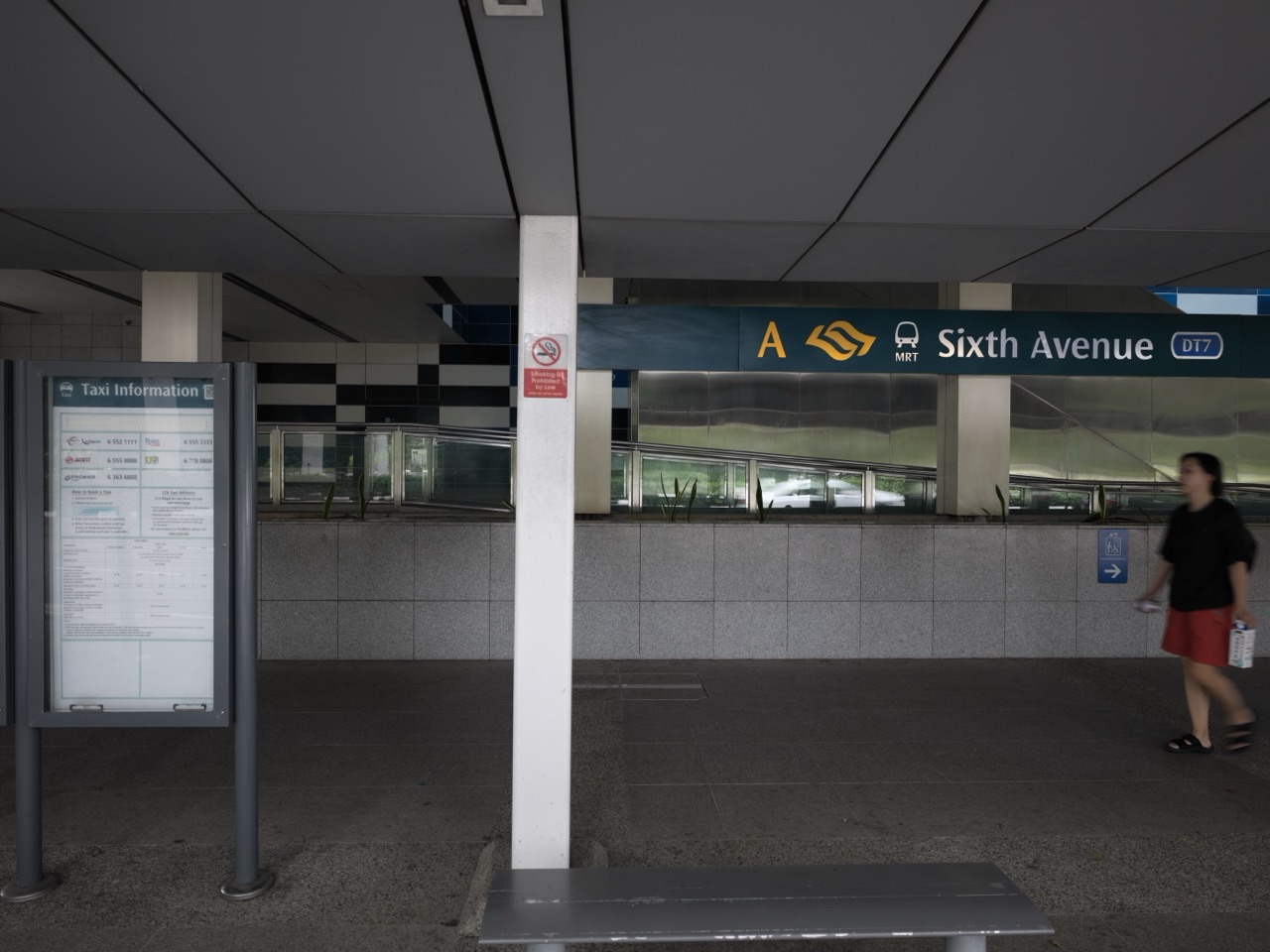
At eduKateSG Bukit Timah, small-group tutorial placements are designed for compatible learners in groups of up to three, where current Physics subject availability permits. Our centre is at 8 Fourth Avenue, Singapore 268674, near Sixth Avenue MRT. This is an evidence-led parent guide, not a sales argument that every Secondary 4 student needs tuition or that more tuition hours automatically produce better results.
The Core Aim: Help the Child Need Less Help Over Time
Tuition is useful when it changes what the learner can do independently. A skilled tutor may explain a difficult physical model, uncover a hidden mathematical error or help a student build a reliable correction routine. But the ultimate goal remains a student who can read a new question, select the right principle and solve it without the tutor nearby.
Self-study can also be highly effective when the student understands the syllabus, has trustworthy resources, checks mistakes honestly and follows a sustainable schedule. In that case, additional lessons may offer limited benefit relative to their time and cost.
A sensible parent asks, ‘What specific obstacle would tuition remove that my child cannot currently remove through school support or independent practice?’ If the family cannot answer yet, a short diagnostic may be more appropriate than immediately committing to a long-term timetable.
What This Guide Owns in the Bukit Timah Physics Series
This article owns the decision between self-directed Physics revision and external tutorial support. It differs from the how to choose a Physics tutor near Sixth Avenue guide, which addresses selecting a provider after tuition is being considered.
It also differs from the small-group versus private tutor comparison, which considers lesson format. Here the question is more fundamental: does this student need an additional teaching relationship at all?
For independent study techniques, see Active Recall, Spaced Revision and Interleaving. For objectively tracking improvement, use the parent Physics progress checklist.
One Disappointing Mark Does Not Explain the Problem
A percentage is a useful summary but not a diagnosis. A mark of 58% could reflect three different realities: mostly secure knowledge with avoidable unit slips, excellent calculation accuracy but weak written explanations, or a substantial conceptual gap across several important topics.
The appropriate response to those cases differs. Unit mistakes may respond to a short check routine. Explanations may need feedback on causal reasoning and command words. Broad conceptual gaps may require sustained teaching and controlled practice.
Before paying for new lessons, examine a handful of the child’s actual errors. Ask which mistakes were made before hints or corrections. An already marked paper may hide the reasoning steps that originally went wrong.
The Five Signals That Help Parents Decide
| Observed signal | What it may suggest | First sensible action |
|---|---|---|
| Child can explain errors and solve changed questions alone | Independent revision may be sufficient | Support a realistic self-study routine |
| Same conceptual misconception repeats despite corrections | External diagnosis may help | Seek targeted tutor or teacher feedback |
| Correct untimed, inaccurate under timed conditions | Exam pacing may be main obstacle | Try timed sections and review bottleneck |
| New topic has not been taught or covered fully yet | Need may be temporary and curriculum-related | Use school teacher guidance and appropriate introduction |
| Child is exhausted and has no review time | More tuition may worsen time scarcity | Prioritise workload, rest and a smaller plan |
These signals are not a rigid grading system. One child may show more than one pattern. What matters is designing the smallest intervention likely to change the specific weak link.
Case One: The Student Who Can Self-Correct
Consider a student who scores modestly because of several rushed conversions and an overlooked graph sign. After marking, the child identifies the precise mistakes, explains the appropriate units and solves two changed unseen problems without help.
This learner may not need an additional tutor for those particular issues. A targeted self-study routine and an occasional school-teacher check may be enough to stabilise the habits.
The parent can ask for a later retest. If the same errors have disappeared after a week or two, that is stronger evidence than immediate correction. If they recur, the family can revisit whether targeted support is worth adding.
Tuition should not become an automatic penalty for a disappointing grade when the student is already demonstrating a productive correction process.
Case Two: The Student Who Repeats the Same Physics Misconception
Another student repeatedly describes a moving object as needing a forward resultant force. The child corrects the worksheet after seeing the answer, then makes the same mistake in a new question about a vehicle moving at constant velocity.
Here an expert tutor may add value by reconstructing the physical model. What forces act? What does constant velocity imply about acceleration? What does zero acceleration imply about the resultant force?
A short series of contrasting examples can repair the misconception more effectively than another stack of timed papers. Afterwards, the child should independently explain an unseen trolley or sliding-body problem.
The relevant test is whether the corrected model transfers when the object and diagram change. Merely reporting that the student has ‘completed Newton’s laws’ is not enough.
Case Three: The Student Who Understands Physics but Struggles with Mathematics
A third teenager explains energy transfers accurately but rearranges equations poorly and converts square centimetres into square metres incorrectly. The learner may assume Physics itself is incomprehensible, when the immediate bottleneck is a narrower mathematical skill.
The tutoring response could be a short bridge involving algebra, ratios, negative numbers or unit conversions, followed by Physics problems requiring those operations. A broad reteaching of every Science chapter would be inefficient.
The existing Can My Child Cope With Physics If Maths Is Weak? guide explains that prerequisite decision. Our new Physics Word Problems and Formula Selection guide shows how to teach it.
The parent should look for an improved first step: the child labels units, chooses the right system and rearranges the selected equation independently.
Case Four: The Student Who Is Tired, Not Under-Taught
Some Secondary 4 students are already carrying substantial school assignments, CCAs, travel, family commitments and additional tuition in other subjects. Their Physics revision may be consistently pushed into the last tired half-hour of an evening.
Adding a new lesson can reduce the time available for self-directed practice and recovery. A tutor should be willing to notice that the student needs a more sustainable plan rather than simply another session.
A family may choose shorter focused work, fewer overlapping tasks or school-based clarification before enrolling in tuition. If a specific conceptual block persists despite a healthier timetable, additional teaching can then be considered.
The point is not that tired students can never benefit from tuition; it is that fatigue and teaching gaps should be distinguished rather than treated as the same problem.
What Self-Study Can Do Very Well
Independent Physics revision allows a student to control pacing, revisit a fragile concept, choose a distraction-free environment and practise without waiting for a class. When the learner has a correct method and trusted answers, these are real advantages.
A useful self-study session contains retrieval, a question not copied from the worked example, honest feedback and a later recheck. It does not need an elaborate app or a huge formula chart.
The strongest independent learner knows when a resource has stopped helping. If the explanation is confusing or the same wrong method repeats, seeking clarification from a teacher, peer discussion or tutor is sensible.
A 30-Minute Self-Study Session That Actually Tests Understanding
Start with five minutes recalling one previously taught Physics idea from memory. Perhaps explain why a constant-velocity trolley can experience balanced forces, or why a water-heating curve has a plateau during a phase change.
Spend fifteen minutes on two or three new problems, not identical examples copied from notes. Choose questions that demand model selection, units or a short explanation and ensure they match the student’s actual school syllabus.
Use the final ten minutes for checking working, identifying the earliest wrong decision and writing one short corrective note. Schedule a changed question later. This routine is more informative than simply announcing that another thirty minutes of revision have been completed.
The durations are illustrative. A student with a demanding school day may do less and still learn well if attention and corrections are strong.
The Four Signs Self-Study Is No Longer Enough
- The child repeatedly makes the same conceptual error after seeing correct explanations and trying changed questions.
- The learner cannot identify why a model applies, even when they can recite the formula.
- A persistent mathematical prerequisite gap prevents progress across several Physics chapters.
- The student has no reliable feedback route and keeps copying answers without understanding the first wrong decision.
Any of these can justify a targeted consultation or a trial of teaching support. They do not automatically justify enrolling for years. The intervention should have a defined goal and a review point.
When a School Teacher Is the Right First Source
A student’s school teacher knows the current lesson sequence, assignments and assessment expectations. For a misunderstood homework instruction, a missed explanation or a recently introduced syllabus topic, school consultation may be the quickest path.
Bring a precise question: ‘I understand that gradient means acceleration on a velocity–time graph, but why is the negative region treated differently when calculating distance?’ A specific question is easier to address than a general claim that the whole of Physics is impossible.
Tuition can complement this support when the gap requires sustained individual explanation or repeated practice that classroom constraints make difficult. It should not pretend that the school and tutor are competing authorities.
When a Small-Group Tutorial Can Add Value
A compatible three-student group can help a tutor see individual first attempts and let learners compare alternative physical models. One student may interpret a graph incorrectly, another may use the wrong units, and a third may understand the method but write an incomplete explanation.
A good tutor addresses those differences and tests each child again. Group discussion can be intellectually useful as students learn to articulate and challenge assumptions respectfully.
However, a three-pax lesson is not automatically appropriate for a learner on a very different school syllabus or requiring unusually intensive one-to-one pacing. Compatibility matters more than the class-size slogan.
The Cost of Tuition Includes More Than Fees
Families naturally think about tuition fees, but there are other costs: transport, waiting time, the cognitive load of another class, missed self-study periods and the pressure of an already crowded week.
Do not compare tuition only by cost per hour. Ask what educational function the lesson performs, whether the learner attends with enough energy to participate and whether useful independent practice still happens between sessions.
Conversely, do not assume the most expensive arrangement is necessarily the most effective. A well-matched tutor who repairs a specific misconception may offer more benefit than many hours of generic drilling.
This article does not quote unverifiable prices or promise a return on investment. Current class fees and schedules should be obtained directly from the provider before making a decision.
A Decision Matrix for Secondary 4 Families
| Situation | First recommendation | When to reconsider |
|---|---|---|
| Mostly accurate independent explanations, occasional arithmetic slips | Self-study with targeted checks | If the same errors persist after rechecks |
| Repeated misconceptions and dependence on hints | Focused tutor diagnostic and trial | Assess independent transfer after several weeks |
| Correct untimed work but runs out of time | Short timed practice and pacing analysis | If poor model selection still causes delays |
| Strong school support already working | Continue school plus independent practice | If a new persistent obstacle appears |
| Overloaded timetable and falling attention | Reduce unnecessary workload and protect rest | Consider tuition only with a clear added learning function |
| Different syllabus, no compatible local group | Seek school-specific support | Reassess if appropriately matched tuition becomes available |
How to Conduct a Fair Four-Week Tuition Trial
A trial is more useful than a vague promise. In week one, diagnose a defined bottleneck from school work and observe the student’s independent first attempt. In week two, provide a specific intervention and compare a changed example.
Week three can include a delayed retrieval task, and week four an unseen mixed question under appropriate conditions. The tutor should show the family which skill now works more reliably, where independence remains weak and what the next useful step would be.
The point is not to claim four weeks is enough for every grade improvement. It is to establish whether the teaching relationship is producing an observable educational change before adding more commitment.
A Trial Should Be Measured by Skill, Not Just a New Percentage
School tests vary in topic coverage and difficulty. A 60% score on a more demanding paper may not mean the student has regressed from a 65% result on an easier one. Conversely, a higher percentage could reflect a familiar topic rather than a repaired misconception.
A meaningful trial compares similar skills: can the student now choose the equation independently? Can they explain an unfamiliar situation? Can they read a changed graph and avoid a recurring unit error?
Evidence can be as simple as a before-and-after annotated example. Parents gain more actionable information from a clear first-line improvement than from a premature guarantee of examination outcomes.
The Difference Between Teaching, Coaching and Repetition
Teaching builds or repairs the physical model. Coaching can help students organise revision, monitor habits and choose the right practice. Repetition can strengthen a correct procedure through suitable varied exercises.
None is inherently sufficient for every problem. A learner who does not understand a physical principle needs more than a timetable. A student with strong concepts but inconsistent revision may need a better routine rather than another explanation.
A good tuition programme identifies which function is missing and avoids selling the entire package when the child only needs one part.
What About High-Performing Physics Students?
A confident student who already solves school work accurately may benefit from carefully chosen enrichment or deeper cross-topic reasoning. But this does not mean advanced tutoring is obligatory for a strong learner.
Ask whether the child has a genuine learning goal such as improving experimental evaluation, strengthening unfamiliar problem-solving or preparing responsibly for an appropriate next-year curriculum.
If those needs are already met through school and self-study, it may be reasonable to preserve the student’s time for other subjects, reading, CCA and rest.
How the 2027 SEC G3 Physics Route Changes the Decision
The official 2027 standalone G3 Physics K323 syllabus includes three assessment components: 40 multiple-choice items in Paper 1, structured and free-response work in Paper 2, and a practical Paper 3. Candidates need more than one type of independent capability.
A student might self-study MCQs effectively but need feedback on evidence-led explanations. Another may handle written questions well yet require suitable practical laboratory opportunities through school.
The right question is which actual assessment skill needs additional support. Tuition should complement, not claim to replace, authentic supervised experimental learning.
For a Combined Science learner, use the actual K326 or K327 route and the corresponding school expectations. An IP learner may not sit the SEC examination at all, so the decision must begin with the institution’s internal curriculum.
A Separate Question: Which Tuition Format If Support Is Needed?
Once a family decides that additional teaching would be useful, another decision follows: a small compatible group, an individual tutor, school consultation or a hybrid. These should not be confused with the earlier decision about whether tuition is needed at all.
Our existing small-group versus private Physics tutor comparison addresses the format question in detail.
A local family may also consider location and travel. The education benefit of a tutorial should justify the actual time needed to attend it; do not assume every route to Sixth Avenue is equally convenient.
The Honest Question to Ask Any Physics Tuition Centre
Ask: ‘What will my child be able to do independently after several weeks that they cannot do now?’ A credible answer should identify a plausible skill, a teaching method and a way of checking progress.
Another useful question is, ‘What happens if my child does not fit the current group’s subject or pace?’ A provider should be willing to discuss compatibility rather than promise that every timetable and combination will work.
Finally, ask whether the learner will still have space for independent study and school assignments. More tuition does not eliminate the student’s need to practise without support.
A Sustainable Week Matters More Than a Perfect-Looking Schedule
For an upper-secondary student, Physics competes for attention with Mathematics, languages, humanities, other Sciences and activities outside lessons. A schedule that looks ideal on paper can fail if it leaves no time to recover and review mistakes.
A parent can list the real commitments, identify two or three short Physics study opportunities and assess whether tuition adds a missing teaching function or simply occupies one of those opportunities.
The goal is an effective rhythm, not maximising the number of hours spent under instruction.
How Parents Can Talk About Physics Results Constructively
Try asking the student which questions felt confusing before they began and which mistakes they could fix independently afterwards. Invite them to show one answer they now understand and one that still needs explanation.
The conversation becomes more helpful when it focuses on a problem that can be solved: reading a graph, separating force and motion, handling units or learning to justify a conclusion.
Avoid treating a single grade as a permanent description of capability. A child’s learning state can vary by topic and can improve with the right support and practice.
A Three-Route Parent Checklist
- Stay with self-study when the student understands feedback, attempts unfamiliar problems independently and follows a sustainable practice routine.
- Use targeted school or tutor help when a precise concept, explanation or mathematical skill remains blocked despite honest attempts.
- Reconsider the whole timetable when tiredness, overload or incompatible classes make another lesson unlikely to produce focused learning.
A Parent’s 15-Minute Physics Audit Before Booking Tuition
The family does not need to conduct a formal examination. Choose two recently marked Physics questions and ask the child to explain how they approached each before seeing the solution. One should be numerical and the other conceptual or data-based if possible. The goal is to listen for independent model selection and correction.
For the numerical question, ask: ‘What quantity was the question asking for? Which physical relationship did you choose, and why? Can you explain the first wrong line?’ Then offer a small numerical variation to see whether the correction survives a changed surface.
For the conceptual question, ask the student what evidence in the diagram or given story supports the explanation. A child who immediately copies a marking-scheme paragraph but cannot connect it to the stimulus may need help with scientific reasoning rather than rote knowledge.
The final step is to ask how the child plans to check the same concept in a week. If the teenager already has a credible plan and has shown independent progress, a short period of self-study may be worth protecting before making a new commitment.
The Difference Between Needing a Better Resource and Needing a Better Tutor
Sometimes the missing ingredient is not an extra lesson. A student may have school notes but no suitably graded independent questions, or may have a workbook without understandable explanations. A trustworthy practice set and periodic teacher consultation might close that gap.
Other learners have plenty of resources but cannot recognise their misconception. They repeatedly choose the same incorrect model and mistake copied corrections for mastery. For this student, a tutor’s observation and questioning may change what a new workbook cannot.
A useful diagnostic is to ask whether the learner can explain why their own wrong answer was tempting and what physical principle invalidates it. If they can and can apply the repair, the next need may be practice. If they cannot, a clearer explanation or skilled feedback is likely more valuable.
Three Realistic Weekly Timetables, Three Different Decisions
| Student profile | Potential Physics routine | Where support may fit |
|---|---|---|
| Secure concepts and self-discipline | Two short mixed sets plus delayed correction | No extra tuition needed unless a new obstacle appears |
| Persistent model confusion | One targeted teaching session plus short independent rechecks | Tutor may help correct misconceptions |
| Heavy CCA and multiple tuition subjects | One manageable retrieval session and existing school support | Reduce overload before adding another commitment |
The table is deliberately not an exact timetable for every child. The student’s energy after school, travel time and current assessment demands matter. A well-designed plan should survive a real Tuesday, not just look impressive in a Sunday spreadsheet.
If a student travels to Bukit Timah from Clementi, Holland Village or elsewhere, the family should consider the full door-to-door time rather than the nominal lesson duration. A convenient location is helpful, but it does not replace a syllabus-appropriate tutor or independent study.
A Good Trial Has a Clear Ending Condition
Before starting Physics tuition, agree on the specific capability the child aims to gain. It might be correct reading of motion graphs, consistent resistance-network reasoning, writing causal explanations, or independent selection of formulas from word problems. The goal should be observable and aligned with school work.
At the end of a defined trial period, collect a new question that genuinely tests the same skill without tutor hints. If the child succeeds and can explain why, decide whether to continue, reduce frequency, move to a new goal or return to self-study. Continuing indefinitely should not be the automatic option.
If the goal is not improving, examine why. Perhaps the group is not matched, the timetable is unsustainable, or the tutor is correcting answers but not the underlying model. Another lesson of the same kind may not be the best response.
When the Choice Is Not Between Two Extremes
Tuition versus self-study is not an all-or-nothing identity. A teenager can use school lessons, independent practice and occasional targeted tutoring at different stages. One learner may need a short intensive conceptual repair and then return to largely self-directed work; another may need regular support during an upper-secondary transition.
The combination should evolve as independent ability grows. A good tutorial relationship can make itself less necessary for a particular skill because the student now knows how to start, check and repair that kind of problem.
Parents who observe that independence should regard it as progress, not as a reason to keep increasing lesson hours. The most worthwhile outcome is a child who can think through Physics with growing ownership.
Frequently Asked Questions
Does every Secondary 4 Physics student need tuition?
No. Some learn effectively through school, independent practice and targeted clarification. The decision should follow diagnosed needs and available time.
When is Physics self-study enough?
When the learner understands core models, corrects errors accurately, tackles unseen problems without regular hints and maintains a sustainable revision routine.
Is one failed Physics test a reason to enrol immediately?
Not automatically. Examine the actual mistakes and their causes first. A recurring misconception may need teaching; a temporary pacing problem may need a different intervention.
How many weeks should a tuition trial last?
A short defined period such as four weeks can provide useful evidence, but it is not a guarantee. Review actual independent skills rather than expecting a fixed mark increase.
Are small-group Physics classes better than private lessons?
Neither format is universally best. The fit depends on learning needs, syllabus compatibility, pace and quality of feedback.
Can my child improve Physics without tuition?
Yes, especially with accurate concepts, good school resources, consistent correction and spaced independent retrieval. The key is the quality of study.
What if my child knows formulas but fails new questions?
They may need explicit model-selection and representation practice rather than more formula memorisation. The Physics word-problems companion explains the repair.
What if Maths is the main problem?
Diagnose the specific algebra, graph or unit difficulty and build a short bridge; do not assume the whole of Physics must be retaught.
Is tuition helpful for high-performing Physics students?
It can be useful for appropriate enrichment or specialised feedback, but is not automatically necessary.
Will more tuition guarantee a higher SEC Physics grade?
No. Outcomes depend on teaching fit, independent work, prior knowledge, assessments and many other factors. Avoid guarantees.
How should parents compare tuition value?
Consider whether the lesson repairs an observed weak link, whether the child participates actively, and what time and cost are involved.
Should tuition replace school laboratory practice?
No. Real apparatus skills require appropriate supervised practical opportunities. Written practice is complementary.
Is this advice for Pure Physics or Combined Science?
The decision method applies broadly, but question difficulty and syllabus must match the child’s registered subject route.
Can a busy CCA student benefit from weekend tuition?
Possibly, if it is a compatible class and leaves room for rest and independent study. The choice should follow the actual week.
What should parents request as proof of progress?
One independent changed question before and after the intervention, plus a concise explanation of the misconception repaired.
Where can we enquire about Bukit Timah Physics tuition?
Start at the Bukit Timah Tuition Hub, and confirm current Physics subject compatibility near Sixth Avenue MRT.
The Best Decision Creates a More Independent Learner
If a student already has an effective independent method, protect it. If an unfamiliar concept repeatedly blocks progress, seek precise teaching. If another lesson would displace sleep and study, reconsider the timetable before adding more.
That is the core aim behind deciding between Physics tuition and self-study in Bukit Timah. The goal is not to win a debate about tuition. It is to help a teenager understand Physics better and need less external prompting over time.
Continue Through the Bukit Timah Physics Series
- SEC G3 Physics Paper 2 Data-Based Questions — a test of independent inference.
- Physics Calculation Word Problems and Units — repair equation-choice difficulty.
- Secondary 4 to JC1 H2 Physics Transition — planning beyond upper secondary.
- Active Recall and Spaced Revision — structure self-study.
- How to Choose a Physics Tutor Near Sixth Avenue — the next decision once support is needed.
- Bukit Timah Tuition Hub — local school-year and subject pathways.
Official syllabus context: 2027 SEC G3 Physics K323 assessment objectives and scheme. Tuition is optional support; the official document sets examination requirements, not a mandatory tutoring schedule.