
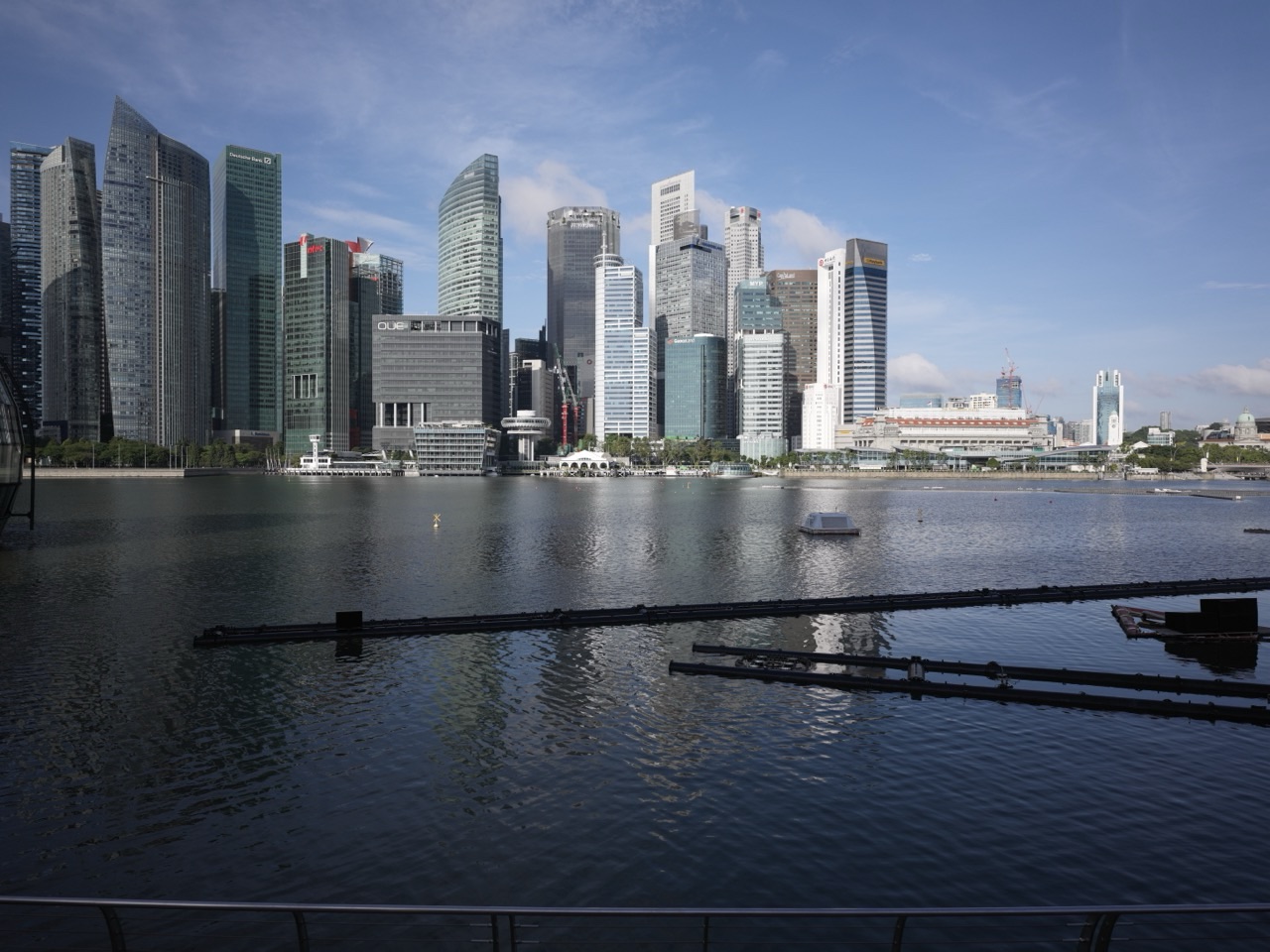
Crazy Rich Singapore | Foreign Exchange, Treasury and the Singapore Dollar begins with a market so large that its daily numbers are difficult to imagine.
Did you know Singapore strengthened its position as the world’s third-largest foreign-exchange centre in the 2025 BIS Triennial Survey? Average daily FX turnover in Singapore reached about US$1.485 trillion in April 2025, representing 11.8% of global turnover. MAS later said average daily traded volumes across 2025 reached about S$1.6 trillion.
That makes “Singapore dollar”, “SGD exchange rate”, “foreign exchange Singapore”, “FX trading Singapore” and “treasury centre Singapore” powerful search themes. The Crazy Rich story is not simply that Singapore has banks. It is that the city has become one of the places where the world continuously converts money into other money.
Crazy Rich Singapore can happen between two currencies before breakfast.
Did You Know? Foreign Exchange Is the Plumbing of Global Business
A company can earn revenue in US dollars, pay staff in Singapore dollars, buy equipment in euros and purchase raw materials priced in Japanese yen.
Somebody has to convert those currencies.
Foreign exchange—or FX—is the market that allows international commerce to function across different monetary systems.
Without FX, global trade would feel like trying to connect electrical appliances with incompatible plugs and no adapter.
US$1.485 Trillion a Day: What the Number Actually Means
The Bank for International Settlements’ 2025 Triennial Central Bank Survey found Singapore’s average daily FX turnover reached US$1.485 trillion in April 2025.
Singapore’s share of global FX trading rose from 9.5% in 2022 to 11.8% in 2025.
Only the United Kingdom and United States were larger.
The word turnover is important.
This is not profit, national income or money physically stored in Singapore.
It is the gross value of FX transactions handled by reporting dealers located here during the survey period.
Good financial literacy begins by asking what the number measures.
Why Singapore Became an FX Hub
Foreign-exchange trading follows flows of trade, investment, banking and corporate activity.
Singapore has all four.
- global banks;
- regional corporate headquarters;
- commodity traders;
- asset managers;
- family offices;
- shipping and aviation companies;
- large institutional investors; and
- deep links to Asian economies.
When many organisations need to exchange currencies, banks build larger dealing desks.
When banks build larger dealing desks, liquidity improves.
When liquidity improves, more market participants choose to trade there.
That is a financial network effect.
The Singapore Dollar Is Small but Strategically Important
The Singapore dollar is not one of the world’s dominant reserve currencies.
Singapore’s importance as an FX centre comes from trading many currencies, not only SGD.
The BIS survey showed that growth in Singapore was broad-based across major currencies, with particularly strong increases in US dollar, Japanese yen and euro activity between 2022 and 2025.
That distinction matters.
Singapore is valuable as a marketplace even when the product being traded is somebody else’s currency.
Why Treasury Centres Sit Next to FX Desks
Large multinational companies need to manage cash across many countries.
A regional treasury centre may handle:
- foreign-exchange hedging;
- short-term funding;
- liquidity management;
- interest-rate risk;
- intercompany loans;
- cash pooling; and
- bank relationships.
Singapore’s Finance and Treasury Centre incentive exists to encourage companies to anchor these strategic treasury functions here.
That connects this article directly to Crazy Rich Singapore | Regional Headquarters and the Command-Centre Economy.
The regional headquarters decides what to do.
The treasury centre decides how to fund it.
Hedging: The Art of Making Currency Moves Survivable
Imagine a Singapore company signing a contract today to receive US$10 million six months from now.
If the US dollar weakens sharply against the Singapore dollar, the company may receive fewer Singapore dollars than expected.
A hedge can reduce that uncertainty.
Common FX hedging tools include:
- forwards;
- swaps;
- options; and
- natural hedges created by matching revenues and costs in the same currency.
Hedging does not make risk disappear.
It reshapes the risk into something more manageable.
Why FX Swaps Matter So Much
FX swaps are among the largest instruments in the global FX market.
They combine an exchange of currencies today with a reverse exchange at a future date.
Banks, asset managers and corporations use them to manage short-term funding and currency exposure.
This is a good example of how the financial system can look abstract while solving very practical balance-sheet problems.
Why Singapore’s Commodity Traders Need FX
Commodity contracts are often priced in US dollars even when the producer, buyer and trader all operate in different currencies.
That creates constant FX exposure.
Singapore’s commodity-trading ecosystem therefore depends heavily on the FX market.
Read this beside Crazy Rich Singapore | Commodity Trading, Energy and Global Risk.
The physical cargo may move by ship.
The financial value moves through currencies.
Why Family Offices and Asset Managers Need FX
A global investment portfolio may contain US equities, European bonds, Japanese property funds and Asian private-market assets.
Even if the investments perform well in local currency, exchange-rate changes can alter the investor’s final return in Singapore dollars.
That is why Family Offices and Wealth Management sits naturally beside the FX story.
Global investing automatically creates currency questions.
Why Central Banks Care About FX Markets
Foreign-exchange markets influence inflation, trade competitiveness and financial conditions.
Singapore’s monetary policy framework is unusual because MAS manages the Singapore dollar nominal effective exchange rate rather than targeting a domestic policy interest rate in the same way many other central banks do.
That means the exchange rate is not merely a market price in Singapore.
It is central to monetary policy.
The Singapore Dollar and Imported Inflation
Singapore imports large amounts of food, energy, machinery and consumer goods.
When the Singapore dollar strengthens against trading-partner currencies, imported goods can become cheaper in SGD terms, all else equal.
When it weakens, imported inflation can become stronger.
This is one reason the exchange rate matters so much in a small open economy.
Why FX Markets Need Technology
Modern FX trading is largely electronic.
Banks need low-latency systems, resilient data centres, market data, cybersecurity and algorithms that can process enormous transaction volumes.
That connects the FX hub to Crazy Rich Singapore | Data Centres, Cloud and AI Infrastructure and Cybersecurity, Digital Trust and the Security Economy.
A currency market is now partly a computing market.
Why Singapore’s Time Zone Helps
Singapore sits between major Asian and European trading hours.
Its location allows market participants to manage Asian flows during the regional day and connect into Europe as trading continues westward.
That does not create a financial centre by itself.
But once banks, clients and technology are already concentrated here, the time zone becomes another advantage.
What Students Can Learn from Foreign Exchange
Mathematics
Exchange rates, percentages, spreads, compounding and hedging ratios.
Economics
Trade, inflation, monetary policy and capital flows.
English
Financial contracts depend on precise definitions of currencies, dates and settlement obligations.
Computing
Electronic trading, market data and low-latency systems power modern FX markets.
Geography
Time zones and regional business networks still matter even in digital finance.
Ten Vocabulary Words for the FX Economy
1. Foreign exchange
The conversion and trading of one currency for another.
2. Spot rate
The exchange rate for a transaction settled in the near term.
3. Forward
A contract fixing an exchange rate today for a currency transaction at a future date.
4. FX swap
A transaction combining one currency exchange with a reverse exchange at a later date.
5. Hedge
A position designed to reduce exposure to an unwanted financial risk.
6. Spread
The difference between quoted buying and selling prices.
7. Liquidity
The ease with which a currency can be traded in size without large price disruption.
8. Treasury centre
A corporate function managing cash, funding and financial risk across an organisation.
9. Effective exchange rate
A measure of a currency against a basket of trading-partner currencies rather than one currency alone.
10. Settlement
The final exchange of currencies and payments after a trade.
Frequently Asked Questions
How large is Singapore’s FX market?
The BIS 2025 Triennial Survey reported average daily FX turnover of US$1.485 trillion in Singapore in April 2025, giving Singapore an 11.8% share of global turnover.
What is Singapore’s global FX ranking?
Singapore ranked third globally behind the United Kingdom and United States in the 2025 BIS survey.
Does Singapore’s FX ranking mean the Singapore dollar is the third-most traded currency?
No. It means FX trading desks located in Singapore handle the third-largest share of global FX turnover. Many of those trades involve US dollars, euros, yen and other currencies.
Why do companies hedge currencies?
To reduce uncertainty in cash flows, costs and profits caused by exchange-rate movements.
Why is the Singapore dollar important to monetary policy?
MAS manages the Singapore dollar against a trade-weighted basket as the core of Singapore’s exchange-rate-centred monetary-policy framework.
Helpful Reading Across the Singapore Graph
- Crazy Rich Singapore | Regional Headquarters and the Command-Centre Economy
- Crazy Rich Singapore | Commodity Trading, Energy and Global Risk
- Crazy Rich Singapore | Family Offices and Wealth Management
- Crazy Rich Singapore | Data Centres, Cloud and AI Infrastructure
References and Current Sources
- Bank for International Settlements, OTC foreign exchange turnover in April 2025.
- Bank for International Settlements, 2025 Triennial Central Bank Survey.
- Monetary Authority of Singapore, Singapore Strengthens Position as Third Largest Global FX Centre, 1 October 2025.
- data.gov.sg, Foreign Exchange Market Turnover, Monthly, updated August 2026.
Crazy Rich Singapore Trades Money Itself
Foreign exchange is the invisible background of international business.
When it works, nobody notices.
When it fails, companies suddenly discover that currencies are not accounting labels—they are prices.
Did you know? One of Singapore’s richest markets sells no physical product at all. It sells the ability to move safely between monetary worlds.