
Explore this series: Crazy Rich Singapore article directory · Crazy Rich World — all countries and learning routes.
Crazy Rich Singapore | Family Offices and Wealth Management is about a kind of wealth that is surprisingly quiet. No supercar is required. No penthouse is required. Sometimes the richest-looking thing in the room is simply a meeting table, a legal document, a risk model and a very serious cup of coffee.
Did you know that Singapore’s asset-management industry reached S$6.7 trillion in assets under management in 2025, according to the Monetary Authority of Singapore? By September 2026, MAS described the industry as managing close to S$7 trillion through more than 1,300 asset managers.
That makes “wealth management Singapore”, “family office Singapore”, “private banking Singapore” and “Singapore financial centre” more than glossy search terms. They describe a working economic machine: capital arrives, expertise clusters around it, decisions are made here, professional services grow around those decisions, and some of that activity connects back into companies, jobs, investment and the wider Asian economy.
This is the first trick of Crazy Rich Singapore: the visible luxury is only the surface. The deeper story is infrastructure for trust.
Did You Know? Singapore Can Be Rich Without Looking Rich
Imagine two kinds of wealth. The first is easy to photograph: a watch, a yacht, a hotel suite, a rare car. The second is harder to photograph: custody systems, fund structures, investment committees, legal certainty, tax rules, accountants, analysts, cybersecurity, compliance teams, portfolio managers and networks of people who know how to move money without losing track of responsibility.
Singapore became valuable in finance because it learned to build the second kind.
This does not mean every wealthy person in Asia is moving to Singapore, nor does it mean every family office is the same. A family office can range from a compact team managing one family’s assets to a sophisticated organisation coordinating investments, philanthropy, succession, governance, reporting and cross-border interests.
The important point is structural. Wealth-management centres compete on more than low taxes or fashionable addresses. They compete on reliability, regulation, talent, connectivity, legal systems, professional services, political and economic stability, and access to opportunities.
In other words, the product is not merely “Singapore”. The product is confidence that complex things can be organised here.
The Numbers Behind the Quiet Offices
MAS reported in August 2026 that Singapore’s asset-management industry had grown by an average of 7.5% a year over the previous five years to almost S$7 trillion. MAS also said the industry accounted for around 15% of financial-sector output and 13% of financial-sector employment.
A separate parliamentary reply in August 2026 stated that, as of the end of December 2025, more than 2,000 single family offices received tax incentives under the relevant fund schemes. The same reply said the broader asset-management industry grew 10.1% during 2025 to S$6.7 trillion in total assets under management.
Those figures matter because they reveal the difference between “rich people live here” and “a financial ecosystem operates here”. One describes residents. The other describes capabilities.
What capabilities sit around wealth management?
- investment research and portfolio construction;
- private banking and custody;
- fund administration;
- legal and tax advisory;
- accounting and audit;
- risk management and compliance;
- insurance and estate planning;
- technology, data and cybersecurity;
- private-market investing and deal execution;
- philanthropy and impact-investment planning; and
- governance across generations.
Every one of those capabilities can become a profession, a company, a training pathway, a technology problem or a specialised service industry.
Why Family Offices Choose Hubs Instead of Just Houses
Here is a useful thought experiment. Suppose a family has assets across several countries, operating businesses in two regions, children studying in different cities, investments in public and private markets, charitable projects, multiple currencies and a desire to pass responsibility to the next generation.
That family does not merely need a nice house. It needs coordination.
A strong family-office hub reduces friction between many moving parts. Good lawyers make structures understandable. Accountants make records comparable. Banks move and safeguard assets. Fund managers allocate capital. Regulators define boundaries. Digital systems keep information visible. Aviation connects decision-makers. Universities and professional networks supply talent.
This is why finance is connected to almost everything else in the eduKate Singapore graph. It touches global gateways, digital connectivity, the Singapore civilisation system and the long history of Singapore as a place that reduces the cost of connecting different worlds.
The Real Luxury Product Is Trust
Did you know that finance is full of invisible products? A bank account is partly a promise. A bond is partly a promise. A contract is a promise made precise. An insurance policy is a promise under specified conditions. A fund is a governed arrangement for handling other people’s money.
Trust does not mean blind faith. In a modern financial centre, trust is engineered through rules, disclosure, supervision, documentation, professional standards, auditing, risk controls and consequences for misconduct.
That is why serious wealth management is almost the opposite of the movie version of “crazy rich”. The movie version is spectacle. The professional version is documentation.
A city that wants to manage large pools of global capital must make boring things work exceptionally well.
Boring things that become very valuable
- contracts that are enforceable;
- records that can be reconciled;
- payments that arrive when expected;
- regulation that is understandable;
- courts and dispute-resolution systems that function;
- professionals who can work across jurisdictions;
- data that can be protected;
- institutions that can explain their responsibilities; and
- networks that allow capital to find credible opportunities.
That is a recurring Singapore pattern. The spectacular skyline gets photographed. The operating system underneath it gets paid.
From Trading Port to Capital-Allocation Hub
Singapore’s financial story makes more sense when placed inside its historical story. The island became important because of connection: shipping routes, entrepôt trade, regional commerce, migration, information and eventually industrial and financial networks.
The modern family office is very different from a nineteenth-century trading house, but there is a family resemblance. Both need information. Both need trusted counterparties. Both need law. Both need fast communications. Both need ways to compare risk across borders.
The technologies changed from paper ledgers and telegraphs to cloud systems and real-time data. The underlying civilisation problem did not disappear: how do strangers coordinate valuable activity across distance?
That question is explored across eduKateSG’s 700-year connected history of Singapore and the SingaporeOS idea: a city becomes powerful when many systems interlock reliably.
Why This Creates More Than Finance Jobs
Money-management activity has spillovers. A fund manager may need legal advice. The lawyer needs researchers and associates. A private investment may need due diligence. Due diligence may require engineers, accountants, data specialists and industry experts. A family’s philanthropic project may work with universities, charities and social enterprises. A new company may need recruitment, office space, digital infrastructure and local suppliers.
This is the multiplier idea. One high-value activity can create demand for many adjacent capabilities.
It also explains why cities fight so hard to attract headquarters and decision-making functions. A booking centre can record activity. A decision centre creates relationships. When senior people, analysts, lawyers, founders, technologists and investors repeatedly meet in the same place, knowledge begins to circulate locally.
That circulation can be more valuable than the original transaction.
What “Rich” Should Mean in a Serious Singapore Article
A fun title should not make us intellectually lazy. A country is not “rich” merely because some people can buy expensive things.
For this series, richer questions are more useful:
- How much productive capability exists?
- How much capital can be mobilised for useful investment?
- How many high-skill professions can the system sustain?
- How reliable are the institutions that make complex transactions possible?
- How much knowledge is being accumulated locally?
- How easily can Singapore connect Asian opportunities with global capital?
- How much of the ecosystem is resilient when markets turn difficult?
- How broad is access to education and pathways into the high-value work?
That final question matters to eduKate. A financial centre is strongest when the capability to participate in it is not treated as mysterious inheritance. Mathematics, English, economics, computing, law, science and clear reasoning are all entry points.
A Student’s Guide to Reading the Financial District
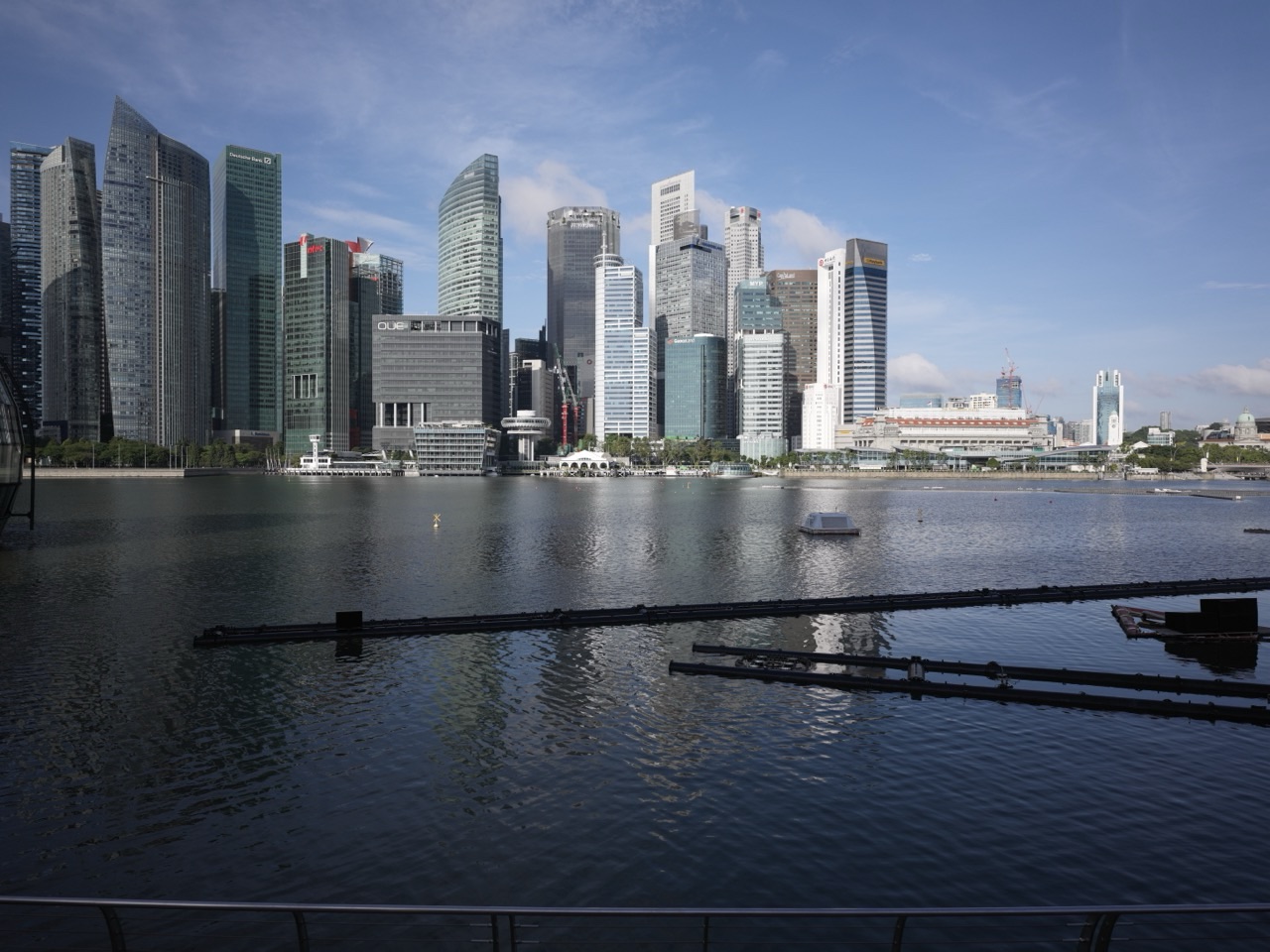
Walk through Raffles Place or Marina Bay with a student and the glass towers can look like giant boxes containing adults with laptops. That is accurate, but incomplete.
Try a different game: ask what problem each building is solving.
- A bank solves custody, lending, payments and intermediation problems.
- An insurer prices and pools risk.
- A law firm converts agreements into enforceable language.
- An accounting firm converts activity into comparable records.
- An asset manager decides how capital should be allocated.
- A regulator defines boundaries and supervises the system.
- A technology company moves, stores or protects information.
- An exchange creates rules and infrastructure for markets.
Suddenly the skyline becomes a diagram of specialised problem-solving.
That is a useful education habit: never stop at the noun. Ask for the function.
Ten Useful Vocabulary Words for Understanding Wealth Management
1. Assets under management (AUM)
The total market value of assets managed on behalf of clients. It is a scale measure, not the same thing as the manager’s own wealth.
2. Family office
An organisation established to manage the financial and often administrative affairs of a wealthy family.
3. Portfolio
A collection of investments held by a person, fund or institution.
4. Diversification
Spreading exposure across different investments so that one failure does not determine the whole result.
5. Liquidity
How easily an asset can be converted into cash without a large loss in value.
6. Custody
The safeguarding and administration of financial assets.
7. Fiduciary
A person or institution required to act in another party’s interests under defined duties.
8. Due diligence
A structured investigation performed before making an investment or entering an important transaction.
9. Governance
The rules and processes that determine who decides, who is accountable and how conflicts are handled.
10. Capital allocation
The process of deciding where money should be invested or deployed.
Vocabulary is not decoration. Once students know the words, they can see the system more clearly. That is the words-to-technology interface that runs through eduKate’s vocabulary work.
Frequently Asked Questions
Is Singapore rich because of family offices?
No single sector explains Singapore’s prosperity. Family offices sit inside a much larger system that includes manufacturing, trade, finance, logistics, technology, tourism, professional services, public infrastructure and human capital. Their significance is that they illustrate Singapore’s role as a trusted regional and global coordination hub.
Does “more than 2,000 family offices” mean 2,000 government-approved families?
The August 2026 MAS parliamentary reply referred specifically to more than 2,000 single family offices receiving tax incentives under relevant fund schemes as of end-December 2025. It should not be interpreted as a count of every family office activity in Singapore or as a general approval label.
Why does assets under management matter?
AUM gives a sense of the scale of assets being professionally managed from a financial centre. It does not show everything: it does not automatically measure investment performance, tax revenue, local ownership or social benefit. It is one useful system indicator among many.
Why would a wealthy family need Singapore if investments are global?
Because global investments still need people, rules, contracts, banking, reporting, governance and decision-making. Hubs reduce coordination friction across those functions.
Is wealth management only for very rich people?
The specialised family-office model is for substantial private wealth, but the underlying ideas—saving, diversification, risk, compounding, governance and long-term planning—are useful at ordinary household scale too.
What subjects help a student understand this industry?
Mathematics for quantitative reasoning, English for precise communication, Economics for incentives and markets, Computing for data systems, and History for understanding how institutions and trade networks develop. Law, accounting and statistics later become especially relevant.
What makes Singapore competitive as a financial centre?
The answer is a bundle rather than one magic ingredient: connectivity, regulation, professional services, legal infrastructure, talent, regional access, technology and accumulated institutional trust.
Helpful Reading Across the Singapore Graph
- How Singapore Works | The Island Nation’s Successful Civilization System
- How Singapore Works | SingaporeOS
- History of Singapore | 700 Years of Fully Connected History
- How Singapore Connects | Airports, Seaports and Global Gateways
- How Singapore Connects | Submarine Cables, Internet Exchanges and Global Data Routes
References and Current Sources
- Monetary Authority of Singapore, Written reply on the number of Single Family Offices, 5 August 2026.
- Monetary Authority of Singapore, Measures to strengthen Singapore’s competitiveness as a leading asset-management hub, 19 August 2026.
- Monetary Authority of Singapore, Connecting Capital and Opportunity: Building a Trusted Growth Capital Ecosystem, 29 September 2026.
Crazy Rich Singapore Is Really About Capability
The joke in the title is that “crazy rich” sounds like champagne, jewellery and impossible apartments.
But Singapore’s more interesting wealth is procedural.
It is the ability to take a complicated cross-border problem and surround it with people, rules, institutions and technology until the problem becomes manageable.
Family offices reveal that machine especially clearly. Capital comes to Singapore because money likes opportunity, but serious capital also likes order.
That is the deeper Singapore story: not simply owning valuable things, but becoming unusually good at organising value.
Did you know? Sometimes the richest room in Singapore is the one where nothing flashy happens at all.