
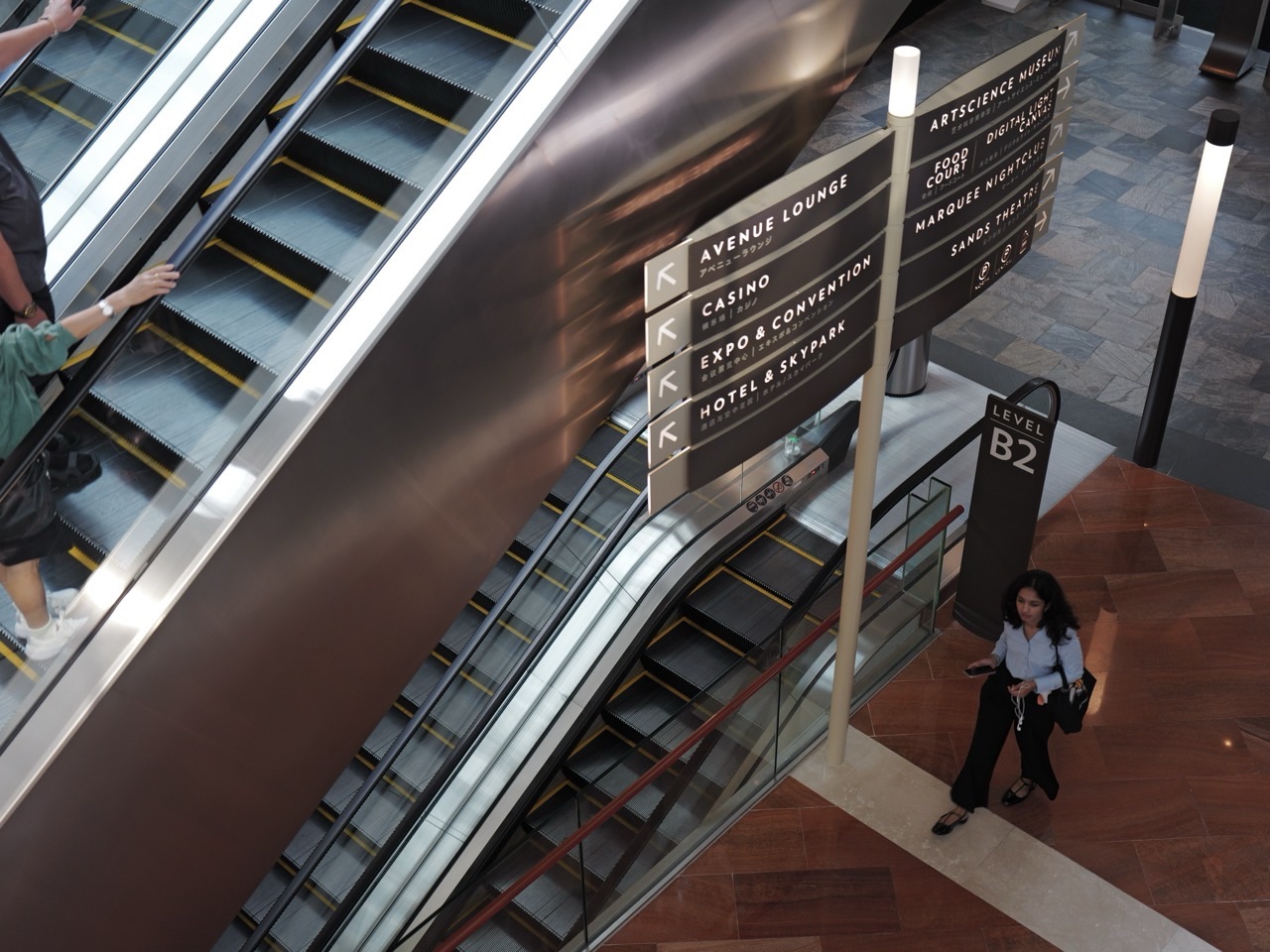
Crazy Rich Singapore | Marina Bay Sands and the MICE Economy begins with one of the most photographed buildings in Asia and asks a less glamorous question: what is the meeting room worth?
Did you know Singapore’s MICE tourism receipts reached S$2.3 billion in 2025, up 35% from S$1.7 billion in 2024? Singapore Tourism Board said MICE visitors typically spend significantly more than leisure visitors, while Singapore retained its position as the top meeting city in Asia-Pacific in the ICCA rankings for the 23rd consecutive year.
That makes “Marina Bay Sands”, “Singapore MICE”, “Singapore convention centre”, “business events Singapore” and “Singapore conferences” unusually rich search topics. The skyline gets the attention, but the economic engine is the density of people, ideas, companies and decisions assembled in one place.
A city becomes richer when it can host the room where the next deal, partnership, standard, medical idea or technology launch happens.
Did You Know? MICE Is Not About Mice
MICE stands for Meetings, Incentives, Conventions and Exhibitions.
The acronym sounds small. The industry is not.
A large international conference can create demand for flights, hotel rooms, restaurants, taxis, event production, translation, security, exhibition construction, software, media, entertainment and professional services.
More importantly, business events can create knowledge exchange and commercial relationships that continue after visitors fly home.
That is why Singapore Tourism Board describes MICE as an industry built around the transfer of knowledge, ideas and connections.
Why MICE Visitors Can Be More Valuable Than Ordinary Tourists
Leisure travellers spend money too, of course.
But a business-events visitor may combine multiple types of spending in a short trip:
- premium flights;
- business-class hotels;
- conference registration;
- corporate dining;
- local transport;
- team incentives;
- shopping and entertainment;
- hospitality suites; and
- extended leisure stays before or after the event.
That is one reason STB tracks MICE tourism receipts separately.
In 2025, Singapore recorded S$32.8 billion in total tourism receipts, the highest ever reported, with MICE contributing S$2.3 billion.
The important distinction is that MICE is not merely visitor volume. It is high-value visitor activity.
Marina Bay Sands Is a Building, but Also a Business-Events Machine
Marina Bay Sands combines hotel rooms, convention facilities, restaurants, retail, entertainment and attractions within one integrated destination.
For an event planner, that reduces coordination friction.
Delegates can sleep, meet, eat, shop and attend evening entertainment within the same district. International guests can move between Changi Airport, Marina Bay and the rest of Singapore efficiently.
The result is a compact high-value ecosystem.
That is why Marina Bay Sands fits naturally inside the larger How Singapore Works | Tourism graph and the Hotels, Visitor Services and Tourism Journeys system.
The US$8 Billion Expansion: What Is Singapore Really Buying?
Marina Bay Sands began work in 2025 on a new ultra-luxury development estimated at US$8 billion.
The planned project includes a 570-suite hotel tower, approximately 200,000 square feet of premium meeting space and a purpose-built 15,000-seat arena, alongside new retail, dining, wellness and entertainment offerings.
A casual reading sees expensive construction.
A systems reading sees expanded capacity for three high-value markets:
- luxury tourism;
- business events; and
- live entertainment.
Those markets overlap. A concert can fill hotel rooms. A conference can generate premium dining. A corporate event can extend into entertainment. A leisure traveller can discover retail and attractions.
The integrated resort makes one visitor easier to monetise across several experiences.
The MICE Economy Is Really a Density Economy
Why fly thousands of people into one city when video calls exist?
Because some kinds of work improve when people share a place.
Trade shows let buyers inspect products. Scientific congresses let researchers compare methods. Industry conferences allow informal conversations between sessions. Investors meet founders. Regulators meet industry. Companies recruit talent. Journalists encounter new stories.
The official agenda matters, but the corridor conversation often matters too.
MICE creates temporary density.
Temporary density creates opportunities for information to move faster between people who might otherwise remain separated by institutions, companies and borders.
Why Singapore Has an Advantage in Business Events
Singapore’s MICE proposition is built from multiple systems working together:
- strong air connectivity;
- reliable public transport;
- large convention venues;
- high-quality hotels;
- English as a widely used business language;
- regional headquarters and professional-services clusters;
- stable digital connectivity;
- restaurants and attractions within compact travel times; and
- a reputation for operational reliability.
The city does not need to be the cheapest venue.
It needs to reduce the risk that a complex international event becomes difficult to execute.
That is another version of the Singapore trust premium.
Business Events Can Strengthen Entire Industry Clusters
Singapore’s events calendar covers healthcare, technology, maritime, tourism, cybersecurity, food, manufacturing and many other sectors.
This matters because events can reinforce the industries Singapore already wants to develop.
A maritime exhibition brings shipowners, suppliers and technology firms together. A medical congress brings clinicians, researchers and healthcare companies together. A technology conference brings founders, investors and enterprise buyers together.
The event therefore becomes temporary infrastructure for an industry cluster.
Singapore can then convert temporary density into longer-term business relationships.
The Downtown MICE Hub: Planning for a Bigger Future
In 2026, Singapore Tourism Board identified the Straits View area near Marina Bay as the potential location for a future Downtown MICE Hub.
The concept is an integrated development combining major business-event facilities with accommodation, dining, retail, entertainment and attractions.
STB has stated an ambition to triple MICE tourism receipts by 2040.
That is not merely a plan to build more halls.
It is a plan to grow the value of the business-events ecosystem.
Why the Meeting Room Can Be More Valuable Than the Casino Floor
Integrated resorts attract attention because gaming revenue is easy to understand.
But a meeting room can create value in more dispersed ways.
A trade show may lead to equipment sales. A medical congress may accelerate adoption of a technique. A technology event may connect a startup with a customer. A board meeting may lead to regional investment. A corporate incentive trip may generate repeat tourism.
Those outcomes are harder to count than a transaction at a gaming table, but they can connect more directly into the rest of the economy.
That is why MICE is strategically interesting even beyond immediate tourism receipts.
How Marina Bay Connects the eduKate Singapore Graph
Tourism
Marina Bay Sands is part of the national visitor system described in How Singapore Works | Tourism.
Aviation
International events depend on the connectivity explored in Crazy Rich Singapore | Changi Airport and the Global Aviation Hub.
Formula 1
The Marina Bay district becomes a global entertainment stage during race season. See Crazy Rich Singapore | Formula 1 and the Night-Race Economy.
Finance
Many conferences and corporate events exist because Singapore already hosts decision-makers from finance, law, technology and regional headquarters.
Urban systems
The district works because transport, hotels, digital connectivity, public space and event logistics can carry unusual surges of visitors.
What Students Can Learn from the MICE Economy
English
Presentations, proposals, moderation, event copy, contracts and cross-cultural communication.
Mathematics
Venue capacity, ticket pricing, occupancy, tourism receipts, budgets and event logistics.
Economics
High-value tourism, multiplier effects, clustering, agglomeration and business networking.
Design
Exhibition booths, stage layouts, signage, lighting, branding and crowd flow.
Computing
Event platforms, registration systems, ticketing, analytics, cybersecurity and hybrid-event technologies.
Geography
Why accessibility and compact urban form matter for international business gatherings.
Ten Vocabulary Words for Singapore MICE
1. MICE
Meetings, Incentives, Conventions and Exhibitions.
2. Delegate
A person attending a conference, convention or formal gathering.
3. Exhibition
An organised event where companies or organisations display products, services or ideas.
4. Convention
A large formal gathering of people with a shared professional, organisational or subject interest.
5. Incentive travel
Travel provided as a reward or motivational programme, often for employees or partners.
6. Venue capacity
The number of people a space can safely and practically accommodate.
7. Tourism receipts
Spending by visitors on goods and services during their stay.
8. Business event
A meeting, conference, exhibition or incentive programme organised for commercial or professional purposes.
9. Integrated resort
A large destination combining multiple functions such as hotels, convention space, retail, entertainment, attractions and gaming.
10. Networking
The process of building professional relationships and exchanging information.
Frequently Asked Questions
How much did Singapore’s MICE sector generate in 2025?
Singapore Tourism Board reported S$2.3 billion in MICE tourism receipts in 2025, up 35% from S$1.7 billion in 2024.
Why do MICE visitors matter economically?
They typically spend more than leisure visitors and also create business relationships, knowledge exchange and demand for professional services.
Is Marina Bay Sands only a casino and hotel?
No. It is also a major convention and exhibition venue, retail destination, entertainment complex and tourism hub.
What is planned for the Marina Bay Sands expansion?
The announced development includes a 570-suite luxury hotel, about 200,000 square feet of premium meeting space, a 15,000-seat arena and additional retail, dining and wellness offerings.
What is the Downtown MICE Hub?
It is a planned integrated business-events district concept near Marina Bay. STB intends to launch an RFP in 2027, with the broader ambition of increasing Singapore’s capacity for major business events.
Why is Singapore good at MICE?
Its advantage comes from a bundle: international aviation links, hotels, transport, event venues, business clusters, digital infrastructure and operational reliability.
Helpful Reading Across the Singapore Graph
- How Singapore Works | Tourism
- Crazy Rich Singapore | Formula 1 and the Night-Race Economy
- Crazy Rich Singapore | Changi Airport and the Global Aviation Hub
- Fun facts about Singapore | Downtown Core
- How Singapore Connects | Hotels, Visitor Services and Tourism Journeys
References and Current Sources
- Singapore Tourism Board, Singapore Raises the Bar for Global Business Events, 20 May 2026.
- Singapore Tourism Board, MICE Industry, updated 17 August 2026.
- Singapore Tourism Board, Downtown MICE Hub, updated 22 July 2026.
- Marina Bay Sands, Las Vegas Sands breaks ground on new ultra-luxury development in Singapore, 15 July 2025.
Crazy Rich Singapore Is the Room Where Everybody Shows Up
Marina Bay Sands is spectacular because it looks spectacular.
The MICE economy is powerful for a different reason.
It assembles people who normally live in different companies, countries and professional worlds, then gives them a place to exchange information at unusually high speed.
That is not just tourism.
It is temporary economic density.
Did you know? Sometimes the most valuable object in Marina Bay is not the infinity pool. It is the conference badge.