
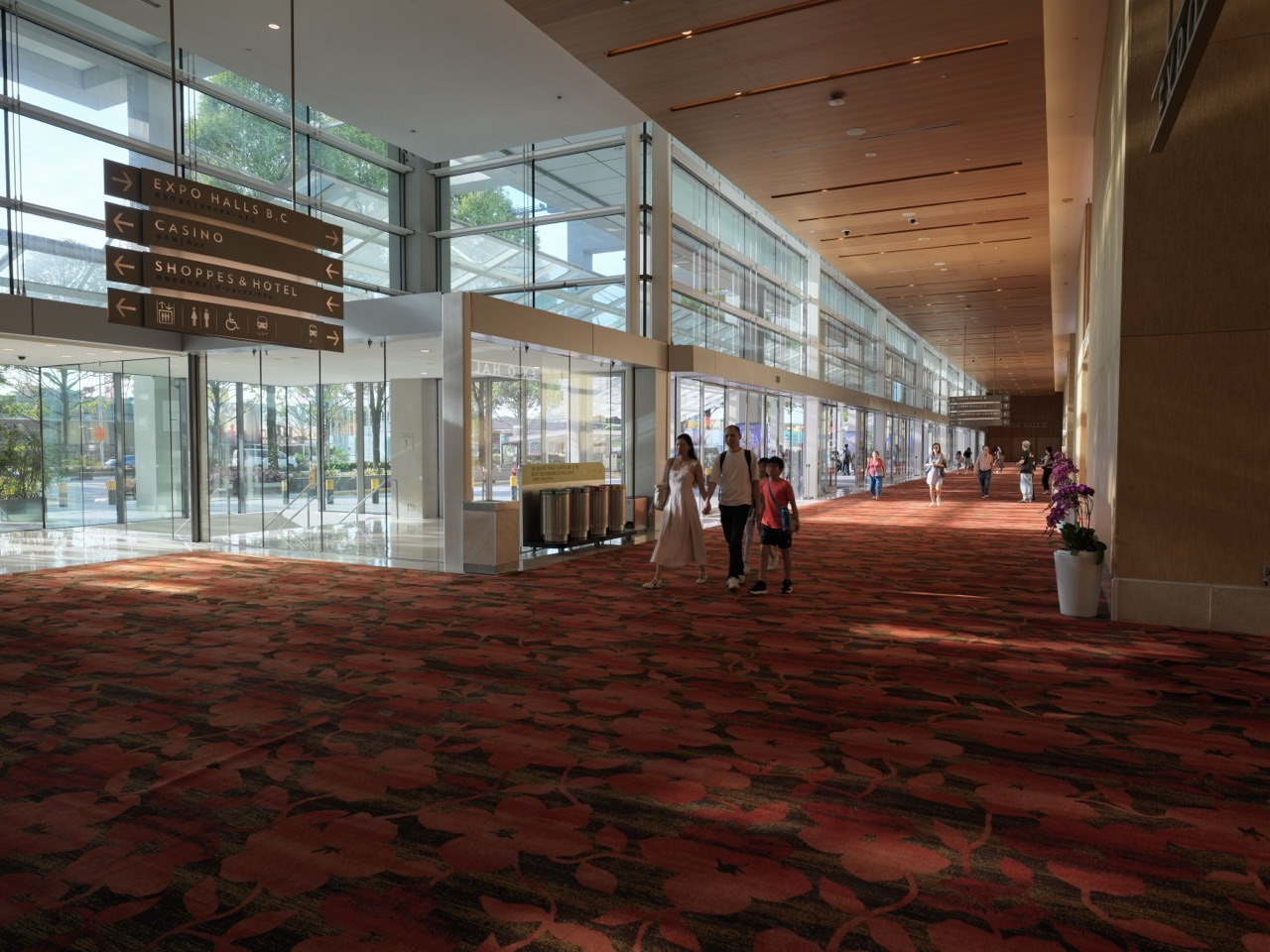
Making Singapore rich can happen inside a conference hall.
Thousands of people arrive for three days, exchange ideas, make deals, fill hotels, eat in restaurants, use transport, buy exhibition space and sometimes decide where to place their next investment.
Did you know that MICE Singapore, Singapore conventions, Singapore exhibitions, business events Singapore and Singapore conference venue are not just tourism keywords? They describe a knowledge-and-dealmaking economy.
Did You Know? MICE Exports a Meeting Place
MICE means Meetings, Incentive Travel, Conventions and Exhibitions.
The product is unusual.
Singapore does not ship the convention centre to the customer. The customer travels to Singapore.
That makes MICE part tourism, part professional services, part knowledge exchange and part business development.
A successful event creates value before, during and after the delegates arrive.
Why Singapore Competes for Business Events
Singapore Tourism Board describes Singapore as a major Asian MICE hub because of its connectivity, business environment, infrastructure, accommodation and event venues.
The Singapore Exhibition & Convention Bureau leads the sector’s development and supports qualifying events through programmes such as Business Events in Singapore.
Official reference: Singapore Tourism Board — MICE.
MICE Is High-Value Tourism
A conference delegate may spend on airfare, hotels, meals, taxis, entertainment and shopping.
But business events can also generate value that ordinary leisure tourism may not.
A delegate may sign a contract. A company may choose a regional partner. A researcher may find a collaborator. An investor may discover a startup.
The spending is immediate. The relationships can last much longer.
The 2026 Event Calendar Shows the Range
STB’s 2026 approved international-fair listings include events such as Singapore Airshow and Space Summit, Medical Fair Asia, Asia Pacific Maritime, ITB Asia, Tech Week Singapore, Singapore International Water Week and MRO Asia Pacific.
The topics are not random.
They align with industries Singapore already wants to deepen: aviation, healthcare, maritime, technology, water and tourism.
Business events can therefore reinforce industrial strategy.
A Conference Is a Temporary Knowledge Cluster
Imagine thousands of specialists arriving in one place.
They attend talks. They compare technologies. They meet suppliers. They recruit. They negotiate. They see competitors.
For a few days, the city becomes unusually dense with specialised knowledge.
That temporary density is economically valuable.
Exhibitions Turn Products Into Conversations
An exhibition lets buyers see technology, ask questions and compare suppliers in person.
That can accelerate sales for complex products where trust and demonstration matter.
A medical device, industrial machine or aircraft system may be difficult to evaluate from a website alone.
Physical events reduce some of that uncertainty.
Singapore Airshow Connects Aviation to MICE
The Singapore Airshow is both an event and an industry platform.
Aircraft manufacturers, airlines, defence companies, suppliers, governments and investors meet around a sector in which Singapore already has deep economic interests.
The aviation wealth layer is Making Singapore Rich | Changi Airport and the Aviation Hub.
The event strengthens the network around the industry.
Marina Bay Sands Shows the Integrated Model
A large integrated resort can combine convention space, hotels, restaurants, retail and entertainment in one location.
That reduces friction for delegates.
The same visitor can attend a conference, sleep upstairs, meet clients over dinner and shop afterwards.
The economic system becomes vertically integrated.
The companion article is Crazy Rich Singapore | Marina Bay Sands and the MICE Economy.
Changi Airport Is MICE Infrastructure
International conferences depend on international access.
Direct air connections reduce travel friction for delegates.
That is why Changi Airport is part of the convention economy even though it is kilometres away from the event halls.
The city works as one connected product.
Hotels Convert Delegates Into Visitor Spending
Large events create concentrated demand for rooms.
Hotels then create demand for food, housekeeping, meetings, transport and local experiences.
A MICE event therefore spreads spending across the visitor economy.
This connects to Making Singapore Rich | Tourism and the Visitor Economy.
Professional Services Capture the Deal Flow
Business events often create demand for lawyers, accountants, translators, consultants, bankers and corporate advisers.
A conference about technology can therefore generate work for industries far beyond technology.
Singapore’s financial and professional-service depth makes the city more useful as a place where deals can actually be completed.
Events Can Strengthen Regional Headquarters
A multinational headquartered in Singapore can bring customers, staff and partners into the same city for an event.
That reinforces Singapore as a coordination node.
The headquarters branch is Making Singapore Rich | Foreign Direct Investment and Regional Headquarters.
Events Are Also Marketing for the Country
A delegate experiences more than the conference.
They experience immigration, airport efficiency, public transport, hotels, safety, food and the city itself.
A well-run event can therefore influence how companies perceive Singapore as a place to invest, work or locate teams.
The event becomes a live demonstration of the country.
Hybrid Events Do Not Eliminate Physical Events
Video conferencing makes information cheaper to distribute.
That reduces the need to travel for simple updates.
But it can make high-value in-person meetings more purposeful.
People still travel when face-to-face trust, networking, demonstrations and dealmaking justify the cost.
The physical event therefore competes less on information and more on connection.
Digital Systems Increase Event Productivity
Registration, ticketing, matchmaking, translation, scheduling, lead capture and follow-up can all be digitised.
A good event platform helps a delegate find the right people faster.
That turns software into networking productivity.
MICE Supports Knowledge Diffusion
A local student may attend a public session.
A local startup may meet a foreign buyer.
A Singapore engineer may see a new technology.
A global expert may speak to local professionals.
Knowledge leaks outward from the event.
That spillover can be more valuable than the immediate ticket revenue.
Education Is Inside the MICE Economy
English becomes presentation and negotiation.
Technology becomes event systems.
Business becomes sales and partnerships.
Design becomes exhibition experience.
Hospitality becomes service.
Subject expertise becomes the reason the conference exists.
Events are classrooms with commercial intent.
What Can Weaken the MICE Wealth Machine?
- weak air connectivity
- high hotel or venue costs
- poor event execution
- insufficient differentiated content
- global recessions
- travel restrictions
- competition from other Asian cities
- weak follow-up after events
- digital alternatives for low-value meetings
- crowding that reduces visitor experience
- event calendars that are large but poorly aligned with economic strengths
- measuring success only by attendance rather than business outcomes
The strongest business events create useful connections, not merely full halls.
A Simple Systems Formula
Connectivity + venues + industry depth + hospitality + knowledge + dealmaking → MICE value.
When events align with sectors Singapore already has, each side can strengthen the other.
Frequently Asked Questions
What does MICE stand for?
Meetings, Incentive Travel, Conventions and Exhibitions.
Why is Singapore a MICE hub?
Singapore combines air connectivity, hotels, venues, public transport, professional services and access to major Asian markets.
How does MICE make Singapore richer?
Delegates spend on travel, hotels, food, transport and retail, while events can also generate contracts, investment, partnerships and knowledge exchange.
What agency develops Singapore’s MICE sector?
The Singapore Exhibition & Convention Bureau, part of Singapore Tourism Board, leads development of the business-events sector.
What major events are held in Singapore?
Examples include Singapore Airshow, Medical Fair Asia, Asia Pacific Maritime, ITB Asia, Tech Week Singapore and Singapore International Water Week.
How is MICE different from leisure tourism?
Business events combine visitor spending with professional networking, trade, knowledge exchange and dealmaking.
Why is Changi Airport important to MICE?
International delegates need convenient access, and direct air connectivity reduces friction for global events.
Do virtual meetings threaten MICE?
They replace some low-value travel, but face-to-face events remain valuable for trust, demonstrations, networking and complex dealmaking.
Helpful Reading and Singapore Graph Connections
- Singapore Tourism Board — MICE
- STB — Business Events in Singapore
- Crazy Rich Singapore | Marina Bay Sands and the MICE Economy
- Making Singapore Rich | Tourism and the Visitor Economy
- Making Singapore Rich | Changi Airport and the Aviation Hub
- Making Singapore Rich | Foreign Direct Investment and Regional Headquarters
Making Singapore Rich: Sometimes the Product Is the Room Full of People
Did you know that a conference hall can become an economic machine without manufacturing a single physical product?
The value comes from who is in the room.
A buyer meets a seller. A founder meets an investor. A scientist meets a manufacturer. A company meets a regional partner.
Singapore earns when it becomes the place where useful people decide to meet.
The event lasts three days. The relationship may last twenty years.