
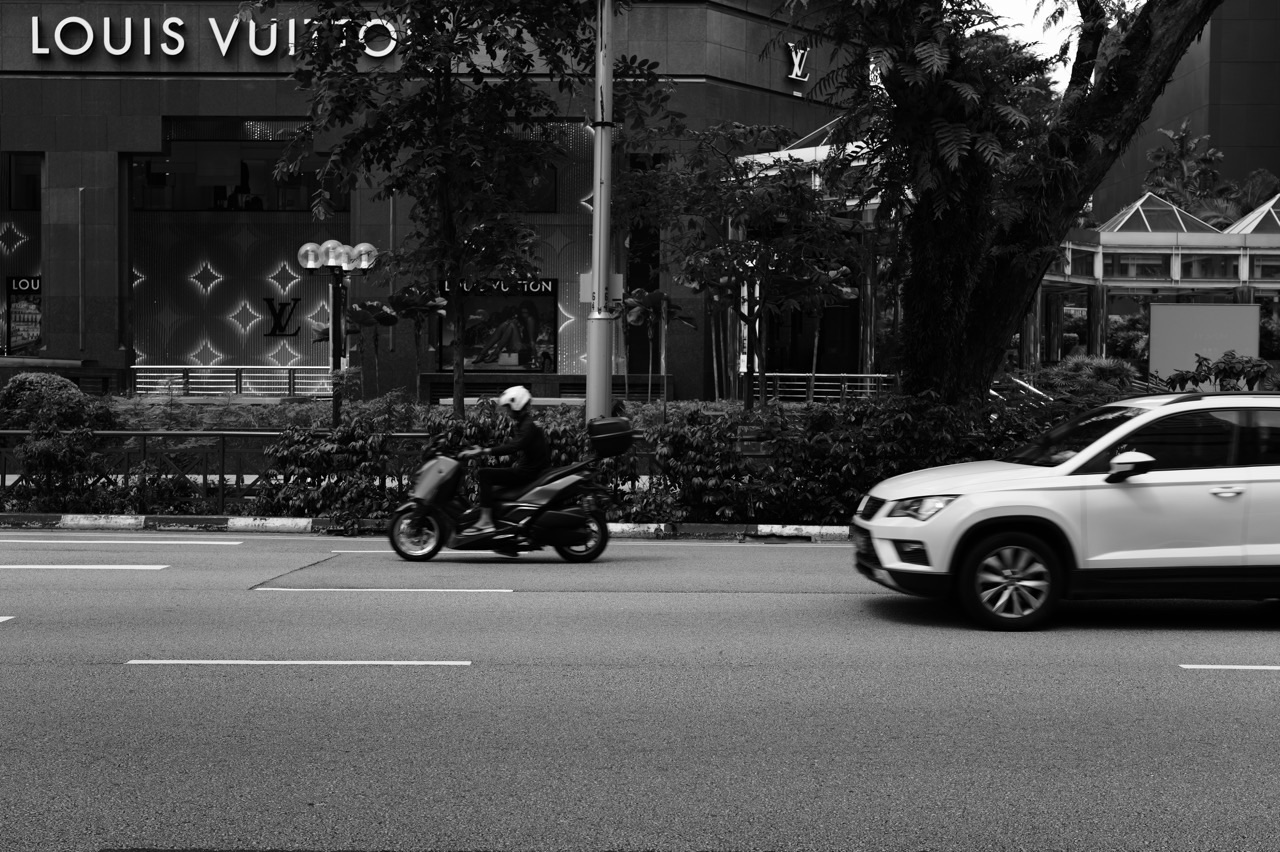
Crazy Rich Singapore | Orchard Road and Luxury Retail begins with a street that Singapore has spent decades teaching how to sell more than products.
Did you know Singapore Tourism Board still describes Orchard Road as Singapore’s premier lifestyle and shopping belt, and in 2026 expanded support for new façades, digital displays, interactive surfaces, architectural lighting, events and experiential concepts designed to increase visitorship and spending?
That makes “Orchard Road Singapore”, “shopping in Singapore”, “luxury shopping Singapore”, “Orchard Road malls” and “things to do in Orchard” useful SEO doors into a bigger question: why does one shopping district contain so much economic value?
The answer is not simply expensive handbags. Orchard Road is a retail laboratory, tourism asset, property market, transport corridor, hospitality zone, branding platform and public space stacked into one long urban experience.
Did You Know? Luxury Retail Sells Certainty as Much as Scarcity
A luxury store is not valuable only because the object inside is expensive.
The wider product includes authenticity, service, environment, after-sales support, prestige, location, brand history and the confidence that the purchase is genuine and properly handled.
That is why major brands cluster in high-trust districts rather than scattering randomly across a city.
A customer buying a costly watch, bag, piece of jewellery or designer garment is also buying the reliability of the surrounding system: secure payment, trained staff, inventory control, climate-controlled premises, transport access, tax administration and a reputable retail environment.
Luxury therefore depends on very unglamorous infrastructure.
That is a recurring Crazy Rich Singapore theme.
Why Orchard Road Works as a Cluster
Imagine placing one luxury boutique by itself on an empty road. It might attract loyal customers, but it has to generate nearly all of its own traffic.
Now place dozens of major brands, department stores, hotels, restaurants, beauty services, cinemas, event spaces and transport nodes close together.
The district starts producing its own gravity.
- one store brings customers past another store;
- hotels deliver travellers directly into the shopping catchment;
- restaurants extend the length of a visit;
- events create reasons to return;
- MRT stations reduce transport friction;
- street design and lighting make walking more attractive;
- brand flagships create media attention; and
- the concentration itself tells shoppers that the area is important.
This is agglomeration in an everyday form: businesses gain value from being near other businesses and shared infrastructure.
The Richest Thing on Orchard Road May Be Footfall
Retail economics begins with people.
A beautiful store without visitors is a showroom. A retail district becomes commercially powerful when it can repeatedly produce footfall: residents, tourists, office workers, hotel guests, event audiences and people transferring through the transport network.
This is why Singapore Tourism Board’s Orchard Road Rejuvenation Initiative focuses not only on shops, but on precinct vibrancy, visitor experience, visual appeal and new focal points.
The logic is simple. More reasons to visit can create more time in the precinct. More time can create more opportunities to spend. More activity can attract more tenants and investment. Better tenants and experiences can then generate new reasons to visit.
That is another flywheel.
From Plantation Road to Global Lifestyle Address
Orchard Road’s name remembers a very different landscape. The area once contained plantations and orchards before urban development transformed it into a major commercial corridor.
That history matters because it demonstrates how land changes function when a city changes.
The same piece of ground can move through agricultural, residential, institutional, commercial and tourism uses across generations. Its value is not fixed by soil. It is created by networks, accessibility, rules, buildings, reputation and demand.
eduKateSG’s History of Singapore | Orchard follows that transformation in greater depth, while Why Singaporeans Love Orchard looks at the district from the lived city side.
Shopping Malls Are Tiny Indoor Cities
Singapore is famous for malls because malls solve a tropical-city problem elegantly: how do you keep people moving, meeting, eating and shopping comfortably in heat and rain?
An Orchard Road mall combines:
- air-conditioning;
- vertical transport through lifts and escalators;
- food and beverage;
- toilets and public amenities;
- parking and loading access;
- MRT and pedestrian connections;
- security and surveillance;
- wayfinding;
- retail leasing;
- events and promotions;
- digital networks; and
- hundreds of separate business operations under one roof.
That is why eduKateSG treats the shopping mall as a system, not merely a collection of shops. See How Singapore Works | Shopping Malls.
A successful mall is an operating system for human movement and commercial attention.
Why Luxury Brands Want Flagship Locations
A flagship store does more than sell inventory.
It performs brand theatre.
The architecture may be larger. The product range may be broader. Limited releases or special services may appear there. The store becomes a destination and an advertisement at the same time.
This is especially powerful on Orchard Road because the audience is mixed. A flagship can be seen by local high-income shoppers, regional travellers, tourists browsing casually, social-media creators and people who never enter the store but still absorb the brand image.
The façade itself becomes media.
That helps explain why STB’s 2026 rejuvenation support explicitly includes artistic façades, digital display boards, interactive surfaces and architectural lighting. The street is being treated as an experience layer, not merely a row of leases.
The Singapore Tourism Machine Behind the Shopping Bag
Singapore recorded a record S$32.8 billion in tourism receipts and 16.9 million visitor arrivals in 2025, according to Singapore Tourism Board’s Tourism Industry Conference 2026 material.
It would be wrong to attribute those national figures to Orchard Road. But they reveal the size of the tourism economy within which Orchard Road operates.
A visitor’s shopping trip can connect multiple sectors in one afternoon:
- aviation brings the visitor into Singapore;
- a hotel anchors the stay;
- public transport brings the visitor to Orchard;
- retail captures shopping spend;
- restaurants capture meal spend;
- attractions and events extend the itinerary;
- payment networks process transactions; and
- airlines and airports eventually move the visitor out again.
The purchase is only one node in the journey.
That is why Orchard Road belongs inside the broader How Singapore Works | Tourism system and the global gateways graph.
Emerald Hill Shows How Singapore Tries to Add New Layers Without Erasing Old Ones
In September 2026, Singapore Tourism Board launched a concept-and-price revenue tender for a mixed-use development at 37 Emerald Hill, the former Singapore Chinese Girls’ School site.
The project is part of the wider Orchard Road Rejuvenation Plan and is intended to combine conserved and new buildings in a distinctive lifestyle node.
That is a useful urban-design problem.
A premium district becomes boring if every building tries to look newly expensive. Heritage gives texture. New development provides capacity. Public space creates movement between them.
The interesting city is the one that can layer time.
Why Orchard Road Needs Events, Not Just Shops
Retail changed when e-commerce made product access easier. If a shopper can order a brand online, the physical district has to offer something the screen cannot.
That “something” may be:
- a live event;
- a launch;
- a seasonal light-up;
- a pop-up;
- a restaurant experience;
- a social occasion;
- a flagship-only product;
- a cultural programme;
- an architectural experience; or
- the simple pleasure of walking through a lively city with other people.
This is why modern retail districts increasingly behave like entertainment districts.
Orchard Road’s Grand Prix-season activations and long-running Christmas light-up are examples of the precinct creating temporary reasons to visit that sit above ordinary shopping.
Luxury Retail Is Also a Real-Estate Technology
A strong shopping street raises the usefulness of nearby buildings.
Hotels value access to retail. Offices value amenities. Residential projects value convenience and prestige. Restaurants value foot traffic. Mall owners value brand mix. Brands value the address.
These actors reinforce one another.
This does not mean prices only rise or every shop succeeds. Retail districts can struggle with rent, changing tastes, tourism cycles and online competition. The point is that a successful precinct converts location into a network effect.
The address itself becomes an economic asset.
What Students Can Learn from Orchard Road
Mathematics
Retail pricing, discounts, margins, sales per square foot, rent, footfall conversion and inventory turn all depend on quantitative reasoning.
English
Advertising, brand storytelling, sales communication, signage, customer service and tourism writing all depend on precise language and tone.
Geography
Land use, accessibility, transport nodes and pedestrian flows explain why some retail locations become more valuable than others.
History
The transformation from plantation landscape to global shopping district reveals how cities change function over time.
Art and design
Architecture, window displays, lighting, typography and product presentation shape how people experience a place.
Economics
Agglomeration, consumer behaviour, price discrimination, tourism, rent and competition are visible everywhere.
The best field trip question is therefore not “What should I buy?” It is “What system makes this street commercially possible?”
Ten Vocabulary Words for Luxury Retail and Orchard Road
1. Flagship
A prominent store that represents a brand at a larger or more distinctive scale than an ordinary outlet.
2. Footfall
The number of people entering or passing through a retail location.
3. Conversion rate
The proportion of visitors who complete a desired action, such as making a purchase.
4. Tenant mix
The combination of shops, restaurants and services selected for a mall or commercial development.
5. Precinct
An area managed or understood as a coherent urban district.
6. Experiential retail
Retail designed around participation, discovery or memorable in-person experiences rather than product display alone.
7. Brand equity
The value associated with a brand’s reputation, recognition and customer perceptions.
8. Premiumisation
A strategy of moving products, services or experiences toward higher-value and higher-priced market positions.
9. Wayfinding
The signs, spatial cues and design systems that help people understand where they are and how to move through a place.
10. Agglomeration
The economic benefit that can arise when related businesses and activities cluster near one another.
Frequently Asked Questions
Is Orchard Road only for luxury shopping?
No. The precinct includes a wide range of retail, dining, entertainment, hotels, offices and public spaces. Luxury is highly visible, but the district serves many price points and purposes.
Why is Orchard Road important to Singapore tourism?
It is one of Singapore’s best-known lifestyle districts and concentrates shopping, hotels, dining and events in a highly accessible corridor. STB continues to invest in its destination appeal through rejuvenation initiatives.
Why do luxury brands cluster together?
Clustering creates shared footfall, comparison shopping, destination appeal and prestige. Customers attracted by one brand may discover others nearby.
Is online shopping a threat to Orchard Road?
It changes the job of physical retail. Stores increasingly need to provide service, experience, discovery and brand theatre that cannot be reproduced by a product page alone.
Why does urban design matter for shopping?
People spend more time in places that are comfortable, attractive, legible and easy to move through. Public space and transport therefore affect commercial performance indirectly.
What makes Orchard Road “uniquely rich”?
Not one mall or brand. The richness comes from the concentration of retail, hospitality, tourism, transport, property, events, public space and global brand recognition in a compact corridor.
Helpful Reading Across the Singapore Graph
- Things to do in Singapore | Orchard
- Why Singaporeans Love Orchard
- History of Singapore | Orchard
- How Singapore Works | Shopping Malls
- How Singapore Works | Tourism
References and Current Sources
- Singapore Tourism Board, Orchard Road Rejuvenation Initiative, updated 21 August 2026.
- Singapore Tourism Board, Land and Concept Development | Orchard Road.
- Singapore Tourism Board, Tender for mixed-use development at 37 Emerald Hill, 16 September 2026.
- Singapore Tourism Board, Tourism Industry Conference 2026, reporting 2025 tourism receipts and visitor arrivals.
Crazy Rich Singapore Is a Street That Learned to Become a Platform
The easiest way to describe Orchard Road is “shopping street”.
The more accurate way is to see it as a platform.
It coordinates brands, property owners, visitors, hotels, restaurants, events, transport, public agencies, designers and millions of small decisions about where people go next.
The expensive products are real, but they are not the deepest source of value.
The deeper value is concentration: many useful systems meeting in one place and reinforcing one another.
Did you know? A shopping bag may be the souvenir, but the real luxury product is the city experience that made carrying it enjoyable.