
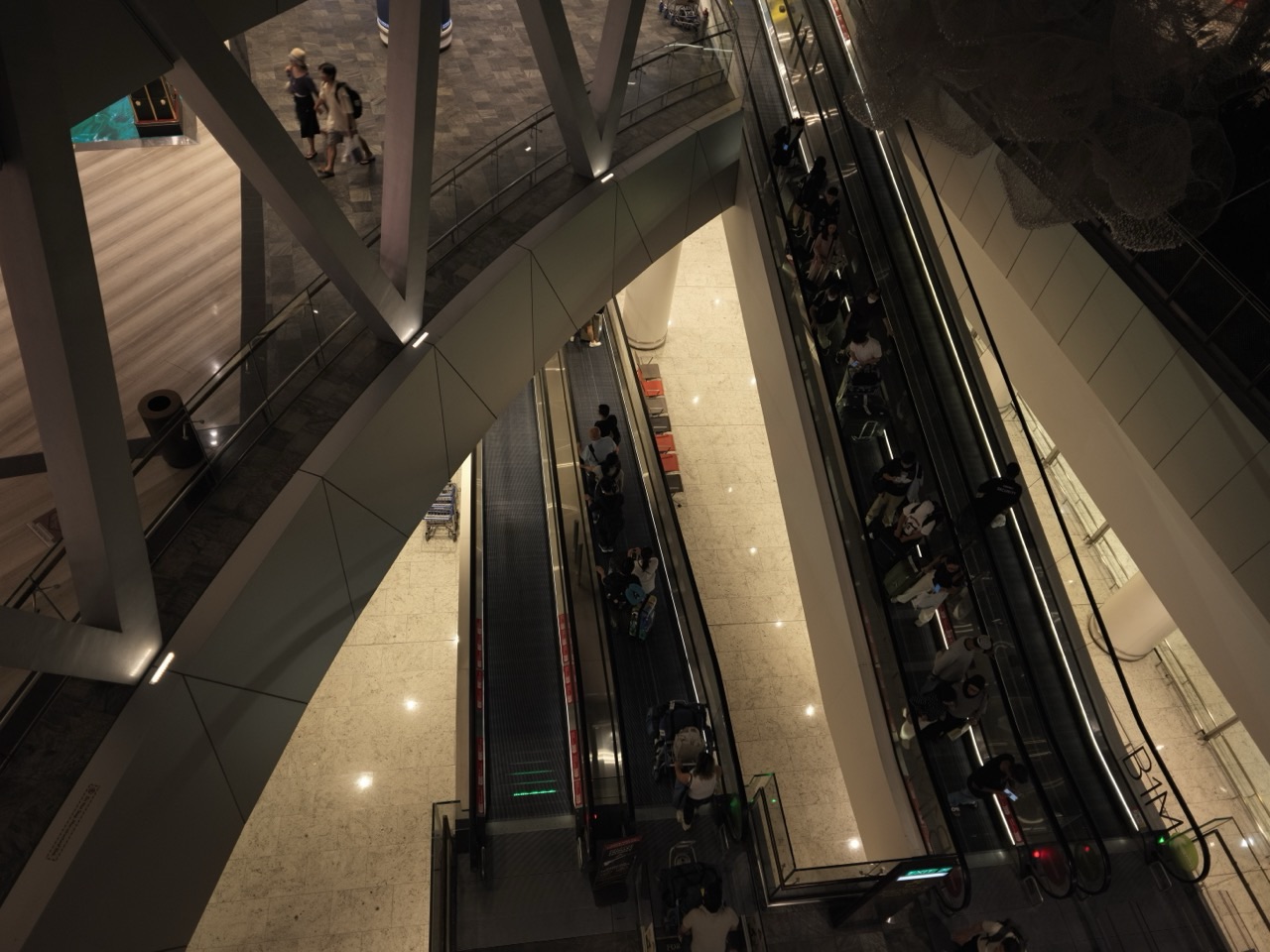
How Singapore connects is not only a story inside the island.
Sometimes the most important line in the Singapore graph leaves Singapore completely.
Did you know that an airport gate and a container berth are both connection points between local life and the rest of the world?
One moves people through aircraft. The other moves goods through ships. Both depend on timing, routing, security, information, logistics and enormous networks beyond Singapore’s shores.
This article follows those outward connections.
It asks how Changi Airport, Singapore’s seaport system, road links, logistics hubs and digital information systems turn a small island into a global gateway.
The canonical aviation and maritime mechanism articles remain elsewhere in eduKateSG’s ecosystem. Here the focus is the connection layer: how global air and sea networks meet Singapore’s local transport, trade, tourism, jobs, food, healthcare and everyday life.
Did You Know? A Gateway Is Useful Because It Connects Networks, Not Because It Is an Endpoint
An airport is not valuable simply because planes can land.
A port is not valuable simply because ships can berth.
Their power comes from what happens next.
A passenger lands and connects to the MRT, a taxi, a hotel, a workplace, a family home or another flight.
A container arrives and connects to a terminal, a truck, a warehouse, a factory, another ship or a customer.
The gateway works when the next network is ready.
Changi Airport Is a Global Node with Local Consequences
Changi Airport Group’s 2025 material describes Changi as one of Asia’s most connected international aviation hubs, with close to 100 airlines and direct links to about 170 cities worldwide.
That global reach becomes meaningful because Singapore is not only a destination.
It is also a transfer point.
Travellers may begin elsewhere, change aircraft in Singapore and continue to another country.
The same airport therefore serves residents, visitors, business travellers, transit passengers, cargo operators and airlines with very different journey shapes.
The Airport Journey Starts Before the Airport
A flight may be international, but the first connection is often local.
- home to taxi or private-hire car;
- home to bus or MRT;
- hotel to airport shuttle;
- office to terminal;
- ferry or cruise terminal to airport;
- cargo facility to airfreight centre; and
- staff housing to airport workplace.
This is why Changi is part of Singapore’s domestic transport graph as well as its international one.
The relationship becomes clearer beside How Singapore Connects | Point-to-Point Transport and How Singapore Connects | Covered Walkways, Underpasses and Pedestrian Links.
Did You Know? An Airport Is Also a Sorting System
A busy airport continuously sorts.
People are sorted by destination, airline, flight, gate, immigration status and transfer path.
Baggage is sorted by tag and flight.
Cargo is sorted by destination, handling requirement and urgency.
Aircraft are sequenced onto runways, taxiways and gates.
The terminal looks like architecture.
Operationally, it is a giant routing machine.
Air Connectivity Shrinks Time
Ships carry huge volumes efficiently.
Aircraft move smaller volumes much faster.
That speed changes what becomes practical.
Perishable goods, urgent parts, high-value electronics, medical supplies and people themselves can cross long distances in hours rather than days or weeks.
In September 2026, Changi Airport Group announced a new healthcare cold-chain logistics facility at Changi Nexus One, highlighting the role of air connectivity in moving time- and temperature-sensitive healthcare and life-sciences cargo.
Connectivity is therefore not only distance conquered.
It is time compressed.
The Seaport Solves a Different Scale of Movement
The Maritime and Port Authority describes Singapore as a major global hub port connected to more than 600 ports worldwide through around 200 shipping lines.
The sea network is slower than aviation but extraordinarily powerful for large-scale trade.
Containers allow many kinds of goods to enter the same transport system in standardised boxes.
That standardisation lets cranes, vessels, terminals, trucks and warehouses handle cargo without needing to redesign the entire chain for every product.
The Container Is a Connection Technology
A container looks simple.
That simplicity is exactly the point.
Its dimensions, corner fittings and handling rules are standardised.
Because everyone agrees on the interface, the box can transfer between ship, crane, yard, truck and rail systems around the world.
The contents may vary completely.
The connection interface stays stable.
This is one of civilisation’s deepest tricks: standardise the handoff so variety can move through the same network.
Transhipment Turns Location into Network Value
A cargo box does not need Singapore to be its final destination for Singapore to be useful.
A vessel can unload cargo here so that it transfers to another vessel heading elsewhere.
This is transhipment.
The value comes from network position.
If many shipping routes meet at one efficient hub, cargo can be recombined into new journeys.
The port becomes a switchboard.
Air Hubs Work the Same Way
A passenger from one city may fly to Singapore and connect onward to a third city.
Airlines build schedules around these connecting flows.
The airport’s usefulness therefore depends partly on the number, timing and reliability of onward connections.
An airport with many destinations but poor transfer coordination would be less useful than the map alone suggests.
Again, connectivity lives in the handoff.
Sea and Air Connect to the Same Island Economy
The port and airport may serve different cargo profiles, but both connect to Singapore’s economy.
- manufacturing;
- food supply;
- retail;
- tourism;
- pharmaceuticals;
- electronics;
- energy services;
- maritime services;
- aviation services;
- e-commerce; and
- professional services.
A global gateway is therefore not isolated at the coast or runway.
Its effects travel inward through jobs, prices, supply chains and business relationships.
Global Gateways Connect to Food Security
Singapore imports much of what it consumes.
That makes external connectivity an everyday household issue.
Ships bring bulk food and supplies.
Aircraft may carry perishables or urgent goods.
Warehouses, cold chains and road transport distribute them locally.
The supermarket shelf is connected to the port.
The restaurant kitchen is connected to shipping lanes.
A plate can be global infrastructure made edible.
Global Gateways Connect to Healthcare
Modern healthcare depends on international supply chains for medicines, devices, diagnostic equipment, laboratory materials and specialised components.
Some items are highly time-sensitive or temperature-sensitive.
That is why logistics capability matters to healthcare even when the patient never sees the airport or port.
A functioning health system reaches far beyond the hospital walls.
Global Gateways Connect to Tourism
Visitors do not experience connectivity as a network diagram.
They experience arrival.
The airport, immigration, baggage collection, wayfinding and onward transport combine into the first practical impression of the country.
The same is true at cruise and ferry terminals.
A tourism journey starts before the attraction.
The gateway is part of the destination experience.
Did You Know? A Delay Can Propagate Across the World
Networks create efficiency, but they also transmit disruption.
A delayed vessel can miss a berth window.
A flight delay can cause passengers to miss onward connections.
Bad weather elsewhere can affect schedules here.
Congestion at one hub can ripple into another.
This is why resilient hubs need buffers, alternatives, communication and recovery procedures.
Connection creates opportunity.
Connection also creates dependency.
The Strait Is Infrastructure Even Though Nobody Built It
Singapore’s geography matters.
The island sits beside one of the world’s busiest maritime corridors.
Civilisations often grow where geography gives movement an advantage: river mouths, straits, sheltered harbours, passes and crossroads.
But geography is only the starting condition.
Ports, institutions, skills, logistics systems, law, maintenance and technology convert geographic opportunity into usable infrastructure.
Digital Information Makes Physical Movement Possible
Modern logistics is full of data.
- flight schedules;
- cargo manifests;
- booking systems;
- container identifiers;
- customs declarations;
- weather information;
- tracking data;
- berth schedules;
- gate assignments; and
- security credentials.
The ship and aircraft are physical.
The coordination layer is increasingly digital.
Bits organise tonnes.
A Small Example: The International Student
A student flies into Changi.
Immigration clears the arrival.
Baggage is delivered.
Wayfinding leads to public transport.
The student reaches housing, then school.
The international journey becomes a local life.
The airport is the connection between two graphs.
A Small Example: The Imported Machine Part
A specialised component arrives by air.
It moves through cargo handling, customs clearance and local logistics.
A vehicle carries it to an industrial site.
A technician installs it.
The global supply chain becomes local uptime.
A Small Example: The Transhipment Container
A container from one region arrives by ship.
It is unloaded, identified, moved through the terminal yard and loaded onto another vessel.
Singapore may never consume the goods inside.
Yet the port creates value by making the connection reliable.
A Small Example: The Returning Family
A family lands after a long trip.
The global journey may feel finished when the aircraft door opens.
Operationally, several connections remain: immigration, baggage, ground transport, roads and the final walk home.
A gateway is successful when the traveller can move smoothly from international scale back to neighbourhood scale.
What Can Break a Global Gateway Connection?
- weather disruption;
- missed connections;
- baggage or cargo misrouting;
- documentation errors;
- security incidents;
- terminal congestion;
- port or runway capacity constraints;
- poor onward transport;
- digital system outages;
- labour or equipment disruption; and
- global events that suddenly change trade or travel demand.
The gateway must therefore be good at both routine and recovery.
How to Read a Global Gateway Like a Systems Thinker
1. Find the external network
Which cities, ports or regions connect into Singapore?
2. Find the local handoff
How does the traveller or cargo continue once it arrives?
3. Separate people from goods
They share some infrastructure but have different timing, security and handling needs.
4. Watch the identifiers
Boarding passes, baggage tags, container numbers, manifests and tracking codes preserve identity.
5. Look for standardisation
Containers, aviation procedures and digital formats make transfers possible across organisations and countries.
6. Notice timing
A connection is only useful if the next vehicle or process is ready at the right time.
7. Ask what happens during disruption
Resilience is the ability to recover without losing the whole network.
The eduKate Singapore Graph: The Island Opens Outward
Many eduKateSG series study Singapore internally: towns, schools, roads, transport, community, history and everyday life.
Global gateways explain how that internal graph connects outward.
The airport connects Singapore to cities.
The seaport connects Singapore to shipping routes.
Road and rail links connect Singapore to the peninsula.
Digital systems coordinate the exchanges.
The island becomes a node rather than an endpoint.
Frequently Asked Questions
Why is Changi Airport important to Singapore’s connectivity?
It connects Singapore directly to a large international aviation network and supports passengers, cargo, tourism, business and transfer traffic.
How many cities does Changi connect to?
Changi Airport Group’s 2025–2026 material describes direct links to about 170 cities worldwide, with close to 100 airlines. Network details change as airlines add or remove routes.
Why is Singapore’s port considered a hub?
Because many international shipping services call here and cargo can transfer between vessels for onward journeys.
What is transhipment?
It is the transfer of cargo from one vessel to another at an intermediate hub before it reaches its final destination.
Why are containers so important?
Standard containers make it easier for cargo to transfer between ships, cranes, yards and trucks using common handling interfaces.
How do airports and seaports connect to everyday life?
They support the movement of people, food, medicines, electronics, equipment, retail goods and many other inputs used across Singapore.
Why is digital information part of logistics?
Modern transport networks depend on schedules, identifiers, manifests, tracking and routing data to coordinate physical movement.
Does Singapore’s geographic location alone explain its hub role?
No. Geography provides an opportunity, but infrastructure, institutions, operations, skills and reliability determine how effectively that opportunity is used.
What is the main systems lesson?
A gateway creates value by making transfers between networks reliable.
Where can I check current official information?
Use Changi Airport for current aviation information and the Maritime and Port Authority of Singapore for current port and maritime information.
Helpful Reading and Singapore Graph Connections
- Changi Airport
- MPA | Global Hub Port
- How Singapore Connects | Point-to-Point Transport
- How Singapore Connects | Ferries, Jetties and Landing Points
- How Singapore Connects | Parcel Lockers, Letterboxes and Last-Mile Delivery
- How Singapore Works | The Whole Machine
How Singapore Connects: The Island Is a Junction
Did you know that Singapore’s small size becomes much more interesting when you stop measuring land and start measuring connections?
A plane arrives from one city and leaves for another.
A ship unloads a container that boards another ship.
A traveller lands and enters the MRT.
A medical shipment crosses the world and reaches a hospital.
A food container crosses an ocean and becomes tomorrow’s lunch.
The airport and port are not edges of Singapore.
They are doors.
And every time those doors connect smoothly to the next system, the island becomes larger than its geography.