
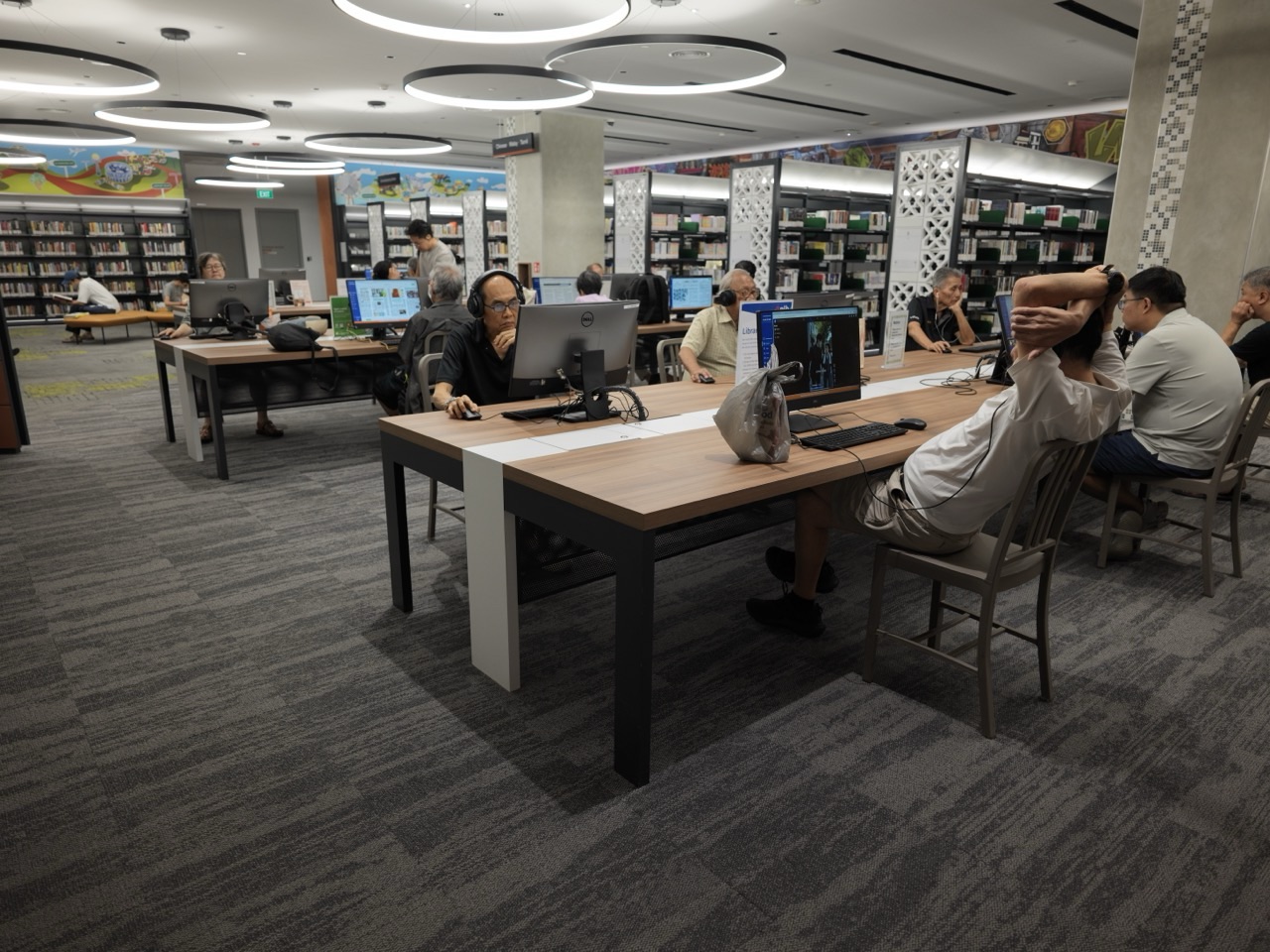
Crazy Rich Singapore | SkillsFuture Jobseeker Support and the Career Transition Economy begins with one of the hardest labour-market moments to design policy around: the worker has lost a job unexpectedly, needs income immediately, but may damage long-term career prospects by grabbing the first poor-fit job available.
Did you know Singapore’s SkillsFuture Jobseeker Support Scheme provides eligible involuntarily unemployed jobseekers with up to S$6,000 over six months while they actively search for work? The maximum payout starts at S$1,500 in month one, then tapers through S$1,250, S$1,000 and S$750 in each of the final three months, with payouts tied to active job-search activities.
The scheme launched for Singapore Citizens in April 2025 and expanded to Permanent Residents in 2026. By end-October 2025, more than 3,500 people had already received support and MOM estimated that more than 1,600 had subsequently found new roles.
That makes “SkillsFuture Jobseeker Support”, “unemployment support Singapore”, “jobseeker support Singapore”, “retrenchment support Singapore”, “SkillsFuture JS scheme” and “job loss Singapore” powerful search themes. The Crazy Rich story is not paying people to remain unemployed. It is buying enough financial time for a displaced worker to search, retrain and re-enter work with better fit.
Crazy Rich Singapore can treat unemployment as a transition to manage rather than only a loss to endure.
Did You Know? The Scheme Is Conditional on Active Job Search
Jobseeker Support is not a passive unemployment benefit.
The participant must complete recognised job-search activities and earn points toward monthly targets.
Eligible activities can include:
- job applications;
- career coaching;
- career fairs;
- training;
- career-planning activities; and
- other recognised employment-facilitation steps.
The payment is therefore linked to movement toward employment.
Up to S$6,000 over Six Months
The maximum payout schedule is front-loaded:
- Month 1: S$1,500;
- Month 2: S$1,250;
- Month 3: S$1,000;
- Month 4: S$750;
- Month 5: S$750; and
- Month 6: S$750.
That totals S$6,000 if the participant qualifies for every maximum monthly payout.
The taper is deliberate.
More support arrives when job loss is newest and household adjustment is hardest.
Why the Payout Tapers
MOM designed the payout to provide stronger support early while preserving incentive to return to suitable work.
A flat six-month payment would be simpler.
A tapering schedule reflects two changing conditions:
- the immediate financial shock is strongest near the beginning; and
- the longer unemployment lasts, the more important active re-entry becomes.
The payment curve is behavioural policy as well as financial support.
Monthly Payouts Are Capped by Past Income
A participant cannot receive more in a month than their previous average gross monthly income under the scheme calculation.
For example, a worker whose prior average gross monthly income was S$900 would not receive the full S$1,500 first-month maximum.
The support is meant to cushion job loss, not create a temporary income above the worker’s recent wage.
The Points System
Current scheme material sets job-search targets of:
- 10 points in each of the first three months; and
- 5 points in each of the final three months.
Different recognised activities carry points.
The design gives jobseekers flexibility to build a personal combination of applications, coaching and training rather than forcing one identical route on everyone.
Why Applications Alone Are Not the Whole Search
A person can submit hundreds of applications and still have a weak search strategy.
Career transition may also require:
- better CV positioning;
- interview practice;
- industry research;
- skills upgrading;
- networking; or
- a broader occupational search.
The scheme recognises that productive job search includes learning and diagnosis.
Who Is the Scheme Targeted At?
Current WSG guidance targets lower- to middle-income involuntarily unemployed residents.
Core eligibility includes conditions such as:
- age 21 and above;
- average gross monthly income of S$5,000 or less over the relevant past period;
- at least six months of employment in Singapore during the past 12 months;
- involuntary unemployment under recognised circumstances; and
- living in a Singapore property with Annual Value up to S$31,000.
Applicants should use the current official eligibility checker because detailed rules can change.
What Counts as Involuntary Unemployment?
Examples under current scheme materials include:
- retrenchment;
- cessation of business;
- dismissal; and
- termination because of illness, injury or accident.
Voluntary resignation is treated differently.
The scheme is designed around income shock the worker did not deliberately choose.
Why the S$5,000 Income Ceiling Exists
MOM says the scheme targets lower- to middle-income workers who are more likely to face financial pressure that could push them into poor job matches quickly.
The S$5,000 qualifying ceiling sits slightly above the 2024 median income of full-time employed residents excluding employer CPF, based on MOM’s published comparison.
The support is therefore targeted rather than universal.
The Annual Value Test
The residential property Annual Value threshold is another means-testing layer.
Current scheme guidance uses a threshold of S$31,000.
Annual Value is an IRAS property concept based broadly on estimated annual rental value rather than the household’s mortgage or purchase price.
The scheme combines income and housing indicators to target public support.
Singapore Citizens and Permanent Residents
Applications opened for Singapore Citizens in April 2025.
Permanent Residents became eligible to apply in 2026 under the rollout plan.
MOM’s September 2026 parliamentary answer continues to describe the scheme as temporary support for involuntarily unemployed individuals actively seeking employment.
The scheme is now part of the ordinary 2026 labour-market safety net.
Why Payments Stop When a Job Is Secured
Once the jobseeker secures employment, future monthly payouts stop under the scheme rules.
That preserves the scheme’s transition purpose.
The goal is not to provide six months of guaranteed income regardless of outcome.
It is to support the search until employment resumes.
The Three-Year Reapplication Rule
People who have received Jobseeker Support payouts cannot make another application within three years of their last payout under the current scheme structure.
That reduces repeated reliance and focuses the programme on exceptional transition periods.
The benefit is a bridge, not an ongoing income programme.
Why Job Fit Matters
MOM has repeatedly explained that the scheme is intended to help displaced workers avoid rushing into poor-fit jobs simply because cash is running out.
A poor fit can create:
- quick resignation;
- low productivity;
- skill underuse;
- lower wages; and
- another job search soon afterward.
A small amount of temporary income can therefore have long-run labour-market value if it improves match quality.
The MyCareersFuture Connection
This connects directly to Crazy Rich Singapore | MyCareersFuture, CareersFinder and the Digital Labour Matching Economy.
Jobseeker Support provides the financial runway.
MyCareersFuture helps identify vacancies and possible career directions.
The support system becomes stronger when money and matching work together.
The SkillsFuture Connection
Training can count as an active job-search activity where eligible.
That connects directly to Crazy Rich Singapore | SkillsFuture, Lifelong Learning and the Workforce Transformation Economy.
A displaced worker may discover that the next job requires new capability.
The unemployment period can become a reskilling window rather than dead time.
The SWDA Connection
From July 2026, jobs and skills support are brought together under the new Skills and Workforce Development Agency.
That institutional merger is especially relevant to Jobseeker Support.
The participant needs both:
- employment facilitation; and
- training pathways.
The public system increasingly treats those as one transition problem.
Career Coaching Can Change the Search
A career coach can help a jobseeker identify:
- transferable skills;
- realistic target roles;
- salary expectations;
- CV weaknesses; and
- skills gaps.
That matters because involuntary job loss can narrow attention.
The worker may search only for the old job title even when adjacent occupations use the same capabilities.
Why Mid-Career Workers Face a Different Transition
A mid-career worker may have:
- higher fixed household expenses;
- family responsibilities;
- specialised experience;
- a stronger salary history; and
- more identity tied to a long-held occupation.
Their job-search problem is not the same as a fresh graduate’s.
Temporary income support can give more space for careful repositioning.
The Career Conversion Programme Connection
Some displaced workers can move into new occupations through Career Conversion Programmes.
These combine employer hiring with structured training under the relevant programme rules.
That creates a stronger bridge than training without a job destination.
The worker learns inside a real labour-market transition.
Why Jobseeker Support Does Not Include Every Household Problem
In September 2026, MOM clarified that the scheme is not intended to provide wraparound support such as childcare, caregiving or HDB-loan deferment.
People needing those forms of help may need to approach other agencies and schemes.
That keeps Jobseeker Support focused on employment transition rather than turning it into a universal household assistance programme.
Why Targeted Schemes Create a Navigation Problem
A worker may simultaneously need:
- job-search support;
- childcare help;
- mortgage assistance;
- training; and
- temporary cash.
Each may belong to a different public programme.
That is why platforms such as SupportGoWhere and whole-of-government service design matter.
A safety net is only useful when people can find the right part of it.
The Smart Nation Connection
Applications use digital identity and online workflows.
That connects to Crazy Rich Singapore | Smart Nation, GovTech and the Public Technology Stack.
The scheme has to verify income, employment history, property information and job-search actions while keeping the user journey manageable.
Social policy increasingly depends on interoperable digital records.
Why Involuntary Unemployment Is Not the Same as Unemployment by Choice
Public support is targeted because the economic problem differs.
A worker choosing a sabbatical has planned for non-employment.
A worker retrenched after business restructuring faces an unplanned shock.
The scheme is designed around the second situation.
Policy distinguishes preference from disruption.
Why a Strong Economy Still Needs Job-Loss Support
Even when national employment remains strong, individual industries can restructure.
Technology, trade, company failure and business cycles can remove jobs that were previously stable.
MOM’s 2026 labour-market reports continue to highlight Jobseeker Support as part of the employment safety net even alongside overall economic growth.
Aggregate strength does not prevent individual displacement.
The AI and Automation Connection
AI and automation can change task demand even before whole occupations disappear.
That connects to Crazy Rich Singapore | National AI Strategy, SEA-LION and the AI Assurance Economy.
Career resilience increasingly depends on the ability to redeploy skills as technology changes.
Transition systems become part of innovation policy.
Why S$6,000 Can Be Economically Larger Than S$6,000
The direct fiscal cost is the payout.
The potential wider benefit can include:
- better job matching;
- shorter long-term unemployment;
- higher future wages;
- less skill erosion; and
- reduced pressure on other social support.
The value of a bridge depends on where it helps the worker land.
What Students Can Learn from Jobseeker Support
Economics
Temporary income can improve labour-market matching by reducing pressure to accept the first available job.
Mathematics
The tapering six-month payment schedule illustrates front-loaded support and conditional maximums.
Civics
Means testing directs limited public resources toward households more likely to need them.
Psychology
Job loss affects confidence and decision quality as well as income.
Education
Training can become part of the employment search rather than a separate life stage.
Ten Vocabulary Words for the Career Transition Economy
1. SkillsFuture Jobseeker Support
Singapore’s temporary financial-support scheme for eligible involuntarily unemployed jobseekers actively seeking employment.
2. Involuntary unemployment
Loss of employment for reasons not voluntarily chosen by the worker under the scheme’s qualifying rules.
3. Job-search activity
A recognised action such as applying for work, attending coaching or participating in eligible training.
4. Tapered payout
A payment schedule in which support decreases over time.
5. Means testing
Using income, property or other indicators to target public support.
6. Job fit
The degree to which a role aligns with a worker’s skills, experience, goals and circumstances.
7. Career coaching
Professional support helping individuals assess options and improve job-search strategy.
8. Transferable skill
A skill useful across several jobs or industries.
9. Reskilling
Learning substantially new capabilities for a different role or field.
10. Career transition
The movement from one job, occupation or employment state into another.
Frequently Asked Questions
How much can an eligible jobseeker receive?
Up to S$6,000 over six months, subject to monthly maximums, prior income and active job-search requirements.
What is the first-month maximum?
S$1,500.
Who is the scheme for?
Eligible lower- to middle-income Singapore Citizens and Permanent Residents aged 21 and above who became involuntarily unemployed and meet the income, work-history, property and other criteria.
Do payouts continue after the person gets a job?
No. Subsequent monthly payouts stop after the jobseeker secures employment under the current rules.
Does the scheme pay people simply for being unemployed?
No. Monthly support is tied to recognised active job-search actions and points targets.
Helpful Reading Across the Singapore Graph
- Crazy Rich Singapore | MyCareersFuture, CareersFinder and the Digital Labour Matching Economy
- Crazy Rich Singapore | SkillsFuture, Lifelong Learning and the Workforce Transformation Economy
- Crazy Rich Singapore | SkillsFuture Queen Bees, SME Upskilling and the Employer Training Economy
- Crazy Rich Singapore | National AI Strategy, SEA-LION and the AI Assurance Economy
References and Current Sources
- Skills and Workforce Development Agency, SkillsFuture Jobseeker Support Scheme Guide, current eligibility and payout structure.
- Ministry of Manpower, Labour Market Report 2Q2026, current 2026 policy context.
- Ministry of Manpower, Jobseeker Support Wraparound Support Parliamentary Answer, 8 September 2026.
- Ministry of Manpower, Committee of Supply 2026 Speech, early scheme participation and re-employment outcomes.
- Ministry of Manpower, Jobseeker Support Participant Story, current example of active-search and training use.
Crazy Rich Singapore Buys the Worker Enough Time to Choose the Next Step Better
Job loss creates a dangerous clock.
Bills keep moving even while income stops.
Did you know? One of Singapore’s richest labour-market ideas is not replacing a salary forever—it is slowing that clock just enough for a displaced worker to search, retrain and choose the next job with more care than panic allows.