
How does a shopping centre marketing team turn an ordinary mall into a place people remember, revisit and talk about? Shopping mall marketing works through a connected system of events, loyalty programmes, rewards, promotions, tenant campaigns, festive experiences, social media, partnerships and customer data. The aim is not simply to advertise that the building exists. It is to create useful reasons to visit, help tenants reach the right customers, encourage repeat trips and give the centre a recognisable identity that is stronger than a random collection of shops.
This guide explains shopping mall marketing, loyalty programmes, customer engagement, mall events, rewards apps, tenant promotions and retail campaigns in clear conversational language. We will look at how a mall chooses a campaign idea, coordinates hundreds of tenants, uses points and vouchers, measures foot traffic and spending, plans seasonal events, manages queues, protects trust and decides whether a promotion created real value or merely produced a short burst of noise. The best mall marketing connects the customer journey to the business model.
Did you know that a shopping centre can market the same square metres differently across the year without changing the permanent building? A Formula 1 display can turn an atrium into an event destination. Christmas decorations can turn circulation space into a family ritual. A loyalty programme can connect grocery spending, dining and transport. A tenant collaboration can encourage a shopper who came for one task to discover another category. Marketing is the layer that temporarily rewrites what the mall means.
For the commercial base, read How a Shopping Centre Works | Tenant Mix, Anchor Tenants and Retail Leasing. For the physical journey, continue with Foot Traffic, Customer Flow, Mall Design and Wayfinding. Marketing works because those underlying systems already give people something worth returning to.
The Simple Model: Promise, Audience, Trigger, Experience, Reward, Measure, Repeat
A useful mall-marketing model has seven steps. First, decide what the centre is promising. Second, identify the audience and visit occasion. Third, give people a trigger to come. Fourth, make the experience worth the trip. Fifth, add a reward when it genuinely strengthens behaviour. Sixth, measure what changed. Seventh, repeat or improve only what produced useful results.
This prevents a common mistake: beginning with the decoration instead of the purpose. “We need a giant installation” is not yet a strategy. “We want families to visit during the school holidays, spend time across dining and entertainment, and discover the new children’s zone” is a strategy. The installation may be one tool inside it.
The clearer the purpose, the easier it becomes to choose the right channel. A weekday lunch campaign may need office workers and fast redemption. A luxury launch may need invitation, storytelling and appointment experiences. A neighbourhood mall may benefit more from everyday-value rewards and community programmes than from a dramatic one-night spectacle.
Mall Marketing Starts with Positioning
Positioning is the answer to “Why this mall?” A centre cannot communicate clearly if it has no clear role. A family-oriented town-centre mall, a downtown luxury mall, a youth-oriented lifestyle centre and a transport-linked convenience mall should not sound identical even if all four run sales.
The marketing team therefore works closely with leasing and asset management. If the centre is becoming stronger in food and wellness, the campaign calendar should help those categories become visible. If a new entertainment anchor is opening, marketing can use the opening to reposition the entire floor. If the tenant mix is mostly everyday services, the centre can celebrate usefulness rather than pretending to be a fashion destination.
Good branding makes the real asset easier to understand. Weak branding tries to hide a mismatch between the promise and the place. Shoppers discover that mismatch quickly.
A Campaign Needs One Main Behaviour
Every campaign should be able to answer: what do we hope the customer does? Visit for the first time? Return within a month? Explore a new zone? Spend across two categories? Attend an event? Download an app? Redeem a reward? Share the experience? A campaign can support several outcomes, but one primary behaviour keeps design disciplined.
This is similar to writing a good lesson objective. “Make students excited” is pleasant but difficult to evaluate. “Students will explain the water cycle in sequence” is actionable. “Make the mall exciting” is vague. “Increase evening visits to the new dining wing during its first six weeks” gives the team something it can design around.
The behavioural target also shapes the reward. A parking benefit may suit a driver-based visit. A dining voucher may support restaurant discovery. A cross-mall points multiplier may encourage portfolio exploration. A photo opportunity may work when social sharing is genuinely part of the experience.
Events Turn Space into a Reason to Visit
A mall event can be an exhibition, performance, pop-up, character appearance, product launch, workshop, sports display, festive market or community activity. Events give customers a reason to make a trip that shopping alone may not create. They also create temporary content for social media and tenant promotions.
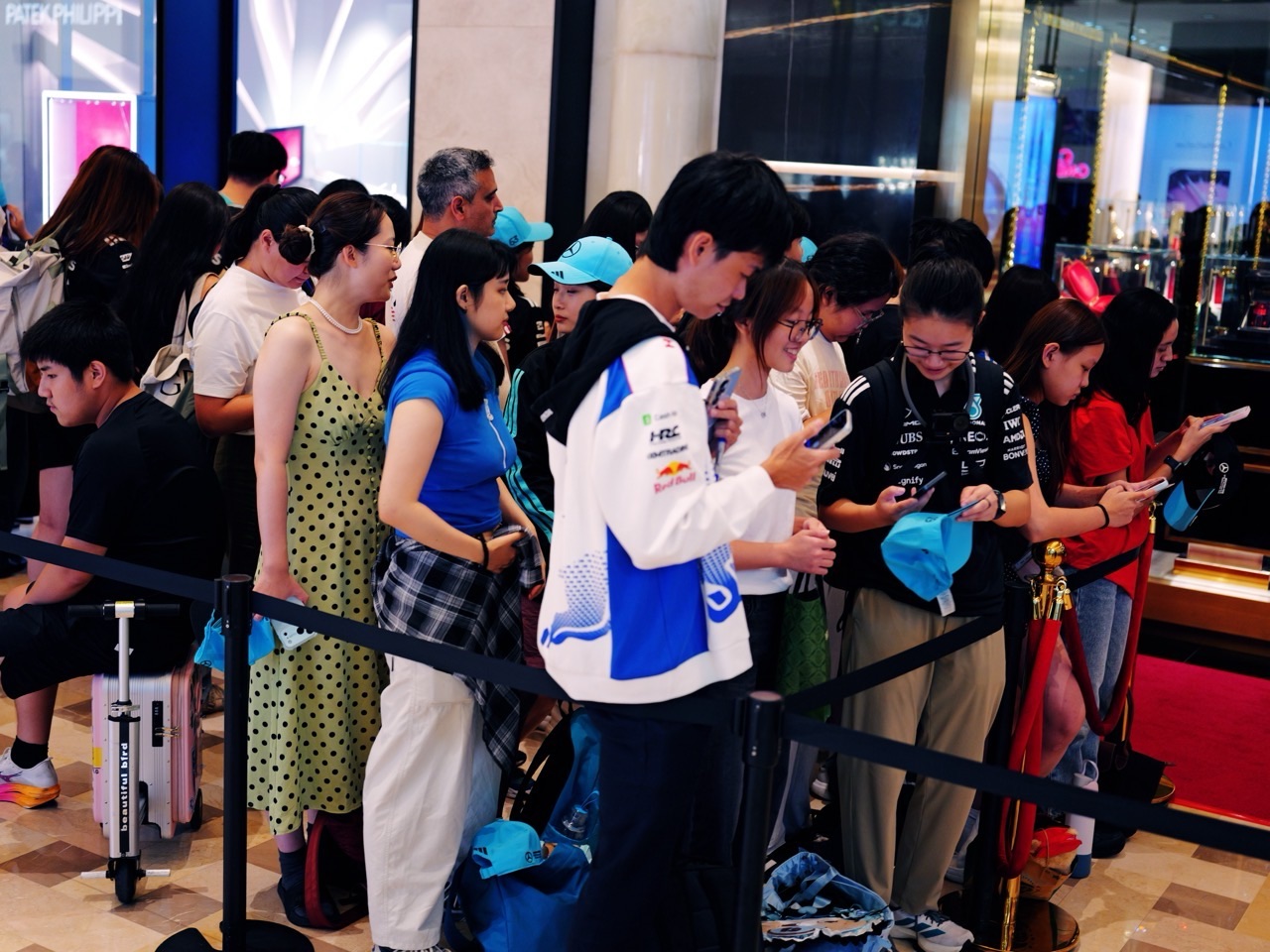
The most effective events connect to the mall’s audience. A Formula 1 display works especially well when the surrounding district, calendar and partners make motorsport culturally relevant. A children’s reading activity works better when the centre already serves families and has complementary bookstores, education or dining. The event should feel like an extension of the place rather than a random object dropped into an atrium.
The featured image for this article shows a Mercedes Formula 1 car display inside Raffles City Shopping Centre. It is a useful example because the display does several things at once: attracts attention, creates a photo moment, supports a wider motorsport season, changes circulation behaviour and gives neighbouring tenants extra exposure. Marketing and operations meet in one object.
Events Also Change Operations
Marketing never owns an atrium alone. An event affects security, cleaning, power, delivery timing, queues, sightlines and emergency routes. A popular activation can redraw customer flow because people stop where they normally walk. A stage can block a directory. A redemption booth can create a queue beside an escalator.
That is why event design needs an operations plan from the beginning. The mall must understand how equipment arrives, how the space is protected, when setup happens, what happens at peak attendance and how the area returns to normal. The public sees the event. The building team sees the transformation of a shared system.
Read Mall Management, Security, Cleaning and Building Operations for the machinery behind this public experience.
Festive Campaigns Create Annual Memory
Shopping centres often become part of seasonal rituals. Families return to see Christmas decorations, festive markets, Lunar New Year displays, Hari Raya programmes, Deepavali lights and school-holiday activities. Repetition can create memory: the mall becomes associated with a time of year.
The strongest festive campaigns balance familiarity with surprise. People enjoy recognising an annual tradition, but they also want a reason to look again. A centre can preserve a recurring idea while changing the story, art, partners or rewards. This builds continuity without becoming stale.
Festive campaigns also need sensitivity and accuracy. Cultural celebrations should not be reduced to decorative stereotypes. Good marketing involves people who understand the audience and treats the occasion as part of real community life.
Loyalty Programmes Turn Visits into a Relationship
A loyalty programme gives a shopper an ongoing reason to identify themselves to the retail ecosystem and receive value in return. The basic mechanism can include points, vouchers, status tiers, exclusive offers, parking benefits, birthday rewards or partner privileges. The technology may be an app, card or digital account.
The important word is relationship. A one-time discount can attract a purchase. A loyalty programme tries to make future behaviour more likely by storing value, recognising repeated activity or making the customer feel that participation becomes more useful over time.
In July 2026, Frasers Property Singapore announced partnerships connecting its Frasers Experience programme with NTUC Link and Shell, describing a network that could reach millions of memberships and more than 2,000 participating grocery, dining, retail and lifestyle touchpoints. The stated business aim included repeat visits, cross-category spending and broader retailer reach. See the current Frasers Property announcement.
A Good Reward Reduces Friction or Adds Delight
Rewards work best when they fit the visit. Complimentary parking can reduce the perceived cost of staying longer. A food voucher can make a new dining wing easier to try. Points earned across several tenants can make fragmented spending feel connected. Early access to an event can reward engagement without cutting prices.
A reward can also be too complicated. If the customer must remember five exclusions, submit several screenshots and wait weeks for approval, the programme creates effort instead of loyalty. The value may be high on paper and low in lived experience.
This is why redemption design matters. A reward is not complete when finance approves the budget. It is complete when the customer can understand and use it.
Points Are a Currency with Rules
Loyalty points behave like a private programme currency. The operator defines how points are earned, when they expire, what they can buy and which transactions qualify. These rules affect customer behaviour and programme cost.
For the operator, unused points can become a financial liability or accounting consideration depending on the programme. For the customer, unclear expiry or difficult redemption can damage trust. The system therefore needs transparent terms, reliable records and consistent treatment.
For students, points create an interesting mathematics exercise. Compare a simple 1-point-per-dollar scheme with a bonus multiplier, capped reward and expiry date. The headline multiplier can look generous while the usable value remains modest. Always calculate the actual outcome.
Portfolio Loyalty Is Different from Single-Mall Loyalty
A mall operator with several properties can design a programme that works across the portfolio. This gives shoppers more places to earn and redeem, while giving the operator a broader view of engagement. A suburban visit, city-centre dinner and weekend entertainment trip can all sit inside one account.
Portfolio programmes can also encourage discovery. A member loyal to one mall may receive a reason to visit another. Partners outside the mall, such as mobility or everyday-essential networks, can extend the relationship beyond the property itself.
The risk is dilution. If every possible transaction belongs to the programme, the mall identity can disappear. Strong programmes create breadth without losing a clear reason why the retail ecosystem matters.
Tenant Participation Determines Whether a Mall Promotion Feels Real
A centre-wide campaign is only as strong as the tenant experience. If posters promise a reward but frontline staff do not know how it works, the customer blames the mall and the shop together. Tenant communication must begin before the public launch.
Mall teams may provide mechanics, training notes, point-of-sale materials, submission processes and troubleshooting contacts. Large campaigns can involve hundreds of independent businesses, each with different staff rosters and systems. Coordination is part of marketing.
This is why a shopping centre is a difficult marketing environment: the brand promise is delivered by organisations the mall does not directly employ.
Promotions Can Be Mall-Wide or Tenant-Led
Some campaigns apply across participating tenants, while others amplify individual tenant offers. A mall-wide spend-and-redeem mechanic can create a shared reason to shop. A tenant-led product launch can draw a more specific audience. The centre can also bundle several offers into a themed route.
The right structure depends on the objective. If the mall wants customers to explore a new floor, a floor-specific reward may be useful. If the aim is broad festive spending, a portfolio mechanic may work better. If a single flagship opening is the news, the mall may focus on storytelling and event support instead of a generic voucher.
The campaign should make the strongest behaviour easy to understand.
Discounts Are Powerful but Expensive
Price promotions can create fast response because the value is obvious. But constant discounting can train customers to wait for offers and can weaken a premium position. Tenants also have different margins, so a discount that is easy for one category can be painful for another.
Marketing therefore uses more than price. Exclusive products, experiences, convenience, recognition, content and community can create value without cutting every transaction. A premium centre may protect brand equity by rewarding access rather than giving blanket discounts.
The deeper lesson is that loyalty and cheapness are not the same thing. A customer can return because a place is useful, pleasant, familiar or socially meaningful.
Social Media Makes the Mall Both Place and Media Channel
A shopping centre now communicates before, during and after the visit. Social channels announce openings, events, dining ideas, seasonal displays and tenant stories. Customers create their own photographs, reviews and short videos, extending the centre’s visibility beyond the building.
The most effective content usually starts with something real in the physical experience. A spectacular display gives people something to film. A good food discovery gives them something to recommend. A beautiful corner gives them somewhere to photograph. Social media amplifies the place; it cannot permanently compensate for a weak place.
This is why experiential design and content strategy have converged. The installation has to work for the person standing beside it and for the audience seeing it on a screen.
The Campaign Calendar Is a Capacity Plan
A strong mall does not treat the campaign calendar as a list of empty weekends waiting to be filled. Each campaign consumes attention, space, staff time, tenant participation, marketing budget and operational capacity. Two major events placed too close together can exhaust tenants and confuse the customer even if each idea is good on its own.
The calendar therefore balances seasonal peaks, tenant openings, school holidays, tourism periods, community events and quieter intervals. A major festive installation may need weeks of setup and months of production planning. A short loyalty multiplier may need little physical infrastructure but heavy system testing. A new restaurant cluster may need sustained storytelling instead of one launch weekend.
The most useful calendar also leaves room for surprise. A sudden cultural moment, sports success or new tenant opportunity may deserve attention. If every day is already filled with a campaign, the mall has no capacity to respond. White space is part of planning.
Offline and Online Must Describe the Same Experience
Customers move freely between channels. They may discover an event on Instagram, check opening hours on Google, read the mall website, navigate with an app, arrive through the MRT, redeem a reward at a tenant and ask customer service a question. They do not care that different teams own each channel. To them, it is one experience.
This means dates, mechanics, tenant lists and exclusions should agree everywhere. A web page that says the event ends Sunday while an in-mall poster says Saturday creates needless distrust. A push notification that promises “all tenants” when the counter later reveals exclusions creates friction at the most visible moment.
Omnichannel consistency is therefore a marketing quality issue before it becomes a technology issue. The simplest version is disciplined publishing: one source of truth, clear ownership and fast correction when details change.
The reward for this discipline is surprisingly large. The customer does not praise the mall because every channel matched. They simply proceed without confusion. As with good wayfinding, marketing infrastructure is often most successful when nobody notices it.
Influencers Can Accelerate Discovery but Do Not Replace Fit
Creators can introduce a new mall zone, restaurant or event to audiences that trust their recommendations. The centre may invite media, organise previews or support content partnerships. Disclosure and advertising rules still apply to paid or sponsored relationships.
The strategic question is audience fit. A creator with a smaller but relevant local following can be more useful than a huge audience with little connection to the mall’s catchment. Marketing quality is not simply follower count.
Good creator partnerships also preserve credibility. Audiences notice when every caption sounds like a brochure. The strongest content lets the real experience carry the story.
Search Marketing Captures Intent
Some shoppers are not waiting to be inspired; they are already searching. They type “best restaurants near City Hall”, “shopping mall near MRT”, “kids activities Singapore”, “parking at Raffles City” or a specific store name. Mall websites and tenant directories help capture these high-intent moments.
Search visibility depends on useful pages, accurate opening information, clear tenant names, current event details and location context. A beautiful campaign image with no searchable text can fail the person who is actively trying to find the event.
This is why SEO and customer service overlap. Search engines reward information that also helps humans complete a task.
Email and Push Notifications Need Restraint
Loyalty apps and email lists create direct communication channels. They can remind members about expiring rewards, relevant events or new benefits. They can also become annoying quickly if every tenant offer becomes an urgent notification.
Good messaging uses relevance, timing and permission. A person who chooses dining interests may appreciate a new restaurant invitation. The same person may not want daily fashion alerts. Frequency is part of the value exchange.
The marketing team should ask not only “Can we send this?” but “Will receiving this make membership feel more useful?”
Customer Data Should Earn Its Place
Loyalty programmes can generate data about redemptions, visits and declared preferences, subject to the programme design, applicable law and privacy commitments. This can help the operator understand engagement and improve offers. But collecting data creates responsibility.
The programme should have a clear reason for the information it requests and should protect it appropriately. Customers should be able to understand the value exchange. Asking for unnecessary information merely because a field can be added to a form creates risk without creating insight.
A useful operating rule is data minimisation by purpose: know what decision the information supports before collecting it.
Segmentation Makes Offers More Relevant
Not every customer wants the same thing. A family with young children, office worker, tourist, student and retiree may use the same mall differently. Segmentation groups customers by relevant behaviour or needs so communication can become more useful.
This does not require pretending that a data model knows everything about a person. Segments are tools, not identities. A shopper can belong to several patterns and change over time. Good marketers use segments to reduce irrelevant messaging, not to trap people in stereotypes.
The best segment often comes from the mission: lunchtime dining, family weekend, grocery routine, entertainment visit or luxury discovery.
Partnership Marketing Extends the Customer Journey
A mall can partner with banks, payment networks, transport companies, airlines, tourism organisations, event promoters, grocery groups or nearby attractions. Partnerships combine audiences and can make rewards more useful.
The Frasers Experience partnerships announced in 2026 are a clear example of this network logic: retail rewards were linked with everyday essentials and mobility. The mall becomes one node in a larger daily-life ecosystem rather than asking the customer to behave as if shopping happens in isolation.
The challenge is coherence. A partnership should solve a customer problem or create a meaningful benefit. A logo swap without a useful journey is not a strong ecosystem.
Parking Promotions Connect Marketing to Mobility
Parking is a classic mall marketing tool because it converts a practical cost into a reward. Spend thresholds, member privileges or partner benefits can encourage longer visits or reduce friction for specific groups. Electric-vehicle charging can create another mobility-linked visit occasion.
But parking incentives are not equally relevant to every mall. A centre directly above an MRT station may serve large numbers of non-drivers. Marketing should reflect the actual access pattern rather than treating car ownership as the default customer state.
Continue with How a Shopping Centre Works | Parking, MRT Connections, Car Parks and Access for the full access system.
Dining Campaigns Work Because Food Creates Frequency
Food gives malls a powerful marketing rhythm because people eat frequently and socially. A new dining cluster can be promoted through tastings, vouchers, themed trails, influencer previews or cross-tenant rewards. Meal occasions also map naturally to time: breakfast, lunch, tea, dinner and supper.
Food campaigns need truthful expectations. A dramatic photograph may attract the first visit, but the restaurant experience determines whether people return. Marketing can accelerate discovery; operations and food quality create retention.
Read How a Shopping Centre Works | Food Courts, Restaurants, Kitchens and F&B Operations for the dining machinery behind the campaign.
Community Marketing Can Be More Durable Than Spectacle
Neighbourhood malls can become community platforms by hosting school showcases, health programmes, charity drives, local performances or useful workshops. These activities may not produce the largest immediate transaction total, but they can strengthen familiarity and trust.
Community marketing works when the activity is genuinely useful and appropriately organised. A token event that treats the community as a backdrop feels different from a programme built with local partners.
The commercial benefit can be indirect: residents regard the mall as part of local life, which supports repeat visitation over time.
Experiential Retail Makes the Visit Harder to Replace Online
A physical mall competes with the convenience of online shopping, so experiences that require presence become increasingly important. Workshops, demonstrations, live events, interactive installations, product trials and dining can give the trip a purpose that a delivery box cannot fully reproduce.
Experiential retail does not mean every store needs a theme park. Even simple human service, fitting, tasting, testing or expert advice can make the physical visit worthwhile. The experience should fit the product.
A mall can then market the benefit honestly: come because this is something you can do here, not merely because there is a sale.
Gamification Works When the Game Is Easy to Understand
Stamp cards, digital missions, lucky draws, collection challenges and reward tiers add game mechanics to shopping. They can encourage exploration and repeat visits. But a mechanic that requires a spreadsheet to explain is not playful.
Good gamification has a visible goal, understandable progress and a reward that feels proportionate to the effort. The customer should know what happened after an action. Hidden rules create frustration.
For students, compare two fictional programmes and calculate expected value. A large prize with tiny probability can sound exciting, while a modest guaranteed reward may provide more predictable utility. Marketing language and mathematics meet again.
Scarcity Creates Urgency but Can Damage Trust
Limited-edition rewards, first-come redemptions and ticketed appearances can create urgency. Scarcity is legitimate when the resource is genuinely limited. Problems begin when availability is communicated poorly or the customer invests significant effort only to discover that the reward disappeared instantly.
Strong campaigns publish clear conditions, update availability where possible and design queues fairly. The goal is excitement without unnecessary disappointment.
Trust has long memory. One badly managed redemption can influence how customers read the next campaign.
How a Mall Measures Campaign Performance
A campaign can generate many metrics: visitor counts, app registrations, voucher redemptions, tenant participation, sales, dwell time, social engagement, event attendance, repeat visits and customer feedback. The team should choose metrics that match the objective rather than celebrate whichever number looks largest.
If the objective was to introduce a new dining zone, a million video views can be interesting but not sufficient. The team should also look at traffic to the zone, tenant performance and repeat behaviour. If the goal was loyalty enrolment, total mall sales alone may not reveal whether the programme acquired useful members.
Measurement should help decide what to do next. A dashboard that cannot change a future campaign is merely an archive.
Incrementality Is the Hard Question
Suppose a festive weekend produced huge sales. How much of that would have happened anyway? Incrementality asks what the campaign caused beyond the normal baseline. This is harder than counting redemptions because customers can use a voucher for spending they already planned.
Marketers can compare periods, segments or test groups where appropriate, while recognising the limitations of each method. Weather, holidays, new tenants and economic conditions can all change the baseline. The purpose is not perfect certainty; it is a more honest estimate of causal value.
This is a valuable general reasoning habit: correlation tells you what moved together. A decision often needs to know what changed because of the intervention.
Tenant Sales Give Marketing a Reality Check
A beautiful campaign can still fail if tenants do not feel useful commercial impact. Where reporting arrangements allow, tenant sales trends can help management understand whether traffic is converting into business. Tenant feedback adds context: perhaps the event created crowds but blocked store entrances, or a reward mechanic was too difficult for staff to process.
The mall should not treat tenants as passive beneficiaries of marketing. They are participants with operational constraints and direct customer knowledge.
A strong post-campaign review includes the people who had to deliver the promise.
Brand Campaign and Performance Campaign Are Different Jobs
Some marketing is designed to create immediate action: redeem, visit, buy, register. Other marketing is designed to change perception: this mall is more premium, more family-friendly, more exciting, more convenient or more connected to local culture. Brand effects can take longer to appear.
The two jobs can support each other. A memorable event builds identity while a loyalty offer converts attendance into repeat engagement. But the team should not demand that every brand installation prove itself with same-day sales.
Good management knows which horizon it is evaluating.
Worked Example: A Formula 1 Retail Campaign
Imagine a city-centre mall during Singapore’s motorsport season. The campaign installs an authentic-looking race display in the atrium, coordinates exclusive tenant promotions, offers member rewards and hosts a timed appearance. The target audience includes fans, tourists and ordinary shoppers who enjoy the spectacle.
The campaign journey begins online, where the display is announced. Visitors arrive, photograph the car, discover participating restaurants and retailers, and receive a loyalty reward after meeting a spend condition. Mall staff manage queues and wayfinding. Social content extends the reach beyond people physically present.
Afterward, management reviews attendance, member activity, participating tenant results, social reach and any operational issues. The car was the headline, but the campaign’s value came from connecting attention to the wider retail ecosystem.
Worked Example: A Neighbourhood Rewards Campaign
Now imagine a suburban mall wants more weekday evening visits. Instead of a giant spectacle, it offers members a simple cross-category reward: complete a grocery purchase and dinner purchase on the same evening, then receive a modest future benefit. The mechanic fits the real after-work mission.
The centre promotes the campaign through app messages, in-mall signs and participating tenants. The redemption is automatic where systems allow or otherwise kept simple. The objective is repeat behaviour rather than one-time hype.
If the data shows that customers returned but tenant sales did not improve, the mall investigates the mechanic. Perhaps the reward captured behaviour that already existed. The next version should become more incremental rather than simply larger.
Worked Example: Launching a New Floor
A mall renovates an upper floor and adds fitness, beauty, family entertainment and dining. The physical project is complete, but customer habits still belong to the old building. Marketing must teach a new route.
The campaign uses floor-specific events, directory changes, tenant previews, trial offers and an exploration mission that rewards visits to several categories. The strongest anchor advertises the floor from outside the mall. Escalator landing graphics reinforce the new identity.
Here marketing is a behavioural bridge between old mental maps and new architecture.
What Can Go Wrong?
- The campaign has impressive creative work but no clear customer behaviour.
- A loyalty reward is valuable but difficult to understand or redeem.
- Tenant staff learn the promotion from customers instead of from management.
- An event attracts a crowd but blocks ordinary shopping journeys.
- Push notifications become so frequent that members disable them.
- The mall collects more customer data than it can use responsibly.
- A campaign reports social impressions while ignoring weak tenant results.
- Discounting becomes permanent and teaches customers to wait for promotions.
- A partner adds reach but does not fit the mall’s audience or positioning.
- The event is culturally decorative but disconnected from the community it claims to celebrate.
These failures all come from confusing attention with value. Marketing is successful when attention moves into a useful customer journey and a healthier retail ecosystem.
Frequently Asked Questions
What is shopping mall marketing?
Shopping mall marketing is the coordinated use of branding, events, promotions, loyalty programmes, digital channels, tenant campaigns and partnerships to attract and retain visitors, support tenant performance and strengthen the identity of the centre.
Why do malls have loyalty apps?
Loyalty apps can connect rewards, vouchers, parking benefits, events and member communication. They also help operators understand engagement where customers consent and programme rules allow. A good app reduces friction; a poor one simply moves paper coupons onto a screen.
Do events really help retail sales?
They can, but the effect depends on the event, audience, placement and tenant integration. A crowded atrium does not automatically mean strong sales. Good measurement looks at traffic, conversion, tenant results and repeat behaviour alongside attendance.
Why do malls give free parking promotions?
Parking promotions reduce a practical cost of visiting and can encourage longer stays or member loyalty. Their relevance depends on the mall’s transport mix; centres with strong MRT access also need benefits that work for non-drivers.
What makes a loyalty reward effective?
The reward should be relevant, understandable, easy to use and economically sustainable. It should encourage behaviour the mall values rather than merely subsidising spending that would have happened anyway.
What is customer engagement in retail?
Customer engagement describes the ongoing interactions between the customer and the retail ecosystem: visits, purchases, app use, events, feedback, content and rewards. Strong engagement feels useful to the customer, not merely measurable to the marketer.
A Practical Learning Activity: Design a Mall Campaign
Choose a fictional neighbourhood mall and one business problem: weak weekday evenings, low upper-floor traffic, a new dining zone or low loyalty-programme participation. Write the objective in one sentence. If the sentence contains three unrelated goals, simplify it.
Choose an audience and one visit mission. Then design a trigger, experience and reward. For example, a family-school-holiday campaign might use a free workshop as the trigger, a themed discovery trail as the experience and a dining voucher as the reward. Explain why each part fits the audience.
Now add an operations check. Where will people queue? What happens if the event fills up? How will tenants know the mechanics? What information must customer service receive? Which route must remain clear? This step turns marketing from a poster into a real system.
Finally, choose three metrics: one for reach, one for behaviour and one for commercial outcome. Do not choose ten. Explain what decision each metric will support after the campaign.
Teaching Guide: Separate Attention from Outcome
For Primary students, show two fictional posters for mall events and ask which information helps a family decide whether to attend. Date, time, location, age suitability and cost are more useful than decorative adjectives. The lesson is audience-centred communication.
For Secondary English, ask students to write a campaign brief: audience, objective, key message, proof and call to action. Then ask a partner to identify any unsupported promise. Marketing becomes an exercise in persuasive writing with accountability.
For Mathematics, create a loyalty reward model. If members earn 1 point per dollar and 500 points unlock a S$5 voucher, calculate the effective reward percentage before exclusions. Add a multiplier weekend and a cap. Students learn to translate promotional language into actual value.
For Economics, discuss whether a mall should spend S$100,000 on a one-week event or divide it across twelve months of loyalty rewards. There is no universal answer. Students should identify objectives, time horizons, spillovers and measurement challenges.
For Geography, compare marketing in an Orchard Road destination mall with a suburban town-centre mall. Tourist traffic, residents, transport, office populations and neighbourhood routines create different campaign opportunities.
The Larger Idea: Marketing Makes a Place Legible in Time
Architecture gives the mall a physical form. Tenant mix gives it economic content. Marketing gives it a changing calendar. It tells people what is happening now, why a visit matters this week and how the centre fits into the rhythm of the year.
At its best, marketing does not shout over the building. It reveals what is already valuable, adds temporary reasons to return and helps tenants participate in one shared story. It turns a collection of leases into an experience customers can recognise.
The next time you see a giant installation in an atrium, ask the systems question: what behaviour is this designed to create, which tenants benefit, what operational work supports it, how is the customer rewarded and what will the mall learn when the campaign ends? The answer is the real marketing machine.
Official and eduKateSG Reading Route
For a current Singapore example of loyalty ecosystems, see Frasers Property Singapore’s July 2026 announcement on Frasers Experience partnerships with NTUC Link and Shell. It illustrates how mall rewards can connect retail, daily essentials and mobility while aiming to support repeat visits and cross-category spending.
Within eduKateSG, continue with Tenant Mix, Anchor Tenants and Retail Leasing, Food Courts, Restaurants, Kitchens and F&B Operations, Parking, MRT Connections, Car Parks and Access, and How Hype Works | The Frontier Between Culture and Shopping. Together they show where marketing sits inside the wider machine.
Current examples and linked public information were checked on 5 October 2026. The durable method is simple: start with a real customer need, design one clear behaviour, create an experience worth attending, reward participation without needless friction, measure what changed and keep only the ideas that make the whole shopping centre more useful.