
What should you know about Honduras beyond its name? This guide connects a country’s landscapes with the people, institutions and skills that give places meaning. It follows historical evidence and contemporary examples across community life, work, learning and cultural expression, without letting one image or headline stand for the whole country.
Begin with geography and history, or move directly to food, music, learning and the environment. Each chapter pairs a broad theme with concrete examples, while the source links let readers follow the evidence. The final chapter examines documented connections with Singapore.
Honduras at a glance
- Capital: Tegucigalpa.
- UN statistical region: Central America.
- Reading date: 21 October 2026; individual observations retain their own dates.
The capital and regional classification are listed in the UNData country profile. This guide uses specific dated sources for the other subjects rather than treating an old country summary as a current account of every institution.
This is an educational overview, not a travel itinerary or personalised medical, legal or financial advice. A cultural or environmental designation does not establish present access or safety. National data cannot replace the experiences of particular households and communities.
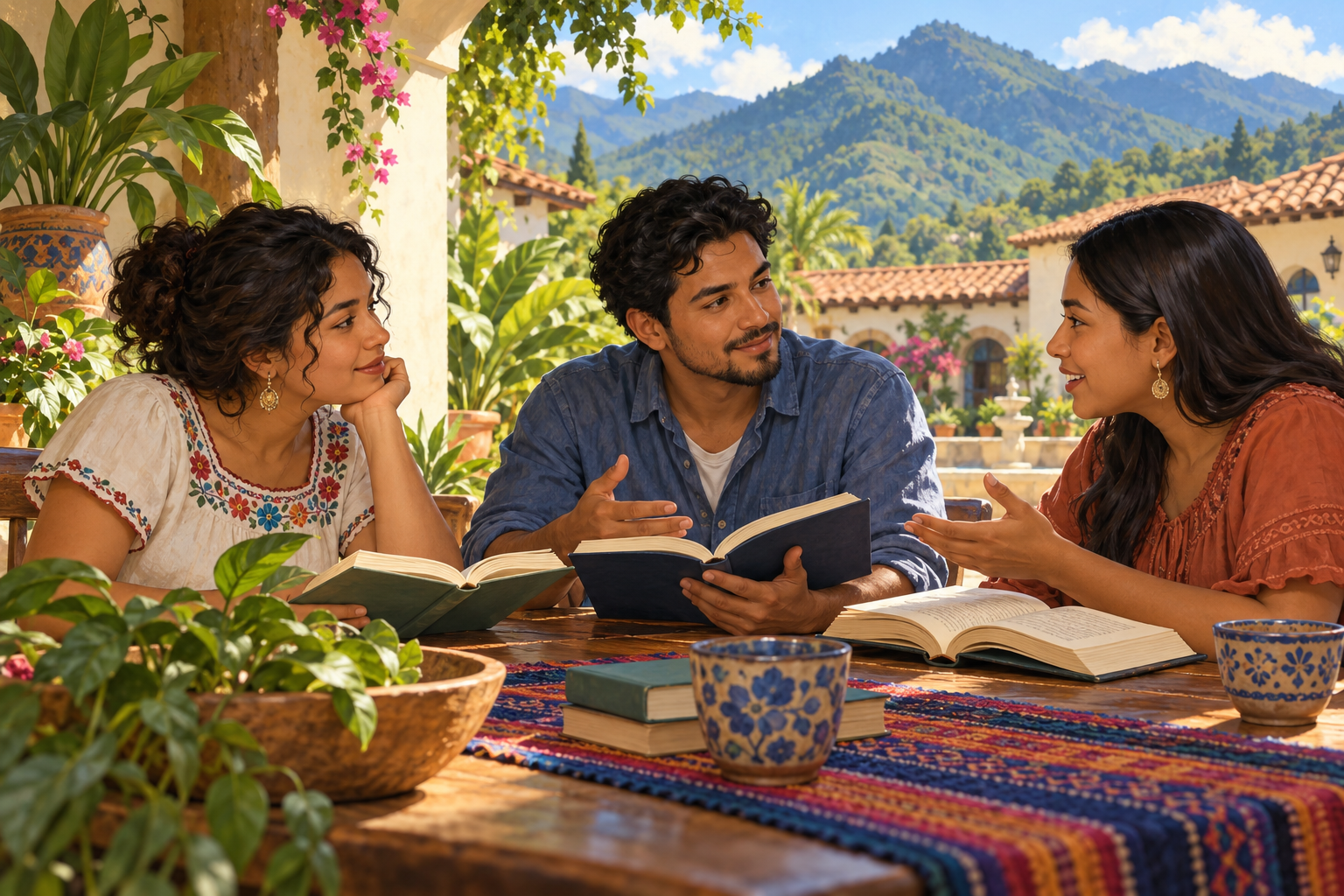
Cover illustration: an original AI-generated artistic interpretation of three adults sharing books in an imagined Honduras-inspired shaded courtyard with plaster walls and terracotta roof tiles, plants and distant green ridges. This is a nonliteral composite, not a photograph or an exact view of a named place.
Choose your route through Honduras
- 1. Geography and landscapes
- 2. Cities and regions
- 3. Early history and independence
- 4. Modern history
- 5. Government and institutions
- 6. Economy and Work
- 7. Agriculture and Livelihoods
- 8. Infrastructure and Connections
- 9. Population and Communities
- 10. Education and Learning
- 11. Food and Culinary Knowledge
- 12. Music and Dance
- 13. Literature and Visual Arts
- 14. Health and Community Care
- 15. Wildlife and Biodiversity
- 16. Climate and Environment
- 17. Sport and Participation
- 18. Science and Research
- 19. Opportunities and Challenges
- 20. Honduras and Singapore
1. Geography and landscapes
Coasts and rocks
Honduras occupies a mountainous part of Central America, adjoining Guatemala, El Salvador and Nicaragua. Its northern shore faces the Caribbean, while its southern coast meets the Gulf of Fonseca. The country also includes islands: Utila, Roatán and Guanaja form the principal Bay Islands, while Zacate Grande and El Tigre lie in the gulf. This combination of mainland highlands, coastal margins and offshore islands gives Honduras several contrasting geographical settings. (Honduras: physical setting)
The rocks beneath these landscapes have different histories. A 2007 geological study combined a Honduran aeromagnetic survey from 1985 with geological maps, isotopic ages and lead isotope evidence. Researchers proposed Central, Eastern and Southern Chortis terranes, distinguished by their magnetic signatures, rock types and structures. Their boundaries were inferred rather than directly observed everywhere. The study illustrates how measurements taken above the ground can help connect scattered rock exposures across difficult terrain. (Rogers et al.: terranes)
Rain and freshwater
Historical rainfall records reveal a seasonal rhythm, although national averages conceal local differences. The University of East Anglia’s gridded Honduras baseline for 1961–1990 gives March precipitation as 41.3 millimetres, compared with 269 millimetres in June. Summer and autumn were generally wetter than the early months of the year. These figures combine station observations across a grid, describing a past national pattern rather than rainfall at every hillside or a forecast for the next season. (UEA: rainfall baseline)
Lake Yojoa’s water supply reflects both natural drainage and engineering. Its Ramsar information sheet describes twelve contributing microbasins, ten natural and two artificial. In 1978, the electricity utility diverted the Varsovia and Yure rivers to support hydroelectric generation. The sheet classifies the lake as freshwater, with relatively soft water and low alkalinity, and describes mixing during December and January. Understanding the lake therefore involves its surrounding catchments as well as the open water visible at its centre. (Ramsar: Yojoa basin)
Forests and sea boundaries
Río Plátano’s landscape extends from steep inland mountains to a low coastal plain. Rivers form meanders, abandoned channels and oxbow lakes before meeting estuaries and lagoons. Mangroves, pine savannah and gallery forests add further variety to this connected landscape. UNESCO inscribed Río Plátano on the World Heritage List in 1982. Its significance lies partly in the continuity between upland forests, river corridors and coastal wetlands, rather than a single isolated scenic feature. (UNESCO: Río Plátano)
Honduras’s Caribbean boundary with Nicaragua was addressed by the International Court of Justice in 2007. The Court awarded sovereignty over Bobel, Savanna, Port Royal and South Cays to Honduras and established a maritime boundary. Coastal geometry and the unstable mouth of the Coco River complicated the delimitation. The judgment used a bisector approach, with adjustments around islands, demonstrating that a sea boundary requires legal interpretation of geography rather than simply extending a river channel indefinitely offshore. (ICJ: maritime boundary)
2. Cities and regions
Riverbanks and valleys
Tegucigalpa and Comayagüela developed on opposite banks of the Choluteca River. The municipal historical account records their union within the Central District in 1937, while preserving Comayagüela’s distinct name and history. Its Inmaculada Concepción church was built between 1788 and 1796 and became a parish in 1893. The paired urban landscape can thus be understood through both a shared municipal framework and older places around which communities developed on each side of the river. (AMDC: twin cities)
San Pedro Sula stands in the Sula Valley near the Chamelecón River and the foothills of the Merendón mountains. Its municipal history dates the Spanish foundation to 27 June 1536, but cautions that the precise original location is uncertain. Floods and attacks contributed to subsequent relocations. Rather than imagining an unchanged settlement fixed to one founding point, this account presents an urban history shaped by movement within the valley and responses to surrounding conditions. (San Pedro Sula: history)
Growth and public spaces
La Ceiba’s 2011 city plan describes a settlement between the Caribbean and the Nombre de Dios mountains. Rivers including the Cangrejal, Danto, Perla and Bonito create important corridors through its surrounding land. The diagnosis also examines floodplains and the absorption of nearby settlements as the city expanded. Places such as Piedra Pintada, Corozal and Toronjal appear within this account of urban growth, showing how a municipal landscape can extend beyond an older compact town centre. (La Ceiba: city plan)
Comayagua’s San Francisco plaza contains several layers of urban history. Archaeological work undertaken before restoration in 2002 examined a setting associated with a church, convent and cemetery. Later uses included a wooden bullring during the 1930s and a park created in 1958. The former convent was also adapted for schooling while retaining its façade. These changes show how a public space can preserve traces of religious, recreational and educational uses beneath its more recent appearance. (Valles Pérez: urban archaeology)
Ports and southern plains
Omoa’s coastal position and fortified port shaped its colonial settlement. A research project begun in July 2007 sought to reconstruct the town’s earlier layout by comparing historical cartography with the settlement then present. Investigators recorded surviving masonry and areas where older features remained intact. Their account treats the fortress and surrounding town as parts of one urban arrangement, making streets, building remains and changes in land use important evidence alongside the better known defensive structures. (Cruz Castillo: Omoa)
A municipal baseline prepared in August 2021 places much of Choluteca within the Pacific coastal plain. Mountains rise to the north, while hills extend towards Santa Rosa de Sampile in the south. The Choluteca and Sampile rivers, together with smaller streams, help define the municipality’s drainage. This physical description situates the town within a wider southern landscape: relatively level ground is interrupted by hills and watercourses, rather than forming an entirely uniform plain. (Choluteca: town diagnosis)
3. Early history and independence
Early societies
Ancient pottery provides evidence of social life at Puerto Escondido in the lower Ulúa Valley. A 2007 study detected chemical markers of cacao in vessels dating before 1000 BCE. The researchers suggested that early drinks may have used fermented pulp around the seeds, although the chemical traces alone could not distinguish pulp from seed preparations. Changes in vessel shapes and decoration helped them investigate how serving drinks connected households with wider networks of interaction. (Henderson et al.: cacao traces)
Copán preserves a major centre of Classic Maya civilisation, whose monumental development flourished between approximately 300 and 900 CE. Temples, plazas, ball courts and sculptured monuments formed an elaborate built environment. Successive additions to the Acropolis covered earlier floors and structures, allowing archaeology to reveal several stages of construction. The Hieroglyphic Stairway records a substantial written history. UNESCO inscribed the site in 1980, recognising its architectural, sculptural and historical significance. (UNESCO: Copán)
Conquest and independence
Accounts of resistance to Spanish conquest require careful attention to who produced the evidence. Author Blanca Moreno García examines Rodrigo Ruiz’s 1558 petition, in which he claimed to have killed Lempira in 1537 and sought a perpetual reward in gold. The publisher’s description highlights contradictions in the testimony rather than treating the claim as settled fact. This investigation makes the petition’s purpose and the petitioner’s interests central to interpreting a contested episode of colonial history. (Moreno García: colonial testimony)
The Central American independence act adopted on 15 September 1821 declared separation from Spain while leaving important political arrangements to further deliberation. It called for provincial representatives to meet and determine the form of government and its fundamental law. Existing authorities were to continue provisionally under specified arrangements. The document therefore records both a decisive declaration and an unfinished process of organising government, rather than a complete blueprint for the later states of the region. (Archive: independence act)
Federal ambitions
Francisco Morazán’s address to the Federal Congress in March 1831 reveals the ambitions of federal reform. He reported new teaching activities in Honduras and neighbouring states and argued for common educational principles. He also called for clearer legal procedures and punishments proportionate to offences. His discussion connected instruction and justice with the republic’s future. Read as a political address, it records priorities and reported initiatives, not proof that uniform schools or legal systems had already been achieved. (Morazán: 1831 address)
Honduras belonged to a Central American federation alongside Guatemala, Nicaragua, Costa Rica and El Salvador. The United States’ diplomatic history places the federation’s disintegration between 1838 and 1840, after which relations developed with its separate members. Washington recognised Honduras in April 1853 through the appointment of Solon Borland as a regional envoy. Borland did not present credentials there, a reminder that formal recognition, appointment and the practical establishment of diplomatic representation were separate steps. (State Department: recognition)
4. Modern history
Exports and organised labour
Railways helped reshape northern Honduras around export production. In her 1996 historical study, Marcela Alejandra García traced how railway development followed foreign investment and the changing requirements of banana companies. Lines linked plantations with ports, while concessions connected transport infrastructure with commercial control of land. She also examined the later competition from roads and economic diversification. This history explains a network organised heavily around particular export businesses rather than a uniform national passenger network. (García: railway history)
The banana workers’ strike that began in May 1954 lasted over sixty days and involved both men and women. Historian Marvin Barahona returned to participants’ memories through interviews conducted in 1994. His book combines these testimonies with a contextual study of the strike’s origins and development. It places workers’ experiences at the narrative’s centre, showing how oral history can recover perspectives that official announcements or company records alone might not preserve. (Barahona: workers’ testimony)
Conflict and disaster
Relations with El Salvador deteriorated through border incidents and a break in diplomatic ties before armed conflict in July 1969. The International Court of Justice’s historical account dates the fighting from 14 to 18 July. Action by the Organization of American States brought a ceasefire and troop withdrawal, but the formal state of war persisted for more than a decade. A general peace treaty followed in 1980, separating the end of fighting from a negotiated political settlement. (ICJ: conflict history)
Hurricane Mitch in 1998 damaged roads, schools, farmland and other essential assets. ECLAC’s subsequent assessment distinguished direct physical destruction from indirect losses, including interrupted production and higher transport costs. Schools also served as shelters, complicating the return to normal teaching. The assessment considered reconstruction standards alongside replacement costs, including the need to reduce future flood exposure. Its approach shows why recovery involves restoring activities and connections, not only rebuilding the structures visible in damage photographs. (ECLAC: Mitch assessment)
Democracy under pressure
On 28 June 2009, soldiers removed President Manuel Zelaya from Honduras and took him to Costa Rica. The Inter-American Commission on Human Rights investigated the resulting crisis, including a visit in August. Its report documented restrictions on expression, arbitrary detention, disproportionate force and weaknesses in judicial protection. The Commission attributed these findings to its investigation. They place the rupture of elected government alongside its consequences for people seeking information, demonstrating or attempting to obtain effective remedies. (IACHR: 2009 investigation)
Honduras held general elections on 30 November 2025. The European Union observation mission’s final report records the presidential declaration on 24 December naming National Party candidate Nasry Asfura the winner. Observers described technical failures and processing delays, while distinguishing those problems from the integrity of the tabulated results. Their recommendations included stronger testing and electoral administration. The report thus evaluates both the declared outcome and the procedures through which results were processed and communicated. (EU: election observation)
5. Government and institutions
Design and executive
Honduras’s Constitution describes a democratic, representative republic with legislative, executive and judicial branches that are complementary and independent. It places executive authority with the president and provides for justice administered by independent judges, including a Supreme Court and lower courts. Spanish is the official language under Article 6. These provisions describe the institutional framework established in the constitutional text; they do not by themselves establish how effectively every safeguard operates in daily public life. (Constitution: institutions)
A government report dated 20 October 2026 identifies Nasry Asfura Zablah as president during his arrival in Rome. The delegation included presidential secretary Juan Carlos García Medina and foreign minister Mireya Agüero. Its announced programme covered meetings with Italian authorities, international organisations, business representatives and the Holy See. The account illustrates executive diplomacy at that date. Its proposed discussions did not establish that investments or agreements had resulted. (Government: October 2026 visit)
Public procedures
The 2014 Organic Law of Legislative Power describes committees as working bodies that prepare opinions and reports on assigned proposals. They can seek assistance from public officials, businesses, civil organisations and scientific or academic institutions. Legal and technical support helps them prepare their work and organise hearings. The text also provides for reading a proposal and its committee opinion when debate begins. These procedures show how examination of legislation extends beyond the final vote. (Congress: committee procedure)
The SIELHO platform provides an administrative route for public information requests. Its forms identify the institution concerned and the questions being submitted, while the system directs requests to information officers. A separate function allows a request’s status to be checked, and the platform also accommodates review appeals. This arrangement connects an initial question with a traceable administrative process, rather than treating access to information as simply finding whatever an institution has already placed on its website. (IAIP: SIELHO portal)
Oversight and rights
The Superior Court of Accounts’ 2013 SISERA manual distinguishes accepting an audit recommendation from demonstrating that it has been implemented. An accepted action plan sets responsibilities and a period for action. A recommendation becomes officially executed only after the institution submits evidence and the tribunal verifies it. The manual also recognises partial implementation and other statuses. This distinction gives follow-up an evidential basis: a promise to correct a problem is not the same as documented corrective action. (TSC: audit follow-up)
In its annual report for 2025, the national ombudsman, CONADEH, examined repeated extensions of the state of exception. It argued that the authorities had not supplied adequate evidence of a proportionality assessment or justified why less restrictive alternatives were insufficient. The report also recorded complaints concerning security operations. These were monitoring findings and recommendations, not court determinations. Its criticism concerned the reasons offered for exceptional measures and the mechanisms used to review their continued application. (CONADEH: rights review)
6. Economy and Work
Stability and currency
Honduras’s economic performance connects domestic policies with money and demand arriving from abroad. In September 2025, IMF staff described an economy supported by stronger remittances, favourable export prices and economic policies. Activity indicators suggested growth of nearly four percent during the first half of that year. The assessment also noted stronger international reserves. These dated observations describe economic conditions at that point, rather than guaranteeing continuing growth or identical circumstances for every household. (IMF programme update)
The monetary unit of Honduras is the lempira, represented by the symbol L and divided into one hundred centavos. The Monetary Law published by the central bank sets out these basic features in its first article. Article six specifies coin denominations and physical features, including permitted metal compositions, weights and diameters. Its examples include coins containing both steel and nickel. These are legal specifications, not confirmation that every listed coin currently circulates. (BCH monetary law)
Trade and enterprise
Trade links Honduran producers and businesses with customers beyond the country. During the 2023 WTO trade review, members recognised trade’s contribution to recovery after the pandemic and the disasters of 2020. They welcomed measures intended to simplify customs procedures and noted the importance of regional trade agreements. Some encouraged broader export diversification and greater transparency. The review shows how trading relationships involve administrative procedures and public rules as well as goods crossing borders. (WTO trade review)
Starting a formal enterprise involves more than choosing a business name. Honduras’s official Mi Empresa en Línea guide covers individual traders, limited liability companies and corporations. Its listed stages include registering online, selecting the business form and completing information, followed by submitting documents through SENPRENDE and sending the incorporation request to the Property Institute. Applicants can then check their file’s status. This combination of digital and office procedures should not be mistaken for automatic approval. (SENPRENDE enterprise guide)
Work and financial access
Workplace standards also depend on institutions that can inspect and follow up. In comments adopted in 2024, the ILO supervisory committee recorded Honduras’s reported updates to its labour inspection strategy. These included revised processes, a virtual labour case system, inspector training and dialogue with employers and workers. The committee requested further information about progress. Its account distinguishes measures reported by the government from a finding that every workplace already meets the required standards. (ILO inspection observations)
Financial access includes the channels people use, not simply the existence of banks. The CNBS Financial Inclusion Report 2025 examined preliminary figures for December 2024, using information from supervised institutions and regulated cooperatives. It distinguished physical branches, correspondent agents and digital transactions. Mobile services accounted for many transactions of relatively small value, while other electronic channels handled larger amounts. These differences help explain why several kinds of financial service can coexist within one economy. (CNBS inclusion report)
7. Agriculture and Livelihoods
Farms and coffee
Agriculture includes both the people managing production and the holdings they operate. INE’s report on the 2024 agricultural census recorded approximately four hundred nine thousand producers and four hundred twelve thousand agricultural holdings. Its agricultural reference year ran from April 2023 through March 2024. The report also examined producers’ ages, education and legal status. Keeping the reference period and the distinction between producers and holdings clear prevents treating different statistical categories as interchangeable counts. (INE agricultural census)
Coffee livelihoods involve renewing fields and learning processing skills. IHCAFE’s report for the 2021 to 2022 harvest described a partnership with Maraita municipality to renew coffee plots for seventy-five producers. In Vallecillo, the institute helped train personnel to operate newly supplied roasting machinery. These examples connect work in the field with processing skills closer to the final product. They are dated, local examples of assistance, not evidence that every coffee grower received support. (IHCAFE harvest report)
Crops and cooperation
Beans can be grown in several arrangements rather than in one uniform field pattern. DICTA’s technical manual describes planting beans in alternating strips with maize, or after maize has reached maturity. In the strip arrangement, beans are the main crop for sale, while maize occupies fewer rows. The manual also discusses making use of space and remaining fertility after maize. These practices illustrate how farmers organise crops across space and successive cultivation stages. (DICTA bean manual)
Producer organisations can bring business planning and technical support to rural households. IFAD’s PRO LENCA project, implemented from 2013 to 2023, combined three approaches: strengthening organisations, financing their productive activities and business plans, and investing in rural infrastructure. Roads and irrigation were included because production and market access depend on more than crops. Women, young people and ethnic minorities were among its intended priority groups, although programme aims should not be confused with universal results. (IFAD producer support)
Markets and fishing
Reaching a different market may require changing what happens after the harvest. A World Bank account of COMRURAL describes improvements to the drying and storage facilities of the CAFEPSA coffee cooperative. The investment supported a move from selling unprocessed beans to local traders towards supplying dried and peeled beans directly to exporters. Across the project, producer organisations also received business planning and management support. The example links processing, commercial relationships and skills, not simply production volume. (World Bank rural alliances)
Fishing livelihoods also depend on handling the catch after boats return. Honduras’s agriculture ministry reported a 2024 support project for artisanal fishers on the Atlantic coast, particularly in Atlántida and the Bay Islands. It reached members of twenty-three fishing associations and supplied equipment including freezers, vacuum sealers, ice machines, outboard motors and navigation devices. The package addressed fishing operations and handling after capture, showing why shore equipment matters alongside boats and fishing knowledge. (SAG fisheries report)
8. Infrastructure and Connections
Roads and ports
Road investment can focus on a particular bottleneck rather than an entirely new national network. The IDB’s San Pedro Sula logistics corridor project targeted widening, rehabilitation and improvement of the second peripheral ring between the Chamelecón River and the Gala intersection. Its stated purpose included easing traffic difficulties and access to Puerto Cortés. Approved in 2008, the project is listed as closed. That status does not, by itself, measure how much travel time subsequently changed. (IDB road project)
Puerto Cortés combines the movement of ships with work on the cargo itself. Its terminal operator, OPC, describes loading and unloading container ships and general cargo vessels, cargo inspections, vehicle reception and dispatch, and handling unusually large loads. The logistics centre also offers storage and space for refrigerated cargo. These different services show that a port is not just a place where a ship stops, but connected operations before goods continue their journey. (OPC terminal profile)
Air travel and communications
Palmerola International Airport began operations in December 2021, serving Tegucigalpa and central Honduras. The airport’s own profile describes an automated baggage handling system, forty check-in counters and separate immigration and emigration stations. It also lists self-service check-in machines and boarding facilities. These features support different stages of a passenger’s journey through the terminal. Their presence describes available infrastructure, without promising a particular waiting time, flight schedule or experience every day. (Palmerola airport profile)
Communications infrastructure includes fixed connections and mobile networks, which should not be treated as the same service. CONATEL’s annual report for 2024 recorded about half a million fixed internet subscriptions and roughly seven million mobile internet subscriptions. It separated broadband subscriptions from wider totals and reported connection speeds. These figures describe service subscriptions, not a count of distinct people online. A subscription total alone cannot show whether every household has affordable and dependable access. (CONATEL telecom indicators)
Electricity and water
Electricity service involves customer support and maintenance as well as delivering power. ENEE’s institutional website states goals of improving service, reducing electricity losses and restoring its financial position. It provides regional contact points and directs customers to information about meters, digital bills, service centres and scheduled maintenance. These are practical parts of managing a utility relationship. The stated goals are institutional priorities, not proof that electricity is uninterrupted or equally accessible in every community. (ENEE service profile)
Water infrastructure needs clear responsibilities for providers and users. ERSAPS describes its role in regulating and supervising water and sanitation services, with local participation in oversight. Its guidance expects providers to maintain service, arrange customer attention and share management information. Users are directed first to their provider when making a complaint, then to local supervisory arrangements and, where necessary, the regulator. This framework explains accountability without assuming every system delivers the same quality or continuity. (ERSAPS water services)
9. Population and Communities
People and registration
Honduras’s communities cannot be understood through a single population total. INE’s 2013 population and housing census gathered information about households, age, education, work, migration and housing conditions. Its published studies also examined communities including Garífuna, Lenca, Maya Chortí, Pech, Tawahka and Tolupan populations. These materials provide a dated foundation for understanding differences within the country. They should not be read as a fresh count of the population or a complete description of anyone’s identity today. (INE population census)
Civil registration connects an individual’s life events with an official record. Honduras’s National Registry of Persons explains that a municipal birth entry records details including the date, time and place of birth. Its guide also describes registration through diplomatic or consular channels for children born abroad to a Honduran parent. Domestic and overseas births have related but different administrative routes. The registry identifies service provision across the country’s municipalities, rather than one central office. (RNP registration guide)
Local participation
Municipal cooperation offers communities connections with wider support. AMHON, the Association of Municipalities of Honduras, presents itself as a national, nonpartisan association representing and assisting municipal governments. Its public resources include a municipal administrative career service, an administrative and financial taxation system, and information about associations of municipalities. These institutional tools concern the practical capacity of local administrations. They do not establish that every municipality has identical staffing, resources or service results. (AMHON municipal support)
Participation also involves preparing people to influence decisions. In July 2025, UNDP described the launch of Ellas Deciden, Ellas Representan, an initiative supporting women’s political leadership in Honduras. Planned activities included training, organisational cooperation and dialogue with political party authorities. The project aimed to strengthen women’s influence and visibility, with the women’s political forum and a women’s studies organisation. These were announced objectives and activities, not a prediction of which candidates would win elections. (UNDP participation project)
Mobility and protection
People who return to Honduras may need assistance reconnecting with community life. IOM’s crisis response plan for 2023 to 2025 included support for safe return, reintegration services and coordination with local governments and national institutions. Its proposed work linked practical assistance with skills training, livelihoods and referral systems. The plan also recognised migrants in transit and displaced people as distinct groups with different needs. These intended services do not mean every person received them all. (IOM migration response)
Community protection can involve residents identifying risks and organising responses together. UNHCR reported supporting forty-three urban communities affected by violence in Honduras during 2024. Activities included protection planning and awareness sessions about violence and internal displacement. The report also described training national and local officials and working on case management. These examples show community organisations and public institutions working together, while remaining specific to people and activities covered by that annual report. (UNHCR community protection)
10. Education and Learning
Basic schooling and recovery
Basic education in Honduras is organised into nine grades across three cycles. The education ministry’s regulation places grades one to three in the first cycle, four to six in the second, and seven to nine in the third. Reference ages are six to eight, nine to eleven, and twelve to fourteen for the first, second and third cycles respectively. The structure describes how schooling is organised, rather than proving that every learner completes each stage. (Education ministry regulation)
Learning recovery concerns student understanding, not simply whether classrooms reopen. UNICEF’s technical account of Honduras describes a recovery plan addressing Spanish, mathematics and social and emotional skills from first through ninth grade. Intended activities included guides, learning materials, teacher support and monitoring results. Digital education and flexible pathways also formed part of the approach. These measures aimed to rebuild foundational learning; inclusion in a plan does not demonstrate that every learning gap has closed. (UNICEF learning recovery)
Universities and teachers
Professional preparation connects academic study with wider social responsibilities in the National Autonomous University of Honduras’s stated objectives. Article three of its Organic Law calls for professionals with academic, civic and ethical capabilities suited to society’s challenges. It also seeks links with productive, labour and business organisations and contributions to sustainable development. These objectives place engagement beyond campus alongside individual preparation, without establishing that every course or graduate has achieved those institutional goals. (UNAH educational objectives)
Preparing teachers is the particular focus of the National Pedagogical University Francisco Morazán. Its history traces its beginnings to a higher teacher training school established in 1956 and its transformation into a university in 1989. The university describes undergraduate and postgraduate study alongside shorter courses and continuing preparation for working teachers. It also identifies professional training for teachers without teaching qualifications as an objective, recognising that improving education includes supporting the adults leading classrooms. (UPNFM teacher education)
Skills and practical learning
Professional education also takes place outside university degree programmes. INFOP, the National Institute of Professional Training, describes a mission of providing technical and vocational formation for different sectors of the economy. Its objectives connect training with labour market needs, while its quality policy includes professional certification and accreditation. Established in 1972, it presents training as a route towards employment and economic participation. This is an educational purpose, not a guarantee that a course produces a job. (INFOP professional training)
At Zamorano, practical experience is built into the institution’s Learn by Doing programme. Its description explains that students develop knowledge through direct experience, practical work and interaction with other people. The programme distinguishes shared knowledge modules, modules within particular value chains, and integrated modules concerned with preparing products for markets. These categories connect learning with stages of productive activity. The model emphasises developing abilities and values alongside subject knowledge, through both individual effort and collaboration. (Zamorano practical learning)
11. Food and Culinary Knowledge
Familiar Foods and Shared Heritage
A flour tortilla holds the filling of the baleada sencilla described by Honduran food writer Valerie Cooper. Her family's version combines refried red beans, mantequilla rala and crumbled cheese. She also describes variations with eggs or meat, while identifying the simple version as her household's usual choice. Her account includes substitutions when Honduran ingredients are unavailable, showing how a familiar dish can remain part of family life in different kitchens. (Valerie Cooper: Baleadas)
Cassava bread places Honduras within a shared Caribbean food tradition. UNESCO's 2024 inscription includes Honduras, Cuba, the Dominican Republic, Haiti and Venezuela. Its overview describes round breads that vary in sweetness, texture, thickness and size across these countries. Knowledge passes through families and communities, as well as media and culinary institutes. The recognition connects these food practices with Indigenous and African heritage while acknowledging that communities preserve their own versions of a broadly shared preparation. (UNESCO: Cassava bread)
Recording Community Knowledge
The publication Sabores y Tradiciones del Pueblo Lenca records culinary knowledge from communities in La Paz. SECAPPH's introduction identifies work in Santa Elena, Guajiquiro, Cabañas and Opatoro. Cooking workshops, written records and photographs helped document recipes and the knowledge surrounding them. The account particularly recognises Lenca women as custodians of traditions passed between generations. Here, producing a cookbook also means recognising the people whose practical experience keeps those traditions available to families and future learners. (SECAPPH: Lenca foodways)
A May 2026 university account introduces Rubén Darío Paz's Bueno para comer through the food plants and cultural memory of western Honduras. The book's sections address leaves, flowers, fruits, seeds, tubers and aromatic plants; named examples include izote, loroco, nances and zapotes. Paz also discusses markets as places where people exchange knowledge alongside goods. The author interview presents food culture as something sustained through conversation, familiar ingredients and the everyday activity of buying and selling. (UNAH: Bueno para comer)
Testing Recipes and Regional Variety
A 2002 Zamorano thesis explored changes to rosquillas through a practical food study. Jaime Ernesto Aparicio Funes tested five maize and sorghum mixtures, then took three formulations into a second stage at Alimentos Dixie. Consumer assessments considered appearance, colour, smell, flavour and texture. The abstract reported no significant acceptance differences among mixtures containing zero to fifty percent sorghum. This historical experiment shows how researchers can investigate adjustments to an established snack rather than simply assume acceptance. (Zamorano: Rosquilla study)
The official tourism account of southern Honduran food connects dishes with local fruit, dairying and fishing. Its examples include melon, watermelon, pineapple and mango, alongside jocotes seasoned with salt. Dairy foods range from dry and partly dried cheeses to quesillo and cuajada. Crab, shrimp and fish appear together in seafood soup. Read as a regional selection, these examples show how different ingredients can enter the same food landscape without implying an identical menu in every home. (Honduras Tourism: Southern food)
12. Music and Dance
Oral Traditions and Recordings
Garifuna language, dance and music entered UNESCO's Representative List in 2008, following proclamation in 2001. The element includes Honduras, Belize, Guatemala and Nicaragua. Its overview describes úraga storytelling, drumming, participatory dances and songs carrying historical memory, practical knowledge and satire. Older community members help transmit ceremonies and oral traditions. This account connects performance with the shared work of remembering, explaining and interpreting community life, rather than treating music as entertainment alone. (UNESCO: Garifuna heritage)
The catalogue for Songs and Dances of Honduras offers a view of varied performance settings. Released in 1955, the collection recorded by Peter K. Smith includes corridos, waltzes, rumba, fandango and sique. Credits identify marimba and accordion players in Choluteca, musicians in Cacautare's square, and Yeguare Valley singers accompanied by guitar and maracas. These descriptions connect repertoire with places and performers, while preserving the album's status as a historical selection rather than a national survey. (Smithsonian: Songs and dances)
Songwriters and Community Memory
Guillermo Anderson's historical biography describes how CEIBANA, his band, combined coastal Honduran rhythms with percussion, reggae and salsa. Parranda and punta were among the musical resources named in that account. His songs addressed love, nature and ordinary life, while Para Los Chiquitos aimed to familiarise children with threatened rainforest species. This body of work connected performance with subjects listeners might recognise around them, including relationships, everyday experiences and concern for the natural world. (Guillermo Anderson: Music)
Aurelio's producer biography traces his musical learning to his mother and community gatherings. It describes paranda as music led by guitar that commented on community life through praise, criticism and humour. The album Lándini credits his mother Maria's influence and brings older songs together with newer work. Laru Beya honours musician Andy Palacio. These descriptions show a songwriter working with inherited repertoire, family memory and friendship while developing his own recorded interpretations of Garifuna music. (Real World: Aurelio)
Research and Shared Stages
In a 2013 interview, dancer and researcher Nubia Osorto described investigating Las bodas de Guajiquiro with Armando Ferrari and other performers. Her contribution concerned costume research. She explained how a community recollection of earlier dancing could prompt investigation and a stage presentation. Her own memories of learning and rehearsing connect research with physical practice. The account offers a practitioner's view of how documenting dance can involve spoken memories, clothing and the disciplined work of performers. (Nubia Osorto: Dance research)
A July 2026 UNAH report describes the third day of FICCUA, a university festival bringing Central American performers together. Its programme included a Honduran university music ensemble, UNAH folk and contemporary dance, Costa Rica's experimental group Sompo and Panama's Sentimientos de mi Tierra. The host account records music, dance and theatre sharing the same setting. This day demonstrates how a university stage can support artistic exchange through different performance forms and participation from neighbouring countries. (UNAH: FICCUA 2026)
13. Literature and Visual Arts
Writing about Power and Memory
Ramón Amaya Amador's novel Prisión Verde presents plantation workers confronting power and exploitation. An introduction published by the author's estate emphasises their developing class consciousness, moving from resignation through protest towards collective political organisation. It identifies Máximo Luján with a rejection of personal patronage and political idols. This is an interpretation of a narrative: it offers a way to discuss labour, authority and solidarity without treating the novel as a survey of every plantation. (Ramón Amaya Amador: Prisión Verde)
Roberto Sosa's The Common Grief uses poetry to explore social experience. The publisher describes this bilingual poetry collection as combining clear, rich language with a challenge to privilege and oppression. Published in July 1995, the edition credits JoAnne Engelbert as translator. Its parallel Spanish and English contents name memories, childhood, weariness, country and poetic language. Even the contents reveal translation's practical role in opening the same collection to readers working in different languages. (Northwestern: The Common Grief)
Craft and Community Arts
Research in five Lenca craft communities highlights differences in how pottery and textiles are used and marketed. The study draws on fifteen months of fieldwork between 2019 and 2022, including 51 purposively selected interviews and life histories. In La Campa, potters described making vessels by hand without wheels or moulds. These local accounts show artisans actively defining their work and its value, rather than reproducing a single unchanging style labelled as Lenca tradition. (Toombs: Lenca craft research)
Regina Aguilar's museum profile connects sculpture and glass with design and arts education. It records studies in Boston in 1985, alongside commissions in Honduras and the United States. Between 2000 and 2003, she founded and designed for In Vitro in San Juancito. The profile also records her foundation, school, workshop and children's Escuela Mágica activities between 1992 and 2003. These roles bring artistic materials, commissioned work and community learning into the same professional record. (MADC: Regina Aguilar)
Reused Materials and Cinema
Adán Vallecillo's account of Hipercapnia explains how discarded filters became artistic materials. Residencies in Panama in 2017 and Bogotá in 2018 led him to use oil filter shells and paper membranes. He described preserving the stained paper and tonal variations of used air filters while altering their qualities as little as possible. The 2019 exhibition interview connects these choices with questions about production, consumption and disposal, presenting material reuse as an artistic investigation. (Adán Vallecillo: Hipercapnia)
Sami Kafati's No hay tierra sin dueño appeared in the 2003 Quinzaine programme as a feature lasting 107 minutes. The festival synopsis centres on Don Calixto, a powerful landowner whose actions expose abuse of authority. Credits identify Kafati's work on screenplay, image and editing, alongside Honduran production and French coproduction. The record presents cinema as a constructed narrative involving writing, visual decisions and assembly, not documentary evidence about all rural communities. (Quinzaine: No hay tierra sin dueño)
14. Health and Community Care
Prevention and Evaluation
MSF's December 2025 Tegucigalpa project account describes collaboration with health authorities, UNAH, the World Mosquito Program and communities. Work in El Manchén, La Joya and El Edén combined mosquito control approaches with community participation. Releases of mosquitoes carrying Wolbachia bacteria and monitoring formed part of the effort. The report states that project activities ended in September 2025, while final analysis was underway, distinguishing completed implementation from findings that had yet to be fully reported. (MSF: Tegucigalpa arbovirus project)
A June 2025 PAHO account describes an immunisation review bringing together health authorities, specialists and civil society. The workshop examined planning, resources, the cold chain, disease surveillance and public communication. Standardised tools supported discussion among national, regional and local participants. Its purpose included developing an action plan after the review. This example shows the organisational work behind vaccination services, while the report issued during the workshop does not establish that all intended actions occurred. (PAHO: Immunization evaluation)
Connecting People with Care
In September 2025, health staff in El Paraíso practised using teleclinic equipment at a workshop supported by PAHO and Honduras's health ministry. Participants explored group psychological services and connections between pregnancy clubs in Trojes, San Diego and Jacaleapa and gynaecology at Hospital Gabriela Alvarado. Staff from Jacaleapa joined the network. The account describes training and proposed uses for a system, showing how digital connections require staff preparation as well as equipment before services can develop. (PAHO: El Paraíso telemedicine)
UNICEF's August 2024 field report describes integrated nutrition support at Las Minas health centre in El Progreso. Alongside nutrition care, the programme included water and hygiene support, child protection and unconditional cash transfers. Families could use financial assistance for food and travel to appointments. The operations involved local authorities and partners during 2023 and 2024. This service model recognises that reaching a health centre and managing household needs can be connected parts of care. (UNICEF: El Progreso nutrition)
Institutions and Disease Control
Hospital Enrique Aguilar Cerrato in Intibucá received certification under the Baby Friendly Hospital Initiative on 9 August 2024. UNICEF's report describes external CONALMA evaluators reviewing ten steps and interviewing healthcare workers and service users. Staff training, counselling and support after discharge were among the features considered. This assessment illustrates how a hospital can examine practices across maternity services, including continuity beyond discharge, rather than defining care only by the moment of delivery. (UNICEF: Intibucá hospital assessment)
In April 2018, an independent expert mission convened by PAHO recognised the elimination of Rhodnius prolixus as a public health problem in Honduras and Nicaragua. The account credited sustained surveillance and vector control, with household transmission by this vector interrupted since 2010. It also stressed continuing diagnosis, care and prevention of transmission from mothers to children. This concerned a particular insect vector, not a declaration that Chagas disease or every transmission route had disappeared. (PAHO: Chagas vector recognition)
15. Wildlife and Biodiversity
Reptiles and restoration
Utila’s spiny-tailed iguana provides a close view of how an animal uses mangrove woodland. A 2005 study marked 171 iguanas at three sites and followed their movements through recaptures. Hollows in larger black mangrove trees were important shelters, while many recorded movements covered relatively short distances. The findings connect the species with particular features inside its habitat: conserving a woodland involves more than retaining a green outline on a map. (Gutsche: Utila iguanas)
Scarlet macaws returned to the Cangrejal Valley near La Ceiba through a documented release programme in 2026. The World Parrot Trust reported that sixteen birds raised at Macaw Mountain were moved to the area, with nine released in May and seven in June. Preparation included attention to flight, behaviour and diet. Local participation and technical monitoring formed part of the work, linking breeding facilities with the demanding process of establishing birds outside captivity. (World Parrot Trust: La Ceiba macaws)
Habitats and evidence
A 2024 inventory recorded 105 amphibian and reptile species in Cusuco National Park: thirty amphibians and seventy-five reptiles. It drew on observations across the seventeen-year period from 2007 to 2023, with surveys absent in 2020 and 2021. Such sustained fieldwork can reveal diversity that a short visit misses. The inventory documents recorded species and their distribution, providing a basis for further investigation rather than a count of every animal living in the park. (Laking and colleagues: Cusuco survey)
Underwater visual surveys around Utila and Cayos Cochinos examined how fish used coral reefs, seagrass and mangroves in 2007 and 2008. The researchers recorded 113 species from thirty-two families. Juveniles and adults did not always occupy the same habitats: young schoolmaster snappers were associated with mangroves, while striped parrotfish occurred across the three environments. These observations make habitat connections tangible, showing why examining only a reef can leave important parts of a fish’s life unrecorded. (Jaxion-Harm and colleagues: Fish habitats)
Forest mammals and plants
Camera traps supplied direct evidence of two elusive mammals in La Muralla Wildlife Refuge during 2015. Three cameras operated for thirty-six nights each, recording a male Baird’s tapir and a jaguar whose sex could not be determined. Each species appeared in a single event. Those photographs strengthened earlier indications of their presence, but their value lies in documenting particular animals at particular places, not in establishing how many survived across the entire refuge. (Sagastume-Espinoza and Romero: Camera traps)
Botanical research also changes the detail of the national wildlife picture. A 2022 synopsis recognised ten Honduran Magnolia species and presented an identification key and distribution map. Its authors described five new species and one new subspecies, and reported rediscovering Magnolia atlantida after more than eighty years. The work brings specimens, field observations and comparisons together. Its dated classification is a record of scientific knowledge developing, rather than a claim that plant inventories are finished. (Vázquez-García and colleagues: Magnolias)
16. Climate and Environment
Commitments and water
Honduras submitted its third nationally determined climate contribution in January 2026. The NDC Partnership’s account describes a conditional emissions goal for 2035 and a programme spanning renewable energy, efficiency, forests, industry, waste and agriculture. Adaptation priorities include water, drought, food security, ecosystem restoration and resilient settlements. Read as a commitment, the document connects changes in production with protection against climatic pressures; delivery depends on later decisions and implementation. (NDC Partnership: Honduras commitments)
The Green Climate Fund approved a forest and water project in July 2019. Its design links restoration of coniferous forests, agroforestry and adaptive forest management with the water services these landscapes provide. Communities and private actors have roles alongside arrangements for financing and governance. Diversifying rural livelihoods and payments for ecosystem services are part of the proposed approach. These features explain how the project intends to join forest protection with incentives and practical local participation. (GCF: Forests and water)
Pollution and practical responses
A three-year trial studied household air pollution among 230 women who were primary cooks in rural Honduras. Researchers made six repeated visits, with two randomly assigned groups receiving a Justa stove at different stages. Personal and kitchen measurements covered twenty-four hours, allowing comparisons of black carbon exposure over time. The 2022 paper reported lower concentrations with the intervention. Its central contribution is measured exposure evidence, distinct from proving that particular diseases were prevented. (Young and colleagues: Stove trial)
An April 2025 UNDP account describes industrial treatment of stored hazardous materials through cooperation with SERNA and cement producer CENOSA. It reports processing forty-eight tonnes of obsolete pesticides and thirty-one tonnes of oils containing PCBs. The operation included chemical characterisation, analysis of cement raw materials and monitoring emissions before oil injection. Some pesticides had been stored for more than twenty-five years, making the account a concrete example of addressing a longstanding waste legacy. (UNDP: Hazardous-waste treatment)
Recycling and climate research
Circular Impact, a Swisscontact programme designed for 2025 to 2028, connects recycling enterprises with public institutions. Its two city settings are San Pedro Sula and San Salvador. The Honduran component focuses on legal frameworks and recycling businesses, while awareness work and academic training feature in both countries. Authorities, business support organisations and green enterprises are intended participants. The design places business development beside changes in how materials are collected, valued and managed within urban economies. (Swisscontact: Circular Impact)
A 2025 orchid study used 3,681 occurrence records representing 437 species to investigate possible climatic changes. Researchers compared the conditions associated with these plants under two different emissions scenarios, including orchids that grow on trees. Their models projected shifts beyond current climatic niches for some species. Gaps in observations and uneven coverage of elevations affect interpretation. The study therefore supplies questions for conservation planning and further surveys, rather than recording extinctions or guaranteeing individual species’ futures. (Murakami and colleagues: Orchid models)
17. Sport and Participation
Football on international stages
Honduras’s 1982 World Cup campaign produced memorable goals against two European opponents. FIFA’s archival account identifies Héctor Zelaya as the scorer of the country’s first World Cup goal, in a match with Spain that finished one-all. Another account records Eduardo Laing heading in a corner to equalise against Northern Ireland, also in a one-all draw. Together, the two episodes place these achievements within their match contexts. (FIFA: Zelaya in 1982; FIFA: Laing in 1982; FIFA: 1982 draws)
The men’s football bronze medal match at the Rio Olympics in August 2016 ended Nigeria three, Honduras two. FIFA’s report describes Honduras falling three goals behind before Antony Lozano and Marcelo Pereira reduced the deficit. Pereira headed in an Óscar Salas free kick during the late response. Honduras finished outside the medals, but the match records a team competing at the closing stage of an Olympic tournament and continuing to challenge after a difficult start. (FIFA: Rio bronze match)
Times and tournament places
Julimar Ávila’s World Aquatics record shows why swimming results must retain their event and pool dimensions. Her listed 200-metre butterfly performances include two minutes 14.92 seconds in a fifty-metre pool at Eindhoven in April 2024, and two minutes 12.90 seconds in a twenty-five-metre pool in December 2021. The profile also spans other strokes and relay events. Reading the separate categories preserves the conditions of competition instead of treating every time as interchangeable. (World Aquatics: Julimar Ávila)
Shanna Rivera and Reizel Bruhier represented Honduras in women’s beach volleyball at the 2025 Central American Games. NORCECA’s report from Jalapa records their match against Panama’s Ingrid Lezcano and Krisleen González for fifth place. The Honduran pair won both sets by twenty-one points to nineteen, securing that position. This result brings attention to a different sporting format and competitive level: a regional tournament has its own placement contests as well as its medal matches. (NORCECA: Women’s beach volleyball)
Coaching and inclusive participation
Developing sport also means developing the people who teach it. A July 2026 ITTF report describes a Level Two table tennis coaching course held in Tegucigalpa from 11 to 16 May. Twenty coaches participated, including thirteen UNAH graduates. The programme addressed advanced technique, physical conditioning and mental preparation. Its reported achievement was a completed learning opportunity for coaches, connecting specialist knowledge with local practitioners without presuming what results their future players would subsequently achieve in competition. (ITTF: Honduras coaching course)
Special Olympics Honduras presents participation through both training and competition for children and adults with intellectual disabilities. Its April 2023 programme sheet lists nine sports, ranging from athletics and swimming to bocce, rhythmic gymnastics and triathlon. Athlete leadership, family involvement, volunteers, Young Athletes and Unified Sports also appear in its activities. This institutional account describes more than a calendar of contests: it identifies different ways that athletes and other participants can contribute to a sporting community. (Special Olympics: Honduras programme)
18. Science and Research
Engineering and observation
In March 2026, UNAH reported beginning assembly of a test model for the Morazán satellite. The CubeSat had sides measuring ten centimetres, with radio, computer and power components brought together in a university clean room. Engineering facilities had produced parts. Testing was to precede construction of the flight model. This stage illustrates the sequence behind a space project: designing components, integrating systems and checking them before an orbital mission can be attempted. (UNAH: Morazán satellite)
Honduran magnetic monitoring brings ground measurements into international space weather research. A paper published online in October 2026 describes the MAGHO team assessing observatory sites between 2019 and 2025 through aerial and ground magnetic surveys. Selecting a magnetically quiet location and limiting human interference were concerns. Related instruments at UNAH measured magnetic fields and ionospheric signals. The account documents the development of measurement capacity, not proof that the permanent observatory was complete. (Castillo-Rosales and colleagues: Magnetic monitoring)
Living systems and experiments
A study published in Innovare in 2024 followed ninety-seven coral colonies at two Utila sites for twelve months. Researchers monitored lesions after treatment and recorded survival; eighty-nine colonies survived. Treatment halted many lesions, but new ones could still appear, and previously affected colonies were observed spawning. A response in an individual lesion does not necessarily mean that disease has disappeared from the colony, or from an entire reef. (Cerrato and colleagues: Coral study)
A 2020 bean study compared seventy Honduran varieties with six North American checks in three trials in Honduras and Ontario. The panel included landraces and varieties developed through participatory or conventional breeding. Genetic markers and measurements examined diversity, nitrogen fixation and water use under low-nitrogen conditions. The groups showed different strengths, with landraces retaining greater genetic diversity than the participatory group. Such comparisons can inform breeding choices without identifying one superior bean for every setting. (Wilker and colleagues: Bean diversity)
Connected environmental questions
An investigation published in August 2026 connected human, animal and insect observations in three Ojos de Agua villages. During August 2023 fieldwork, researchers trapped sandflies, tested dogs and conducted surveillance among residents, selecting households using earlier disease records. Leishmania infantum DNA was found in some sandflies and dogs, while no active human cases were detected during fieldwork. The approach examines possible transmission connections without turning a local sampling period into a declaration that disease is absent. (Alcántara-Henríquez and colleagues: One Health)
A 2024 Zamorano thesis examined microplastics in clams from Isla de la Vaca, Isla La Montosa and Playa del Burro. Laboratory work separated particles from soft tissue and classified them by shape and colour. Fibres predominated, and the study found no statistically significant concentration difference among its three sampling sites. The results support monitoring and investigation of pollution sources. They measure a local environmental question rather than establish human health effects or national seafood safety. (Rivera Pasco: Clam microplastics)
19. Opportunities and Challenges
Listening and mentoring
Young people’s own accounts help explain barriers to employment. In August 2026, UNDP reported findings from an earlier survey receiving 749 responses across Honduras’s eighteen departments. Respondents identified limited experience and opportunities in their preferred fields, alongside gaps in training and access to technology. They valued digital abilities together with communication, teamwork and leadership. These are the views of the surveyed participants, not a statistical census of every young Honduran’s circumstances or ambitions. (UNDP: youth work survey)
The Mentorízate UP pilot connected university students with professional guidance. Launched in San Pedro Sula in August 2025 by UNDP, UNITEC and CEUTEC, it selected fifteen students aged nineteen to twenty-four. The announced programme offered eight weeks of virtual mentoring with weekly sessions and supplementary resources. Specialists would help participants prepare action plans responding to community challenges. Its design connected technical knowledge with leadership, while the launch itself did not establish completed community outcomes. (UNDP: Mentorízate UP)
Practical routes to opportunity
Swisscontact’s ProJoven programme focused on young adults facing social vulnerability, including interrupted schooling and discrimination. Its account describes cooperation among training centres, community workshops, municipalities, business chambers and other organisations. The programme also supported dialogue about connecting vocational preparation with productive activity. This approach treated entry into work as more than an individual classroom achievement: it involved the organisations providing training and their relationships with employers and communities, without guaranteeing employment for each participant. (Swisscontact: ProJoven)
Housing opportunities can involve repairing an existing home rather than constructing a new one. Habitat for Humanity’s Honduras profile for the 2025 financial year describes both approaches, alongside access to land. Its model combines instalment financing with subsidies for some families facing extreme poverty. Support from local donors and international affiliates also assists Indigenous communities. These are descriptions of a housing support model, not a promise of eligibility or a recommendation to take a loan. (Habitat: housing support)
Services and preparedness
Water and sanitation services in dispersed rural settlements require approaches suited to that setting. An IDB project approved in December 2015 aimed to develop guidance by organising existing experience and examining service delivery models. It also proposed demonstrations and trials of sustainable technological alternatives. The project record is now marked closed. Its stated purpose illustrates the role of testing and learning in service design, but closure alone does not demonstrate improved water quality in every settlement. (IDB: rural water models)
Disaster preparation connects scientific monitoring with local organisation. A World Bank account published in December 2022 described Honduras’s PGRD programme supporting hazard monitoring stations, national technical capacity and community planning. Local authorities and residents identified risks and prepared emergency arrangements, while committees received equipment and training. The account reported that eighteen municipalities adopted risk management and emergency plans. These specific activities show how preparedness can combine information, agreed responsibilities and practical organisation before an emergency occurs. (World Bank: disaster preparation)
20. Honduras and Singapore
Diplomacy and shared learning
Honduras and Singapore established diplomatic relations on 5 July 1985, according to Singapore’s diplomatic list. A later connection appears in the biography of Ambassador Harold Burgos published for the February 2025 credentials ceremony. Singapore’s foreign ministry described him as Honduras’ first ambassador to Singapore since 1994. Based in Tokyo, he also represented Honduras in Japan. These records show how diplomatic representation can connect countries without requiring an embassy in every capital. (MFA: diplomatic directory; MFA: credentials, 2025)
Honduras participated in the fifth Forum of Small States Fellowship Programme in Singapore in April 2017. Ambassadors based in London and Geneva exchanged experiences concerning development and international challenges. Fellows met Foreign Minister Vivian Balakrishnan and discussed climate change, social integration and sustainable development. The announced programme included briefings on urban planning, water, governance and education. This was a specific diplomatic study visit, rather than evidence that Honduras adopted Singapore’s public policies. (Singapore MFA: fellowship in 2017)
Skills and public institutions
Digital government provided another meeting point in April 2019. Argentina’s foreign ministry listed Honduras among eleven regional countries invited to a Smart Nations seminar organised jointly by Argentina and Singapore. Its announced topics included services designed around citizens, institutions for sustainable cities and emerging technologies. The National University of Singapore helped coordinate the workshop. This record documents an opportunity to exchange practical ideas, without demonstrating changes to Honduran services resulting from the event. (Argentina MFA: digital seminar)
Aviation cooperation also links Honduras to a wider regional programme involving Singapore. In March 2022, Singapore’s aviation authority signed a training agreement with the Latin American Civil Aviation Commission, whose listed members included Honduras. Planned fellowships and courses covered airport management, aviation safety, security and accident investigation, in Singapore and Latin America. This provides a documented channel for professional learning; regional totals for past trainees should not be presented as numbers specifically from Honduras. (CAAS: aviation cooperation)
International rules and regional dialogue
In an October 2022 statement to the United Nations, Honduras welcomed its ratification of the Singapore Convention on Mediation. Its delegation thanked Singapore for hosting a recent event promoting understanding of international mediation. The statement described mediation as an alternative to court proceedings in commercial practice and valued technical assistance in international trade law. This is a historical account of Honduras’ stated position, not guidance about whether the convention applies to a particular dispute. (Honduras UN: mediation statement)
Honduras and Singapore were also special guests at Pacific Alliance discussions in Mexico City in November 2022. Chile’s account identified Singapore’s Alvin Tan alongside Honduran representatives Eduardo Enrique Reina García and Rodolfo Pastor de María. It welcomed Honduras’ interest in joining the alliance and discussed Singapore’s relationship with the bloc. Sharing a regional forum creates a setting for dialogue, but this account does not establish a separate bilateral trade agreement between Honduras and Singapore. (Chile SUBREI: regional meeting)
Frequently asked questions about Honduras
Which countries border Honduras?
Guatemala, El Salvador and Nicaragua. (Honduras: physical setting)
When was Río Plátano inscribed by UNESCO?
In 1982. (UNESCO: Río Plátano)
When was Copán inscribed by UNESCO?
In 1980. (UNESCO: Copán)
When was the Central American independence act adopted?
On 15 September 1821. (Archive: independence act)
What currency does Honduras use?
Honduras uses the lempira, divided into one hundred centavos. (BCH monetary law)
How many grades are in basic education?
Basic education has nine grades arranged in three cycles. (Education ministry regulation)
What type of tortilla is used for a baleada?
A flour tortilla. (Baleada recipe)
When were Garifuna language, dance and music inscribed by UNESCO?
In 2008. (UNESCO: Garifuna tradition)
Continue reading: specialist guides to Honduras
These links provide subject-specific background. Their travel-themed titles do not establish that visiting is safe or feasible; use them as reading resources here.
- How Honduras Works | Why Are Roatán's Coral Reefs Important? Bay Islands, Clean Water and Reef Protection Explained
- How Honduras Works | Government, Coffee, Trade, Hurricanes and Public Services Explained
- Understanding the Education System of Honduras
- How to decide which Mathematics Tutor to go to? | Honduras
- Top 10 Things to Eat When Visiting and Touring Honduras
- Top 10 Places to Visit When Touring Honduras
- Top 10 Things to Learn When Visiting and Touring Honduras
- Top 10 Things to Do When Visiting and Touring Honduras
Explore the Everything About Countries archive for national overviews. The How Singapore Works collection offers a different national case study; comparisons should account for history, scale and institutional responsibilities.
Continue exploring Honduras: Visit the How Countries Work A–Z directory for the worldwide reading map, or follow how Honduras works for its government, infrastructure and everyday services.
Keep the country’s people in the explanation
An explanation becomes stronger when it connects a national institution with a concrete question: who can use a service, how knowledge is passed on, what a measurement records, or how a change affects everyday work. Ask whose experience is represented and what additional evidence would help. That keeps analysis clear without turning people into illustrations of a single story.
Sources and further evidence
Sources were checked for this edition in October 2026. Statistical observations retain their own reference periods. Policy announcements and project plans are distinguished from completed outcomes.
- UNData country profile
- Honduras: physical setting
- Rogers et al.: terranes
- UEA: rainfall baseline
- Ramsar: Yojoa basin
- UNESCO: Río Plátano
- ICJ: maritime boundary
- AMDC: twin cities
- San Pedro Sula: history
- La Ceiba: city plan
- Valles Pérez: urban archaeology
- Cruz Castillo: Omoa
- Choluteca: town diagnosis
- Henderson et al.: cacao traces
- UNESCO: Copán
- Moreno García: colonial testimony
- Archive: independence act
- Morazán: 1831 address
- State Department: recognition
- García: railway history
- Barahona: workers’ testimony
- ICJ: conflict history
- ECLAC: Mitch assessment
- IACHR: 2009 investigation
- EU: election observation
- Constitution: institutions
- Government: October 2026 visit
- Congress: committee procedure
- IAIP: SIELHO portal
- TSC: audit follow-up
- CONADEH: rights review
- IMF programme update
- BCH monetary law
- WTO trade review
- SENPRENDE enterprise guide
- ILO inspection observations
- CNBS inclusion report
- INE agricultural census
- IHCAFE harvest report
- DICTA bean manual
- IFAD producer support
- World Bank rural alliances
- SAG fisheries report
- IDB road project
- OPC terminal profile
- Palmerola airport profile
- CONATEL telecom indicators
- ENEE service profile
- ERSAPS water services
- INE population census
- RNP registration guide
- AMHON municipal support
- UNDP participation project
- IOM migration response
- UNHCR community protection
- Education ministry regulation
- UNICEF learning recovery
- UNAH educational objectives
- UPNFM teacher education
- INFOP professional training
- Zamorano practical learning
- Valerie Cooper: Baleadas
- UNESCO: Cassava bread
- SECAPPH: Lenca foodways
- UNAH: Bueno para comer
- Zamorano: Rosquilla study
- Honduras Tourism: Southern food
- UNESCO: Garifuna heritage
- Smithsonian: Songs and dances
- Guillermo Anderson: Music
- Real World: Aurelio
- Nubia Osorto: Dance research
- UNAH: FICCUA 2026
- Ramón Amaya Amador: Prisión Verde
- Northwestern: The Common Grief
- Toombs: Lenca craft research
- MADC: Regina Aguilar
- Adán Vallecillo: Hipercapnia
- Quinzaine: No hay tierra sin dueño
- MSF: Tegucigalpa arbovirus project
- PAHO: Immunization evaluation
- PAHO: El Paraíso telemedicine
- UNICEF: El Progreso nutrition
- UNICEF: Intibucá hospital assessment
- PAHO: Chagas vector recognition
- Gutsche: Utila iguanas
- World Parrot Trust: La Ceiba macaws
- Laking and colleagues: Cusuco survey
- Jaxion-Harm and colleagues: Fish habitats
- Sagastume-Espinoza and Romero: Camera traps
- Vázquez-García and colleagues: Magnolias
- NDC Partnership: Honduras commitments
- GCF: Forests and water
- Young and colleagues: Stove trial
- UNDP: Hazardous-waste treatment
- Swisscontact: Circular Impact
- Murakami and colleagues: Orchid models
- FIFA: Honduras in 1982
- FIFA: Honduras in 1982
- FIFA: Honduras in 1982
- FIFA: Rio bronze match
- World Aquatics: Julimar Ávila
- NORCECA: Women’s beach volleyball
- ITTF: Honduras coaching course
- Special Olympics: Honduras programme
- UNAH: Morazán satellite
- Castillo-Rosales and colleagues: Magnetic monitoring
- Cerrato and colleagues: Coral study
- Wilker and colleagues: Bean diversity
- Alcántara-Henríquez and colleagues: One Health
- Rivera Pasco: Clam microplastics
- UNDP: youth work survey
- UNDP: Mentorízate UP
- Swisscontact: ProJoven
- Habitat: housing support
- IDB: rural water models
- World Bank: disaster preparation
- Singapore MFA: diplomatic relations
- Singapore MFA: diplomatic relations
- Singapore MFA: fellowship in 2017
- Argentina MFA: digital seminar
- CAAS: aviation cooperation
- Honduras UN: mediation statement
- Chile SUBREI: regional meeting