
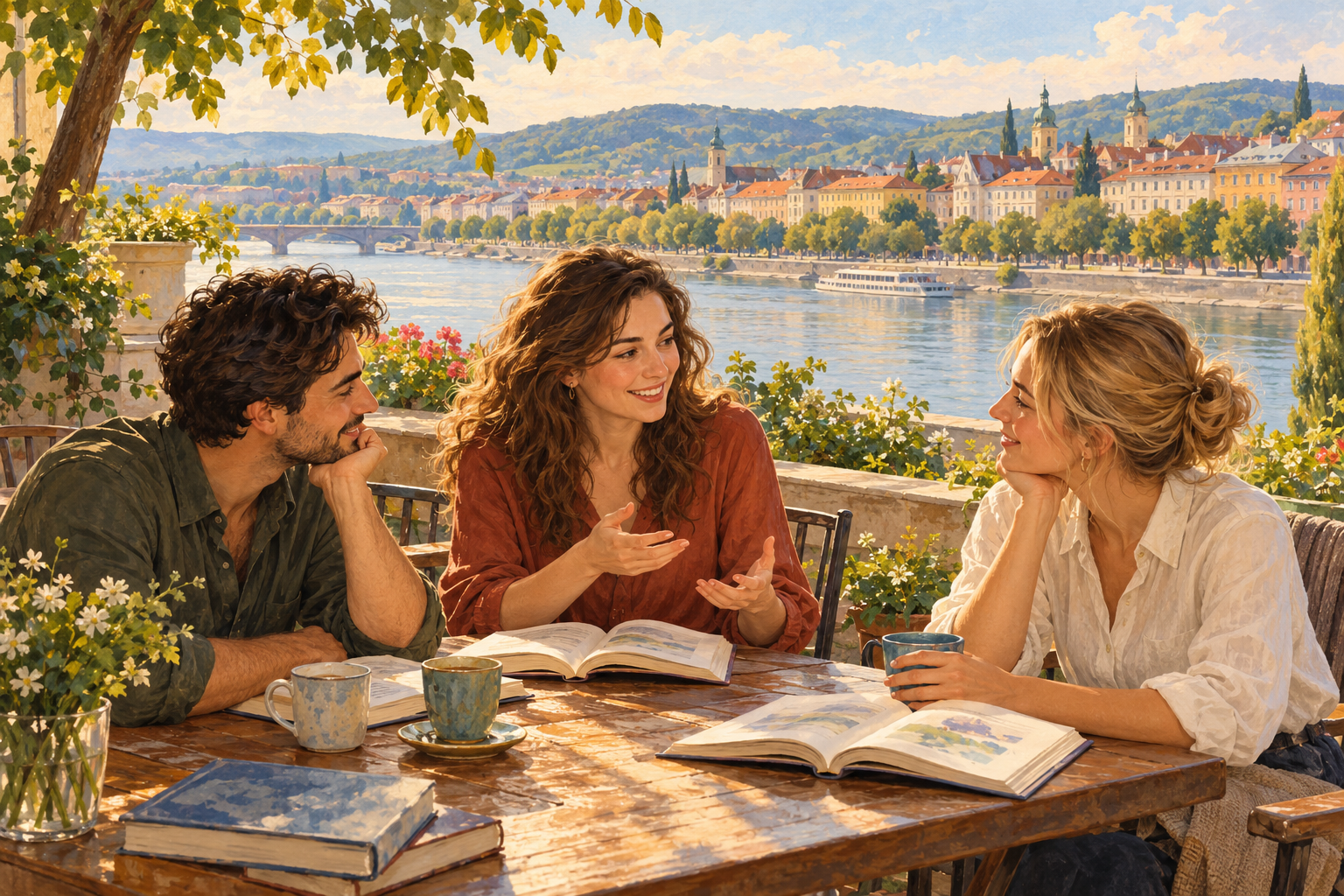
What should you know about Hungary beyond its name? This guide connects a country’s landscapes with the people, institutions and skills that give places meaning. It follows historical evidence and contemporary examples across community life, work, learning and cultural expression, without letting one image or headline stand for the whole country.
Begin with geography and history, or move directly to food, music, learning and the environment. Each chapter pairs a broad theme with concrete examples, while the source links let readers follow the evidence. The final chapter examines documented connections with Singapore.
Hungary at a glance
- Capital: Budapest.
- UN statistical region: Eastern Europe.
- Reading date: 21 October 2026; individual observations retain their own dates.
The capital and regional classification are listed in the UNData country profile. This guide uses specific dated sources for the other subjects rather than treating an old country summary as a current account of every institution.
This is an educational overview, not a travel itinerary or personalised medical, legal or financial advice. A cultural or environmental designation does not establish present access or safety. National data cannot replace the experiences of particular households and communities.
Cover illustration: an original AI-generated artistic interpretation of three adults sharing books in an imagined Hungary-inspired riverside terrace with leafy trees, pastel buildings and green hills. This is a nonliteral composite, not a photograph or an exact view of a named place.
Choose your route through Hungary
- 1. Geography
- 2. Cities and regions
- 3. Early history
- 4. Modern history
- 5. Government
- 6. Economy and Work
- 7. Agriculture and Livelihoods
- 8. Infrastructure and Connections
- 9. Population and Communities
- 10. Education and Learning
- 11. Food and Drink
- 12. Music and Dance
- 13. Literature and Arts
- 14. Health and Community
- 15. Wildlife and Biodiversity
- 16. Climate and Environment
- 17. Sport
- 18. Science and Research
- 19. Opportunities and Challenges
- 20. Hungary and Singapore
1. Geography
Land and climate
Hungary is a landlocked country in the Carpathian Basin, with connections extending across seven neighbouring states. Austria, Slovakia, Ukraine, Romania, Serbia, Croatia and Slovenia form its surrounding political geography. The National Atlas places the country within a broader basin landscape rather than treating national boundaries as the edges of a separate physical world. This distinction helps explain why its geographical setting is best understood through both the national map and the surrounding region. (Atlas: physical setting)
Hungary’s climate combines continental, oceanic and Mediterranean influences. HungaroMet describes a temperate setting in which elevation and surrounding mountain ranges help shape local conditions, while the influence of different air masses varies. Its historical temperature and precipitation descriptions use a quality checked, homogenised baseline for 1991–2020. Such a baseline summarises observations across decades: it describes the climatic background against which individual seasons unfold, rather than predicting the conditions of a particular day. (HungaroMet: climate)
Rivers and lakes
The Tisza links Hungary to a river basin shared with Ukraine, Romania, Slovakia and Serbia. Its upper, middle and lower sections connect mountain headwaters with extensive lowlands. Tributaries associated with its Hungarian reaches include the Bodrog, Sajó, Szamos, Körös and Maros. The International Commission for the Protection of the Danube River treats water quality and water quantity together in this basin, bringing pollution, floods and drought into a common framework for cooperation across borders. (ICPDR: Tisza)
Lake Balaton’s geography can be read through old surveying records as well as modern maps. Zlinszky and Molnár describe a shallow lake supplied principally by the Zala and drained through the Sió. Their historical mapping study examines how a canal and lock lowered its water level in 1863. An 1895 survey recorded thousands of depth measurements with a sounding line or pole, allowing later researchers to compare historical observations within a shared geographical reference system. (Zlinszky and Molnár: Balaton)
Plains and caves
Hortobágy is not simply an empty expanse of grass. UNESCO’s landscape account describes a mosaic of alkaline grasslands, meadows and wetlands whose appearance reflects prolonged pastoral use. Grazing animals, herding practices and the movement between different kinds of ground helped shape this cultural landscape. The open views therefore contain a history of work as well as ecological variation. Its World Heritage inscription recognises the relationship between the plain and the communities that managed it. (UNESCO: Hortobágy)
Beneath the border area between Hungary and Slovakia, the Aggtelek and Slovak Karst cave systems reveal another scale of landscape. Water moving through limestone has created passages, underground streams and mineral formations. The connected Baradla–Domica system illustrates how these features cross a political boundary. UNESCO’s geological description also emphasises evidence of changing climatic conditions preserved underground. The caves are consequently records of landscape development, not merely isolated chambers with visually striking shapes and surfaces. (UNESCO: karst caves)
2. Cities and regions
Riverfront and market
Budapest’s historic urban landscape brings together contrasting sides of the Danube. Buda occupies the more elevated bank, while Pest spreads across flatter ground opposite it. Buda, Pest and Óbuda united in 1873. UNESCO’s account connects subsequent development with major avenues, public buildings and the underground railway beneath Andrássy Avenue. The riverfront and planned streets show how separate settlements became a larger city while retaining different landforms and distinctive inherited patterns of building and movement. (UNESCO: Budapest)
Debrecen’s Piac Street preserves the memory of a marketplace in its name and urban form. The city’s own historical account describes fairs and commercial activity that made the street a meeting point for traders. During the nineteenth and early twentieth centuries, modest houses increasingly gave way to larger commercial buildings and palaces. Municipal investment, banks and private owners all contributed to this transformation, giving the market district an architectural record of changing ambitions and resources. (Debrecen: Piac Street)
Rebuilding and archaeology
Szeged’s streets conceal an extensively reshaped ground surface. In a 2018 archival study, Csaba Szalontai reconstructed historical terrain from maps made before and around the destructive 1879 flood. Reconstruction raised inhabited areas with substantial quantities of fill, obscuring earlier landforms. Surveyors installed forty-five fixed iron columns to support accurate mapping and rebuilding. By georeferencing old maps and comparing elevation measurements, the study recovered evidence of waterlogged depressions and the higher ground around which settlement developed. (Szalontai: Szeged)
Pécs contains an early Christian burial landscape beneath the later city. UNESCO’s archaeological dossier describes funerary structures belonging to Roman Sopianae, especially tombs decorated with paintings. Architectural remains and painted scenes provide complementary evidence: one records how burial spaces were constructed, while the other reveals the imagery selected for them. Their survival within an inhabited urban area creates a layered setting in which the ancient cemetery and subsequent city occupy closely connected spaces through time. (UNESCO: Pécs)
Village and town
Hollókő offers a smaller settlement pattern, organised around a village street and long, narrow household plots. UNESCO describes houses with whitewashed walls, stone foundations and characteristic porches, rebuilt in traditional forms after the fire of 1909. Gardens, orchards and cultivated land link the buildings to their surrounding landscape. The heritage significance lies in this combined pattern of settlement and land use, including the continuity of village life rather than a collection of detached architectural monuments. (UNESCO: Hollókő)
Sopron Museum’s account of the main square follows urban history downward through successive layers. Beneath the later town lie medieval Oedenburg and the Roman settlement of Scarbantia. Archaeological investigations identified parts of a forum, temple, basilica and drainage system across different campaigns. The museum’s 2010 explanation connects these discoveries with the position of streets and buildings above them. A familiar civic space thus becomes evidence of repeated construction, reuse and changing urban arrangements over centuries. (Sopron Museum: urban layers)
3. Early history
Objects and monasteries
Decorated belt pouches offer a view of the tenth century. The Hungarian National Museum’s catalogue describes leather pouches carried by armed men and sometimes ornamented with bronze fittings, gilded silver or a continuous metal plate. Finds are concentrated in several regions rather than one location. Their association with elite status is an archaeological interpretation, while their practical function was to hold everyday objects. Ornament, distribution and construction together help researchers investigate social distinctions and craftsmanship. (Museum: early pouches)
Pannonhalma’s Benedictine abbey was founded in 996, but its buildings record later periods. UNESCO describes the present church as the third on the site, begun in the thirteenth century above earlier remains. A decorated doorway and crypt stand alongside a late Gothic cloister, Baroque additions and a nineteenth-century library. Reading these elements together reveals an institution repeatedly rebuilt and adapted, rather than a monument that has remained physically unchanged since its foundation. (UNESCO: Pannonhalma)
Charters and archaeology
Andrew II’s Golden Bull of 1222 survives through copies and confirmations rather than its seven original exemplars. The National Archives explains that later transcriptions preserved the text, including the authenticated confirmation of 1351. Its name refers to the gold seal attached to the charter. The document concerned royal power and privileged groups within medieval society, not equal political rights for everyone. Its material history also shows how copying could preserve an otherwise lost legal record. (Archives: Golden Bull)
Archaeology continues to investigate the human consequences associated with the 1526 Battle of Mohács. A 2024 excavation examined mass grave IV at the national memorial site through cooperation between museum archaeologists and university biological anthropologists. The researchers reported predominantly young male remains and evidence of injuries, with much material fragmented or mixed. After ten weeks, remains were transported for laboratory preparation. Their account separates observations made during excavation from questions requiring further study. (Kocsmár: Mohács)
Reform and compromise
The April Laws received royal approval on 11 April 1848 and opened a period of political and social reform. An archival exhibition connects them with the responsible ministry led by Lajos Batthyány and the removal of serfdom and noble privileges. The same documentary account follows the shift from reform towards armed conflict later that year. A proclamation preserved by the archives makes that changing situation visible through the language of an appeal written during the crisis. (Archives: April reforms)
The 1867 Compromise created a divided arrangement within the Habsburg monarchy. Act XII distinguished Hungary’s domestic institutions from affairs handled in common with the monarch’s other territories. Foreign relations, military matters and the financing associated with those responsibilities formed central parts of the agreement. Contributions were to be settled through negotiation rather than an undifferentiated common treasury. The original statute reveals a political settlement built through specific allocations of responsibility, representation and expenditure between its participants. (Act XII: Compromise)
4. Modern history
Borders and persecution
The Treaty of Trianon, signed on 4 June 1920 and incorporated into Hungarian law in 1921, addressed the settlement after the former monarchy’s dissolution. Its articles defined frontiers and territorial renunciations, while also regulating nationality and minority protection. The text committed Hungary to protecting life and liberty without distinctions of language or religion. These were treaty obligations, not evidence that every promised protection was realised. Borders and the legal position of residents were therefore closely connected questions. (Treaty: Trianon)
The United States Holocaust Memorial Museum documents how German occupation in March 1944 intensified the persecution of Jews in wartime Hungary. Hungarian authorities participated in concentrating people in ghettos and organising deportations. Between mid-May and early July, approximately 437,000 Jews were deported, most to Auschwitz, where many were murdered. The museum’s account makes the collaboration of institutions and officials explicit. Its geographical scope is the country’s wartime territory, which should not be confused with Hungary’s present boundaries. (USHMM: persecution)
Uprising and negotiations
The United Nations investigated the uprising and Soviet intervention of October and November 1956 through a special committee. Its report described a spontaneous national uprising rooted in longstanding grievances, including repression and Hungary’s subordinate position towards the Soviet Union. The inquiry combined witness testimony with contemporary newspapers, radio broadcasts and diplomatic information. Hungary’s government disputed the committee’s authority and findings. The documentary record preserves the investigation’s conclusions and the international disagreement surrounding the events. (UN: 1956 inquiry)
In 1989, opposition organisations negotiated common positions before entering broader talks about political change. The Blinken OSA archive preserves 121 hours of unedited Black Box recordings from the Opposition Roundtable. Its collection description identifies debates over a multiparty system, elections, press freedom, property and the former ruling party’s assets. Representatives subsequently negotiated with the communist party at the National Roundtable. These recordings preserve bargaining behind a transition often remembered through public milestones. (Archive: 1989 talks)
European membership and elections
Hungary joined the European Union on 1 May 2004 alongside nine other countries. The accession treaty signed the previous year established their membership, while its accompanying act set out how existing treaties and institutional rules would apply. Detailed annexes addressed transitional arrangements rather than treating accession as a single ceremonial declaration. The Council’s institutional chronology records the completed enlargement. This combination of treaty text and entry date explains how negotiations became a formal change in membership. (EU: accession treaty)
Hungary’s election authority records the parliamentary election held on 12 April 2026 through both party totals and lists of representatives. Its results page assigns 141 mandates to TISZA, 52 to FIDESZ–KDNP and six to Mi Hazánk. Together, those entries describe the distribution of the 199 elected seats recorded for that election. The named representatives make figures traceable to individual mandates. This dated record connects party totals with the people returned. (NVI: 2026 election)
5. Government
Rules and leadership
The Fundamental Law describes Hungary as a republic based on separation of powers. In the consolidated text dated 1 October 2026, the government comprises the prime minister and ministers and is accountable to Parliament. Parliament elects the prime minister following a presidential nomination, while the prime minister determines general government policy. These provisions explain the relationship between executive and legislature. They describe legal institutional design, rather than measuring its operation in practice. (NJT: Fundamental Law)
An official account dated 16 October 2026 identifies Péter Magyar as prime minister during a meeting with Ukrainian President Volodymyr Zelensky in Brussels. The government reported that they agreed to continue consultations at ministerial level and give attention to minority communities in both countries. Magyar also expressed support for diplomatic efforts towards a ceasefire and lasting peace. The meeting illustrates executive diplomacy, while the stated intentions remain commitments reported by participants. (Government: October meeting)
Research and auditing
Parliamentary work also depends on information services. In a firsthand paper from 2014, Ida Kelemen described the separation of the Information Service for MPs from the Parliamentary Library into a distinct department within the same directorate. Their different audiences and services prompted an agreement governing cooperation. Two dedicated information points combined library and research assistance in parliamentary buildings. The account shows how institutional knowledge was organised to support users, through coordinated services rather than an undifferentiated collection. (Kelemen: research service)
A 2025 State Audit Office examination considered the sharing of revenues between Budapest’s municipal government and its districts. It found that the adoption procedure was lawful and the overall planning figures were supported, but identified inconsistencies within the regulation. Financial settlements did not reveal improper allocations in the examined scope. Follow-up work found three previous recommendations implemented and another only partly addressed. The report illustrates how an audit can distinguish sound accounting from provisions requiring correction. (ÁSZ: municipal audit)
Data and public debate
The data-protection authority’s report on 2025 describes an investigation into artificial intelligence in banking. Investigators examined the purposes of systems, the personal data they processed and their compliance with applicable requirements. Findings and examples of good practice were published in Hungarian and English. The authority also described a digital strategy department and plans to use artificial intelligence when anonymising decisions. Completed investigative work and proposed tools appear together, showing stages of an evolving administrative response. (NAIH: 2025 work)
The European Commission’s July 2026 assessment distinguished progress in media regulation from unresolved concerns about public advertising. It reported reforms to the media regulator’s appointments, organisation and financing and considered that some progress had been made. However, it found that transparent and fair allocation of state advertising had not yet been addressed. These are findings from that reporting period, not a claim that every later development was already known. This distinguishes institutional reform from practical safeguards. (Commission: 2026 review)
6. Economy and Work
Economic activity and banknotes
Hungary’s economy connects manufacturing, investment and demand from other countries. In its October 2026 assessment, IMF staff projected growth of around two percent for that year. The assessment identified weaker European demand and additional trade barriers as risks for manufacturers selling abroad. It also recommended training that helps workers develop new skills or change occupations. These connections explain why an economic outlook considers both international markets and the capabilities of people at home. (IMF economic assessment)
Hungary’s banknotes combine familiar images with carefully designed physical features. The MNB’s guide describes paper made from cotton, with a white base colour. All denominations have the same dimensions, measuring 154 millimetres by 70 millimetres. Some protective features are visible, while others require special equipment to identify. Portraits and pictures on the reverse preserve an established design tradition. The guide therefore presents a banknote as both a recognisable object and a manufactured security product. (MNB banknote guide)
Investment and enterprise
Investment decisions offer one view of the work businesses expect to create. HIPA reported that investors supported by the agency decided on 108 projects during 2025, associated with 18,227 new jobs. The projects covered seventeen sectors, including electronics, automotive manufacturing and business services. More than eighty-four percent were planned outside Budapest. These figures describe the agency’s supported investment decisions, rather than every investment in Hungary or a count of jobs already filled. (HIPA investment results)
Small enterprises also depend on practical administrative services. NAV’s guide explains that a sole entrepreneur can begin the registration process through an online service or at a customer service office. It advises checking whether a chosen activity requires qualifications, notification or permission. A separate public register allows free searches using a registration or tax number. Its entries include business activities, operating addresses and status information, making the formal record accessible beyond the business itself. (NAV enterprise guide)
Work and payments
Choosing work can require reflection as well as searching for vacancies. The National Employment Service describes individual counselling for people uncertain about their direction, returning after a long absence or discouraged by unsuccessful applications. Counsellors help participants organise their knowledge, experience and strengths, identify areas for development and plan steps towards goals. The service is offered through district employment departments. The guide describes six to eight sessions, each lasting no more than an hour. (NFSZ work counselling)
Payments are another part of everyday economic activity. The MNB’s September 2026 report recorded 7.6 million qvik payments during 2025, worth approximately 2.3 trillion forints. These services use instant transfers and include payment requests, QR codes, links and contactless technology. By the end of 2025, transactions had originated from nearly half a million accounts. The report follows how different payment methods are used, distinguishing the number of transactions from their total monetary value. (MNB payment report)
7. Agriculture and Livelihoods
Fields and vineyards
Hungary’s agricultural landscape includes arable fields, grassland, orchards and vineyards. The final 2023 agricultural survey recorded approximately 5.1 million hectares of agricultural land on the first of June. Arable land accounted for eighty-two percent and grassland for sixteen percent, with fruit and vines occupying smaller shares. Individual farms used sixty-three percent of the agricultural area. The survey also found fewer farms and larger average holdings, showing changes in how production was organised. (KSH agricultural survey)
Wine production varies across Hungary’s growing districts. The National Council of Wine Communities publishes a table following each district from 2011 through 2025. Its 2025 figures place Kunság well ahead of other districts by volume, while also recording output from Eger, Tokaj, Villány and numerous smaller areas. The national total exceeded three million hectolitres that year. Reading the district rows alongside the total shows how different producing areas contribute to the national output. (HNT wine statistics)
Fish and rural development
Fish farming contributes to rural livelihoods. AKI’s report summary recorded 20,634 tonnes from Hungarian pond farms in 2025, with common carp accounting for over eighty-four percent of pond fish produced for food. The report separately recorded production from intensive systems, where output approached six thousand tonnes. This distinction shows that fish production takes place in different settings. Pond area, species and production method all help describe the sector beyond a single total. (AKI fish harvest)
Rural development involves the stages between growing a product and reaching customers. Hungary’s agricultural plan, updated in August 2026, includes support for modernising farms, processing after harvest and improving logistics. It also promotes shorter local supply chains and digital opportunities for local markets. Support for younger farmers is intended to help a new generation establish businesses. These are connected programme priorities: strengthening production, marketing and rural enterprise, rather than simply expanding cultivated land. (EU rural plan)
Seeds and processing
Producing seed requires checks before it reaches another grower. NÉBIH’s 2022 presentation describes three connected activities: inspecting fields, taking seed samples and testing seeds in laboratories. It also outlines training for authorised inspectors, including written, oral and practical examinations. Practical assessment can take place in a multiplication field, a seed plant or a laboratory. This account highlights the specialised work behind planting materials, connecting agricultural production with sampling, documentation and technical judgement. (NEBIH seed inspection)
Resource processing supports a different set of Hungarian livelihoods. MOL’s production profile traces the Danube Refinery at Százhalombatta to its opening in 1965 and lists a nominal capacity of 8.1 million tonnes annually. The same profile describes petrochemical operations at Tiszaújváros, including ethylene production and polymer units. The two locations illustrate different branches of Hungary’s industrial processing. Their listed capacities describe the scale of facilities, not the amount actually produced in any particular year. (MOL production sites)
8. Infrastructure and Connections
Trains and roads
Rail journeys involve information systems as well as tracks and trains. MÁV’s domestic travel guide explains how its journey planner can broaden searches to allow transfers at different Budapest stations. It also distinguishes online passes displayed in an application from passes bought and presented on paper. Seat preferences can be requested, but their fulfilment depends on availability. These practical details show how planning, purchasing and presenting a ticket form connected parts of a journey. (MAV travel guide)
Road infrastructure needs continuing care after construction. Hungarian Public Road describes maintenance work including repairing defects and clearing snow and ice during winter. Its remit does not cover every road: the operator distinguishes its network from municipal streets, Budapest roads and motorways managed through concessions. That distinction matters when identifying who maintains a particular route. The organisation’s public guidance presents roads as a network of separate responsibilities, with seasonal work forming part of regular operations. (Hungarian Public Road)
Air travel and communications
Budapest Airport handles both travellers and freight. Its account of 2025 recorded approximately 19.6 million passenger movements and more than 426 thousand tonnes of cargo. Passenger facilities and cargo handling therefore represent different sides of the same transport gateway. The airport also described a development programme intended to accommodate further growth. The annual traffic figures measure movements and handled goods, while the development programme describes preparation for future demand rather than completed additional capacity. (Budapest Airport traffic)
Communication infrastructure reaches households through different combinations of connections. NMHH’s survey of 2025 found that seventy-one percent of Hungarian households used both fixed internet and mobile internet on smaller devices. Eight percent used only mobile internet, five percent only fixed internet, and sixteen percent neither. The survey was based on a sample of 3020 households. Its categories make clear that having one kind of connection does not necessarily mean having the other at home. (NMHH household survey)
Electricity and water
Electricity networks also require renewal and new connections. An EIB project summary published in August 2026 described E.ON’s proposed distribution investment programme for 2027 through 2031. Planned work included rehabilitation, modernisation, expansion, metering and connections for new customers. The programme aimed to improve network operation and accommodate additional electricity sources. At publication it remained under appraisal. It is therefore an example of infrastructure being planned and assessed, rather than a completed expansion already serving households. (EIB electricity proposal)
Water supply links extraction sites with treatment and distribution. Budapest Waterworks’ 2017 report described wells using bank filtration on Szentendre, Csepel and Margaret islands and beside the Danube. Water extracted on Csepel required iron and manganese removal before entering the network. The report also described disinfection and separate local water resources serving additional communities. This dated operational account makes the supply chain visible: wells alone are only one part of the system delivering water. (Budapest Waterworks report)
9. Population and Communities
Residents and participation
Hungary’s 2022 census provides a detailed picture of its residents at a specific moment. It counted 9,603,634 people on the first of October that year and found that older age groups had grown since the previous census. Published tables examine age, citizenship, language, household size and household composition. These categories show several ways of understanding a population. A national total gives scale, while the accompanying tables reveal differences among households and generations within it. (KSH population census)
Residents can help shape local spending through Budapest’s participatory budget. The city’s guide describes a process in which ideas are submitted, checked and evaluated before reaching a public vote. Technical feasibility and available funds affect which proposals can proceed. Similar ideas may be combined, with their authors informed about changes. The most popular eligible proposals are selected within category budgets. Participation therefore includes developing practical proposals as well as expressing preferences on a ballot. (Budapest community budgeting)
Support and belonging
Refugee support often depends on cooperation across organisations and local communities. UNHCR’s February 2026 factsheet describes coordination through a refugee response forum in Hungary. It also reports that partners delivered more than six hundred thousand essential items during December 2025 to Ukrainian refugees and vulnerable host community members. Supplies included bedding and other winter household necessities. A separate school campaign supported educational inclusion, illustrating how immediate assistance and participation in community life can be connected. (UNHCR Hungary activities)
The Hungarian Maltese Charity’s Presence programme starts with sustained contact in disadvantaged communities. Its account describes establishing a social office close to residents, learning about difficulties together and building relationships of trust. Housing, employment and education problems are treated as connected rather than isolated issues. Local development then brings additional services and neighbouring institutions into the process. The programme therefore builds support around regular contact, local knowledge and cooperation with people who live in the community. (Maltese Presence programme)
Digital access and volunteering
Digital services offer another way to handle everyday official matters. The DÁP application’s guide lists an inbox for official messages, appointment booking, a data wallet and document signing. Users can also view personal and vehicle information and use the application to sign in to connected services. Registration is offered online or in person. The guide describes specific available functions, helping distinguish practical mobile services from the broader ambition of making public administration easier to use. (DAP citizen guide)
Community participation includes shared voluntary work. The 72 Hours Without Compromise programme brings young people together for projects such as improving playgrounds, painting fences and organising activities for older people or people with disabilities. Groups help plan, carry out and evaluate their tasks. The organisers describe the aim as encouraging generosity and showing what young people can achieve together. Such projects connect practical work with meeting people beyond an existing circle of friends. (72 Hours volunteering)
10. Education and Learning
Schools and assessment
Basic schooling in Hungary usually follows an eight-grade structure. Eurydice describes four years at primary level followed by four at lower secondary level, providing a foundation of general education. Students can then enter several kinds of upper secondary institution. General grammar schools prepare pupils for a school-leaving examination, commonly through four years of study. Some grammar schools instead run programmes lasting six or eight years, illustrating the variety of routes within general education. (Eurydice school structure)
Assessment can examine how pupils use knowledge, not only what they remember. The Education Authority’s account of national competency testing describes mathematical tasks based on realistic situations and reading questions that ask pupils to find information, recognise relationships and interpret meaning. School reports help institutions analyse their work, while individual identifiers make it possible to follow pupils’ development. The account therefore connects classroom skills with feedback that can support reflection on learning and teaching. (Education Authority assessment)
Vocational and university study
Vocational education combines general study with preparation for an occupation. IKK’s guide describes technicum programmes usually lasting five years, with two years of sectoral foundations followed by three years of specialist study. Some sectors have longer programmes. Students initially choose a sector and begin their specific occupation in the third year. The route can lead to both a school-leaving qualification and vocational certification. Vocational schools offer a separate pathway, generally lasting three years. (IKK vocational pathways)
University study opens a wide range of subject choices. Eötvös Loránd University’s information for prospective students lists programmes for international applicants across nine faculties. Examples include computer science, psychology, English and American studies, and cartography. Its educational information also introduces preparation for preschool and primary teaching. The university provides programme searches, application guidance and opportunities to hear from students. These resources help an applicant move from a broad interest towards understanding a particular course of study. (ELTE study options)
Mobility and mastery
Learning can extend beyond a student’s home institution. Tempus’s Erasmus programme materials distinguish study mobility from practical traineeships, and teaching visits from staff training. Its 2025 implementation resources provide separate learning agreements for studies and placements, alongside staff agreements and a project management handbook. This documentation shows that mobility involves planning the educational activity, not merely arranging travel. Different agreements reflect the different purposes of learning abroad and the responsibilities involved in organising it. (Tempus mobility guide)
Advanced vocational learning also prepares experienced workers to teach others. The Hungarian Chamber of Commerce and Industry describes master training as a way to pass professional knowledge to the next generation. Its merchant master curriculum combines occupational expertise with business management and pedagogy. Participants study communication, planning practical learning and motivating trainees, alongside commercial work. This example shows how professional development can connect doing a job, running an enterprise and helping someone else learn its skills. (MKIK master training)
11. Food and Drink
Soup and seasoning
Goulash is best approached as a particular kind of soup rather than a name for any paprika dish. Hungary’s individual heritage entry describes a generous broth containing onions, paprika, cubed potatoes and csipetke pasta, without a thickening agent. The liquid remains an important part of the dish alongside its solid ingredients. The same account places the increasing use of paprika within nineteenth-century Hungarian cooking, connecting this named preparation with a changing culinary vocabulary. (Hungarikum: Goulash)
Szeged paprika’s product specification explains how a vivid red powder emerges from ripe pepper pods. Harvest is followed by further ripening, drying and milling, with both sweet and hot varieties described. During grinding, warmth helps seed oils combine with pigments from the skins and coat the particles. Colour therefore reflects processing as well as the harvested crop. The specification also locates growing, processing and packaging within its defined production area, linking technique with provenance. (EU: Szeged paprika)
Regional specialities
Makó onions have a distinctive place in regional food production. Their European specification describes shiny bronze-red skins enclosing dense, firm, pale flesh, with a strong taste and substantial dry matter. The bulbs are rounded or slightly elongated rather than uniformly spherical. Named local varieties and a particular production method form part of the description. The document connects keeping quality with cultivation and the region’s late-summer conditions, showing why texture and storage characteristics matter alongside flavour. (EU: Makó onions)
Szeged salami brings together pork, fat, curing and a carefully maintained ripening environment. Its specification describes an evenly cylindrical sausage with a greyish-white mould covering. The microorganisms established in the ripening rooms contribute to the product’s characteristic appearance, aroma and flavour; the document calls attention to these local production conditions rather than ingredients alone. Humid air associated with the nearby Tisza also figures in its explanation of the relationship between the salami and its production setting. (EU: Szeged salami)
Confectionery and winemaking
A Dobos cake combines layers of sponge and cream beneath a top of caramelized sugar. Its heritage account traces its introduction to the Budapest exhibition of 1885 and records that József Dobos gave the original recipe to a confectioners’ association in 1906. Historical shipments used special packing and ice. The cake’s story follows the movement of a delicate confection between places, as well as the arrangement of contrasting layers on a plate. (Hungarikum: Dobos cake)
At Disznókő, aszú winemaking begins with individually selected berries kept separately before processing. The estate describes contact with fermenting must or new wine to extract sugars, flavours and acidity from them. Pressing is followed by maturation in oak, while separate lots allow later blending. This is an account of one producer’s practice, in which selection, extraction and maturation each have a role. The finished wine results from decisions made across these successive stages. (Disznókő: Aszú winemaking)
12. Music and Dance
Learning through participation
Táncház means dance house, but the safeguarding method centres on participation. UNESCO’s account describes learners observing and imitating experienced dancers to live music, then using their own creativity. Singing, crafts and presentations can accompany the dancing, with participants welcomed regardless of prior experience. Selected for the Register of Good Safeguarding Practices in 2011, the model joins direct learning with archives and teaching resources that help transmit skills between people. (UNESCO: Táncház)
Csárdás is danced in couples within a larger gathering. Regional gestures and figures give dancers material to improvise within familiar patterns, rather than a single routine to reproduce mechanically. UNESCO’s 2024 inscription describes string accompaniment, including violins, violas and double basses, and performances at weddings, community occasions and on stage. Partners attend both to one another and to surrounding couples. The dance involves coordination across the floor alongside individual movement and expression. (UNESCO: Csárdás)
Teaching and instruments
The Kodály safeguarding concept connects collecting music with making it available for use. UNESCO’s 2016 decision describes research, documentation and publication alongside formal and informal teaching, community practice and composition. Recorded and organised material is intended for tradition bearers as well as wider audiences. Its emphasis on respecting different musical traditions also permits adaptation to varied repertoires. In this approach, an archive is not simply a store: it supplies material that people can learn and perform. (UNESCO: Kodály concept)
Objects in the Liszt Memorial Museum reveal connections between performance and teaching. Its drawing-room catalogue describes a Chickering piano made around 1879–1880 and sent to the Academy of Music at Liszt’s request, where he and his students used it. A Bösendorfer carries a certificate identifying his use of that instrument. These details place the pianos within working musical spaces. The catalogue also explains that preserving an instrument’s authenticity can limit how extensively it is restored. (Liszt Museum: Instruments)
Ensembles and arrangements
Muzsikás’s own historical account recalls musicians seeking out village players in Transylvania and other Hungarian-speaking areas to learn instrumental techniques directly. The ensemble formally began in 1973. In a statement dated 1996, its members described the patient teaching that helped them acquire this repertoire. The biography also follows their collaboration with Márta Sebestyén while recognising her separate career. It presents musical transmission as sustained work between particular performers, rather than anonymous survival of unchanged tunes. (Muzsikás: Musical learning)
Romano Drom’s representative profile describes an ensemble composing in the Oláh Roma language while drawing on varied musical influences. Antal Kovács’s arrangements combine elements of inherited repertoire with Catalan rumba, Arabic, Balkan and pop rhythms. Guitar and bass appear alongside pots and spoons in the instrumentation. The result is the band’s own approach to contemporary performance, not a definition of all Roma music. Its profile foregrounds arrangement and composition as ways of working with inherited sounds. (Romano Drom: Arrangements)
13. Literature and Arts
Novels and memory
Imre Kertész’s Sorstalanság, published in 1975 and translated as Fatelessness, draws on his experiences in Auschwitz and Buchenwald. The Swedish Academy’s biographical account nevertheless distinguishes its autobiographical novel form from a straightforward autobiography. That distinction frames the narrated experience as literature. The same account places the novel among later fiction, essays and diary-like writing, and notes his translations of German-language authors. His work extends beyond a single book or mode of expression. (Nobel: Kertész)
László Krasznahorkai’s fiction moves between remote settlements and journeys far beyond them. The Swedish Academy’s 2025 account identifies Sátántangó, first published in 1985, with a rural setting, while War and War follows an archivist towards New York. Baron Wenckheim’s Homecoming reverses the direction through a return to Hungary after exile in Argentina. The Academy also emphasises long, winding sentences. Place, movement and prose distinguish these fictional worlds from a simple national portrait. (Nobel: Krasznahorkai)
Fiction and moving light
Magda Szabó’s The Door centres on the relationship between a writer named Magda and her housekeeper, Emerence. In the publisher’s synopsis, Emerence becomes indispensable within her employer’s household while keeping her own home closed even to relatives. Their different backgrounds and growing dependence create the novel’s tensions. The 2015 New York Review Books edition uses Len Rix’s translation. Its domestic setting makes privacy, attachment and unequal relationships central to the fictional encounter. (NYRB: The Door)
László Moholy-Nagy’s Light Prop for an Electric Stage turns movement into changing patterns of illumination. The Guggenheim’s exhibition transcript describes metal, glass and plastic components driven by a motor, with perforated discs and screens casting shifting light and shadows. Intended for theatrical use, the device involved engineers and other collaborators. The museum’s 2016 presentation used an exhibition copy, consistent with the artist’s interest in reproducibility. The artwork includes an optical event, not merely a stationary object. (Guggenheim: Light Prop)
Embroidery and painted narratives
Matyó embroidery is associated with the community in and around Mezőkövesd. UNESCO’s 2012 inscription describes floral motifs worked in flat stitches on celebratory clothing and decorated objects. Community transmission includes the Matyó Folk Art Association, established in 1991, and its Borsóka Embroidery Circle, where experienced makers teach techniques and motifs. The designs also appear in contemporary fashion and interiors. Such uses place embroidery within changing settings while maintaining opportunities to learn through work with other practitioners. (UNESCO: Matyó embroidery)
Mara Oláh, known as Omara, brought written language and painted imagery together. A Ludwig Museum exhibition booklet situates her work around poverty, women’s position and relations between Roma communities and wider society. Its reproduction of Stormy Rains Showing Their Strength depicts houses, water and boats beneath a dark sky, accompanied by handwritten words. The text gives the scene a social argument rather than leaving it as weather imagery alone. The painting is dated 2010; Omara died in 2020. (Ludwig Museum: Omara)
14. Health and Community
Access and prevention
Hungary’s Primary Care Model Programme employed community health mediators alongside multidisciplinary teams between 2013 and 2017. Four groups, each involving six general practitioners, served disadvantaged areas with Roma populations. A qualitative study interviewed forty mediators about their work and found that they regarded themselves as useful links between communities and healthcare teams. Their accounts described improved access and changing personal attitudes to health. These were reported experiences, not a controlled measurement of health outcomes. (Health mediators: Access)
The 2025 Country Health Profile distinguishes Hungary’s mandatory vaccination programme from its voluntary offer of free human papillomavirus vaccination. Parents could request the latter for girls aged twelve to thirteen from 2014, with boys included from 2020. National figures cited in the profile put 2024 coverage at 81 per cent for girls and 76 per cent for boys in that age group. The figures describe this programme and cohort, not vaccination across the population. (WHO: Vaccination systems)
Donation and emergency care
The Hungarian Red Cross describes blood-donor recruitment as a partnership with the National Blood Transfusion Service. Its account reports 9,856 donation events during 2024 and provides information about locating sessions, including through an app. This work connects potential donors with collection opportunities. The service’s stated purposes include supplying blood products for surgery, casualties and other patients needing transfusions. Recruitment and event organisation form the community-facing side of that supply system. (Red Cross: Blood donation)
A 2025 study analysed 130,258 out-of-hospital cardiac arrests recorded by the Hungarian National Ambulance Service during 2018–2023. It compared urban and rural settings using administrative categories and statistical adjustment. Rural response times were longer, and the measured outcome was less frequent there. That outcome was return of spontaneous circulation at the scene, not survival to hospital discharge. The study links location with measured emergency-care results, without establishing a cause for the observed differences. (Hungarian study: Emergency response)
Ageing and supportive care
WHO reported the launch of a Healthy Ageing Collaborating Centre at Semmelweis University in November 2025. Its agenda combined disease-prevention evidence, workforce education and community-based prevention with tools for ageing strategies. The centre was linked with work on a regional strategy for 2026–2030. This designation established a platform for collaboration; the listed activities described its intended contribution. The emphasis linked research and training with services responding to ageing, rather than a single treatment. (WHO: Healthy ageing centre)
The Hungarian Hospice Foundation describes care that addresses physical, emotional, social and spiritual needs, with support extending to relatives. Its team model brings together doctors, nurses, psychologists, physiotherapists, social workers, spiritual advisers and volunteers. The home-care account includes equipment loans and cooperation with families. These features place practical assistance beside symptom care and emotional support. The provider’s approach shows how forms of expertise can be organised around a person and their household. (Hungarian Hospice: Team care)
15. Wildlife and Biodiversity
Protecting vulnerable species
Protecting the Hungarian meadow viper involves more than keeping snakes alive. A June 2026 project account describes six years of work combining habitat restoration, conservation breeding, releases and research. These activities address the animals and the grassland conditions they require. The account presents the close of a project phase, with further work continuing, rather than declaring the species secure. Conservation here connects practical habitat management with knowledge gained from monitoring and breeding. (MME: Meadow vipers)
Poisoned wildlife can require cooperation between people with different skills. The HELICON project’s report on its 2012–2016 work describes a network connecting conservationists, veterinarians and police to protect imperial eagles. Field discoveries were followed by examination and investigation, with laboratory analysis helping establish what had happened. A specially trained dog unit began work in 2013. The project therefore treated poisoning as both a conservation problem and an investigative task requiring shared procedures and evidence. (HELICON: Eagle protection)
Animal choices and barriers
Beavers do not select trees equally. A Hungarian study published in 2023 examined 13,304 woody plant units across eleven sites, recording species, stem dimensions and signs of feeding. Willow and poplar were preferred, while some invasive plants were avoided. Distinguishing cutting, carving and bark removal helped the researchers describe how animals used vegetation. Such detailed observations reveal selective feeding within particular habitats, rather than supporting the assumption that beavers simply remove whatever grows beside water. (Juhász study: Beaver choices)
A bridge can obstruct an insect without physically blocking its path. In a 2011 study on the Tisza, researchers observed mayflies flying upstream and found that most turned back at a bridge. Measurements of reflected light indicated that the structure interrupted the horizontally polarized signal associated with the river surface. The study connects insect behaviour with an optical feature of infrastructure, showing why an open passage may function as a barrier during that flight. (Málnás study: Mayfly flight)
Meadows and soda pans
Meadow conservation can depend on when mowing happens, not merely whether grass is cut. Kőrösi and colleagues compared mowing treatments and abandonment across four Hungarian meadows over three years. Their 2014 paper found that adult scarce large blue butterflies favoured plots cut only in September over plots cut twice or left unmanaged. Responses differed among butterflies, their host plants, ants and invasive goldenrod, making the experiment an example of managing several interacting ecological requirements together. (Kőrösi study: Meadow management)
Shallow soda pans link water chemistry with the movements of birds. A 2021 study of three Hungarian pans combined water measurements with bird counts collected in 2017. Geese, ducks and gulls brought phosphorus into these habitats, yet nutrient levels did not translate straightforwardly into equally high production. Salinity, alkalinity, turbidity and intermittent water conditions shaped the system. The findings explain why interpreting these unusual wetlands requires attention to physical conditions as well as nutrients. (Boros study: Soda-pan ecology)
16. Climate and Environment
Plans and urban research
Climate policy contains targets and projections that should not be confused with achieved results. The European Commission’s 2025 assessment of Hungary’s updated energy and climate plan recorded a proposed 30 percent renewable share in gross final energy consumption by 2030. This was below the 34 percent contribution indicated by its formula. The assessment also identified gaps in quantified climate risks and adaptation detail, showing how external review can test a plan’s specificity and ambition. (European Commission: Climate plan)
Urban heat research asks how surfaces behave within a city. A Budapest park study published in 2025 compared satellite observations with computer simulations across three summer days. The two approaches broadly agreed, but results differed locally around tree canopies and hard surfaces. These were measurements and estimates of surface temperature, not interchangeable readings of the air people breathe. Combining methods can therefore reveal both a broad pattern and places where closer investigation is needed. (Salih study: Urban heat)
Forests and local air
The Pilis forest experiment makes woodland management into a controlled comparison. After baseline observations in 2014, researchers established clear cuts, gaps, retained tree groups and preparatory cuts alongside uncut controls. Six replicates produced thirty experimental plots. Its project description reports pronounced microclimatic changes after clear cutting, while gaps combined increased light and soil moisture with more balanced temperature and humidity. Studying these treatments together helps reveal how forestry decisions alter the conditions experienced by living organisms. (Pilis: Forest experiments)
Local air quality work involves communication and coordination. In a June 2026 account, the HungAIRy project described training and support for local environmental managers, educational materials and an information platform. Activities included awareness work around household heating and workshops on lower-emission agricultural practices. The emphasis was on connecting professional knowledge with decisions made in municipalities, homes and farms. These are documented project activities, not a measurement showing that every participating place achieved cleaner air. (HungAIRy: Local air quality)
Keeping materials in circulation
The Plastic Cup initiative turns river litter collection into a collaborative activity. Its programme describes collecting discarded materials along the Tisza floodplain, sorting them and using suitable bottles to provide buoyancy for boats. Teams then propel these craft with paddles, oars or sails, while unsuitable materials require separate handling. The practical sequence makes waste classification part of the activity itself: an object’s next use depends on its material and condition, rather than simply its presence. (Plastic Cup: River waste)
Container returns offer another way to organise materials. MOHU’s REpont information describes automatic and manual return points for covered plastic, metal and glass beverage containers. An October 2024 account explained options including vouchers, application-based refunds and charitable donations. The system connects consumers, collection equipment and retailers through a return process. Returning a container is one step in managing its material, however, and does not by itself document what subsequently happened to it. (MOHU: Container returns)
17. Sport
Football and fencing
Hungary’s 6–3 victory over England at Wembley in November 1953 illustrates tactical invention. UEFA’s retrospective describes Nándor Hidegkuti playing behind Ferenc Puskás and Sándor Kocsis rather than staying where defenders expected a centre forward. Hidegkuti scored three goals, while Puskás’s celebrated turn illustrated the value of close control and movement. The match can be studied through positioning and cooperation, not only through a famous score or individual reputations. (UEFA: Hungary at Wembley)
Áron Szilágyi’s Tokyo victory illustrates another competitive rhythm. In the men’s individual sabre tournament held in July 2021, he defeated Sandro Bazadze 15–13 in the semifinal before beating Luigi Samele 15–7 in the final. The international fencing federation recorded this as his third individual Olympic gold. Thirty-six men contested the event at Makuhari Messe in Chiba. The scores show how a narrow contest and clearer final victory belonged to one successful tournament. (FIE: Szilágyi in Tokyo)
Racing on water
Katinka Hosszú’s Rio performance provides a swimming landmark. In the women’s 400-metre individual medley final in August 2016, she finished in 4:26.36, setting a world record at that time. World Aquatics’ report placed Maya DiRado second and Mireia Belmonte third. Hosszú had already approached the previous record during the heats before surpassing it in the final. Reading those stages together distinguishes preparation within a competition from the decisive performance that determined the medals. (World Aquatics: Hosszú in Rio)
Danuta Kozák’s Rio programme combined individual racing with crew events. The canoe federation reported that she raced seven times across six days, competing in the women’s single, double and four-person kayaks over 500 metres. She won three gold medals, adding to earlier Olympic medals from Beijing and London. Her programme illustrates repeated competition across different boat sizes, while the federation’s report places the achievement within Hungary’s second place in that Games’ canoe sprint medal table. (ICF: Kozák’s Rio programme)
Athletics and chess
Luca Ekler’s results show achievements across both jumping and sprinting. The Paralympic archive records her victory in women’s T38 long jump at Tokyo in August 2021, with a distance of 5.63 metres. She won the same event in Paris in September 2024 with 5.56 metres, then took second place in the T38 400 metres. Keeping the event and classification attached to each result explains more than a medal total detached from its context. (IPC: Luca Ekler results)
Chess can combine community activity with competitive play. The Judit Polgar Foundation’s September 2025 festival programme at the Hungarian National Gallery combined a chess tournament with opportunities to challenge masters, storytelling and children’s art. Plans included a chess piece adventure trail for younger participants and programming sessions for older children. This planned combination linked concentration at the board with creative activities around it, offering several ways to participate without requiring everyone to enter the same competition. (Judit Polgar Foundation: festival programme)
18. Science and Research
Molecules and ultrafast light
Katalin Karikó’s research illustrates scientists’ international paths. Born in Szolnok, she coauthored a 2005 laboratory study at the University of Pennsylvania examining how cells respond to RNA. The team tested modified and unmodified RNA and found reduced activation markers and cytokine responses with modified RNA. This was an investigation of cellular recognition, not a clinical vaccine trial. It clarified a mechanism that later research could develop into practical applications. (RNA study; Nobel: Karikó)
Ferenc Krausz, born in Mór, contributed to an international investigation of tiny scales. A 2001 paper by Hentschel and colleagues measured soft X-ray pulses lasting about 650 attoseconds, with an uncertainty of 150 attoseconds. An attosecond is a billionth of a billionth of a second. Combining these pulses with visible light allowed the team to trace electronic dynamics. The paper’s affiliations span Austria, Germany and Canada, illustrating collaborative research rather than an experiment conducted solely in Hungary. (Nature: Attosecond metrology; Nobel: Krausz)
Facilities and sky surveys
Scientific discoveries also depend on shared equipment. ELI ALPS in Szeged describes the development of a research centre providing lasers, secondary light sources and experimental stations. Construction began in 2014, and the first lasers were installed in 2017. From 2019, researchers could seek access through calls for experimental proposals. The operator explains how staff worked with national and international partners to commission these systems, making the organisation of research infrastructure part of the scientific story. (ELI ALPS: research infrastructure)
At Konkoly Observatory’s Piszkéstető station, astronomers have developed methods for detecting small objects approaching Earth. A 2025 conference paper discusses three discoveries made before atmospheric impact: 2022 EB5, 2023 CX1 and 2024 BX1. Its authors emphasise the feedback between analysing observations and collecting data immediately. Their account connects upgraded instruments with decisions made during observation, while treating expanded sensitivity and coverage as future work. Detecting these objects depended on a process, not a single photograph alone. (Szabó and colleagues: asteroid survey)
Animal minds and geometry
Researchers at Eötvös Loránd University investigated what happens when dogs hear familiar object words. Their 2024 study compared electrical brain responses when a named object matched what the animal saw and when it did not. A mismatch produced a different response, particularly for words owners considered better known. The findings supported the interpretation that object words can evoke mental representations in dogs. This experiment concerns word and object relationships, not every aspect of human language. (Boros and colleagues: dogs and words)
Péter Várkonyi and Gábor Domokos explored a simple question about balance. Their 2006 paper demonstrated that a convex body made of uniform material can have just one stable and one unstable equilibrium. Unlike a weighted toy that returns upright, its behaviour follows from shape rather than a hidden concentration of mass. The distinction between two and three dimensions was crucial to the problem, turning the experience of objects resting on a surface into a mathematical investigation. (Várkonyi and Domokos: balance)
19. Opportunities and Challenges
Homes and learning
Housing support can begin with repairing a building that already exists. Habitat for Humanity Hungary describes renovating vacant municipal rental apartments through its Second Chance programme. Volunteers work alongside the families who will move in, helping create an alternative to prolonged stays in temporary accommodation. The organisation also combines practical construction assistance with research and advocacy. This approach connects the condition of individual homes with the wider arrangements that make secure housing accessible. (Habitat: housing programmes)
Educational support can reach beyond a classroom without replacing the school. BAGázs describes online tutoring for students living in, or coming from, Roma settlements in Bag and Dány. Volunteers meet learners repeatedly during the week to work on homework and prepare for tests or examinations. The programme also supports parents in handling educational matters. Training and short lesson records help organise the volunteers’ work, while the stated aim is to help learners remain in education. (BAGázs: online tutoring)
Mentoring and inclusion
The Hungarian Business Leaders Forum’s X Mentor programme connects developing leaders with experienced professionals. Originally created to support women leaders, it opened to men in 2023. Its announced May 2026 cohort was designed to run for a year, with at least ten meetings arranged online or in person. Mentors receive coaching resources and supervision. The programme illustrates a structured setting for exchanging experience, not evidence that participation guarantees promotion or a particular career outcome. (HBLF: X Mentor)
Access to employment can depend on support on both sides of a workplace. In its European Youth Portal profile, the Salva Vita Foundation describes personalised assistance for jobseekers with disabilities and for employers. Its services seek to make workplaces more inclusive rather than treating preparation as the employee’s responsibility alone. The profile also describes Szeglet, a community space with café and conference facilities that employs people with disabilities, linking an organisational mission with everyday operations. (Salva Vita: supported work)
Shared resources and local responses
The Hungarian Food Bank’s operational account connects surplus products with charitable distribution. Volunteers pack meals, coordinators arrange donations with partner organisations, and dispatchers respond when restaurants or event organisers offer unused food. The work also includes collecting remaining school lunches and helping smaller shops offer surpluses through an online platform. These tasks show that food redistribution requires practical organisation: transport, timing, sorting and cooperation matter alongside the initial decision to donate. (Food Bank: shared resources)
Municipal cooperation provides another practical response to a shared challenge. In August 2020, WWF reported completed water retention prototypes in five villages under the LIFE MICACC project. At Püspökszilágy, leaky wooden dams slowed water moving through gullies; at Bátya, rainwater was directed into an abandoned clay pit. The project also aimed to share experience with other municipalities. These specific measures illustrate local adaptation without promising protection against every future flood or dry period. (WWF: municipal water retention)
20. Hungary and Singapore
Representation and study
Hungary and Singapore established diplomatic relations in 1970. Hungary’s embassy records that its first resident ambassador began work in Singapore in 2001, followed by a foreign trade office in 2008 covering Singapore and Brunei. Singapore had used a travelling ambassador to represent it in Budapest since 1992. Read as a historical account, these milestones distinguish the start of diplomatic ties from the later offices and forms of representation used to maintain them. (Embassy: diplomatic connections)
Education became the subject of a specific agreement during a Hungarian ministerial visit in March 2024. Péter Szijjártó and Singapore’s Maliki Osman discussed economic and educational cooperation and signed a memorandum concerning the Stipendium Hungaricum Programme. Singapore’s foreign ministry described Hungary’s offer of scholarships for Singaporean students to study there. The announcement documents an agreed channel for study, rather than the number of students who eventually received awards or completed degrees. (Singapore MFA: scholarships)
University links and practical visits
University partnerships create another route for academic exchange. The National University of Singapore lists the Budapest University of Technology and Economics among its university-wide partners, while Corvinus University of Budapest appears as a business faculty partner. NUS describes its exchange programme as allowing students to spend one or two semesters at a partner university and earn degree credits. The distinction between partnership levels matters; a listing does not itself guarantee an individual student’s placement. (NUS: Hungarian partners; NUS: exchange programme)
A shorter educational visit brought twenty Temasek Polytechnic students and two accompanying adults to Budapest in 2026. In an account published on 2 October, BME described hosting the group for two days within a weeklong programme involving BME and Corvinus. Visits introduced high-voltage experiments, electrical machines, a teaching reactor and wind tunnel demonstrations. A campus tour added cultural and student activities, connecting technical explanations with the setting in which university learning takes place. (BME: Temasek visit)
Culture and professional networks
Cultural events can give international relationships a public setting. Hungary’s embassy reported organising a classical music concert in Singapore on 21 October 2024 as part of Hungarian Month. The occasion marked Hungary’s European Union presidency and twenty years of membership. Guests included Singapore’s Heng Swee Keat, Hungarian representatives, diplomats and members of the Hungarian community. Plácido Domingo also performed. This was a particular shared cultural occasion, not a measure of everyone’s musical preferences. (Embassy: Virtuosos concert)
Professional associations have pursued connections in financial technology as well. In September 2017, the Singapore FinTech Association announced memoranda with Enterprise Hungary and the Hungarian National Trading House’s Innotrade programme. The stated aims included sharing information, exchanging expertise and connecting businesses across the two settings. The announcement also described the opening of Startup Campus Singapore. These records document organisations creating opportunities for cooperation, without establishing that particular investments, products or commercial results subsequently followed. (SFA: business collaboration)
Frequently asked questions about Hungary
How many countries border Hungary?
Seven. (Atlas: physical setting)
When were Buda, Pest and Óbuda united?
In 1873. (UNESCO: Budapest)
When was Hungary’s Golden Bull issued?
In 1222. (Archives: Golden Bull)
When did Hungary join the European Union?
On 1 May 2004. (EU: accession treaty)
What are Hungary’s banknotes made from?
The banknotes are printed on white cotton paper. (MNB banknote guide)
How many grades do basic schools usually have?
Basic schools usually have eight grades. (Eurydice school structure)
What tops a Dobos cake?
Caramelized sugar. (Hungarikum: Dobos cake)
What does táncház mean?
Dance house. (UNESCO: Táncház)
Continue reading: specialist guides to Hungary
These links provide subject-specific background. Their travel-themed titles do not establish that visiting is safe or feasible; use them as reading resources here.
- How Hungary Works | Why Does Hungary Use the Forint Instead of the Euro? Currency, Exchange Rates and EU Membership Explained
- How Hungary Works | Why Does Budapest Have So Many Thermal Baths? Hot Springs, Minerals and Bath Culture Explained
- How Hungary Works | Parliament, Government, Forint, Schools and Public Services Explained
- Education | Hungary
- How to decide which Mathematics Tutor to go to? | Hungary
- Top 10 Things to Eat When Visiting and Touring Hungary
- Top 10 Places to Visit When Touring Hungary
- Top 10 Things to Learn When Visiting and Touring Hungary
Explore the Everything About Countries archive for national overviews. The How Singapore Works collection offers a different national case study; comparisons should account for history, scale and institutional responsibilities.
Continue exploring Hungary: Return to the How Countries Work A–Z directory to compare all 195 countries, or read how Hungary works for government, infrastructure and public-service systems.
Keep the country’s people in the explanation
An explanation becomes stronger when it connects a national institution with a concrete question: who can use a service, how knowledge is passed on, what a measurement records, or how a change affects everyday work. Ask whose experience is represented and what additional evidence would help. That keeps analysis clear without turning people into illustrations of a single story.
Sources and further evidence
Sources were checked for this edition in October 2026. Statistical observations retain their own reference periods. Policy announcements and project plans are distinguished from completed outcomes.
- UNData country profile
- Atlas: physical setting
- HungaroMet: climate
- ICPDR: Tisza
- Zlinszky and Molnár: Balaton
- UNESCO: Hortobágy
- UNESCO: karst caves
- UNESCO: Budapest
- Debrecen: Piac Street
- Szalontai: Szeged
- UNESCO: Pécs
- UNESCO: Hollókő
- Sopron Museum: urban layers
- Museum: early pouches
- UNESCO: Pannonhalma
- Archives: Golden Bull
- Kocsmár: Mohács
- Archives: April reforms
- Act XII: Compromise
- Treaty: Trianon
- USHMM: persecution
- UN: 1956 inquiry
- Archive: 1989 talks
- EU: accession treaty
- NVI: 2026 election
- NJT: Fundamental Law
- Government: October meeting
- Kelemen: research service
- ÁSZ: municipal audit
- NAIH: 2025 work
- Commission: 2026 review
- IMF economic assessment
- MNB banknote guide
- HIPA investment results
- NAV enterprise guide
- NFSZ work counselling
- MNB payment report
- KSH agricultural survey
- HNT wine statistics
- AKI fish harvest
- EU rural plan
- NEBIH seed inspection
- MOL production sites
- MAV travel guide
- Hungarian Public Road
- Budapest Airport traffic
- NMHH household survey
- EIB electricity proposal
- Budapest Waterworks report
- KSH population census
- Budapest community budgeting
- UNHCR Hungary activities
- Maltese Presence programme
- DAP citizen guide
- 72 Hours volunteering
- Eurydice school structure
- Education Authority assessment
- IKK vocational pathways
- ELTE study options
- Tempus mobility guide
- MKIK master training
- Hungarikum: Goulash
- EU: Szeged paprika
- EU: Makó onions
- EU: Szeged salami
- Hungarikum: Dobos cake
- Disznókő: Aszú winemaking
- UNESCO: Táncház
- UNESCO: Csárdás
- UNESCO: Kodály concept
- Liszt Museum: Instruments
- Muzsikás: Musical learning
- Romano Drom: Arrangements
- Nobel: Kertész
- Nobel: Krasznahorkai
- NYRB: The Door
- Guggenheim: Light Prop
- UNESCO: Matyó embroidery
- Ludwig Museum: Omara
- Health mediators: Access
- WHO: Vaccination systems
- Red Cross: Blood donation
- Hungarian study: Emergency response
- WHO: Healthy ageing centre
- Hungarian Hospice: Team care
- MME: Meadow vipers
- HELICON: Eagle protection
- Juhász study: Beaver choices
- Málnás study: Mayfly flight
- Kőrösi study: Meadow management
- Boros study: Soda-pan ecology
- European Commission: Climate plan
- Salih study: Urban heat
- Pilis: Forest experiments
- HungAIRy: Local air quality
- Plastic Cup: River waste
- MOHU: Container returns
- UEFA: Hungary at Wembley
- FIE: Szilágyi in Tokyo
- World Aquatics: Hosszú in Rio
- ICF: Kozák’s Rio programme
- IPC: Luca Ekler results
- Judit Polgar Foundation: festival programme
- Karikó and colleagues: RNA recognition
- Nobel: Katalin Karikó facts
- Hentschel and colleagues: attosecond metrology
- Nobel: 2023 Physics Prize announcement
- ELI ALPS: research infrastructure
- Szabó and colleagues: asteroid survey
- Boros and colleagues: dogs and words
- Várkonyi and Domokos: balance
- Habitat: housing programmes
- BAGázs: online tutoring
- HBLF: X Mentor
- Salva Vita: supported work
- Food Bank: shared resources
- WWF: municipal water retention
- Embassy: diplomatic connections
- Singapore MFA: scholarships
- NUS: Hungarian partners
- NUS: student exchange programme
- BME: Temasek visit
- Embassy: Virtuosos concert
- SFA: business collaboration