
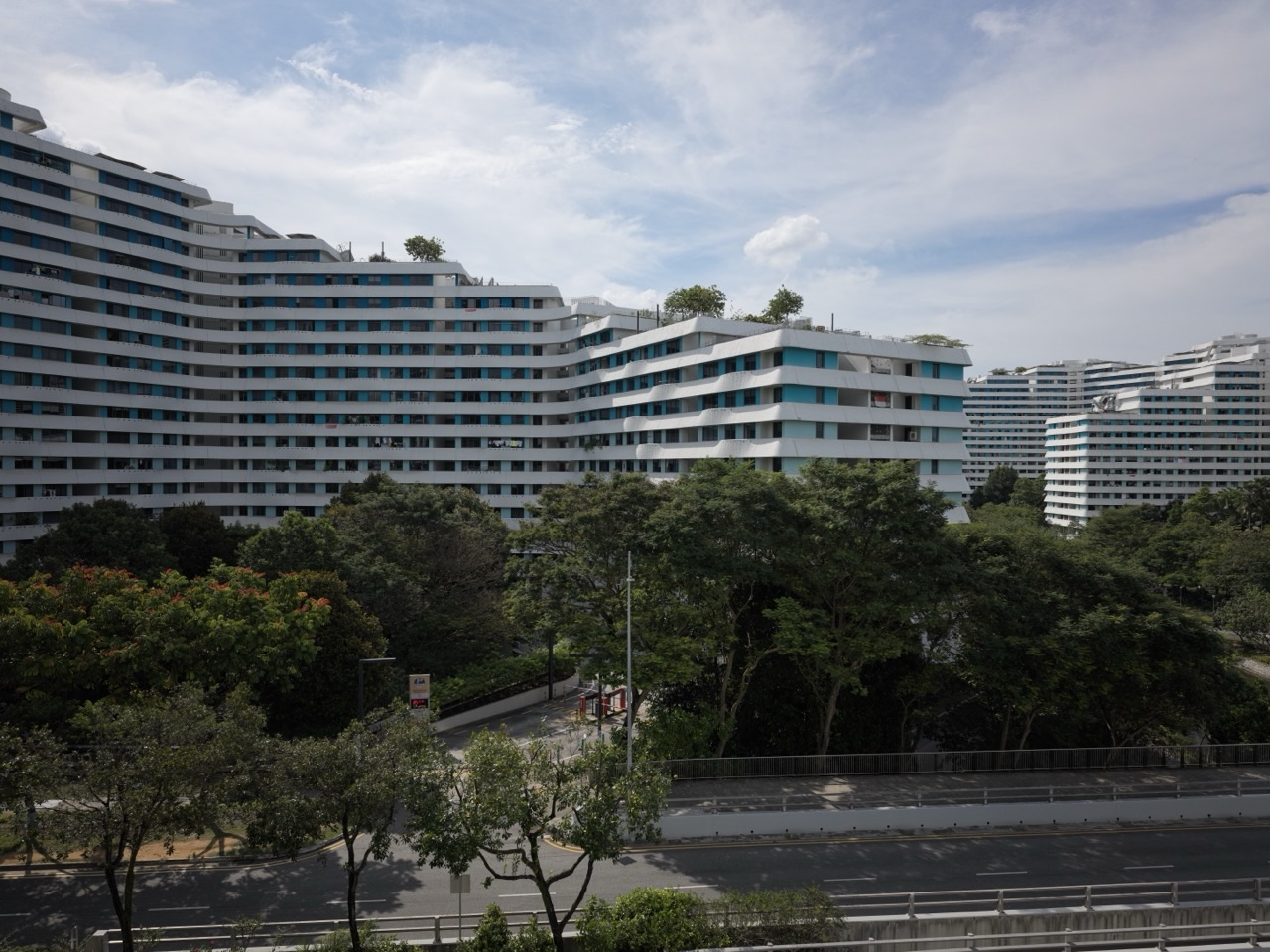
Singapore’s electric-vehicle charging network is expanding, but not every HDB car park has a charger or an available charging space. The Ministry of Transport reported 30,500 EV charging points across Singapore as of March 2026 and said 139 HDB car parks—about 7% of the total—still lacked chargers because of factors such as electrical capacity and community requests to defer installation. An owner whose usual HDB car park has no charger can apply under the stated arrangements to transfer season parking to a nearby HDB car park with chargers at the same season-parking rate. Always check the actual charger operator, connector, availability and price before driving there.
Looking ahead to 2027 and 2028, the government has committed to at least one fast-charging hub in every HDB town by end-2027, with the longer-term target of 60,000 charging points by 2030—40,000 in public car parks and 20,000 on private premises. These are national targets, not a guarantee that every individual block gains a fast charger on a specific day. Publicly accessible chargers must comply with Singapore’s Electric Vehicles Charging Act and LTA safety requirements, with familiar Type 2 AC and CCS2 DC connectors among the permitted public options. This guide explains how to find and pay for a legal charger, plan HDB and private-estate charging, avoid charging-bay disputes, assess speed and budget the actual electricity and parking costs.
- As of March 2026: 30,500 EV charging points deployed in Singapore according to MOT.
- HDB exception: 139 car parks, 7% of total, still lacked chargers in March 2026; many others already have points.
- By end-2027: at least one fast-charging hub planned for every HDB town; check actual local completion.
- By 2030: 60,000 points nationally targeted, 40,000 in public car parks and 20,000 in private premises.
- Where to find chargers: MyTransport.SG and the charging operator’s current map or app.
- Connector: public chargers generally use Type 2 for AC, CCS2 for DC, with permitted additional options.
- Safety: charger models require LTA type approval; fixed chargers must be installed by licensed electrical workers, certified and registered.
- Never: improvise extension cords, adapters or damaged charging cables contrary to approved conditions.
- Payment: operator app, approved payment QR or terminal; check fees per kWh and any idle, reservation or parking charges.
- Do not occupy a charger longer than needed: move the vehicle after the session ends, following charger-bay terms.
- HDB and private premises differ: charger availability and access rights depend on the actual car park and operator.
- Season parking: residents in qualifying HDB car parks without chargers can ask about transfer to a nearby equipped car park.
- EV range: plan with realistic car efficiency, battery state of charge, weather, driving conditions and time to reach a functioning charger.
- Updated information: 2027/2028 rollout, tariffs and operator rules must be verified live; a 2026 snapshot is not a guarantee.
Information checked 7 November 2026. EV charger figures, electrical capacity and fast hub targets are dated official reports; operator availability, payment, parking fees and site rules should be checked live before a charging session.
Chapter 1. An EV needs a charging routine rather than just a station map
Buying an electric car changes an owner’s daily routine. With a petrol vehicle, a driver can usually fill up quickly at a fuel station. With an EV, a charger may need to be available for a longer period, especially when the battery is low or the charging point is relatively slow. The important question is not simply whether the district has any charger; it is whether the owner can fit reliable charging into a normal week.
Start with the actual home parking arrangement, work schedule and typical mileage. A person with predictable commuting and reliable overnight charging may hardly need public fast charging. Someone who works shifts and parks at different locations may need multiple verified charging options. A good plan includes a practical backup, rather than assuming the closest charger will always be free and operating.
Chapter 2. What 30,500 charging points actually means
The Ministry of Transport’s May 2026 parliamentary replies state that approximately 30,500 charging points had been deployed as of March 2026. That figure includes public and private locations. It does not mean there are 30,500 open public bays available to every driver. Some chargers are in condominiums, workplaces or restricted car parks, while others can be used by the wider public.
When evaluating EV convenience, separate a nationwide count from the number of usable points near the driver. A private office charger does not help someone without access to the building. A public charger can also be occupied or temporarily out of service. The useful metric for a household is reliable nearby capacity at the times its vehicles need charging.
Chapter 3. The national 2030 target is not a 2028 guarantee
Singapore aims to deploy 60,000 EV charging points by 2030, comprising 40,000 in public car parks and 20,000 at private premises. This is a policy target that guides rollout, electrical infrastructure and private investment. It should not be rewritten as a claim that the full network is already complete in 2027 or 2028.
A homebuyer or EV purchaser should use what is operational at the time of the decision. New charging sites can improve convenience, but their timing depends on electrical works, approvals and operators. A planned point in a town map does not mean a charging socket is energised or bookable. Current operator information is needed before depending on it for a weekly routine.
Chapter 4. Fast-charging hubs by end-2027
MOT said in May 2026 that Singapore intends to have at least one fast-charging hub in every HDB town by the end of 2027. Fast hubs could provide useful alternatives for drivers who cannot leave a car charging overnight. They may also help during busy periods when regular neighbourhood chargers are occupied.
The statement is a town-level commitment rather than a promise for every individual HDB car park. A fast hub may require driving to a different part of the town, and its bays can still be busy. Drivers should check location, connector, power rating, opening hours and operator terms after the hub is actually commissioned. A fast-hub target should not substitute for a realistic current charging plan.
Chapter 5. Why 139 HDB car parks lacked chargers
MOT reported that 139 HDB car parks, roughly seven per cent of the total, remained without chargers in March 2026. It gave reasons such as insufficient available electricity capacity and community requests to defer installation. That is different from saying the rollout failed everywhere, or that the remaining car parks can simply be fitted with sockets overnight.
Electrical capacity can require upstream infrastructure, cabling and approvals. A car park may also have other safety and space constraints. For a resident, the practical response is to check a nearby equipped car park and the available season-parking transfer arrangement rather than assume charging will be added to the preferred lot immediately.
Chapter 6. An HDB season-parking transfer can help
The government said EV owners in HDB car parks without chargers can transfer their season parking to a nearby HDB car park with EV chargers at the same season-parking rate, under the published arrangement. This gives residents a way to access charging while installation constraints are resolved. It does not create a private reserved charging bay just for that vehicle.
Before applying, check the exact eligible car parks, real charger availability and the current HDB transfer process. A neighbouring lot with a charger might still be busy at the owner’s preferred hour. The transfer may change the walking distance between the car and home. Compare daily convenience and security, not only the fact that a plug exists at the destination car park.
Chapter 7. How to find charging sites
LTA recommends using MyTransport.SG and charger-operator applications to locate charging points. An operator’s map can show its own sites, availability and payment requirements, while broader maps may help identify alternatives across networks. A useful route should be checked immediately before departure, not only when the driver first bought the car.
Save several suitable chargers near home, work and common destinations. Confirm that the location is public or that the driver has access rights. A charger in a mall basement may operate only during car-park hours and may require separate parking fees. A map pin showing a charger does not establish that it can accept the car or that a bay is vacant.
Chapter 8. Public access is different from private access
A point installed on private premises may be visible in a national rollout count without being open to unrelated drivers. Condominiums, offices and fleet depots can limit entry to residents, employees or registered vehicles. Publicly accessible sites have different regulatory and payment obligations. A driver should not enter a guarded building or private loading area simply because a charging map suggests a plug is nearby.
Check the operator’s public-access status and any required account or parking permission. A visitor may need to pay an ordinary car-park entry fee even when allowed to use the EV charger. Respect signs and security instructions. Using a charger is not permission to enter unrelated restricted rooms or leave the car in an otherwise prohibited lot.
Chapter 9. Type 2 AC is a familiar public connector
LTA’s safety guidance identifies Type 2 as a permitted AC connector for publicly accessible chargers. AC charging is common in car parks because it can serve vehicles while they remain parked for an ordinary workday or overnight period. But the power delivered depends on both the charger and what the car’s onboard system can accept.
A point labelled with a high AC power rating does not mean every vehicle will draw that full output. Some cars have lower onboard AC charging limits. Drivers should check their vehicle’s manual and the operator’s published specification. For a normal overnight routine, a steady lower-power charge may be more appropriate than seeking the fastest possible option every time.
Chapter 10. CCS2 is an important DC fast-charging connector
Public fast chargers in Singapore commonly provide DC charging through CCS2, also called Combo-2. LTA permits this connector type at publicly accessible charging locations. DC fast charging can be useful during longer journeys or for drivers who need to replenish substantial energy in a relatively short stop.
The connector must match the vehicle’s inlet and authorised charging equipment. Some cars and older imported models may have different connectors or limitations. Do not assume a third-party adapter can safely or legally solve an incompatible socket. The operator’s supported vehicle and connector guidance should be checked before selecting a fast hub.
Chapter 11. Charger rating is not the speed the car will always achieve
A charger may advertise 50 kW, 100 kW or another maximum rating, but the actual power transferred can be lower. The vehicle’s charging curve, battery temperature, battery state of charge, available electrical capacity and potential power sharing all affect the session. Charging often slows as the battery approaches a high percentage.
The best way to plan is to estimate the amount of energy needed for the next journeys and allow realistic charging time. A car with a small DC acceptance rate may gain little from seeking the highest-rated charger. A person should not interpret an illustrative ’80 per cent in 20 minutes’ advertisement as a universal promise for every battery in every condition.
Chapter 12. Understand kW and kWh
Kilowatts, abbreviated kW, describe power: the rate at which a charger can deliver energy. Kilowatt-hours, kWh, describe an amount of energy purchased or stored. A car that receives 20 kWh has gained a quantity of electricity; a charger supplying a steady 20 kW for one hour would deliver approximately 20 kWh before accounting for losses.
The distinction matters when reading tariffs. An operator might charge per kWh, while another adds time-based or idle fees under its terms. A charging station rated at 100 kW does not automatically mean the driver pays for 100 kWh during a brief visit. Read the price unit and the actual energy on the session receipt.
Chapter 13. A simple energy-cost calculation
Suppose a driver adds an illustrative 25 kWh and the operator’s displayed price is S$0.60 per kWh. The energy subtotal would be S$15 before other charges. This is merely a worked example, not a claim that S$0.60 is the current universal Singapore price. Some sites may have different tariffs or promotions.
Check whether parking, booking, idle or service charges also apply. A low advertised kWh rate can become less attractive if the car park has a high hourly fee. Conversely, a slightly more expensive charger near a normal errand can be economical if it avoids an extra drive. Compare the true total cost and lost time, not only the price shown in a promotional banner.
Chapter 14. Battery range must be treated realistically
A vehicle’s stated range under a standard test cycle is not identical to the distance it will cover under every driving condition. Air-conditioning use, speed, hills, traffic, load and battery condition can change consumption. The driver should learn the vehicle’s own typical efficiency after several weeks of ordinary travel.
Plan a buffer rather than running the battery close to empty to match an ideal published range. A driver expecting a long trip should locate alternative chargers and avoid relying on one unit that might be occupied. The best charging routine is designed around routine travel and uncertainty instead of a rigid goal of always charging at a particular battery percentage.
Chapter 15. Daily charging need is different from battery size
A car might have a battery much larger than the energy used on a normal workday. A driver who travels 40 kilometres a day may need only a modest regular recharge, depending on consumption. That can make slower charging convenient if the owner has reliable parking access.
Another driver may cover a much longer route or drive for work throughout the day. That user may value fast hubs and multiple operator networks. It is more accurate to estimate daily energy from distance and actual consumption than to assume a large battery must be charged from zero to full every night. Most routine charging decisions are about topping up what was used.
Chapter 16. Paying through an operator app or terminal
LTA’s EV driver guide describes operator apps, QR-code payment and payment terminals as available ways to start or pay for a session. Licensed charging operators have obligations concerning common cashless payment options and guest access. The exact process differs by charging station and provider, so the user should read the displayed instructions.
Avoid scanning an obviously altered sticker or entering bank details into a suspicious site. Confirm that the charger ID matches the legitimate operator’s page and that a session has started before leaving the car. A mobile app may show the amount transferred and payment receipt. If a charger refuses payment, use official support rather than attempting to bypass safety controls.
Chapter 17. One app does not control every charger
Singapore has multiple charging operators, and their applications and payment methods can vary. A vehicle owner should not assume a subscription to one network automatically works at all other companies’ chargers. A mapping app may show a point that requires a different approved payment flow.
Choose a practical set of two or three networks near common routes, and learn how each shows availability and session completion. A backup operator can be useful when the nearest regular point is occupied or under maintenance. A driver who only has a low battery and no valid payment option may face avoidable delays even when suitable chargers exist nearby.
Chapter 18. Safety regulation under the EV Charging Act
The Electric Vehicles Charging Act 2022 established a comprehensive regime for charger supply, type approval, installation, registration and operation. LTA requires approved models to satisfy Singapore’s Technical Reference 25 safety requirements. Fixed chargers must be installed by licensed electrical workers and certified before they are registered.
A driver should use a registered approved public charger rather than untested electrical equipment in a parking bay. Chargers and vehicle inlets carry substantial electrical power, and unsafe modifications can create injury or fire risks. Regulatory approval is not permission to ignore the manufacturer’s normal inspection and operating instructions. If equipment appears damaged, stop and contact the operator.
Chapter 19. Why extension cords and adapters are unsafe
LTA’s EV charger regulation explains that improper charging includes using prohibited adapters between vehicle and charger, or using a non-fixed charger with an extension cord or adapter. Public chargers are designed for approved connectors and operating conditions. A driver cannot convert an ordinary wall socket into a lawful public EV charger by bringing a long household cable.
Do not attempt improvised electrical connections inside an HDB or mall car park. Apart from regulatory problems, a cable laid across a pedestrian route can trip someone and may be damaged by vehicles. If the car’s plug does not match, choose an approved compatible charger and ask the operator for help.
Chapter 20. Damaged cables must be reported
A cracked plug, exposed conductor, unusual smell, heat or damaged cable insulation is a reason not to start charging. Public chargers may be used by many people and exposed to weather or vehicle movement, which makes visual inspection useful. The charging unit should have an operator contact for fault reporting.
Do not attempt to repair a charging connector with tape or dismantle equipment. If a session is behaving abnormally, follow the operator’s safe-stop instructions and maintain distance from damaged electrical components. Emergency services should be contacted when there is immediate danger. The charger operator and property manager are responsible for professional assessment and repair.
Chapter 21. The emergency stop button is for emergencies
LTA’s driver guide advises not to press a charger’s emergency stop unless there is a genuine emergency. It is not a routine way to finish charging or claim a space. Normal ending should follow the operator app, terminal or vehicle procedure so the connector is released safely and the transaction closes correctly.
Unnecessary activation may interrupt service for other drivers or require a maintenance reset. If smoke, fire, injury or another immediate hazard occurs, stop in the manner instructed by the unit and seek emergency help rather than remain close to faulty equipment. A user should learn the proper start and end process during the first routine session.
Chapter 22. Move the car when charging finishes
LTA asks drivers to move their EV after the charging session has ended and to coil the cable neatly. This is a practical courtesy in a shared car park. A car left occupying a charger after it is full prevents other residents from using the limited point and may attract additional operator idle or parking charges.
Set an alert before the expected session end and check the operator’s displayed completion time. Charging a small amount during an errand may be easier than leaving the vehicle parked all evening. Do not unplug another person’s car or argue over a bay; follow the operator’s terms and report persistent misuse through the authorised channel.
Chapter 23. Charging spaces are not general EV-only parking
An EV charging bay is generally intended for vehicles actively using the charging service under the posted rules. Being an electric car does not necessarily entitle a driver to occupy that bay without charging. A petrol or diesel car likewise should not block an active charger in defiance of the marked designation.
Look at the sign for the specific HDB, URA or private car park. Operators may impose time limits or idle fees in addition to parking charges. When a session finishes, move to a normal lawful parking lot if the car will remain there. Fair turnover is important when several residents share only a few charging points.
Chapter 24. Parking fees and charging fees can be separate
A driver using a charger in a mall car park may pay the electricity operator and the carpark operator separately. Season parking at an HDB location is also a distinct product from the electricity bought through a charger. A discounted energy price does not necessarily include an hour of parking.
For a fair comparison, add electricity purchased, any operator fee, parking, travel to the site and waiting. A fast charger far away may be less attractive than a nearby normal charger if it requires an extra journey solely for charging. Costs should be compared against the owner’s real routine rather than one headline figure.
Chapter 25. HDB overnight charging and access
Many EV users prefer to charge while parked near home, reducing the need for dedicated trips to a fast hub. The normal approach is to use an authorised charger at a car park where the vehicle may lawfully park, with a valid parking arrangement. Some HDB car parks have multiple charging operators or points; others may still be constrained.
Before purchasing an EV, check what is available at the preferred home car park and what happens when every charging bay is occupied. The proximity of the nearest public fast hub can provide a useful backup, but it is not the same as having a guaranteed point every evening. Consider how often the household actually needs charging.
Chapter 26. EV adoption in new towns such as Tengah
The Ministry of Transport’s May 2026 reply describes coordinated charger deployment with EMA, HDB and JTC as new housing estates are occupied. For high-demand car parks, LTA can work with operators to install more points where electrical capacity permits. The goal is to keep deployment aligned with growing adoption, not to energise every new bay on one universal date.
A family moving to Tengah or another new town should verify the charging points at the actual block and whether the needed car park is open. A development brochure may show charging infrastructure as planned, while an early resident may need a temporary alternative. Confirm practical charging before buying an EV that depends on a single future installation.
Chapter 27. Condominiums have separate approval questions
Installing chargers at a condominium or other non-landed private residence involves the relevant property management, parking spaces, electrical capacity and regulatory requirements. The EV Common Charger Grant has been used to support shared infrastructure, but its availability and time limits need current confirmation. Not every private estate’s management will approve a new charger immediately.
Residents should consult their MCST or management and the licensed charging operator. A private charging cable cannot simply be routed across common property without permission and compliant installation. The appropriate application process may require technical assessment and collective decisions. A person renting an apartment should also ask whether charger access is actually included in the tenancy or parking arrangement.
Chapter 28. Landed homes still require compliant equipment
A landed homeowner may have a private parking space where a home charger can be installed, but that does not remove the requirements for safe equipment and professional electrical work. LTA sets rules for approved charger types, registration and the use of non-fixed equipment in restricted-access locations. Different installation classes can apply depending on the property configuration.
Use a licensed electrical worker and an approved installer, and verify the home’s electrical supply and load. Do not assume a standard domestic extension cord is a valid charging solution. A properly designed home setup can make EV ownership convenient, but only when safety and the applicable property rules have been addressed.
Chapter 29. Charging while travelling to work
Someone who parks at an office or public car park during the day might charge while working, if the charger is available and the car can lawfully use the bay. That can suit a driver who has no convenient home charger. It also means the owner needs to understand employer access and whether the car must be moved before the workday ends.
An office building’s charger may be reserved for staff, tenants or paid visitors. Do not assume it can be used because the operator is listed on a national map. A long work shift may exceed a charger-bay time limit, so a normal parking lot may still be needed after charging finishes. Plan realistic vehicle movement rather than relying on an absent person to move the car.
Chapter 30. Fast charging is valuable as a backup
A public fast hub can help during an unusually busy driving week, a trip with limited time or a temporary home-charger outage. A driver may choose to charge enough for the next journeys instead of waiting until the battery reaches a high percentage where charging often slows.
Check availability and price before arrival. Charging can take longer than expected when the battery is too cold or hot, or the site shares power across ports. If several cars queue, a slower but available charger elsewhere may deliver the required energy sooner. Flexibility and backup choices matter more than maximising the advertised charger rating.
Chapter 31. The 2027 fast-hub target should be checked locally
By end-2027, MOT says every HDB town should have at least one fast-charging hub. This is a meaningful public-policy milestone but needs verification for each town at the time of travel. The hub’s actual address, operating status, connector count and available power may not match an early conceptual illustration.
A resident in a mature estate might already have a reliable local charger and rarely need the town hub. Someone in a car park with technical constraints may depend on it more heavily. A future town-wide hub cannot guarantee every driver’s preferred evening slot, so check actual demand and alternatives before making a major purchase.
Chapter 32. Charger data can change monthly
MOT says the public can track charger deployment through LTA’s DataMall, which is updated monthly. More detailed day-to-day availability and payment conditions may come from individual charging operators. A carpark that lacked chargers in March 2026 may gain them later, while a previously available unit can be temporarily out of service.
Date the evidence before using it to compare neighbourhoods. The national rollout is changing rapidly, so repeating an old count as a current guarantee is misleading. A household deciding in late 2027 should check both the government deployment data and actual operator map. Those sources answer related but different questions.
Chapter 33. How to respond to charger failure
If the charger cannot start, first confirm that the location is open, the plug is compatible and the selected unit is not marked out of service. Follow the operator’s normal troubleshooting prompts without forcing connectors or bypassing safety mechanisms. Keep the transaction reference if money was authorised but no energy was delivered.
Contact the operator’s official support and follow its refund or fault procedure. Avoid sharing a payment card number or app password with a stranger at the car park. If the charger appears damaged or dangerous, stop using it rather than repeatedly retrying. Move to a functioning alternative when the issue cannot be safely resolved.
Chapter 34. A practical EV budget for households
A full EV budget includes electricity, car parking, insurance, road tax, maintenance, loan or lease costs and the time used for charging. The cost of electricity is meaningful, but a cheap per-kWh figure alone does not establish that an EV will be cheaper to own in every situation. Car model, mileage, access to affordable charging and depreciation matter.
Run two or three realistic scenarios using the household’s actual journeys. One assumes home-area AC charging, another includes regular paid DC charging, and a third covers a month with a charger outage. Compare the cost and inconvenience of each against the vehicle owner’s routine. This gives a much stronger decision than extrapolating one public charger receipt to a whole year.
Chapter 35. Twenty-minute charging claims need conditions
Advertisements sometimes imply a car will recover most of its battery charge within a short stop. A high-power DC charger can deliver energy quickly to a compatible vehicle, but the battery’s actual charging curve determines the time. Percentage targets, starting battery state and temperature all affect the result.
For a time-critical drive, estimate the minimum practical energy rather than aim for an arbitrary 100 per cent every visit. Use the car’s own estimated time after the session starts and keep a buffer for queueing or an unavailable bay. A driver who understands charging behaviour is less likely to rely on a misleading universal fast-charge promise.
Chapter 36. Workplace and public courtesy keep the network usable
Shared chargers depend on cooperation. Drivers should park within the marked lot, connect the cable safely, keep walkways clear, move after charging and avoid arguments with other users. Chargers in HDB estates or workplaces serve a community, and poor bay turnover can be more inconvenient than the number of charging stations alone suggests.
A person who notices recurring misuse can report it through the operator or carpark authority instead of physically interfering with another vehicle. Do not unplug an occupied vehicle without permission. A more considerate charging culture makes the rollout useful to more residents and reduces pressure to install excessive duplicate infrastructure in every limited-space car park.
Chapter 37. A reliable EV charging checklist for 2028
Choose the actual home or workplace parking location, check current operating chargers, confirm car connector compatibility and find at least one accessible backup. Understand the operator’s payment system, energy tariff, parking charges and any idle fees. For an HDB car park without a charger, investigate the published season-parking transfer arrangement and other nearby options.
Mark future promises separately. Fast hubs in every town are targeted by end-2027; 60,000 points is a 2030 target; the latest charger count needs a dated MOT or LTA update. Use approved equipment and licensed operators, inspect the cable and move the car after the session. A good EV routine is dependable before it is convenient.
Sixteen practical EV charging and HDB decisions
HDB resident whose car park lacks a charger
MOT said 139 HDB car parks remained without chargers in March 2026. Ask HDB about the available transfer to a nearby car park with charging access and check the actual operating operator. A season parking transfer can help, but it does not reserve an individual plug at every hour.
A reliable choice begins with the actual vehicle, parking entitlement, compatible approved charger and a legal backup. Check the live operator’s tariff and condition rather than assume a past price or rollout date. Allow for queues and move the car when the session ends so shared charging remains useful.
New EV owner selecting a compatible connector
Check whether the vehicle accepts Type 2 AC and CCS2 DC or another approved connector, and whether the desired public unit supports it. A public charger with a different inlet cannot be made suitable through an improvised extension. Choose a legal compatible point.
A reliable choice begins with the actual vehicle, parking entitlement, compatible approved charger and a legal backup. Check the live operator’s tariff and condition rather than assume a past price or rollout date. Allow for queues and move the car when the session ends so shared charging remains useful.
Driver using a mall fast charger
Read both the energy tariff and the carpark fee. A session at a competitive per-kWh price can still be expensive if parking or idle charges are high. Plan to return when charging completes and move to a normal legal space if staying longer.
A reliable choice begins with the actual vehicle, parking entitlement, compatible approved charger and a legal backup. Check the live operator’s tariff and condition rather than assume a past price or rollout date. Allow for queues and move the car when the session ends so shared charging remains useful.
Family considering an EV in Tengah
Verify actual HDB carpark equipment and a nearby alternative before buying. A future point shown in a developer or town plan is not a functioning charger. Check the 2027 fast-hub rollout separately from the individual block’s electrical capacity.
A reliable choice begins with the actual vehicle, parking entitlement, compatible approved charger and a legal backup. Check the live operator’s tariff and condition rather than assume a past price or rollout date. Allow for queues and move the car when the session ends so shared charging remains useful.
Shift worker relying on public charging
Map sites that are open at the end of the shift, not only during mall hours. A charger behind a closed parking gate is unusable at midnight. Keep one or two practical alternatives and enough battery reserve to reach them.
A reliable choice begins with the actual vehicle, parking entitlement, compatible approved charger and a legal backup. Check the live operator’s tariff and condition rather than assume a past price or rollout date. Allow for queues and move the car when the session ends so shared charging remains useful.
Driver seeing a cracked charging cable
Do not plug it in or attempt a makeshift repair. Report the visible defect to the legitimate operator, move to another approved charger and follow emergency instructions if there is an immediate safety hazard.
A reliable choice begins with the actual vehicle, parking entitlement, compatible approved charger and a legal backup. Check the live operator’s tariff and condition rather than assume a past price or rollout date. Allow for queues and move the car when the session ends so shared charging remains useful.
User arriving at an occupied bay
Check the operator app for live status and nearby available sites. Do not unplug another car or block the charging lane while waiting. An available slower charger may be a better choice than a long queue at the most powerful unit.
A reliable choice begins with the actual vehicle, parking entitlement, compatible approved charger and a legal backup. Check the live operator’s tariff and condition rather than assume a past price or rollout date. Allow for queues and move the car when the session ends so shared charging remains useful.
Condo resident hoping to install an AC charger
Ask the MCST or estate manager about permitted shared charging infrastructure and electrical capacity. Use licensed electrical workers and type-approved equipment. Running a household extension cable across a common corridor is not an appropriate alternative.
A reliable choice begins with the actual vehicle, parking entitlement, compatible approved charger and a legal backup. Check the live operator’s tariff and condition rather than assume a past price or rollout date. Allow for queues and move the car when the session ends so shared charging remains useful.
Driver comparing 25 kWh purchases
At an illustrative S$0.60 per kWh, 25 kWh costs S$15 before carpark and operator fees. Check the actual current operator rate rather than treat the example as a universal tariff. Use the receipt to calculate the real cost per kilometre.
A reliable choice begins with the actual vehicle, parking entitlement, compatible approved charger and a legal backup. Check the live operator’s tariff and condition rather than assume a past price or rollout date. Allow for queues and move the car when the session ends so shared charging remains useful.
Vehicle unable to take full DC charger power
A 100 kW-rated charging point does not force the car to accept 100 kW. Check the car’s DC charge curve and battery condition. Planning based on compatible actual power yields more reliable stop times.
A reliable choice begins with the actual vehicle, parking entitlement, compatible approved charger and a legal backup. Check the live operator’s tariff and condition rather than assume a past price or rollout date. Allow for queues and move the car when the session ends so shared charging remains useful.
Driver travelling across Singapore for the day
Identify one charger near the destination and a second backup along the return. A national charger count does not establish availability at any single site. Start with enough range and verify the actual operator’s access conditions.
A reliable choice begins with the actual vehicle, parking entitlement, compatible approved charger and a legal backup. Check the live operator’s tariff and condition rather than assume a past price or rollout date. Allow for queues and move the car when the session ends so shared charging remains useful.
Resident seeing a fast hub promised in the town
The end-2027 town-hub target is a government commitment, not confirmation that every particular site has opened. Check current official rollout and operator maps before using the hub in a time-sensitive itinerary.
A reliable choice begins with the actual vehicle, parking entitlement, compatible approved charger and a legal backup. Check the live operator’s tariff and condition rather than assume a past price or rollout date. Allow for queues and move the car when the session ends so shared charging remains useful.
Owner paying through a QR sticker
Confirm the unit ID and operator identity before entering payment details. An altered or unfamiliar sticker could direct the driver to an unsafe page. If the information does not match the unit, use the verified app or official support.
A reliable choice begins with the actual vehicle, parking entitlement, compatible approved charger and a legal backup. Check the live operator’s tariff and condition rather than assume a past price or rollout date. Allow for queues and move the car when the session ends so shared charging remains useful.
Driver whose session ended while shopping
Return promptly and move the EV if the charging bay is only for active sessions. Overstaying can block others and may trigger idle charges. Check the carpark’s separate time limits before assuming charging completion also ends parking payment.
A reliable choice begins with the actual vehicle, parking entitlement, compatible approved charger and a legal backup. Check the live operator’s tariff and condition rather than assume a past price or rollout date. Allow for queues and move the car when the session ends so shared charging remains useful.
Employer offering workplace charging
Check whether chargers are actually available to the relevant staff, the charging terms and whether the space can be held during a full shift. Workplace access can be different from public charging. A planned corporate programme is not equivalent to an operational parking entitlement.
A reliable choice begins with the actual vehicle, parking entitlement, compatible approved charger and a legal backup. Check the live operator’s tariff and condition rather than assume a past price or rollout date. Allow for queues and move the car when the session ends so shared charging remains useful.
Homeowner considering a fast home charger
A landed property still needs a compliant electrical installation, approved equipment and appropriate registration. Have a licensed professional assess capacity and the proper location rather than buy a high-powered unit based only on its advertised speed.
A reliable choice begins with the actual vehicle, parking entitlement, compatible approved charger and a legal backup. Check the live operator’s tariff and condition rather than assume a past price or rollout date. Allow for queues and move the car when the session ends so shared charging remains useful.
Frequently asked questions
How many EV charging points did Singapore have in March 2026?
MOT reported about 30,500 points deployed nationally.
Are chargers installed at every HDB car park?
No. MOT reported 139 HDB car parks without chargers in March 2026 because of technical or community constraints.
What is Singapore’s EV charger target for 2030?
60,000 points, including 40,000 in public car parks and 20,000 at private premises.
Will every HDB town have a fast charger by end-2027?
MOT has committed to at least one fast-charging hub in every HDB town by end-2027; check actual completion locally.
Can I transfer HDB season parking to find a charger?
MOT describes an option for qualifying residents at car parks without chargers to use nearby equipped HDB car parks at the same season rate.
Where do I find live public chargers?
Use MyTransport.SG and the actual charging operator’s location, availability and payment information.
Are all charging points public?
No. Some are in restricted condominiums, workplaces and fleet sites.
What connector is typical for AC public charging?
Type 2 is a recognised public AC connector under LTA’s rules.
What connector is typical for DC fast charging?
CCS2, also called Combo-2, is an approved public DC connector.
Does a 100 kW charger always charge my car at 100 kW?
No. Vehicle acceptance, battery state and site conditions can limit charging power.
What is the difference between kW and kWh?
kW measures rate of power; kWh measures energy delivered or stored.
Are there separate parking and charging fees?
Often yes. Check both the charging operator’s tariff and carpark terms.
Can I use an extension cord or adapter?
Improper use of non-fixed chargers with extensions and prohibited adapters is restricted under LTA’s EV charging safety regime.
Who installs a fixed charger?
An appropriately licensed electrical worker, with the required certification and registration processes.
Do I have to move after charging?
LTA advises moving the vehicle when the session ends to free the shared charger.
Can I use a condo charger without resident access?
Only if its owner or operator permits access; not all private points are public.
Can I always pay with one EV app?
No. Operators can use different apps and payment channels.
Is the emergency-stop button the normal end-session control?
No. Use the operator’s normal ending process; emergency stop is for an emergency.
How can I estimate charging cost?
Multiply actual delivered kWh by the site’s current price, then add applicable parking and other fees.
What is the most important EV ownership test?
A safe, legal and reliably accessible charging routine near real daily journeys, including a working backup.
Official sources and related eduKateSG guides
- MOT — May 2026 HDB charger coverage and 139 exceptions
- MOT — May 2026 30,500 points and fast hubs by end-2027
- MOT — National electric vehicle policy and charger rollout
- LTA — Electric Vehicles Charging Act safety and Type 2/CCS2 standards
- LTA — Charger registration and label requirements
- LTA — Charging an EV and finding public chargers
- LTA — Licensed EV charging operator requirements
- LTA — Charger deployment and monthly EV data
- HDB — Parking and season parking transfers
- eduKateSG — Driving, COE, ERP2, tax and car ownership
- eduKateSG — HDB and housing transport guide
Singapore’s EV charging network is growing, but the best EV decision remains individual: how will this car charge at this home or workplace, what is the real cost and what happens when the preferred charger is unavailable? The 2027 fast-hub milestone and 2030 national target matter, yet safe approved equipment and real daily access matter even more.