
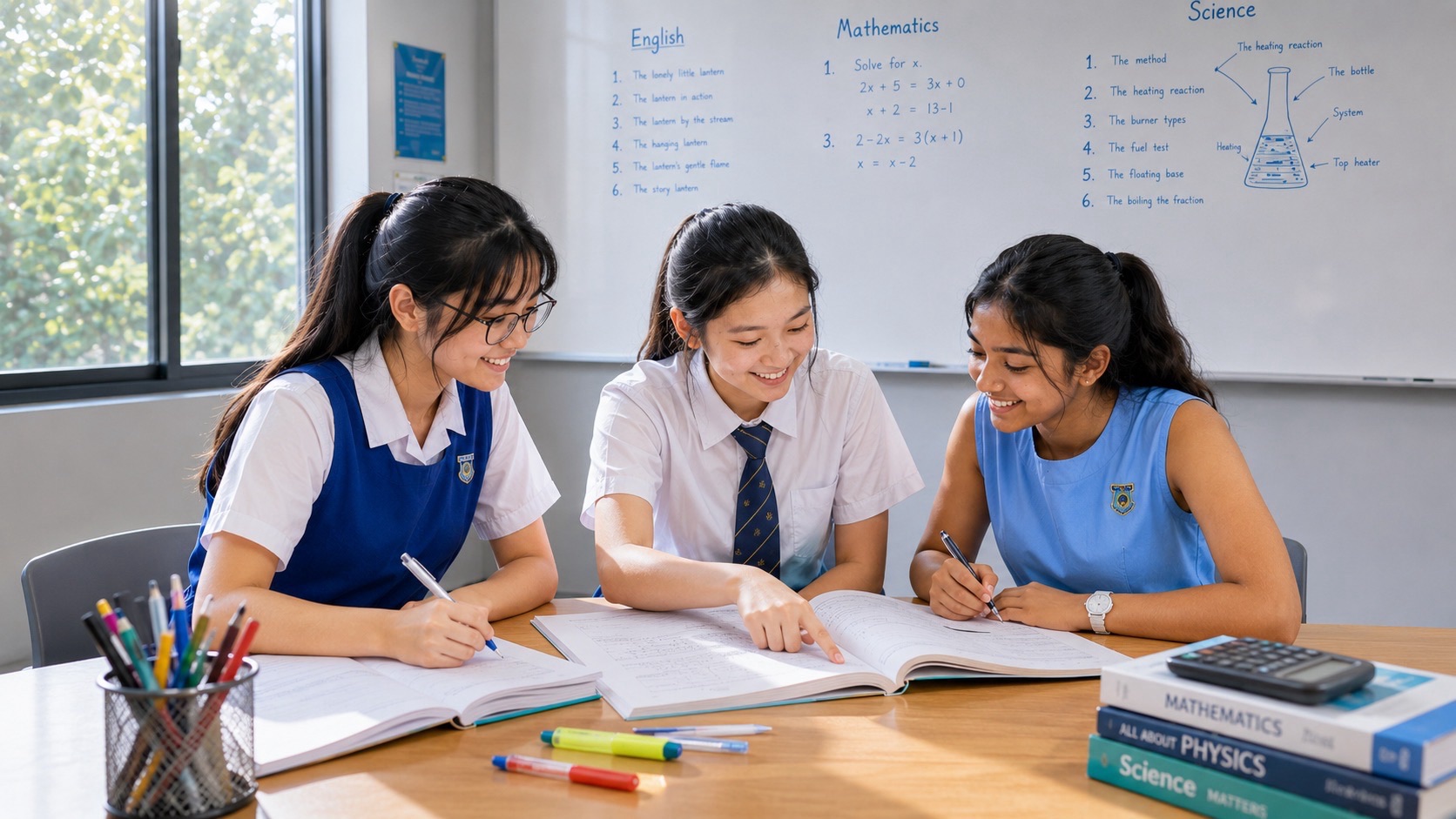
G2 English Tutorials | Punggol Field help secondary students who recognise important information but do not always turn it into a defensible inference, a faithful summary or a purposeful written response. eduKateSG offers premium three-student G2 English tuition near Sixth Avenue MRT, with 90-minute weekly lessons. For families around Punggol Field, the priority is to make reasoning visible rather than ask a fluent child to fill more pages with words.
Parents searching for a G2 English tutor or tutorials from the Cove, Meridian and Coral Edge side of Punggol can begin with a marked comprehension response and an unaided piece of writing. A copied quotation may need a clear inference; an essay may need a mechanism rather than more examples; a summary may need careful control of time, quantity and certainty. Our teaching centre is at 8 Fourth Avenue, Singapore 268674, near Sixth Avenue MRT—not in Punggol Field.
A useful parent–student consultation starts with authentic schoolwork: the original question, a marked script, one unaided writing sample and relevant teacher comments. We use these to find the next teachable decision and establish a clear independent check. See eduKateSG’s small-group services or contact eduKate Singapore for arrangements. Timetables, placement and fees are confirmed directly, not assumed from this locality guide.
The Transition That Changes a Student’s English
At the beginning of tuition, it is tempting to judge a lesson by how many pages have been completed. But recognition and independent application are not the same. A learner can understand a model after it has been explained and still be unsure where to begin on a different question. We identify which decision was supplied by the model and teach the child to make it independently.
For G2 English, the next capability is identify exactly what a question requires, select sufficient evidence and explain how that evidence supports a faithful, appropriately qualified claim. That description gives parents a practical way to examine the work. Was the question understood before a quotation was selected? Does the response explain the detail rather than just repeat it? Can the student correct a similar error when the wording changes? These are more useful questions than how impressive the answer sounds after an adult has helped write it.
The Hidden Problem Behind a Mark
Two students may receive similar marks on comprehension but need quite different instruction. One reads a question inaccurately; another chooses weak evidence; a third finds the right line but does not know what to say about it. In G2, a common trap is finding the correct evidence but leaving its significance unexplained, or paraphrasing a source so that possible becomes definite. The error that appears at the end of the process is not always where the misunderstanding began.
We inspect the original task and ask the child to explain what they thought it required. The tutor traces the reading, evidence, reasoning and expression in order. The resulting target should describe something teachable and testable. General feedback such as work harder or be careful does not show the learner how to choose a better method on an unfamiliar task.
Why a Three-Student Tutorial Can Be More Diagnostic
Our three-student format lets every learner attempt a short response before group discussion. This matters because listening to a classmate’s answer can make a method seem familiar without proving that another student can generate it alone. We invite each pupil to say why a phrase or idea was chosen, then compare alternatives. The discussion is about reasoning, not a race to speak first.
Shared material does not require identical feedback. One learner may need a short grammar contrast, another an explanation of an inference and another a check on paragraph relevance. We also return to previous targets after a delay. Small classes offer the opportunity for close attention; they are valuable when that attention produces clearer independent decisions rather than simply more detailed correction marks.
G1, G2, G3 and the 2027 SEC
The Singapore-Cambridge Secondary Education Certificate begins from 2027 and records the subjects and General levels candidates sit under Full Subject-Based Banding. English Language is listed at G1 K100, G2 K200 and G3 K300 for school candidates. SEC is not a separate fourth English difficulty. Families should confirm their child’s English offering with the school instead of choosing practice material from another subject’s label.
For G2, SEAB lists G2 English Language as K200 for 2027 SEC school candidates. It includes comprehension with summary and questions concerning language effects, situational and continuous writing, listening, and oral planned response and spoken interaction. These components should be practised through suitable learning steps rather than used as a reason for constant full-paper rehearsal. Consult SEAB’s SEC overview and its 2027 G1, G2 and G3 English syllabus listings. The correct document describes the assessment destination; the tutor’s diagnostic establishes which foundation or application needs attention now. A useful short teaching exercise is not automatically a realistic full-paper simulation.
Punggol Field Is More Than a Search Term
Punggol Field is a genuine residential road corridor. HDB’s Punggol town information situates it within the wider town, while its planning districts include Punggol Field East and Punggol Field West. The road corridor should not be mistaken for one homogeneous block of flats with a single nearest LRT station. We distinguish this broad Punggol Field guide from the more specific east and west locality guides that families may encounter.
SBS Transit lists stops along Punggol Field serving Cove, Meridian and Coral Edge LRT stations. These are useful real place names for practising exact reading, but they do not prove a fixed journey time from every home. The SBS Transit route information and LTA’s Sengkang–Punggol LRT description supply transport context. For schoolwork, the learner should notice which name refers to an actual starting point and which refers only to a proposed meeting location in a fictional notice.
Punggol’s Under-Viaduct Spaces: Read Design and Reality Separately
Urban planning can create opportunities for public space beneath transport structures, but a plan is not proof that every pictured facility is open. The URA article on Punggol Green describes the transformed under-viaduct area between Punggol MRT and Sam Kee LRT as a specific realised community project. This is not the same as claiming every LRT viaduct segment along Punggol Field has identical facilities or opening arrangements.
A child can compare an official description of a completed site with a design proposal for another area. Which source is talking about something already established, and which is describing an intention? What date does the source provide? These are real reading questions. We do not direct students to enter construction zones or assume that a facility’s access conditions remain unchanged. Familiar locality names create interest; responsible source use supplies the accuracy.
A Historical Punggol Passage Should Stay Historical
The National Heritage Board’s Punggol history article explains how the area’s recreational identity developed over different periods. Its subject is Punggol’s broader past, not a statement about today’s exact conditions at every point on Punggol Field. A historical narrative can provide context without replacing current transport or public-access information. Students should check what a source can properly answer.
In class, one question can ask for a fact recorded in the historical account and another can ask what the writer’s selection of events suggests about change. At G2, the response is adjusted to the relevant language demand. We separate what is explicitly documented from what is being inferred, and avoid turning a general history of the town into an invented memory belonging to a fictional local resident.
What a Question Actually Wants
Identify, explain, infer, compare and evaluate are not interchangeable instructions. Before rereading a whole passage, we teach the learner to state the operation in simple words. A response may contain correct facts yet answer the wrong question. That problem often disappears from view once a model answer is shown, because recognition replaces the independent choice that was originally missing.
Students compare two questions about one extract, locate different kinds of information and describe why each answer is appropriate. We then change the passage while retaining the operation. For G2, this helps develop identify exactly what a question requires, select sufficient evidence and explain how that evidence supports a faithful, appropriately qualified claim. A learner who can select the correct method on unseen work is demonstrating more than memory of the tutor’s explanation.
Literal Fact, Inference and Invention
An official station name is a fact when properly recorded in a current transport source. A character’s mood may be inferred from behaviour in a story. An explanation about a hidden motive may be invented if the writer supplies no evidence. These distinctions are central to careful English reading. Not every plausible story is an answer supported by the passage.
We ask what words establish the claim and what remains uncertain. The student learns when a direct statement is appropriate and when a qualification such as may suggest is necessary. Overqualification is not the goal: an explicit event should not be described as merely possible. The goal is a fit between evidence and certainty, carried into later writing and oral reasoning.
Vocabulary That Changes What a Sentence Promises
The expressions scheduled, postponed, cancelled and completed convey different stages. In a neighbourhood notice, mixing them up can change whether someone expects an activity to occur. Intended, likely and guaranteed also make different strengths of claim. We teach vocabulary through the action or interpretation it causes, not through lists of rare synonyms that sound good but may distort the meaning.
Each new word should have a contextual explanation, an ordinary collocation and a learner-written sentence. A later task retrieves it without the original model. For G2, vocabulary development matters because finding the correct evidence but leaving its significance unexplained, or paraphrasing a source so that possible becomes definite. A familiar word used precisely is more useful than an impressive word the student cannot explain or use accurately.
Grammar as Control of Relationships
Grammar matters because it shows who acted, when the action occurred and how two ideas relate. Subject–verb agreement, tense, articles, pronouns, connectors and sentence boundaries are taught according to what actually appears in the child’s work. Repeatedly selecting the correct answer on a familiar worksheet is not enough if the same relationship fails inside an original paragraph.
We contrast two sentences that differ in one meaningful choice and ask the learner to explain the result. Then the same operation returns in a new setting. For G2 English, we do not demand complex language before the core meaning is secure. A longer sentence becomes an improvement only when its added detail contributes to a clearer account rather than confusion.
Writing for a Real Reader
G2 situational writing links a stimulus feature to the reader’s actual need, while continuous writing needs a developed point rather than a pile of generic examples. We plan the function of paragraphs and teach a student to explain why a claim makes sense. A relevant qualification can make an argument stronger rather than weaker. The first planning question is who the response is meant for and what the reader needs to know or decide. It may require a direct recommendation, an organised sequence or a carefully explained point. A long introduction that never reaches the task is not a better answer simply because its vocabulary is impressive.
We label the function of each paragraph while teaching, then gradually remove the labels. A student should be able to explain why a detail belongs and which requirement a sentence fulfils. Editing begins with meaning and task completion before surface polishing. The tutor returns to another prompt so that the learner must select the organisation rather than fill a familiar template mechanically.
Listening Must Continue After the First Possible Answer
A spoken instruction may be corrected halfway through a recording. A student who writes the first place name and stops listening can miss a later change that determines the final answer. We teach listeners to predict what kind of detail is required and to pay attention to contrast and revision markers, not attempt to memorise or transcribe every word.
After the first exercise, the tutor identifies where comprehension broke down and gives a new recording with the same listening demand but different surface details. This distinguishes understanding of feedback from genuine transfer. For G2, the listening routine should also support school instructions and oral discussion, where paying attention to a speaker’s updated view matters outside examinations.
Oral Communication Is a Conversation, Not a Script
A planned oral response uses brief notes for a position and a reason, then responds to a changed follow-up. We distinguish preparation from memorisation. Listening includes tentative plans, objections and final choices that students must track to answer accurately. We teach a response that begins with a point, supplies a relevant reason and develops an example when useful. Planning may use short notes, but a whole memorised speech cannot anticipate every follow-up. A strong answer listens to the changed question and adjusts the claim without losing its meaning.
The tutor should give selective feedback: relevance first, then development, clarity and recurring language patterns. A learner needs room to finish a thought before being corrected. Being quiet is not a synonym for poor reasoning, and being talkative is not proof of relevance. We use changed follow-ups so a student can demonstrate adaptable thinking rather than familiarity with a rehearsed topic.
The Fencing Method Builds Reliable Complexity
We begin within a boundary that makes one language operation clear. An accurate claim may gain a reason, a reason may gain evidence, a coherent paragraph may gain a qualification or a new audience. When the addition changes the meaning or overwhelms the learner, the tutor isolates that point rather than add more material. The fence is a temporary support, not a permanent ceiling.
For G2, the method works towards an unfamiliar comprehension response that explains a supported inference and a summary preserving the source’s scope. We want a student who can handle new demands while preserving accurate interpretation and communication. A longer response is worthwhile when it carries more relevant information or judgement, not merely more words. The learner should know exactly what the new layer contributes to the task.
The Four Contact Points Across a Week
The tutorial is the first contact with a target skill. A second, short contact retrieves the method after a delay; a third applies it to a changed text or writing prompt; a fourth is a cold-start check before the next lesson. These are not four additional tuition appointments. They are manageable moments of learning that can fit around homework, CCA, rest and reading for enjoyment.
The work should remain honestly independent. A short response produced without prompts gives a more useful diagnostic than a perfect long answer supplied through adult rewriting. Parents can ask what was practised and which correction mattered. If the child cannot begin without a constant stream of hints, the tutor should adapt the task rather than conceal the difficulty beneath polished work.
A Ninety-Minute Lesson With Purpose
A typical lesson opens with a brief retrieval task and a look at current schoolwork. The tutor then models one important decision using a small number of contrasted examples. Guided practice allows the learner to explain a choice while prompts are gradually reduced. The independent phase changes the text, audience or requirement so the student must choose the method rather than repeat a familiar answer.
Listening or oral practice can reinforce the same principle in another form. The final review identifies one useful error checkpoint and a manageable continuation task. The exact allocation varies; we do not insist that every component consumes identical minutes every week. Parents should be able to ask what the learner attempted unaided and what will be checked next time.
Repair, Stabilisation and Extension
Repair is appropriate when a prerequisite repeatedly requires help. We return to the smallest relevant relationship and reconnect it to school work. Stabilisation addresses correct work that disappears when the topic, time or question wording changes. We vary the material deliberately and make the student recognise which method still applies.
Extension develops judgement after the foundation is secure. The learner may consider competing interpretations, more precise vocabulary or an unfamiliar writing audience. We do not assume that another subject level’s examination paper is automatically the best extension. For G2, the next challenge should improve identify exactly what a question requires, select sufficient evidence and explain how that evidence supports a faithful, appropriately qualified claim, with evidence that the learner can explain why the new answer is stronger.
An Error Ledger That Can Be Used
A useful error entry shows the original mistake, why it failed and what to check next time. The instruction be careful is too broad to guide a new task. A specific checkpoint might be count the requested points, preserve the source’s uncertainty or identify the pronoun’s referent. The tutor selects a few recurring errors instead of filling an overwhelming notebook with every minor imperfection.
Later, a new task tests whether the student retrieves the checkpoint without its name being supplied. If the error persists, the tutor examines the explanation and the earlier foundation. Recopying the old model can demonstrate responsiveness to feedback, but only a fresh independent attempt shows that the method is becoming portable.
Digital Writing Tools Should Not Hide the Starting Point
An automated rewrite can improve fluency while adding unsupported facts, changing a condition or masking who planned the paragraph. For diagnostic purposes we need at least one sample that shows the child’s personal choices. Adults should identify assistance used in a polished response rather than allow the tutor to mistake externally supplied wording for independent ability.
Where the applicable examination uses a digital environment, students should practise the relevant working skills according to school guidance. In a comparison exercise, they can inspect assisted writing for changes in meaning. The aim is responsible judgement and language capability available when an answer must be planned, written and checked without a writing assistant.
What Parents Should See Over a Term
Compare an early unaided sample with later unfamiliar work of appropriate difficulty. Look for more accurate task reading, better selection, more complete explanation, fewer repeated grammar patterns and responsive speaking. A grade still matters, but the independent decisions help explain the result. A polished familiar answer and a fresh cold-start attempt tell us different things.
We do not guarantee a fixed grade after a set number of lessons. When progress is unclear, a good review explains what was tested, which skill remains fragile and why the next task is being changed. For G2, a meaningful demonstration is an unfamiliar comprehension response that explains a supported inference and a summary preserving the source’s scope. The student should increasingly be able to name the useful correction in everyday language and show it in their own work.
Route from Punggol Field to Sixth Avenue
The Cove, Meridian and Coral Edge LRT stations serve sections along Punggol Field on the East Loop. From a suitable station, families may connect to Punggol MRT, use the North East Line to Little India and change to the Downtown Line for Sixth Avenue. The best connection depends on the exact home and service pattern. Check the SBS Transit system map and current transport information.
eduKateSG’s teaching location for these tutorials is 8 Fourth Avenue, Singapore 268674, near Sixth Avenue MRT. There is no claim of a Punggol Field classroom, direct train or fixed travel time from every household. Include walking, waiting, transfers and the return journey when comparing tuition choices. Educational fit and a sustainable weekly routine matter together.
Eighteen Worked G2 English Decisions for Punggol Field
The following examples are original classroom material rather than official examination questions, actual community announcements or promises that a specific topic will appear in an SEC paper. Their purpose is to make the learner’s decision visible. In each case we preserve the first attempt, diagnose the reason for the error and use changed material to check whether the correction has transferred.
1. Two speakers, different reasons
Original practice situation: One imagined resident praises more planting along a route; another values signs that make navigation easier. Before giving a model, the tutor asks the G2 learner to restate the question’s purpose and attempt the response independently. Even when a first answer is incomplete, it reveals whether the student knows what information or expression the task needs.
What the mistake reveals: The answer states that both like Punggol without comparing what each values. We distinguish a reading or selection problem from a reasoning or language problem. Simply showing the right answer could conceal why the response went wrong. The student should be able to explain the difference in ordinary language before another page is assigned.
Repair and independent transfer: We use the common basis of reason for approval, identify greenery versus navigation and support both from the fictional source. We record a short checkpoint rather than a vague warning to be more careful. The tutor then changes the names, context or question wording. The second attempt matters because the learner must decide to use the method without seeing the polished first model.
2. The first suggested time
Original practice situation: An invented recorded conversation offers 2 pm, then discusses and confirms 3 pm. Before giving a model, the tutor asks the G2 learner to restate the question’s purpose and attempt the response independently. Even when a first answer is incomplete, it reveals whether the student knows what information or expression the task needs.
What the mistake reveals: The learner writes 2 pm after hearing the first plausible time. We distinguish a reading or selection problem from a reasoning or language problem. Simply showing the right answer could conceal why the response went wrong. The student should be able to explain the difference in ordinary language before another page is assigned.
Repair and independent transfer: We identify tentative and confirmed language and use a different recording with three options for transfer. We record a short checkpoint rather than a vague warning to be more careful. The tutor then changes the names, context or question wording. The second attempt matters because the learner must decide to use the method without seeing the polished first model.
3. Explain a metaphor
Original practice situation: The line ‘The conversation flowed beneath the viaduct’ appears in original classroom prose. Before giving a model, the tutor asks the G2 learner to restate the question’s purpose and attempt the response independently. Even when a first answer is incomplete, it reveals whether the student knows what information or expression the task needs.
What the mistake reveals: The student names the metaphor and says it is interesting. We distinguish a reading or selection problem from a reasoning or language problem. Simply showing the right answer could conceal why the response went wrong. The student should be able to explain the difference in ordinary language before another page is assigned.
Repair and independent transfer: We explain that flowed suggests continuous, spreading talk and check whether the context supports a relaxed atmosphere. We record a short checkpoint rather than a vague warning to be more careful. The tutor then changes the names, context or question wording. The second attempt matters because the learner must decide to use the method without seeing the polished first model.
4. A detail does not prove a motive
Original practice situation: A narrator walks past a notice twice before asking someone a question. Before giving a model, the tutor asks the G2 learner to restate the question’s purpose and attempt the response independently. Even when a first answer is incomplete, it reveals whether the student knows what information or expression the task needs.
What the mistake reveals: The learner invents that the narrator is afraid of a particular person. We distinguish a reading or selection problem from a reasoning or language problem. Simply showing the right answer could conceal why the response went wrong. The student should be able to explain the difference in ordinary language before another page is assigned.
Repair and independent transfer: We identify plausible uncertainty about the information and keep the interpretation within what the words establish. We record a short checkpoint rather than a vague warning to be more careful. The tutor then changes the names, context or question wording. The second attempt matters because the learner must decide to use the method without seeing the polished first model.
5. The summary’s focus
Original practice situation: A fictional report explains why an event was changed, what organisers did and its earlier history. Before giving a model, the tutor asks the G2 learner to restate the question’s purpose and attempt the response independently. Even when a first answer is incomplete, it reveals whether the student knows what information or expression the task needs.
What the mistake reveals: The question asks for difficulties and solutions but the learner includes historical background. We distinguish a reading or selection problem from a reasoning or language problem. Simply showing the right answer could conceal why the response went wrong. The student should be able to explain the difference in ordinary language before another page is assigned.
Repair and independent transfer: We select pairs of problem and response, excluding interesting material that does not serve the question. We record a short checkpoint rather than a vague warning to be more careful. The tutor then changes the names, context or question wording. The second attempt matters because the learner must decide to use the method without seeing the polished first model.
6. Some is not all
Original practice situation: The source says some participants preferred clearer signage. Before giving a model, the tutor asks the G2 learner to restate the question’s purpose and attempt the response independently. Even when a first answer is incomplete, it reveals whether the student knows what information or expression the task needs.
What the mistake reveals: The student’s paraphrase says everyone demanded new signs. We distinguish a reading or selection problem from a reasoning or language problem. Simply showing the right answer could conceal why the response went wrong. The student should be able to explain the difference in ordinary language before another page is assigned.
Repair and independent transfer: We preserve scope with some and use a new passage containing most, several and a few. We record a short checkpoint rather than a vague warning to be more careful. The tutor then changes the names, context or question wording. The second attempt matters because the learner must decide to use the method without seeing the polished first model.
7. Designed to versus guaranteed
Original practice situation: A planning passage explains that a green corridor is designed to encourage interaction. Before giving a model, the tutor asks the G2 learner to restate the question’s purpose and attempt the response independently. Even when a first answer is incomplete, it reveals whether the student knows what information or expression the task needs.
What the mistake reveals: The answer states that all residents now interact more. We distinguish a reading or selection problem from a reasoning or language problem. Simply showing the right answer could conceal why the response went wrong. The student should be able to explain the difference in ordinary language before another page is assigned.
Repair and independent transfer: We distinguish intention, actual usage and measured outcome and preserve the planning status. We record a short checkpoint rather than a vague warning to be more careful. The tutor then changes the names, context or question wording. The second attempt matters because the learner must decide to use the method without seeing the polished first model.
8. Rewriting a request
Original practice situation: A student needs to ask a teacher for more time to complete a project. Before giving a model, the tutor asks the G2 learner to restate the question’s purpose and attempt the response independently. Even when a first answer is incomplete, it reveals whether the student knows what information or expression the task needs.
What the mistake reveals: The draft emphasises friendship but never states the revised deadline being requested. We distinguish a reading or selection problem from a reasoning or language problem. Simply showing the right answer could conceal why the response went wrong. The student should be able to explain the difference in ordinary language before another page is assigned.
Repair and independent transfer: We name the recipient and desired action, give a relevant reason and end with a clear courteous request. We record a short checkpoint rather than a vague warning to be more careful. The tutor then changes the names, context or question wording. The second attempt matters because the learner must decide to use the method without seeing the polished first model.
9. A reasonable comparison
Original practice situation: Two fictitious community ideas offer outdoor reading and a skills workshop. Before giving a model, the tutor asks the G2 learner to restate the question’s purpose and attempt the response independently. Even when a first answer is incomplete, it reveals whether the student knows what information or expression the task needs.
What the mistake reveals: The learner selects a preferred idea without considering the audience’s stated needs. We distinguish a reading or selection problem from a reasoning or language problem. Simply showing the right answer could conceal why the response went wrong. The student should be able to explain the difference in ordinary language before another page is assigned.
Repair and independent transfer: We choose a shared basis—what beginners need—and explain the recommendation rather than merely praise it. We record a short checkpoint rather than a vague warning to be more careful. The tutor then changes the names, context or question wording. The second attempt matters because the learner must decide to use the method without seeing the polished first model.
10. The second text matters
Original practice situation: A paired-text question asks how two writers differ in their attitudes towards public space. Before giving a model, the tutor asks the G2 learner to restate the question’s purpose and attempt the response independently. Even when a first answer is incomplete, it reveals whether the student knows what information or expression the task needs.
What the mistake reveals: The student fully analyses the first writer and describes the second in one unsupported phrase. We distinguish a reading or selection problem from a reasoning or language problem. Simply showing the right answer could conceal why the response went wrong. The student should be able to explain the difference in ordinary language before another page is assigned.
Repair and independent transfer: We use a parallel claim for each and connect them in a single comparative judgement. We record a short checkpoint rather than a vague warning to be more careful. The tutor then changes the names, context or question wording. The second attempt matters because the learner must decide to use the method without seeing the polished first model.
11. Language effect without a stock sentence
Original practice situation: A narrator says that distant announcements ‘snapped the quiet’. Before giving a model, the tutor asks the G2 learner to restate the question’s purpose and attempt the response independently. Even when a first answer is incomplete, it reveals whether the student knows what information or expression the task needs.
What the mistake reveals: The response says the verb makes the reader imagine something but stops there. We distinguish a reading or selection problem from a reasoning or language problem. Simply showing the right answer could conceal why the response went wrong. The student should be able to explain the difference in ordinary language before another page is assigned.
Repair and independent transfer: We show that snapped suggests abrupt disruption and check the surrounding paragraph before claiming an emotional tone. We record a short checkpoint rather than a vague warning to be more careful. The tutor then changes the names, context or question wording. The second attempt matters because the learner must decide to use the method without seeing the polished first model.
12. A paragraph with a mechanism
Original practice situation: An essay states that public notices are helpful because they are beneficial. Before giving a model, the tutor asks the G2 learner to restate the question’s purpose and attempt the response independently. Even when a first answer is incomplete, it reveals whether the student knows what information or expression the task needs.
What the mistake reveals: The sentence repeats the claim instead of explaining how people benefit. We distinguish a reading or selection problem from a reasoning or language problem. Simply showing the right answer could conceal why the response went wrong. The student should be able to explain the difference in ordinary language before another page is assigned.
Repair and independent transfer: We explain how relevant information can help newcomers choose a route; the illustration should support the mechanism. We record a short checkpoint rather than a vague warning to be more careful. The tutor then changes the names, context or question wording. The second attempt matters because the learner must decide to use the method without seeing the polished first model.
13. A qualifier changes the meaning
Original practice situation: A poster states that printed guides are available while stocks last. Before giving a model, the tutor asks the G2 learner to restate the question’s purpose and attempt the response independently. Even when a first answer is incomplete, it reveals whether the student knows what information or expression the task needs.
What the mistake reveals: The student’s summary guarantees one for each visitor. We distinguish a reading or selection problem from a reasoning or language problem. Simply showing the right answer could conceal why the response went wrong. The student should be able to explain the difference in ordinary language before another page is assigned.
Repair and independent transfer: We preserve the condition and test it again in an unfamiliar notice with registration required. We record a short checkpoint rather than a vague warning to be more careful. The tutor then changes the names, context or question wording. The second attempt matters because the learner must decide to use the method without seeing the polished first model.
14. An oral claim with a limit
Original practice situation: The prompt asks whether digital notices should replace all printed signs. Before giving a model, the tutor asks the G2 learner to restate the question’s purpose and attempt the response independently. Even when a first answer is incomplete, it reveals whether the student knows what information or expression the task needs.
What the mistake reveals: The learner gives an unqualified yes and repeats that technology is modern. We distinguish a reading or selection problem from a reasoning or language problem. Simply showing the right answer could conceal why the response went wrong. The student should be able to explain the difference in ordinary language before another page is assigned.
Repair and independent transfer: We consider access needs and develop a position that can acknowledge a serious limitation. We record a short checkpoint rather than a vague warning to be more careful. The tutor then changes the names, context or question wording. The second attempt matters because the learner must decide to use the method without seeing the polished first model.
15. Connector logic
Original practice situation: A draft uses therefore when the second statement simply contrasts with the first. Before giving a model, the tutor asks the G2 learner to restate the question’s purpose and attempt the response independently. Even when a first answer is incomplete, it reveals whether the student knows what information or expression the task needs.
What the mistake reveals: The expression asserts a consequence the argument has not proved. We distinguish a reading or selection problem from a reasoning or language problem. Simply showing the right answer could conceal why the response went wrong. The student should be able to explain the difference in ordinary language before another page is assigned.
Repair and independent transfer: We choose the logical relation before the connective and check a fresh paragraph. We record a short checkpoint rather than a vague warning to be more careful. The tutor then changes the names, context or question wording. The second attempt matters because the learner must decide to use the method without seeing the polished first model.
16. Direct versus inferred evidence
Original practice situation: A fictional student reads a timetable twice and walks away. Before giving a model, the tutor asks the G2 learner to restate the question’s purpose and attempt the response independently. Even when a first answer is incomplete, it reveals whether the student knows what information or expression the task needs.
What the mistake reveals: The answer says the student certainly missed the train. We distinguish a reading or selection problem from a reasoning or language problem. Simply showing the right answer could conceal why the response went wrong. The student should be able to explain the difference in ordinary language before another page is assigned.
Repair and independent transfer: We state what is visible and what might be inferred, then check another uncertain event. We record a short checkpoint rather than a vague warning to be more careful. The tutor then changes the names, context or question wording. The second attempt matters because the learner must decide to use the method without seeing the polished first model.
17. A summary that remains concise
Original practice situation: A report lists six examples of one difficulty and two separate solutions. Before giving a model, the tutor asks the G2 learner to restate the question’s purpose and attempt the response independently. Even when a first answer is incomplete, it reveals whether the student knows what information or expression the task needs.
What the mistake reveals: The learner includes every example but omits the second solution. We distinguish a reading or selection problem from a reasoning or language problem. Simply showing the right answer could conceal why the response went wrong. The student should be able to explain the difference in ordinary language before another page is assigned.
Repair and independent transfer: We group examples into a main point, preserve both remedies and shorten only after selection. We record a short checkpoint rather than a vague warning to be more careful. The tutor then changes the names, context or question wording. The second attempt matters because the learner must decide to use the method without seeing the polished first model.
18. An editing pass by purpose
Original practice situation: An essay has strong grammar but ignores the word compare in the question. Before giving a model, the tutor asks the G2 learner to restate the question’s purpose and attempt the response independently. Even when a first answer is incomplete, it reveals whether the student knows what information or expression the task needs.
What the mistake reveals: The learner corrects punctuation without addressing task fulfilment. We distinguish a reading or selection problem from a reasoning or language problem. Simply showing the right answer could conceal why the response went wrong. The student should be able to explain the difference in ordinary language before another page is assigned.
Repair and independent transfer: We check relevance and paragraph function first, then recurring sentence errors. We record a short checkpoint rather than a vague warning to be more careful. The tutor then changes the names, context or question wording. The second attempt matters because the learner must decide to use the method without seeing the polished first model.
A Six-Week G2 English Improvement Cycle
Week 1: See the real starting point
We collect the student’s current school questions and at least one unassisted writing sample. A short diagnostic distinguishes task interpretation, source understanding, evidence selection, organisation and expression. The tutor chooses one or two meaningful priorities rather than label every difficulty weak English. The beginning sample is saved so that later improvement can be compared honestly.
Parents should know what counts as successful progress before the next session. It might be a complete sentence, a faithful qualification in summary or an inference that clearly connects clue and claim. We avoid treating an adult-revised paragraph as a baseline without recording the help used.
Week 2: Teach the missing relationship
We use contrasting short examples to make the target visible. The student compares an effective response with one that has a particular flaw, explains the reason and attempts a correction. The tutor models only what is necessary, then reduces prompts. The lesson’s value lies in understanding the decision rather than repeating a pattern of words.
A brief home retrieval asks the child to recall the checkpoint without seeing the original answer. If the explanation is uncertain, the next lesson should repair it before increasing task complexity. More pages using an unclear method are not automatically useful.
Week 3: Retrieve after a delay
A changed passage or writing prompt contains an opportunity to use the earlier decision. The tutor does not announce that this is another exercise on the same rule. We watch whether the learner recognises the cue, chooses the method and checks the answer independently. It is normal for transfer to reveal a weakness hidden during guided practice.
The tutor distinguishes a forgotten explanation from a failure to recognise when it applies. These require different interventions. One may need a clear reminder, while the other needs more varied examples and a more memorable task-reading checkpoint.
Week 4: Integrate two demands
Once one operation is more secure, we add a second: a complete explanation might need evidence, or a summary may need both selection and accurate wording. The Fencing Method keeps the change visible. The aim is not maximum difficulty but an increase in complexity that preserves the learner’s earlier accuracy.
We check whether the student can explain which demand was added and why the answer is better. If the new layer causes contradictions or omissions, the tutor repairs that point before adding another. A longer answer with less meaning is not progress.
Week 5: Use suitable timed work
A short timed item can show whether the learner rereads without a focus, overplans, overcorrects or leaves task points unanswered. Timing becomes useful when the method is understood enough to be attempted independently. We do not use speed to disguise an unexplained grammar or comprehension gap.
The review locates the decision that consumed the time. One student may need a clearer starting routine; another needs a stopping criterion once an answer is complete. The next task should test that adjustment rather than simply demand faster writing.
Week 6: Compare fresh evidence
We compare an unfamiliar suitable task with the starting sample and note how much help was available. Has the student improved ${x.target}? Where does the next error begin? This review is an illustrative teaching cycle, not a guarantee of a particular grade in six weeks.
If a target remains unstable, we change the explanation, examples or level of support. If the method is secure, the next cycle can extend or stabilise it. Parents should leave with a clear reason for the next work selected, not only a tally of worksheets completed.
Frequently Asked Questions: G2 English | Punggol Field
Is G2 English tuition taught in Punggol Field?
No. The centre described in this article is at 8 Fourth Avenue, Singapore 268674, near Sixth Avenue MRT. The Punggol Field label identifies families who may consider the classes; it is not a claim of a new physical branch.
How many pupils are in each lesson?
The format is a three-student small-group tutorial, normally 90 minutes weekly. The tutor can use common material but should still diagnose the different individual errors and assign suitable continuation work.
What should a G2 English student practise first?
It depends on the original task and response. A concern may be finding the correct evidence but leaving its significance unexplained, or paraphrasing a source so that possible becomes definite, but a brief diagnostic is needed to distinguish the cause before choosing the lesson.
What if the child understands when the tutor explains?
Recognition after an explanation is worthwhile but does not prove transfer. We use a changed question and a delayed retrieval check to establish whether the learner can select the same method without being told its name.
Will a tutor make the student memorise model compositions?
Models show the function of a paragraph, the relationship between evidence and explanation or an appropriate response to the reader. The learner should then write for a changed prompt. Copying a rehearsed script does not establish adaptable writing.
Is every weekend a full English paper?
Not necessarily. Full-paper practice can test integration and timing at a suitable stage, while a short targeted exercise can repair an important missing skill. The next assignment should have a clear purpose.
Does the SEC introduce another English difficulty?
No. From 2027 it is the common certificate reflecting subjects examined at G1, G2 or G3. English Language syllabus codes are K100, K200 and K300 respectively. The school confirms the student’s actual offering.
Can tuition move a learner to another General level?
Formal subject-level offering and progression arrangements are matters for the school and MOE policies. A tuition centre can teach skills and help interpret schoolwork, but does not independently assign official levels.
What about students who speak well but write poorly?
We distinguish understanding from expression using a spoken explanation and an unaided written attempt. The repair may concern sentence structure, organisation or converting an idea into a clear reason. Oral fluency by itself cannot establish writing readiness.
What about a student who is already doing well?
Extension can mean finer reading judgement, stronger argument, more faithful summary where applicable or more flexible writing for a new audience. Another level’s full paper is not automatically the most useful next exercise.
Can home practice be short?
Yes, when the target is clear. Brief retrieval, a fresh item and a self-check can provide useful evidence while leaving room for schoolwork, CCA, reading for pleasure and rest.
Can the family use Punggol Field landmarks in examples?
Yes, as a familiar context, provided actual facts come from reliable sources and fictional notices are labelled as invented. A local example should teach transferable reading or writing, not create unverified information about public facilities.
Which station should a family use?
Cove, Meridian and Coral Edge serve different sections along Punggol Field. The best connection depends on the actual home address and services. Consult current transport information rather than assume that every resident boards at the same station.
What does an honest progress review include?
The baseline difficulty, the teaching method, a fresh independent attempt and the next target. For G2, a meaningful sign is an unfamiliar comprehension response that explains a supported inference and a summary preserving the source’s scope. No particular grade can responsibly be guaranteed after a fixed number of sessions.
Helpful English Reading and Punggol Field Guides
English Learning Hub · Singapore English Tuition by Area Index · SEAB SEC overview · 2027 G1 English listing · 2027 G2 English listing · 2027 G3 English listing. Examination content should be checked against the school-confirmed level and appropriate official syllabus.
A Student’s Life | Punggol Field · Why Go Punggol Secondary School? · HDB’s Punggol town overview · National Heritage Board’s Punggol history. These are useful for background, source-reading and family planning; they do not imply endorsement by a school or government agency.
G1 English Tutorials | Punggol Field · G2 English Tutorials | Punggol Field · G3 English Tutorials | Punggol Field · SEC English Tutorials | Punggol Field. Choose the guide matching the student’s English level or the SEC qualification-planning question.
The preceding locality in this series was G2 English Tutorials | Matilda. Punggol Field, its eastern and western planning districts, and Matilda are related but not interchangeable search locations. The academic skill remains the centre of the lesson; the local guide helps parents understand which area is being discussed.
Arrange a G2 English Parent–Student Consultation
Better G2 English is not simply more homework. It is clearer independent decision-making: identify exactly what a question requires, select sufficient evidence and explain how that evidence supports a faithful, appropriately qualified claim. We begin with actual schoolwork, identify the smallest important step that is unreliable and build towards an unfamiliar application. eduKateSG provides three-student, 90-minute weekly tutorials at 8 Fourth Avenue, Singapore 268674, near Sixth Avenue MRT, by arrangement.
Contact eduKate Singapore or request a G2 English consultation on WhatsApp. Confirm placement, schedule and fees directly. Properly taught kids shine a bright light into the future.