
Air Cargo: How Airports, Freight and Time-Sensitive Goods Connect the World starts with one friendly question: what must connect before a time-sensitive shipment moving from sender through an airport network to a receiver becomes useful? air cargo and time-sensitive freight is easiest to understand when we follow the actual handovers instead of treating “global” as a magic word. Each node does a bounded job, and the connection succeeds only when the next node can continue.
Did you know that a network can become more capable through specialisation and more fragile through the very same specialisation? That is the delightful puzzle at the heart of global connectivity. Shared standards, timing, information, trust, skills and alternatives let specialised participants cooperate. This guide turns those relationships into clear models that a learner can explain, calculate and test.
Deepen the topic through Singapore Air Cargo and Changi Connectivity and Connecting Flights. Return to the eduKate Ecosystem Hub when the next job belongs to English, Mathematics, Science, local place knowledge, learner repair or wellbeing. The worked figures here are illustrative learning numbers, not operational, investment, legal, safety or commercial advice.
Begin with the outcome people care about
Return to our working journey: a time-sensitive shipment moving from sender through an airport network to a receiver. Draw the smallest network that can answer the question. Label each arrow with a verb such as sends, receives, verifies, carries, licenses, measures, schedules, demonstrates, teaches or returns. Then ask what information must remain attached to the activity. A label, specification, timestamp, identifier or explanation may be just as important as the physical or digital movement itself.
Inspect the interface between two nodes. In air cargo and time-sensitive freight, competent participants can still fail to cooperate when definitions, units, formats, timing or expectations differ. Shared rules reduce repeated interpretation without making every organisation identical. Ask what the rule enables, who maintains it, how updates are communicated and what happens when a case falls outside the normal pattern.
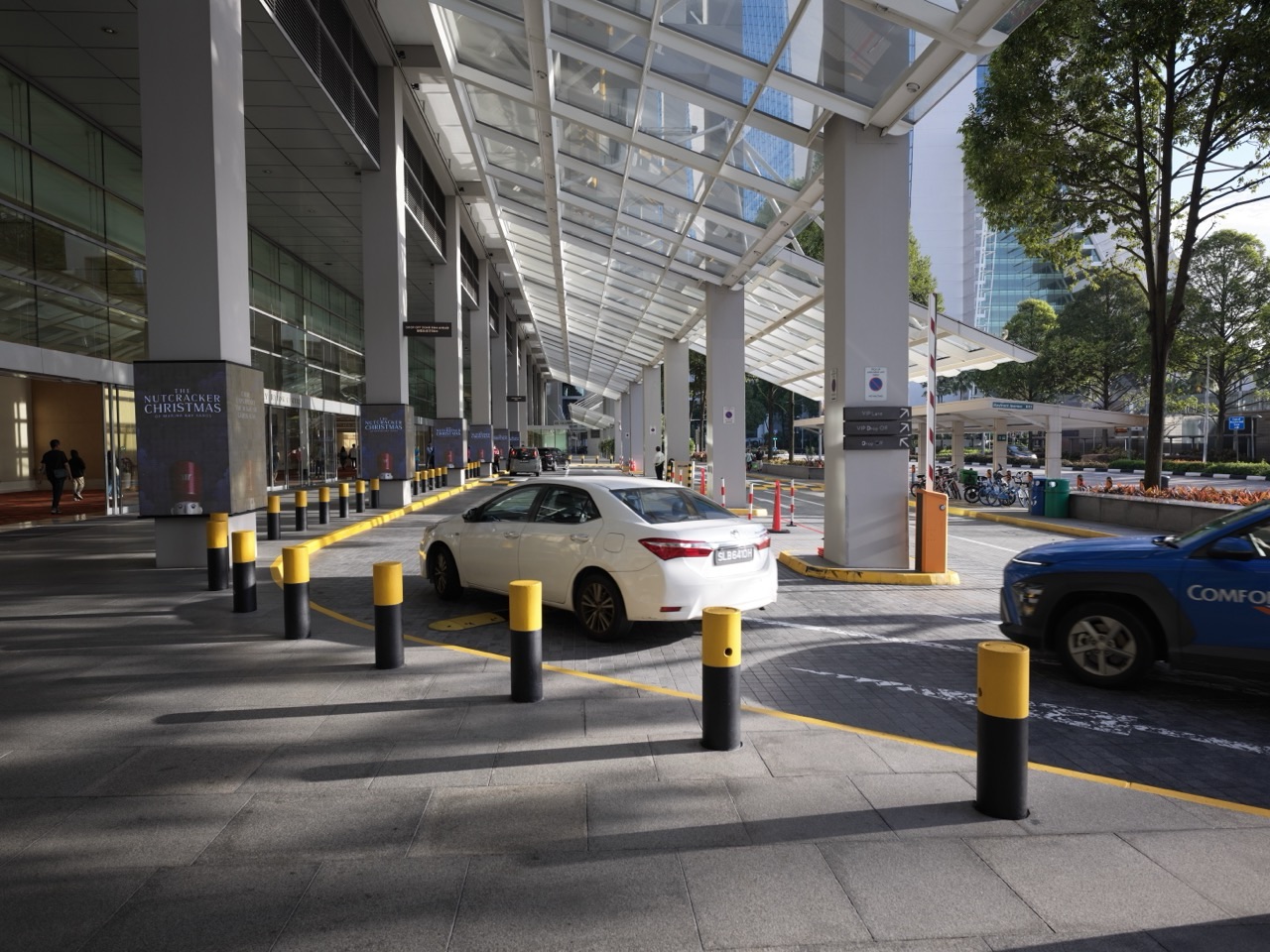
Keep evidence boundaries visible. The featured photograph is an existing eduKate media-library image selected to ground the article in a real Singapore environment; it cannot prove every hidden global mechanism. A route map, patent record, event programme or infrastructure diagram also answers only certain questions. Use the Research and Inquiry Hub to separate source, observation, interpretation and uncertainty.
Test transfer by changing one condition. Remove a route, reduce capacity, delay a handover, change a specification, make a record incomplete or change the intended audience. Ask the learner to predict what becomes unstable and why. If they cannot, return to the earliest weak distinction. The Sengkang Learning Atlas supports the diagnose-repair-practise-transfer loop.
Use an invented elapsed-time model. Four sequential stages take 16, 24, 12 and 18 minutes, totalling 70. Reduce the 24-minute stage to 14 and the total becomes 60 minutes because the other stages remain. Ask whether any stages can overlap before changing the formula. These figures teach modelling; they do not describe real air cargo and time-sensitive freight.
Try a capacity model. One fictional stage handles 40 units per hour and the next 25. Under a simple continuous-flow assumption, completed flow cannot exceed 25. Raising the first stage to 50 may create a larger queue rather than more completed work. Ask whether the slower stage performs a necessary quality or safety function. Use the World Mathematics Atlas for rates and modelling.
Add the human question. Language, disability access, cost, unfamiliar procedures, time zones, confidence and prior knowledge can change whether a technically available connection is usable. Do not infer needs from nationality or appearance. Ask what the person is trying to accomplish. The Well Being library supports belonging and proportionate help, while SETC supports precise communication.
Follow one journey from start to finish
Return to our working journey: a time-sensitive shipment moving from sender through an airport network to a receiver. Draw the smallest network that can answer the question. Label each arrow with a verb such as sends, receives, verifies, carries, licenses, measures, schedules, demonstrates, teaches or returns. Then ask what information must remain attached to the activity. A label, specification, timestamp, identifier or explanation may be just as important as the physical or digital movement itself.
Inspect the interface between two nodes. In air cargo and time-sensitive freight, competent participants can still fail to cooperate when definitions, units, formats, timing or expectations differ. Shared rules reduce repeated interpretation without making every organisation identical. Ask what the rule enables, who maintains it, how updates are communicated and what happens when a case falls outside the normal pattern.
Keep evidence boundaries visible. The featured photograph is an existing eduKate media-library image selected to ground the article in a real Singapore environment; it cannot prove every hidden global mechanism. A route map, patent record, event programme or infrastructure diagram also answers only certain questions. Use the Research and Inquiry Hub to separate source, observation, interpretation and uncertainty.
Test transfer by changing one condition. Remove a route, reduce capacity, delay a handover, change a specification, make a record incomplete or change the intended audience. Ask the learner to predict what becomes unstable and why. If they cannot, return to the earliest weak distinction. The Sengkang Learning Atlas supports the diagnose-repair-practise-transfer loop.
Specialised nodes create capability
Return to our working journey: a time-sensitive shipment moving from sender through an airport network to a receiver. Draw the smallest network that can answer the question. Label each arrow with a verb such as sends, receives, verifies, carries, licenses, measures, schedules, demonstrates, teaches or returns. Then ask what information must remain attached to the activity. A label, specification, timestamp, identifier or explanation may be just as important as the physical or digital movement itself.
Inspect the interface between two nodes. In air cargo and time-sensitive freight, competent participants can still fail to cooperate when definitions, units, formats, timing or expectations differ. Shared rules reduce repeated interpretation without making every organisation identical. Ask what the rule enables, who maintains it, how updates are communicated and what happens when a case falls outside the normal pattern.
Keep evidence boundaries visible. The featured photograph is an existing eduKate media-library image selected to ground the article in a real Singapore environment; it cannot prove every hidden global mechanism. A route map, patent record, event programme or infrastructure diagram also answers only certain questions. Use the Research and Inquiry Hub to separate source, observation, interpretation and uncertainty.
Test transfer by changing one condition. Remove a route, reduce capacity, delay a handover, change a specification, make a record incomplete or change the intended audience. Ask the learner to predict what becomes unstable and why. If they cannot, return to the earliest weak distinction. The Sengkang Learning Atlas supports the diagnose-repair-practise-transfer loop.
Specialisation also creates dependency
Return to our working journey: a time-sensitive shipment moving from sender through an airport network to a receiver. Draw the smallest network that can answer the question. Label each arrow with a verb such as sends, receives, verifies, carries, licenses, measures, schedules, demonstrates, teaches or returns. Then ask what information must remain attached to the activity. A label, specification, timestamp, identifier or explanation may be just as important as the physical or digital movement itself.
Inspect the interface between two nodes. In air cargo and time-sensitive freight, competent participants can still fail to cooperate when definitions, units, formats, timing or expectations differ. Shared rules reduce repeated interpretation without making every organisation identical. Ask what the rule enables, who maintains it, how updates are communicated and what happens when a case falls outside the normal pattern.
Keep evidence boundaries visible. The featured photograph is an existing eduKate media-library image selected to ground the article in a real Singapore environment; it cannot prove every hidden global mechanism. A route map, patent record, event programme or infrastructure diagram also answers only certain questions. Use the Research and Inquiry Hub to separate source, observation, interpretation and uncertainty.
Test transfer by changing one condition. Remove a route, reduce capacity, delay a handover, change a specification, make a record incomplete or change the intended audience. Ask the learner to predict what becomes unstable and why. If they cannot, return to the earliest weak distinction. The Sengkang Learning Atlas supports the diagnose-repair-practise-transfer loop.
Use an invented elapsed-time model. Four sequential stages take 16, 24, 12 and 18 minutes, totalling 70. Reduce the 24-minute stage to 14 and the total becomes 60 minutes because the other stages remain. Ask whether any stages can overlap before changing the formula. These figures teach modelling; they do not describe real air cargo and time-sensitive freight.
The interface is where systems meet
Return to our working journey: a time-sensitive shipment moving from sender through an airport network to a receiver. Draw the smallest network that can answer the question. Label each arrow with a verb such as sends, receives, verifies, carries, licenses, measures, schedules, demonstrates, teaches or returns. Then ask what information must remain attached to the activity. A label, specification, timestamp, identifier or explanation may be just as important as the physical or digital movement itself.
Inspect the interface between two nodes. In air cargo and time-sensitive freight, competent participants can still fail to cooperate when definitions, units, formats, timing or expectations differ. Shared rules reduce repeated interpretation without making every organisation identical. Ask what the rule enables, who maintains it, how updates are communicated and what happens when a case falls outside the normal pattern.
Keep evidence boundaries visible. The featured photograph is an existing eduKate media-library image selected to ground the article in a real Singapore environment; it cannot prove every hidden global mechanism. A route map, patent record, event programme or infrastructure diagram also answers only certain questions. Use the Research and Inquiry Hub to separate source, observation, interpretation and uncertainty.
Test transfer by changing one condition. Remove a route, reduce capacity, delay a handover, change a specification, make a record incomplete or change the intended audience. Ask the learner to predict what becomes unstable and why. If they cannot, return to the earliest weak distinction. The Sengkang Learning Atlas supports the diagnose-repair-practise-transfer loop.
Try a capacity model. One fictional stage handles 40 units per hour and the next 25. Under a simple continuous-flow assumption, completed flow cannot exceed 25. Raising the first stage to 50 may create a larger queue rather than more completed work. Ask whether the slower stage performs a necessary quality or safety function. Use the World Mathematics Atlas for rates and modelling.
Standards make handovers repeatable
Return to our working journey: a time-sensitive shipment moving from sender through an airport network to a receiver. Draw the smallest network that can answer the question. Label each arrow with a verb such as sends, receives, verifies, carries, licenses, measures, schedules, demonstrates, teaches or returns. Then ask what information must remain attached to the activity. A label, specification, timestamp, identifier or explanation may be just as important as the physical or digital movement itself.
Inspect the interface between two nodes. In air cargo and time-sensitive freight, competent participants can still fail to cooperate when definitions, units, formats, timing or expectations differ. Shared rules reduce repeated interpretation without making every organisation identical. Ask what the rule enables, who maintains it, how updates are communicated and what happens when a case falls outside the normal pattern.
Keep evidence boundaries visible. The featured photograph is an existing eduKate media-library image selected to ground the article in a real Singapore environment; it cannot prove every hidden global mechanism. A route map, patent record, event programme or infrastructure diagram also answers only certain questions. Use the Research and Inquiry Hub to separate source, observation, interpretation and uncertainty.
Test transfer by changing one condition. Remove a route, reduce capacity, delay a handover, change a specification, make a record incomplete or change the intended audience. Ask the learner to predict what becomes unstable and why. If they cannot, return to the earliest weak distinction. The Sengkang Learning Atlas supports the diagnose-repair-practise-transfer loop.
Add the human question. Language, disability access, cost, unfamiliar procedures, time zones, confidence and prior knowledge can change whether a technically available connection is usable. Do not infer needs from nationality or appearance. Ask what the person is trying to accomplish. The Well Being library supports belonging and proportionate help, while SETC supports precise communication.
Identifiers reduce ambiguity
Return to our working journey: a time-sensitive shipment moving from sender through an airport network to a receiver. Draw the smallest network that can answer the question. Label each arrow with a verb such as sends, receives, verifies, carries, licenses, measures, schedules, demonstrates, teaches or returns. Then ask what information must remain attached to the activity. A label, specification, timestamp, identifier or explanation may be just as important as the physical or digital movement itself.
Inspect the interface between two nodes. In air cargo and time-sensitive freight, competent participants can still fail to cooperate when definitions, units, formats, timing or expectations differ. Shared rules reduce repeated interpretation without making every organisation identical. Ask what the rule enables, who maintains it, how updates are communicated and what happens when a case falls outside the normal pattern.
Keep evidence boundaries visible. The featured photograph is an existing eduKate media-library image selected to ground the article in a real Singapore environment; it cannot prove every hidden global mechanism. A route map, patent record, event programme or infrastructure diagram also answers only certain questions. Use the Research and Inquiry Hub to separate source, observation, interpretation and uncertainty.
Test transfer by changing one condition. Remove a route, reduce capacity, delay a handover, change a specification, make a record incomplete or change the intended audience. Ask the learner to predict what becomes unstable and why. If they cannot, return to the earliest weak distinction. The Sengkang Learning Atlas supports the diagnose-repair-practise-transfer loop.
Use an invented elapsed-time model. Four sequential stages take 16, 24, 12 and 18 minutes, totalling 70. Reduce the 24-minute stage to 14 and the total becomes 60 minutes because the other stages remain. Ask whether any stages can overlap before changing the formula. These figures teach modelling; they do not describe real air cargo and time-sensitive freight.
Specifications protect meaning
Return to our working journey: a time-sensitive shipment moving from sender through an airport network to a receiver. Draw the smallest network that can answer the question. Label each arrow with a verb such as sends, receives, verifies, carries, licenses, measures, schedules, demonstrates, teaches or returns. Then ask what information must remain attached to the activity. A label, specification, timestamp, identifier or explanation may be just as important as the physical or digital movement itself.
Inspect the interface between two nodes. In air cargo and time-sensitive freight, competent participants can still fail to cooperate when definitions, units, formats, timing or expectations differ. Shared rules reduce repeated interpretation without making every organisation identical. Ask what the rule enables, who maintains it, how updates are communicated and what happens when a case falls outside the normal pattern.
Keep evidence boundaries visible. The featured photograph is an existing eduKate media-library image selected to ground the article in a real Singapore environment; it cannot prove every hidden global mechanism. A route map, patent record, event programme or infrastructure diagram also answers only certain questions. Use the Research and Inquiry Hub to separate source, observation, interpretation and uncertainty.
Test transfer by changing one condition. Remove a route, reduce capacity, delay a handover, change a specification, make a record incomplete or change the intended audience. Ask the learner to predict what becomes unstable and why. If they cannot, return to the earliest weak distinction. The Sengkang Learning Atlas supports the diagnose-repair-practise-transfer loop.
Time changes what counts as useful
Return to our working journey: a time-sensitive shipment moving from sender through an airport network to a receiver. Draw the smallest network that can answer the question. Label each arrow with a verb such as sends, receives, verifies, carries, licenses, measures, schedules, demonstrates, teaches or returns. Then ask what information must remain attached to the activity. A label, specification, timestamp, identifier or explanation may be just as important as the physical or digital movement itself.
Inspect the interface between two nodes. In air cargo and time-sensitive freight, competent participants can still fail to cooperate when definitions, units, formats, timing or expectations differ. Shared rules reduce repeated interpretation without making every organisation identical. Ask what the rule enables, who maintains it, how updates are communicated and what happens when a case falls outside the normal pattern.
Keep evidence boundaries visible. The featured photograph is an existing eduKate media-library image selected to ground the article in a real Singapore environment; it cannot prove every hidden global mechanism. A route map, patent record, event programme or infrastructure diagram also answers only certain questions. Use the Research and Inquiry Hub to separate source, observation, interpretation and uncertainty.
Test transfer by changing one condition. Remove a route, reduce capacity, delay a handover, change a specification, make a record incomplete or change the intended audience. Ask the learner to predict what becomes unstable and why. If they cannot, return to the earliest weak distinction. The Sengkang Learning Atlas supports the diagnose-repair-practise-transfer loop.
Try a capacity model. One fictional stage handles 40 units per hour and the next 25. Under a simple continuous-flow assumption, completed flow cannot exceed 25. Raising the first stage to 50 may create a larger queue rather than more completed work. Ask whether the slower stage performs a necessary quality or safety function. Use the World Mathematics Atlas for rates and modelling.
Distance and elapsed time are different
Return to our working journey: a time-sensitive shipment moving from sender through an airport network to a receiver. Draw the smallest network that can answer the question. Label each arrow with a verb such as sends, receives, verifies, carries, licenses, measures, schedules, demonstrates, teaches or returns. Then ask what information must remain attached to the activity. A label, specification, timestamp, identifier or explanation may be just as important as the physical or digital movement itself.
Inspect the interface between two nodes. In air cargo and time-sensitive freight, competent participants can still fail to cooperate when definitions, units, formats, timing or expectations differ. Shared rules reduce repeated interpretation without making every organisation identical. Ask what the rule enables, who maintains it, how updates are communicated and what happens when a case falls outside the normal pattern.
Keep evidence boundaries visible. The featured photograph is an existing eduKate media-library image selected to ground the article in a real Singapore environment; it cannot prove every hidden global mechanism. A route map, patent record, event programme or infrastructure diagram also answers only certain questions. Use the Research and Inquiry Hub to separate source, observation, interpretation and uncertainty.
Test transfer by changing one condition. Remove a route, reduce capacity, delay a handover, change a specification, make a record incomplete or change the intended audience. Ask the learner to predict what becomes unstable and why. If they cannot, return to the earliest weak distinction. The Sengkang Learning Atlas supports the diagnose-repair-practise-transfer loop.
Use an invented elapsed-time model. Four sequential stages take 16, 24, 12 and 18 minutes, totalling 70. Reduce the 24-minute stage to 14 and the total becomes 60 minutes because the other stages remain. Ask whether any stages can overlap before changing the formula. These figures teach modelling; they do not describe real air cargo and time-sensitive freight.
Capacity changes the possible flow
Return to our working journey: a time-sensitive shipment moving from sender through an airport network to a receiver. Draw the smallest network that can answer the question. Label each arrow with a verb such as sends, receives, verifies, carries, licenses, measures, schedules, demonstrates, teaches or returns. Then ask what information must remain attached to the activity. A label, specification, timestamp, identifier or explanation may be just as important as the physical or digital movement itself.
Inspect the interface between two nodes. In air cargo and time-sensitive freight, competent participants can still fail to cooperate when definitions, units, formats, timing or expectations differ. Shared rules reduce repeated interpretation without making every organisation identical. Ask what the rule enables, who maintains it, how updates are communicated and what happens when a case falls outside the normal pattern.
Keep evidence boundaries visible. The featured photograph is an existing eduKate media-library image selected to ground the article in a real Singapore environment; it cannot prove every hidden global mechanism. A route map, patent record, event programme or infrastructure diagram also answers only certain questions. Use the Research and Inquiry Hub to separate source, observation, interpretation and uncertainty.
Test transfer by changing one condition. Remove a route, reduce capacity, delay a handover, change a specification, make a record incomplete or change the intended audience. Ask the learner to predict what becomes unstable and why. If they cannot, return to the earliest weak distinction. The Sengkang Learning Atlas supports the diagnose-repair-practise-transfer loop.
Add the human question. Language, disability access, cost, unfamiliar procedures, time zones, confidence and prior knowledge can change whether a technically available connection is usable. Do not infer needs from nationality or appearance. Ask what the person is trying to accomplish. The Well Being library supports belonging and proportionate help, while SETC supports precise communication.
A Mathematics model of elapsed time
Return to our working journey: a time-sensitive shipment moving from sender through an airport network to a receiver. Draw the smallest network that can answer the question. Label each arrow with a verb such as sends, receives, verifies, carries, licenses, measures, schedules, demonstrates, teaches or returns. Then ask what information must remain attached to the activity. A label, specification, timestamp, identifier or explanation may be just as important as the physical or digital movement itself.
Inspect the interface between two nodes. In air cargo and time-sensitive freight, competent participants can still fail to cooperate when definitions, units, formats, timing or expectations differ. Shared rules reduce repeated interpretation without making every organisation identical. Ask what the rule enables, who maintains it, how updates are communicated and what happens when a case falls outside the normal pattern.
Keep evidence boundaries visible. The featured photograph is an existing eduKate media-library image selected to ground the article in a real Singapore environment; it cannot prove every hidden global mechanism. A route map, patent record, event programme or infrastructure diagram also answers only certain questions. Use the Research and Inquiry Hub to separate source, observation, interpretation and uncertainty.
Test transfer by changing one condition. Remove a route, reduce capacity, delay a handover, change a specification, make a record incomplete or change the intended audience. Ask the learner to predict what becomes unstable and why. If they cannot, return to the earliest weak distinction. The Sengkang Learning Atlas supports the diagnose-repair-practise-transfer loop.
A Mathematics model of rate
Return to our working journey: a time-sensitive shipment moving from sender through an airport network to a receiver. Draw the smallest network that can answer the question. Label each arrow with a verb such as sends, receives, verifies, carries, licenses, measures, schedules, demonstrates, teaches or returns. Then ask what information must remain attached to the activity. A label, specification, timestamp, identifier or explanation may be just as important as the physical or digital movement itself.
Inspect the interface between two nodes. In air cargo and time-sensitive freight, competent participants can still fail to cooperate when definitions, units, formats, timing or expectations differ. Shared rules reduce repeated interpretation without making every organisation identical. Ask what the rule enables, who maintains it, how updates are communicated and what happens when a case falls outside the normal pattern.
Keep evidence boundaries visible. The featured photograph is an existing eduKate media-library image selected to ground the article in a real Singapore environment; it cannot prove every hidden global mechanism. A route map, patent record, event programme or infrastructure diagram also answers only certain questions. Use the Research and Inquiry Hub to separate source, observation, interpretation and uncertainty.
Test transfer by changing one condition. Remove a route, reduce capacity, delay a handover, change a specification, make a record incomplete or change the intended audience. Ask the learner to predict what becomes unstable and why. If they cannot, return to the earliest weak distinction. The Sengkang Learning Atlas supports the diagnose-repair-practise-transfer loop.
Use an invented elapsed-time model. Four sequential stages take 16, 24, 12 and 18 minutes, totalling 70. Reduce the 24-minute stage to 14 and the total becomes 60 minutes because the other stages remain. Ask whether any stages can overlap before changing the formula. These figures teach modelling; they do not describe real air cargo and time-sensitive freight.
Try a capacity model. One fictional stage handles 40 units per hour and the next 25. Under a simple continuous-flow assumption, completed flow cannot exceed 25. Raising the first stage to 50 may create a larger queue rather than more completed work. Ask whether the slower stage performs a necessary quality or safety function. Use the World Mathematics Atlas for rates and modelling.
A Mathematics model of percentage change
Return to our working journey: a time-sensitive shipment moving from sender through an airport network to a receiver. Draw the smallest network that can answer the question. Label each arrow with a verb such as sends, receives, verifies, carries, licenses, measures, schedules, demonstrates, teaches or returns. Then ask what information must remain attached to the activity. A label, specification, timestamp, identifier or explanation may be just as important as the physical or digital movement itself.
Inspect the interface between two nodes. In air cargo and time-sensitive freight, competent participants can still fail to cooperate when definitions, units, formats, timing or expectations differ. Shared rules reduce repeated interpretation without making every organisation identical. Ask what the rule enables, who maintains it, how updates are communicated and what happens when a case falls outside the normal pattern.
Keep evidence boundaries visible. The featured photograph is an existing eduKate media-library image selected to ground the article in a real Singapore environment; it cannot prove every hidden global mechanism. A route map, patent record, event programme or infrastructure diagram also answers only certain questions. Use the Research and Inquiry Hub to separate source, observation, interpretation and uncertainty.
Test transfer by changing one condition. Remove a route, reduce capacity, delay a handover, change a specification, make a record incomplete or change the intended audience. Ask the learner to predict what becomes unstable and why. If they cannot, return to the earliest weak distinction. The Sengkang Learning Atlas supports the diagnose-repair-practise-transfer loop.
Queues reveal hidden demand
Return to our working journey: a time-sensitive shipment moving from sender through an airport network to a receiver. Draw the smallest network that can answer the question. Label each arrow with a verb such as sends, receives, verifies, carries, licenses, measures, schedules, demonstrates, teaches or returns. Then ask what information must remain attached to the activity. A label, specification, timestamp, identifier or explanation may be just as important as the physical or digital movement itself.
Inspect the interface between two nodes. In air cargo and time-sensitive freight, competent participants can still fail to cooperate when definitions, units, formats, timing or expectations differ. Shared rules reduce repeated interpretation without making every organisation identical. Ask what the rule enables, who maintains it, how updates are communicated and what happens when a case falls outside the normal pattern.
Keep evidence boundaries visible. The featured photograph is an existing eduKate media-library image selected to ground the article in a real Singapore environment; it cannot prove every hidden global mechanism. A route map, patent record, event programme or infrastructure diagram also answers only certain questions. Use the Research and Inquiry Hub to separate source, observation, interpretation and uncertainty.
Test transfer by changing one condition. Remove a route, reduce capacity, delay a handover, change a specification, make a record incomplete or change the intended audience. Ask the learner to predict what becomes unstable and why. If they cannot, return to the earliest weak distinction. The Sengkang Learning Atlas supports the diagnose-repair-practise-transfer loop.
Bottlenecks move after improvements
Return to our working journey: a time-sensitive shipment moving from sender through an airport network to a receiver. Draw the smallest network that can answer the question. Label each arrow with a verb such as sends, receives, verifies, carries, licenses, measures, schedules, demonstrates, teaches or returns. Then ask what information must remain attached to the activity. A label, specification, timestamp, identifier or explanation may be just as important as the physical or digital movement itself.
Inspect the interface between two nodes. In air cargo and time-sensitive freight, competent participants can still fail to cooperate when definitions, units, formats, timing or expectations differ. Shared rules reduce repeated interpretation without making every organisation identical. Ask what the rule enables, who maintains it, how updates are communicated and what happens when a case falls outside the normal pattern.
Keep evidence boundaries visible. The featured photograph is an existing eduKate media-library image selected to ground the article in a real Singapore environment; it cannot prove every hidden global mechanism. A route map, patent record, event programme or infrastructure diagram also answers only certain questions. Use the Research and Inquiry Hub to separate source, observation, interpretation and uncertainty.
Test transfer by changing one condition. Remove a route, reduce capacity, delay a handover, change a specification, make a record incomplete or change the intended audience. Ask the learner to predict what becomes unstable and why. If they cannot, return to the earliest weak distinction. The Sengkang Learning Atlas supports the diagnose-repair-practise-transfer loop.
Use an invented elapsed-time model. Four sequential stages take 16, 24, 12 and 18 minutes, totalling 70. Reduce the 24-minute stage to 14 and the total becomes 60 minutes because the other stages remain. Ask whether any stages can overlap before changing the formula. These figures teach modelling; they do not describe real air cargo and time-sensitive freight.
Add the human question. Language, disability access, cost, unfamiliar procedures, time zones, confidence and prior knowledge can change whether a technically available connection is usable. Do not infer needs from nationality or appearance. Ask what the person is trying to accomplish. The Well Being library supports belonging and proportionate help, while SETC supports precise communication.
Priority needs a stated objective
Return to our working journey: a time-sensitive shipment moving from sender through an airport network to a receiver. Draw the smallest network that can answer the question. Label each arrow with a verb such as sends, receives, verifies, carries, licenses, measures, schedules, demonstrates, teaches or returns. Then ask what information must remain attached to the activity. A label, specification, timestamp, identifier or explanation may be just as important as the physical or digital movement itself.
Inspect the interface between two nodes. In air cargo and time-sensitive freight, competent participants can still fail to cooperate when definitions, units, formats, timing or expectations differ. Shared rules reduce repeated interpretation without making every organisation identical. Ask what the rule enables, who maintains it, how updates are communicated and what happens when a case falls outside the normal pattern.
Keep evidence boundaries visible. The featured photograph is an existing eduKate media-library image selected to ground the article in a real Singapore environment; it cannot prove every hidden global mechanism. A route map, patent record, event programme or infrastructure diagram also answers only certain questions. Use the Research and Inquiry Hub to separate source, observation, interpretation and uncertainty.
Test transfer by changing one condition. Remove a route, reduce capacity, delay a handover, change a specification, make a record incomplete or change the intended audience. Ask the learner to predict what becomes unstable and why. If they cannot, return to the earliest weak distinction. The Sengkang Learning Atlas supports the diagnose-repair-practise-transfer loop.
Try a capacity model. One fictional stage handles 40 units per hour and the next 25. Under a simple continuous-flow assumption, completed flow cannot exceed 25. Raising the first stage to 50 may create a larger queue rather than more completed work. Ask whether the slower stage performs a necessary quality or safety function. Use the World Mathematics Atlas for rates and modelling.
Redundancy is not independence
Return to our working journey: a time-sensitive shipment moving from sender through an airport network to a receiver. Draw the smallest network that can answer the question. Label each arrow with a verb such as sends, receives, verifies, carries, licenses, measures, schedules, demonstrates, teaches or returns. Then ask what information must remain attached to the activity. A label, specification, timestamp, identifier or explanation may be just as important as the physical or digital movement itself.
Inspect the interface between two nodes. In air cargo and time-sensitive freight, competent participants can still fail to cooperate when definitions, units, formats, timing or expectations differ. Shared rules reduce repeated interpretation without making every organisation identical. Ask what the rule enables, who maintains it, how updates are communicated and what happens when a case falls outside the normal pattern.
Keep evidence boundaries visible. The featured photograph is an existing eduKate media-library image selected to ground the article in a real Singapore environment; it cannot prove every hidden global mechanism. A route map, patent record, event programme or infrastructure diagram also answers only certain questions. Use the Research and Inquiry Hub to separate source, observation, interpretation and uncertainty.
Test transfer by changing one condition. Remove a route, reduce capacity, delay a handover, change a specification, make a record incomplete or change the intended audience. Ask the learner to predict what becomes unstable and why. If they cannot, return to the earliest weak distinction. The Sengkang Learning Atlas supports the diagnose-repair-practise-transfer loop.
Resilience protects a defined function
Return to our working journey: a time-sensitive shipment moving from sender through an airport network to a receiver. Draw the smallest network that can answer the question. Label each arrow with a verb such as sends, receives, verifies, carries, licenses, measures, schedules, demonstrates, teaches or returns. Then ask what information must remain attached to the activity. A label, specification, timestamp, identifier or explanation may be just as important as the physical or digital movement itself.
Inspect the interface between two nodes. In air cargo and time-sensitive freight, competent participants can still fail to cooperate when definitions, units, formats, timing or expectations differ. Shared rules reduce repeated interpretation without making every organisation identical. Ask what the rule enables, who maintains it, how updates are communicated and what happens when a case falls outside the normal pattern.
Keep evidence boundaries visible. The featured photograph is an existing eduKate media-library image selected to ground the article in a real Singapore environment; it cannot prove every hidden global mechanism. A route map, patent record, event programme or infrastructure diagram also answers only certain questions. Use the Research and Inquiry Hub to separate source, observation, interpretation and uncertainty.
Test transfer by changing one condition. Remove a route, reduce capacity, delay a handover, change a specification, make a record incomplete or change the intended audience. Ask the learner to predict what becomes unstable and why. If they cannot, return to the earliest weak distinction. The Sengkang Learning Atlas supports the diagnose-repair-practise-transfer loop.
Use an invented elapsed-time model. Four sequential stages take 16, 24, 12 and 18 minutes, totalling 70. Reduce the 24-minute stage to 14 and the total becomes 60 minutes because the other stages remain. Ask whether any stages can overlap before changing the formula. These figures teach modelling; they do not describe real air cargo and time-sensitive freight.
Information must travel with the activity
Return to our working journey: a time-sensitive shipment moving from sender through an airport network to a receiver. Draw the smallest network that can answer the question. Label each arrow with a verb such as sends, receives, verifies, carries, licenses, measures, schedules, demonstrates, teaches or returns. Then ask what information must remain attached to the activity. A label, specification, timestamp, identifier or explanation may be just as important as the physical or digital movement itself.
Inspect the interface between two nodes. In air cargo and time-sensitive freight, competent participants can still fail to cooperate when definitions, units, formats, timing or expectations differ. Shared rules reduce repeated interpretation without making every organisation identical. Ask what the rule enables, who maintains it, how updates are communicated and what happens when a case falls outside the normal pattern.
Keep evidence boundaries visible. The featured photograph is an existing eduKate media-library image selected to ground the article in a real Singapore environment; it cannot prove every hidden global mechanism. A route map, patent record, event programme or infrastructure diagram also answers only certain questions. Use the Research and Inquiry Hub to separate source, observation, interpretation and uncertainty.
Test transfer by changing one condition. Remove a route, reduce capacity, delay a handover, change a specification, make a record incomplete or change the intended audience. Ask the learner to predict what becomes unstable and why. If they cannot, return to the earliest weak distinction. The Sengkang Learning Atlas supports the diagnose-repair-practise-transfer loop.
Data needs definitions
Return to our working journey: a time-sensitive shipment moving from sender through an airport network to a receiver. Draw the smallest network that can answer the question. Label each arrow with a verb such as sends, receives, verifies, carries, licenses, measures, schedules, demonstrates, teaches or returns. Then ask what information must remain attached to the activity. A label, specification, timestamp, identifier or explanation may be just as important as the physical or digital movement itself.
Inspect the interface between two nodes. In air cargo and time-sensitive freight, competent participants can still fail to cooperate when definitions, units, formats, timing or expectations differ. Shared rules reduce repeated interpretation without making every organisation identical. Ask what the rule enables, who maintains it, how updates are communicated and what happens when a case falls outside the normal pattern.
Keep evidence boundaries visible. The featured photograph is an existing eduKate media-library image selected to ground the article in a real Singapore environment; it cannot prove every hidden global mechanism. A route map, patent record, event programme or infrastructure diagram also answers only certain questions. Use the Research and Inquiry Hub to separate source, observation, interpretation and uncertainty.
Test transfer by changing one condition. Remove a route, reduce capacity, delay a handover, change a specification, make a record incomplete or change the intended audience. Ask the learner to predict what becomes unstable and why. If they cannot, return to the earliest weak distinction. The Sengkang Learning Atlas supports the diagnose-repair-practise-transfer loop.
Try a capacity model. One fictional stage handles 40 units per hour and the next 25. Under a simple continuous-flow assumption, completed flow cannot exceed 25. Raising the first stage to 50 may create a larger queue rather than more completed work. Ask whether the slower stage performs a necessary quality or safety function. Use the World Mathematics Atlas for rates and modelling.
Add the human question. Language, disability access, cost, unfamiliar procedures, time zones, confidence and prior knowledge can change whether a technically available connection is usable. Do not infer needs from nationality or appearance. Ask what the person is trying to accomplish. The Well Being library supports belonging and proportionate help, while SETC supports precise communication.
Maps simplify deliberately
Return to our working journey: a time-sensitive shipment moving from sender through an airport network to a receiver. Draw the smallest network that can answer the question. Label each arrow with a verb such as sends, receives, verifies, carries, licenses, measures, schedules, demonstrates, teaches or returns. Then ask what information must remain attached to the activity. A label, specification, timestamp, identifier or explanation may be just as important as the physical or digital movement itself.
Inspect the interface between two nodes. In air cargo and time-sensitive freight, competent participants can still fail to cooperate when definitions, units, formats, timing or expectations differ. Shared rules reduce repeated interpretation without making every organisation identical. Ask what the rule enables, who maintains it, how updates are communicated and what happens when a case falls outside the normal pattern.
Keep evidence boundaries visible. The featured photograph is an existing eduKate media-library image selected to ground the article in a real Singapore environment; it cannot prove every hidden global mechanism. A route map, patent record, event programme or infrastructure diagram also answers only certain questions. Use the Research and Inquiry Hub to separate source, observation, interpretation and uncertainty.
Test transfer by changing one condition. Remove a route, reduce capacity, delay a handover, change a specification, make a record incomplete or change the intended audience. Ask the learner to predict what becomes unstable and why. If they cannot, return to the earliest weak distinction. The Sengkang Learning Atlas supports the diagnose-repair-practise-transfer loop.
Use an invented elapsed-time model. Four sequential stages take 16, 24, 12 and 18 minutes, totalling 70. Reduce the 24-minute stage to 14 and the total becomes 60 minutes because the other stages remain. Ask whether any stages can overlap before changing the formula. These figures teach modelling; they do not describe real air cargo and time-sensitive freight.
Trust is layered
Return to our working journey: a time-sensitive shipment moving from sender through an airport network to a receiver. Draw the smallest network that can answer the question. Label each arrow with a verb such as sends, receives, verifies, carries, licenses, measures, schedules, demonstrates, teaches or returns. Then ask what information must remain attached to the activity. A label, specification, timestamp, identifier or explanation may be just as important as the physical or digital movement itself.
Inspect the interface between two nodes. In air cargo and time-sensitive freight, competent participants can still fail to cooperate when definitions, units, formats, timing or expectations differ. Shared rules reduce repeated interpretation without making every organisation identical. Ask what the rule enables, who maintains it, how updates are communicated and what happens when a case falls outside the normal pattern.
Keep evidence boundaries visible. The featured photograph is an existing eduKate media-library image selected to ground the article in a real Singapore environment; it cannot prove every hidden global mechanism. A route map, patent record, event programme or infrastructure diagram also answers only certain questions. Use the Research and Inquiry Hub to separate source, observation, interpretation and uncertainty.
Test transfer by changing one condition. Remove a route, reduce capacity, delay a handover, change a specification, make a record incomplete or change the intended audience. Ask the learner to predict what becomes unstable and why. If they cannot, return to the earliest weak distinction. The Sengkang Learning Atlas supports the diagnose-repair-practise-transfer loop.
Verification answers a bounded question
Return to our working journey: a time-sensitive shipment moving from sender through an airport network to a receiver. Draw the smallest network that can answer the question. Label each arrow with a verb such as sends, receives, verifies, carries, licenses, measures, schedules, demonstrates, teaches or returns. Then ask what information must remain attached to the activity. A label, specification, timestamp, identifier or explanation may be just as important as the physical or digital movement itself.
Inspect the interface between two nodes. In air cargo and time-sensitive freight, competent participants can still fail to cooperate when definitions, units, formats, timing or expectations differ. Shared rules reduce repeated interpretation without making every organisation identical. Ask what the rule enables, who maintains it, how updates are communicated and what happens when a case falls outside the normal pattern.
Keep evidence boundaries visible. The featured photograph is an existing eduKate media-library image selected to ground the article in a real Singapore environment; it cannot prove every hidden global mechanism. A route map, patent record, event programme or infrastructure diagram also answers only certain questions. Use the Research and Inquiry Hub to separate source, observation, interpretation and uncertainty.
Test transfer by changing one condition. Remove a route, reduce capacity, delay a handover, change a specification, make a record incomplete or change the intended audience. Ask the learner to predict what becomes unstable and why. If they cannot, return to the earliest weak distinction. The Sengkang Learning Atlas supports the diagnose-repair-practise-transfer loop.
Security does not prove accuracy
Return to our working journey: a time-sensitive shipment moving from sender through an airport network to a receiver. Draw the smallest network that can answer the question. Label each arrow with a verb such as sends, receives, verifies, carries, licenses, measures, schedules, demonstrates, teaches or returns. Then ask what information must remain attached to the activity. A label, specification, timestamp, identifier or explanation may be just as important as the physical or digital movement itself.
Inspect the interface between two nodes. In air cargo and time-sensitive freight, competent participants can still fail to cooperate when definitions, units, formats, timing or expectations differ. Shared rules reduce repeated interpretation without making every organisation identical. Ask what the rule enables, who maintains it, how updates are communicated and what happens when a case falls outside the normal pattern.
Keep evidence boundaries visible. The featured photograph is an existing eduKate media-library image selected to ground the article in a real Singapore environment; it cannot prove every hidden global mechanism. A route map, patent record, event programme or infrastructure diagram also answers only certain questions. Use the Research and Inquiry Hub to separate source, observation, interpretation and uncertainty.
Test transfer by changing one condition. Remove a route, reduce capacity, delay a handover, change a specification, make a record incomplete or change the intended audience. Ask the learner to predict what becomes unstable and why. If they cannot, return to the earliest weak distinction. The Sengkang Learning Atlas supports the diagnose-repair-practise-transfer loop.
Use an invented elapsed-time model. Four sequential stages take 16, 24, 12 and 18 minutes, totalling 70. Reduce the 24-minute stage to 14 and the total becomes 60 minutes because the other stages remain. Ask whether any stages can overlap before changing the formula. These figures teach modelling; they do not describe real air cargo and time-sensitive freight.
Try a capacity model. One fictional stage handles 40 units per hour and the next 25. Under a simple continuous-flow assumption, completed flow cannot exceed 25. Raising the first stage to 50 may create a larger queue rather than more completed work. Ask whether the slower stage performs a necessary quality or safety function. Use the World Mathematics Atlas for rates and modelling.
Language shapes participation
Return to our working journey: a time-sensitive shipment moving from sender through an airport network to a receiver. Draw the smallest network that can answer the question. Label each arrow with a verb such as sends, receives, verifies, carries, licenses, measures, schedules, demonstrates, teaches or returns. Then ask what information must remain attached to the activity. A label, specification, timestamp, identifier or explanation may be just as important as the physical or digital movement itself.
Inspect the interface between two nodes. In air cargo and time-sensitive freight, competent participants can still fail to cooperate when definitions, units, formats, timing or expectations differ. Shared rules reduce repeated interpretation without making every organisation identical. Ask what the rule enables, who maintains it, how updates are communicated and what happens when a case falls outside the normal pattern.
Keep evidence boundaries visible. The featured photograph is an existing eduKate media-library image selected to ground the article in a real Singapore environment; it cannot prove every hidden global mechanism. A route map, patent record, event programme or infrastructure diagram also answers only certain questions. Use the Research and Inquiry Hub to separate source, observation, interpretation and uncertainty.
Test transfer by changing one condition. Remove a route, reduce capacity, delay a handover, change a specification, make a record incomplete or change the intended audience. Ask the learner to predict what becomes unstable and why. If they cannot, return to the earliest weak distinction. The Sengkang Learning Atlas supports the diagnose-repair-practise-transfer loop.
Add the human question. Language, disability access, cost, unfamiliar procedures, time zones, confidence and prior knowledge can change whether a technically available connection is usable. Do not infer needs from nationality or appearance. Ask what the person is trying to accomplish. The Well Being library supports belonging and proportionate help, while SETC supports precise communication.
Translation can preserve specialist meaning
Return to our working journey: a time-sensitive shipment moving from sender through an airport network to a receiver. Draw the smallest network that can answer the question. Label each arrow with a verb such as sends, receives, verifies, carries, licenses, measures, schedules, demonstrates, teaches or returns. Then ask what information must remain attached to the activity. A label, specification, timestamp, identifier or explanation may be just as important as the physical or digital movement itself.
Inspect the interface between two nodes. In air cargo and time-sensitive freight, competent participants can still fail to cooperate when definitions, units, formats, timing or expectations differ. Shared rules reduce repeated interpretation without making every organisation identical. Ask what the rule enables, who maintains it, how updates are communicated and what happens when a case falls outside the normal pattern.
Keep evidence boundaries visible. The featured photograph is an existing eduKate media-library image selected to ground the article in a real Singapore environment; it cannot prove every hidden global mechanism. A route map, patent record, event programme or infrastructure diagram also answers only certain questions. Use the Research and Inquiry Hub to separate source, observation, interpretation and uncertainty.
Test transfer by changing one condition. Remove a route, reduce capacity, delay a handover, change a specification, make a record incomplete or change the intended audience. Ask the learner to predict what becomes unstable and why. If they cannot, return to the earliest weak distinction. The Sengkang Learning Atlas supports the diagnose-repair-practise-transfer loop.
Culture changes interpretation
Return to our working journey: a time-sensitive shipment moving from sender through an airport network to a receiver. Draw the smallest network that can answer the question. Label each arrow with a verb such as sends, receives, verifies, carries, licenses, measures, schedules, demonstrates, teaches or returns. Then ask what information must remain attached to the activity. A label, specification, timestamp, identifier or explanation may be just as important as the physical or digital movement itself.
Inspect the interface between two nodes. In air cargo and time-sensitive freight, competent participants can still fail to cooperate when definitions, units, formats, timing or expectations differ. Shared rules reduce repeated interpretation without making every organisation identical. Ask what the rule enables, who maintains it, how updates are communicated and what happens when a case falls outside the normal pattern.
Keep evidence boundaries visible. The featured photograph is an existing eduKate media-library image selected to ground the article in a real Singapore environment; it cannot prove every hidden global mechanism. A route map, patent record, event programme or infrastructure diagram also answers only certain questions. Use the Research and Inquiry Hub to separate source, observation, interpretation and uncertainty.
Test transfer by changing one condition. Remove a route, reduce capacity, delay a handover, change a specification, make a record incomplete or change the intended audience. Ask the learner to predict what becomes unstable and why. If they cannot, return to the earliest weak distinction. The Sengkang Learning Atlas supports the diagnose-repair-practise-transfer loop.
Use an invented elapsed-time model. Four sequential stages take 16, 24, 12 and 18 minutes, totalling 70. Reduce the 24-minute stage to 14 and the total becomes 60 minutes because the other stages remain. Ask whether any stages can overlap before changing the formula. These figures teach modelling; they do not describe real air cargo and time-sensitive freight.
Accessibility belongs at the start
Return to our working journey: a time-sensitive shipment moving from sender through an airport network to a receiver. Draw the smallest network that can answer the question. Label each arrow with a verb such as sends, receives, verifies, carries, licenses, measures, schedules, demonstrates, teaches or returns. Then ask what information must remain attached to the activity. A label, specification, timestamp, identifier or explanation may be just as important as the physical or digital movement itself.
Inspect the interface between two nodes. In air cargo and time-sensitive freight, competent participants can still fail to cooperate when definitions, units, formats, timing or expectations differ. Shared rules reduce repeated interpretation without making every organisation identical. Ask what the rule enables, who maintains it, how updates are communicated and what happens when a case falls outside the normal pattern.
Keep evidence boundaries visible. The featured photograph is an existing eduKate media-library image selected to ground the article in a real Singapore environment; it cannot prove every hidden global mechanism. A route map, patent record, event programme or infrastructure diagram also answers only certain questions. Use the Research and Inquiry Hub to separate source, observation, interpretation and uncertainty.
Test transfer by changing one condition. Remove a route, reduce capacity, delay a handover, change a specification, make a record incomplete or change the intended audience. Ask the learner to predict what becomes unstable and why. If they cannot, return to the earliest weak distinction. The Sengkang Learning Atlas supports the diagnose-repair-practise-transfer loop.
Try a capacity model. One fictional stage handles 40 units per hour and the next 25. Under a simple continuous-flow assumption, completed flow cannot exceed 25. Raising the first stage to 50 may create a larger queue rather than more completed work. Ask whether the slower stage performs a necessary quality or safety function. Use the World Mathematics Atlas for rates and modelling.
Affordability affects practical access
Return to our working journey: a time-sensitive shipment moving from sender through an airport network to a receiver. Draw the smallest network that can answer the question. Label each arrow with a verb such as sends, receives, verifies, carries, licenses, measures, schedules, demonstrates, teaches or returns. Then ask what information must remain attached to the activity. A label, specification, timestamp, identifier or explanation may be just as important as the physical or digital movement itself.
Inspect the interface between two nodes. In air cargo and time-sensitive freight, competent participants can still fail to cooperate when definitions, units, formats, timing or expectations differ. Shared rules reduce repeated interpretation without making every organisation identical. Ask what the rule enables, who maintains it, how updates are communicated and what happens when a case falls outside the normal pattern.
Keep evidence boundaries visible. The featured photograph is an existing eduKate media-library image selected to ground the article in a real Singapore environment; it cannot prove every hidden global mechanism. A route map, patent record, event programme or infrastructure diagram also answers only certain questions. Use the Research and Inquiry Hub to separate source, observation, interpretation and uncertainty.
Test transfer by changing one condition. Remove a route, reduce capacity, delay a handover, change a specification, make a record incomplete or change the intended audience. Ask the learner to predict what becomes unstable and why. If they cannot, return to the earliest weak distinction. The Sengkang Learning Atlas supports the diagnose-repair-practise-transfer loop.
Skills turn access into capability
Return to our working journey: a time-sensitive shipment moving from sender through an airport network to a receiver. Draw the smallest network that can answer the question. Label each arrow with a verb such as sends, receives, verifies, carries, licenses, measures, schedules, demonstrates, teaches or returns. Then ask what information must remain attached to the activity. A label, specification, timestamp, identifier or explanation may be just as important as the physical or digital movement itself.
Inspect the interface between two nodes. In air cargo and time-sensitive freight, competent participants can still fail to cooperate when definitions, units, formats, timing or expectations differ. Shared rules reduce repeated interpretation without making every organisation identical. Ask what the rule enables, who maintains it, how updates are communicated and what happens when a case falls outside the normal pattern.
Keep evidence boundaries visible. The featured photograph is an existing eduKate media-library image selected to ground the article in a real Singapore environment; it cannot prove every hidden global mechanism. A route map, patent record, event programme or infrastructure diagram also answers only certain questions. Use the Research and Inquiry Hub to separate source, observation, interpretation and uncertainty.
Test transfer by changing one condition. Remove a route, reduce capacity, delay a handover, change a specification, make a record incomplete or change the intended audience. Ask the learner to predict what becomes unstable and why. If they cannot, return to the earliest weak distinction. The Sengkang Learning Atlas supports the diagnose-repair-practise-transfer loop.
Use an invented elapsed-time model. Four sequential stages take 16, 24, 12 and 18 minutes, totalling 70. Reduce the 24-minute stage to 14 and the total becomes 60 minutes because the other stages remain. Ask whether any stages can overlap before changing the formula. These figures teach modelling; they do not describe real air cargo and time-sensitive freight.
Add the human question. Language, disability access, cost, unfamiliar procedures, time zones, confidence and prior knowledge can change whether a technically available connection is usable. Do not infer needs from nationality or appearance. Ask what the person is trying to accomplish. The Well Being library supports belonging and proportionate help, while SETC supports precise communication.
Education builds the people behind the network
Return to our working journey: a time-sensitive shipment moving from sender through an airport network to a receiver. Draw the smallest network that can answer the question. Label each arrow with a verb such as sends, receives, verifies, carries, licenses, measures, schedules, demonstrates, teaches or returns. Then ask what information must remain attached to the activity. A label, specification, timestamp, identifier or explanation may be just as important as the physical or digital movement itself.
Inspect the interface between two nodes. In air cargo and time-sensitive freight, competent participants can still fail to cooperate when definitions, units, formats, timing or expectations differ. Shared rules reduce repeated interpretation without making every organisation identical. Ask what the rule enables, who maintains it, how updates are communicated and what happens when a case falls outside the normal pattern.
Keep evidence boundaries visible. The featured photograph is an existing eduKate media-library image selected to ground the article in a real Singapore environment; it cannot prove every hidden global mechanism. A route map, patent record, event programme or infrastructure diagram also answers only certain questions. Use the Research and Inquiry Hub to separate source, observation, interpretation and uncertainty.
Test transfer by changing one condition. Remove a route, reduce capacity, delay a handover, change a specification, make a record incomplete or change the intended audience. Ask the learner to predict what becomes unstable and why. If they cannot, return to the earliest weak distinction. The Sengkang Learning Atlas supports the diagnose-repair-practise-transfer loop.
Libraries make distant knowledge locally usable
Return to our working journey: a time-sensitive shipment moving from sender through an airport network to a receiver. Draw the smallest network that can answer the question. Label each arrow with a verb such as sends, receives, verifies, carries, licenses, measures, schedules, demonstrates, teaches or returns. Then ask what information must remain attached to the activity. A label, specification, timestamp, identifier or explanation may be just as important as the physical or digital movement itself.
Inspect the interface between two nodes. In air cargo and time-sensitive freight, competent participants can still fail to cooperate when definitions, units, formats, timing or expectations differ. Shared rules reduce repeated interpretation without making every organisation identical. Ask what the rule enables, who maintains it, how updates are communicated and what happens when a case falls outside the normal pattern.
Keep evidence boundaries visible. The featured photograph is an existing eduKate media-library image selected to ground the article in a real Singapore environment; it cannot prove every hidden global mechanism. A route map, patent record, event programme or infrastructure diagram also answers only certain questions. Use the Research and Inquiry Hub to separate source, observation, interpretation and uncertainty.
Test transfer by changing one condition. Remove a route, reduce capacity, delay a handover, change a specification, make a record incomplete or change the intended audience. Ask the learner to predict what becomes unstable and why. If they cannot, return to the earliest weak distinction. The Sengkang Learning Atlas supports the diagnose-repair-practise-transfer loop.
Try a capacity model. One fictional stage handles 40 units per hour and the next 25. Under a simple continuous-flow assumption, completed flow cannot exceed 25. Raising the first stage to 50 may create a larger queue rather than more completed work. Ask whether the slower stage performs a necessary quality or safety function. Use the World Mathematics Atlas for rates and modelling.
Singapore as a connected-system specimen
Return to our working journey: a time-sensitive shipment moving from sender through an airport network to a receiver. Draw the smallest network that can answer the question. Label each arrow with a verb such as sends, receives, verifies, carries, licenses, measures, schedules, demonstrates, teaches or returns. Then ask what information must remain attached to the activity. A label, specification, timestamp, identifier or explanation may be just as important as the physical or digital movement itself.
Inspect the interface between two nodes. In air cargo and time-sensitive freight, competent participants can still fail to cooperate when definitions, units, formats, timing or expectations differ. Shared rules reduce repeated interpretation without making every organisation identical. Ask what the rule enables, who maintains it, how updates are communicated and what happens when a case falls outside the normal pattern.
Keep evidence boundaries visible. The featured photograph is an existing eduKate media-library image selected to ground the article in a real Singapore environment; it cannot prove every hidden global mechanism. A route map, patent record, event programme or infrastructure diagram also answers only certain questions. Use the Research and Inquiry Hub to separate source, observation, interpretation and uncertainty.
Test transfer by changing one condition. Remove a route, reduce capacity, delay a handover, change a specification, make a record incomplete or change the intended audience. Ask the learner to predict what becomes unstable and why. If they cannot, return to the earliest weak distinction. The Sengkang Learning Atlas supports the diagnose-repair-practise-transfer loop.
Use an invented elapsed-time model. Four sequential stages take 16, 24, 12 and 18 minutes, totalling 70. Reduce the 24-minute stage to 14 and the total becomes 60 minutes because the other stages remain. Ask whether any stages can overlap before changing the formula. These figures teach modelling; they do not describe real air cargo and time-sensitive freight.
Local places reveal global systems
Return to our working journey: a time-sensitive shipment moving from sender through an airport network to a receiver. Draw the smallest network that can answer the question. Label each arrow with a verb such as sends, receives, verifies, carries, licenses, measures, schedules, demonstrates, teaches or returns. Then ask what information must remain attached to the activity. A label, specification, timestamp, identifier or explanation may be just as important as the physical or digital movement itself.
Inspect the interface between two nodes. In air cargo and time-sensitive freight, competent participants can still fail to cooperate when definitions, units, formats, timing or expectations differ. Shared rules reduce repeated interpretation without making every organisation identical. Ask what the rule enables, who maintains it, how updates are communicated and what happens when a case falls outside the normal pattern.
Keep evidence boundaries visible. The featured photograph is an existing eduKate media-library image selected to ground the article in a real Singapore environment; it cannot prove every hidden global mechanism. A route map, patent record, event programme or infrastructure diagram also answers only certain questions. Use the Research and Inquiry Hub to separate source, observation, interpretation and uncertainty.
Test transfer by changing one condition. Remove a route, reduce capacity, delay a handover, change a specification, make a record incomplete or change the intended audience. Ask the learner to predict what becomes unstable and why. If they cannot, return to the earliest weak distinction. The Sengkang Learning Atlas supports the diagnose-repair-practise-transfer loop.
Country examples add texture
Return to our working journey: a time-sensitive shipment moving from sender through an airport network to a receiver. Draw the smallest network that can answer the question. Label each arrow with a verb such as sends, receives, verifies, carries, licenses, measures, schedules, demonstrates, teaches or returns. Then ask what information must remain attached to the activity. A label, specification, timestamp, identifier or explanation may be just as important as the physical or digital movement itself.
Inspect the interface between two nodes. In air cargo and time-sensitive freight, competent participants can still fail to cooperate when definitions, units, formats, timing or expectations differ. Shared rules reduce repeated interpretation without making every organisation identical. Ask what the rule enables, who maintains it, how updates are communicated and what happens when a case falls outside the normal pattern.
Keep evidence boundaries visible. The featured photograph is an existing eduKate media-library image selected to ground the article in a real Singapore environment; it cannot prove every hidden global mechanism. A route map, patent record, event programme or infrastructure diagram also answers only certain questions. Use the Research and Inquiry Hub to separate source, observation, interpretation and uncertainty.
Test transfer by changing one condition. Remove a route, reduce capacity, delay a handover, change a specification, make a record incomplete or change the intended audience. Ask the learner to predict what becomes unstable and why. If they cannot, return to the earliest weak distinction. The Sengkang Learning Atlas supports the diagnose-repair-practise-transfer loop.
Add the human question. Language, disability access, cost, unfamiliar procedures, time zones, confidence and prior knowledge can change whether a technically available connection is usable. Do not infer needs from nationality or appearance. Ask what the person is trying to accomplish. The Well Being library supports belonging and proportionate help, while SETC supports precise communication.
Environmental questions need fair boundaries
Return to our working journey: a time-sensitive shipment moving from sender through an airport network to a receiver. Draw the smallest network that can answer the question. Label each arrow with a verb such as sends, receives, verifies, carries, licenses, measures, schedules, demonstrates, teaches or returns. Then ask what information must remain attached to the activity. A label, specification, timestamp, identifier or explanation may be just as important as the physical or digital movement itself.
Inspect the interface between two nodes. In air cargo and time-sensitive freight, competent participants can still fail to cooperate when definitions, units, formats, timing or expectations differ. Shared rules reduce repeated interpretation without making every organisation identical. Ask what the rule enables, who maintains it, how updates are communicated and what happens when a case falls outside the normal pattern.
Keep evidence boundaries visible. The featured photograph is an existing eduKate media-library image selected to ground the article in a real Singapore environment; it cannot prove every hidden global mechanism. A route map, patent record, event programme or infrastructure diagram also answers only certain questions. Use the Research and Inquiry Hub to separate source, observation, interpretation and uncertainty.
Test transfer by changing one condition. Remove a route, reduce capacity, delay a handover, change a specification, make a record incomplete or change the intended audience. Ask the learner to predict what becomes unstable and why. If they cannot, return to the earliest weak distinction. The Sengkang Learning Atlas supports the diagnose-repair-practise-transfer loop.
Use an invented elapsed-time model. Four sequential stages take 16, 24, 12 and 18 minutes, totalling 70. Reduce the 24-minute stage to 14 and the total becomes 60 minutes because the other stages remain. Ask whether any stages can overlap before changing the formula. These figures teach modelling; they do not describe real air cargo and time-sensitive freight.
Try a capacity model. One fictional stage handles 40 units per hour and the next 25. Under a simple continuous-flow assumption, completed flow cannot exceed 25. Raising the first stage to 50 may create a larger queue rather than more completed work. Ask whether the slower stage performs a necessary quality or safety function. Use the World Mathematics Atlas for rates and modelling.
Wellbeing and dignity matter
Return to our working journey: a time-sensitive shipment moving from sender through an airport network to a receiver. Draw the smallest network that can answer the question. Label each arrow with a verb such as sends, receives, verifies, carries, licenses, measures, schedules, demonstrates, teaches or returns. Then ask what information must remain attached to the activity. A label, specification, timestamp, identifier or explanation may be just as important as the physical or digital movement itself.
Inspect the interface between two nodes. In air cargo and time-sensitive freight, competent participants can still fail to cooperate when definitions, units, formats, timing or expectations differ. Shared rules reduce repeated interpretation without making every organisation identical. Ask what the rule enables, who maintains it, how updates are communicated and what happens when a case falls outside the normal pattern.
Keep evidence boundaries visible. The featured photograph is an existing eduKate media-library image selected to ground the article in a real Singapore environment; it cannot prove every hidden global mechanism. A route map, patent record, event programme or infrastructure diagram also answers only certain questions. Use the Research and Inquiry Hub to separate source, observation, interpretation and uncertainty.
Test transfer by changing one condition. Remove a route, reduce capacity, delay a handover, change a specification, make a record incomplete or change the intended audience. Ask the learner to predict what becomes unstable and why. If they cannot, return to the earliest weak distinction. The Sengkang Learning Atlas supports the diagnose-repair-practise-transfer loop.
A paper-network activity
Return to our working journey: a time-sensitive shipment moving from sender through an airport network to a receiver. Draw the smallest network that can answer the question. Label each arrow with a verb such as sends, receives, verifies, carries, licenses, measures, schedules, demonstrates, teaches or returns. Then ask what information must remain attached to the activity. A label, specification, timestamp, identifier or explanation may be just as important as the physical or digital movement itself.
Inspect the interface between two nodes. In air cargo and time-sensitive freight, competent participants can still fail to cooperate when definitions, units, formats, timing or expectations differ. Shared rules reduce repeated interpretation without making every organisation identical. Ask what the rule enables, who maintains it, how updates are communicated and what happens when a case falls outside the normal pattern.
Keep evidence boundaries visible. The featured photograph is an existing eduKate media-library image selected to ground the article in a real Singapore environment; it cannot prove every hidden global mechanism. A route map, patent record, event programme or infrastructure diagram also answers only certain questions. Use the Research and Inquiry Hub to separate source, observation, interpretation and uncertainty.
Test transfer by changing one condition. Remove a route, reduce capacity, delay a handover, change a specification, make a record incomplete or change the intended audience. Ask the learner to predict what becomes unstable and why. If they cannot, return to the earliest weak distinction. The Sengkang Learning Atlas supports the diagnose-repair-practise-transfer loop.
A timing-and-capacity activity
Return to our working journey: a time-sensitive shipment moving from sender through an airport network to a receiver. Draw the smallest network that can answer the question. Label each arrow with a verb such as sends, receives, verifies, carries, licenses, measures, schedules, demonstrates, teaches or returns. Then ask what information must remain attached to the activity. A label, specification, timestamp, identifier or explanation may be just as important as the physical or digital movement itself.
Inspect the interface between two nodes. In air cargo and time-sensitive freight, competent participants can still fail to cooperate when definitions, units, formats, timing or expectations differ. Shared rules reduce repeated interpretation without making every organisation identical. Ask what the rule enables, who maintains it, how updates are communicated and what happens when a case falls outside the normal pattern.
Keep evidence boundaries visible. The featured photograph is an existing eduKate media-library image selected to ground the article in a real Singapore environment; it cannot prove every hidden global mechanism. A route map, patent record, event programme or infrastructure diagram also answers only certain questions. Use the Research and Inquiry Hub to separate source, observation, interpretation and uncertainty.
Test transfer by changing one condition. Remove a route, reduce capacity, delay a handover, change a specification, make a record incomplete or change the intended audience. Ask the learner to predict what becomes unstable and why. If they cannot, return to the earliest weak distinction. The Sengkang Learning Atlas supports the diagnose-repair-practise-transfer loop.
Use an invented elapsed-time model. Four sequential stages take 16, 24, 12 and 18 minutes, totalling 70. Reduce the 24-minute stage to 14 and the total becomes 60 minutes because the other stages remain. Ask whether any stages can overlap before changing the formula. These figures teach modelling; they do not describe real air cargo and time-sensitive freight.
An evidence notebook
Return to our working journey: a time-sensitive shipment moving from sender through an airport network to a receiver. Draw the smallest network that can answer the question. Label each arrow with a verb such as sends, receives, verifies, carries, licenses, measures, schedules, demonstrates, teaches or returns. Then ask what information must remain attached to the activity. A label, specification, timestamp, identifier or explanation may be just as important as the physical or digital movement itself.
Inspect the interface between two nodes. In air cargo and time-sensitive freight, competent participants can still fail to cooperate when definitions, units, formats, timing or expectations differ. Shared rules reduce repeated interpretation without making every organisation identical. Ask what the rule enables, who maintains it, how updates are communicated and what happens when a case falls outside the normal pattern.
Keep evidence boundaries visible. The featured photograph is an existing eduKate media-library image selected to ground the article in a real Singapore environment; it cannot prove every hidden global mechanism. A route map, patent record, event programme or infrastructure diagram also answers only certain questions. Use the Research and Inquiry Hub to separate source, observation, interpretation and uncertainty.
Test transfer by changing one condition. Remove a route, reduce capacity, delay a handover, change a specification, make a record incomplete or change the intended audience. Ask the learner to predict what becomes unstable and why. If they cannot, return to the earliest weak distinction. The Sengkang Learning Atlas supports the diagnose-repair-practise-transfer loop.
Try a capacity model. One fictional stage handles 40 units per hour and the next 25. Under a simple continuous-flow assumption, completed flow cannot exceed 25. Raising the first stage to 50 may create a larger queue rather than more completed work. Ask whether the slower stage performs a necessary quality or safety function. Use the World Mathematics Atlas for rates and modelling.
Add the human question. Language, disability access, cost, unfamiliar procedures, time zones, confidence and prior knowledge can change whether a technically available connection is usable. Do not infer needs from nationality or appearance. Ask what the person is trying to accomplish. The Well Being library supports belonging and proportionate help, while SETC supports precise communication.
Teach the first unstable distinction
Return to our working journey: a time-sensitive shipment moving from sender through an airport network to a receiver. Draw the smallest network that can answer the question. Label each arrow with a verb such as sends, receives, verifies, carries, licenses, measures, schedules, demonstrates, teaches or returns. Then ask what information must remain attached to the activity. A label, specification, timestamp, identifier or explanation may be just as important as the physical or digital movement itself.
Inspect the interface between two nodes. In air cargo and time-sensitive freight, competent participants can still fail to cooperate when definitions, units, formats, timing or expectations differ. Shared rules reduce repeated interpretation without making every organisation identical. Ask what the rule enables, who maintains it, how updates are communicated and what happens when a case falls outside the normal pattern.
Keep evidence boundaries visible. The featured photograph is an existing eduKate media-library image selected to ground the article in a real Singapore environment; it cannot prove every hidden global mechanism. A route map, patent record, event programme or infrastructure diagram also answers only certain questions. Use the Research and Inquiry Hub to separate source, observation, interpretation and uncertainty.
Test transfer by changing one condition. Remove a route, reduce capacity, delay a handover, change a specification, make a record incomplete or change the intended audience. Ask the learner to predict what becomes unstable and why. If they cannot, return to the earliest weak distinction. The Sengkang Learning Atlas supports the diagnose-repair-practise-transfer loop.
Retrieve before rereading
Return to our working journey: a time-sensitive shipment moving from sender through an airport network to a receiver. Draw the smallest network that can answer the question. Label each arrow with a verb such as sends, receives, verifies, carries, licenses, measures, schedules, demonstrates, teaches or returns. Then ask what information must remain attached to the activity. A label, specification, timestamp, identifier or explanation may be just as important as the physical or digital movement itself.
Inspect the interface between two nodes. In air cargo and time-sensitive freight, competent participants can still fail to cooperate when definitions, units, formats, timing or expectations differ. Shared rules reduce repeated interpretation without making every organisation identical. Ask what the rule enables, who maintains it, how updates are communicated and what happens when a case falls outside the normal pattern.
Keep evidence boundaries visible. The featured photograph is an existing eduKate media-library image selected to ground the article in a real Singapore environment; it cannot prove every hidden global mechanism. A route map, patent record, event programme or infrastructure diagram also answers only certain questions. Use the Research and Inquiry Hub to separate source, observation, interpretation and uncertainty.
Test transfer by changing one condition. Remove a route, reduce capacity, delay a handover, change a specification, make a record incomplete or change the intended audience. Ask the learner to predict what becomes unstable and why. If they cannot, return to the earliest weak distinction. The Sengkang Learning Atlas supports the diagnose-repair-practise-transfer loop.
Use an invented elapsed-time model. Four sequential stages take 16, 24, 12 and 18 minutes, totalling 70. Reduce the 24-minute stage to 14 and the total becomes 60 minutes because the other stages remain. Ask whether any stages can overlap before changing the formula. These figures teach modelling; they do not describe real air cargo and time-sensitive freight.
Change one condition
Return to our working journey: a time-sensitive shipment moving from sender through an airport network to a receiver. Draw the smallest network that can answer the question. Label each arrow with a verb such as sends, receives, verifies, carries, licenses, measures, schedules, demonstrates, teaches or returns. Then ask what information must remain attached to the activity. A label, specification, timestamp, identifier or explanation may be just as important as the physical or digital movement itself.
Inspect the interface between two nodes. In air cargo and time-sensitive freight, competent participants can still fail to cooperate when definitions, units, formats, timing or expectations differ. Shared rules reduce repeated interpretation without making every organisation identical. Ask what the rule enables, who maintains it, how updates are communicated and what happens when a case falls outside the normal pattern.
Keep evidence boundaries visible. The featured photograph is an existing eduKate media-library image selected to ground the article in a real Singapore environment; it cannot prove every hidden global mechanism. A route map, patent record, event programme or infrastructure diagram also answers only certain questions. Use the Research and Inquiry Hub to separate source, observation, interpretation and uncertainty.
Test transfer by changing one condition. Remove a route, reduce capacity, delay a handover, change a specification, make a record incomplete or change the intended audience. Ask the learner to predict what becomes unstable and why. If they cannot, return to the earliest weak distinction. The Sengkang Learning Atlas supports the diagnose-repair-practise-transfer loop.
Explain the mechanism aloud
Return to our working journey: a time-sensitive shipment moving from sender through an airport network to a receiver. Draw the smallest network that can answer the question. Label each arrow with a verb such as sends, receives, verifies, carries, licenses, measures, schedules, demonstrates, teaches or returns. Then ask what information must remain attached to the activity. A label, specification, timestamp, identifier or explanation may be just as important as the physical or digital movement itself.
Inspect the interface between two nodes. In air cargo and time-sensitive freight, competent participants can still fail to cooperate when definitions, units, formats, timing or expectations differ. Shared rules reduce repeated interpretation without making every organisation identical. Ask what the rule enables, who maintains it, how updates are communicated and what happens when a case falls outside the normal pattern.
Keep evidence boundaries visible. The featured photograph is an existing eduKate media-library image selected to ground the article in a real Singapore environment; it cannot prove every hidden global mechanism. A route map, patent record, event programme or infrastructure diagram also answers only certain questions. Use the Research and Inquiry Hub to separate source, observation, interpretation and uncertainty.
Test transfer by changing one condition. Remove a route, reduce capacity, delay a handover, change a specification, make a record incomplete or change the intended audience. Ask the learner to predict what becomes unstable and why. If they cannot, return to the earliest weak distinction. The Sengkang Learning Atlas supports the diagnose-repair-practise-transfer loop.
Try a capacity model. One fictional stage handles 40 units per hour and the next 25. Under a simple continuous-flow assumption, completed flow cannot exceed 25. Raising the first stage to 50 may create a larger queue rather than more completed work. Ask whether the slower stage performs a necessary quality or safety function. Use the World Mathematics Atlas for rates and modelling.
Write for an unfamiliar reader
Return to our working journey: a time-sensitive shipment moving from sender through an airport network to a receiver. Draw the smallest network that can answer the question. Label each arrow with a verb such as sends, receives, verifies, carries, licenses, measures, schedules, demonstrates, teaches or returns. Then ask what information must remain attached to the activity. A label, specification, timestamp, identifier or explanation may be just as important as the physical or digital movement itself.
Inspect the interface between two nodes. In air cargo and time-sensitive freight, competent participants can still fail to cooperate when definitions, units, formats, timing or expectations differ. Shared rules reduce repeated interpretation without making every organisation identical. Ask what the rule enables, who maintains it, how updates are communicated and what happens when a case falls outside the normal pattern.
Keep evidence boundaries visible. The featured photograph is an existing eduKate media-library image selected to ground the article in a real Singapore environment; it cannot prove every hidden global mechanism. A route map, patent record, event programme or infrastructure diagram also answers only certain questions. Use the Research and Inquiry Hub to separate source, observation, interpretation and uncertainty.
Test transfer by changing one condition. Remove a route, reduce capacity, delay a handover, change a specification, make a record incomplete or change the intended audience. Ask the learner to predict what becomes unstable and why. If they cannot, return to the earliest weak distinction. The Sengkang Learning Atlas supports the diagnose-repair-practise-transfer loop.
Use an invented elapsed-time model. Four sequential stages take 16, 24, 12 and 18 minutes, totalling 70. Reduce the 24-minute stage to 14 and the total becomes 60 minutes because the other stages remain. Ask whether any stages can overlap before changing the formula. These figures teach modelling; they do not describe real air cargo and time-sensitive freight.
Add the human question. Language, disability access, cost, unfamiliar procedures, time zones, confidence and prior knowledge can change whether a technically available connection is usable. Do not infer needs from nationality or appearance. Ask what the person is trying to accomplish. The Well Being library supports belonging and proportionate help, while SETC supports precise communication.
Vocabulary should clarify relationships
Return to our working journey: a time-sensitive shipment moving from sender through an airport network to a receiver. Draw the smallest network that can answer the question. Label each arrow with a verb such as sends, receives, verifies, carries, licenses, measures, schedules, demonstrates, teaches or returns. Then ask what information must remain attached to the activity. A label, specification, timestamp, identifier or explanation may be just as important as the physical or digital movement itself.
Inspect the interface between two nodes. In air cargo and time-sensitive freight, competent participants can still fail to cooperate when definitions, units, formats, timing or expectations differ. Shared rules reduce repeated interpretation without making every organisation identical. Ask what the rule enables, who maintains it, how updates are communicated and what happens when a case falls outside the normal pattern.
Keep evidence boundaries visible. The featured photograph is an existing eduKate media-library image selected to ground the article in a real Singapore environment; it cannot prove every hidden global mechanism. A route map, patent record, event programme or infrastructure diagram also answers only certain questions. Use the Research and Inquiry Hub to separate source, observation, interpretation and uncertainty.
Test transfer by changing one condition. Remove a route, reduce capacity, delay a handover, change a specification, make a record incomplete or change the intended audience. Ask the learner to predict what becomes unstable and why. If they cannot, return to the earliest weak distinction. The Sengkang Learning Atlas supports the diagnose-repair-practise-transfer loop.
A student route
Return to our working journey: a time-sensitive shipment moving from sender through an airport network to a receiver. Draw the smallest network that can answer the question. Label each arrow with a verb such as sends, receives, verifies, carries, licenses, measures, schedules, demonstrates, teaches or returns. Then ask what information must remain attached to the activity. A label, specification, timestamp, identifier or explanation may be just as important as the physical or digital movement itself.
Inspect the interface between two nodes. In air cargo and time-sensitive freight, competent participants can still fail to cooperate when definitions, units, formats, timing or expectations differ. Shared rules reduce repeated interpretation without making every organisation identical. Ask what the rule enables, who maintains it, how updates are communicated and what happens when a case falls outside the normal pattern.
Keep evidence boundaries visible. The featured photograph is an existing eduKate media-library image selected to ground the article in a real Singapore environment; it cannot prove every hidden global mechanism. A route map, patent record, event programme or infrastructure diagram also answers only certain questions. Use the Research and Inquiry Hub to separate source, observation, interpretation and uncertainty.
Test transfer by changing one condition. Remove a route, reduce capacity, delay a handover, change a specification, make a record incomplete or change the intended audience. Ask the learner to predict what becomes unstable and why. If they cannot, return to the earliest weak distinction. The Sengkang Learning Atlas supports the diagnose-repair-practise-transfer loop.
A parent and teacher route
Return to our working journey: a time-sensitive shipment moving from sender through an airport network to a receiver. Draw the smallest network that can answer the question. Label each arrow with a verb such as sends, receives, verifies, carries, licenses, measures, schedules, demonstrates, teaches or returns. Then ask what information must remain attached to the activity. A label, specification, timestamp, identifier or explanation may be just as important as the physical or digital movement itself.
Inspect the interface between two nodes. In air cargo and time-sensitive freight, competent participants can still fail to cooperate when definitions, units, formats, timing or expectations differ. Shared rules reduce repeated interpretation without making every organisation identical. Ask what the rule enables, who maintains it, how updates are communicated and what happens when a case falls outside the normal pattern.
Keep evidence boundaries visible. The featured photograph is an existing eduKate media-library image selected to ground the article in a real Singapore environment; it cannot prove every hidden global mechanism. A route map, patent record, event programme or infrastructure diagram also answers only certain questions. Use the Research and Inquiry Hub to separate source, observation, interpretation and uncertainty.
Test transfer by changing one condition. Remove a route, reduce capacity, delay a handover, change a specification, make a record incomplete or change the intended audience. Ask the learner to predict what becomes unstable and why. If they cannot, return to the earliest weak distinction. The Sengkang Learning Atlas supports the diagnose-repair-practise-transfer loop.
Use an invented elapsed-time model. Four sequential stages take 16, 24, 12 and 18 minutes, totalling 70. Reduce the 24-minute stage to 14 and the total becomes 60 minutes because the other stages remain. Ask whether any stages can overlap before changing the formula. These figures teach modelling; they do not describe real air cargo and time-sensitive freight.
Try a capacity model. One fictional stage handles 40 units per hour and the next 25. Under a simple continuous-flow assumption, completed flow cannot exceed 25. Raising the first stage to 50 may create a larger queue rather than more completed work. Ask whether the slower stage performs a necessary quality or safety function. Use the World Mathematics Atlas for rates and modelling.
Frequently asked questions
Return to our working journey: a time-sensitive shipment moving from sender through an airport network to a receiver. Draw the smallest network that can answer the question. Label each arrow with a verb such as sends, receives, verifies, carries, licenses, measures, schedules, demonstrates, teaches or returns. Then ask what information must remain attached to the activity. A label, specification, timestamp, identifier or explanation may be just as important as the physical or digital movement itself.
Inspect the interface between two nodes. In air cargo and time-sensitive freight, competent participants can still fail to cooperate when definitions, units, formats, timing or expectations differ. Shared rules reduce repeated interpretation without making every organisation identical. Ask what the rule enables, who maintains it, how updates are communicated and what happens when a case falls outside the normal pattern.
Keep evidence boundaries visible. The featured photograph is an existing eduKate media-library image selected to ground the article in a real Singapore environment; it cannot prove every hidden global mechanism. A route map, patent record, event programme or infrastructure diagram also answers only certain questions. Use the Research and Inquiry Hub to separate source, observation, interpretation and uncertainty.
Test transfer by changing one condition. Remove a route, reduce capacity, delay a handover, change a specification, make a record incomplete or change the intended audience. Ask the learner to predict what becomes unstable and why. If they cannot, return to the earliest weak distinction. The Sengkang Learning Atlas supports the diagnose-repair-practise-transfer loop.
Keep the next connection visible
Return to our working journey: a time-sensitive shipment moving from sender through an airport network to a receiver. Draw the smallest network that can answer the question. Label each arrow with a verb such as sends, receives, verifies, carries, licenses, measures, schedules, demonstrates, teaches or returns. Then ask what information must remain attached to the activity. A label, specification, timestamp, identifier or explanation may be just as important as the physical or digital movement itself.
Inspect the interface between two nodes. In air cargo and time-sensitive freight, competent participants can still fail to cooperate when definitions, units, formats, timing or expectations differ. Shared rules reduce repeated interpretation without making every organisation identical. Ask what the rule enables, who maintains it, how updates are communicated and what happens when a case falls outside the normal pattern.
Keep evidence boundaries visible. The featured photograph is an existing eduKate media-library image selected to ground the article in a real Singapore environment; it cannot prove every hidden global mechanism. A route map, patent record, event programme or infrastructure diagram also answers only certain questions. Use the Research and Inquiry Hub to separate source, observation, interpretation and uncertainty.
Test transfer by changing one condition. Remove a route, reduce capacity, delay a handover, change a specification, make a record incomplete or change the intended audience. Ask the learner to predict what becomes unstable and why. If they cannot, return to the earliest weak distinction. The Sengkang Learning Atlas supports the diagnose-repair-practise-transfer loop.
Add the human question. Language, disability access, cost, unfamiliar procedures, time zones, confidence and prior knowledge can change whether a technically available connection is usable. Do not infer needs from nationality or appearance. Ask what the person is trying to accomplish. The Well Being library supports belonging and proportionate help, while SETC supports precise communication.
A final connected-world investigation
Choose one documented example of air cargo and time-sensitive freight. Build a one-page explanation with one bounded diagram, one reliable source, one clearly labelled illustrative calculation, one uncertainty and one Singapore connection. Give it to someone unfamiliar with the topic. Their first sensible question is evidence about the quality of your explanatory handover.
Continue through Maritime Shipping, Global Science, Global Workforce and Standards and Measurement. Each article owns a different mechanism while keeping the larger world connected.