
Volcanic ash is a global-connectivity problem because an eruption in one place can disrupt flights, airports, cargo, tourism and passenger connections far beyond the volcano itself. Ash can travel through the atmosphere across hundreds of kilometres while airline schedules connect the affected airspace to cities around the world.
Volcanic ash aviation disruption is treated seriously because ash can damage aircraft and, in severe encounters, threaten engine operation. The U.S. Federal Aviation Administration warns that flying into an ash cloud can be extremely dangerous and that volcanic ash may not be reliably visible or distinguishable from ordinary cloud, making monitoring, advisories, rerouting and contingency planning essential.
Problems & resilience route: return to the Global Connectivity Problems Hub to compare environmental shocks, infrastructure failures, digital disruption, trade chokepoints and financial-system outages through one resilience framework.
Return to the Global Connectivity Hub for the wider map. The normal system is explained in Air Traffic Control, Airline Alliances, Weather and Climate and Connecting Flights.
The volcano may be local; the air network is not
A volcano erupts at one geographic point, but ash can enter winds at altitude and move into air routes used by flights that never planned to land near the volcano. The problem becomes global when the affected airspace sits inside a network of long-distance routes and hub connections.
Volcanic ash is not soft fireplace ash
Volcanic ash contains fine particles of rock, mineral and volcanic glass. At jet-engine temperatures, some material can melt and then deposit inside the engine. Ash can also abrade surfaces, contaminate systems and affect visibility.
The FAA’s central rule is avoidance
The FAA Aeronautical Information Manual states that the most important response is to avoid encountering volcanic ash. Ash plumes may be difficult to see and are not normally displayed on airborne or air-traffic radar.
The information problem is as important as the ash
Pilots and air-traffic services need to know where ash is, how high it extends and where it is expected to move. An invisible or poorly observed hazard changes route planning, fuel planning and airport decisions.
Volcanic Ash Advisory Centres turn observation into aviation information
ICAO’s regional volcanic-ash contingency framework relies on specialist monitoring and advisory arrangements so aviation users can receive information about ash location and movement. The network transforms volcanic observation into operational guidance for a global transport system.
A Mathematics model of rerouting
Suppose a fictional flight normally covers 5,000 kilometres and an ash avoidance route adds 600 kilometres. The route becomes 12% longer by distance. That can increase fuel needs, flight time and crew or connection pressures. The calculation is illustrative, not an operational flight plan.
Aviation disruption propagates through schedules
One rerouted flight can arrive late. That can affect the next aircraft rotation, gate assignment, connecting passengers and crew duty time. A volcanic event can therefore disrupt airports that are nowhere near the volcano.
Hub airports amplify both connection and disruption
Hubs create efficient transfer because many flights meet at one place. The same structure means that delays arriving from one region can spread into many onward journeys. Connectivity creates reach and propagation at the same time.
Air cargo inherits the same airspace problem
High-value, urgent and temperature-sensitive goods often use air freight. If ash closes or constrains routes, cargo may be delayed, rerouted or shifted to other airports. A geological event can therefore become a supply-chain problem.
Tourism can be disrupted without destination damage
A holiday destination may be physically unaffected while travellers cannot reach it because the connecting route crosses restricted airspace. Tourism depends on the transport network around the destination, not only conditions at the destination itself.
Airports can face ground contamination too
The FAA warns that ash on runways can affect braking and that aircraft movement can resuspend deposited ash. The hazard is therefore not limited to aircraft already in flight.
Forecast uncertainty matters
The atmosphere is dynamic, and eruption intensity can change. Forecasting ash movement therefore involves observation, atmospheric models and updates. Airlines must make decisions before every detail is known.
A false negative and false positive have different costs
Failing to identify dangerous ash can threaten aircraft. Overestimating hazardous airspace can cancel flights unnecessarily. Good monitoring tries to reduce both errors, but no observing system removes uncertainty entirely.
Weather satellites become aviation infrastructure
Satellite observations can help identify volcanic clouds and support ash analysis. A spacecraft designed for Earth observation can therefore become part of a flight-safety information chain.
Pilot reports can become global data
The FAA notes that pilots observing an unexpected eruption or ash condition may provide important reports. One aircraft’s observation can enter a wider information network that protects later flights.
Airline alliances complicate recovery
Passengers on one ticket may depend on several airlines. If the first flight is cancelled, rebooking depends on partner schedules, seat availability, visa or transit rules and baggage routing. A geological hazard becomes a coordination problem among organisations.
Resilience does not mean flying through the hazard
In some infrastructure systems, resilience means keeping the same route open. In volcanic-ash aviation, resilience often means changing or suspending the route safely, then recovering the network when conditions permit. Continuity is not the same as refusing to stop.
A resilient volcanic-ash system
- monitor volcanoes and detect eruptions quickly;
- observe ash using satellites, ground reports and other data;
- forecast movement through the atmosphere;
- publish advisories in forms aviation users can act on;
- reroute or suspend flights when needed;
- protect airports and aircraft from ground contamination;
- recover schedules after airspace becomes usable again.
Singapore is connected to volcanoes it cannot see
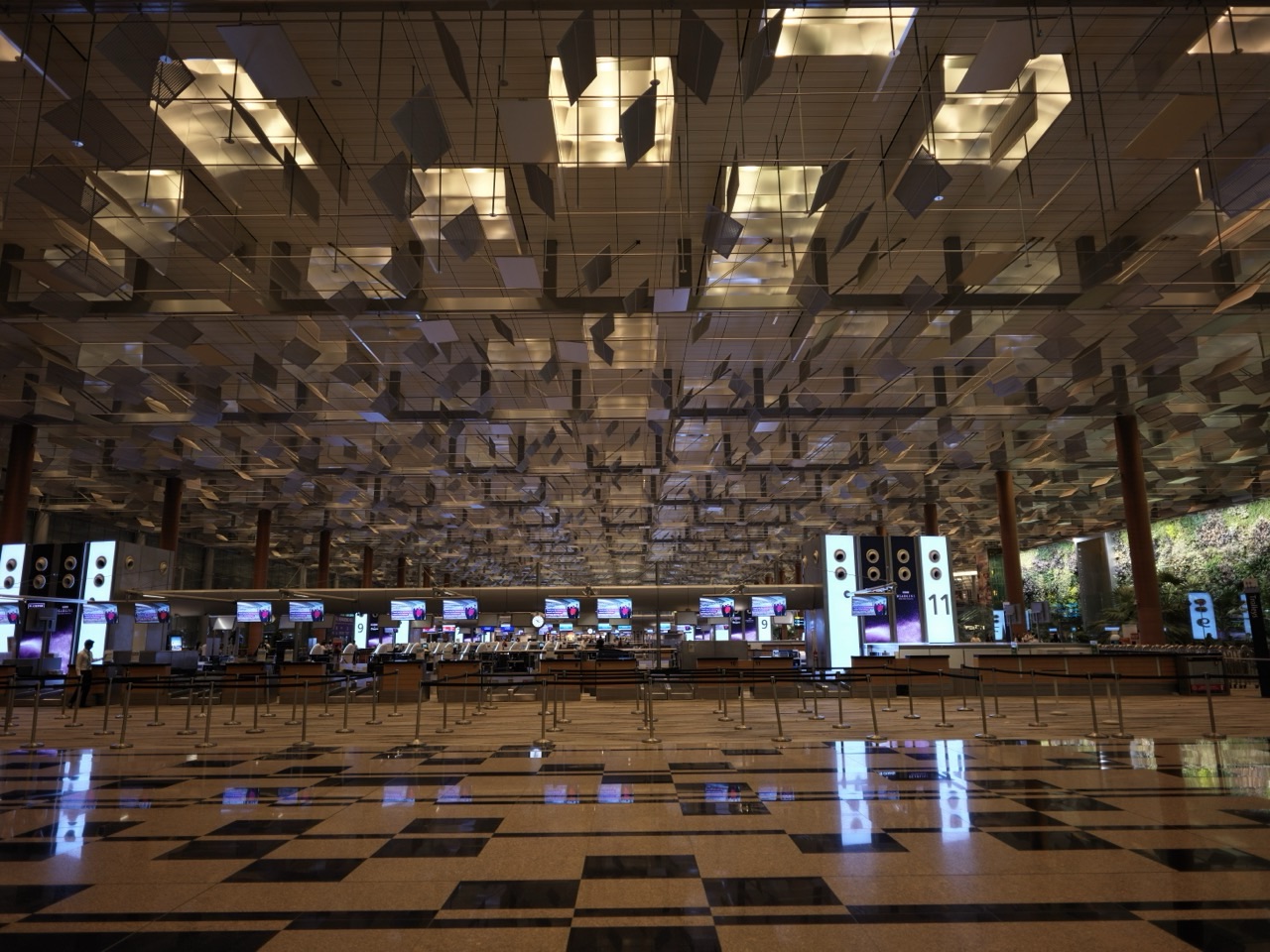
Singapore is surrounded by an aviation region that includes highly active volcanic zones in Indonesia and elsewhere around the Pacific. Changi Airport can therefore be operationally affected by eruptions far beyond Singapore’s borders even when the city itself experiences no eruption.
A paper airline-network activity
Draw a hub airport with six connecting routes. Block one regional corridor with an ash cloud. Ask which flights can reroute, which passengers miss connections and which cargoes become time-critical. Then reopen the corridor and ask why the schedule does not instantly return to normal.
Vocabulary that clarifies the system
- volcanic ash — fine fragmented volcanic material ejected into the atmosphere;
- ash plume — airborne body of volcanic ash moving away from an eruption;
- advisory — operational information issued to help users make decisions;
- reroute — change the planned flight path;
- hub — airport where many routes and connections meet;
- contingency plan — prepared response for abnormal or disruptive conditions;
- airspace — the portion of the atmosphere managed for aircraft operations.
Frequently asked questions
Can aircraft radar see volcanic ash?
The FAA says volcanic ash clouds are not normally displayed on airborne or air-traffic radar, which is why external advisories and reports matter.
Why not simply fly above an ash cloud?
Ash can extend to very high altitudes and its vertical extent may be uncertain. Avoidance planning is based on current operational information, not visual guesswork.
Does every eruption close airports?
No. The impact depends on ash production, winds, altitude, airport location and operational risk assessment.
Keep the return paths visible
Continue through Air Traffic Control, Airline Alliances, Air Cargo, Weather Observations and the Global Connectivity Hub.
A final ash-disruption investigation
Choose one volcanic eruption that affected aviation. Map the volcano, ash movement, affected airspace, hub airports and one downstream consequence. Use an aviation authority or volcanic-ash advisory source, and keep the geological event separate from the transport-network effects it triggered.