
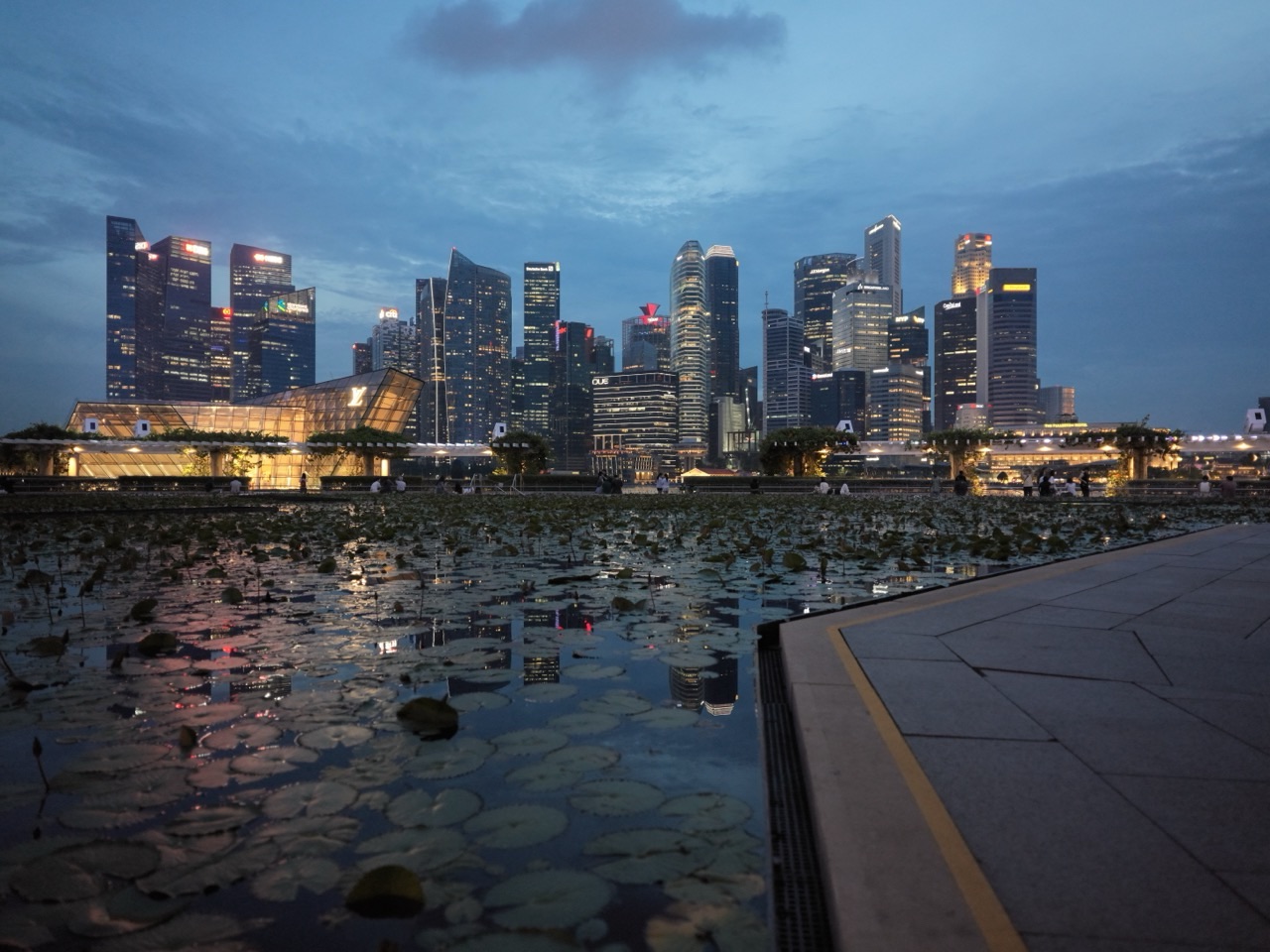
Renewable energy connects the world through solar power, wind power, batteries, electricity grids, transmission lines, markets, forecasts and shared technical rules. A solar panel or wind turbine can generate electricity locally, but a reliable power system depends on many other relationships: when energy is produced, where demand occurs, how power flows, how variability is managed and what happens when one part changes.
Did you know that the hardest part of solar energy, wind energy, battery storage and renewable power grids is not simply producing electricity? Electricity systems must balance supply and demand continuously enough for the network to remain stable. Renewable generation adds new opportunities and new coordination problems because sunlight and wind vary across time and place.
Deepen the route through Electricity Grids, Critical Minerals, Weather and Climate and Manufacturing. Return to the eduKate Ecosystem Hub when the next job belongs to Mathematics, Science, English, research or learner repair. All numerical examples are illustrative learning models, not operating instructions for real power systems.
Begin with one unit of electricity
Imagine electricity generated by a solar farm. Draw the smallest useful journey: source, inverter, local network, transmission system, distribution network and user. Add storage if the question needs it. Label the arrows with verbs such as generates, converts, carries, measures, balances, stores, releases and consumes. The network becomes understandable when every connection has a job.
Renewable does not mean infrastructure-free
Solar panels and wind turbines are visible symbols, but renewable electricity also depends on metals, glass, electronics, power converters, foundations, cables, substations, control systems, weather information, maintenance and skilled people. The energy source may be renewable while the surrounding industrial system still has material, land, financial and logistical constraints.
Solar power follows light
Photovoltaic systems convert light into electrical energy. Output changes with sunlight, orientation, shading, temperature, equipment design and time. A solar installation therefore has a production profile rather than one permanent output number. The useful question is how that profile fits the pattern of demand and the wider grid.
Wind power follows moving air
Wind turbines extract energy from moving air. Wind conditions vary by location, height, season and weather. A site with strong average wind can still have calm periods. This is why resource assessment, forecasting and geographic diversity matter.
Variable generation changes the balancing problem
Traditional power systems already manage changing demand and equipment outages. Variable renewable generation adds another changing input. The system must coordinate generation, storage, flexible demand, interconnectors and reserves so that useful power remains available when people need it.
A Mathematics model of capacity factor
Suppose a fictional 100-unit generator could produce 2,400 unit-hours in a 24-hour day if it operated at full output continuously. If it actually produces 720 unit-hours, the simple capacity factor in this model is 720 ÷ 2,400 = 30%. This does not tell us whether the generator is “good” or “bad.” It describes output relative to a theoretical maximum under stated assumptions.
A Mathematics model of daily balance
Imagine demand of 900 units during daylight and 700 after sunset. A solar system produces 1,100 units in daylight and none after sunset. The daylight surplus is 200, but the night deficit is 700. Storage of 200 units cannot cover the whole night. The model forces an important question: what other generation, import, demand response or storage is available?
Batteries move energy through time
A battery can absorb electricity at one time and release it later. That makes storage a time-connection mechanism. It may help shift solar energy into evening demand, provide fast response or support local resilience. But batteries have limits in power, energy capacity, efficiency, lifetime, temperature range and cost.
Power and energy are different
Power describes a rate of energy transfer; energy describes the amount transferred over time. A battery can have high power but limited duration, or large energy capacity with a lower discharge rate. Confusing these terms makes storage discussions slippery. Precise units protect the explanation.
Transmission connects distant resources
Excellent wind or solar resources may be far from major demand centres. Transmission networks move electricity across longer distances and can connect regions with different production and demand patterns. The grid becomes a geographic coordination system, not merely a collection of wires.
Interconnectors share diversity
When neighbouring systems are linked, one region may import while another has surplus generation. This can improve flexibility, but interconnection also creates dependencies, contractual questions and limits on transfer capacity. Continue through Electricity Grids for the broader network logic.
Forecasting turns weather into operational information
Operators need estimates of future wind, sunlight and demand. Forecasts are not guarantees; they are evidence-based expectations with uncertainty. Better forecasts can reduce surprise, but the system must still handle forecast error. The same distinction between model and reality appears across science and logistics.
Geographic diversity can smooth variation
Clouds do not cover every solar plant at exactly the same moment, and wind conditions differ across regions. Connecting geographically diverse resources can reduce some local variability. It does not eliminate all shared weather patterns, so resilience depends on the scale of the event and the diversity of the system.
Demand can become flexible
Balancing does not always require changing generation. Some electricity use can move in time. Industrial processes, water heating, cooling, vehicle charging or other flexible loads may respond to system conditions when technically and socially appropriate. This turns consumers from passive endpoints into possible participants in balancing.
Standards make electricity measurable and tradable
Meters, equipment and markets need agreed definitions, units, timing and quality requirements. Shared standards let many manufacturers, operators and users cooperate without every system being designed by one organisation. Visit Standards and Measurement to see why common rules create useful interfaces.
Materials connect clean energy to mining and industry
Solar, wind and storage technologies depend on materials that must be extracted, refined, manufactured and transported. Different technologies require different material mixes. The sustainability question therefore spans the full lifecycle: sourcing, production, operation, maintenance, recycling and disposal. Follow Critical Minerals for that layer.
Manufacturing determines how designs become capacity
A technically excellent energy design cannot scale without factories, quality control, components, logistics and trained workers. Manufacturing connects scientific possibility to deployable equipment. This is why energy transitions are also industrial transitions.
Reliability is a system property
A solar panel can be reliable while the local network is constrained. A battery can be available while a control system is misconfigured. A transmission line can be healthy while generation is insufficient. Reliability emerges from the whole chain of necessary relationships.
Redundancy must target a real failure
Adding another battery helps only with failures or shortages that the battery can address. Adding another transmission route helps only when transfer is possible at the right place and time. Redundancy becomes useful when we name the failure mode first.
Curtailment is not automatically waste
Sometimes available generation cannot or should not be used because demand is low, network capacity is constrained or system conditions require adjustment. Curtailment can look like “lost energy,” but its meaning depends on the reason and the alternatives. Good analysis asks why the energy was not accepted and what change would reduce the constraint.
Prices can carry coordination signals
Electricity markets can use prices to reflect changing supply, demand and network conditions. A price is not a physical electron; it is an information and incentive signal inside an institutional system. Keep physical flow and financial settlement conceptually separate even when they interact.
Environmental benefit needs a lifecycle boundary
Comparisons can change depending on whether they include manufacturing, construction, operation, land use, fuel, maintenance, recycling or disposal. The Research and Inquiry Hub helps learners define the boundary before comparing environmental claims. A number without a boundary can look more precise than it really is.
The human layer matters
Energy systems affect households, workers, communities and landscapes. Cost, accessibility, land use, jobs, reliability and local acceptance can shape whether a project succeeds. Technical capability is necessary, but social and institutional capability influence implementation.
Access is not the same as capability
A country can purchase renewable equipment and still need grid engineers, planners, technicians, financiers, regulators and educators to operate a reliable system. Technology transfer becomes real only when knowledge, maintenance and decision-making capability travel too.
A Singapore learning specimen
A learner in Singapore can study the daily path of sunlight, cloud cover and electricity use without pretending to know confidential grid operations. Record observations, compare them with public weather information, sketch a hypothetical solar profile and ask what additional evidence would be needed to estimate real generation. This builds disciplined inference.
A paper-grid activity
Use cards for solar, wind, battery, transmission, demand and reserve generation. Give each card an invented capacity. Change one condition at a time: sunset arrives, wind drops, demand rises or one transmission link is removed. Ask the learner to rebalance the system and state every assumption.
Vocabulary should clarify relationships
- renewable energy — energy from sources replenished naturally on human timescales;
- photovoltaic — conversion of light into electricity using semiconductor devices;
- capacity factor — actual output over a period relative to maximum possible output under continuous full power;
- storage — a system that retains energy for later use;
- interconnector — a link that allows electricity exchange between systems or regions;
- curtailment — reduction of available generation because the system does not accept all of it;
- demand response — changes in electricity use in response to system conditions or incentives;
- grid — the interconnected system used to transport and coordinate electricity.
A student route
Choose one renewable source. Draw its complete useful system, not only the generator. Add one calculation of energy over time, one storage constraint and one grid dependency. Then change one condition and predict what becomes unstable. Use the Sengkang Learning Atlas when the explanation fails at an earlier distinction.
A parent and teacher route
Ask the learner to separate source, storage, transmission and demand. If they say “batteries solve intermittency,” ask how much energy, for how long, at what power and under which conditions. The objective is not pessimism; it is precision.
Frequently asked questions
Can renewable energy work when the sun is not shining or wind is low?
Yes, if the wider system has suitable combinations of storage, other generation, flexible demand, interconnection and reserves. The exact mix depends on the network, geography, demand profile and technology.
Are batteries the same as power plants?
No. Batteries store energy produced elsewhere and return it later. They can provide valuable power-system services, but they are not primary energy sources.
Why build transmission for renewable energy?
Useful renewable resources and major demand centres are not always in the same place. Transmission connects geography, allowing energy to move between them and letting regions share diversity.
Is renewable electricity automatically impact-free?
No technology is impact-free. Meaningful comparison requires a stated lifecycle boundary that includes relevant materials, manufacturing, land, operation and end-of-life considerations.
Keep the return paths visible
Continue through Electricity Grids, Weather and Climate, Critical Minerals, Manufacturing and Circular Economy. Renewable energy is a connected system, not a single device.
A final connected-energy investigation
Choose one renewable-energy project described by a reliable public source. Make a one-page explanation with one bounded system diagram, one illustrative energy calculation, one grid interface, one material dependency, one uncertainty and one human question. Give it to someone unfamiliar with the topic and improve the first point they find unclear.