
Student Records: How Transcripts and Digital Credentials Connect Education Across Borders begins with one practical question: what must remain compatible before evidence of a learner’s study or achievement remaining interpretable when presented to another school, university, employer or jurisdiction can work? student records and digital credentials becomes easier to understand when we follow the handovers between independent systems and ask what information, measurement or record survives each transfer.
Did you know that many global systems do not need to become identical to connect? They need a workable interface. Rail systems can manage differences, documents can carry commercial meaning, student records can preserve educational evidence, and weather stations can contribute comparable observations. This guide makes those interfaces visible through clear models, Mathematics and evidence checks.
Deepen the topic through Qualifications and Displaced Learners. Return to the Connected World Hub and the eduKate Ecosystem Hub for the wider route. The examples are educational models rather than railway, trade, customs, admissions, meteorological, legal, safety or professional advice.
Begin with the bounded outcome
Return to our working journey: evidence of a learner’s study or achievement remaining interpretable when presented to another school, university, employer or jurisdiction. Draw the smallest useful network and label each arrow with a verb such as transfers, records, signals, measures, verifies, recognises, exchanges, teaches or returns. Then ask what context must remain attached. A rail movement needs compatible operating information; a trade record needs parties and goods; a transcript needs issuer and achievement context; a weather measurement needs time, place, unit and method.
Inspect the interface. In student records and digital credentials, competent participants can still fail to cooperate when definitions, timing, formats, identifiers, units, authority or expectations differ. Shared conventions reduce ambiguity without making every participant identical. Ask what the convention enables, who maintains it, how updates are communicated and what happens when a record becomes incomplete or a system differs.
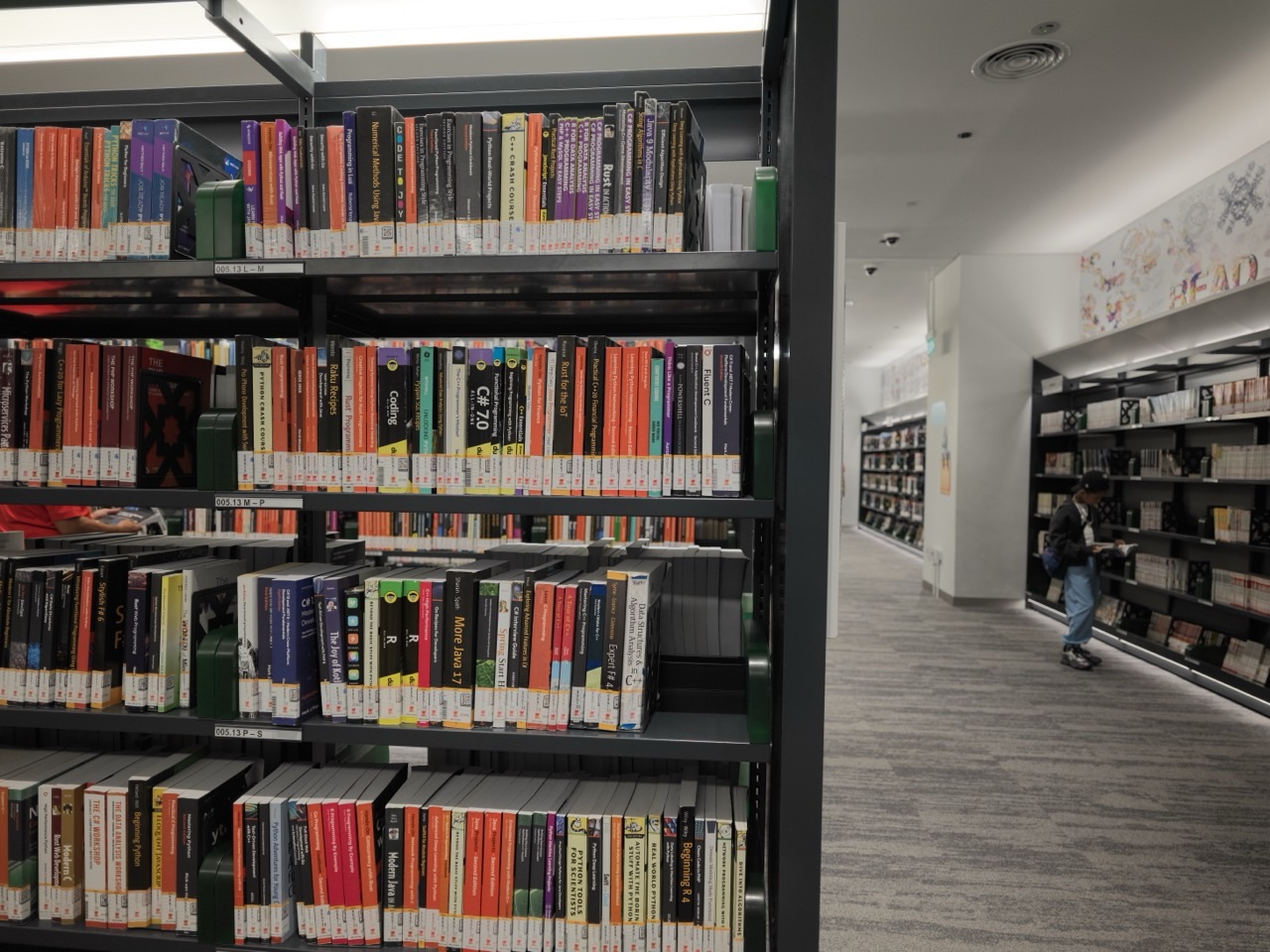
Keep evidence boundaries visible. The featured photograph is an existing eduKate media-library image chosen to ground the article in a real Singapore environment; it does not prove every hidden global mechanism. A signalling diagram, bill of lading, transcript or weather chart also answers bounded questions. Use the Research and Inquiry Hub to separate observation, source, interpretation and uncertainty.
Test transfer. Ask the learner to explain the mechanism from memory, then change one condition: change a gauge, remove a document field, make an issuer unclear, alter a unit or delay data exchange. Can the learner predict what becomes unstable? If not, return to the earliest weak distinction through the Sengkang Learning Atlas.
Use an invented elapsed-time model. Four sequential stages take 16, 18, 20 and 16 minutes, totalling 70. Reduce the 20-minute stage to 10 and the total becomes 60 because the other stages remain. Ask whether any stages can overlap before changing the model. These figures are illustrative and do not describe real student records and digital credentials.
Try a capacity model. One fictional stage handles 42 units per hour and the next 28. Under a simple continuous-flow assumption, completed flow cannot exceed 28. Increasing the first stage alone may enlarge a queue. Ask whether the slower stage performs an essential verification, safety or quality function. Use the World Mathematics Atlas for rates and modelling.
Add the human question. Language, disability access, cost, unfamiliar procedures, time and confidence can determine whether a technically available connection is usable. Do not infer capability from nationality, academic background or occupation. Ask what the person is trying to accomplish. The Well Being library supports dignity and belonging, while SETC supports precise communication.
Follow one complete journey
Return to our working journey: evidence of a learner’s study or achievement remaining interpretable when presented to another school, university, employer or jurisdiction. Draw the smallest useful network and label each arrow with a verb such as transfers, records, signals, measures, verifies, recognises, exchanges, teaches or returns. Then ask what context must remain attached. A rail movement needs compatible operating information; a trade record needs parties and goods; a transcript needs issuer and achievement context; a weather measurement needs time, place, unit and method.
Inspect the interface. In student records and digital credentials, competent participants can still fail to cooperate when definitions, timing, formats, identifiers, units, authority or expectations differ. Shared conventions reduce ambiguity without making every participant identical. Ask what the convention enables, who maintains it, how updates are communicated and what happens when a record becomes incomplete or a system differs.
Keep evidence boundaries visible. The featured photograph is an existing eduKate media-library image chosen to ground the article in a real Singapore environment; it does not prove every hidden global mechanism. A signalling diagram, bill of lading, transcript or weather chart also answers bounded questions. Use the Research and Inquiry Hub to separate observation, source, interpretation and uncertainty.
Test transfer. Ask the learner to explain the mechanism from memory, then change one condition: change a gauge, remove a document field, make an issuer unclear, alter a unit or delay data exchange. Can the learner predict what becomes unstable? If not, return to the earliest weak distinction through the Sengkang Learning Atlas.
Different nodes perform different jobs
Return to our working journey: evidence of a learner’s study or achievement remaining interpretable when presented to another school, university, employer or jurisdiction. Draw the smallest useful network and label each arrow with a verb such as transfers, records, signals, measures, verifies, recognises, exchanges, teaches or returns. Then ask what context must remain attached. A rail movement needs compatible operating information; a trade record needs parties and goods; a transcript needs issuer and achievement context; a weather measurement needs time, place, unit and method.
Inspect the interface. In student records and digital credentials, competent participants can still fail to cooperate when definitions, timing, formats, identifiers, units, authority or expectations differ. Shared conventions reduce ambiguity without making every participant identical. Ask what the convention enables, who maintains it, how updates are communicated and what happens when a record becomes incomplete or a system differs.
Keep evidence boundaries visible. The featured photograph is an existing eduKate media-library image chosen to ground the article in a real Singapore environment; it does not prove every hidden global mechanism. A signalling diagram, bill of lading, transcript or weather chart also answers bounded questions. Use the Research and Inquiry Hub to separate observation, source, interpretation and uncertainty.
Test transfer. Ask the learner to explain the mechanism from memory, then change one condition: change a gauge, remove a document field, make an issuer unclear, alter a unit or delay data exchange. Can the learner predict what becomes unstable? If not, return to the earliest weak distinction through the Sengkang Learning Atlas.
Specialisation creates dependency
Return to our working journey: evidence of a learner’s study or achievement remaining interpretable when presented to another school, university, employer or jurisdiction. Draw the smallest useful network and label each arrow with a verb such as transfers, records, signals, measures, verifies, recognises, exchanges, teaches or returns. Then ask what context must remain attached. A rail movement needs compatible operating information; a trade record needs parties and goods; a transcript needs issuer and achievement context; a weather measurement needs time, place, unit and method.
Inspect the interface. In student records and digital credentials, competent participants can still fail to cooperate when definitions, timing, formats, identifiers, units, authority or expectations differ. Shared conventions reduce ambiguity without making every participant identical. Ask what the convention enables, who maintains it, how updates are communicated and what happens when a record becomes incomplete or a system differs.
Keep evidence boundaries visible. The featured photograph is an existing eduKate media-library image chosen to ground the article in a real Singapore environment; it does not prove every hidden global mechanism. A signalling diagram, bill of lading, transcript or weather chart also answers bounded questions. Use the Research and Inquiry Hub to separate observation, source, interpretation and uncertainty.
Test transfer. Ask the learner to explain the mechanism from memory, then change one condition: change a gauge, remove a document field, make an issuer unclear, alter a unit or delay data exchange. Can the learner predict what becomes unstable? If not, return to the earliest weak distinction through the Sengkang Learning Atlas.
Use an invented elapsed-time model. Four sequential stages take 16, 18, 20 and 16 minutes, totalling 70. Reduce the 20-minute stage to 10 and the total becomes 60 because the other stages remain. Ask whether any stages can overlap before changing the model. These figures are illustrative and do not describe real student records and digital credentials.
Interfaces determine whether transfer works
Return to our working journey: evidence of a learner’s study or achievement remaining interpretable when presented to another school, university, employer or jurisdiction. Draw the smallest useful network and label each arrow with a verb such as transfers, records, signals, measures, verifies, recognises, exchanges, teaches or returns. Then ask what context must remain attached. A rail movement needs compatible operating information; a trade record needs parties and goods; a transcript needs issuer and achievement context; a weather measurement needs time, place, unit and method.
Inspect the interface. In student records and digital credentials, competent participants can still fail to cooperate when definitions, timing, formats, identifiers, units, authority or expectations differ. Shared conventions reduce ambiguity without making every participant identical. Ask what the convention enables, who maintains it, how updates are communicated and what happens when a record becomes incomplete or a system differs.
Keep evidence boundaries visible. The featured photograph is an existing eduKate media-library image chosen to ground the article in a real Singapore environment; it does not prove every hidden global mechanism. A signalling diagram, bill of lading, transcript or weather chart also answers bounded questions. Use the Research and Inquiry Hub to separate observation, source, interpretation and uncertainty.
Test transfer. Ask the learner to explain the mechanism from memory, then change one condition: change a gauge, remove a document field, make an issuer unclear, alter a unit or delay data exchange. Can the learner predict what becomes unstable? If not, return to the earliest weak distinction through the Sengkang Learning Atlas.
Try a capacity model. One fictional stage handles 42 units per hour and the next 28. Under a simple continuous-flow assumption, completed flow cannot exceed 28. Increasing the first stage alone may enlarge a queue. Ask whether the slower stage performs an essential verification, safety or quality function. Use the World Mathematics Atlas for rates and modelling.
Standards reduce repeated interpretation
Return to our working journey: evidence of a learner’s study or achievement remaining interpretable when presented to another school, university, employer or jurisdiction. Draw the smallest useful network and label each arrow with a verb such as transfers, records, signals, measures, verifies, recognises, exchanges, teaches or returns. Then ask what context must remain attached. A rail movement needs compatible operating information; a trade record needs parties and goods; a transcript needs issuer and achievement context; a weather measurement needs time, place, unit and method.
Inspect the interface. In student records and digital credentials, competent participants can still fail to cooperate when definitions, timing, formats, identifiers, units, authority or expectations differ. Shared conventions reduce ambiguity without making every participant identical. Ask what the convention enables, who maintains it, how updates are communicated and what happens when a record becomes incomplete or a system differs.
Keep evidence boundaries visible. The featured photograph is an existing eduKate media-library image chosen to ground the article in a real Singapore environment; it does not prove every hidden global mechanism. A signalling diagram, bill of lading, transcript or weather chart also answers bounded questions. Use the Research and Inquiry Hub to separate observation, source, interpretation and uncertainty.
Test transfer. Ask the learner to explain the mechanism from memory, then change one condition: change a gauge, remove a document field, make an issuer unclear, alter a unit or delay data exchange. Can the learner predict what becomes unstable? If not, return to the earliest weak distinction through the Sengkang Learning Atlas.
Add the human question. Language, disability access, cost, unfamiliar procedures, time and confidence can determine whether a technically available connection is usable. Do not infer capability from nationality, academic background or occupation. Ask what the person is trying to accomplish. The Well Being library supports dignity and belonging, while SETC supports precise communication.
Identifiers keep the right thing connected
Return to our working journey: evidence of a learner’s study or achievement remaining interpretable when presented to another school, university, employer or jurisdiction. Draw the smallest useful network and label each arrow with a verb such as transfers, records, signals, measures, verifies, recognises, exchanges, teaches or returns. Then ask what context must remain attached. A rail movement needs compatible operating information; a trade record needs parties and goods; a transcript needs issuer and achievement context; a weather measurement needs time, place, unit and method.
Inspect the interface. In student records and digital credentials, competent participants can still fail to cooperate when definitions, timing, formats, identifiers, units, authority or expectations differ. Shared conventions reduce ambiguity without making every participant identical. Ask what the convention enables, who maintains it, how updates are communicated and what happens when a record becomes incomplete or a system differs.
Keep evidence boundaries visible. The featured photograph is an existing eduKate media-library image chosen to ground the article in a real Singapore environment; it does not prove every hidden global mechanism. A signalling diagram, bill of lading, transcript or weather chart also answers bounded questions. Use the Research and Inquiry Hub to separate observation, source, interpretation and uncertainty.
Test transfer. Ask the learner to explain the mechanism from memory, then change one condition: change a gauge, remove a document field, make an issuer unclear, alter a unit or delay data exchange. Can the learner predict what becomes unstable? If not, return to the earliest weak distinction through the Sengkang Learning Atlas.
Use an invented elapsed-time model. Four sequential stages take 16, 18, 20 and 16 minutes, totalling 70. Reduce the 20-minute stage to 10 and the total becomes 60 because the other stages remain. Ask whether any stages can overlap before changing the model. These figures are illustrative and do not describe real student records and digital credentials.
Metadata preserves context
Return to our working journey: evidence of a learner’s study or achievement remaining interpretable when presented to another school, university, employer or jurisdiction. Draw the smallest useful network and label each arrow with a verb such as transfers, records, signals, measures, verifies, recognises, exchanges, teaches or returns. Then ask what context must remain attached. A rail movement needs compatible operating information; a trade record needs parties and goods; a transcript needs issuer and achievement context; a weather measurement needs time, place, unit and method.
Inspect the interface. In student records and digital credentials, competent participants can still fail to cooperate when definitions, timing, formats, identifiers, units, authority or expectations differ. Shared conventions reduce ambiguity without making every participant identical. Ask what the convention enables, who maintains it, how updates are communicated and what happens when a record becomes incomplete or a system differs.
Keep evidence boundaries visible. The featured photograph is an existing eduKate media-library image chosen to ground the article in a real Singapore environment; it does not prove every hidden global mechanism. A signalling diagram, bill of lading, transcript or weather chart also answers bounded questions. Use the Research and Inquiry Hub to separate observation, source, interpretation and uncertainty.
Test transfer. Ask the learner to explain the mechanism from memory, then change one condition: change a gauge, remove a document field, make an issuer unclear, alter a unit or delay data exchange. Can the learner predict what becomes unstable? If not, return to the earliest weak distinction through the Sengkang Learning Atlas.
Time changes usefulness
Return to our working journey: evidence of a learner’s study or achievement remaining interpretable when presented to another school, university, employer or jurisdiction. Draw the smallest useful network and label each arrow with a verb such as transfers, records, signals, measures, verifies, recognises, exchanges, teaches or returns. Then ask what context must remain attached. A rail movement needs compatible operating information; a trade record needs parties and goods; a transcript needs issuer and achievement context; a weather measurement needs time, place, unit and method.
Inspect the interface. In student records and digital credentials, competent participants can still fail to cooperate when definitions, timing, formats, identifiers, units, authority or expectations differ. Shared conventions reduce ambiguity without making every participant identical. Ask what the convention enables, who maintains it, how updates are communicated and what happens when a record becomes incomplete or a system differs.
Keep evidence boundaries visible. The featured photograph is an existing eduKate media-library image chosen to ground the article in a real Singapore environment; it does not prove every hidden global mechanism. A signalling diagram, bill of lading, transcript or weather chart also answers bounded questions. Use the Research and Inquiry Hub to separate observation, source, interpretation and uncertainty.
Test transfer. Ask the learner to explain the mechanism from memory, then change one condition: change a gauge, remove a document field, make an issuer unclear, alter a unit or delay data exchange. Can the learner predict what becomes unstable? If not, return to the earliest weak distinction through the Sengkang Learning Atlas.
Try a capacity model. One fictional stage handles 42 units per hour and the next 28. Under a simple continuous-flow assumption, completed flow cannot exceed 28. Increasing the first stage alone may enlarge a queue. Ask whether the slower stage performs an essential verification, safety or quality function. Use the World Mathematics Atlas for rates and modelling.
Distance is not the whole delay
Return to our working journey: evidence of a learner’s study or achievement remaining interpretable when presented to another school, university, employer or jurisdiction. Draw the smallest useful network and label each arrow with a verb such as transfers, records, signals, measures, verifies, recognises, exchanges, teaches or returns. Then ask what context must remain attached. A rail movement needs compatible operating information; a trade record needs parties and goods; a transcript needs issuer and achievement context; a weather measurement needs time, place, unit and method.
Inspect the interface. In student records and digital credentials, competent participants can still fail to cooperate when definitions, timing, formats, identifiers, units, authority or expectations differ. Shared conventions reduce ambiguity without making every participant identical. Ask what the convention enables, who maintains it, how updates are communicated and what happens when a record becomes incomplete or a system differs.
Keep evidence boundaries visible. The featured photograph is an existing eduKate media-library image chosen to ground the article in a real Singapore environment; it does not prove every hidden global mechanism. A signalling diagram, bill of lading, transcript or weather chart also answers bounded questions. Use the Research and Inquiry Hub to separate observation, source, interpretation and uncertainty.
Test transfer. Ask the learner to explain the mechanism from memory, then change one condition: change a gauge, remove a document field, make an issuer unclear, alter a unit or delay data exchange. Can the learner predict what becomes unstable? If not, return to the earliest weak distinction through the Sengkang Learning Atlas.
Use an invented elapsed-time model. Four sequential stages take 16, 18, 20 and 16 minutes, totalling 70. Reduce the 20-minute stage to 10 and the total becomes 60 because the other stages remain. Ask whether any stages can overlap before changing the model. These figures are illustrative and do not describe real student records and digital credentials.
Capacity and demand interact
Return to our working journey: evidence of a learner’s study or achievement remaining interpretable when presented to another school, university, employer or jurisdiction. Draw the smallest useful network and label each arrow with a verb such as transfers, records, signals, measures, verifies, recognises, exchanges, teaches or returns. Then ask what context must remain attached. A rail movement needs compatible operating information; a trade record needs parties and goods; a transcript needs issuer and achievement context; a weather measurement needs time, place, unit and method.
Inspect the interface. In student records and digital credentials, competent participants can still fail to cooperate when definitions, timing, formats, identifiers, units, authority or expectations differ. Shared conventions reduce ambiguity without making every participant identical. Ask what the convention enables, who maintains it, how updates are communicated and what happens when a record becomes incomplete or a system differs.
Keep evidence boundaries visible. The featured photograph is an existing eduKate media-library image chosen to ground the article in a real Singapore environment; it does not prove every hidden global mechanism. A signalling diagram, bill of lading, transcript or weather chart also answers bounded questions. Use the Research and Inquiry Hub to separate observation, source, interpretation and uncertainty.
Test transfer. Ask the learner to explain the mechanism from memory, then change one condition: change a gauge, remove a document field, make an issuer unclear, alter a unit or delay data exchange. Can the learner predict what becomes unstable? If not, return to the earliest weak distinction through the Sengkang Learning Atlas.
Add the human question. Language, disability access, cost, unfamiliar procedures, time and confidence can determine whether a technically available connection is usable. Do not infer capability from nationality, academic background or occupation. Ask what the person is trying to accomplish. The Well Being library supports dignity and belonging, while SETC supports precise communication.
A Mathematics model of elapsed time
Return to our working journey: evidence of a learner’s study or achievement remaining interpretable when presented to another school, university, employer or jurisdiction. Draw the smallest useful network and label each arrow with a verb such as transfers, records, signals, measures, verifies, recognises, exchanges, teaches or returns. Then ask what context must remain attached. A rail movement needs compatible operating information; a trade record needs parties and goods; a transcript needs issuer and achievement context; a weather measurement needs time, place, unit and method.
Inspect the interface. In student records and digital credentials, competent participants can still fail to cooperate when definitions, timing, formats, identifiers, units, authority or expectations differ. Shared conventions reduce ambiguity without making every participant identical. Ask what the convention enables, who maintains it, how updates are communicated and what happens when a record becomes incomplete or a system differs.
Keep evidence boundaries visible. The featured photograph is an existing eduKate media-library image chosen to ground the article in a real Singapore environment; it does not prove every hidden global mechanism. A signalling diagram, bill of lading, transcript or weather chart also answers bounded questions. Use the Research and Inquiry Hub to separate observation, source, interpretation and uncertainty.
Test transfer. Ask the learner to explain the mechanism from memory, then change one condition: change a gauge, remove a document field, make an issuer unclear, alter a unit or delay data exchange. Can the learner predict what becomes unstable? If not, return to the earliest weak distinction through the Sengkang Learning Atlas.
A Mathematics model of rates
Return to our working journey: evidence of a learner’s study or achievement remaining interpretable when presented to another school, university, employer or jurisdiction. Draw the smallest useful network and label each arrow with a verb such as transfers, records, signals, measures, verifies, recognises, exchanges, teaches or returns. Then ask what context must remain attached. A rail movement needs compatible operating information; a trade record needs parties and goods; a transcript needs issuer and achievement context; a weather measurement needs time, place, unit and method.
Inspect the interface. In student records and digital credentials, competent participants can still fail to cooperate when definitions, timing, formats, identifiers, units, authority or expectations differ. Shared conventions reduce ambiguity without making every participant identical. Ask what the convention enables, who maintains it, how updates are communicated and what happens when a record becomes incomplete or a system differs.
Keep evidence boundaries visible. The featured photograph is an existing eduKate media-library image chosen to ground the article in a real Singapore environment; it does not prove every hidden global mechanism. A signalling diagram, bill of lading, transcript or weather chart also answers bounded questions. Use the Research and Inquiry Hub to separate observation, source, interpretation and uncertainty.
Test transfer. Ask the learner to explain the mechanism from memory, then change one condition: change a gauge, remove a document field, make an issuer unclear, alter a unit or delay data exchange. Can the learner predict what becomes unstable? If not, return to the earliest weak distinction through the Sengkang Learning Atlas.
Use an invented elapsed-time model. Four sequential stages take 16, 18, 20 and 16 minutes, totalling 70. Reduce the 20-minute stage to 10 and the total becomes 60 because the other stages remain. Ask whether any stages can overlap before changing the model. These figures are illustrative and do not describe real student records and digital credentials.
Try a capacity model. One fictional stage handles 42 units per hour and the next 28. Under a simple continuous-flow assumption, completed flow cannot exceed 28. Increasing the first stage alone may enlarge a queue. Ask whether the slower stage performs an essential verification, safety or quality function. Use the World Mathematics Atlas for rates and modelling.
A Mathematics model of percentages
Return to our working journey: evidence of a learner’s study or achievement remaining interpretable when presented to another school, university, employer or jurisdiction. Draw the smallest useful network and label each arrow with a verb such as transfers, records, signals, measures, verifies, recognises, exchanges, teaches or returns. Then ask what context must remain attached. A rail movement needs compatible operating information; a trade record needs parties and goods; a transcript needs issuer and achievement context; a weather measurement needs time, place, unit and method.
Inspect the interface. In student records and digital credentials, competent participants can still fail to cooperate when definitions, timing, formats, identifiers, units, authority or expectations differ. Shared conventions reduce ambiguity without making every participant identical. Ask what the convention enables, who maintains it, how updates are communicated and what happens when a record becomes incomplete or a system differs.
Keep evidence boundaries visible. The featured photograph is an existing eduKate media-library image chosen to ground the article in a real Singapore environment; it does not prove every hidden global mechanism. A signalling diagram, bill of lading, transcript or weather chart also answers bounded questions. Use the Research and Inquiry Hub to separate observation, source, interpretation and uncertainty.
Test transfer. Ask the learner to explain the mechanism from memory, then change one condition: change a gauge, remove a document field, make an issuer unclear, alter a unit or delay data exchange. Can the learner predict what becomes unstable? If not, return to the earliest weak distinction through the Sengkang Learning Atlas.
Queues reveal pressure
Return to our working journey: evidence of a learner’s study or achievement remaining interpretable when presented to another school, university, employer or jurisdiction. Draw the smallest useful network and label each arrow with a verb such as transfers, records, signals, measures, verifies, recognises, exchanges, teaches or returns. Then ask what context must remain attached. A rail movement needs compatible operating information; a trade record needs parties and goods; a transcript needs issuer and achievement context; a weather measurement needs time, place, unit and method.
Inspect the interface. In student records and digital credentials, competent participants can still fail to cooperate when definitions, timing, formats, identifiers, units, authority or expectations differ. Shared conventions reduce ambiguity without making every participant identical. Ask what the convention enables, who maintains it, how updates are communicated and what happens when a record becomes incomplete or a system differs.
Keep evidence boundaries visible. The featured photograph is an existing eduKate media-library image chosen to ground the article in a real Singapore environment; it does not prove every hidden global mechanism. A signalling diagram, bill of lading, transcript or weather chart also answers bounded questions. Use the Research and Inquiry Hub to separate observation, source, interpretation and uncertainty.
Test transfer. Ask the learner to explain the mechanism from memory, then change one condition: change a gauge, remove a document field, make an issuer unclear, alter a unit or delay data exchange. Can the learner predict what becomes unstable? If not, return to the earliest weak distinction through the Sengkang Learning Atlas.
Bottlenecks can move
Return to our working journey: evidence of a learner’s study or achievement remaining interpretable when presented to another school, university, employer or jurisdiction. Draw the smallest useful network and label each arrow with a verb such as transfers, records, signals, measures, verifies, recognises, exchanges, teaches or returns. Then ask what context must remain attached. A rail movement needs compatible operating information; a trade record needs parties and goods; a transcript needs issuer and achievement context; a weather measurement needs time, place, unit and method.
Inspect the interface. In student records and digital credentials, competent participants can still fail to cooperate when definitions, timing, formats, identifiers, units, authority or expectations differ. Shared conventions reduce ambiguity without making every participant identical. Ask what the convention enables, who maintains it, how updates are communicated and what happens when a record becomes incomplete or a system differs.
Keep evidence boundaries visible. The featured photograph is an existing eduKate media-library image chosen to ground the article in a real Singapore environment; it does not prove every hidden global mechanism. A signalling diagram, bill of lading, transcript or weather chart also answers bounded questions. Use the Research and Inquiry Hub to separate observation, source, interpretation and uncertainty.
Test transfer. Ask the learner to explain the mechanism from memory, then change one condition: change a gauge, remove a document field, make an issuer unclear, alter a unit or delay data exchange. Can the learner predict what becomes unstable? If not, return to the earliest weak distinction through the Sengkang Learning Atlas.
Use an invented elapsed-time model. Four sequential stages take 16, 18, 20 and 16 minutes, totalling 70. Reduce the 20-minute stage to 10 and the total becomes 60 because the other stages remain. Ask whether any stages can overlap before changing the model. These figures are illustrative and do not describe real student records and digital credentials.
Add the human question. Language, disability access, cost, unfamiliar procedures, time and confidence can determine whether a technically available connection is usable. Do not infer capability from nationality, academic background or occupation. Ask what the person is trying to accomplish. The Well Being library supports dignity and belonging, while SETC supports precise communication.
Priority needs an explicit objective
Return to our working journey: evidence of a learner’s study or achievement remaining interpretable when presented to another school, university, employer or jurisdiction. Draw the smallest useful network and label each arrow with a verb such as transfers, records, signals, measures, verifies, recognises, exchanges, teaches or returns. Then ask what context must remain attached. A rail movement needs compatible operating information; a trade record needs parties and goods; a transcript needs issuer and achievement context; a weather measurement needs time, place, unit and method.
Inspect the interface. In student records and digital credentials, competent participants can still fail to cooperate when definitions, timing, formats, identifiers, units, authority or expectations differ. Shared conventions reduce ambiguity without making every participant identical. Ask what the convention enables, who maintains it, how updates are communicated and what happens when a record becomes incomplete or a system differs.
Keep evidence boundaries visible. The featured photograph is an existing eduKate media-library image chosen to ground the article in a real Singapore environment; it does not prove every hidden global mechanism. A signalling diagram, bill of lading, transcript or weather chart also answers bounded questions. Use the Research and Inquiry Hub to separate observation, source, interpretation and uncertainty.
Test transfer. Ask the learner to explain the mechanism from memory, then change one condition: change a gauge, remove a document field, make an issuer unclear, alter a unit or delay data exchange. Can the learner predict what becomes unstable? If not, return to the earliest weak distinction through the Sengkang Learning Atlas.
Try a capacity model. One fictional stage handles 42 units per hour and the next 28. Under a simple continuous-flow assumption, completed flow cannot exceed 28. Increasing the first stage alone may enlarge a queue. Ask whether the slower stage performs an essential verification, safety or quality function. Use the World Mathematics Atlas for rates and modelling.
Redundancy needs independent dependencies
Return to our working journey: evidence of a learner’s study or achievement remaining interpretable when presented to another school, university, employer or jurisdiction. Draw the smallest useful network and label each arrow with a verb such as transfers, records, signals, measures, verifies, recognises, exchanges, teaches or returns. Then ask what context must remain attached. A rail movement needs compatible operating information; a trade record needs parties and goods; a transcript needs issuer and achievement context; a weather measurement needs time, place, unit and method.
Inspect the interface. In student records and digital credentials, competent participants can still fail to cooperate when definitions, timing, formats, identifiers, units, authority or expectations differ. Shared conventions reduce ambiguity without making every participant identical. Ask what the convention enables, who maintains it, how updates are communicated and what happens when a record becomes incomplete or a system differs.
Keep evidence boundaries visible. The featured photograph is an existing eduKate media-library image chosen to ground the article in a real Singapore environment; it does not prove every hidden global mechanism. A signalling diagram, bill of lading, transcript or weather chart also answers bounded questions. Use the Research and Inquiry Hub to separate observation, source, interpretation and uncertainty.
Test transfer. Ask the learner to explain the mechanism from memory, then change one condition: change a gauge, remove a document field, make an issuer unclear, alter a unit or delay data exchange. Can the learner predict what becomes unstable? If not, return to the earliest weak distinction through the Sengkang Learning Atlas.
Resilience protects a defined function
Return to our working journey: evidence of a learner’s study or achievement remaining interpretable when presented to another school, university, employer or jurisdiction. Draw the smallest useful network and label each arrow with a verb such as transfers, records, signals, measures, verifies, recognises, exchanges, teaches or returns. Then ask what context must remain attached. A rail movement needs compatible operating information; a trade record needs parties and goods; a transcript needs issuer and achievement context; a weather measurement needs time, place, unit and method.
Inspect the interface. In student records and digital credentials, competent participants can still fail to cooperate when definitions, timing, formats, identifiers, units, authority or expectations differ. Shared conventions reduce ambiguity without making every participant identical. Ask what the convention enables, who maintains it, how updates are communicated and what happens when a record becomes incomplete or a system differs.
Keep evidence boundaries visible. The featured photograph is an existing eduKate media-library image chosen to ground the article in a real Singapore environment; it does not prove every hidden global mechanism. A signalling diagram, bill of lading, transcript or weather chart also answers bounded questions. Use the Research and Inquiry Hub to separate observation, source, interpretation and uncertainty.
Test transfer. Ask the learner to explain the mechanism from memory, then change one condition: change a gauge, remove a document field, make an issuer unclear, alter a unit or delay data exchange. Can the learner predict what becomes unstable? If not, return to the earliest weak distinction through the Sengkang Learning Atlas.
Use an invented elapsed-time model. Four sequential stages take 16, 18, 20 and 16 minutes, totalling 70. Reduce the 20-minute stage to 10 and the total becomes 60 because the other stages remain. Ask whether any stages can overlap before changing the model. These figures are illustrative and do not describe real student records and digital credentials.
Information quality changes outcomes
Return to our working journey: evidence of a learner’s study or achievement remaining interpretable when presented to another school, university, employer or jurisdiction. Draw the smallest useful network and label each arrow with a verb such as transfers, records, signals, measures, verifies, recognises, exchanges, teaches or returns. Then ask what context must remain attached. A rail movement needs compatible operating information; a trade record needs parties and goods; a transcript needs issuer and achievement context; a weather measurement needs time, place, unit and method.
Inspect the interface. In student records and digital credentials, competent participants can still fail to cooperate when definitions, timing, formats, identifiers, units, authority or expectations differ. Shared conventions reduce ambiguity without making every participant identical. Ask what the convention enables, who maintains it, how updates are communicated and what happens when a record becomes incomplete or a system differs.
Keep evidence boundaries visible. The featured photograph is an existing eduKate media-library image chosen to ground the article in a real Singapore environment; it does not prove every hidden global mechanism. A signalling diagram, bill of lading, transcript or weather chart also answers bounded questions. Use the Research and Inquiry Hub to separate observation, source, interpretation and uncertainty.
Test transfer. Ask the learner to explain the mechanism from memory, then change one condition: change a gauge, remove a document field, make an issuer unclear, alter a unit or delay data exchange. Can the learner predict what becomes unstable? If not, return to the earliest weak distinction through the Sengkang Learning Atlas.
Data needs definitions
Return to our working journey: evidence of a learner’s study or achievement remaining interpretable when presented to another school, university, employer or jurisdiction. Draw the smallest useful network and label each arrow with a verb such as transfers, records, signals, measures, verifies, recognises, exchanges, teaches or returns. Then ask what context must remain attached. A rail movement needs compatible operating information; a trade record needs parties and goods; a transcript needs issuer and achievement context; a weather measurement needs time, place, unit and method.
Inspect the interface. In student records and digital credentials, competent participants can still fail to cooperate when definitions, timing, formats, identifiers, units, authority or expectations differ. Shared conventions reduce ambiguity without making every participant identical. Ask what the convention enables, who maintains it, how updates are communicated and what happens when a record becomes incomplete or a system differs.
Keep evidence boundaries visible. The featured photograph is an existing eduKate media-library image chosen to ground the article in a real Singapore environment; it does not prove every hidden global mechanism. A signalling diagram, bill of lading, transcript or weather chart also answers bounded questions. Use the Research and Inquiry Hub to separate observation, source, interpretation and uncertainty.
Test transfer. Ask the learner to explain the mechanism from memory, then change one condition: change a gauge, remove a document field, make an issuer unclear, alter a unit or delay data exchange. Can the learner predict what becomes unstable? If not, return to the earliest weak distinction through the Sengkang Learning Atlas.
Try a capacity model. One fictional stage handles 42 units per hour and the next 28. Under a simple continuous-flow assumption, completed flow cannot exceed 28. Increasing the first stage alone may enlarge a queue. Ask whether the slower stage performs an essential verification, safety or quality function. Use the World Mathematics Atlas for rates and modelling.
Add the human question. Language, disability access, cost, unfamiliar procedures, time and confidence can determine whether a technically available connection is usable. Do not infer capability from nationality, academic background or occupation. Ask what the person is trying to accomplish. The Well Being library supports dignity and belonging, while SETC supports precise communication.
Maps and diagrams simplify
Return to our working journey: evidence of a learner’s study or achievement remaining interpretable when presented to another school, university, employer or jurisdiction. Draw the smallest useful network and label each arrow with a verb such as transfers, records, signals, measures, verifies, recognises, exchanges, teaches or returns. Then ask what context must remain attached. A rail movement needs compatible operating information; a trade record needs parties and goods; a transcript needs issuer and achievement context; a weather measurement needs time, place, unit and method.
Inspect the interface. In student records and digital credentials, competent participants can still fail to cooperate when definitions, timing, formats, identifiers, units, authority or expectations differ. Shared conventions reduce ambiguity without making every participant identical. Ask what the convention enables, who maintains it, how updates are communicated and what happens when a record becomes incomplete or a system differs.
Keep evidence boundaries visible. The featured photograph is an existing eduKate media-library image chosen to ground the article in a real Singapore environment; it does not prove every hidden global mechanism. A signalling diagram, bill of lading, transcript or weather chart also answers bounded questions. Use the Research and Inquiry Hub to separate observation, source, interpretation and uncertainty.
Test transfer. Ask the learner to explain the mechanism from memory, then change one condition: change a gauge, remove a document field, make an issuer unclear, alter a unit or delay data exchange. Can the learner predict what becomes unstable? If not, return to the earliest weak distinction through the Sengkang Learning Atlas.
Use an invented elapsed-time model. Four sequential stages take 16, 18, 20 and 16 minutes, totalling 70. Reduce the 20-minute stage to 10 and the total becomes 60 because the other stages remain. Ask whether any stages can overlap before changing the model. These figures are illustrative and do not describe real student records and digital credentials.
Trust is layered
Return to our working journey: evidence of a learner’s study or achievement remaining interpretable when presented to another school, university, employer or jurisdiction. Draw the smallest useful network and label each arrow with a verb such as transfers, records, signals, measures, verifies, recognises, exchanges, teaches or returns. Then ask what context must remain attached. A rail movement needs compatible operating information; a trade record needs parties and goods; a transcript needs issuer and achievement context; a weather measurement needs time, place, unit and method.
Inspect the interface. In student records and digital credentials, competent participants can still fail to cooperate when definitions, timing, formats, identifiers, units, authority or expectations differ. Shared conventions reduce ambiguity without making every participant identical. Ask what the convention enables, who maintains it, how updates are communicated and what happens when a record becomes incomplete or a system differs.
Keep evidence boundaries visible. The featured photograph is an existing eduKate media-library image chosen to ground the article in a real Singapore environment; it does not prove every hidden global mechanism. A signalling diagram, bill of lading, transcript or weather chart also answers bounded questions. Use the Research and Inquiry Hub to separate observation, source, interpretation and uncertainty.
Test transfer. Ask the learner to explain the mechanism from memory, then change one condition: change a gauge, remove a document field, make an issuer unclear, alter a unit or delay data exchange. Can the learner predict what becomes unstable? If not, return to the earliest weak distinction through the Sengkang Learning Atlas.
Verification answers a bounded question
Return to our working journey: evidence of a learner’s study or achievement remaining interpretable when presented to another school, university, employer or jurisdiction. Draw the smallest useful network and label each arrow with a verb such as transfers, records, signals, measures, verifies, recognises, exchanges, teaches or returns. Then ask what context must remain attached. A rail movement needs compatible operating information; a trade record needs parties and goods; a transcript needs issuer and achievement context; a weather measurement needs time, place, unit and method.
Inspect the interface. In student records and digital credentials, competent participants can still fail to cooperate when definitions, timing, formats, identifiers, units, authority or expectations differ. Shared conventions reduce ambiguity without making every participant identical. Ask what the convention enables, who maintains it, how updates are communicated and what happens when a record becomes incomplete or a system differs.
Keep evidence boundaries visible. The featured photograph is an existing eduKate media-library image chosen to ground the article in a real Singapore environment; it does not prove every hidden global mechanism. A signalling diagram, bill of lading, transcript or weather chart also answers bounded questions. Use the Research and Inquiry Hub to separate observation, source, interpretation and uncertainty.
Test transfer. Ask the learner to explain the mechanism from memory, then change one condition: change a gauge, remove a document field, make an issuer unclear, alter a unit or delay data exchange. Can the learner predict what becomes unstable? If not, return to the earliest weak distinction through the Sengkang Learning Atlas.
Authority matters
Return to our working journey: evidence of a learner’s study or achievement remaining interpretable when presented to another school, university, employer or jurisdiction. Draw the smallest useful network and label each arrow with a verb such as transfers, records, signals, measures, verifies, recognises, exchanges, teaches or returns. Then ask what context must remain attached. A rail movement needs compatible operating information; a trade record needs parties and goods; a transcript needs issuer and achievement context; a weather measurement needs time, place, unit and method.
Inspect the interface. In student records and digital credentials, competent participants can still fail to cooperate when definitions, timing, formats, identifiers, units, authority or expectations differ. Shared conventions reduce ambiguity without making every participant identical. Ask what the convention enables, who maintains it, how updates are communicated and what happens when a record becomes incomplete or a system differs.
Keep evidence boundaries visible. The featured photograph is an existing eduKate media-library image chosen to ground the article in a real Singapore environment; it does not prove every hidden global mechanism. A signalling diagram, bill of lading, transcript or weather chart also answers bounded questions. Use the Research and Inquiry Hub to separate observation, source, interpretation and uncertainty.
Test transfer. Ask the learner to explain the mechanism from memory, then change one condition: change a gauge, remove a document field, make an issuer unclear, alter a unit or delay data exchange. Can the learner predict what becomes unstable? If not, return to the earliest weak distinction through the Sengkang Learning Atlas.
Use an invented elapsed-time model. Four sequential stages take 16, 18, 20 and 16 minutes, totalling 70. Reduce the 20-minute stage to 10 and the total becomes 60 because the other stages remain. Ask whether any stages can overlap before changing the model. These figures are illustrative and do not describe real student records and digital credentials.
Try a capacity model. One fictional stage handles 42 units per hour and the next 28. Under a simple continuous-flow assumption, completed flow cannot exceed 28. Increasing the first stage alone may enlarge a queue. Ask whether the slower stage performs an essential verification, safety or quality function. Use the World Mathematics Atlas for rates and modelling.
Language changes participation
Return to our working journey: evidence of a learner’s study or achievement remaining interpretable when presented to another school, university, employer or jurisdiction. Draw the smallest useful network and label each arrow with a verb such as transfers, records, signals, measures, verifies, recognises, exchanges, teaches or returns. Then ask what context must remain attached. A rail movement needs compatible operating information; a trade record needs parties and goods; a transcript needs issuer and achievement context; a weather measurement needs time, place, unit and method.
Inspect the interface. In student records and digital credentials, competent participants can still fail to cooperate when definitions, timing, formats, identifiers, units, authority or expectations differ. Shared conventions reduce ambiguity without making every participant identical. Ask what the convention enables, who maintains it, how updates are communicated and what happens when a record becomes incomplete or a system differs.
Keep evidence boundaries visible. The featured photograph is an existing eduKate media-library image chosen to ground the article in a real Singapore environment; it does not prove every hidden global mechanism. A signalling diagram, bill of lading, transcript or weather chart also answers bounded questions. Use the Research and Inquiry Hub to separate observation, source, interpretation and uncertainty.
Test transfer. Ask the learner to explain the mechanism from memory, then change one condition: change a gauge, remove a document field, make an issuer unclear, alter a unit or delay data exchange. Can the learner predict what becomes unstable? If not, return to the earliest weak distinction through the Sengkang Learning Atlas.
Add the human question. Language, disability access, cost, unfamiliar procedures, time and confidence can determine whether a technically available connection is usable. Do not infer capability from nationality, academic background or occupation. Ask what the person is trying to accomplish. The Well Being library supports dignity and belonging, while SETC supports precise communication.
Translation can preserve meaning
Return to our working journey: evidence of a learner’s study or achievement remaining interpretable when presented to another school, university, employer or jurisdiction. Draw the smallest useful network and label each arrow with a verb such as transfers, records, signals, measures, verifies, recognises, exchanges, teaches or returns. Then ask what context must remain attached. A rail movement needs compatible operating information; a trade record needs parties and goods; a transcript needs issuer and achievement context; a weather measurement needs time, place, unit and method.
Inspect the interface. In student records and digital credentials, competent participants can still fail to cooperate when definitions, timing, formats, identifiers, units, authority or expectations differ. Shared conventions reduce ambiguity without making every participant identical. Ask what the convention enables, who maintains it, how updates are communicated and what happens when a record becomes incomplete or a system differs.
Keep evidence boundaries visible. The featured photograph is an existing eduKate media-library image chosen to ground the article in a real Singapore environment; it does not prove every hidden global mechanism. A signalling diagram, bill of lading, transcript or weather chart also answers bounded questions. Use the Research and Inquiry Hub to separate observation, source, interpretation and uncertainty.
Test transfer. Ask the learner to explain the mechanism from memory, then change one condition: change a gauge, remove a document field, make an issuer unclear, alter a unit or delay data exchange. Can the learner predict what becomes unstable? If not, return to the earliest weak distinction through the Sengkang Learning Atlas.
Accessibility belongs at the beginning
Return to our working journey: evidence of a learner’s study or achievement remaining interpretable when presented to another school, university, employer or jurisdiction. Draw the smallest useful network and label each arrow with a verb such as transfers, records, signals, measures, verifies, recognises, exchanges, teaches or returns. Then ask what context must remain attached. A rail movement needs compatible operating information; a trade record needs parties and goods; a transcript needs issuer and achievement context; a weather measurement needs time, place, unit and method.
Inspect the interface. In student records and digital credentials, competent participants can still fail to cooperate when definitions, timing, formats, identifiers, units, authority or expectations differ. Shared conventions reduce ambiguity without making every participant identical. Ask what the convention enables, who maintains it, how updates are communicated and what happens when a record becomes incomplete or a system differs.
Keep evidence boundaries visible. The featured photograph is an existing eduKate media-library image chosen to ground the article in a real Singapore environment; it does not prove every hidden global mechanism. A signalling diagram, bill of lading, transcript or weather chart also answers bounded questions. Use the Research and Inquiry Hub to separate observation, source, interpretation and uncertainty.
Test transfer. Ask the learner to explain the mechanism from memory, then change one condition: change a gauge, remove a document field, make an issuer unclear, alter a unit or delay data exchange. Can the learner predict what becomes unstable? If not, return to the earliest weak distinction through the Sengkang Learning Atlas.
Use an invented elapsed-time model. Four sequential stages take 16, 18, 20 and 16 minutes, totalling 70. Reduce the 20-minute stage to 10 and the total becomes 60 because the other stages remain. Ask whether any stages can overlap before changing the model. These figures are illustrative and do not describe real student records and digital credentials.
Affordability changes practical access
Return to our working journey: evidence of a learner’s study or achievement remaining interpretable when presented to another school, university, employer or jurisdiction. Draw the smallest useful network and label each arrow with a verb such as transfers, records, signals, measures, verifies, recognises, exchanges, teaches or returns. Then ask what context must remain attached. A rail movement needs compatible operating information; a trade record needs parties and goods; a transcript needs issuer and achievement context; a weather measurement needs time, place, unit and method.
Inspect the interface. In student records and digital credentials, competent participants can still fail to cooperate when definitions, timing, formats, identifiers, units, authority or expectations differ. Shared conventions reduce ambiguity without making every participant identical. Ask what the convention enables, who maintains it, how updates are communicated and what happens when a record becomes incomplete or a system differs.
Keep evidence boundaries visible. The featured photograph is an existing eduKate media-library image chosen to ground the article in a real Singapore environment; it does not prove every hidden global mechanism. A signalling diagram, bill of lading, transcript or weather chart also answers bounded questions. Use the Research and Inquiry Hub to separate observation, source, interpretation and uncertainty.
Test transfer. Ask the learner to explain the mechanism from memory, then change one condition: change a gauge, remove a document field, make an issuer unclear, alter a unit or delay data exchange. Can the learner predict what becomes unstable? If not, return to the earliest weak distinction through the Sengkang Learning Atlas.
Try a capacity model. One fictional stage handles 42 units per hour and the next 28. Under a simple continuous-flow assumption, completed flow cannot exceed 28. Increasing the first stage alone may enlarge a queue. Ask whether the slower stage performs an essential verification, safety or quality function. Use the World Mathematics Atlas for rates and modelling.
Skills turn access into capability
Return to our working journey: evidence of a learner’s study or achievement remaining interpretable when presented to another school, university, employer or jurisdiction. Draw the smallest useful network and label each arrow with a verb such as transfers, records, signals, measures, verifies, recognises, exchanges, teaches or returns. Then ask what context must remain attached. A rail movement needs compatible operating information; a trade record needs parties and goods; a transcript needs issuer and achievement context; a weather measurement needs time, place, unit and method.
Inspect the interface. In student records and digital credentials, competent participants can still fail to cooperate when definitions, timing, formats, identifiers, units, authority or expectations differ. Shared conventions reduce ambiguity without making every participant identical. Ask what the convention enables, who maintains it, how updates are communicated and what happens when a record becomes incomplete or a system differs.
Keep evidence boundaries visible. The featured photograph is an existing eduKate media-library image chosen to ground the article in a real Singapore environment; it does not prove every hidden global mechanism. A signalling diagram, bill of lading, transcript or weather chart also answers bounded questions. Use the Research and Inquiry Hub to separate observation, source, interpretation and uncertainty.
Test transfer. Ask the learner to explain the mechanism from memory, then change one condition: change a gauge, remove a document field, make an issuer unclear, alter a unit or delay data exchange. Can the learner predict what becomes unstable? If not, return to the earliest weak distinction through the Sengkang Learning Atlas.
Education builds the people behind the system
Return to our working journey: evidence of a learner’s study or achievement remaining interpretable when presented to another school, university, employer or jurisdiction. Draw the smallest useful network and label each arrow with a verb such as transfers, records, signals, measures, verifies, recognises, exchanges, teaches or returns. Then ask what context must remain attached. A rail movement needs compatible operating information; a trade record needs parties and goods; a transcript needs issuer and achievement context; a weather measurement needs time, place, unit and method.
Inspect the interface. In student records and digital credentials, competent participants can still fail to cooperate when definitions, timing, formats, identifiers, units, authority or expectations differ. Shared conventions reduce ambiguity without making every participant identical. Ask what the convention enables, who maintains it, how updates are communicated and what happens when a record becomes incomplete or a system differs.
Keep evidence boundaries visible. The featured photograph is an existing eduKate media-library image chosen to ground the article in a real Singapore environment; it does not prove every hidden global mechanism. A signalling diagram, bill of lading, transcript or weather chart also answers bounded questions. Use the Research and Inquiry Hub to separate observation, source, interpretation and uncertainty.
Test transfer. Ask the learner to explain the mechanism from memory, then change one condition: change a gauge, remove a document field, make an issuer unclear, alter a unit or delay data exchange. Can the learner predict what becomes unstable? If not, return to the earliest weak distinction through the Sengkang Learning Atlas.
Use an invented elapsed-time model. Four sequential stages take 16, 18, 20 and 16 minutes, totalling 70. Reduce the 20-minute stage to 10 and the total becomes 60 because the other stages remain. Ask whether any stages can overlap before changing the model. These figures are illustrative and do not describe real student records and digital credentials.
Add the human question. Language, disability access, cost, unfamiliar procedures, time and confidence can determine whether a technically available connection is usable. Do not infer capability from nationality, academic background or occupation. Ask what the person is trying to accomplish. The Well Being library supports dignity and belonging, while SETC supports precise communication.
Libraries preserve transferable knowledge
Return to our working journey: evidence of a learner’s study or achievement remaining interpretable when presented to another school, university, employer or jurisdiction. Draw the smallest useful network and label each arrow with a verb such as transfers, records, signals, measures, verifies, recognises, exchanges, teaches or returns. Then ask what context must remain attached. A rail movement needs compatible operating information; a trade record needs parties and goods; a transcript needs issuer and achievement context; a weather measurement needs time, place, unit and method.
Inspect the interface. In student records and digital credentials, competent participants can still fail to cooperate when definitions, timing, formats, identifiers, units, authority or expectations differ. Shared conventions reduce ambiguity without making every participant identical. Ask what the convention enables, who maintains it, how updates are communicated and what happens when a record becomes incomplete or a system differs.
Keep evidence boundaries visible. The featured photograph is an existing eduKate media-library image chosen to ground the article in a real Singapore environment; it does not prove every hidden global mechanism. A signalling diagram, bill of lading, transcript or weather chart also answers bounded questions. Use the Research and Inquiry Hub to separate observation, source, interpretation and uncertainty.
Test transfer. Ask the learner to explain the mechanism from memory, then change one condition: change a gauge, remove a document field, make an issuer unclear, alter a unit or delay data exchange. Can the learner predict what becomes unstable? If not, return to the earliest weak distinction through the Sengkang Learning Atlas.
Singapore as a connected-system specimen
Return to our working journey: evidence of a learner’s study or achievement remaining interpretable when presented to another school, university, employer or jurisdiction. Draw the smallest useful network and label each arrow with a verb such as transfers, records, signals, measures, verifies, recognises, exchanges, teaches or returns. Then ask what context must remain attached. A rail movement needs compatible operating information; a trade record needs parties and goods; a transcript needs issuer and achievement context; a weather measurement needs time, place, unit and method.
Inspect the interface. In student records and digital credentials, competent participants can still fail to cooperate when definitions, timing, formats, identifiers, units, authority or expectations differ. Shared conventions reduce ambiguity without making every participant identical. Ask what the convention enables, who maintains it, how updates are communicated and what happens when a record becomes incomplete or a system differs.
Keep evidence boundaries visible. The featured photograph is an existing eduKate media-library image chosen to ground the article in a real Singapore environment; it does not prove every hidden global mechanism. A signalling diagram, bill of lading, transcript or weather chart also answers bounded questions. Use the Research and Inquiry Hub to separate observation, source, interpretation and uncertainty.
Test transfer. Ask the learner to explain the mechanism from memory, then change one condition: change a gauge, remove a document field, make an issuer unclear, alter a unit or delay data exchange. Can the learner predict what becomes unstable? If not, return to the earliest weak distinction through the Sengkang Learning Atlas.
Try a capacity model. One fictional stage handles 42 units per hour and the next 28. Under a simple continuous-flow assumption, completed flow cannot exceed 28. Increasing the first stage alone may enlarge a queue. Ask whether the slower stage performs an essential verification, safety or quality function. Use the World Mathematics Atlas for rates and modelling.
Local places reveal global relationships
Return to our working journey: evidence of a learner’s study or achievement remaining interpretable when presented to another school, university, employer or jurisdiction. Draw the smallest useful network and label each arrow with a verb such as transfers, records, signals, measures, verifies, recognises, exchanges, teaches or returns. Then ask what context must remain attached. A rail movement needs compatible operating information; a trade record needs parties and goods; a transcript needs issuer and achievement context; a weather measurement needs time, place, unit and method.
Inspect the interface. In student records and digital credentials, competent participants can still fail to cooperate when definitions, timing, formats, identifiers, units, authority or expectations differ. Shared conventions reduce ambiguity without making every participant identical. Ask what the convention enables, who maintains it, how updates are communicated and what happens when a record becomes incomplete or a system differs.
Keep evidence boundaries visible. The featured photograph is an existing eduKate media-library image chosen to ground the article in a real Singapore environment; it does not prove every hidden global mechanism. A signalling diagram, bill of lading, transcript or weather chart also answers bounded questions. Use the Research and Inquiry Hub to separate observation, source, interpretation and uncertainty.
Test transfer. Ask the learner to explain the mechanism from memory, then change one condition: change a gauge, remove a document field, make an issuer unclear, alter a unit or delay data exchange. Can the learner predict what becomes unstable? If not, return to the earliest weak distinction through the Sengkang Learning Atlas.
Use an invented elapsed-time model. Four sequential stages take 16, 18, 20 and 16 minutes, totalling 70. Reduce the 20-minute stage to 10 and the total becomes 60 because the other stages remain. Ask whether any stages can overlap before changing the model. These figures are illustrative and do not describe real student records and digital credentials.
Country examples add context
Return to our working journey: evidence of a learner’s study or achievement remaining interpretable when presented to another school, university, employer or jurisdiction. Draw the smallest useful network and label each arrow with a verb such as transfers, records, signals, measures, verifies, recognises, exchanges, teaches or returns. Then ask what context must remain attached. A rail movement needs compatible operating information; a trade record needs parties and goods; a transcript needs issuer and achievement context; a weather measurement needs time, place, unit and method.
Inspect the interface. In student records and digital credentials, competent participants can still fail to cooperate when definitions, timing, formats, identifiers, units, authority or expectations differ. Shared conventions reduce ambiguity without making every participant identical. Ask what the convention enables, who maintains it, how updates are communicated and what happens when a record becomes incomplete or a system differs.
Keep evidence boundaries visible. The featured photograph is an existing eduKate media-library image chosen to ground the article in a real Singapore environment; it does not prove every hidden global mechanism. A signalling diagram, bill of lading, transcript or weather chart also answers bounded questions. Use the Research and Inquiry Hub to separate observation, source, interpretation and uncertainty.
Test transfer. Ask the learner to explain the mechanism from memory, then change one condition: change a gauge, remove a document field, make an issuer unclear, alter a unit or delay data exchange. Can the learner predict what becomes unstable? If not, return to the earliest weak distinction through the Sengkang Learning Atlas.
Fairness and efficiency can differ
Return to our working journey: evidence of a learner’s study or achievement remaining interpretable when presented to another school, university, employer or jurisdiction. Draw the smallest useful network and label each arrow with a verb such as transfers, records, signals, measures, verifies, recognises, exchanges, teaches or returns. Then ask what context must remain attached. A rail movement needs compatible operating information; a trade record needs parties and goods; a transcript needs issuer and achievement context; a weather measurement needs time, place, unit and method.
Inspect the interface. In student records and digital credentials, competent participants can still fail to cooperate when definitions, timing, formats, identifiers, units, authority or expectations differ. Shared conventions reduce ambiguity without making every participant identical. Ask what the convention enables, who maintains it, how updates are communicated and what happens when a record becomes incomplete or a system differs.
Keep evidence boundaries visible. The featured photograph is an existing eduKate media-library image chosen to ground the article in a real Singapore environment; it does not prove every hidden global mechanism. A signalling diagram, bill of lading, transcript or weather chart also answers bounded questions. Use the Research and Inquiry Hub to separate observation, source, interpretation and uncertainty.
Test transfer. Ask the learner to explain the mechanism from memory, then change one condition: change a gauge, remove a document field, make an issuer unclear, alter a unit or delay data exchange. Can the learner predict what becomes unstable? If not, return to the earliest weak distinction through the Sengkang Learning Atlas.
Add the human question. Language, disability access, cost, unfamiliar procedures, time and confidence can determine whether a technically available connection is usable. Do not infer capability from nationality, academic background or occupation. Ask what the person is trying to accomplish. The Well Being library supports dignity and belonging, while SETC supports precise communication.
Uncertainty belongs in the record
Return to our working journey: evidence of a learner’s study or achievement remaining interpretable when presented to another school, university, employer or jurisdiction. Draw the smallest useful network and label each arrow with a verb such as transfers, records, signals, measures, verifies, recognises, exchanges, teaches or returns. Then ask what context must remain attached. A rail movement needs compatible operating information; a trade record needs parties and goods; a transcript needs issuer and achievement context; a weather measurement needs time, place, unit and method.
Inspect the interface. In student records and digital credentials, competent participants can still fail to cooperate when definitions, timing, formats, identifiers, units, authority or expectations differ. Shared conventions reduce ambiguity without making every participant identical. Ask what the convention enables, who maintains it, how updates are communicated and what happens when a record becomes incomplete or a system differs.
Keep evidence boundaries visible. The featured photograph is an existing eduKate media-library image chosen to ground the article in a real Singapore environment; it does not prove every hidden global mechanism. A signalling diagram, bill of lading, transcript or weather chart also answers bounded questions. Use the Research and Inquiry Hub to separate observation, source, interpretation and uncertainty.
Test transfer. Ask the learner to explain the mechanism from memory, then change one condition: change a gauge, remove a document field, make an issuer unclear, alter a unit or delay data exchange. Can the learner predict what becomes unstable? If not, return to the earliest weak distinction through the Sengkang Learning Atlas.
Use an invented elapsed-time model. Four sequential stages take 16, 18, 20 and 16 minutes, totalling 70. Reduce the 20-minute stage to 10 and the total becomes 60 because the other stages remain. Ask whether any stages can overlap before changing the model. These figures are illustrative and do not describe real student records and digital credentials.
Try a capacity model. One fictional stage handles 42 units per hour and the next 28. Under a simple continuous-flow assumption, completed flow cannot exceed 28. Increasing the first stage alone may enlarge a queue. Ask whether the slower stage performs an essential verification, safety or quality function. Use the World Mathematics Atlas for rates and modelling.
Wellbeing and dignity matter
Return to our working journey: evidence of a learner’s study or achievement remaining interpretable when presented to another school, university, employer or jurisdiction. Draw the smallest useful network and label each arrow with a verb such as transfers, records, signals, measures, verifies, recognises, exchanges, teaches or returns. Then ask what context must remain attached. A rail movement needs compatible operating information; a trade record needs parties and goods; a transcript needs issuer and achievement context; a weather measurement needs time, place, unit and method.
Inspect the interface. In student records and digital credentials, competent participants can still fail to cooperate when definitions, timing, formats, identifiers, units, authority or expectations differ. Shared conventions reduce ambiguity without making every participant identical. Ask what the convention enables, who maintains it, how updates are communicated and what happens when a record becomes incomplete or a system differs.
Keep evidence boundaries visible. The featured photograph is an existing eduKate media-library image chosen to ground the article in a real Singapore environment; it does not prove every hidden global mechanism. A signalling diagram, bill of lading, transcript or weather chart also answers bounded questions. Use the Research and Inquiry Hub to separate observation, source, interpretation and uncertainty.
Test transfer. Ask the learner to explain the mechanism from memory, then change one condition: change a gauge, remove a document field, make an issuer unclear, alter a unit or delay data exchange. Can the learner predict what becomes unstable? If not, return to the earliest weak distinction through the Sengkang Learning Atlas.
A paper-network activity
Return to our working journey: evidence of a learner’s study or achievement remaining interpretable when presented to another school, university, employer or jurisdiction. Draw the smallest useful network and label each arrow with a verb such as transfers, records, signals, measures, verifies, recognises, exchanges, teaches or returns. Then ask what context must remain attached. A rail movement needs compatible operating information; a trade record needs parties and goods; a transcript needs issuer and achievement context; a weather measurement needs time, place, unit and method.
Inspect the interface. In student records and digital credentials, competent participants can still fail to cooperate when definitions, timing, formats, identifiers, units, authority or expectations differ. Shared conventions reduce ambiguity without making every participant identical. Ask what the convention enables, who maintains it, how updates are communicated and what happens when a record becomes incomplete or a system differs.
Keep evidence boundaries visible. The featured photograph is an existing eduKate media-library image chosen to ground the article in a real Singapore environment; it does not prove every hidden global mechanism. A signalling diagram, bill of lading, transcript or weather chart also answers bounded questions. Use the Research and Inquiry Hub to separate observation, source, interpretation and uncertainty.
Test transfer. Ask the learner to explain the mechanism from memory, then change one condition: change a gauge, remove a document field, make an issuer unclear, alter a unit or delay data exchange. Can the learner predict what becomes unstable? If not, return to the earliest weak distinction through the Sengkang Learning Atlas.
A matching-and-routing activity
Return to our working journey: evidence of a learner’s study or achievement remaining interpretable when presented to another school, university, employer or jurisdiction. Draw the smallest useful network and label each arrow with a verb such as transfers, records, signals, measures, verifies, recognises, exchanges, teaches or returns. Then ask what context must remain attached. A rail movement needs compatible operating information; a trade record needs parties and goods; a transcript needs issuer and achievement context; a weather measurement needs time, place, unit and method.
Inspect the interface. In student records and digital credentials, competent participants can still fail to cooperate when definitions, timing, formats, identifiers, units, authority or expectations differ. Shared conventions reduce ambiguity without making every participant identical. Ask what the convention enables, who maintains it, how updates are communicated and what happens when a record becomes incomplete or a system differs.
Keep evidence boundaries visible. The featured photograph is an existing eduKate media-library image chosen to ground the article in a real Singapore environment; it does not prove every hidden global mechanism. A signalling diagram, bill of lading, transcript or weather chart also answers bounded questions. Use the Research and Inquiry Hub to separate observation, source, interpretation and uncertainty.
Test transfer. Ask the learner to explain the mechanism from memory, then change one condition: change a gauge, remove a document field, make an issuer unclear, alter a unit or delay data exchange. Can the learner predict what becomes unstable? If not, return to the earliest weak distinction through the Sengkang Learning Atlas.
Use an invented elapsed-time model. Four sequential stages take 16, 18, 20 and 16 minutes, totalling 70. Reduce the 20-minute stage to 10 and the total becomes 60 because the other stages remain. Ask whether any stages can overlap before changing the model. These figures are illustrative and do not describe real student records and digital credentials.
An evidence notebook
Return to our working journey: evidence of a learner’s study or achievement remaining interpretable when presented to another school, university, employer or jurisdiction. Draw the smallest useful network and label each arrow with a verb such as transfers, records, signals, measures, verifies, recognises, exchanges, teaches or returns. Then ask what context must remain attached. A rail movement needs compatible operating information; a trade record needs parties and goods; a transcript needs issuer and achievement context; a weather measurement needs time, place, unit and method.
Inspect the interface. In student records and digital credentials, competent participants can still fail to cooperate when definitions, timing, formats, identifiers, units, authority or expectations differ. Shared conventions reduce ambiguity without making every participant identical. Ask what the convention enables, who maintains it, how updates are communicated and what happens when a record becomes incomplete or a system differs.
Keep evidence boundaries visible. The featured photograph is an existing eduKate media-library image chosen to ground the article in a real Singapore environment; it does not prove every hidden global mechanism. A signalling diagram, bill of lading, transcript or weather chart also answers bounded questions. Use the Research and Inquiry Hub to separate observation, source, interpretation and uncertainty.
Test transfer. Ask the learner to explain the mechanism from memory, then change one condition: change a gauge, remove a document field, make an issuer unclear, alter a unit or delay data exchange. Can the learner predict what becomes unstable? If not, return to the earliest weak distinction through the Sengkang Learning Atlas.
Try a capacity model. One fictional stage handles 42 units per hour and the next 28. Under a simple continuous-flow assumption, completed flow cannot exceed 28. Increasing the first stage alone may enlarge a queue. Ask whether the slower stage performs an essential verification, safety or quality function. Use the World Mathematics Atlas for rates and modelling.
Add the human question. Language, disability access, cost, unfamiliar procedures, time and confidence can determine whether a technically available connection is usable. Do not infer capability from nationality, academic background or occupation. Ask what the person is trying to accomplish. The Well Being library supports dignity and belonging, while SETC supports precise communication.
Teach the earliest unstable distinction
Return to our working journey: evidence of a learner’s study or achievement remaining interpretable when presented to another school, university, employer or jurisdiction. Draw the smallest useful network and label each arrow with a verb such as transfers, records, signals, measures, verifies, recognises, exchanges, teaches or returns. Then ask what context must remain attached. A rail movement needs compatible operating information; a trade record needs parties and goods; a transcript needs issuer and achievement context; a weather measurement needs time, place, unit and method.
Inspect the interface. In student records and digital credentials, competent participants can still fail to cooperate when definitions, timing, formats, identifiers, units, authority or expectations differ. Shared conventions reduce ambiguity without making every participant identical. Ask what the convention enables, who maintains it, how updates are communicated and what happens when a record becomes incomplete or a system differs.
Keep evidence boundaries visible. The featured photograph is an existing eduKate media-library image chosen to ground the article in a real Singapore environment; it does not prove every hidden global mechanism. A signalling diagram, bill of lading, transcript or weather chart also answers bounded questions. Use the Research and Inquiry Hub to separate observation, source, interpretation and uncertainty.
Test transfer. Ask the learner to explain the mechanism from memory, then change one condition: change a gauge, remove a document field, make an issuer unclear, alter a unit or delay data exchange. Can the learner predict what becomes unstable? If not, return to the earliest weak distinction through the Sengkang Learning Atlas.
Retrieve before rereading
Return to our working journey: evidence of a learner’s study or achievement remaining interpretable when presented to another school, university, employer or jurisdiction. Draw the smallest useful network and label each arrow with a verb such as transfers, records, signals, measures, verifies, recognises, exchanges, teaches or returns. Then ask what context must remain attached. A rail movement needs compatible operating information; a trade record needs parties and goods; a transcript needs issuer and achievement context; a weather measurement needs time, place, unit and method.
Inspect the interface. In student records and digital credentials, competent participants can still fail to cooperate when definitions, timing, formats, identifiers, units, authority or expectations differ. Shared conventions reduce ambiguity without making every participant identical. Ask what the convention enables, who maintains it, how updates are communicated and what happens when a record becomes incomplete or a system differs.
Keep evidence boundaries visible. The featured photograph is an existing eduKate media-library image chosen to ground the article in a real Singapore environment; it does not prove every hidden global mechanism. A signalling diagram, bill of lading, transcript or weather chart also answers bounded questions. Use the Research and Inquiry Hub to separate observation, source, interpretation and uncertainty.
Test transfer. Ask the learner to explain the mechanism from memory, then change one condition: change a gauge, remove a document field, make an issuer unclear, alter a unit or delay data exchange. Can the learner predict what becomes unstable? If not, return to the earliest weak distinction through the Sengkang Learning Atlas.
Use an invented elapsed-time model. Four sequential stages take 16, 18, 20 and 16 minutes, totalling 70. Reduce the 20-minute stage to 10 and the total becomes 60 because the other stages remain. Ask whether any stages can overlap before changing the model. These figures are illustrative and do not describe real student records and digital credentials.
Change one condition
Return to our working journey: evidence of a learner’s study or achievement remaining interpretable when presented to another school, university, employer or jurisdiction. Draw the smallest useful network and label each arrow with a verb such as transfers, records, signals, measures, verifies, recognises, exchanges, teaches or returns. Then ask what context must remain attached. A rail movement needs compatible operating information; a trade record needs parties and goods; a transcript needs issuer and achievement context; a weather measurement needs time, place, unit and method.
Inspect the interface. In student records and digital credentials, competent participants can still fail to cooperate when definitions, timing, formats, identifiers, units, authority or expectations differ. Shared conventions reduce ambiguity without making every participant identical. Ask what the convention enables, who maintains it, how updates are communicated and what happens when a record becomes incomplete or a system differs.
Keep evidence boundaries visible. The featured photograph is an existing eduKate media-library image chosen to ground the article in a real Singapore environment; it does not prove every hidden global mechanism. A signalling diagram, bill of lading, transcript or weather chart also answers bounded questions. Use the Research and Inquiry Hub to separate observation, source, interpretation and uncertainty.
Test transfer. Ask the learner to explain the mechanism from memory, then change one condition: change a gauge, remove a document field, make an issuer unclear, alter a unit or delay data exchange. Can the learner predict what becomes unstable? If not, return to the earliest weak distinction through the Sengkang Learning Atlas.
Explain the mechanism aloud
Return to our working journey: evidence of a learner’s study or achievement remaining interpretable when presented to another school, university, employer or jurisdiction. Draw the smallest useful network and label each arrow with a verb such as transfers, records, signals, measures, verifies, recognises, exchanges, teaches or returns. Then ask what context must remain attached. A rail movement needs compatible operating information; a trade record needs parties and goods; a transcript needs issuer and achievement context; a weather measurement needs time, place, unit and method.
Inspect the interface. In student records and digital credentials, competent participants can still fail to cooperate when definitions, timing, formats, identifiers, units, authority or expectations differ. Shared conventions reduce ambiguity without making every participant identical. Ask what the convention enables, who maintains it, how updates are communicated and what happens when a record becomes incomplete or a system differs.
Keep evidence boundaries visible. The featured photograph is an existing eduKate media-library image chosen to ground the article in a real Singapore environment; it does not prove every hidden global mechanism. A signalling diagram, bill of lading, transcript or weather chart also answers bounded questions. Use the Research and Inquiry Hub to separate observation, source, interpretation and uncertainty.
Test transfer. Ask the learner to explain the mechanism from memory, then change one condition: change a gauge, remove a document field, make an issuer unclear, alter a unit or delay data exchange. Can the learner predict what becomes unstable? If not, return to the earliest weak distinction through the Sengkang Learning Atlas.
Try a capacity model. One fictional stage handles 42 units per hour and the next 28. Under a simple continuous-flow assumption, completed flow cannot exceed 28. Increasing the first stage alone may enlarge a queue. Ask whether the slower stage performs an essential verification, safety or quality function. Use the World Mathematics Atlas for rates and modelling.
Write for an unfamiliar reader
Return to our working journey: evidence of a learner’s study or achievement remaining interpretable when presented to another school, university, employer or jurisdiction. Draw the smallest useful network and label each arrow with a verb such as transfers, records, signals, measures, verifies, recognises, exchanges, teaches or returns. Then ask what context must remain attached. A rail movement needs compatible operating information; a trade record needs parties and goods; a transcript needs issuer and achievement context; a weather measurement needs time, place, unit and method.
Inspect the interface. In student records and digital credentials, competent participants can still fail to cooperate when definitions, timing, formats, identifiers, units, authority or expectations differ. Shared conventions reduce ambiguity without making every participant identical. Ask what the convention enables, who maintains it, how updates are communicated and what happens when a record becomes incomplete or a system differs.
Keep evidence boundaries visible. The featured photograph is an existing eduKate media-library image chosen to ground the article in a real Singapore environment; it does not prove every hidden global mechanism. A signalling diagram, bill of lading, transcript or weather chart also answers bounded questions. Use the Research and Inquiry Hub to separate observation, source, interpretation and uncertainty.
Test transfer. Ask the learner to explain the mechanism from memory, then change one condition: change a gauge, remove a document field, make an issuer unclear, alter a unit or delay data exchange. Can the learner predict what becomes unstable? If not, return to the earliest weak distinction through the Sengkang Learning Atlas.
Use an invented elapsed-time model. Four sequential stages take 16, 18, 20 and 16 minutes, totalling 70. Reduce the 20-minute stage to 10 and the total becomes 60 because the other stages remain. Ask whether any stages can overlap before changing the model. These figures are illustrative and do not describe real student records and digital credentials.
Add the human question. Language, disability access, cost, unfamiliar procedures, time and confidence can determine whether a technically available connection is usable. Do not infer capability from nationality, academic background or occupation. Ask what the person is trying to accomplish. The Well Being library supports dignity and belonging, while SETC supports precise communication.
Vocabulary should clarify relationships
Return to our working journey: evidence of a learner’s study or achievement remaining interpretable when presented to another school, university, employer or jurisdiction. Draw the smallest useful network and label each arrow with a verb such as transfers, records, signals, measures, verifies, recognises, exchanges, teaches or returns. Then ask what context must remain attached. A rail movement needs compatible operating information; a trade record needs parties and goods; a transcript needs issuer and achievement context; a weather measurement needs time, place, unit and method.
Inspect the interface. In student records and digital credentials, competent participants can still fail to cooperate when definitions, timing, formats, identifiers, units, authority or expectations differ. Shared conventions reduce ambiguity without making every participant identical. Ask what the convention enables, who maintains it, how updates are communicated and what happens when a record becomes incomplete or a system differs.
Keep evidence boundaries visible. The featured photograph is an existing eduKate media-library image chosen to ground the article in a real Singapore environment; it does not prove every hidden global mechanism. A signalling diagram, bill of lading, transcript or weather chart also answers bounded questions. Use the Research and Inquiry Hub to separate observation, source, interpretation and uncertainty.
Test transfer. Ask the learner to explain the mechanism from memory, then change one condition: change a gauge, remove a document field, make an issuer unclear, alter a unit or delay data exchange. Can the learner predict what becomes unstable? If not, return to the earliest weak distinction through the Sengkang Learning Atlas.
A student route
Return to our working journey: evidence of a learner’s study or achievement remaining interpretable when presented to another school, university, employer or jurisdiction. Draw the smallest useful network and label each arrow with a verb such as transfers, records, signals, measures, verifies, recognises, exchanges, teaches or returns. Then ask what context must remain attached. A rail movement needs compatible operating information; a trade record needs parties and goods; a transcript needs issuer and achievement context; a weather measurement needs time, place, unit and method.
Inspect the interface. In student records and digital credentials, competent participants can still fail to cooperate when definitions, timing, formats, identifiers, units, authority or expectations differ. Shared conventions reduce ambiguity without making every participant identical. Ask what the convention enables, who maintains it, how updates are communicated and what happens when a record becomes incomplete or a system differs.
Keep evidence boundaries visible. The featured photograph is an existing eduKate media-library image chosen to ground the article in a real Singapore environment; it does not prove every hidden global mechanism. A signalling diagram, bill of lading, transcript or weather chart also answers bounded questions. Use the Research and Inquiry Hub to separate observation, source, interpretation and uncertainty.
Test transfer. Ask the learner to explain the mechanism from memory, then change one condition: change a gauge, remove a document field, make an issuer unclear, alter a unit or delay data exchange. Can the learner predict what becomes unstable? If not, return to the earliest weak distinction through the Sengkang Learning Atlas.
A parent and teacher route
Return to our working journey: evidence of a learner’s study or achievement remaining interpretable when presented to another school, university, employer or jurisdiction. Draw the smallest useful network and label each arrow with a verb such as transfers, records, signals, measures, verifies, recognises, exchanges, teaches or returns. Then ask what context must remain attached. A rail movement needs compatible operating information; a trade record needs parties and goods; a transcript needs issuer and achievement context; a weather measurement needs time, place, unit and method.
Inspect the interface. In student records and digital credentials, competent participants can still fail to cooperate when definitions, timing, formats, identifiers, units, authority or expectations differ. Shared conventions reduce ambiguity without making every participant identical. Ask what the convention enables, who maintains it, how updates are communicated and what happens when a record becomes incomplete or a system differs.
Keep evidence boundaries visible. The featured photograph is an existing eduKate media-library image chosen to ground the article in a real Singapore environment; it does not prove every hidden global mechanism. A signalling diagram, bill of lading, transcript or weather chart also answers bounded questions. Use the Research and Inquiry Hub to separate observation, source, interpretation and uncertainty.
Test transfer. Ask the learner to explain the mechanism from memory, then change one condition: change a gauge, remove a document field, make an issuer unclear, alter a unit or delay data exchange. Can the learner predict what becomes unstable? If not, return to the earliest weak distinction through the Sengkang Learning Atlas.
Use an invented elapsed-time model. Four sequential stages take 16, 18, 20 and 16 minutes, totalling 70. Reduce the 20-minute stage to 10 and the total becomes 60 because the other stages remain. Ask whether any stages can overlap before changing the model. These figures are illustrative and do not describe real student records and digital credentials.
Try a capacity model. One fictional stage handles 42 units per hour and the next 28. Under a simple continuous-flow assumption, completed flow cannot exceed 28. Increasing the first stage alone may enlarge a queue. Ask whether the slower stage performs an essential verification, safety or quality function. Use the World Mathematics Atlas for rates and modelling.
Frequently asked questions
Return to our working journey: evidence of a learner’s study or achievement remaining interpretable when presented to another school, university, employer or jurisdiction. Draw the smallest useful network and label each arrow with a verb such as transfers, records, signals, measures, verifies, recognises, exchanges, teaches or returns. Then ask what context must remain attached. A rail movement needs compatible operating information; a trade record needs parties and goods; a transcript needs issuer and achievement context; a weather measurement needs time, place, unit and method.
Inspect the interface. In student records and digital credentials, competent participants can still fail to cooperate when definitions, timing, formats, identifiers, units, authority or expectations differ. Shared conventions reduce ambiguity without making every participant identical. Ask what the convention enables, who maintains it, how updates are communicated and what happens when a record becomes incomplete or a system differs.
Keep evidence boundaries visible. The featured photograph is an existing eduKate media-library image chosen to ground the article in a real Singapore environment; it does not prove every hidden global mechanism. A signalling diagram, bill of lading, transcript or weather chart also answers bounded questions. Use the Research and Inquiry Hub to separate observation, source, interpretation and uncertainty.
Test transfer. Ask the learner to explain the mechanism from memory, then change one condition: change a gauge, remove a document field, make an issuer unclear, alter a unit or delay data exchange. Can the learner predict what becomes unstable? If not, return to the earliest weak distinction through the Sengkang Learning Atlas.
Return to the Connected World hub
Return to our working journey: evidence of a learner’s study or achievement remaining interpretable when presented to another school, university, employer or jurisdiction. Draw the smallest useful network and label each arrow with a verb such as transfers, records, signals, measures, verifies, recognises, exchanges, teaches or returns. Then ask what context must remain attached. A rail movement needs compatible operating information; a trade record needs parties and goods; a transcript needs issuer and achievement context; a weather measurement needs time, place, unit and method.
Inspect the interface. In student records and digital credentials, competent participants can still fail to cooperate when definitions, timing, formats, identifiers, units, authority or expectations differ. Shared conventions reduce ambiguity without making every participant identical. Ask what the convention enables, who maintains it, how updates are communicated and what happens when a record becomes incomplete or a system differs.
Keep evidence boundaries visible. The featured photograph is an existing eduKate media-library image chosen to ground the article in a real Singapore environment; it does not prove every hidden global mechanism. A signalling diagram, bill of lading, transcript or weather chart also answers bounded questions. Use the Research and Inquiry Hub to separate observation, source, interpretation and uncertainty.
Test transfer. Ask the learner to explain the mechanism from memory, then change one condition: change a gauge, remove a document field, make an issuer unclear, alter a unit or delay data exchange. Can the learner predict what becomes unstable? If not, return to the earliest weak distinction through the Sengkang Learning Atlas.
Add the human question. Language, disability access, cost, unfamiliar procedures, time and confidence can determine whether a technically available connection is usable. Do not infer capability from nationality, academic background or occupation. Ask what the person is trying to accomplish. The Well Being library supports dignity and belonging, while SETC supports precise communication.
A final connected-world investigation
Choose one documented example of student records and digital credentials. Make a one-page explanation containing one bounded diagram, one reliable source, one clearly labelled illustrative calculation, one uncertainty and one Singapore connection. Give it to someone unfamiliar with the topic. Their first sensible question shows where your explanatory handover can improve.
Return to the Global Connectivity | The Connected World Hub, then continue through Certification and Accreditation, Shared Time and Official Statistics. Each article owns a different interoperability layer while the hub keeps the branch navigable.