
How does Orchard Road stay clean despite its busy shops, restaurants, traffic and constant crowds? The answer involves public-area cleaners, privately managed mall housekeeping, rubbish bins, recycling facilities, careful maintenance and the everyday behaviour of people using the street. Singapore’s National Environment Agency oversees specified public roads, pavements, underpasses and other public spaces, while mall and hotel managers arrange work within their own premises.
The differences matter. A worker cleaning the pavement beside Mandarin Gallery is part of an outdoor streetscape; a cleaner working inside Scotts Square is in a privately managed retail environment. Both contribute to a pleasant visitor experience, but you cannot identify their employer or exact contract from a photograph. This guide explores who looks after different spaces, how cleaning services are organised and what visitors can do to keep the boulevard welcoming.
The October 2026 photographs are genuinely local: a street-cleaning scene near Hilton Singapore Orchard, an indoor cleaner at Scotts Square, and actual rubbish and recycling bins on Orchard Road. They show the ordinary people and infrastructure behind Singapore’s public spaces, not generic staged cleaning photographs.
Keeping Orchard Road clean: the quick guide
- Public areas: NEA’s Division of Public Cleanliness oversees cleaning of specified roads, pavements, walkways, underpasses, drains and other spaces.
- Private malls and hotels: building operators arrange cleaning for their managed premises.
- Ordinary rubbish bins and recycling bins have different purposes; read disposal instructions.
- Cleaning involves sweeping, debris removal, spill response, safe floor care, inspections and trained workers.
- Visitors help by disposing of food wrappers correctly and keeping entrances and accessible paths clear.
- OneService is a useful reporting route for public cleanliness issues with a clear location and description.
- The photographs document October 2026 workers and equipment but do not establish contractor identities or cleaning schedules.

What keeps a famous shopping street clean?
Orchard Road serves commuters, shoppers, workers, hotel guests, tourists and people meeting friends. That means litter can appear in many ordinary ways: a food wrapper falls, leaves collect after wind or rain, a bin fills and somebody spills a drink on a pavement. A pleasant streetscape requires a combination of cleaning work, suitable infrastructure, property management and responsible behaviour.
Singapore’s National Environment Agency describes the Division of Public Cleanliness as responsible for cleaning public roads, pavements, footpaths, underpasses and other public places within its remit. Mall operators also arrange cleaning for privately managed areas such as shops and indoor corridors. These are complementary responsibilities rather than one team maintaining every single tile.
The real October 2026 photographs show workers and public equipment within the Orchard district, making an often-overlooked part of everyday city life visible.
Orchard Road’s cleaning work is not all done by NEA
It is easy to see a cleaner and assume that one government agency employs everyone. In practice, Singapore has different property and public-space responsibilities. NEA oversees cleaning of specified public areas and engages service providers, while commercial property managers procure cleaning for their malls, private corridors, building interiors and other managed premises.
A cleaner working inside Scotts Square may have a different employer and service contract from someone sweeping a public pavement. The image of an indoor cleaner does not prove their exact employer, wage, shift or contract terms. A responsible article should not infer private employment details from a photograph.
What connects the roles is the value of safe, hygienic spaces that people can use comfortably. Both outdoor and indoor cleaning contribute to the whole visitor experience.
A photo of street cleaning near Hilton Singapore Orchard
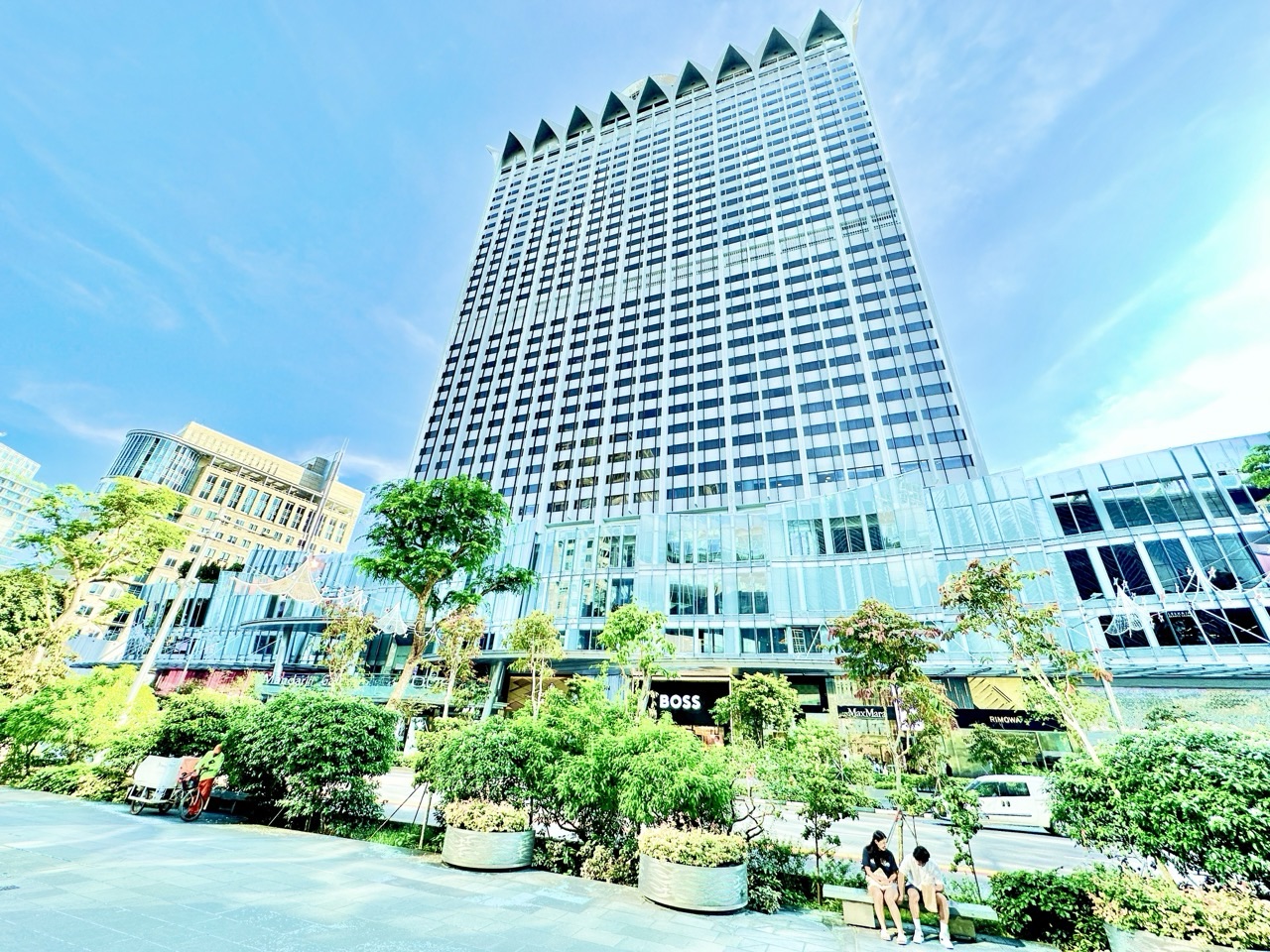
eduKateSG’s October 2026 image of Hilton Singapore Orchard and Mandarin Gallery includes street-cleaning activity alongside ordinary shoppers and road movement. It is a useful illustration because it shows maintenance happening as part of real city life rather than an empty, staged promotional photograph.
The photograph confirms visible cleaning activity in that street scene. It does not identify a particular worker, contractor or assigned service schedule. Those claims would need separate records, not visual guesswork based on clothing or equipment.
Captions should be respectful and factual. The work is significant to public hygiene, but the workers are not props for a tourism photo or an invitation to intrude into their private lives.
Cleaning inside Scotts Square: a different responsibility
The October 2026 media collection includes a cleaner working on the floor inside Scotts Square. This helps distinguish indoor retail housekeeping from work on public pavements. Shopping centres need floors, lifts, entrances and shared facilities maintained without unnecessarily obstructing customers.
Different surfaces may require different tools and methods. A polished indoor floor, outdoor pavement and wet restroom each have distinct safety concerns. NEA’s cleaning-industry guidance discusses trained procedures and hygiene requirements across several environments.
Do not assume that the visible task tells you the person’s employer or the property manager’s exact cleaning contract. Focus on the service and the ways visitors can make the workspace safer.

Public roads, footpaths, bridges and underpasses
NEA’s published Cleaning of Public Areas page lists roads, pavements, back lanes, walkways, footpaths, footbridges, overhead bridges and underpasses among places falling within its public-cleanliness responsibilities. That range explains why cleaning a shopping district involves much more than sweeping the obvious main pavement.
People may use an underpass to reach a mall, a bridge to cross a road or a side lane for business deliveries. Each route contributes to the wider city’s usability. Leaves, dirt and other debris on one connecting path can make a journey unpleasant or unsafe even when the main shopping frontage looks beautiful.
Maintenance arrangements may change around road works and construction. A guide should not invent a cleaning timetable for a specific underpass without current agency or property information.
Rubbish bins on Orchard Road: small but important details
Our October 2026 Leica photograph shows a public rubbish bin along Orchard Road. It is a simple image, but it captures an essential piece of street infrastructure. Pedestrians need a practical place to dispose of wrappers, cups and everyday litter while moving between shopping centres.
A bin is not an invitation to leave bags beside it when it is full. If one bin cannot be used, find another appropriate disposal point. Overflow can attract pests, create inconvenience and increase the work required to clean a busy area.
Use the correct type of bin for the item. Ordinary rubbish and accepted recyclable materials are not necessarily meant to be mixed.

How a recycling bin differs from an ordinary rubbish bin
Another October 2026 image documents a recycling bin in the Orchard Road streetscape. The two photographed bins provide a clear visual distinction between general waste and collection intended for recyclable material. Their exact accepted items depend on the scheme and labels used.
Read the instructions on the bin rather than assume all plastic, paper or drink containers belong in it. Food residue and unsuitable items can contaminate recycling. When uncertain, check official Singapore recycling guidance rather than guess.
eduKateSG already has a separate Orchard Road recycling guide covering the Return Right bottle-deposit programme, so this article focuses on the broader cleanliness system rather than repeating that entire topic.

Why packaging and takeaway meals affect street cleanliness
Orchard Road has cafés, food courts, takeaway counters and traditional small vendors. Their products often come with cups, straws, paper bags and food wrappers. Once visitors finish eating, those materials need appropriate disposal rather than being left on planters or building steps.
Our photograph of a traditional ice-cream cart near Ngee Ann City provides an example of how a tiny snack becomes part of the street experience. The image is not a criticism of that vendor; responsibility for the wrapper lies with the person using it.
Visitors can make a practical difference by carrying a small piece of rubbish until reaching a bin. Keeping public spaces clean is an ordinary shared behaviour, not something done only by official cleaners.

Public footpaths and the importance of a clear walking surface
A footpath is not just a decorative part of the shopping street. People use it with prams, wheelchairs, luggage, walking aids and children. Litter, spilled food, fallen objects or obstructions can interfere with those journeys.
Cleaning services help restore a clear usable surface, but visitors should also avoid abandoning items or blocking ramps, lift entrances and marked crossings. A person pushing a stroller may have far fewer alternative routes than an unencumbered adult.
Good public hygiene and accessibility support one another. A tidy path is most valuable when it remains safe and practical for different kinds of users.

Street trees and the problem of fallen leaves
Orchard Road has a recognisable tree-lined pedestrian environment. Trees provide shade and visual relief, but leaves and small natural debris can collect after rain, wind or seasonal changes. This is a normal part of managing a landscaped tropical boulevard.
NEA’s public-cleanliness material identifies leaf-litter and debris removal among its cleaning activities. The agency has also described increasing cleaning frequency during periods of heavy leaf shedding. This is a broader service principle, not proof that a particular Orchard Road team follows an identical schedule every day.
Trees and clean pavements are both valuable. A city needs to accommodate greenery without treating every fallen leaf as evidence of a failed streetscape.

Rainfall, drains and street debris
Tropical storms can move leaves, litter and soil into drainage areas. NEA’s public cleaning responsibilities include specified drains and waterways, while other asset owners also maintain infrastructure within their scope. A blocked drain can affect the comfort and safety of public routes after heavy rain.
Cleaners and drainage teams may need different equipment and specialist procedures. A visitor should never enter a drain or interfere with a maintenance area to obtain a photo. If a hazard is visible, use the appropriate public feedback channel rather than attempting a risky repair.
During thunder and lightning, seek suitable shelter and leave exposed outdoor maintenance and photography to appropriate professionals.

Spills, slippery surfaces and fast response
Some cleaning tasks are routine, while others arise unexpectedly. A dropped drink or other spill can make an indoor floor slippery; a road incident may require emergency cleaning beyond ordinary sweeping. NEA describes public-area clean-ups after specific emergency events within its responsibilities.
Visitors should give workers room to put up warning signs and finish a task. Walking through a freshly mopped area or moving safety cones for a shortcut can put both customers and cleaning staff at risk.
If a serious hazard affects an accessible walkway, report it to venue staff or the responsible public authority. A calm response can prevent an avoidable slip or injury.
Keeping mall entrances tidy without blocking customers
Shopping centre entrances are especially busy because customers stop, meet friends, check directions and move between different surfaces. Dirt from wet shoes, food packaging and crowded circulation can create repeated cleaning needs.
Building managers often coordinate cleaning with business operations so entrances remain usable. A cleaner may need to work around shoppers, deliveries and escalators. Visitors can help simply by allowing space, following temporary directions and keeping personal belongings out of the way.
Photographs of mall entrances are helpful for navigation, but a reader should not infer the exact private maintenance schedule from a single scene.

The role of the Division of Public Cleanliness
NEA says its Department of Public Cleanliness was formed on 1 April 2012 and renamed Division of Public Cleanliness in September 2020. The division works to improve public cleaning standards and service delivery across specified public areas, including roads, pavements and other infrastructure.
This is a useful historical detail because the public often sees only the individual cleaner rather than the broader system of inspections, contracts, supervision and emergency planning. The work depends on people as well as equipment and quality standards.
Identifying NEA’s responsibility does not imply that it controls every commercial mall washroom, private lobby or shop counter. Property owners and businesses have their own obligations.
How public cleaning contracts work
NEA’s cleaning-sector material describes service contracts covering different public environments and an emphasis on clear outcomes. These contracts are not simply a list of how many people must hold a broom; they can specify standards, response expectations, equipment and quality assessment.
Outcome-based contracting seeks to focus on the desired cleanliness result and the service needed to maintain it rather than only the number of staff deployed. NEA publishes guidance to help service buyers and contractors improve productivity and monitor performance.
For a busy street, this means the visible cleaning activity is part of a wider operational process. But a public webpage does not automatically reveal the specific contractor or detailed roster for Orchard Road.
What is outcome-based cleaning?
NEA describes outcome-based contracting as a strategy that specifies cleaning outcomes and service quality instead of prescribing only headcount. The approach can encourage better tools, training, technology and performance monitoring across the environmental-services industry.
A simple example is specifying that a public walkway should be clean and safe during its use, rather than requiring an identical number of sweepers regardless of demand. The actual contract must still make clear who checks the result and how service failures are addressed.
This is a policy approach, not a promise that every private retail building or government contract has adopted precisely the same template.
Licensed cleaning businesses in Singapore
General cleaning businesses are subject to Singapore’s licensing regime under the Environmental Public Health Act and NEA’s published framework. The agency explains that the rules cover commercial cleaning, food-and-beverage premises and conservancy operations, with specific exceptions and requirements.
That matters because environmental cleaning is a professional service industry. Training, safety responsibilities, licensing and appropriate business practices help determine how work is delivered. It is not simply informal labour that any unqualified contractor can perform without regulation.
Do not infer the licence class of a company from a worker’s uniform. A reliable statement about a particular contractor would require its actual business and licence records.
Cleaning training and worker skills
NEA publishes pictorial guidelines for cleaning tasks and describes workforce skills training connected to different commercial and public settings. A washroom, carpeted office and exterior paved surface each require suitable methods rather than one universal cleaning procedure.
Workers may be trained in equipment use, chemical safety, infection prevention, correct waste handling and worksite precautions. These skills help protect both employees and people using the area.
A visitor’s role is modest: respect barriers and notices, keep clear of equipment and allow workers to complete tasks without unnecessary interruption.
Technology and mechanised cleaning
Singapore’s environmental-services sector has explored mechanised equipment and new methods to improve cleaning productivity. NEA has published information about innovation, technology and outcome-based service delivery, though this does not establish the exact machines operating on Orchard Road on a given day.
Mechanical sweepers, appropriate tools and data-informed inspections can support workers, but they do not eliminate the need for human judgement. Different spaces require different methods, and a crowded pedestrian corridor is not identical to an empty industrial road.
Do not identify an unspecified vehicle or machine in a photograph as an official NEA road sweeper without independent evidence.
Why litter enforcement is only part of the system
Cleaning workers remove waste, but preventing litter is another important responsibility. NEA combines public education, deterrence, enforcement and community involvement. Its 2026 review reported roughly 13,600 littering enforcement actions taken islandwide during 2025.
That number is a national statistic. It must not be incorrectly presented as 13,600 incidents on Orchard Road. The streetscape is one of many public environments contributing to Singapore’s overall cleanliness effort.
Enforcement alone cannot replace bins, good design, cleaning teams and responsible behaviour by the people using a place.
What is a Corrective Work Order?
Singapore’s Corrective Work Order, commonly called CWO, is a court-imposed measure that can require offenders to clean public areas. NEA explains that the measure helps people understand the burden of picking up litter while also discouraging further offences.
The scheme is part of Singapore’s broader litter-control framework and is not a daily volunteer programme for tourists on Orchard Road. A person should not mistake a worker carrying cleaning equipment for somebody serving a CWO.
Respect the dignity and privacy of everyone seen performing public cleaning. An external photograph cannot establish why a particular person is engaged in the work.
How the Cleaner Neighbourhood initiative works
NEA’s public-cleanliness overview describes the Cleaner Neighbourhood initiative introduced in 2025, focusing on hotspots identified through litter counts, feedback and ground observation. Enforcement and outreach may be intensified in places with persistent problems.
This is a national initiative, not a declaration that the particular Orchard photograph depicts a listed hotspot. Cleanliness statistics should remain attached to the population, time period and locations actually identified by the source.
The useful general lesson is that public agencies combine measurement, cleaning operations and community participation to improve how places feel and function.
How to report a public cleanliness problem
NEA’s contact guidance identifies the OneService app as a route for reporting cleanliness, pests and certain public infrastructure issues. The system helps send feedback to the relevant Town Council or authority instead of requiring residents to know the responsible agency in advance.
A useful report includes the exact location, date, time, nature of the problem and a relevant photograph when safe. Do not step into the carriageway or a hazardous area simply to obtain a clearer image.
If the issue is within a mall or private restaurant, notifying the venue’s staff may be the appropriate first step. Different problems belong to different management systems.
Who cleans Orchard Road rubbish bins?
Public rubbish bins are part of the wider public-area service environment, but the specific owner or emptying contractor may depend on where the bin stands. A bin outside a private property can also be managed differently from one belonging to a public authority.
The October photograph confirms the presence of a rubbish bin, not the name of its servicing company or the hour it was last emptied. Those details cannot be deduced from the shape or colour of the bin.
Visitors do not need to know the contracting boundary to dispose of litter properly. They only need to use the appropriate facility and avoid leaving waste around it.
The difference between outdoor and private indoor cleaning
The photo of the street cleaner near Mandarin Gallery and the photo of a cleaner inside Scotts Square allow a useful visual comparison. Outdoors, work may involve leaves, traffic, weather and public pedestrian conditions. Indoors, the focus may be polished floors, shop entrances and shared circulation.
Both settings require protecting passers-by, but equipment, staffing, cleaning agents and time windows can differ. A single universal schedule would not be appropriate for every commercial property and street segment.
These photographs tell a stronger story together than either alone, while respecting the fact that individual workers and employers have not been identified.

Why food courts and cafes have separate hygiene obligations
Dining venues in Orchard Road malls need their own hygiene systems and applicable Singapore Food Agency requirements. Table clearing, food preparation, dish handling and restaurant sanitation differ from the general sweeping of public streets.
A clean-looking café in a photograph is not an official food hygiene inspection result. Customers should rely on current operator information and official guidance when a food safety question matters.
For visitors, simple habits such as disposing of packaging correctly and washing hands before eating help keep shared spaces pleasant.
Public toilets and restrooms: cleanliness behind the scenes
Mall restrooms are important to a comfortable shopping day, especially for older visitors, families and people using mobility aids. Their cleaning is generally coordinated by the relevant property operator, while Singapore has broader public hygiene standards and initiatives for toilet management.
Visitors should leave facilities tidy, report serious problems to staff and respect areas temporarily closed for cleaning. A sign indicating a wet floor or maintenance session exists for safety, not as an inconvenience to ignore.
A good location guide can identify where facilities are listed without promising that every toilet is open and spotless at every moment.
The value of cleaners during special events
Orchard Road hosts changing decorations, promotions and public activities. A busy event can produce more takeaway packaging, crowds and temporary barriers, requiring organisers and service providers to plan for additional cleaning and safe circulation.
The exact division of duties depends on the event and its permission arrangements. A festive display in a dated photograph does not prove that a specific agency or company was responsible for cleaning it.
Visitors can help by following bin and queue instructions and taking rubbish away from crowded areas when appropriate.
How rain can change a cleaner’s shift
An ordinary dry-weather pavement requires different attention from one affected by a sudden tropical shower. Rain may wash dust and leaf litter into corners, while damp floors can become slippery inside shops. Service providers may adjust operations to the actual conditions.
NEA has described increasing cleaning frequencies during certain higher-debris periods, but that does not justify inventing a fixed Orchard Road cleaning timetable. Workers and supervisors need to respond to the real situation.
If you see warning signs or equipment, give the workers the necessary space. A small detour is preferable to slipping or interfering with a task.
Orchard Road public art and clean surroundings
The outdoor sculptures, fountains and architectural spaces around ION and Ngee Ann City help make Orchard Road visually interesting. Cleanliness supports the experience by keeping the public-facing areas welcoming and preventing litter from overwhelming the setting.
Art installations can have surfaces that require specialist maintenance, and not every sculpture is meant to be touched or used as a seat. Visitors should respect barriers and not leave food containers on an artwork.
The best architectural photograph often includes the ordinary public space around the object, showing how people move through it and care for it.

A small family activity: finding the correct bin
Children can learn simple habits during a shopping outing. Ask them to identify an ordinary rubbish bin and a recycling bin, then read the labels before choosing where packaging belongs. It is a short practical exercise rather than a formal lesson.
Adults should model the habit by not leaving cups, straws or wrappers on seating or building steps. A child who watches a parent carry rubbish to the correct bin learns that keeping the city tidy is a shared responsibility.
Finish the activity quickly and enjoy the rest of the outing. The goal is a natural everyday skill rather than turning a family walk into a long lecture.
A Geography question: who manages different spaces?
Imagine walking from a public pavement into ION Orchard, then to a restaurant and later into a private hotel. Those are connected places physically, but their cleaning and management responsibilities may differ. The boundary between public and private space is not always obvious from the floor tiles.
Secondary-school students can examine how governments, property owners and private contractors work together. Why might roads, indoor corridors and restaurant kitchens require different standards? How do transport and foot traffic affect the level of cleaning needed?
These questions connect Geography, economics and civic responsibility in a real neighbourhood that students can observe safely.
A Mathematics exercise about waste and staffing
Suppose a fictional event results in 36 bags of litter over a day and a cleaning team collects nine bags per scheduled round. Under the simplifying assumption that each round removes nine bags, four rounds would collect the total. Real cleaning is not that neat, because waste appears at different times and bag volumes vary.
The point of the exercise is not to prescribe a staffing plan. It is to show how quantities, time and workload inform operational decisions. Service planning also requires safety, equipment, travel and quality checks.
Students should distinguish a teaching example from real NEA performance data; no such Orchard Road daily bag count is being claimed here.
Photography ethics when cleaners are working
Workers in public areas may appear in documentary street photographs, but that does not erase their personal dignity. Avoid following individuals, interrupting tasks or taking intrusive close-up portraits without consent. Show enough of the surrounding place to communicate the nature of the work.
Our October photos illustrate two cleaning settings. They are not a licence to identify or speculate about a person’s nationality, wages, immigration status or employer based on appearance.
A respectful caption describes the visible activity and the location. It can educate readers without turning a working person into an object of curiosity.
The streetscape beyond the shopping bags
Famous Orchard Road photographs often emphasise luxury store windows, food and architecture. Adding a street-cleaning image gives readers a more complete understanding of how the place functions. The cleaner, rubbish bin, delivery worker and transport operator all contribute to the everyday experience of a shopping district.
A happy city is not built solely by the most expensive buildings. It also depends on quiet routine work that allows thousands of people to share space without unnecessary hazards.
Recognising this does not require romanticising physically demanding work. It simply means acknowledging the people and systems behind the scene.

Frequently asked questions about Orchard Road cleanliness
Who cleans public roads and footpaths in Singapore?
NEA’s Division of Public Cleanliness oversees specified public-area cleaning, with service providers and other asset owners responsible within their own scopes.
Who cleans the floors inside Orchard Road malls?
Privately managed commercial properties generally arrange their own housekeeping and cleaning contractors.
Does NEA clean every restaurant and hotel lobby?
No. Food businesses and private building managers have separate duties and applicable rules.
Are there rubbish bins along Orchard Road?
Yes. eduKateSG’s October 2026 photography documents both public rubbish bins and recycling bins.
Can food wrappers go in a recycling bin?
Follow the actual bin’s instructions. Food-contaminated packaging can interfere with recycling, and not every material is accepted.
Who removes fallen leaves from public pavements?
Public-area cleaning includes leaf and debris removal within the relevant authority or asset owner’s responsibility.
Do all cleaners work on the same shift?
No such uniform schedule is established. Exact work periods vary by site, provider, contract and actual needs.
How does NEA oversee cleaning quality?
NEA publishes public-area service standards, contract guidance, inspections and outcome-based cleaning approaches.
What is a cleaning-business licence?
It is part of NEA’s regulatory framework for businesses providing specified general cleaning services.
What is a Corrective Work Order?
A CWO is a court-imposed measure associated with certain littering offences; it should not be confused with ordinary employment.
Were 13,600 littering actions taken specifically on Orchard Road?
No. The roughly 13,600 enforcement actions NEA reported for 2025 were islandwide, not an Orchard Road count.
How can I report litter on a public pavement?
The OneService app can accept location-specific reports and route them to the responsible agency or Town Council.
What should I do about a slippery mall floor?
Alert venue staff and follow warning signs rather than crossing a potentially hazardous cleaning area.
Are recycling bins and general rubbish bins interchangeable?
No. They serve different collection purposes and have different accepted materials.
Who maintains public sculptures and their surroundings?
Responsibilities vary among artwork owners, property managers and relevant public agencies; the operator cannot be inferred from a photograph.
Is photographing a street cleaner permitted?
Use respectful public photography practices and avoid obstructing work or making intrusive close-up portraits without consent.
Are the photographs really from Orchard Road in October 2026?
Yes. The media library documents street cleaning, a Scotts Square interior cleaner and Orchard Road bins in October 2026.
Thank the systems and people who make the street welcoming
Orchard Road’s famous façades attract visitors, but the street is enjoyable because many other things work together: public services, thoughtful design, considerate shoppers and the people who clean and maintain shared spaces. Recognising that effort makes the neighbourhood easier to appreciate beyond its shop windows.
A simple habit helps: dispose of rubbish correctly, leave room for cleaners to work and treat public areas as spaces shared with everybody else. A more welcoming Singapore starts with ordinary decisions made throughout the day.
For a nearby experience, see Starbucks on Orchard Road, including the photographed Pacific Plaza stand and Boost Juice and the photographed Orchard Road kiosk.
Official public-cleanliness sources and Orchard Road reading
NEA cleaning of public roads, pavements and underpasses
NEA public cleanliness and litter control overview
NEA cleaning industry and training guidance
NEA licensing requirements for cleaning contractors
NEA outcome-based cleaning contracts
NEA 2025 enforcement report issued March 2026
NEA contact information and OneService reporting
NEA 2025 response on public-area cleaners and leaf shedding
Orchard Road recycling and rubbish-bin guide
Orchard Road green corridor and shade guide
Mandarin Gallery Orchard Road visitor guide
Orchard Road architecture guide
Updated October 2026. Responsibilities, statistics and training guidance are derived from NEA’s published materials. National statistics are not represented as specific Orchard Road results. October 2026 photographs are accurate location records but do not identify workers or prove contractor schedules.