
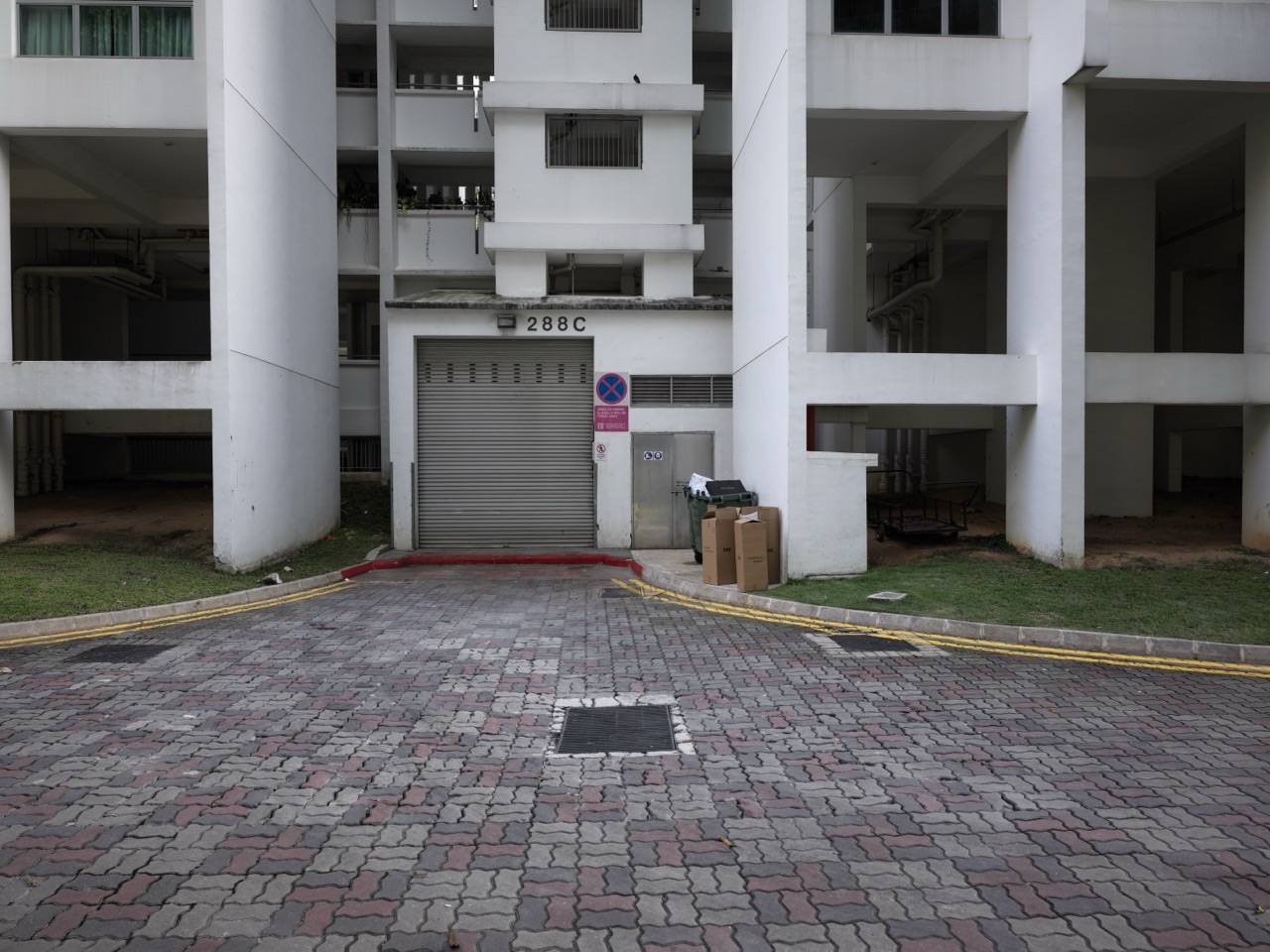
Singapore is clean because Singapore runs a Clean OS.
Not just cleaning.
Not just fines.
Not just campaigns.
Not just cleaners.
Not just laws.
Not just public shame.
Not just bins.
Not just incinerators.
Not just “do not litter” signs.
It is an operating system.
A culture-society invisible handshake.
In How Society Works, society is described as an invisible handshake: people know how to behave not only because the law tells them, but because shared conduct, timing, respect, expectations, and social habits teach them what is acceptable.
The Clean Singapore OS is one of the clearest examples of that handshake.
When a visitor enters Singapore, they may not understand the whole country yet.
But they quickly understand the sign-in screen.
Do not litter.
Do not smoke where smoking is prohibited.
Do not dirty public spaces.
Do not vandalise.
Do not throw rubbish from high-rise flats.
Do not treat public toilets like nobody owns them.
Do not assume someone invisible will clean up after every careless act.
The fines are part of the sign-in.
They are the visible warning.
They tell every user of the Singapore system:
You have entered a shared space.
The space is clean because people before you kept it clean, cleaners maintained it, and the system enforced it.
Now you are inside the OS.
Behave accordingly.
1. The Fine Is the Sign-In Screen
Every operating system has a sign-in screen.
It tells the user:
You are entering a system.
There are rules.
There are permissions.
There are limits.
There are things you can do.
There are things you must not do.
In Singapore, cleanliness rules work like that.
A visitor does not need to read every part of Singapore’s social contract to understand the basics.
The visible signs tell the story.
No littering.
No smoking in prohibited areas.
Return trays.
Bin your rubbish.
Keep toilets clean.
Do not damage public property.
Do not treat shared space as private dumping ground.
This is why fines matter.
A fine is not only punishment.
A fine is a signal.
It says:
This behaviour is not normal here.
This action creates cost for everyone else.
This mess does not disappear by itself.
Someone will have to clean it.
Someone will have to restore the space.
Someone will have to carry your friction.
That is the deeper meaning.
Singapore’s littering rules make this explicit: NEA states that under the Environmental Public Health Act, high-rise littering offenders can face court fines of up to S$2,000 for a first conviction, S$4,000 for a second conviction, and S$10,000 for third and subsequent convictions; the court may also impose a Corrective Work Order requiring offenders to clean public areas for up to 12 hours.
This is very Singapore.
The punishment does not only take money.
It makes the offender touch the work.
If you dirty the shared world, you may be made to clean the shared world.
The sign-in becomes physical.
The user learns the OS through labour.
The idea is simple: Stick with the rules, and everything will OK. (I can’t use fine here or it will be a confusing double entendre. lol.)
And OK just happens to be fine for everyone. (ouch… I went there didn’t I?)
2. Cleanliness Is Not a Natural State
Cleanliness feels natural only after a system has been maintaining it for a long time.
But cleanliness is not natural.
Dust gathers.
Leaves fall.
Rubbish accumulates.
Food spills.
Toilets smell.
Floors become sticky.
Roads collect debris.
Bus stops collect grime.
Shopping centres collect foot traffic.
MRT stations collect human residue.
Offices collect waste.
Hawker centres collect trays, plates, spills, tissues, bones, cups, packets, and leftovers.
If nobody cleans, the city decays quickly.
So Singapore’s cleanliness is not the absence of dirt.
It is the constant removal of dirt.
The Clean OS works because there is a hidden night shift and an everyday discipline.
The street is swept.
The road is brushed.
The bin is cleared.
The public toilet is washed.
The bridge is pressure cleaned.
The train is wiped.
The station is maintained.
The office is vacuumed.
The shopping-centre floor is mopped.
The rubbish is collected.
The waste enters the back-end system.
Then the next morning, people wake up and say:
Singapore is clean.
But Singapore did not clean itself.
3. The Cleaner Hero Is the Hidden Runtime
The Cleaner Hero is the hidden runtime of the Clean Singapore OS.
While most people sleep, another layer of Singapore works.
A cleaning truck moves through the road.
A cleaner wipes the bus stop.
A team clears bins.
A worker washes public toilets.
Someone cleans the MRT station.
Someone checks transport infrastructure.
Someone restores the shopping centre.
Someone prepares the office before workers arrive.
Someone removes what yesterday left behind.
NEA lists public-area cleaning activities such as sweeping, removing debris and leaf litter, removing bulky waste, litter picking, clearing bins, and de-silting drains across roads, pavements, footpaths, bridges, underpasses, drains, waterways, parks, public beaches, and other public areas.
This is the visible work most people do not see.
It is not glamorous.
But it is foundational.
The Cleaner Hero turns yesterday’s mess into tomorrow’s normal.
That is what maintenance does.
Maintenance makes civilisation look effortless.
And when it works well, the worker disappears from attention.
That is why the Cleaner Hero must be named.
The cleaner is not a background person.
The cleaner is part of the national operating system.
4. The User Also Has a Role
A clean society cannot rely only on cleaners.
That would be unfair.
If people dirty the city carelessly, the night shift must work harder.
If toilets are abused, toilet cleaners carry more unpleasant work.
If trays are left everywhere, hawker-centre cleaners must move faster.
If rubbish is thrown on the street, public cleaners must chase what should have gone into bins.
If cigarette butts are dropped, someone else must pick them up.
If people treat the public world like nobody owns it, the Cleaner Hero pays the price.
This is why Clean Singapore is not just a cleaning system.
It is a user-behaviour system.
The user must not overload the cleaner.
The citizen must not create unnecessary friction.
The visitor must understand the handshake.
The child must learn:
Do not make another person clean what you could have prevented.
That is the culture.
That is the OS.
The cleaner restores the shared world.
But the user must not destroy it faster than it can be restored.
5. Fines Reduce the Burden on the Cleaner Hero
This is the important insight.
Fines are not only about fear.
Fines are also about workload reduction.
Every piece of litter avoided is one less item for a cleaner to pick up.
Every tray returned is one less handover for a cleaner.
Every clean toilet user is one less unpleasant reset.
Every person who bins rubbish correctly reduces the hidden labour of the night shift.
Every smoker who uses proper areas and bins cigarette waste reduces the dirty edge of public space.
Every person who treats shared places respectfully lowers friction for the next user.
The fine is the hard edge of the handshake.
Culture says:
Please do the right thing.
Fines say:
If you refuse, the system will remind you.
This is why Singapore’s Clean OS works as both culture and law.
Culture alone may be too soft.
Law alone may be too cold.
Together, they create a behavioural field.
People learn what not to do.
Then, over time, the best version is when they no longer need the fine.
They do the right thing because it is normal.
6. The History of the Clean OS
Singapore did not become clean by accident.
It was built.
The Keep Singapore Clean campaign was launched on 1 October 1968 by then Prime Minister Lee Kuan Yew, and NLB describes it as one of Singapore’s first national campaigns after independence, aimed at making Singapore the cleanest and greenest city in the region by addressing inconsiderate littering and reaching every stratum of society.
This matters.
The Clean OS was installed early.
Singapore understood that cleanliness was not a decorative issue.
It was public health.
It was dignity.
It was order.
It was tourism.
It was investment confidence.
It was shared discipline.
It was national self-respect.
It was also a way to teach people that the public world mattered.
Not only the home.
Not only the shop.
Not only the private room.
The street mattered.
The drain mattered.
The market mattered.
The toilet mattered.
The lift mattered.
The corridor mattered.
The bus stop mattered.
The shared world had to be protected.
That is civilisation.
Responsibility cannot stop at the doorstep.
7. The Public Toilet Is a Test of the OS
Public toilets are one of the most honest tests of society.
They are shared.
They are intimate.
They are heavily used.
They are easy to abuse.
They become unpleasant quickly.
And when they fail, everyone notices.
That is why public-toilet cleanliness is not a small issue.
NEA’s public toilet cleanliness campaign has targeted habits such as flushing after use, keeping toilet seats clean, keeping floors dry, and binning litter, with campaign messages placed at transport hubs, hawker centres, coffeeshops, community centres, and shopping malls.
This is exactly the Clean OS at work.
The toilet sign is not only a sign.
It is a social instruction.
Flush.
Bin.
Keep dry.
Think of the next person.
Think of the cleaner.
Think of the shared space.
A clean toilet requires three parties.
The user.
The cleaner.
The system.
If the user fails, the cleaner suffers.
If the cleaner is unsupported, the toilet fails.
If the system does not design, inspect, and enforce, the standard drops.
A clean toilet is therefore not just a clean toilet.
It is a successful invisible handshake.
8. The Hawker Centre and the Tray Return Signal
The hawker centre is another Clean OS classroom.
It teaches the public that shared eating space requires shared responsibility.
A tray left behind is not only a tray.
It is a handover.
Someone else must remove it.
Someone else must wipe the table.
Someone else must restore the space so the next person can sit.
When people return trays, they lower friction.
The next diner gets a cleaner table.
The cleaner’s workload drops.
The hawker centre moves better.
The public space becomes more respectful.
NEA and SFA observed in 2024 that the vast majority of diners take the initiative to remove table litter and return trays and crockery, and that diners are generally cooperative when approached for not doing so.
That is the culture becoming the OS.
At first, people may need reminders.
Then signs.
Then enforcement.
Then habit.
Eventually, the best version is when the behaviour becomes normal.
The tray return becomes an invisible handshake:
I used this table.
I reset it for the next person.
I do not make the cleaner carry everything.
That is a small act.
But civilisation is full of small acts.
9. Smoking, Gum, and the Boundary of Public Space
Singapore’s Clean OS also teaches people through boundaries.
Smoking is one example.
NEA states that it is an offence to smoke in smoking-prohibited areas under the Smoking (Prohibition in Certain Places) Regulations 2018, and notes that smoking is largely not permitted within buildings and public service vehicles except in specified areas such as indoor smoking rooms and uncovered rooftops of multi-storey carparks.
This is again an OS instruction.
The point is not only smoke.
It is shared air.
Shared corridors.
Shared lifts.
Shared lobbies.
Shared bus stops.
Shared comfort.
A smoker’s private act becomes public friction when it enters the shared environment.
The Clean OS says:
You may have personal habits.
But your habits cannot dirty everyone else’s air and space.
Chewing gum is another famous example.
Singapore Customs lists chewing gum as a prohibited import, except for Health Sciences Authority-approved oral dental and medicinal chewing gum.
People often joke about this.
But inside the Clean OS, the logic is simple:
Prevent one form of sticky public friction before it spreads through seats, floors, doors, pavements, and transport infrastructure.
The rule is not only about gum.
It is about the cost of removing gum from a shared city.
Singapore’s approach often begins with this question:
Will this behaviour create unnecessary cleaning burden, maintenance burden, public-health burden, or social friction?
If yes, the OS creates a boundary.
10. Waste Does Not Disappear
The Clean OS also has a back end.
When rubbish goes into a bin, it has not vanished.
It has only entered the next layer.
NEA explains that solid waste generated by homes, commercial premises, and industries is collected and disposed of at waste-to-energy plants, and that incineration reduces solid waste volume by about 90%, helping land-scarce Singapore extend the lifespan of Semakau Landfill.
That means every bin is part of a national chain.
User.
Bin.
Cleaner.
Collector.
Truck.
Waste-to-energy plant.
Ash.
Transfer station.
Semakau.
Land constraint.
Environmental policy.
This is why littering is not just ugly.
It breaks the chain.
When waste is placed properly, the system can handle it.
When waste is thrown carelessly, the system must send extra labour to retrieve it.
That is friction.
The Clean OS is designed to keep waste inside the chain.
Not on the road.
Not in the drain.
Not on the table.
Not on the pavement.
Not in the lift.
Not under the seat.
The cleaner should not have to hunt for what the user should have placed correctly.
11. The Clean OS Lowers Friction
A clean Singapore is a lower-friction Singapore.
People walk more comfortably.
Children sit more safely.
Elderly people hold cleaner railings.
Commuters board cleaner trains.
Workers enter cleaner offices.
Families eat at cleaner tables.
Visitors understand the country faster.
Businesses operate in more pleasant surroundings.
Public trust rises because the city looks cared for.
Cleanliness is not only appearance.
Cleanliness is reduced resistance.
A dirty space creates emotional friction.
People hesitate.
They avoid.
They feel disgust.
They feel unsafe.
They feel neglected.
They feel that nobody owns the place.
A clean space says the opposite.
This place is maintained.
This place is usable.
This place is shared.
This place still has standards.
This is why cleanliness becomes a social trust signal.
A clean Singapore tells the person:
The system has not abandoned this place.
12. The Clean OS Is an Invisible Handshake
The Clean OS is not fully written in law.
Some of it is written in habit.
A child watches the parent put rubbish in the bin.
A diner sees others return trays.
A visitor sees signs and understands the boundary.
A resident sees a clean lift and feels shame about dirtying it.
A commuter sees a cleaner wiping the station and becomes more careful.
A student sees the school cleaner and learns respect.
A citizen sees a public campaign and remembers that shared space has rules.
This is how culture transmits.
Not only by punishment.
By repetition.
By imitation.
By signage.
By expectation.
By public design.
By enforcement.
By visible cleaners.
By invisible labour.
By the feeling that “we do not do that here.”
That sentence is powerful.
“We do not do that here” is the OS speaking.
It is not always said aloud.
But it is felt.
13. The Cleaner Hero’s Workload Drops When the OS Works
This is the deepest connection.
A clean culture protects the cleaner.
If people do not litter, the cleaner’s workload drops.
If people return trays, the cleaner’s workload drops.
If people keep toilets clean, the cleaner’s unpleasant work drops.
If people bin waste properly, the cleaner’s search work drops.
If people respect public spaces, maintenance becomes easier.
If people follow smoking rules, smell and cigarette-butt cleaning drop.
If people understand the Clean OS, the night shift can focus on real maintenance instead of preventable mess.
This is logical friction removing.
Do not add more cleaning burden if the dirt did not need to exist.
Do not make the cleaner heroic because everyone else was careless.
The best society does not ask cleaners to fight endless unnecessary mess.
The best society reduces the mess upstream.
That is why the Clean OS is humane.
It does not only make the city look good.
It makes the Cleaner Hero’s work less punishing.
It says:
We will not make your invisible work harder than it needs to be.
14. The Visitor Learns the OS Quickly
Singapore’s cleanliness culture is especially interesting because visitors learn it quickly.
They may come from different societies with different habits.
But when they enter Singapore, the signs, fines, bins, clean streets, transport standards, and public behaviour teach them the local OS.
The message is immediate:
This place is maintained.
Do not be the one who breaks it.
That is the sign-in effect.
A visitor may not know Singapore deeply.
But the visitor knows the boundary.
The fines are not the whole culture.
They are the entry prompt.
Then the clean environment itself reinforces the behaviour.
People behave differently in a place that already looks cared for.
A clean system creates clean expectations.
The cleaner the space, the more obvious the offender becomes.
That is another Singapore mechanism.
Cleanliness makes dirt visible.
When dirt is visible, behaviour is easier to correct.
15. The Danger of Forgetting the Work
There is a danger in a successful Clean OS.
People may forget the labour.
They may think Singapore is naturally clean.
They may complain when one toilet is dirty but never thank the cleaner who restored ten others.
They may notice one overflowing bin but ignore the thousands that were cleared properly.
They may enjoy clean trains and never think of the night teams.
They may walk clean pavements and never think of the sweeping truck.
They may treat cleanliness as entitlement rather than inheritance.
This is dangerous.
Because when invisible work is forgotten, people become careless.
When people become careless, cleaners carry more.
When cleaners carry more, friction rises.
When friction rises, the clean surface begins to weaken.
So Singapore must keep teaching the public:
Normal is maintained.
Clean is maintained.
Order is maintained.
Public space is maintained.
The clean city is not a default setting.
It is a daily achievement.
16. The Clean Singapore OS and The Table
The Clean Singapore OS sits on the Table.
It touches land scarcity.
Public health.
Tourism.
Transport.
Housing.
Labour.
Waste systems.
Social trust.
Municipal services.
Education.
Class dignity.
Visitor experience.
Cleanliness is not a side issue.
It is connected to everything.
A dirty drain can become a public-health problem.
A dirty toilet can become a hygiene problem.
A dirty bus stop can become a dignity problem.
A dirty hawker centre can become a food-culture problem.
A dirty train can become a trust problem.
A dirty street can become a visitor-confidence problem.
A dirty city can become an economic problem.
That is why Singapore treats cleanliness seriously.
Not because it wants to look perfect.
But because in a dense city, small messes travel.
A wrapper becomes litter.
Litter blocks drains.
Dirty drains attract pests.
Pests become health risks.
Bad smell reduces comfort.
Poor comfort reduces trust.
Trust loss becomes social friction.
The Table is small.
So dirt cannot simply be pushed far away.
It must be managed.
17. The Clean Singapore OS and The Child
The child is where the Clean OS must be passed forward.
A child who grows up in a clean Singapore must not become blind to cleaning.
The child must learn:
Do not litter.
Return the tray.
Flush properly.
Keep the floor dry.
Respect cleaners.
Respect public toilets.
Use bins.
Do not dirty lifts.
Do not damage shared spaces.
Do not make unnecessary work for someone else.
This is not small education.
This is civic education.
The child who learns cleanliness learns responsibility.
The child learns that society is shared.
The child learns that private behaviour has public cost.
The child learns that invisible workers matter.
The child learns that Nobody is not nobody.
The cleaner who works through the night is Somebody in the national OS.
The child who understands this becomes a better citizen.
Not only a cleaner child.
A more civilised child.
18. Final Frame
How Singapore Works | The Clean Singapore OS
Singapore is clean because it runs a Clean OS.
The fines are the sign-in screen.
The signs are the user instructions.
The cleaners are the hidden runtime.
The waste system is the back end.
The public campaigns are the updates.
The bins are the interface.
The toilets are the test.
The hawker tray return is the handshake.
The public shame is the warning light.
The law is the hard boundary.
The culture is the soft boundary.
The Cleaner Hero is the person who makes the system visible by morning.
And the user must do their part.
Because every avoided mess lowers friction.
Every bin used properly lowers friction.
Every tray returned lowers friction.
Every clean toilet habit lowers friction.
Every respectful act lowers the Cleaner Hero’s burden.
This is not just about a pretty city.
It is about a humane city.
A city where people do not make unnecessary work for invisible workers.
A city where public space feels cared for.
A city where visitors sign in quickly to the local norms.
A city where cleanliness is both law and culture.
A city where the shared world is restored every night and respected every day.
That is the Clean Singapore OS.
It is one of the invisible handshakes of Singapore.
And when it works, the night shift drops in intensity.
Not because cleaning stops.
But because society has learned not to create unnecessary dirt.
That is how Singapore works.
The cleaner restores the city.
The citizen protects the cleaner.
The visitor learns the handshake.
The child inherits the habit.
And the next morning, Singapore wakes up clean again.
The Invisible Handshake: What Society Does When No One Is Looking
In How Culture Works, one of the most important ideas is the Invisible Handshake.
The Invisible Handshake is how people behave when no one is looking.
Not because a police officer is standing there.
Not because a fine is immediately coming.
Not because a camera is watching.
Not because a teacher is checking.
Not because a parent is scolding.
Not because a government agency has issued a reminder.
But because the person has internalised the lane.
That is culture.
Culture is the lane we stay within even when nobody painted the line in front of us.
A mature society does not only work because of law.
Law is the hard boundary.
Governance is the organised boundary.
Enforcement is the corrective boundary.
But culture is the invisible boundary.
It asks:
What will people do when the system is not looking?
Will they still return the tray?
Will they still bin the rubbish?
Will they still keep the toilet clean?
Will they still queue properly?
Will they still give way?
Will they still speak with restraint?
Will they still avoid taking what is not theirs?
Will they still treat the cleaner with respect?
Will they still protect shared spaces?
Will they still care for the next person?
This is where civilisation is tested.
Not when the law is present.
But when the law is absent.
The Absence Test
Every society has an absence test.
Remove the police officer.
Remove the teacher.
Remove the parent.
Remove the manager.
Remove the fine.
Remove the camera.
Remove the immediate consequence.
Then see what remains.
What remains is culture.
If people immediately break the space, the culture is weak.
If people continue to behave with care, the culture is strong.
This is why the Invisible Handshake matters.
It tells us whether the good has become self-reinforcing.
A society can be clean because cleaners work very hard.
That is one level.
A society can be clean because people fear fines.
That is another level.
But the strongest society is clean because people do not want to dirty the shared world in the first place.
That is culture.
That is the Invisible Handshake.
The person returns the tray not because someone is shouting.
The person returns the tray because the table belongs to the next person too.
The person bins the rubbish not because the fine is coming.
The person bins the rubbish because the cleaner should not carry unnecessary work.
The person keeps the toilet clean not because someone is watching.
The person keeps the toilet clean because another human being must use it after them.
That is the Good becoming normal.
Will the Good Win?
This is the serious question.
In the absence of enforcement, will the Good win?
Here, “Good” does not need to mean something dramatic.
Good can be small.
Good is returning the tray.
Good is not littering.
Good is not cutting the queue.
Good is not abusing public toilets.
Good is not making noise late at night.
Good is not damaging shared property.
Good is not making someone else’s work harder.
Good is not pretending that invisible workers do not exist.
Evil also does not always arrive dramatically.
Sometimes Evil begins as carelessness.
I cannot be bothered.
Someone else will clean it.
Nobody saw.
Not my problem.
I paid already.
The cleaner is paid to clean.
The government should handle it.
The system will fix it.
This is how the invisible handshake breaks.
Not always through wickedness.
Often through selfish convenience.
One person litters.
Another sees it.
The next person thinks it is normal.
The table becomes dirty.
The toilet becomes dirty.
The lift becomes dirty.
The corridor becomes dirty.
The culture weakens.
Then the law must return harder.
More signs.
More fines.
More cameras.
More cleaners.
More enforcement.
More cost.
More friction.
A weak culture requires more external control.
A strong culture reduces the need for constant control.
That is why the Invisible Handshake is so important.
It is cheaper than enforcement.
Gentler than punishment.
Deeper than instruction.
And more powerful than fear when it truly takes root.
Staying Within Lanes Without Being Told
The best education does not only teach children what the lanes are.
It teaches them how to sense the lane.
A child can be told:
Do not litter.
Return your tray.
Keep the toilet clean.
Queue properly.
Respect cleaners.
Do not damage public property.
But the deeper education is this:
Ask yourself what your action does to the next person.
That is the lane.
If I leave this table dirty, who receives it?
If I throw this tissue on the floor, who picks it up?
If I wet the toilet floor, who cleans it?
If I make noise here, who suffers it?
If I cut the queue, whose time did I steal?
If I damage this lift, who loses access?
If I ignore the cleaner, what am I teaching myself about human worth?
This is how a child learns invisible lanes.
Not only by memorising rules.
But by learning consequence.
The invisible lane is drawn by empathy.
It says:
My freedom does not end at what I can get away with.
My freedom is shaped by what my action does to others.
That is culture.
That is civic education.
That is how a society becomes mature.
The Clean Singapore OS as Culture
The Clean Singapore OS begins with visible signs.
No littering.
No smoking.
Return trays.
Keep toilets clean.
Use bins.
Follow the rules.
But the goal is not to live forever at the signboard level.
The goal is to move from rule to habit.
From habit to instinct.
From instinct to culture.
At the beginning, the fine says:
Do not do this.
Then the sign says:
Remember not to do this.
Then the public space says:
People here do not do this.
Then the child learns:
We do not do this.
That final sentence matters.
“We do not do this” is the Invisible Handshake speaking.
It means the rule has moved from outside the person into the person.
That is when culture becomes stronger than enforcement.
The person does not need to be watched because the person is now carrying the lane internally.
The Cleaner Hero and the Invisible Handshake
The Cleaner Hero shows why this matters.
When people dirty the city, the Cleaner Hero carries the cost.
When people behave properly, the Cleaner Hero’s work becomes lighter.
So the Invisible Handshake is not abstract.
It has a human beneficiary.
A clean toilet means less unpleasant work for someone.
A returned tray means less rushing for someone.
A properly used bin means less bending, picking, and chasing for someone.
A clean bus stop means less restoration work for someone.
A clean lift means less disgust for the next resident and less cleaning burden for the cleaner.
This is the moral engine of the Clean OS:
Do not create unnecessary work for invisible people.
A child who understands this has learned something bigger than cleanliness.
The child has learned civilisation.
The child has learned that every shared space contains an unseen chain of responsibility.
The child has learned that Nobody is not nobody.
The cleaner is Somebody.
The next user is Somebody.
The public is Somebody.
The shared world is Somebody’s burden if we are careless.
Culture Is Self-Governance
The highest form of governance is not when the state controls everything.
The highest form is when society can govern itself in ordinary behaviour.
Not perfectly.
No society is perfect.
But sufficiently.
People queue without being forced.
People return trays without being chased.
People keep toilets clean without being threatened.
People lower their voices without being warned.
People protect public spaces without needing constant surveillance.
People correct children gently.
People feel shame when they dirty what others must use.
People feel pride when the shared world is cared for.
Where the cat roams the streets and greets without fear.
Where the otters having families and their pups are local celebrities.
Where the sambar deers are coming back from almost extinction.
When the people feel their world is calmer and worth it.
This is self-governance.
It is not lawless.
It is not anti-government.
It is the opposite.
It means the government does not need to stand everywhere because culture is carrying part of the load.
Good culture lowers governance friction.
Bad culture increases governance load.
If society cannot behave by itself, the system must spend more energy watching, warning, punishing, repairing, and cleaning.
If society can behave by itself, the system can spend more energy improving, educating, building, and preparing.
That is why culture matters to national efficiency.
A good society is not only one with good laws.
It is one where people do the right thing before the law arrives.
The Danger of Outsourcing Morality
A society weakens when people outsource morality to enforcement.
They say:
If it is wrong, someone will stop me.
If there is no sign, it must be allowed.
If there is no fine, it does not matter.
If nobody caught me, it is fine.
If the cleaner is paid, I can leave the mess.
If the government wants it clean, they can send more workers.
This is a dangerous mindset.
It turns citizens into users without responsibility.
It turns public space into a service counter.
It turns cleaners into shock absorbers for selfishness.
It turns law into the only moral boundary.
But law cannot stand everywhere.
Governance cannot see everything.
Enforcement cannot repair every small failure.
That is why culture must exist.
Culture fills the space between law and private conscience.
It tells the person:
Even if nobody stops you, you should stop yourself.
That is the Invisible Handshake.
The Education Behind the Invisible Lane
Children must be taught to see invisible lanes.
Not only exam lanes.
Not only traffic lanes.
Not only school rules.
But social lanes.
The lane of respect.
The lane of cleanliness.
The lane of patience.
The lane of shared space.
The lane of care.
The lane of restraint.
The lane of not making another person’s life harder for no reason.
This is what education should do.
Education is not only the transfer of knowledge.
Education is the shaping of judgment.
The educated child should be able to ask:
What is the right thing to do when nobody is checking?
That question is civilisation.
Because in real life, most moral tests happen quietly.
Nobody may see whether the child litters.
Nobody may see whether the tray is returned.
Nobody may see whether the cleaner is respected.
Nobody may see whether the public toilet is left properly.
Nobody may see whether the child cheats, cuts corners, bullies, lies, damages, or ignores.
But the child sees.
And the child is becoming a person.
That is why invisible lanes matter.
A child who can stay within invisible lanes becomes a citizen who does not need constant policing.
That is one of the greatest outcomes of education.
Final Frame
The Invisible Handshake governs how we behave when no one is looking.
That is one of the most important ideas in How Culture Works.
Because a society is not only tested by its laws.
It is tested by what people do in the absence of law.
When governance is not visible.
When enforcement is not immediate.
When no one is pointing at the lane.
Will the society break?
Or will it reinforce its own good?
Will the Good win?
Or will selfishness, laziness, carelessness, and cruelty take over?
The answer depends on culture.
The answer depends on whether people have internalised the lanes.
The Clean Singapore OS is one example.
The fine is the sign-in.
The cleaner is the hidden runtime.
The public space is the shared interface.
The citizen is the user.
The child is the future update.
But the deepest layer is the invisible handshake.
Do the right thing even when no one is watching.
Do not make unnecessary work for someone else.
Do not dirty what others must share.
Do not confuse invisibility with unimportance.
Stay within the lane even when no one painted the line.
That is culture.
That is education.
That is how Singapore works when it works at its deepest level.
The law teaches the boundary.
The fine warns the user.
The cleaner restores the city.
But culture is what keeps the city from needing constant rescue.
And when culture is strong, the Good does not need to shout.
It becomes normal.