
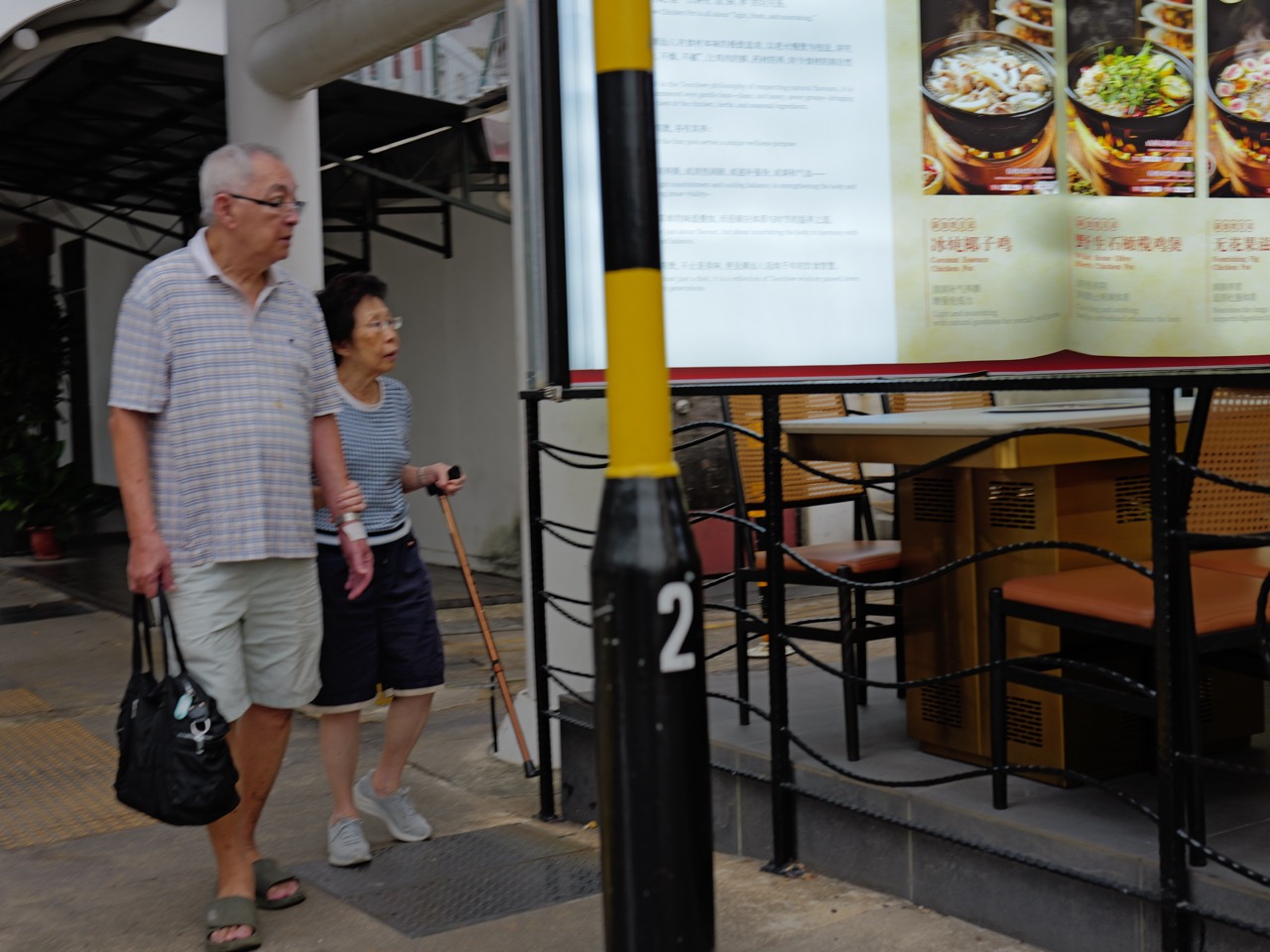
How Singapore connects is not only about moving people quickly across the island.
Sometimes the most important connection is making sure a person does not have to travel very far at all.
Did you know that ageing in place is really a neighbourhood-network problem?
A senior may need social activity today, a blood-pressure check next week, help with meals after an illness, rehabilitation after a hospital stay, home nursing later, and perhaps transport support for a specialist appointment. If every service sits in a different world, ageing becomes a navigation burden.
A connected community-care system tries to do the opposite. It brings active ageing, health support, home care, caregiver help and referrals closer to where seniors already live.
This article follows that connection layer: Active Ageing Centres, Community Health Posts, Senior Care Centres, home medical and nursing services, enhanced Home Personal Care, AIC Link, caregivers and Age Well Neighbourhoods.
The broader healthcare pathway is explored in How Singapore Connects | Hospitals, Clinics and Care Pathways. Here we ask the neighbourhood question: how does Singapore connect longer lives to ordinary homes, familiar streets and nearby support?
Did You Know? Singapore Is Entering a Super-Aged Era
MOH’s current Ageing in the Community page says Singapore is projected to attain “super-aged” status in 2026, and that by 2030 one in four citizens will be aged 65 and above.
That changes the geometry of care.
If more people are living longer, a system cannot assume that every need will be solved inside hospitals or nursing homes.
More support has to exist in neighbourhoods and homes.
Ageing in Place Means Keeping Daily Life Connected
Ageing in place does not mean never leaving home.
It means remaining in a familiar community for as long as practical while the support network adapts around changing needs.
The home stays central.
Care services, mobility, social contact and healthcare become the surrounding network.
Active Ageing Centres Are Neighbourhood Connection Nodes
AIC describes Active Ageing Centres as places for seniors aged 60 and above to remain active, meet others, participate in programmes and connect to support.
Typical functions can include:
- exercise, arts, cooking and other active-ageing programmes;
- befriending and buddying;
- information and referrals;
- community screenings;
- social-connector support;
- volunteer opportunities; and
- at selected centres, response to emergency alerts.
The centre is therefore not only an activity venue.
It can become a social and service-routing node.
Did You Know? Seniors Can Attend Outside Their Immediate Service Boundary
MOH clarified in August 2026 that Active Ageing Centres are expected to serve seniors even when they live outside the centre’s designated service boundary.
That matters because social ties do not always follow administrative lines.
A senior may prefer a centre near a friend, market, family member or familiar transport route.
Human geography can be wider than programme geography.
Active Ageing Is Preventive Infrastructure
Exercise, social contact and purposeful activity are not merely entertainment.
They help preserve function, confidence and community participation.
A system that supports people while they are well may reduce the chance that isolation or frailty becomes invisible until a crisis occurs.
Prevention is often quieter than treatment.
That is why it is easy to underestimate.
Social Connection Is Part of Health
A senior can be medically stable and socially isolated.
That is not the same as doing well.
Regular activities, friendships, volunteering and neighbourhood contact can help maintain a sense of routine and belonging.
This connects directly to How Singapore Connects | Community Clubs, Residents’ Networks and Neighbourhood Events.
Health has a social layer.
Age Well SG Connects Health, Community and the Built Environment
MOH describes Age Well SG as a plan to help seniors stay active, socially connected and cared for within their communities.
That is broader than healthcare.
It includes the way neighbourhoods are designed, how seniors reach services, and whether support is available close to home.
Ageing is therefore a town-planning issue as well as a medical issue.
Age Well Neighbourhoods Concentrate Support Where Seniors Live
In May 2026, MOH announced three additional Age Well Neighbourhoods in Bedok, Bukit Panjang and Tiong Bahru-Redhill, joining the inaugural Toa Payoh programme. MOH said more than 110,000 seniors will benefit across the four areas.
The model strengthens four connected elements:
- Active Ageing Centres;
- enhanced Home Personal Care;
- Community Health Posts; and
- senior-friendly neighbourhood infrastructure.
The neighbourhood becomes the organising unit.
Community Health Posts Bring Healthcare into Familiar Places
MOH’s 2026 updates describe enhanced Community Health Posts located within Active Ageing Centres, with services such as general health advice, basic assessments, preventive-health support, medication review, chronic-disease support and post-discharge follow-up.
That is a powerful connection.
A social place becomes a healthcare access point.
The boundary between ‘community’ and ‘clinic’ becomes softer.
Community Nurses Are Human Bridges
A community nurse can connect hospital treatment to everyday life.
The nurse sees what happens outside the consultation room.
Medication routines, wounds, mobility, caregiver stress and the home environment all become visible.
Clinical care becomes contextual care.
Home Medical Services Reverse the Usual Healthcare Journey
MOH’s Care Services page says home medical services involve doctors conducting house visits to review a client’s medical condition at home.
Usually the patient travels to the doctor.
Here the care team travels to the patient.
The direction of movement reverses, but the healthcare connection remains.
Home Nursing Extends Clinical Care Past the Hospital Door
Home nursing can include services such as wound dressing and other nursing care in the home.
This is especially important after discharge or when travel is difficult.
The hospital episode ends.
The care pathway continues.
Enhanced Home Personal Care Connects Support to Daily Living
MOH says enhanced Home Personal Care, or HPC+, began from 1 April 2026 with more tailored and frequent support, including help with activities of daily living and technology-enabled monitoring for some clients.
This is not simply medical treatment.
It is capability support.
Showering, feeding, housekeeping and safety can determine whether a senior is able to remain at home.
Meals on Wheels Connects Nutrition to Mobility Limitations
A person may be well enough to live at home but unable to shop or cook independently.
Meals on Wheels connects food preparation elsewhere to the home.
The service is simple to describe.
Operationally, it is a recurring last-mile logistics network for human wellbeing.
Medical Escort and Transport Connects Home to Appointments
Not every senior can travel independently.
Medical escort and transport services help people who need support reaching healthcare appointments.
That places ageing care inside How Singapore Connects | Point-to-Point Transport and the broader accessible-mobility graph.
A clinic is only useful if the patient can reach it.
Senior Care Centres Add Daytime Care and Rehabilitation
MOH says Senior Care Centres can provide day care for people who need supervision or assistance with activities of daily living, and can also provide community rehabilitation.
This creates a middle layer between total independence at home and residential care.
The senior returns home after the day.
Care and community remain connected.
Active Ageing Centres (Care) Combine Social and Care Functions
AIC distinguishes ordinary AACs from AACs(Care), which add services such as day care and community rehabilitation.
That creates a continuum.
The same neighbourhood network can remain relevant as needs increase.
AIC Link Is a Navigation Interface
AIC describes AIC Link as a place where seniors and caregivers can get advice on care services and schemes and find the right care in the right place.
This is another routing problem.
Families often know that help is needed before they know which service name applies.
A navigator reduces that search burden.
The Silver Generation Office Adds Outreach
MOH says the Silver Generation Office conducts outreach to Singaporeans aged 60 and above to identify needs and connect seniors to appropriate support.
This is important because the most isolated person may be least likely to walk into a centre and ask for help.
A connected system sometimes has to reach outward.
Caregivers Are Part of the Infrastructure
Families organise medication, meals, appointments, transport and emotional support.
A care system that ignores caregivers is incomplete.
Respite, training, grants and professional advice can help sustain the human network around a senior.
The Home Itself Can Become Care Infrastructure
Grab bars, ramps, better lighting, safer bathrooms and assistive devices can change how independently someone moves through the home.
A familiar flat can remain usable for longer when the environment adapts.
Housing design becomes healthcare prevention.
Lifts Matter More as Mobility Changes
The vertical-mobility layer in How Singapore Connects | Lifts, Escalators and Vertical Mobility becomes especially important for older residents.
A lift outage may be a mild inconvenience to one person and a complete access barrier to another.
Ageing reveals the real importance of universal design.
Covered Walkways Extend the Senior-Friendly Radius
Sheltered walking routes from How Singapore Connects | Covered Walkways, Underpasses and Pedestrian Links reduce the weather cost of reaching nearby services.
A five-minute walk can become much more usable when it includes shade, shelter, seats and safe crossings.
Fitness Corners Keep Movement Local
The recreation network in How Singapore Connects | Playgrounds, Fitness Corners and Shared Recreation becomes part of ageing infrastructure when exercise opportunities sit near home.
Low-friction movement is easier to repeat.
Repetition builds routine.
Digital Care Can Extend the Home Network
Remote monitoring, digital appointment systems and caregiver access can support care coordination.
But digital access is not automatic.
A senior may still need help learning the interface.
That links ageing care to How Singapore Connects | Digital Ambassadors and Community Hubs.
Age Well Kakis Turns Seniors into Contributors
AIC’s Age Well Kakis programme, running from August 2026 to July 2028, supports meaningful volunteer opportunities for seniors aged 50 and above in community-care and neighbourhood settings.
That shifts the model from ‘services for seniors’ toward ‘seniors as part of the service community’.
Ageing does not erase contribution.
Did You Know? The Strongest Ageing Network Is Not One-Way
A senior can receive care.
The same senior can mentor, volunteer, teach, accompany or encourage someone else.
Community capacity grows when people remain participants rather than becoming only recipients.
A Small Example: After Hospital Discharge
An older patient returns home after treatment.
A community health team follows up.
Home nursing supports wound care.
A caregiver manages medication.
Transport helps with the next appointment.
An AAC provides nearby social activity as strength returns.
The hospital episode has been connected back into ordinary life.
A Small Example: Senior Living Alone
Outreach identifies someone becoming isolated.
AAC staff or volunteers make contact.
The senior joins activities.
A health need is noticed.
Referral connects the senior to further support.
One social connection becomes a care pathway.
A Small Example: Caregiver at Work
A frail senior needs daytime supervision.
A Senior Care Centre provides day care and rehabilitation.
Transport support may assist the journey.
The caregiver remains employed.
Care infrastructure has supported both people.
What Can Break the Ageing-in-Place Connection?
- social isolation;
- services too far from home;
- caregivers becoming exhausted;
- poor coordination after hospital discharge;
- digital systems that are difficult to navigate;
- unsafe home environments;
- transport barriers;
- unclear referral pathways;
- services operating as isolated silos; and
- help arriving only after a preventable crisis.
Ageing in place works when support can arrive before the home stops being workable.
How to Read Community Care Like a Systems Thinker
1. Start with capability
What can the senior still do independently?
2. Identify the next missing support
Social contact, mobility, personal care, nursing, meals, rehabilitation or medical review?
3. Keep the home central
Can the service come to the person, or does the person need to travel?
4. Include the caregiver
What support does the family need to keep the arrangement sustainable?
5. Find the neighbourhood node
AAC, Community Health Post, SCC or AIC Link?
6. Build escalation paths
What happens if needs become more complex?
7. Preserve participation
How can the senior continue contributing, choosing and connecting?
The eduKate Singapore Graph: Ageing Makes Every System More Human
Transport looks different when walking speed changes.
Housing looks different when balance changes.
Digital services look different when interfaces become harder to read.
Healthcare looks different when several chronic conditions overlap.
Community looks different when social isolation becomes a health risk.
Ageing reveals whether Singapore’s connections work for the whole lifespan.
Frequently Asked Questions
What is an Active Ageing Centre?
AIC describes an AAC as a neighbourhood centre where seniors can stay active, meet others, volunteer and connect to useful support and referrals.
Who can use an AAC?
AIC says AACs are for Singapore Citizens and PRs aged 60 and above, regardless of housing type and income.
What is an AAC(Care)?
It provides the same active-ageing functions as an AAC and adds care services such as day care and community rehabilitation.
What is Age Well SG?
It is Singapore’s national effort to help seniors stay active, remain connected and receive more support in their communities.
What are Age Well Neighbourhoods?
They are selected neighbourhoods where Active Ageing Centres, enhanced Home Personal Care, Community Health Posts and senior-friendly infrastructure are strengthened together.
Which Age Well Neighbourhoods were announced by May 2026?
Toa Payoh, Bedok, Bukit Panjang and Tiong Bahru-Redhill.
What is Home Personal Care?
It supports activities of daily living and household-related needs in the home. MOH introduced an enhanced HPC model from 1 April 2026.
What is AIC Link?
It is an advice and navigation service that helps seniors and caregivers understand care options and schemes.
Does ageing in place mean no residential care is ever needed?
No. It means helping people remain at home and in the community where appropriate, while keeping other care options available when needs change.
Where can I check current services?
MOH | Ageing Well and AIC | Care Services.
Helpful Reading and Singapore Graph Connections
- MOH | Ageing in the Community
- MOH | Care Services
- AIC | Active Ageing Centres
- AIC | Age Well Neighbourhood
- How Singapore Connects | Hospitals, Clinics and Care Pathways
- How Singapore Connects | Community Clubs, Residents’ Networks and Neighbourhood Events
How Singapore Connects: The Best Care Network Can Feel Like Home
Did you know that a successful ageing system may look surprisingly ordinary?
A nearby centre.
A familiar nurse.
A meal arriving on time.
A safe bathroom.
A lift that works.
A friend calling.
A caregiver getting help.
A doctor visiting when travel becomes difficult.
None of these is the whole system.
Together they let a person remain part of the neighbourhood.
That is what ageing in place really connects: care to continuity.