
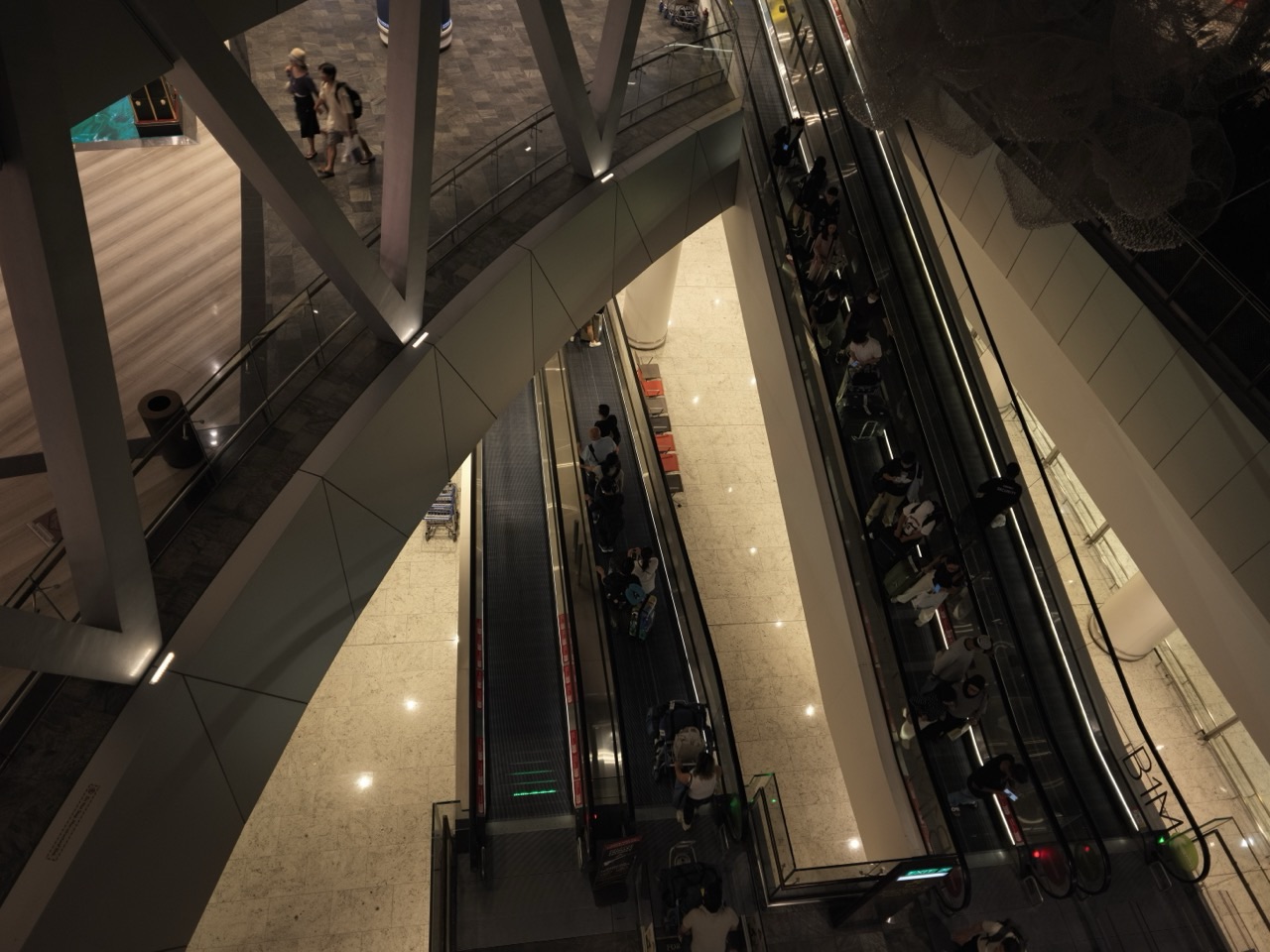
The Front Door That Makes a Small Island Feel Connected to the World
Singapore is an island.
That is the beginning of the problem.
A small island has no large domestic hinterland. It does not have a continent behind it. It does not have vast farmland, a huge internal market, or neighbouring cities connected by ordinary land highways. Singapore cannot behave like a large country where distance is absorbed by geography. It has to connect itself to the world deliberately.
So Singapore built a front door.
That front door is Changi Airport.
Changi is not just a place where planes land. It is one of Singapore’s most important civilisation systems. It connects the island to business, tourism, trade, students, families, workers, investors, conferences, cargo, medical travel, diplomacy, holidays, talent, and time-sensitive global flows.
For many people, Changi is the first impression of Singapore.
Before they see Marina Bay, HDB towns, schools, offices, hawker centres, roads, MRT stations, parks or the CBD, they see the airport. They see the signs, the immigration lanes, the baggage belts, the toilets, the lighting, the calmness, the efficiency, the shops, the gardens, the taxis, the MRT connection, the staff, the order.
That first impression matters.
A country that is small must look reliable quickly.
Changi helps Singapore do that.
Changi Is Not an Airport Only
Most countries have airports.
Singapore needs an air hub.
That difference is important.
An airport is a place where flights arrive and depart. An air hub is a network machine. It pulls airlines, passengers, cargo, ground handlers, engineers, immigration officers, security teams, cleaners, retail operators, hotel operators, taxis, buses, MRT links, aviation regulators, logistics companies and government agencies into one working system.
Changi Airport Group describes its role across air hub development, airport operations and management, retail management, and systems and technology. In other words, Changi is not only a runway and terminal operator. It is also a connectivity, experience, commercial and infrastructure platform.
That is how Singapore works.
A system is rarely just one thing.
The MRT is not just trains.
The bus is not just buses.
Roads are not just roads.
Changi is not just flights.
It is an airport, a mall, a logistics node, a tourism engine, a workforce system, a security zone, a border checkpoint, a national brand, and a confidence signal.
That is why Changi matters far beyond travel.
The Airport Makes Singapore Bigger
Singapore is physically small.
But Changi makes Singapore feel larger because it gives the island reach.
A person can wake up in Singapore and land in another region within hours. A business team can fly in for meetings. A student can leave for university. A family can visit relatives overseas. A tourist can spend a few days here. A cargo shipment can arrive overnight. A specialist can travel in. A conference can choose Singapore because people can reach it easily.
This is the airport converting smallness into access.
Without Changi, Singapore would feel more isolated. With Changi, Singapore becomes a node in the global network. The island may be small on the map, but it becomes large in connections.
That is the deeper logic.
Singapore does not have size, so it builds reach.
Changi is one of the main machines that provides that reach.
The Numbers Show the Scale
Changi is not a symbolic airport. It is a high-volume operating system.
Changi Airport’s traffic statistics show about 69.98 million passenger movements in 2025, around 2.08 million tonnes of airfreight movements, and about 374,000 commercial aircraft movements for the year.
Those numbers are not just aviation statistics.
They are movement statistics for the Singapore civilisation machine.
Every passenger movement may represent a tourist, a student, a business traveller, an overseas Singaporean, a family member, a worker, a conference attendee, a medical visitor, or someone transiting through the island. Every cargo movement may represent medicine, electronics, perishables, documents, e-commerce, aircraft parts, high-value goods, or urgent business supply.
This is what Changi moves:
People.
Goods.
Time.
Trust.
Opportunity.
That is why the airport has to work well.
If Changi fails, Singapore does not only lose airport comfort. It loses connectivity.
Changi Is Singapore’s First Handshake
A country’s airport tells visitors what kind of place they have entered.
Changi tells them Singapore is orderly, clean, prepared, systematic and serious about experience.
This is not cosmetic.
A business traveller notices how long immigration takes. A tourist notices whether the signage is clear. A family notices whether the toilets are clean. A conference organiser notices whether people can arrive smoothly. A parent notices whether the airport feels safe. An investor notices whether the first point of contact feels competent.
Changi therefore performs national trust.
It says, before Singapore explains itself:
This country can organise complex things.
That matters because Singapore’s global role depends heavily on trust. Businesses choose Singapore partly because systems work. Travellers choose Singapore partly because it feels safe and predictable. Airlines choose Changi because it connects flows. Conferences choose Singapore because people can arrive, move and function.
Changi is a physical argument.
It argues that Singapore is reliable.
The Airport Is Also a Shopping System
Singapore understands that an airport is not only a transport point.
It is also a waiting room.
And waiting rooms can become economic spaces.
Changi turns waiting into retail, dining, entertainment, gardens, lounges, hotels, events and experience. It does not treat passengers as people to be processed only. It treats them as people who can spend time, money and attention.
This is why Changi feels different from a purely functional airport.
The airport is also a commercial ecosystem. It supports shops, restaurants, services, brands, airport workers, concession partners and tourists who may spend before they even properly enter the city.
Jewel Changi Airport pushed this idea even further. Jewel describes itself as a green sanctuary connected to the airport, with more than 2,000 trees and palms, over 100,000 shrubs, more than 21,000 square metres of greenery, and about 120 plant species.
That is not normal airport thinking.
That is Singapore stacking systems again.
Transport becomes retail.
Retail becomes tourism.
Tourism becomes branding.
Branding becomes national image.
National image becomes economic value.
Jewel is not just decoration.
It turns the airport into a destination.
Changi Is a Tourism Engine
Many tourists begin and end their Singapore experience at Changi.
That gives the airport unusual power.
If the arrival is smooth, the trip begins well. If the departure is pleasant, the memory ends well. If the airport itself is interesting, Singapore gains extra value without asking visitors to travel far.
Changi therefore extends Singapore’s tourism surface.
A visitor may arrive early just to explore Jewel. A transit passenger may choose Changi because the layover is more comfortable. A family may remember the airport as part of the holiday. A shopper may buy before leaving. A business traveller may associate Singapore with ease.
This is important because Singapore competes as a destination.
It does not have mountains.
It does not have vast natural wilderness.
It does not have ancient ruins on the scale of some larger countries.
It does not have endless domestic tourist regions.
So Singapore has to make the systems themselves part of the experience.
The airport becomes one of those experiences.
That is very Singapore.
When land is limited, function must become attraction.
Changi Is Also a Cargo Machine
Passengers are the visible part.
Cargo is the quieter part.
Airfreight matters because some goods cannot wait for slow movement. High-value electronics, pharmaceuticals, perishables, urgent parts, documents, luxury goods and e-commerce shipments may need speed, reliability and secure handling.
Changi’s airfreight volume shows that it is not only a passenger airport. Its 2025 traffic statistics list around 2.08 million tonnes of airfreight movements, making cargo a major part of the airport’s role.
This matters for a country like Singapore.
Singapore’s economy depends on flows. Not only people flows, but goods flows. The port handles the heavy sea-based movement. The airport handles speed-sensitive movement. Together, they allow Singapore to act as a logistics and supply node far larger than its land size suggests.
The airport and port are siblings.
The port moves mass.
The airport moves speed.
Both help Singapore overcome the limits of being small.
Changi Supports the Wider Economy
An airport is also a jobs system.
Behind every flight are pilots, cabin crew, engineers, baggage handlers, security officers, immigration officers, customs officers, cleaners, retail staff, food workers, ground handlers, aircraft refuellers, air traffic controllers, maintenance teams, technology teams, taxi drivers, bus drivers, hotel staff, airport planners and many more.
A passenger sees a boarding gate.
Singapore sees an ecosystem.
That ecosystem supports employment, training, service standards, shift work, aviation technology, tourism, retail, logistics and international business. It also supports Singapore Airlines, low-cost carriers, cargo operators, maintenance companies and many airport-linked businesses.
This is why aviation is not a separate sector sitting at the edge of the island.
It is plugged into the national economy.
When flights grow, tourism can grow.
When tourism grows, hotels and restaurants benefit.
When cargo grows, logistics benefits.
When connectivity grows, business confidence improves.
When Changi performs well, Singapore’s attractiveness improves.
That is how one airport becomes national infrastructure.
Changi Connects to the Rest of the Island
The airport cannot work alone.
It must connect to the MRT, buses, taxis, private-hire vehicles, roads, hotels, business districts, tourist attractions and residential areas.
This is why Changi is not merely an aviation system. It is part of the land transport system too.
A traveller who lands at Changi must be able to move into Singapore easily. A worker must be able to reach the airport for a shift. A passenger must be able to get home after a late flight. A tourist must be able to find the train, taxi or bus. A family must be able to pick someone up. A cargo vehicle must be able to move goods onward.
The airport is therefore a junction between air and land.
That junction has to feel effortless.
When it works, people barely notice it. They simply arrive, collect their bags, follow the signs, tap into the MRT, take a taxi, board a bus, or walk into Jewel.
But effortless is not simple.
It is designed.
Changi Is a Border System
An airport is also a national border.
This is one of the more serious layers.
Every airport must manage who enters, who leaves, what goods move, what risks are controlled, what documents are checked, and what threats are prevented. This includes immigration, customs, health screening when needed, aviation security, baggage screening, restricted zones, airside access and emergency planning.
Changi must therefore balance two opposite needs.
It must be welcoming.
It must be secure.
Too much friction, and the airport becomes stressful. Too little control, and the country becomes exposed.
Singapore’s style is to make security feel quiet where possible. The system works best when passengers experience calm order, while the deeper layers continue operating behind the scenes.
That is another Singapore pattern.
The visible surface is smooth because the invisible machinery is disciplined.
Changi Is a Time Machine
Airports manage time.
Departure time. Arrival time. Boarding time. Connection time. Baggage time. Immigration time. Taxi time. Cleaning time. Refuelling time. Turnaround time. Cargo handling time. Gate allocation time.
If one part fails, many other parts are affected.
A delayed aircraft can affect a gate.
A delayed gate can affect another flight.
A delayed baggage belt can affect passenger experience.
A delayed cargo process can affect business.
A delayed connection can affect trust.
So Changi is not just managing space. It is managing sequences.
This is why airport operations are so complex. A terminal is a choreography of moving parts. Planes arrive, passengers disembark, bags unload, cleaners enter, fuel is loaded, catering is prepared, crews change, passengers board, gates turn over, aircraft depart, and the cycle repeats.
Changi’s excellence comes from making this choreography feel ordinary.
But ordinary is the achievement.
Changi Shows Singapore’s Love of Redundancy
A serious system plans for growth and shock.
Changi has already expanded across multiple terminals, and the completed Terminal 2 expansion increased Changi’s annual capacity to 90 million passengers across all four terminals.
That capacity is not just about today’s passenger flow. It is about future readiness.
A hub cannot wait until it is completely full before planning the next layer. By the time the problem is obvious, it may be too late. Airport projects take years. Terminals require planning, land, runways, roads, trains, manpower, systems, testing and operational integration.
This is why Singapore plans ahead.
It builds before the pain becomes unmanageable.
Terminal 5 Is the Next Big Layer
Terminal 5 shows how Singapore thinks long-term.
Changi Airport Group says T5 is part of the 1,080-hectare Changi East development, designed to be built in phases. Its first phase will handle about 50 million passenger movements per year and is expected to be operational around the mid-2030s.
That is not a small extension.
It is a future national bet.
T5 is meant to keep Singapore connected as aviation demand grows. It also has to link to the existing terminals so the airport can operate as one integrated air hub. Changi Airport Group states that T5 will include a ground transportation centre bringing together train, bus, taxi and other transport services, with possibilities for stronger air-sea connectivity to neighbouring destinations.
This is important.
The future airport is not just more gates.
It is integration.
Air to train.
Air to bus.
Air to taxi.
Air to sea.
Air to city.
Air to region.
That is how Singapore defends its hub position.
Changi Is the Airport Version of the Ouroboros
Singapore’s weakness is geography.
The country is small, islanded and resource-limited.
But that weakness forces connectivity.
Because Singapore is small, it cannot depend on a large domestic market.
Because it lacks a large domestic market, it must connect outward.
Because it must connect outward, it builds a powerful air hub.
Because it builds a powerful air hub, it attracts passengers, cargo, airlines, businesses and tourists.
Because those flows come through Singapore, the small island becomes globally relevant.
Because it becomes globally relevant, it strengthens the economy.
Because the economy strengthens, Singapore can invest in better systems.
The weakness feeds the strength.
Changi is the Ouroboros with wings.
The island cannot be large, so it becomes connected.
Changi Is Also a National Mood
Singaporeans feel something about Changi.
It is departure, holiday, reunion, goodbye, homecoming, study overseas, work travel, migration, relatives arriving, grandparents leaving, children waving, students flying out, families coming back.
The airport carries national emotion.
That is why Changi is more than infrastructure. Singaporeans do not only use it. They feel it.
The arrival hall has a certain meaning. The departure hall has a certain meaning. The first step back into Changi after a long trip has a certain meaning. It feels like the country has resumed around you.
The signs are familiar.
The floors are familiar.
The taxi queue is familiar.
The food is familiar.
The efficiency is familiar.
For a small country, familiarity matters.
Changi is one of the places where Singaporeans feel the island as home.
The Airport Makes Singapore Legible
A good airport helps visitors understand a country quickly.
Changi makes Singapore legible.
It tells visitors that the country is modern, controlled, clean, safe, efficient, commercial, green, service-oriented and globally connected. It compresses Singapore’s national message into one arrival experience.
That is why Changi’s design matters.
The signage matters.
The smell matters.
The lighting matters.
The gardens matter.
The toilets matter.
The queues matter.
The staff tone matters.
The baggage timing matters.
The transport connection matters.
These details are not “small” when millions pass through them.
A small detail multiplied by millions becomes national reputation.
Changi Shows the Singapore Method
Changi teaches us how Singapore works in another way.
First, there is a constraint: Singapore is small, islanded and dependent on external flows.
Second, there is a system: build a major air hub with terminals, runways, immigration, cargo, retail, transport links, security, technology, manpower and future expansion.
Third, the system shapes behaviour: airlines use Singapore, tourists arrive, businesses meet here, cargo moves through here, Singaporeans travel easily, and the country becomes a regional and global node.
Fourth, the national result appears: a small island gains reach beyond its physical size.
This is the Singapore method.
It does not simply complain about geography.
It builds systems to outgrow geography.
The Trade-Offs Are Real
Changi is powerful, but it is not free of trade-offs.
Airports take land. Aviation creates emissions. Large passenger flows require manpower. Security creates complexity. Expansion is expensive. Noise, sustainability, labour constraints, travel disruptions and global shocks all matter.
The COVID period showed how vulnerable aviation can be when borders close and passenger flows collapse. A hub is powerful when flows are strong, but exposed when flows stop.
That is why Changi has to be resilient, not merely beautiful.
The airport must handle growth, shocks, disease risks, manpower limits, sustainability pressures, technology shifts and passenger expectations. It must stay attractive while becoming more efficient. It must serve today while preparing for tomorrow.
That is hard.
But hard systems are exactly where Singapore often shows its character.
Closing Thought
To understand Singapore, stand at Changi Airport’s arrival hall.
Watch the families waiting. Watch business travellers walk out. Watch tourists look around. Watch workers pushing trolleys. Watch cabin crew pass through. Watch taxis, buses, trains, lifts, signs, shops, immigration, baggage belts and gardens combine into one smooth national welcome.
That is Singapore.
A small island with a large front door.
A country that cannot rely on size, so it builds connection.
A place where the airport is not just an airport, but a declaration:
We are here.
We are organised.
We are connected.
We are ready for the world.