
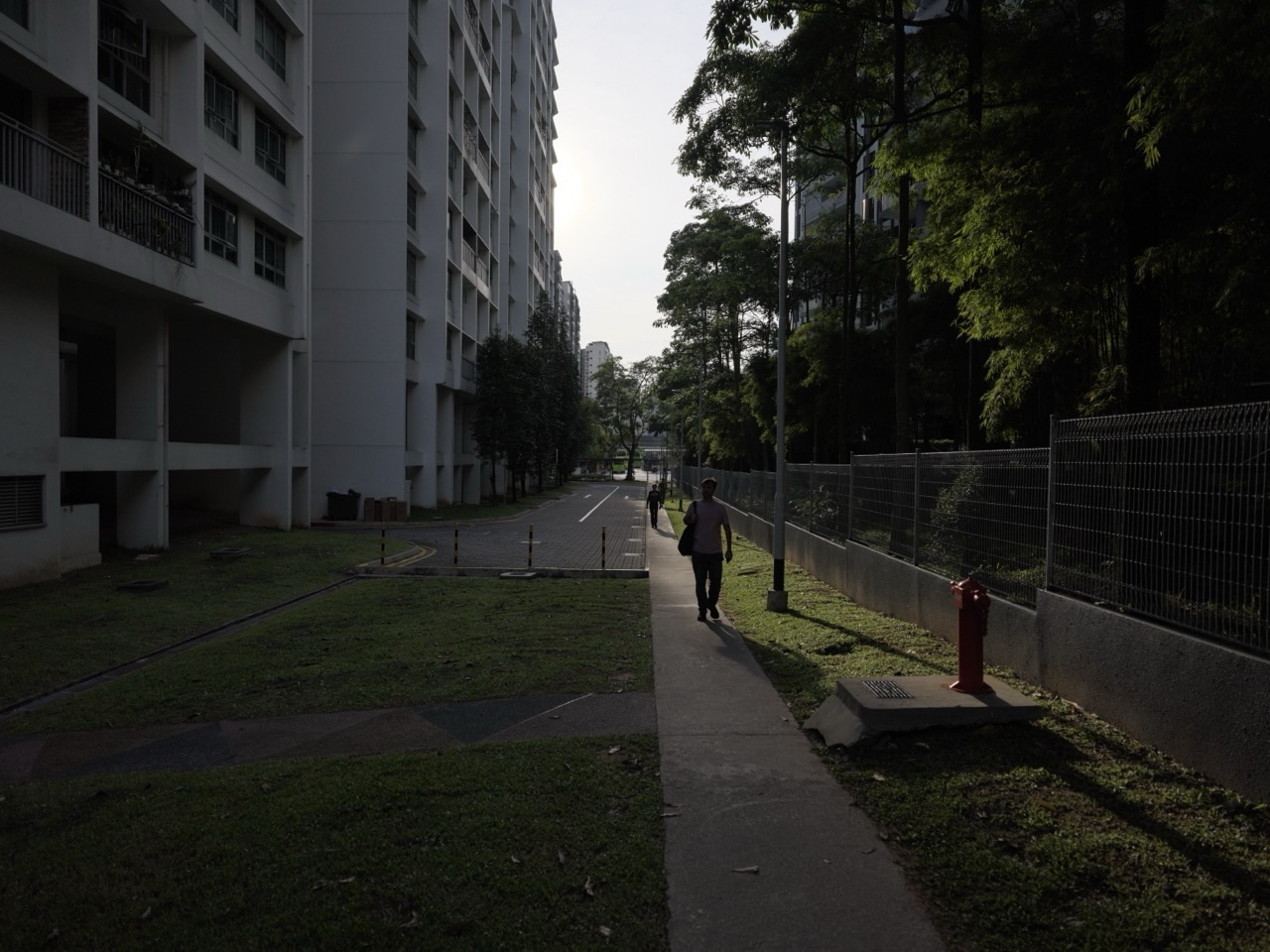
How Singapore connects is not only about putting solar panels on rooftops.
The deeper system is what happens to the electricity after sunlight reaches an HDB block.
Did you know that solar energy generated on HDB rooftops is first used to power common services such as lifts, lights and water pumps, with excess electricity channelled to the wider grid?
The resident sees a familiar block.
The roof becomes a power plant.
The lift becomes a daytime solar load.
Smart electrical sub-meters measure common-service consumption.
Town Councils can compare energy patterns.
The national grid absorbs excess output.
This article follows Singapore’s HDB estate-energy connection layer: SolarNova, rooftop photovoltaic panels, common services, smart LED lighting, Elevator Energy Regeneration Systems, smart electric sub-meters, Town Council operations and the Green Towns Programme.
The wider national electricity network is explored in How Singapore Connects | Electricity Grid, Substations and Power Distribution. Solar generation and storage are explored in How Singapore Connects | Solar Panels, Batteries and the Electricity Grid. Here we ask the estate question: how does one HDB rooftop become part of a national energy system?
Did You Know? HDB’s 2030 Solar Target Is 540 MWp
HDB’s current Green Innovations page says its goal is to reach 540 MWp of solar capacity by 2030.
HDB describes that as roughly equivalent to the annual energy needed to power about 135,000 four-room flats.
The important systems point is not the comparison.
It is the scale of the rooftop network.
The Rooftop Is Distributed Generation
A conventional power station concentrates generation at one site.
HDB solar spreads generation across thousands of roofs.
The electricity is produced close to where some of it is used.
The estate becomes a distributed energy network.
Common Services Use the Solar First
HDB says solar energy generated in estates is first used during the day to power common services such as:
- lifts;
- corridor and common-area lighting;
- water pumps; and
- other shared electrical loads.
The resident’s individual flat electricity account is not simply being directly fed by a rooftop panel assigned to that unit.
The rooftop system primarily supports shared estate demand before excess energy moves outward.
Did You Know? Excess Solar Is Exported to the Grid
When generation exceeds common-area demand, HDB says excess solar electricity is channelled to the electrical grid.
The HDB block is therefore both a consumer and, at times, a generator feeding the wider system.
The Grid Balances What the Roof Cannot
Solar output changes with cloud cover and time of day.
Lifts and pumps still need power at night.
The national grid fills the gap.
The rooftop does not replace the grid.
It connects to it.
SolarNova Scales Procurement Across Agencies
The SolarNova programme aggregates public-sector rooftop demand so solar deployment can be procured at large scale.
Instead of every block or agency running a tiny separate tender, capacity is bundled.
Aggregation reduces transaction friction and creates scale.
Did You Know? HDB Awarded a 130 MWp SolarNova Tender in 2024
HDB’s eighth SolarNova tender awarded in 2024 covered about 130 MWp of capacity, the programme’s largest tender at that point.
HDB said this brought committed solar capacity to almost 85% of its 540 MWp target.
Thousands of Blocks Become One Portfolio
One rooftop may host only a modest solar array.
Thousands of rooftops together become a meaningful generation fleet.
Portfolio scale changes economics, maintenance and monitoring.
Roof Suitability Still Matters
Not every HDB block has the same roof.
Site conditions can include:
- roof geometry;
- existing equipment;
- shading;
- structural constraints;
- maintenance access;
- future upgrading plans; and
- electrical connection feasibility.
HDB’s objective is broad deployment where feasible, not identical panels on every roof.
The Solar Panel Sits Above Other Building Services
Rooftops can contain water tanks, antennas, services and maintenance routes.
Solar design has to preserve access and safety.
The roof is shared infrastructure too.
Common-Area Energy Is a Good Solar Match
Lifts move throughout the day.
Water pumps run according to demand.
Lighting uses different schedules.
Solar generation can offset part of that daytime load before any surplus is exported.
Did You Know? HDB Says Solar Blocks Can Achieve Net-Zero Common-Area Energy on Average
HDB has said that, on average, blocks with solar panels have been able to achieve net-zero energy consumption for common areas over the accounting period used in its programme reporting.
That does not mean the block is electrically islanded.
It means solar generation can offset the annual common-area consumption on average.
Net-Zero on Average Is Not Zero Power Draw Every Minute
At noon, solar generation may exceed common-area demand.
At midnight, solar generation is zero.
The grid absorbs and supplies across time.
Energy balance is an accounting relationship, not a constant real-time state.
Smart LED Lighting Reduces the Load Before Solar Has to Serve It
HDB’s Green Innovations page says smart LED lighting can use up to 60% less energy than conventional LED lighting.
Sensors and smart analytics allow lighting to brighten when someone approaches and dim after the person passes.
The cleanest kilowatt-hour is often the one the system no longer needs.
Smart Lighting Is a Feedback System
Sensor detects movement.
Light level increases.
Person passes.
Light dims.
The corridor remains usable without operating at maximum brightness continuously.
Smart Lighting Can Report Faults
HDB says the smart-lighting system can automatically alert estate maintenance teams when a lighting fault occurs.
The lighting network becomes observable.
A failed lamp no longer depends entirely on a resident noticing it first.
The Estate Energy System Connects to Conservancy
That connects directly to How Singapore Connects | HDB Estate Cleaning, Conservancy and Common Property.
Energy efficiency and estate maintenance increasingly share the same data layer.
Elevator Energy Regeneration Recovers Motion
A lift moving downward with a heavy load or upward with a lighter load can create recoverable electrical energy.
An Elevator Energy Regeneration System, or EERS, captures part of that energy rather than dissipating all of it as heat.
Did You Know? HDB Has Been Retrofitting Thousands of Lifts with EERS
HDB’s SolarNova 8 announcement included tenders to retrofit 4,000 lifts islandwide with Elevator Energy Regeneration Systems.
The lift becomes both a consumer and, briefly, a regenerative electrical machine.
Regeneration Reduces the Lift’s Net Energy Use
The recovered energy can support lift-associated services or reduce overall electricity drawn from the grid.
The effect is modest per trip.
Repeated across thousands of lifts and millions of journeys, small savings accumulate.
The Lift Connects Solar, Regeneration and Mobility
The vertical-mobility layer in How Singapore Connects | Lifts, Escalators and Vertical Mobility now has an energy-recovery dimension.
The same lift that moves residents can also participate in estate energy efficiency.
Smart Electric Sub-Meters Add Measurement
HDB says smart electrical sub-meters have been introduced to monitor and analyse common-area energy consumption and equipment performance at block level.
The estate can see how much energy lifts, lighting and water pumps are using rather than relying only on coarse aggregate figures.
Did You Know? Smart Sub-Meters Began Expanding from 2Q2025
HDB’s Green Towns Programme update said smart electric sub-meters would be installed from the second quarter of 2025 in consumer switch rooms of HDB blocks.
The data supports both energy management and maintenance planning.
Measurement Turns the Block into an Energy Dashboard
Block A uses more lift electricity than Block B.
Why?
Different lift age?
More traffic?
Equipment fault?
Measurement creates the question.
Anomaly Detection Can Become Maintenance
A pump that normally uses one level of electricity suddenly draws much more.
The increase may indicate a fault or deterioration.
Energy monitoring becomes condition monitoring.
Town Councils Gain Comparative Data
HDB says Town Councils can compare energy usage across blocks and monitor the demand and supply of common-area energy.
One block becomes a benchmark for another.
The Green Towns Programme Connects Several Estate Systems
HDB introduced the Green Towns Programme in 2020 with the objective of making existing HDB towns more sustainable and liveable.
The current programme groups initiatives around:
- reducing energy consumption;
- optimising resources;
- promoting green commute; and
- cooling HDB towns.
Energy is one layer inside a wider urban sustainability system.
Did You Know? The Programme Targets a 15% Reduction in Energy Consumption
HDB says the Green Towns Programme aims to reduce energy consumption in HDB towns by 15% over ten years.
The reduction depends on several interventions working together, not solar panels alone.
Solar Produces; Smart Lighting Reduces; EERS Recovers
Solar adds clean generation.
Smart lighting lowers demand.
EERS recovers some energy.
Sub-meters make performance visible.
The estate-energy strategy uses several mechanisms at once.
The Estate Connects to EV Charging
HDB car parks are also becoming charging sites for electric vehicles.
That connects the estate to How Singapore Connects | EV Charging, Car Parks and Road Energy.
A neighbourhood electrical system increasingly serves homes, lifts, lights, pumps, solar and transport.
The Estate Connects to the National Solar Target
HDB is one of Singapore’s largest rooftop owners.
That gives public housing a strategic role in national solar deployment.
The estate roof becomes national energy infrastructure.
The Estate Connects to Regional Power Imports
Solar is only one clean-energy source. Singapore is also developing How Singapore Connects | Electricity Imports, Interconnectors and the Regional Power Grid.
Local rooftop solar and imported low-carbon electricity can complement each other.
The Estate Connects to Digital Twins
Block-level energy data can eventually support broader digital estate models and planning.
That connects common services to How Singapore Connects | Digital Twins, Virtual Singapore and Urban Planning.
The Estate Energy System Needs Cybersecurity
Smart meters, connected lighting and monitoring systems create digital interfaces.
Those systems need access control and secure communications.
That links energy management to How Singapore Connects | Cybersecurity, Scam Alerts and Digital Trust.
A Small Example: Sunny Afternoon
Rooftop solar produces electricity.
Block common services consume part of it.
Lift operates.
Water pumps run.
Smart lights remain dim where corridors are empty.
Excess solar flows to the grid.
The block has temporarily become a small generator.
A Small Example: Night
Solar generation falls to zero.
Common services continue operating.
Grid supplies lifts, pumps and lighting.
The energy balance continues across the full day.
A Small Example: Pump Fault
Smart sub-meter shows unusual power consumption.
Town Council or maintenance team sees anomaly.
Inspection is scheduled.
Fault is found and repaired.
Energy data has become maintenance intelligence.
A Small Example: Smart Corridor
No resident is present.
Lighting remains at lower level.
Sensor detects a person approaching.
Lights brighten progressively.
Resident passes.
Lighting dims.
Comfort and efficiency coexist.
What Can Break the HDB Energy Connection?
- solar inverter fault;
- roof access problem;
- shading reducing output;
- smart-light sensor failure;
- sub-meter communications outage;
- lift-regeneration fault;
- poor maintenance response;
- electrical protection issue;
- data collected but never acted on; and
- energy systems designed separately rather than as one estate portfolio.
The estate becomes smarter only when generation, measurement and maintenance stay connected.
How to Read HDB Estate Energy Like a Systems Thinker
1. Find the generation
Which roofs have solar and how much can they produce?
2. Find the common load
Lifts, lights, pumps and other services?
3. Find the efficiency measure
Smart LED, EERS or equipment upgrade?
4. Find the meter
What can be measured at block level?
5. Find the operator
Which Town Council or maintenance team acts on the data?
6. Find the grid interface
What happens to surplus and night-time demand?
7. Find the maintenance loop
Can energy anomalies reveal equipment faults?
The eduKate Singapore Graph: The HDB Roof Is Part of the Power System
A housing block is not only a place that consumes electricity.
Its roof can generate.
Its lift can regenerate.
Its lights can sense.
Its meter can report.
Its common services can be managed as one energy system.
Frequently Asked Questions
What is HDB’s solar target?
HDB currently says 540 MWp by 2030.
What does rooftop solar power first?
HDB common services such as lifts, lights and water pumps during the day.
What happens to excess solar power?
HDB says it is channelled to the electrical grid.
What is SolarNova?
A programme that aggregates public-sector solar demand for large-scale rooftop solar deployment.
What is smart LED lighting?
Lighting that uses sensors and smart analytics to brighten when people approach and dim when areas are unused.
How much energy can smart LED lighting save?
HDB says up to 60% compared with conventional LED lighting.
What is EERS?
Elevator Energy Regeneration System, which recovers some energy during suitable lift movements for reuse.
What do smart electric sub-meters do?
They monitor common-area energy use and equipment performance at block level, helping HDB and Town Councils compare usage and identify anomalies.
What is the Green Towns Programme target?
HDB says it aims to reduce energy consumption in HDB towns by 15% over ten years.
Where can I check official information?
Helpful Reading and Singapore Graph Connections
- HDB | Green Towns Programme
- HDB | Green Innovations
- HDB | SolarNova 8 Tender
- How Singapore Connects | Electricity Grid, Substations and Power Distribution
- How Singapore Connects | HDB Estate Cleaning, Conservancy and Common Property
How Singapore Connects: The Block Can Produce, Save and Report Energy
Did you know that the same HDB block can be a home, a solar generator, an energy-recovery machine and a data source?
Sun hits roof.
Panels generate.
Lifts and pumps consume.
Smart lights reduce demand.
Meters report.
Town Councils respond.
The estate becomes part of Singapore’s energy transition one common service at a time.