
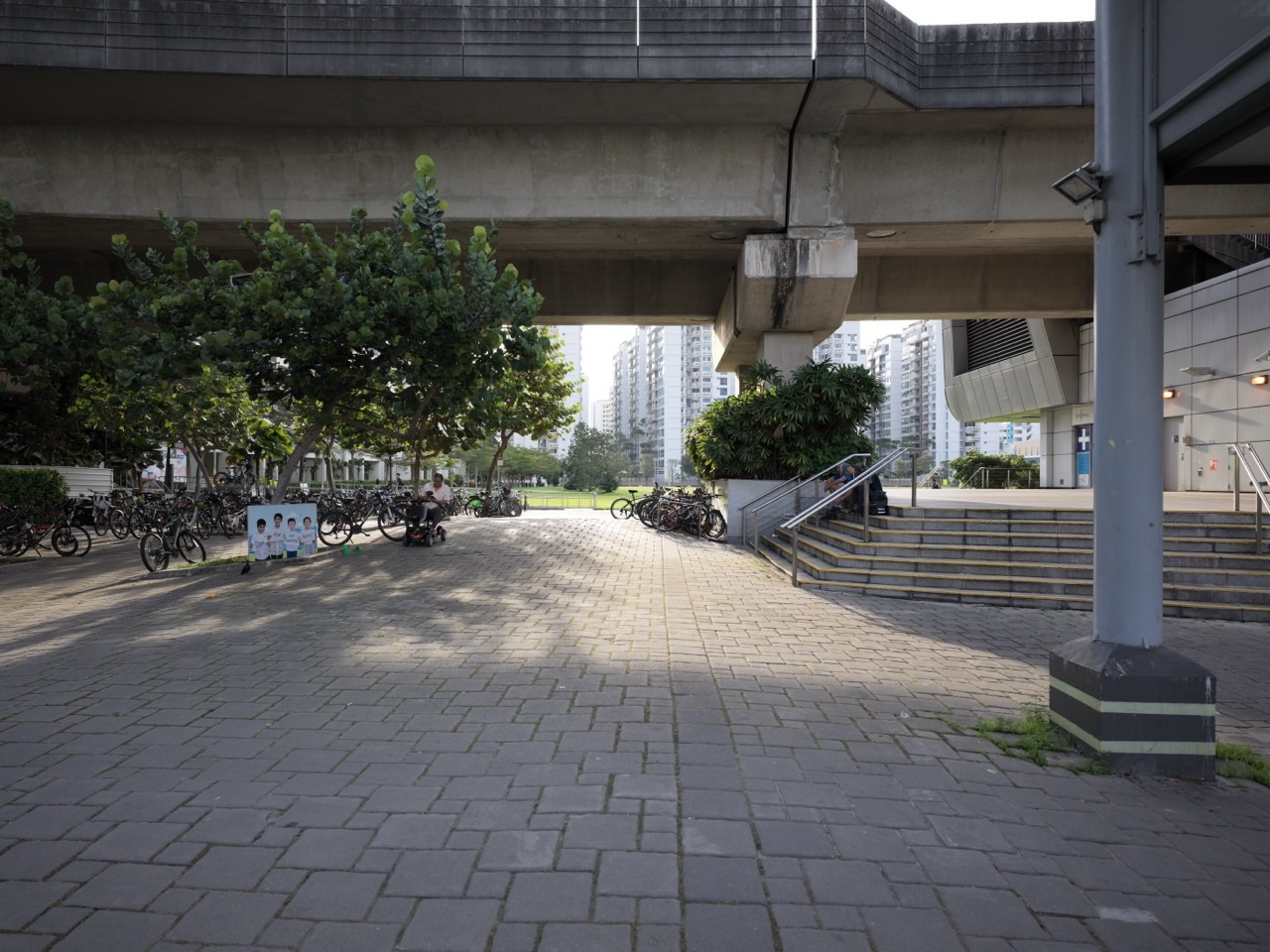
How Singapore connects is not only about trains and buses moving when passengers can see them.
A large part of public transport works when passengers are asleep.
Did you know that when the MRT closes for the night, the railway does not simply switch off? Trains return to depots. Tracks are inspected. Power and signalling equipment are checked. Maintenance teams enter engineering windows that are too short to waste.
Bus operations have a similar hidden rhythm. Vehicles return to depots for parking, cleaning, fuelling or charging where applicable, inspections, repairs and preparation for the next service day.
This article follows that hidden transport layer: MRT depots, bus depots, engineering hours, train testing, maintenance, stabling, dispatch and the overnight work that lets morning commuters experience public transport as if the system had simply been waiting.
The visible journey is explored in How Singapore Connects | Bus Interchanges, MRT Stations and Transfer Hubs. Here we ask what happens behind the scenes: where do vehicles go when service ends, and what must happen before the first train or bus leaves again?
Did You Know? Rail Maintenance Has Only a Narrow Night Window
LTA has explained that trains generally run from about 5.30am to around midnight, leaving a limited overnight engineering window for maintenance and testing on the operational network.
That means teams have to organise work carefully.
Track access cannot begin too early while passenger service is still running.
It cannot end too late because the railway has to be ready for morning service.
Time is one of the scarcest resources in rail maintenance.
Engineering Hours Turn the Passenger Railway into a Worksite
During passenger hours, the track belongs to trains.
During engineering hours, the same infrastructure becomes a maintenance environment.
Workers may inspect track, signalling equipment, power systems, communications equipment and station assets.
Possession of the railway has to be controlled carefully so maintenance teams and vehicles can work safely.
The network changes mode.
The Depot Is Where Trains Sleep
A rail depot provides space to stable trains when they are not in passenger service.
But stabling is only one job.
- inspection;
- cleaning;
- routine maintenance;
- fault diagnosis;
- component replacement;
- train washing;
- wheel and bogie work;
- systems testing; and
- preparation for morning launch.
The depot is the railway’s workshop, parking system and launch base at once.
Morning Service Begins with Train Launch
Before passengers see a train at the platform, the train has to leave the depot and enter the operational line.
This is called launch.
Launch timing matters because trains must be inserted into service in a planned sequence.
A depot that connects efficiently to the main line can improve flexibility in how service is built up at the start of the day.
Withdrawal Is the Reverse Journey
At the end of service—or when a train needs attention—a train can be withdrawn from the line and returned to a depot.
That sounds simple until we remember that other trains are still moving.
Routing a train out of service is another scheduling problem inside the larger operating plan.
East Coast Integrated Depot Changes the Scale
LTA describes the East Coast Integrated Depot as the world’s first four-in-one depot, combining three rail depots and one bus depot in one site.
The train complex serves the East-West Line, Thomson-East Coast Line and Downtown Line.
The adjacent bus depot supports bus operations.
LTA says the integrated arrangement saves about 44 hectares of land compared with building the facilities separately.
Land scarcity has turned depot planning into vertical infrastructure design.
Did You Know? ECID Can Stable About 220 Trains
LTA’s ECID factsheet states that the three train depots together can stable around 220 trains, while the bus depot has parking capacity for about 760 buses.
That is a city-scale storage problem.
Hundreds of large vehicles need organised positions, maintenance access and routes back into service.
The Depot Is Also a Land-Use Problem
A depot occupies a large footprint because trains need long tracks, workshops and movement space.
Buses need parking, circulation and maintenance bays.
Singapore’s integrated-depot approach shows how infrastructure can be stacked or clustered when land is constrained.
Train Testing Competes with Maintenance Time
New or upgraded trains need testing.
New signalling or power systems need testing.
Extension works may require full-line test runs.
But testing on the operational railway consumes the same limited engineering hours needed for maintenance.
That creates competition for night-time access.
The Singapore Rail Test Centre Creates Another Testing Path
LTA’s Singapore Rail Test Centre was designed so testing can be carried out away from the main passenger lines, including around the clock.
That frees engineering hours on operational tracks for maintenance and renewal work.
The testing centre therefore adds capacity not by carrying passengers, but by removing testing pressure from the live railway.
Did You Know? LTA Has Described Engineering Hours as Roughly Midnight to 5.30am
The exact work window depends on the line, task and service arrangements.
But LTA’s public material repeatedly describes the overnight period as a narrow resource.
A few hours must contain mobilisation, safe access, actual work, testing, clearance and handback.
A five-hour window does not mean five hours of tool-on-track time.
Handback Is as Important as the Maintenance
Before passenger service resumes, the railway has to be confirmed safe for operation.
Tools, workers and maintenance vehicles must be clear.
Systems must be tested.
Power and signalling must be ready.
The asset must be handed back to operations.
The morning train cannot inherit an unfinished worksite.
Some Work Needs Longer Than One Night
LTA has said that more engineering hours—and sometimes longer service closures—are needed for major renewal and expansion work because multiple systems cannot always be safely renewed inside the normal night window.
This is why commuters occasionally experience early closures, late openings or temporary service adjustments.
The disruption buys construction or renewal time.
Shuttle Buses Become Temporary Rail Connections
When rail service is adjusted, shuttle buses can preserve parts of the network.
The mode changes.
The journey continues.
This is a useful resilience principle: if the primary connection is temporarily unavailable, an alternative path reduces the impact.
Bus Depots Have Their Own Overnight Rhythm
Buses return from service at different times.
Some may require inspection.
Some may need cleaning.
Some need fuelling or charging depending on propulsion type.
Faults found during the day may need repair.
The depot has to prepare enough serviceable vehicles for the next morning’s scheduled pull-out.
The Bus Depot Is a Fleet-Control Node
A bus fleet is not useful if every vehicle is treated independently.
Operations teams need to know:
- which buses are serviceable;
- which are under maintenance;
- which routes need vehicles;
- which vehicles are due for inspection;
- where buses are parked; and
- when each bus needs to leave the depot.
The depot turns many individual vehicles into an organised fleet.
Maintenance Prevents Small Faults from Becoming Service Failures
Routine inspection is less dramatic than breakdown recovery.
That is precisely why it matters.
A worn component found during maintenance can be replaced before it fails in service.
Preventive maintenance converts uncertainty into planned work.
Condition Monitoring Makes Maintenance More Predictive
LTA’s Rail Reliability Taskforce recommendations in 2025 and 2026 emphasised more comprehensive condition monitoring and earlier intervention on critical components.
Sensors and data can reveal deterioration before a fault becomes obvious.
Maintenance then shifts from purely scheduled work toward condition-based decisions where appropriate.
Spare Parts Are Part of Reliability
A maintenance team can know exactly what failed and still be delayed if the replacement part is unavailable.
That is why spare-component management matters.
Reliability depends on engineering knowledge and logistics.
The Depot Connects to the Electricity Grid
Electric trains need traction power.
Depots also need electricity for workshops, lighting, cleaning systems, diagnostics and building services.
That connects transport maintenance to How Singapore Connects | Electricity Grid, Substations and Power Distribution.
The Depot Connects to Data Networks
Modern vehicles generate diagnostic information.
Maintenance records are digital.
Scheduling and asset-management systems depend on communications and compute.
That puts the depot on top of How Singapore Connects | Data Centres, Cloud Services and the Internet.
The Depot Connects to Construction and Renewal
New depots and depot modifications require the same coordination discussed in How Singapore Connects | Construction Sites, Materials and Urban Growth.
Tracks, power, signalling, workshops and vehicle routes have to meet correctly before operations can begin.
A Small Example: Last Train of the Night
Passengers leave the final service.
The train continues toward the depot.
It is routed into a stabling track.
Cleaning and inspections may begin.
Maintenance work elsewhere on the railway starts.
The passenger network has become an engineering network.
A Small Example: Early Morning Launch
Operations confirms which trains are ready.
Trains leave the depot in sequence.
They enter the main line.
Stations open.
The first passengers arrive.
The visible transport day begins with an invisible logistics operation.
A Small Example: Major Renewal Work
A system renewal cannot fit inside the normal night window.
Service closes earlier or opens later.
Teams gain extra engineering hours.
Alternative buses support passengers.
The short disruption is traded for longer-term reliability.
What Can Break the Depot-to-Service Connection?
- train or bus faults discovered late;
- maintenance taking longer than planned;
- spare parts unavailable;
- engineering works not cleared on time;
- power or signalling problems;
- vehicle-routing conflicts;
- insufficient test time;
- staffing constraints; and
- unexpected faults during morning preparation.
Service reliability begins before the first passenger boards.
How to Read a Depot Like a Systems Thinker
1. Find the stabling function
Where do vehicles wait when not in service?
2. Find the maintenance function
Which inspections and repairs happen here?
3. Find the launch path
How do vehicles enter the passenger network?
4. Find the withdrawal path
How do faulty or end-of-service vehicles leave the network?
5. Find the time window
Which tasks can happen only when passenger service stops?
6. Find the test environment
Can testing happen away from the live line?
7. Find the logistics layer
People, tools, spares and information all have to arrive at the correct time.
The eduKate Singapore Graph: The Commute Begins the Night Before
Passengers experience public transport in the morning.
The railway begins preparing at midnight.
Depots stable vehicles.
Engineers inspect systems.
Technicians replace components.
Test teams verify changes.
Operations teams prepare launch.
The public sees continuity.
Behind it sits a nightly reset.
Frequently Asked Questions
What is an MRT depot?
It is a facility used to stable, inspect, maintain and prepare trains for passenger service.
What is a bus depot?
It is a facility used for bus parking, fleet management, maintenance and preparation for scheduled services.
What are rail engineering hours?
They are the periods when passenger service is not operating and authorised maintenance or engineering work can be carried out on the railway.
Why are engineering hours so limited?
Singapore’s trains operate from early morning until around midnight, leaving only a narrow overnight window.
What is the East Coast Integrated Depot?
It is a four-in-one depot combining three rail depots for the EWL, TEL and DTL with an adjacent bus depot.
How many trains can ECID stable?
LTA states around 220 trains across the three rail depots.
How many buses can the ECID bus depot park?
LTA’s factsheet states about 760 buses.
Why does Singapore need the Rail Test Centre?
It allows train and rail-system testing away from the operational passenger lines, freeing limited engineering hours for maintenance and renewal.
Why do early closures or late openings sometimes happen?
Some major renewal or testing tasks require longer uninterrupted engineering windows than a normal night provides.
Where can I check official information?
LTA | Singapore Rail Test Centre and LTA | East Coast Integrated Depot.
Helpful Reading and Singapore Graph Connections
- LTA | East Coast Integrated Depot
- LTA | Singapore Rail Test Centre
- How Singapore Connects | Bus Interchanges, MRT Stations and Transfer Hubs
- How Singapore Connects | Electricity Grid, Substations and Power Distribution
How Singapore Connects: The First Train Starts the Night Before
Did you know that morning reliability is partly manufactured at midnight?
The passengers go home.
The engineers arrive.
The trains return to depot.
The tracks become worksites.
The fleet is inspected.
The first launch is prepared.
Then the shutters open again.
Public transport feels continuous because a hidden night shift reconnects it every day.