
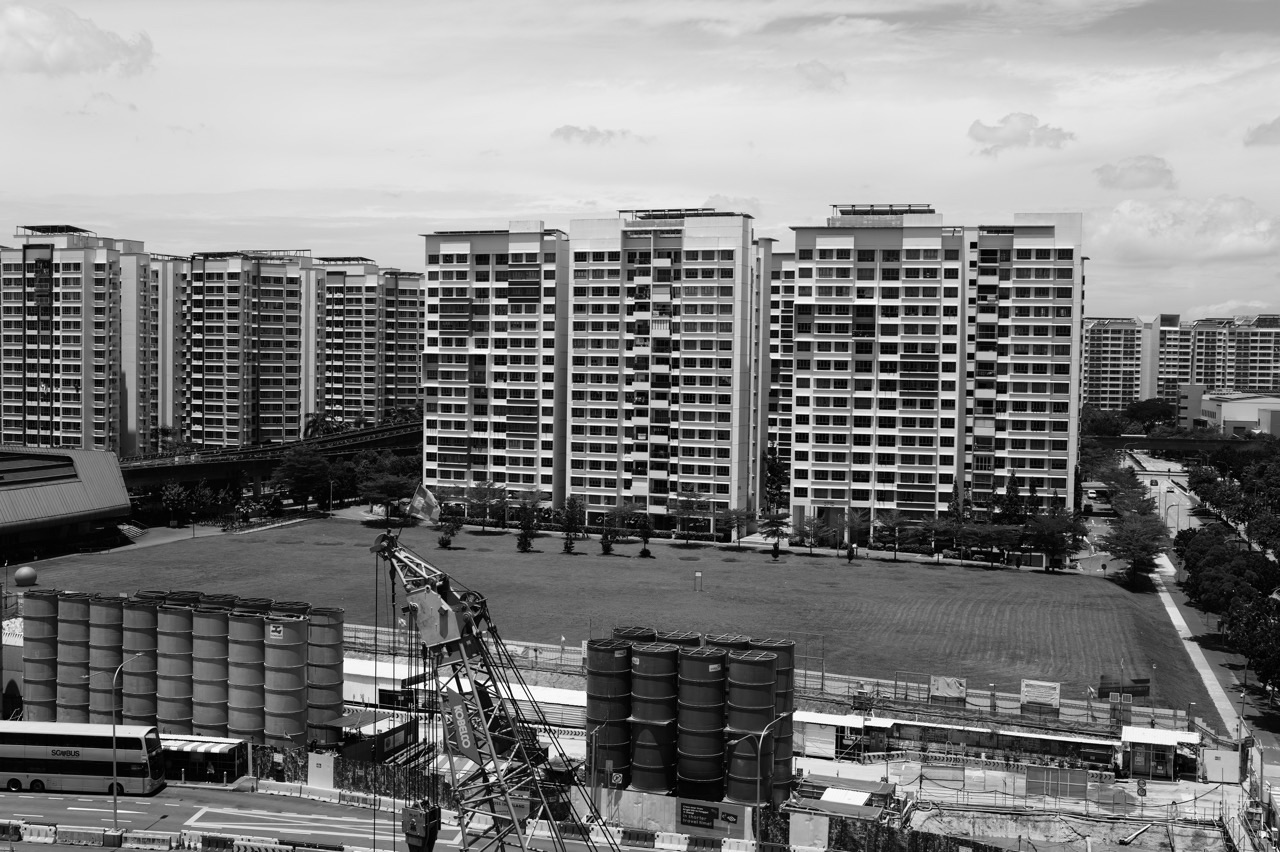
How Singapore connects is not only about finished roads, stations, homes and hospitals.
Before a city can connect people, somebody has to build the things that do the connecting.
Did you know that a construction site is really a temporary logistics network?
Concrete, steel, glass, prefabricated components, workers, cranes, drawings, inspections, permits and delivery schedules all have to arrive in the correct sequence.
The building may eventually look permanent.
Construction is intensely temporary.
This article follows Singapore’s construction connection layer: sites, materials, prefabrication, digital design, cranes, logistics, safety, approvals and the handoffs that turn drawings into usable city infrastructure.
The canonical Built Environment transformation owner remains the Building and Construction Authority’s wider industry framework. Here we ask the connection question: how do materials, people, information and machinery meet on site in the correct order?
Did You Know? A Construction Site Is a Queueing System
A truck arrives too early.
There is nowhere to unload.
A crane is busy.
Workers wait.
A later trade cannot begin.
Construction productivity is therefore not only about working faster.
It is about sequencing.
The right thing has to arrive when the next process is ready.
The Built Environment Is a Life-Cycle Network
BCA’s Built Environment Industry Transformation Map treats planning and design, construction, and operations and maintenance as one connected value chain.
That matters because a building is not finished when the contractor leaves.
Design decisions affect construction.
Construction decisions affect maintenance.
Maintenance experience should feed back into future design.
A mature built-environment system learns across the whole life cycle.
Drawings Are the First Connection Interface
Before materials move, information moves.
Architectural, structural, mechanical and electrical designs have to align.
A wall cannot occupy the same space as a major duct.
A beam cannot ignore a lift shaft.
A ceiling cannot be designed without considering services above it.
Coordination begins as information.
Integrated Digital Delivery Connects Teams Before Site Work
BCA promotes Integrated Digital Delivery, or IDD, as part of the Built Environment transformation agenda.
The idea is to connect digital information across design, construction and asset operations.
Instead of every discipline holding an isolated version of the project, information can be coordinated more systematically.
Digital integration reduces the cost of discovering conflicts only after physical work begins.
BIM Turns a Building into a Shared Model
Building Information Modelling gives teams a digital representation of the project.
Different disciplines can coordinate around geometry and data.
A model can reveal clashes before concrete is poured.
The virtual building becomes a rehearsal for the physical building.
Did You Know? Prefabrication Moves Construction Away from the Construction Site
Traditional construction often assembles many elements directly on site.
Prefabrication moves some of that work into controlled factory environments.
Components can be manufactured, checked and delivered for assembly.
The site becomes more like a final integration point.
DfMA Connects Manufacturing to Building
BCA promotes Design for Manufacturing and Assembly, or DfMA, to improve construction productivity.
The idea is simple to state but deep in consequence.
Design components so they can be manufactured efficiently and assembled reliably.
A building begins to borrow methods from manufacturing.
Kit-of-Parts Pushes Standardisation Further
In April 2026, BCA introduced a Buildability Type Approval pathway supporting a Kit-of-Parts approach, where pre-designed and prefabricated standard building components can be reused across multiple projects.
Standardisation does not mean every building has to look the same.
It means some interfaces can become predictable.
Predictable interfaces make assembly easier.
Standard Components Are Construction’s Version of Shipping Containers
A standard component can connect more easily to a standard process.
This is the same civilisation trick we see in logistics.
The container made global freight easier because ships, cranes and trucks could agree on dimensions and handling points.
Construction can gain similar benefits when repeatable parts meet repeatable assembly methods.
Materials Carry Hidden Supply Chains
Concrete contains cement, aggregates and water.
Steel comes through manufacturing and distribution.
Glass, lifts, cables, pumps and façade systems each have their own supply chains.
A construction site is therefore connected to factories, ports, warehouses and roads far beyond the site boundary.
Ports and Roads Feed Construction
The global gateway network in How Singapore Connects | Airports, Seaports and Global Gateways and the road network in How Singapore Connects | Roads, Expressways and Junctions sit upstream of many construction projects.
Materials may arrive internationally, move through storage or processing, then travel by road to the project.
Urban growth depends on logistics.
The Site Gate Is a Logistics Control Point
A busy site cannot allow every vehicle to arrive whenever it wants.
Deliveries may be booked into windows.
Security checks who enters.
Traffic controllers manage reversing and unloading.
Cranes and hoists determine when materials can move upward.
The gate is where the external logistics network becomes the internal site network.
Cranes Turn Horizontal Logistics into Vertical Logistics
The truck gets a component to the site.
The crane gets it to the correct level.
In a high-rise city, that vertical handoff is crucial.
The crane schedule can become one of the most important shared resources on a site.
Several trades may all depend on the same lifting capacity.
Did You Know? Construction Sites Have Temporary Roads
Temporary access routes, laydown areas, hoardings and work zones exist only for the construction period.
They may disappear completely when the project is finished.
The site therefore has a temporary urban plan inside the permanent city.
Safety Connects Every Trade
Construction brings together workers doing different tasks in the same changing environment.
One team’s work can create hazards for another.
Lifting, excavation, temporary works, electrical systems, working at height and moving vehicles all interact.
Safety therefore has to be coordinated across trades, not treated as a separate activity.
Approvals Connect Private Projects to Public Rules
Buildings affect neighbours, roads, utilities and public safety.
That is why construction is regulated through approvals, inspections and professional responsibilities.
The project team does not build in isolation.
It connects to a wider system of standards.
CORENET X Connects Regulatory Submissions
Singapore’s Built Environment digitalisation includes CORENET X, intended to support more coordinated regulatory submissions across agencies.
This is another information-handoff problem.
A project contains architectural, structural and building-services information.
Regulators need to review that information coherently.
Digital coordination can reduce fragmented submissions.
Robotics and Automation Change the Human–Machine Interface
Construction has traditionally relied heavily on manual labour.
BCA’s current transformation programmes support greater use of robotics and automation where suitable.
The goal is not simply to add machines.
It is to redesign workflows so machines perform tasks they can perform well while people handle judgement, coordination and complex work.
Construction Demand Connects National Plans to Site Activity
BCA projected total construction demand of about S$47–53 billion in nominal terms for 2026.
That demand reflects many project types: transport infrastructure, healthcare, commercial developments, housing and other works.
A national pipeline becomes thousands of local site activities.
Major Projects Create Network Effects
A new MRT extension affects contractors, suppliers and transport planning.
A hospital creates demand for specialist systems.
A large terminal project creates logistics and engineering demand.
Construction is therefore not only output.
It is a temporary concentration of many industries around one future asset.
Maintenance Begins Before Handover
A difficult-to-access pump will remain difficult after opening.
A façade that is hard to inspect will create long-term maintenance problems.
This is why BCA promotes Design for Maintainability.
Future maintenance needs should influence design before the building is built.
Facilities Management Closes the Loop
BCA’s 2026 facilities-management guidance emphasises Smart FM, design for maintainability and integrated service models.
The operating building generates lessons.
Sensors reveal performance.
Maintenance teams discover recurring problems.
Those lessons should feed into future projects.
The built environment becomes a learning system.
A Small Example: Prefabricated Bathroom Unit
A bathroom module is manufactured off-site.
Finishes and fittings are installed in a controlled environment.
The unit is transported to site.
A crane lifts it into position.
Connections are made to building services.
A room arrives as an assembled object rather than a long sequence of site trades.
A Small Example: Concrete Pour
Concrete is ordered.
Batching, transport and timing matter.
Formwork and reinforcement must be ready.
Workers and pumps must be available.
Weather matters.
Testing matters.
One pour is a choreography of supply, readiness and quality control.
A Small Example: Lift Installation
The shaft has to be built accurately.
Equipment arrives through logistics routes.
Mechanical and electrical interfaces align.
Installation occurs in sequence.
Testing and regulatory approval follow.
The finished lift later becomes part of How Singapore Connects | Lifts, Escalators and Vertical Mobility.
What Can Break the Construction Connection?
- late design changes;
- clashing drawings;
- material delays;
- site-access problems;
- crane bottlenecks;
- labour shortages;
- poor sequencing;
- unsafe work conditions;
- inspection failures;
- weather disruption; and
- information that does not reach the next trade.
Construction failure is often a handoff failure.
How to Read a Construction Site Like a Systems Thinker
1. Find the sequence
What must happen before the next activity can begin?
2. Find the shared resources
Crane, hoist, access road, storage area or temporary power?
3. Follow the information
Which drawing, model or instruction tells people what to build?
4. Follow the material
Factory, warehouse, truck, gate, crane and final position.
5. Look for standardisation
Which parts can be prefabricated or reused?
6. Look for regulation
Which approvals and inspections connect the project to public safety?
7. Look beyond completion
How will the building be operated and maintained?
The eduKate Singapore Graph: Construction Is Where Plans Become Places
Roads, schools, hospitals, data centres, parks and homes begin as ideas.
Construction is the conversion layer.
Drawings become concrete.
Schedules become sequences.
Materials become structure.
Temporary logistics becomes permanent infrastructure.
This is how the Singapore graph physically grows.
Frequently Asked Questions
What is the Built Environment Industry Transformation Map?
BCA’s BE ITM connects planning and design, construction, and operations and maintenance into one transformation framework for the sector.
What is DfMA?
Design for Manufacturing and Assembly is an approach that shifts more work into manufacturing and simplifies on-site assembly.
What is Integrated Digital Delivery?
IDD connects digital information and workflows across the building life cycle to improve coordination.
What is a Kit-of-Parts approach?
It uses repeatable pre-designed and prefabricated components that can be deployed across multiple projects while still allowing different layouts and designs.
Why is logistics important on a construction site?
Materials, equipment and workers need to arrive in sequence and often depend on shared site resources such as cranes and access routes.
Why does maintenance matter during design?
Design choices affect how safely, efficiently and economically a building can be inspected and maintained later.
What did BCA project for 2026 construction demand?
BCA projected total nominal construction demand of about S$47–53 billion for 2026.
Is this the main eduKateSG article on construction productivity?
No. This page owns the connection lens: how information, materials, machinery and people meet on site.
What is the main systems lesson?
A construction site succeeds when temporary networks of information and logistics assemble permanent infrastructure in the correct sequence.
Where can I check official Built Environment information?
Building and Construction Authority | Growth and Transformation.
Helpful Reading and Singapore Graph Connections
- BCA | Growth and Transformation
- BCA | Built Environment Industry Transformation Map
- BCA | Construction Demand 2026
- BCA | Buildability Type Approval and Kit-of-Parts
- How Singapore Connects | Airports, Seaports and Global Gateways
- How Singapore Connects | Roads, Expressways and Junctions
How Singapore Connects: The City Is Assembled Before It Is Lived In
Did you know that the finished city hides the temporary city that built it?
Cranes disappear.
Hoardings come down.
Temporary roads vanish.
Workers move on.
But the building remains.
Construction is the short-lived network that creates long-lived infrastructure.
And once you see that, every new station, school, hospital or tower becomes the frozen result of thousands of perfectly timed connections.