
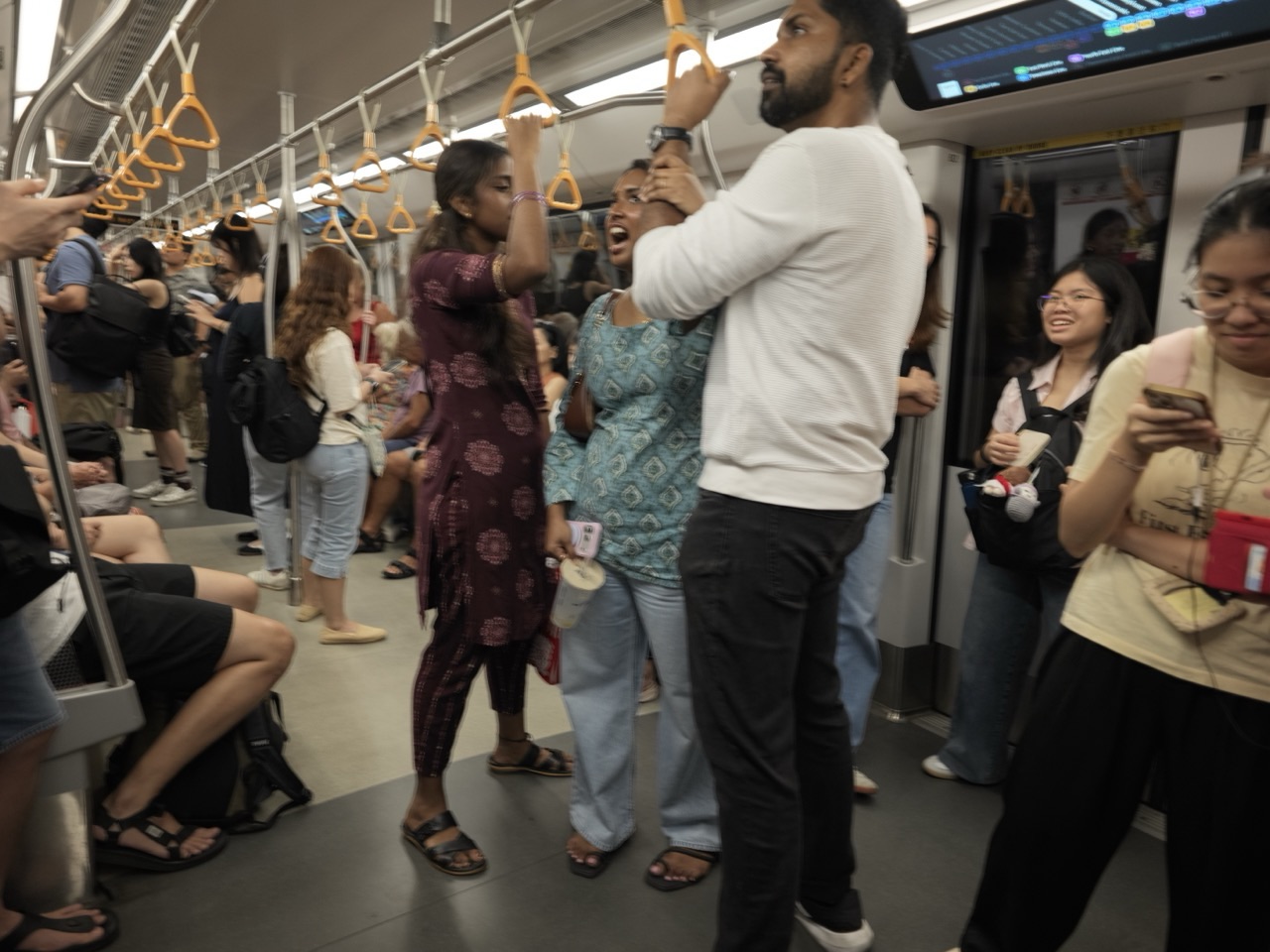
How Singapore connects is not only about homes and neighbourhoods.
Every working day, millions of routines bend toward places of employment.
Did you know that a business park, regional centre or industrial district is also a transport problem, a land-use problem, a digital-connectivity problem and a daily-life problem?
A workplace does not exist alone.
People have to reach it. Goods may have to reach it. Data has to move in and out. Food and services have to support the workforce. Housing and transport shape the commute. The location changes how much time is spent moving before the work even begins.
This article follows Singapore’s workplace connection layer: regional centres, business parks, industrial districts, mixed-use hubs, transport nodes, active mobility, digital infrastructure and the idea of bringing jobs closer to homes.
The canonical town-planning owners remain elsewhere in eduKateSG’s ecosystem. Here the question is the connection: how does Singapore arrange workplaces so jobs, homes, transport and supporting amenities can meet more efficiently?
Did You Know? Where a Job Is Located Changes the Job Before Work Starts
A job description may be identical in two places.
The daily experience may not be.
One worker spends twenty minutes travelling.
Another spends ninety.
One workplace sits beside an MRT station.
Another requires several transfers.
One district has food, childcare and services nearby.
Another is isolated.
Location changes the human cost of employment.
Singapore Uses a Polycentric Workplace Strategy
URA says Singapore has pursued a decentralised, polycentric planning approach to distribute commercial, business-park and industrial nodes across the island rather than concentrating every job in the city centre.
Regional centres, sub-regional centres, business parks and industrial estates create multiple employment nodes.
The idea is not that every resident works beside home.
It is that the city offers more than one major place where jobs can cluster.
Jobs Closer to Homes Can Reduce Commuting Pressure
URA’s 2026 long-term planning material says future job nodes will continue to bring workplaces closer to homes, with mixed-use spaces and flexible work options.
That matters because commuting is not only an individual inconvenience.
It is network demand.
If too many journeys all point toward one centre at the same time, transport systems experience stronger peaks.
Distributing employment can distribute movement too.
Did You Know? Tampines Was Singapore’s First Regional Centre
URA describes Tampines as Singapore’s first regional centre, now a major commercial node inside a mature residential town.
This is a powerful planning idea.
Work does not have to sit far away from everyday life.
A regional centre can combine offices, retail, food, public services and transport inside one town.
Transport Hubs Turn Job Nodes into Reachable Job Nodes
A workplace district is only useful to workers if they can reach it.
MRT lines, bus interchanges, roads, cycling paths and walking routes determine the effective catchment.
That links work geography directly to How Singapore Connects | Bus Interchanges, MRT Stations and Transfer Hubs.
The job node creates demand.
The transport node turns demand into movement.
Business Parks Mix Knowledge Work with Infrastructure
Business parks often house offices, technology companies, research facilities and other knowledge-intensive activities.
They need more than floor space.
They need:
- high-capacity digital connectivity;
- reliable electricity;
- public transport;
- food and retail;
- meeting spaces;
- security;
- logistics access; and
- places for employees to spend time outside the office.
The workplace is an ecosystem.
one-north Shows How Research, Business and Learning Can Cluster
one-north combines research institutes, technology companies, biomedical facilities, start-ups, universities and supporting amenities in a relatively compact geography.
The value comes partly from proximity.
People who work in different organisations can still meet, recruit, collaborate and move between related institutions.
Knowledge networks benefit when distance is reduced.
Jurong Innovation District Shows Manufacturing Becoming More Connected
JTC describes Jurong Innovation District as a 600-hectare advanced manufacturing district with extensive digital, transport and logistics connectivity.
The district includes 5G infrastructure, research and testing facilities, future MRT connectivity and an underground logistics network for heavy vehicles.
This is not a conventional isolated factory estate.
It is designed as an integrated industrial ecosystem.
Did You Know? Industrial Logistics Can Move Underground
JTC says Phase 1 of the Jurong Innovation District’s District Logistics Network is already operational, using underground tunnels for heavy vehicles to reduce ground-level congestion and improve road safety.
This is a classic Singapore solution to land scarcity.
Separate incompatible flows vertically.
People and active mobility can occupy more pleasant ground-level space.
Heavy logistics can move underneath.
The Sky Corridor Connects Workers at Human Speed
JTC’s plans include an 11-kilometre Sky Corridor for walking and cycling through Jurong Innovation District.
The district therefore has several transport layers.
Heavy logistics underground.
Vehicles on roads.
Walking and cycling on a raised route.
Rail stations connecting the district outward.
Different users get different movement channels.
Digital Infrastructure Makes Modern Work Location-Independent—But Not Placeless
Cloud software, video calls and remote access allow some work to happen from many locations.
That does not make place irrelevant.
People still need reliable broadband, quiet space, devices and often face-to-face collaboration.
The digital substrate in How Singapore Connects | Broadband, Mobile Networks and Public Wi-Fi supports flexible work, but physical workspaces still matter.
Flexible Work Changes Peak Travel Patterns
If employees work from home on some days, commute at different times or use satellite workspaces, the classic morning-and-evening rush can change.
Transport demand becomes less uniform.
URA’s future-work planning explicitly considers flexible work arrangements as part of the changing geography of employment.
Workplace planning therefore has to respond to behaviour, not only buildings.
Work Hubs Near Homes Can Support Family Logistics
Work is only one part of the day.
Parents may also need childcare drop-off, school pick-up, groceries and dinner.
A workplace closer to home can reduce the number of separate long journeys.
That connects employment geography to family time.
Mixed-Use Districts Reduce the Number of Necessary Trips
A worker who can eat lunch, see a doctor, buy groceries and take the MRT from the same district needs fewer separate journeys.
That is why modern employment nodes increasingly include amenities rather than treating offices as isolated boxes.
Daily life works better when functions are near one another.
Public Transport Connects Labour Markets
A transport line does more than move people.
It changes which jobs are realistically reachable from which homes.
A new MRT station can expand the labour catchment of a business district.
A new bus route can make an industrial area accessible to a different group of workers.
Transport changes employment geography.
Roads Connect Goods and Workers Differently
Some workplaces depend heavily on freight.
Factories, warehouses and logistics centres need truck access in addition to employee access.
The road network in How Singapore Connects | Roads, Expressways and Junctions therefore supports two different flows: people going to work and goods going through work.
Workplaces Connect to Food
Thousands of workers create predictable meal demand.
That is why office districts and industrial estates often develop food courts, hawker options, canteens and nearby retail.
Lunch is a logistics event repeated every weekday.
Food infrastructure follows employment density.
Workplaces Connect to Childcare
Some business and mixed-use developments include childcare facilities.
URA notes examples such as Woods Square in Woodlands Regional Centre, which combines offices with childcare, food and retail.
This is an important planning move because work and caregiving schedules overlap.
Bringing childcare closer to work or home can reduce coordination friction.
Workplaces Connect to Housing
A regional employment centre beside a residential town changes the meaning of ‘commute’.
Some residents may work locally.
Others may travel in from elsewhere.
The same node can be both destination and neighbourhood centre.
A Small Example: Tampines Resident
A resident lives in Tampines.
Works in Tampines Regional Centre.
Walks or takes a short bus ride.
Buys lunch nearby.
Runs an errand after work.
Returns home without crossing the island.
The job node and the residential town form one daily system.
A Small Example: Jurong Innovation District Worker
A worker arrives by public transport.
Walks or cycles through district infrastructure.
Works in an advanced manufacturing facility.
A separate underground logistics network moves heavy vehicles elsewhere.
Several transport systems share the district without performing the same job.
A Small Example: Hybrid Worker
A worker spends two days at home and three days in the office.
The weekly travel pattern changes.
Office demand changes.
Food demand changes.
Transport demand changes.
Flexible work changes the rhythm of the city.
What Can Break the Workplace Connection?
- poor public transport;
- long first- and last-mile walks;
- too little food or retail nearby;
- weak digital connectivity;
- insufficient childcare or family-support options;
- freight conflict with pedestrian movement;
- jobs concentrated too far from housing;
- peak-hour congestion;
- poor accessibility; and
- districts that become empty and unwelcoming outside office hours.
A successful employment node needs more than office floor area.
How to Read a Job Node Like a Systems Thinker
1. Find the workers
Where do they come from?
2. Find the transport
MRT, bus, walking, cycling, roads and private transport?
3. Find the work type
Office, manufacturing, research, logistics or mixed?
4. Find the support systems
Food, childcare, retail, healthcare and public space.
5. Find the digital layer
What connectivity does the work require?
6. Find the freight layer
Do goods and heavy vehicles need separate routes?
7. Find the time pattern
How does the district change during peak, off-peak and weekends?
The eduKate Singapore Graph: Work Is a Spatial Relationship
A job is not only a contract between worker and employer.
It is also a relationship between home and workplace.
Transport connects them.
Digital networks support them.
Food sustains them.
Childcare makes some schedules possible.
Roads move goods.
Housing determines where people begin and end the day.
Workplace planning sits in the middle of many systems.
Frequently Asked Questions
What does polycentric planning mean?
It means developing multiple significant business and employment nodes rather than concentrating all major jobs in one central area.
Why bring jobs closer to homes?
It can reduce travel time for some workers, distribute commuting demand and make everyday life more convenient.
What are Singapore’s regional centres?
URA identifies major regional centres including Tampines, Jurong Lake District and Woodlands, alongside other sub-regional and fringe centres.
What is Jurong Innovation District?
JTC describes it as an advanced manufacturing district integrating industry, research, digital infrastructure, logistics and future rail connectivity.
What is the District Logistics Network?
It is an underground heavy-vehicle network in Jurong Innovation District designed to reduce surface congestion and improve road safety.
Why do workplaces need mixed-use amenities?
Food, childcare, retail and services reduce the number of separate journeys workers need to make.
Does remote work make business districts unnecessary?
No. It changes usage patterns, but many roles still depend on specialised facilities, face-to-face collaboration, secure infrastructure or physical production.
How does transport change job access?
Better connections expand the number of workplaces that are practically reachable from a home.
Is this the main eduKateSG article on town planning?
No. This page owns the workplace-connection lens within the larger Singapore graph.
Where can I check current official planning information?
URA | Attractive Job Nodes and JTC | Jurong Innovation District Connectivity.
Helpful Reading and Singapore Graph Connections
- URA | Attractive Job Nodes
- URA | Decentralisation
- JTC | Jurong Innovation District Connectivity
- How Singapore Connects | Bus Interchanges, MRT Stations and Transfer Hubs
- How Singapore Connects | Broadband, Mobile Networks and Public Wi-Fi
- How Singapore Connects | Roads, Expressways and Junctions
How Singapore Connects: Work Begins Before You Reach the Desk
Did you know that a job has a geography?
Home sits somewhere.
Work sits somewhere else.
Transport joins them.
Amenities support the day.
Digital infrastructure supports the task.
Freight may support the workplace.
The distance between those systems changes how life feels.
Singapore’s workplace network is therefore not only about where companies locate.
It is about how employment becomes reachable.
And once jobs, transport and daily life begin to align, the city becomes easier to use.