
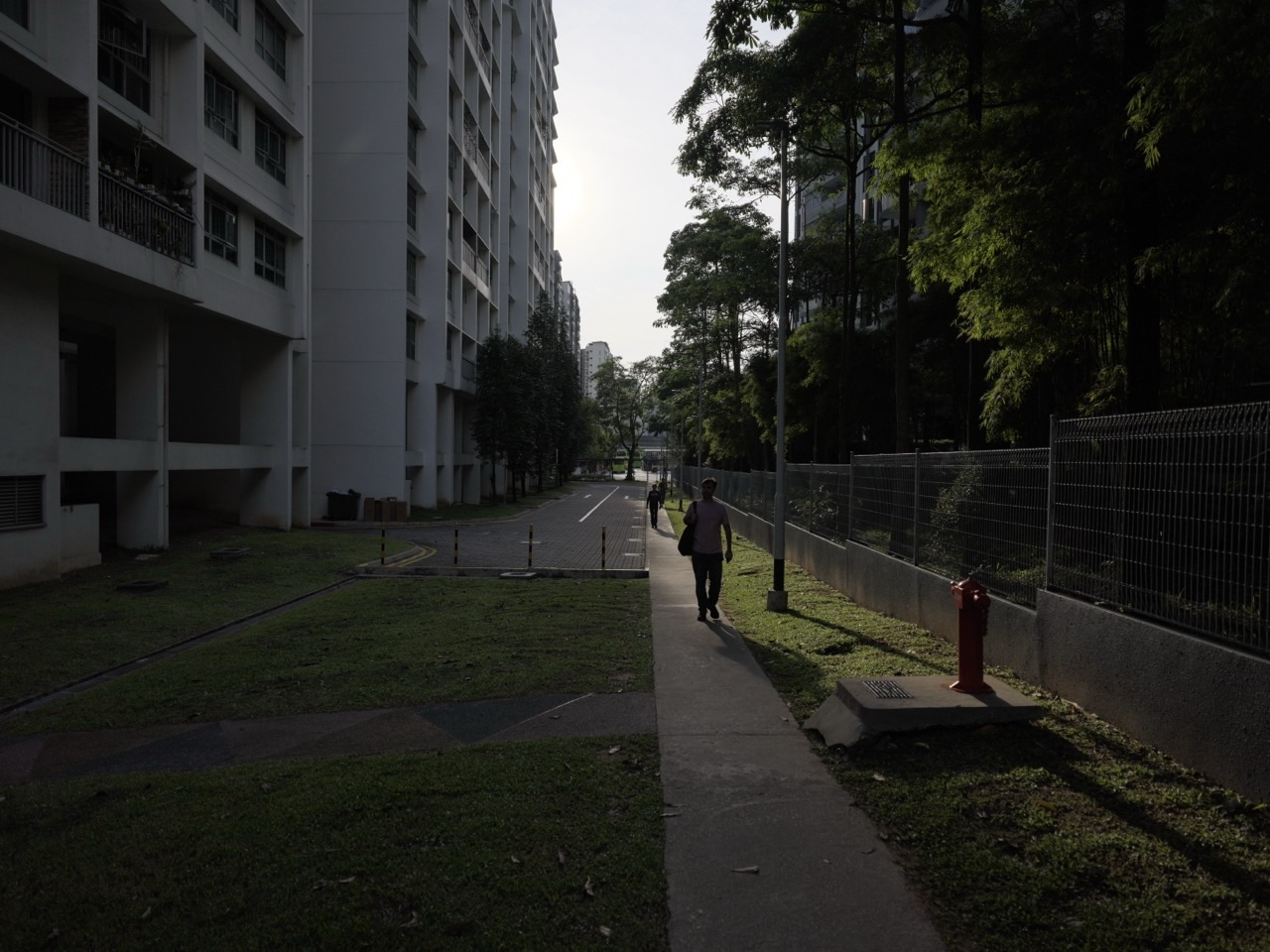
The Housing System That Turned Flats Into a Nation
HDB is not just housing.
That is the first mistake people make.
They look at HDB and see blocks. Flats. Corridors. Lifts. Void decks. Car parks. Playgrounds. Coffee shops. Letterboxes. Laundry poles. Town councils. BTO launches. Resale prices. Ballots. Keys. Renovations. Neighbours upstairs. Neighbours downstairs.
But HDB is much larger than that.
HDB is one of Singapore’s core civilisation systems. It is where housing, land use, family formation, town planning, social stability, transport, schools, shops, parks, ageing, ownership, race, class, public finance, daily convenience and national identity all meet inside one built environment.
The HDB flat is the visible object.
The HDB town is the actual machine.
That is why to understand Singapore, we must understand HDB not only as “where people live,” but as how Singapore organises living.
HDB was established in 1960, and its public role is to provide quality and affordable public housing while creating homes and towns where communities thrive. Today, HDB flats remain home to almost eight in 10 of Singapore’s resident population, with about 1.1 million households living in HDB flats, and more than nine in 10 of these households owning their homes.
That is not a side statistic.
That is the national structure.
If most Singaporeans live in HDB, then HDB is not merely a housing agency. It is one of the main places where Singapore society is physically arranged.
HDB Solves the Land Problem
Singapore’s land problem is simple.
There is not enough of it.
A larger country can spread. It can build suburbs, villages, private estates, satellite towns and highways across huge areas. Singapore cannot do that casually. Every piece of land must work hard. Housing competes with airports, ports, military land, reservoirs, roads, schools, hospitals, parks, offices, factories, MRT stations, bus interchanges and nature.
So Singapore had to solve housing through density.
But density alone is not enough.
Dense housing without planning becomes crowding.
Dense housing without transport becomes isolation.
Dense housing without shops becomes inconvenience.
Dense housing without schools becomes family stress.
Dense housing without parks becomes suffocation.
Dense housing without maintenance becomes decline.
Dense housing without ownership becomes insecurity.
HDB is Singapore’s answer to this.
It takes high-density living and turns it into planned town life.
That is the achievement.
Not simply building flats. Many countries can build flats.
The harder work is building a dense environment where families can live, children can grow, elderly residents can age, workers can commute, shops can survive, schools can operate, and neighbourhoods can remain functional over decades.
HDB turns vertical living into a national system.
The HDB Town Is Planned, Not Accidental
An HDB town is not a random cluster of blocks.
It is planned as a living unit.
HDB says its towns are comprehensively planned to create a quality living environment and optimise land use. A key principle is self-sufficiency: each town is planned from the start with amenities such as shops, schools, parks and community centres so residents can meet daily needs without always travelling out of the town.
This is the important idea.
A town must not only contain homes.
It must contain life.
That means a resident should be able to wake up, send a child to school, buy breakfast, take the bus or MRT, return home, visit a clinic, buy groceries, eat dinner, go to a playground, exercise, meet friends, attend tuition, care for elderly parents and take part in community life without the entire day collapsing into transport difficulty.
This is why HDB towns usually include layers:
Homes.
Neighbourhood centres.
Schools.
Parks.
Playgrounds.
Community clubs.
Clinics.
Markets.
Hawker centres.
Supermarkets.
Bus stops.
MRT stations or feeder routes.
Sheltered walkways.
Precinct facilities.
Town centres.
Void decks.
Car parks.
Green spaces.
The system is not perfect in every estate, and convenience varies between mature and newer towns. But the intention is clear.
HDB town planning tries to make daily life workable.
HDB Makes the MRT and Bus Systems More Powerful
The MRT and bus systems cannot be understood separately from HDB.
Transport needs people. Housing provides the people.
When a HDB town is planned around transport nodes, the MRT becomes more useful. When buses feed residents into interchanges and stations, the town becomes more connected. When neighbourhood centres sit near transport routes, footfall supports shops. When schools and amenities sit within the town, residents need fewer long trips.
This is how Singapore stacks systems.
The MRT moves the big flows.
The bus reaches the estate roads.
The HDB town gathers the population.
The neighbourhood centre supports daily needs.
The mall and interchange create the town heart.
The result is a city where dense housing does not have to mean paralysis.
If HDB blocks were scattered without transport planning, Singapore would suffer. If MRT stations existed without enough residential density nearby, the rail system would be weaker. If buses did not enter estates, the train would be too far from many homes. If town centres did not gather services, residents would travel too much for basic needs.
HDB, MRT and buses are not separate chapters.
They are one urban sentence.
The Void Deck Is a Social Invention
The void deck is one of Singapore’s most important ordinary spaces.
It is easy to overlook because it is so familiar.
A void deck is not glamorous. It is not a luxury clubhouse. It is not a grand civic square. It is simply the open ground-floor space under many HDB blocks.
But that simplicity is powerful.
The void deck gives a dense vertical estate a shared horizontal space. It can host weddings, funerals, community events, children playing, residents waiting, delivery riders resting, elderly residents chatting, students meeting, and neighbours passing through.
It is a flexible civic room under the block.
In private housing, shared spaces are often enclosed, controlled or tied to membership. In HDB, the void deck is part of the public-residential fabric. It gives the estate breathing room.
This matters because high-rise living can otherwise become isolating. People leave their flats, enter lifts, pass corridors and disappear into the city. The void deck interrupts that. It creates a place where residents can encounter one another without planning it.
Not every encounter becomes friendship.
But the possibility matters.
A town is not only built by walls. It is built by repeated, casual visibility.
The Neighbourhood Centre Is Daily Life Infrastructure
Singapore’s neighbourhood centres are another underrated system.
They are not simply shop clusters. They are convenience engines.
HDB describes neighbourhood centres as integral parts of HDB towns, giving residents easy access to food and dining, healthcare, shopping options and daily needs. The first neighbourhood centre was built in Toa Payoh in 1967, and HDB has since built and progressively upgraded more than 100 neighbourhood centres across HDB towns.
That tells us something important.
The HDB town does not depend only on big malls. It also needs smaller, close-to-home commercial nodes.
The neighbourhood centre is where life becomes practical.
Breakfast.
Haircut.
Clinic.
Pharmacy.
Groceries.
Coffee shop.
Bakery.
Laundry.
ATM.
Tuition.
Bubble tea.
Household goods.
Dental appointment.
Chicken rice after school.
These are not minor details.
If daily services are too far away, family life becomes harder. If every errand requires a car, Singapore becomes less equal. If every estate depends only on one large mall, local life becomes less resilient.
The neighbourhood centre keeps the town functional at human scale.
HDB Creates Home Ownership at Scale
HDB is also a home ownership system.
This is one of Singapore’s most important social structures.
When many households own their homes, housing becomes tied to family stability, savings, retirement planning, neighbourhood identity and national belonging. HDB home ownership is not only about shelter. It is also about giving ordinary families a stake in the country.
That has deep effects.
A home-owning society behaves differently from a purely rental society. Families think long-term. Parents invest in renovation, children’s rooms, school routines and neighbourhood networks. Elderly residents remain tied to familiar places. Residents become more aware of maintenance, estate quality and resale value.
Of course, this creates tensions too.
When housing is both shelter and asset, prices matter emotionally and politically. Young couples worry about affordability. Older owners worry about lease decay. Families compare locations. Mature estates become prized. BTO ballots become stressful. Resale markets become national conversation.
That is the trade-off.
HDB gives stability, but because it is so central, every pressure in housing becomes a pressure in society.
HDB Is Where Family Formation Happens
In Singapore, housing and family formation are strongly connected.
Young couples often think about marriage together with applying for a flat. Parents think about schools and grandparents together with location. Adult children think about proximity to family. Seniors think about downsizing, ageing in place, lift access and nearby clinics.
This means HDB is not just a property system.
It is a family-timing system.
When flats are delayed, marriage plans can be affected. When housing prices rise, young couples feel pressure. When estates lack amenities, young families feel the strain. When elderly residents age, the design of the flat and town becomes important.
HDB therefore sits inside personal life.
It affects when people marry.
Where children grow up.
How grandparents help.
How far parents commute.
Which schools feel convenient.
How families plan finances.
How seniors remain independent.
Few systems are as intimate as housing.
That is why HDB is emotional.
It is not only policy. It is the floor under family life.
HDB and Schools Form the Childhood Map
For children, Singapore is often first understood through the HDB estate.
The block.
The lift.
The playground.
The minimart.
The school nearby.
The bus stop.
The basketball court.
The tuition centre.
The library.
The park connector.
The hawker centre.
The MRT station.
This childhood map matters.
A well-planned town gives children routines. They can go to school, play downstairs, buy food, visit friends, attend tuition and move through familiar public spaces. Parents can manage pickups, errands and meals more easily.
The school system and HDB system therefore reinforce each other.
Primary schools serve neighbourhoods. Secondary students travel farther but still depend on buses and MRT. Tuition centres often cluster near neighbourhood centres, malls and transport nodes. Libraries and community clubs support learning. Sports facilities support after-school life.
The child’s education journey is not only inside the classroom.
It is supported by the town.
This is why eduKateSG can read HDB towns as learning environments. A student’s routine is shaped by transport time, home space, nearby tuition, library access, parent commute, food convenience and neighbourhood safety.
Housing affects learning because housing shapes the day.
HDB Is a Social Mixing System
HDB is also one of Singapore’s social mixing systems.
In many countries, housing becomes sharply segregated by income, race, class or private market sorting. Singapore has still not eliminated inequality, but HDB reduces the extreme separation that could appear in a land-scarce, high-pressure city.
Many income levels, family types, age groups and ethnic communities live within the public housing system.
This matters because daily life creates social familiarity.
Children see different families. Residents share lifts. People queue at the same shops. Elderly residents, young families, workers, students, professionals and retirees all occupy the same town fabric.
Again, this does not create perfect harmony.
Neighbours still argue. Noise complaints happen. Social tensions exist. Estates differ in prestige. Some areas become more expensive. Some families feel left behind.
But the system prevents Singapore from becoming a city where ordinary life is completely split into isolated enclaves.
HDB keeps much of the country inside a shared housing grammar.
That shared grammar is one of Singapore’s stabilisers.
The Lift Is a Quiet Civilisation Tool
A lift looks like a small machine.
In HDB, it is much more than that.
The lift determines how easily elderly residents leave home. It affects parents with prams. It affects children going to school. It affects wheelchair users. It affects deliveries. It affects emergency access. It affects whether a flat feels practical across different life stages.
This is why lift upgrading mattered so much in older estates.
A flat without direct lift access may be tolerable for a young adult. It becomes very different for an elderly resident with knee pain, a parent carrying groceries, or a person with mobility issues.
Housing quality is not only about square metres.
It is about everyday movement.
Can the resident leave home easily?
Can the resident return safely?
Can a wheelchair move?
Can a senior age in place?
Can emergency help arrive?
Can a parent manage a child and stroller?
The lift is part of the dignity system.
HDB Must Age With Its Residents
A public housing system built over decades must face ageing.
Buildings age. Residents age. Towns age.
This creates a different challenge from simply building new flats. Singapore must maintain old estates, upgrade facilities, renew precincts, support elderly residents and keep mature towns liveable.
HDB’s upgrading and redevelopment programmes are meant to improve the living environment of HDB estates, including programmes such as the Home Improvement Programme, Neighbourhood Renewal Programme and Enhancement for Active Seniors.
This is important because a housing system that only builds but does not renew will decline.
Maintenance is civilisation.
The Home Improvement Programme helps address common maintenance issues in ageing flats, such as spalling concrete and ceiling leakage, while providing improvements to living conditions in older flats. The Neighbourhood Renewal Programme focuses on precinct and block improvements, and was extended in 2024 to include flats built up to 1999.
This tells us how Singapore thinks about HDB.
The flat is not a one-time product.
It is a long-term living asset that must be repaired, upgraded and adapted.
The Town Must Be Rejuvenated Too
A flat can be upgraded, but the town must also be renewed.
Residents do not live only inside their units. They live in the whole estate.
This includes walkways, drop-off points, playgrounds, fitness corners, seating areas, ramps, lighting, neighbourhood centres, town plazas and green links. HDB has continued to announce upgrading works for neighbourhoods; in April 2026, it said around 29,000 HDB households would benefit from the latest batches of Neighbourhood Renewal Programme and Silver Upgrading Programme projects to improve comfort, safety and vibrancy.
This matters because old towns must remain emotionally competitive.
If mature estates are not renewed, residents feel decline. If newer estates lack amenities, residents feel unfinished. If elderly residents cannot move comfortably, the town becomes harsh. If young families lack playgrounds and childcare, the town becomes stressful.
Town renewal is therefore not beautification only.
It is social maintenance.
A good bench can matter.
A shaded path can matter.
A ramp can matter.
A playground can matter.
A brighter corridor can matter.
A safer crossing can matter.
A better neighbourhood centre can matter.
These are small things until they are used every day.
HDB Is Also About Identity
HDB gives Singapore a common visual language.
The block number.
The lift lobby.
The corridor.
The void deck.
The town centre.
The neighbourhood school.
The coffee shop downstairs.
The bus stop nearby.
The laundry outside the window.
The evening lights across opposite blocks.
This is the scenery of ordinary Singapore.
Many Singaporeans may aspire to private property, and private housing has its own appeal. But HDB remains the shared backdrop of the national story. It is where many people grew up, where parents sacrificed, where grandparents aged, where children studied, where neighbours argued, where festivals were celebrated, where funerals were held, where weddings happened, and where daily routines repeated.
A nation needs shared reference points.
HDB provides many of them.
It creates a common memory structure.
Even if people move from one estate to another, they recognise the grammar. The blocks may look different, but the logic is familiar. Lift, corridor, void deck, shop, bus stop, school, playground, town centre.
This familiarity is part of belonging.
The HDB Flat Is Private Life Inside Public Planning
The HDB flat contains private life.
Inside the flat are family arguments, study tables, dinners, prayers, birthdays, tuition homework, exam stress, grandparents watching television, parents checking bills, children growing taller, and teenagers closing bedroom doors.
But the flat exists inside public planning.
That combination is very Singapore.
Private family life is supported by a public housing system. The government plans the town, sells the flat, controls eligibility, provides subsidies, manages land supply, supports upgrading and shapes the resale framework. Families then personalise the home, renovate it, build routines and turn policy into lived experience.
This is why HDB feels both personal and national.
It is your home.
But it is also part of Singapore’s state-built housing civilisation.
The HDB Market Creates Pressure
Because HDB is so central, it also carries pressure.
BTO demand, resale prices, waiting times, location preferences, grants, subsidies, lease issues, mature estate premiums, family proximity and affordability are all major concerns.
This is unavoidable because housing is both practical and emotional.
A flat is shelter, but it is also money.
It is family life, but also asset value.
It is national policy, but also personal anxiety.
It is long-term planning, but also immediate need.
HDB has continued adjusting supply. In November 2025, HDB said it would launch about 55,000 new flats from 2025 to 2027, including Shorter Waiting Time flats in 2026 and 2027, as part of efforts to reduce waiting times and expand options for home buyers with more pressing needs.
This shows that HDB is not a static system.
It must respond to demand, demographics, affordability concerns and changing family needs.
Housing policy is never finished because society is never finished.
HDB Is the Heartland Machine
The word “heartland” can sound sentimental.
But it is also technically accurate.
The heartland is where the national body lives.
HDB towns hold much of Singapore’s resident population. They connect to schools, malls, MRT stations, bus interchanges, hawker centres, clinics, parks, tuition centres, community clubs and neighbourhood shops. They are where the worker rests, the student studies, the parent worries, the child grows, and the senior ages.
The CBD may command capital.
The airport may greet the world.
The port may move global trade.
But the HDB town holds daily Singapore.
This is why HDB towns are civilisation infrastructure.
They are not only bedrooms for the labour force. They are the living base of the nation.
HDB Shows Singapore’s Trade-Offs Clearly
HDB is powerful, but it is full of trade-offs.
High density gives land efficiency, but it can create noise and neighbour tension.
Home ownership gives stability, but it creates price anxiety.
Standardisation allows scale, but it can feel repetitive.
Town planning gives order, but residents may want more organic character.
Public housing creates inclusion, but location differences still matter.
Upgrading improves towns, but works can disrupt residents.
New estates provide homes, but amenities may take time to mature.
Mature estates are convenient, but often more expensive.
This is the honest picture.
Singapore works not because trade-offs disappear.
Singapore works because trade-offs are managed continuously.
HDB is one of the largest examples of that management.
The Ouroboros of HDB
HDB shows the Singapore Ouroboros clearly.
Singapore lacks land.
Because Singapore lacks land, it must build dense housing.
Because dense housing can become harsh, it must plan complete towns.
Because complete towns need transport, it builds MRT, buses and interchanges.
Because towns need daily life, it adds schools, shops, parks and community spaces.
Because residents need stability, it promotes home ownership.
Because ownership creates long-term stakes, families invest in homes and communities.
Because towns age, the system upgrades and renews them.
Because the system renews itself, dense living remains possible.
The weakness feeds the strength.
Land scarcity forces density.
Density forces planning.
Planning creates towns.
Towns create community.
Community creates stability.
Stability supports the nation.
That is how HDB turns a constraint into civilisation.
HDB as Civilisation at Work
HDB teaches the Singapore method clearly.
First, there is a constraint: limited land, rapid urbanisation, a need for affordable housing and a need for social stability.
Second, there is a system: public housing, town planning, home ownership, amenities, transport integration, neighbourhood centres, upgrading programmes and long-term estate renewal.
Third, the system shapes behaviour: families form around flats, residents organise life around towns, children grow within neighbourhood routines, seniors age in familiar places, shops serve local needs, and public transport supports daily movement.
Fourth, the national result appears: a small island houses most of its people in dense but functioning towns.
That is the HDB achievement.
Not perfect.
But extraordinary.
Closing Thought
To understand Singapore, stand at the foot of a HDB block in the evening.
Watch the lights come on floor by floor. Watch students return from school. Watch parents carry groceries. Watch elderly residents sit near the void deck. Watch delivery riders move through the estate. Watch children at the playground. Watch someone waiting at the bus stop. Watch people walk toward the MRT station. Watch the coffee shop fill. Watch the town settle into night.
That is Singapore.
Not only the skyline.
Not only the airport.
Not only the port.
The block.
The lift.
The corridor.
The void deck.
The town centre.
The school nearby.
The bus stop near home.
HDB is where Singapore becomes lived.
It is the housing system that turned flats into towns.
And towns into a nation.