
The Green System That Makes a Dense Island Breathe
Singapore is a city that should have felt harder than it does.
It is small. It is dense. It is hot. It is humid. It is highly built-up. People live close together. Flats rise upward. Roads carry constant movement. Schools, malls, offices, hospitals, train stations, industrial areas, expressways and homes all compete for space.
By simple geography, Singapore should have become a concrete pressure cooker.
But it did not.
One reason is greenery.
Not random greenery. Not decorative greenery. Not a few trees placed politely beside roads to soften the photo.
Singapore’s parks, trees, park connectors, nature reserves, gardens, skyrise greenery, roadside planting, waterways and green corridors form a national system. It is not as loud as Changi Airport. It is not as visible as the MRT map. It is not as dramatic as National Service. But it quietly changes how the island feels.
It cools the city.
It gives people space to walk.
It makes HDB towns more liveable.
It protects biodiversity.
It supports mental health.
It manages water.
It gives children somewhere to run.
It gives seniors somewhere to move.
It gives families somewhere to breathe.
It gives a dense country psychological oxygen.
This is why parks and green corridors belong inside How Singapore Works.
Because greenery in Singapore is not just beauty.
It is urban survival.
The First Problem Is Density
Singapore’s density is not an accident. It is the result of geography.
A small island has to fit homes, jobs, schools, military land, ports, airports, roads, reservoirs, parks, hospitals, malls, industry and nature into limited space. Every hectare has an opportunity cost. A park could have been housing. A road could have been a school. A nature reserve could have been development. A canal could have been buried. A tree-lined corridor could have been another lane.
So when Singapore chooses greenery, it is not choosing decoration.
It is choosing a kind of infrastructure.
This is important because parks often look “soft.” They look like leisure. They look optional. They look like something a country adds after becoming rich.
But in Singapore, parks do harder work than that.
They reduce the harshness of density.
A dense town without greenery feels like storage. A dense town with parks, trees, waterways and connectors feels like a place where human beings can live. The difference is not small. It is the difference between being housed and being at home.
HDB gives the flat.
The MRT gives the connection.
The mall gives convenience.
The school gives the child’s pathway.
The park gives the town breathing space.
That is the systems layer.
Greenery Turns Smallness Into Reach
Parks alone are not enough.
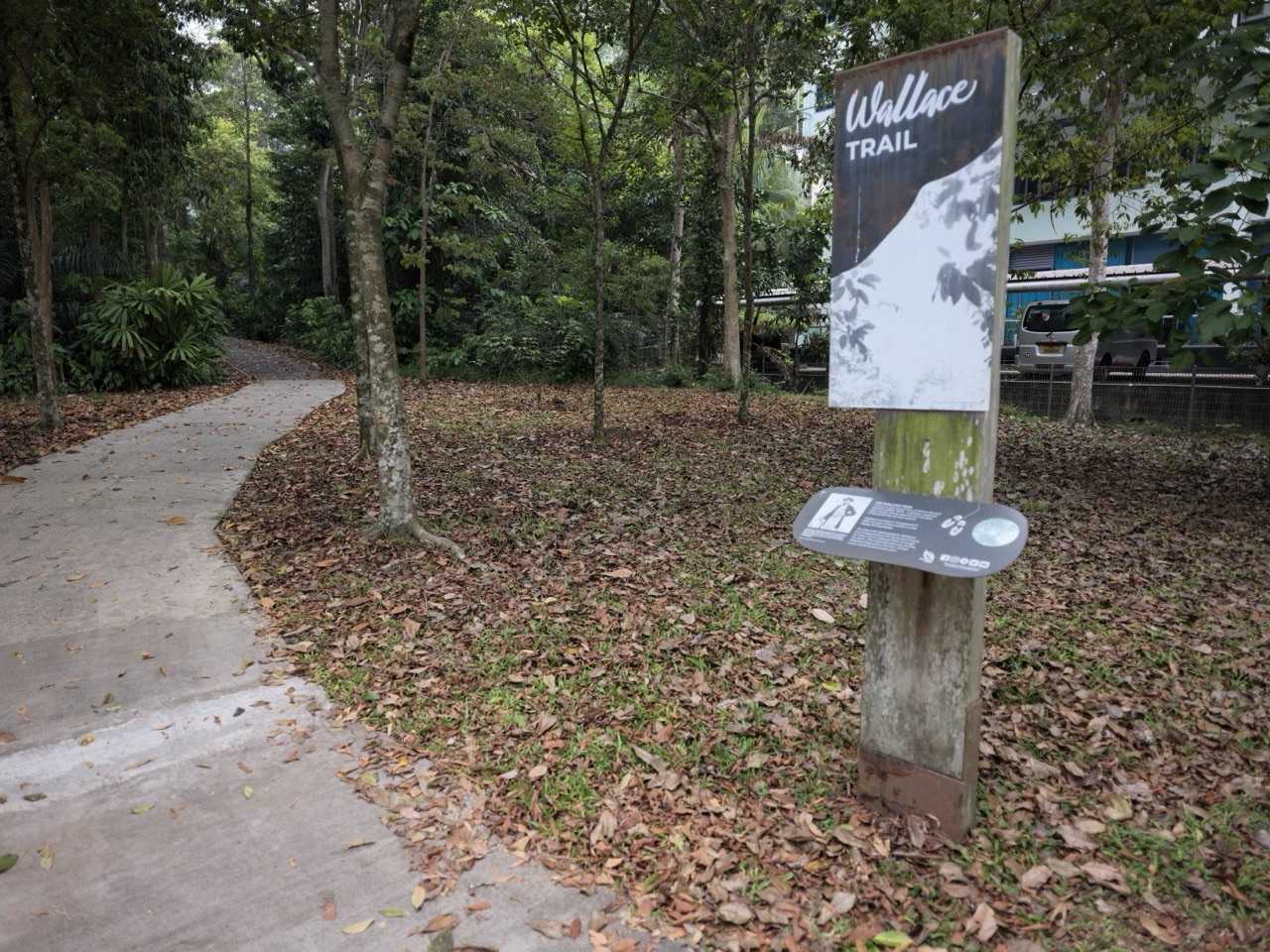
If every park is isolated, people must make a special trip. A park becomes a destination, not part of daily life. Singapore’s better idea is to connect parks, reservoirs, waterways, neighbourhoods and nature areas through park connectors and green corridors.
This changes the meaning of greenery.
A person does not only visit nature. A person can move through it.
Walk to the supermarket through shade.
Cycle to another town.
Jog beside a canal.
Bring children to a playground.
Walk a dog in the evening.
Let seniors exercise near home.
Let residents move between parks without needing a car.
The Park Connector Network is the clearest example. NParks describes the PCN as an island-wide network of linear green corridors linking major parks and nature areas across Singapore, with more than 380km of trails; NParks’ annual reporting said the network reached 393km in 2024 after additional park connectors were completed.
This is not only recreation.
It is mobility in green form.
The MRT moves people fast.
The bus moves people locally.
The PCN moves people gently.
This matters because not all movement is economic. A country also needs walking movement, family movement, evening movement, exercise movement, recovery movement, old-age movement and thinking movement.
The green corridor gives Singapore another kind of map.
Not the map of work.
The map of breathing.
Parks Are Mental Infrastructure
A park does not only serve the body.
It serves the mind.
This is especially important in Singapore because the country runs fast. The student system is intense. The work system is intense. The housing system is dense. The transport system moves millions. The shopping system is convenient but noisy. The digital system is constant. The education system pushes. The economy pushes. Parents push. Deadlines push.
People need decompression.
A park gives a different speed.
The child can run without being marked.
The worker can walk without being measured.
The senior can sit without being rushed.
The family can gather without buying anything.
The teenager can cycle instead of staring at a screen.
The parent can breathe after a long day.
This is why parks matter inside a high-performance society.
If every public space becomes commercial, the citizen is always a consumer. If every space is transport, the citizen is always moving. If every space is home, school or work, the citizen is always under role pressure.
The park gives the person back to themselves.
That sounds soft, but it is not.
Mental recovery is productivity protection. Physical movement is healthcare prevention. Family leisure is social stability. Public greenery is emotional infrastructure.
A society that wants disciplined workers and resilient students must also give them places to recover.
Parks Make HDB Towns Human
Singapore’s HDB towns cannot rely only on flats.
A town is not just blocks of housing. It needs void decks, playgrounds, schools, clinics, coffeeshops, malls, bus stops, MRT stations, paths, trees and parks. The home may be private, but the town is shared.
Greenery is what softens the shared town.
Without trees, the walk to the bus stop feels harsher. Without parks, children have fewer free places to play. Without benches, seniors have fewer places to pause. Without shade, exercise becomes less inviting. Without green edges, blocks feel harder and hotter.
The park is not outside the housing system.
It is part of the housing system.
A flat gives shelter.
A park gives relief.
A tree gives shade.
A connector gives movement.
A playground gives childhood.
A fitness corner gives ageing bodies a reason to keep moving.
This is one reason Singapore’s town planning has to be read as a whole.
The flat alone cannot carry liveability.
The town must carry it.
Green Corridors Are Ecological Roads
Humans need corridors.
So does nature.
If green spaces are fragmented, wildlife populations become isolated. Plants, birds, butterflies, insects, small mammals and other organisms need connected habitats. Singapore’s urban environment cuts through nature with roads, buildings and human activity, so green corridors help reconnect the living system.
NParks describes nature corridors and nature ways as networks of ecological corridors that link thriving green spaces, bringing plants, wildlife and people together; it says that after six decades of greening efforts, Singapore now has a network of green spaces where nature is entwined into everyday life.
This is the deeper purpose of green corridors.
They are not just pretty walking routes.
They are ecological roads.
Birds move. Insects move. Seeds move. Animals move. Plants spread. Habitats connect. Nature becomes less trapped.
This matters because Singapore is not trying to become a wilderness. It cannot. It is a city-state. But it can become a city where nature is not entirely pushed to the edges.
That is the City in Nature idea.
Not nature outside the city.
Nature inside the city.
City in Nature Is a Systems Upgrade
Singapore used to be described as a Garden City.
That phrase was already powerful. It meant a city deliberately greened, cleaned and planted.
But the newer phrase is stronger: City in Nature.
A Garden City can sound like the city is primary and greenery is added around it. A City in Nature suggests a deeper integration: nature is not garnish, but part of the structure.
The Singapore Green Plan describes City in Nature as a key pillar, with strategies such as expanding the Nature Park Network, intensifying nature in gardens and parks, restoring nature into the urban landscape, strengthening connectivity between green spaces, and enhancing veterinary care and animal management.
This is a conceptual shift.
Singapore is not only asking: how do we make the city look green?
It is asking: how do we make nature function inside the city?
That is a more demanding question.
It requires planting differently. It requires connecting habitats. It requires protecting nature reserves. It requires designing parks with ecological value. It requires green roofs and vertical greenery. It requires thinking about heat, water, shade, biodiversity and people together.
A decorative tree is not enough.
The question becomes: what system does this greenery serve?
The 10-Minute Park Promise
One of Singapore’s most important green targets is simple to understand.
Every household should be within a 10-minute walk from a park.
NParks’ City in Nature strategy states that by 2030, Singapore aims to have 300km of nature ways and 500km of park connectors so that every household will be within a 10-minute walk from a park.
This is a powerful target because it treats access to greenery as a normal part of urban life.
Not only for those living near expensive districts.
Not only for those who drive to big parks.
Not only for weekend visitors.
Not only for the fit and mobile.
Nearness matters.
A park that is thirty minutes away is a planned outing. A park ten minutes away is part of life. It can be used after dinner, before school, during a walk, after work, during recovery from illness, or by a senior who cannot travel far.
This is how public greenery becomes democratic.
A famous garden is nice.
A nearby park changes daily life.
Trees Are Cooling Infrastructure
Singapore’s heat is not just discomfort.
It is a national planning problem.
A hot city makes walking harder. It discourages outdoor exercise. It increases energy use for cooling. It makes elderly residents more vulnerable. It makes public spaces less usable. It affects workers who spend time outdoors. It can make dense estates feel harsher.
Trees help.
They shade paths, cool surfaces, reduce glare, improve walking comfort and make outdoor movement more bearable. They are living infrastructure. They do not just stand there. They work.
The OneMillionTrees movement aims to plant one million more trees across Singapore between 2020 and 2030 to restore nature into the city. NParks had said in 2023 that more than half a million trees had already been planted with the community, and expected the one-million target to be reached by 2027, three years ahead of the original 2030 target.
This matters because tree planting is not only symbolic.
A tree planted today becomes shade for future pedestrians. A tree-lined route becomes a more walkable neighbourhood. A shaded town is more humane than a heat-baked one.
Trees are Singapore’s quiet climate machines.
They are slow, living, patient machines.
Greenery and Water Work Together
Parks are also part of Singapore’s water story.
In a tropical city, rain does not fall politely. Heavy rain can overwhelm drains, flood roads and test urban systems. Green spaces, waterways, canals, reservoirs and naturalised landscapes help manage the relationship between rain and city.
This is why many park connectors follow rivers, canals and waterways.
The green route is also a water route.
A canal can be more than concrete drainage. A waterway can become a recreational corridor. A park can absorb, slow or frame water. A reservoir can be both water infrastructure and public landscape.
This is the Singapore habit again: make one piece of land serve multiple functions.
A waterway is drainage.
A waterway is scenery.
A waterway is exercise space.
A waterway is biodiversity edge.
A waterway is town identity.
The same space performs many jobs because Singapore cannot waste space.
Parks Are Healthcare Before the Clinic
Healthcare is not only doctors and hospitals.
Healthcare also begins before sickness.
Walking paths, exercise corners, cycling routes, shaded parks and nearby green spaces encourage movement. That movement matters because ageing, diabetes, heart disease, obesity, stress and loneliness cannot be solved only inside hospitals.
A senior who walks every morning is doing healthcare.
A child running at a playground is doing healthcare.
A worker decompressing after work is doing healthcare.
A family walking after dinner is doing healthcare.
A resident cycling instead of sitting all weekend is doing healthcare.
This is preventive health in landscape form.
The healthcare article showed how Singapore is trying to move upstream through prevention. Parks are part of that upstream system. They help people stay healthier before the clinic is needed.
A hospital treats the body after trouble.
A park helps the body stay in use.
That is why parks should not be treated as leisure only. They reduce pressure elsewhere in the system: healthcare, family stress, ageing care, mental health, even community cohesion.
The park is a low-cost public health machine.
Parks Are Also Social Mixing Spaces
Singapore’s public spaces matter because people live different lives.
A mall mixes people, but through consumption.
An MRT station mixes people, but through movement.
A hawker centre mixes people, but through food.
A park mixes people through presence.
No one has to buy anything to sit under a tree.
That is important.
The park allows different ages and backgrounds to occupy the same public space without a transaction. Children, domestic helpers, elderly residents, joggers, cyclists, pet owners, families, teenagers, migrant workers, office workers, tourists and residents can all share the same green space.
This does not mean deep social harmony automatically appears.
But it creates low-pressure contact.
A society needs some spaces where people can simply exist near one another. Not as customers. Not as commuters. Not as students. Not as workers. Just as people.
That is what parks do.
They create a softer form of citizenship.
Park Connectors Change the Weekend
The Park Connector Network also changed Singapore’s leisure geography.
Before, many families had to choose a destination: East Coast Park, Botanic Gardens, MacRitchie, Bishan-Ang Mo Kio Park, West Coast Park, Pasir Ris Park.
With connectors, the route itself becomes the activity.
Cycling from one neighbourhood to another. Walking along waterways. Jogging across town boundaries. Exploring loops. Linking parks. Moving through HDB estates and nature edges without feeling trapped by roads.
NParks’ Round Island Route is planned as a continuous 150km park connector and part of broader plans for a 360km island-wide network of recreational routes made up of park connectors and trails.
This is important because Singaporeans often feel the island is small.
Green routes make it feel larger.
Not geographically larger, but experientially larger.
A person can discover hidden edges, quiet canals, bridges, waterfronts, neighbourhood parks and routes that are not obvious from the MRT map. The city becomes explorable again.
That is valuable in a country where many routines are fixed.
Home. School. Work. Tuition. Mall. MRT. Repeat.
The green corridor interrupts the loop.
Greenery Raises Property Value, But That Creates Tension
Greenery makes places desirable.
A flat near a good park feels different. A condo near a nature reserve markets itself differently. A town beside a waterfront becomes more attractive. A shaded estate feels better than a barren one.
This is positive, but it creates tension.
If greenery improves liveability, it can also improve property value. If property value rises, access to premium green spaces may become unequal. The rich can buy nearer to beautiful landscapes, while ordinary households depend on public planning to distribute green access fairly.
This is why the 10-minute park promise matters.
It is not enough for Singapore to have iconic green spaces.
It needs ordinary green access.
Every town needs breathing space. Every child needs a place to play. Every senior needs a place to walk. Every worker needs shade. Every family needs nearby relief.
If greenery becomes only an amenity for expensive areas, it fails as public infrastructure.
Singapore’s green system is strongest when it is distributed.
Nature Also Creates Conflict
A City in Nature is not always comfortable.
More nature means more encounters with wildlife. Monkeys, wild boars, otters, snakes, birds, insects and other animals become part of urban life. Some people enjoy this. Some fear it. Some feed animals wrongly. Some complain when animals enter estates. Some want nature nearby but not too nearby.
This is another Singapore trade-off.
If we want biodiversity, we must accept that nature is alive.
A tree drops leaves.
A bird makes noise.
An animal crosses a path.
An insect appears.
A park floods after rain.
A trail becomes muddy.
A branch falls.
A root lifts pavement.
Nature is not an air-conditioned mall.
That is the lesson Singapore must learn as it becomes greener. A City in Nature cannot mean nature behaves like decoration. It means citizens must become more literate about living systems.
Do not feed wildlife.
Do not panic unnecessarily.
Do not treat every animal as an invader.
Do not expect parks to behave like polished hotel lobbies.
Do not forget that the city shares space with other life.
This is not easy for an orderly society.
Singapore likes control.
Nature reminds Singapore that not everything living can be controlled perfectly.
Green Corridors Are Education Spaces
Parks also teach.
Not through exams, but through experience.
A child who sees trees, insects, birds, rainwater, soil, leaves, flowers, roots, ants, butterflies, mangroves, reservoirs and monkeys understands the island differently. Nature becomes real, not just a chapter in a Science textbook.
This matters for education.
Environmental responsibility is hard to teach only through worksheets. Children need to see the living system. They need to understand that water comes from somewhere, waste goes somewhere, trees cool something, animals need habitat, and human behaviour changes the environment.
A park is an outdoor classroom.
A mangrove boardwalk teaches coastal ecology.
A reservoir teaches water.
A park connector teaches urban planning.
A nature trail teaches biodiversity.
A community garden teaches food, patience and care.
In a tuition-heavy, exam-heavy society, this kind of learning is important.
It reminds children that not all intelligence is paper intelligence.
Some intelligence is observation.
Skyrise Greenery Is Singapore’s Vertical Answer
Because land is scarce, greenery cannot remain only horizontal.
Singapore has also pushed greenery upward through rooftops, vertical greenery, balconies, terraces and facades. NParks describes skyrise greenery as rooftop and vertical greenery, an important strategy to increase greenery in urban environments under the City in Nature vision.
This is another example of Singapore’s land-scarcity logic.
If there is not enough ground, use height.
Buildings are not only structures. They become surfaces for greenery. Roofs become gardens. Facades become planting zones. Balconies become small green spaces. Infrastructure becomes habitat and cooling surface.
This does not replace forests or parks.
But it extends the green system into built form.
In Singapore, even buildings are asked to help the island breathe.
Parks Are Maintenance Systems Too
A park looks natural, but it is heavily maintained.
Grass is cut. Trees are inspected. Paths are repaired. Lights are maintained. Drains are cleared. Playgrounds are checked. Fitness equipment is serviced. Wildlife is managed. Plants are selected. Invasive species are controlled. Fallen branches are removed. Signs are updated. Toilets are cleaned. Litter is collected.
Nature inside a city is not self-running.
It is managed nature.
This is another hidden labour system. Just as clean streets depend on cleaners, green spaces depend on arborists, landscape workers, planners, rangers, ecologists, contractors and volunteers.
A beautiful park is not only a gift of nature.
It is a collaboration between nature and maintenance.
This matters because the public often sees the result but not the work.
When a tree falls, people notice.
When a path floods, people notice.
When grass grows too long, people notice.
When everything is maintained, people forget the system exists.
That is the fate of successful infrastructure.
It disappears into expectation.
Greenery Is National Branding
Singapore’s green image is also economic.
A clean, green, organised city attracts tourists, expatriates, investors, conferences and companies. It makes the country feel liveable. It differentiates Singapore from other dense cities that feel more polluted, chaotic or harsh.
This is not superficial.
Liveability is economic strategy.
Global workers can choose where to live. Companies care about quality of life. Tourism depends on impressions. Families care about parks and safety. A city that feels green is easier to love and easier to sell.
Greenery therefore sits inside Singapore’s competitiveness.
Changi impresses the visitor.
The MRT moves the visitor.
The city skyline signals wealth.
The trees and parks signal liveability.
Together, they form the national interface.
Singapore does not only want to work.
It wants to feel like it works.
Greenery helps produce that feeling.
The Trade-Off: Nature Versus Development
Every green space in Singapore has to defend itself against development pressure.
The island needs housing. It needs roads. It needs schools. It needs hospitals. It needs transport lines. It needs economic space. It needs defence land. It needs utilities. It needs future flexibility.
So nature and development are always in tension.
This is the hardest part of the green story.
It is easy to praise greenery generally. It is harder to decide what happens when a road, train line, housing project, nature area, drainage need and biodiversity concern collide.
Singapore’s planning challenge is not whether greenery is good.
Everyone can agree greenery is good.
The challenge is how much, where, for whom, and at what cost.
This is why public debates over forests, nature reserves, trails, development projects and environmental impact studies can become emotional. People are not only arguing over trees. They are arguing over what kind of city Singapore should become.
A purely economic city will consume its green lungs.
A purely preservationist city may struggle to house and move people.
A mature city has to negotiate carefully.
Singapore’s future green success depends on whether it can keep making those negotiations with intelligence and honesty.
Parks Show the Singapore Method
Parks and green corridors reveal the Singapore method clearly.
First, begin with constraint: the island is small, hot, dense and highly urban.
Second, identify the risk: without greenery, density becomes harsh, heat worsens, biodiversity shrinks, public health suffers and liveability declines.
Third, build systems: parks, nature reserves, park connectors, nature ways, skyrise greenery, tree planting, waterway integration and town-level green planning.
Fourth, make access broad: every household within a 10-minute walk of a park.
Fifth, connect the pieces: green corridors for people and wildlife.
Sixth, keep upgrading: City in Nature, OneMillionTrees, more park connectors, more nature parks, more ecological restoration.
That is how Singapore works.
It does not treat beauty as separate from function.
It turns beauty into function.
The Park Is the Anti-Mall
Singapore has many malls.
Malls are useful. They provide food, air-conditioning, services, shopping, tuition centres, clinics and social space. But malls are commercial spaces. They are designed around spending.
Parks are different.
They ask less from the person.
You can walk without buying. Sit without ordering. Talk without paying. Sweat without subscribing. Watch children play without booking. Look at water without entering a queue.
This is important in a society where so many spaces are monetised.
The park is one of the few public spaces where a citizen can simply be.
That matters for dignity.
Not every family wants to spend money every weekend. Not every teenager needs another mall. Not every senior wants to sit at home. Not every child should grow up thinking leisure must happen indoors and cost money.
The park is public wealth.
It belongs to the common life.
Closing Thought
To understand Singapore, do not only look at the skyline.
Look at the shade beneath it.
Look at the tree beside the HDB block.
The park connector beside the canal.
The senior walking at 7am.
The child learning to cycle.
The family crossing a bridge after dinner.
The jogger moving through the town.
The otters in the waterway.
The butterflies along a nature way.
The rooftop garden above a building.
The rain falling into a landscape designed to carry it.
The park ten minutes from home.
That is Singapore too.
A small island cannot survive as concrete alone.
It needs systems that move people, systems that house people, systems that feed people, systems that protect people, systems that teach people, systems that heal people, and systems that let people breathe.
Parks and green corridors are part of that breathing system.
They are not decorations placed after the real work is done.
They are part of the real work.
They make density bearable.
They make heat softer.
They make towns humane.
They make exercise easier.
They make childhood freer.
They make ageing gentler.
They make biodiversity possible.
They make the city emotionally larger than its land area.
Singapore works because it understands that infrastructure is not only steel, concrete, trains, ports, airports and pipes.
Sometimes infrastructure has leaves.
Sometimes it gives shade.
Sometimes it is a path beside water.
Sometimes it is a park where no one has to buy anything.
A civilisation cannot only move fast.
It must also know where its people can slow down.
That is why Singapore’s green corridors matter.
They are the island’s lungs.
They are the city’s soft machinery.
They are how a dense country remembers that human beings need space, shade, silence and life around them.