
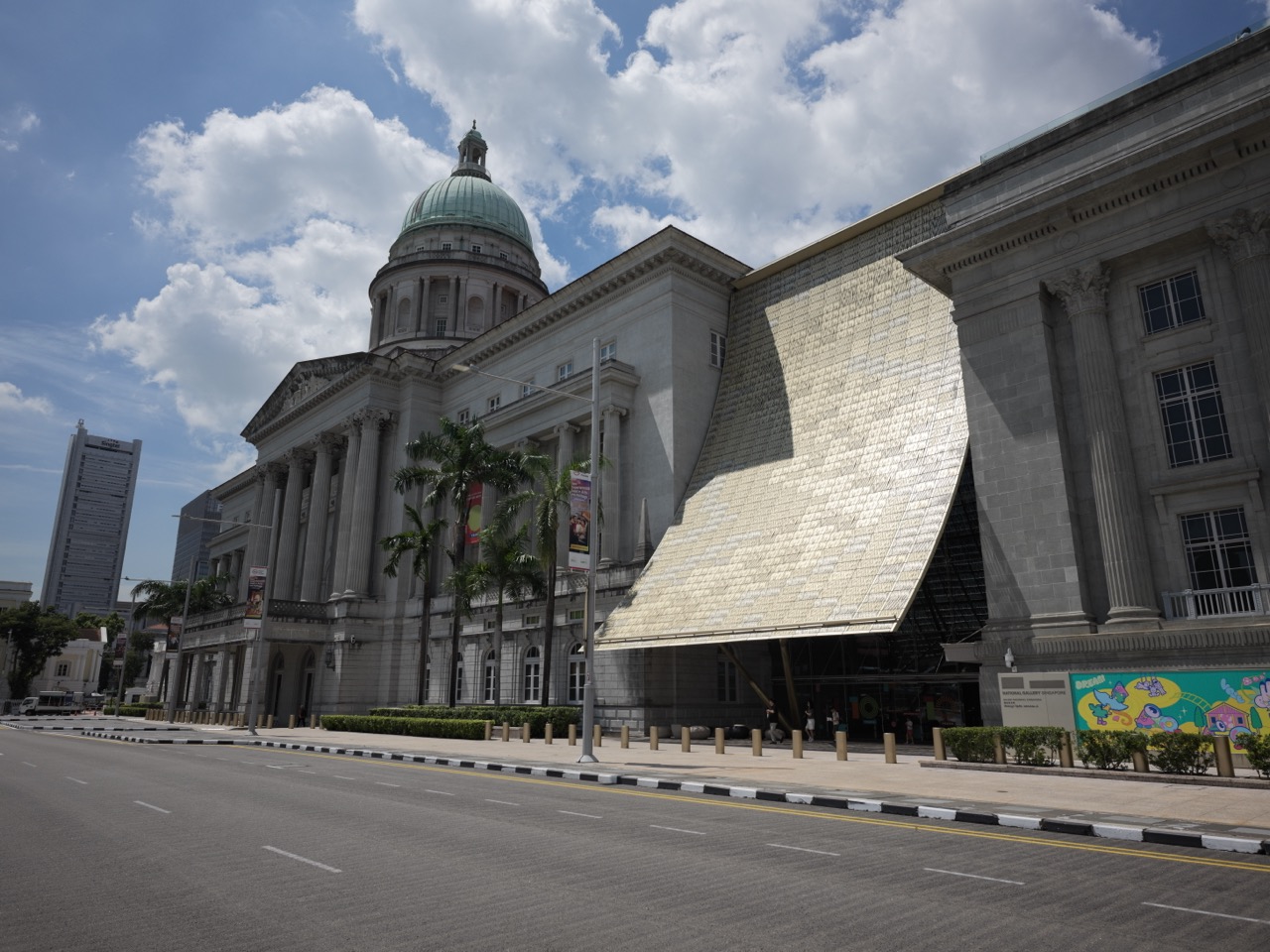
Description: Singapore works because scarcity forced it to become a tightly connected island system: law, land, housing, trade, water, education, labour, reserves, transport, trust and long-term planning working together.
Article Series: How Singapore Works
Article Type: Civilisation Systems / Singapore Explainer / eduKateSG Longform
Connected articles start here:
- https://edukatesg.com/portfolio/how-singapore-works-the-island-nations-successful-civilization-system/
- https://edukatesg.com/portfolio/civos-runtime-how-singapore-works-singapore-technical-documentation-id/
- https://edukatesg.com/portfolio/how-singapore-works-the-control-tower-and-runtime/
Excerpt
Singapore is not easy to explain because it does not work like a normal large country. It is a city, island, port, airport, financial centre, housing system, education machine, water project, social compact and strategic state all compressed into one small space. Its success does not come from one policy or one leader alone. It comes from how many systems are forced to connect.
To understand Singapore, begin with the island. Small land means housing must be planned. No natural water abundance means water must be engineered. No large domestic market means trade must be global. A dense population means transport, schools, hospitals and public order cannot be allowed to fail casually. A lack of natural resources means people, trust, law, logistics and capital become the real resources.
So Singapore works by turning constraint into design. That is the real operating system.
How Singapore Works: The Island Nation
Singapore is often described as a successful country, a clean city, a global financial hub, a port, an airport, a safe place, a strict society, a high-pressure education system, or a small but rich nation.
All of these descriptions are partly correct.
But they are not enough.
They describe the surface. They do not explain the machine.
Singapore is not simply a country that became rich. It is an island that had to become organised. It is a city-state that could not afford many of the mistakes that larger countries can absorb. A large country can have empty hinterland, failed towns, inefficient roads, spare farmland, unused rivers, internal markets, domestic energy reserves and strategic depth. Singapore has very little of that.
Singapore had to make the island itself work.
That is why the correct question is not only:
Why is Singapore successful?
The better question is:
How does Singapore convert a small island into a functioning civilisation system?
That answer begins with one simple idea:
Singapore works because its weaknesses were not ignored. They were turned into systems.
1. Singapore Begins With Constraint
Every country has geography. Singapore has compression.
Singapore’s total population stood at 6.11 million as at June 2025, according to Singapore’s official Population in Brief data, while SingStat lists population density at about 8,300 persons per sq km in 2025. (Population.sg)
That density matters. It changes everything.
It means land cannot be treated casually. Roads, homes, schools, hospitals, train lines, industrial estates, parks, reservoirs, airports, ports and military facilities must all compete for space. In a larger country, bad planning may create inconvenience. In Singapore, bad planning becomes national stress.
This is the first key to understanding Singapore:
Singapore is not planned because planners like planning. Singapore is planned because the island has no room for disorder.
A small island has to decide early what every piece of land is for. Housing cannot be separated from transport. Transport cannot be separated from work. Work cannot be separated from education. Education cannot be separated from economic policy. Economic policy cannot be separated from trade. Trade cannot be separated from ports, airports, law, finance and diplomacy.
This is why Singapore feels unusually coordinated.
It is not one system. It is a stack.
2. The Island Nation Is a Stack, Not a Single Machine
A normal article may say Singapore has good government, good infrastructure, good schools, low corruption and a strong economy.
That is true, but too shallow.
Singapore works because these are not separate achievements. They reinforce one another.
| Singapore Layer | What It Does | Why It Matters |
|---|---|---|
| Land | Allocates scarce space | Prevents chaos in a dense island |
| Law | Creates predictability | Allows trust, contracts and investment |
| Housing | Stabilises families and neighbourhoods | Builds social order and asset security |
| Transport | Moves workers, students and goods | Keeps the island productive |
| Port and airport | Connect Singapore to the world | Replaces the missing hinterland |
| Education | Builds human capital | Turns people into the main resource |
| CPF | Forces long-term savings | Links work, housing, healthcare and retirement |
| Reserves | Protects the future | Funds crises and long-term national needs |
| Water | Engineers survival | Converts vulnerability into resilience |
| Anti-corruption | Protects trust | Reduces friction and hidden costs |
| Skills upgrading | Repairs the workforce over time | Keeps Singapore adaptable |
| Digital government | Speeds up administration | Makes the state more responsive |
This is the island stack.
Singapore’s real design is not “government on top, people below.” It is more like a network of systems where each layer supports the next.
When land is planned, housing can be built.
When housing is stable, families can function.
When families function, children can learn.
When children learn, the workforce improves.
When the workforce improves, companies invest.
When companies invest, jobs and taxes grow.
When taxes and reserves grow, infrastructure can be upgraded.
When infrastructure improves, the island becomes more valuable.
When the island becomes more valuable, the system can fund the next generation.
That is how Singapore compounds.
3. The Legal Skeleton: How the State Is Structured
Singapore is a sovereign republic with a written Constitution. The Prime Minister’s Office explains that the Constitution provides the basic framework for the three organs of state: the Executive, the Legislature and the Judiciary. The Executive comprises the Cabinet, which is responsible for the general direction of government and accountable to Parliament; the Legislature comprises Parliament; and the Judiciary independently administers justice. (Prime Minister’s Office Singapore)
This is the skeleton.
But a skeleton alone does not explain motion.
The formal structure tells us who has authority. It does not fully explain how Singapore moves quickly, coordinates across ministries, builds infrastructure ahead of demand, controls corruption, manages land, links education to employment, or turns water insecurity into engineered supply.
That is why “How Singapore Works” needs to go beyond constitutional description.
The Constitution gives the state its legal body.
Cabinet gives the state its decision-making centre.
The public service gives the state its implementation muscle.
Statutory boards give the state specialised operating arms.
The law gives citizens and investors predictability.
Public trust gives the system speed.
Singapore is not just government by law. It is government through execution.
4. The Island Has No Hinterland, So It Built External Lungs
Large countries breathe through domestic markets.
Singapore breathes through the world.
This is why the port and airport are not just infrastructure. They are national organs.
The Maritime and Port Authority of Singapore reported that Singapore achieved record port performance in 2025, with 3.22 billion gross tonnage of vessel arrivals and 44.66 million TEUs of container throughput. (Maritime and Port Authority of Singapore) Changi Airport recorded 69.98 million passenger movements in 2025, an all-time high, according to Changi Airport Group reporting cited by CNA. (CNA)
These are not just impressive numbers. They explain Singapore’s survival pattern.
Singapore is small, but it is not isolated. It is small and connected.
The port connects goods.
The airport connects people.
The financial system connects capital.
The legal system connects contracts.
The education system connects talent.
The diplomatic system connects Singapore to a wider rules-based world.
This is how Singapore solves the missing hinterland problem.
It cannot rely on a large domestic market, so it becomes useful to other markets.
It cannot feed itself entirely from its own land, so it becomes excellent at logistics.
It cannot depend on natural resources, so it becomes a place where resources, capital, people and information flow reliably.
Singapore works because it made itself into a trusted node.
5. Land Is the First Operating System
In Singapore, land is never just land.
Land is housing.
Land is transport.
Land is defence.
Land is water catchment.
Land is industrial policy.
Land is social policy.
Land is national psychology.
This is why HDB matters so much.
The Ministry of National Development says there are more than 1 million HDB flats across Singapore, home to close to 80% of the resident population. (Ministry of National Development) HDB states that it has built over 1.25 million flats, housing close to 80% of Singapore’s resident population. (HDB)
Public housing in Singapore is not merely a roof over the head. It is a national stabiliser.
It gives families an address.
It creates towns.
It anchors schools, clinics, transport routes and shops.
It allows government to plan density.
It gives citizens a stake in the island.
It turns scarce land into a social compact.
This is why one cannot explain Singapore without HDB.
In many countries, housing is mainly a private market issue. In Singapore, housing is a civilisation issue. If housing fails, family formation, retirement, transport, social trust and political stability are all affected.
So Singapore does not treat housing as one ministry’s problem. Housing sits inside the whole island design.
6. CPF: The Hidden Circuit Beneath Work, Housing and Retirement
CPF is often misunderstood as simply retirement savings.
It is more than that.
The Central Provident Fund describes CPF as a key pillar of Singapore’s social security system, helping Singapore citizens and permanent residents set aside funds for retirement; CPF’s overview links retirement security to home ownership, healthcare savings through MediSave, and lifelong income through CPF LIFE. (SingStat)
CPF is a forced long-term savings system. But its deeper role is that it links different parts of life into one circuit:
| CPF Function | System Role |
|---|---|
| Ordinary Account | Housing and long-term asset formation |
| Special Account / Retirement Account | Retirement adequacy |
| MediSave | Healthcare financing |
| CPF LIFE | Lifelong retirement income |
| Employer and employee contributions | Work-linked social security |
This is the Singapore style: one institution often does several things at once.
CPF is not only about old age.
It affects home ownership.
It affects family finances.
It affects healthcare readiness.
It affects labour cost.
It affects national savings.
It affects retirement security.
That is why Singapore is hard to explain in ordinary categories. The systems are braided together.
7. Water: The Island Learns Not to Panic
Water is one of the clearest examples of how Singapore works.
A normal country may treat water as a natural resource. Singapore treats water as a strategic system.
PUB explains Singapore’s Four National Taps: local catchment water, imported water, NEWater and desalinated water. (PUB, Singapore’s National Water Agency) The Ministry of Sustainability and the Environment describes these four sources as a diversified water supply strategy to provide a robust supply of water for future generations. (Ministry of Sustainability)
This is the Singapore method in miniature.
First, identify the vulnerability.
Second, diversify supply.
Third, engineer substitutes.
Fourth, educate the population.
Fifth, build long-term resilience before crisis arrives.
Water shows how Singapore thinks.
The island does not simply ask, “Do we have enough?”
It asks, “What happens if the external supply is disrupted?”
Then it builds alternatives.
That is the deeper lesson.
Singapore works by refusing to leave vital systems to chance.
8. The Fiscal Engine: Reserves, NIRC and Long-Term Capacity
Singapore’s reserves are not just savings. They are strategic depth.
The Ministry of Finance explains that about 20% of annual government spending is funded by investment returns on reserves through the Net Investment Returns Contribution, with the estimated NIRC for FY2026 at S$28.48 billion. (Ministry of Finance (MOF)) MOF also explains that the NIRC makes up about 20% of government revenue, supplementing tax revenues. (Ministry of Finance (MOF))
This matters because Singapore has very little physical depth.
It has limited land.
It has no large natural-resource buffer.
It has no large domestic market to retreat into.
It has no room for fiscal carelessness.
So reserves become national depth.
They allow Singapore to respond to crises.
They help fund public spending without relying only on taxes.
They strengthen confidence.
They protect future generations.
They give the state room to manoeuvre.
In a small island, fiscal discipline is not merely accounting. It is survival architecture.
9. The Monetary Engine: Why Singapore Uses the Exchange Rate
Most people think central banks mainly set interest rates.
Singapore is different.
MAS states that Singapore’s monetary policy framework is centred on managing the Singapore dollar against a trade-weighted basket of currencies. (Monetary Authority of Singapore) MAS also explains that it conducts monetary policy by managing the Singapore dollar exchange rate and does not control domestic interest rates or money supply growth. (Monetary Authority of Singapore)
This fits Singapore’s island economy.
Because Singapore imports so much, exchange rates affect prices.
Because Singapore is open to global trade and capital flows, external prices matter.
Because Singapore is small, imported inflation can pass quickly into daily life.
So the monetary system is designed around openness.
Again, the pattern is the same:
Singapore does not copy a large-country model blindly.
It designs for its own constraint.
10. Education: The Island’s Replacement for Natural Resources
Singapore has no oilfield, no huge agricultural plain, no giant domestic market and no mineral empire.
So the main resource is people.
This is why education carries such heavy weight in Singapore. It is not only about exams. It is the national talent engine.
Singapore’s Full Subject-Based Banding changes, beginning with the 2024 Secondary 1 cohort, replaced the old Express, Normal Academic and Normal Technical streams with Posting Groups 1, 2 and 3, allowing students to take subjects at different levels as they progress. (Prime Minister’s Office Singapore)
That matters because the education system is no longer simply a sorting machine. It increasingly has to become a routing and repair machine.
Students develop at different speeds.
Subjects have different difficulty levels.
Labour markets change.
Families have different levels of support.
The economy needs both depth and flexibility.
So Singapore’s education system is moving from fixed labels towards more flexible subject pathways. That is consistent with the island’s broader operating style: keep structure, but allow controlled movement within the structure.
This is also where eduKateSG’s education philosophy connects naturally with the Singapore system.
A student is not one mark.
A student is a developing system.
Weak foundations create future bottlenecks.
Good teaching creates future optionality.
The earlier a child learns how to think, connect, repair, write, reason and solve, the more pathways remain open later.
Singapore’s national education system builds the broad architecture. Good teaching builds the internal engine.
11. SkillsFuture: The Adult Repair Loop
A strong school system is not enough anymore.
The economy changes too quickly. Skills expire. Industries shift. Technology replaces old work. New sectors require new literacies.
SkillsFuture describes itself as a key pillar of Singapore’s social compact, supporting Singaporeans to develop future-ready skills and resilient careers through partnership among individuals, employers, unions, industry partners and government. (Ministry of Finance (MOF))
This is important because Singapore cannot afford a workforce that stops learning at graduation.
In a resource-poor country, human capital must be renewable.
That is what SkillsFuture represents: the adult update layer.
School builds the first operating system.
Work tests it.
SkillsFuture patches it.
Industry transformation redirects it.
Lifelong learning keeps the person useful in a changing economy.
This is Singapore’s education loop extending into adulthood.
12. Labour Peace: The Tripartite System
Singapore also works because it tries to reduce destructive conflict between workers, employers and government.
MOM describes tripartism as collaboration among unions, employers and the government, and calls it a key competitive advantage for Singapore. (Ministry of Finance (MOF))
This does not mean every tension disappears. Wages, costs, productivity, immigration, retraining and worker protection are still difficult issues.
But the system tries to prevent labour relations from becoming permanently adversarial.
The Singapore model prefers negotiation, adjustment and coordination.
Government wants employment and social stability.
Employers want competitiveness and flexibility.
Workers want wages, fairness and security.
Unions represent worker concerns while staying connected to national economic realities.
This is another Singapore pattern:
Conflict is not denied. It is channelled.
13. Anti-Corruption: The Trust Compressor
A small country cannot afford slow trust.
If citizens distrust institutions, everything becomes harder.
If investors distrust contracts, capital becomes expensive.
If companies distrust enforcement, business slows.
If public officers expect bribes, infrastructure becomes distorted.
If rules are not applied reliably, social resentment grows.
This is why anti-corruption is not a side issue in Singapore. It is part of the operating system.
CPIB explains that Singapore’s corruption control framework relies on legislation, enforcement and prevention, including the Prevention of Corruption Act and the Corruption, Drug Trafficking and Other Serious Crimes Act. (Ministry of Finance (MOF)) CPIB also reported that Singapore ranked third globally and top in Asia Pacific in Transparency International’s 2025 Corruption Perceptions Index. (Ministry of Finance (MOF))
Trust reduces transaction cost.
A permit moves faster when the officer is not bargaining.
A company invests faster when the rules are clear.
A citizen complies more readily when enforcement feels predictable.
A public project costs less when leakage is controlled.
This is the hidden speed of Singapore.
Trust becomes infrastructure.
14. Smart Nation: The Digital Layer
The next Singapore is not only physical.
It is digital.
Smart Nation 2.0 states that digital technologies have transformed Singapore’s economy, society, government and security, while the refreshed vision must address new opportunities and risks. (Ministry of Finance (MOF))
This is another island response.
A dense island can become congested physically, so digital systems reduce friction. Forms move online. Services connect. Data improves planning. Sensors monitor infrastructure. Digital identity enables transactions. Cybersecurity becomes part of national defence.
But digitalisation also creates new risks: scams, misinformation, cyberattacks, data leaks, social fragmentation and overdependence on platforms.
So Singapore’s digital layer has to do two things at once:
It must increase speed.
It must manage risk.
This is very Singapore.
Every new capability becomes another control problem.
15. Singapore Works Through Coupling
The most important word in this article is coupling.
Singapore works because its systems are coupled.
Housing is coupled to CPF.
CPF is coupled to work.
Work is coupled to education.
Education is coupled to industry.
Industry is coupled to trade.
Trade is coupled to port, airport and finance.
Finance is coupled to law and trust.
Trust is coupled to anti-corruption.
Water is coupled to engineering and public behaviour.
Land is coupled to almost everything.
This is why Singapore can look complicated from the outside.
A single policy often has several purposes.
An HDB town is not just housing. It is family policy, transport planning, school planning, retail planning, estate management and social stability.
A train line is not just transport. It is land-value creation, commute reduction, labour mobility and housing viability.
A school is not just a school. It is future workforce development, social mixing, national identity and pathway sorting.
A port is not just cargo. It is Singapore’s connection to the world economy.
A reservoir is not just water. It is strategic resilience.
CPF is not just savings. It is a life-cycle financing system.
This is the island lattice.
16. The Singapore Lattice: Land, Law, Logistics, Learning, Labour, Liquidity
A useful way to explain Singapore is through six Ls.
| Lattice Layer | Meaning | Singapore Function |
|---|---|---|
| Land | Scarce island space | Forces planning and density discipline |
| Law | Predictable rules | Creates trust and investor confidence |
| Logistics | Port, airport, movement | Connects Singapore to the world |
| Learning | Schools and skills | Turns people into the main resource |
| Labour | Workforce and tripartism | Balances productivity, wages and stability |
| Liquidity | Finance, reserves, capital | Funds resilience and future investment |
This is the article’s central model.
Singapore is not powerful because it is large.
Singapore is powerful because it is organised.
It has turned the island into a lattice where each system reinforces the others.
17. Why the Island Model Is Both Strong and Fragile
The same features that make Singapore strong also create pressure.
Density creates efficiency, but also stress.
Education creates talent, but also pressure on children.
Housing creates stability, but also affordability anxiety.
Global trade creates wealth, but also exposure to external shocks.
Foreign labour supports growth, but also social tension.
Rules create order, but can feel restrictive.
Long-term planning creates resilience, but may feel top-down.
High performance creates pride, but also fatigue.
This is why Singapore cannot simply declare victory.
The island has to keep recalibrating.
A small system can move fast, but it can also feel intense.
A dense system can be efficient, but it can also feel crowded.
A meritocratic system can reward effort, but it can also amplify inequality if starting points differ.
A global hub can attract capital, but it can also raise costs.
The island nation is not a finished product.
It is a live runtime.
18. How Singapore Actually Works, In One Flow
Singapore begins with scarce land and few natural resources.
Because land is scarce, planning becomes serious.
Because resources are scarce, trade becomes essential.
Because trade is essential, ports, airport, finance and law become vital.
Because law and trust are vital, corruption control becomes non-negotiable.
Because people are the main resource, education becomes central.
Because work changes, skills upgrading becomes necessary.
Because families need stability, housing and CPF become core systems.
Because water is vulnerable, supply is diversified.
Because the world is unstable, reserves and diplomacy matter.
Because everything is dense, systems must be coordinated.
That is Singapore.
Not one miracle.
A chain of necessities.
19. The Island Nation as a Civilisation Machine
Singapore is often misunderstood because people look for one secret.
Low taxes.
Strict laws.
Good schools.
Clean government.
Strong port.
Public housing.
Reserves.
Leadership.
Location.
Multicultural society.
Global capital.
But Singapore is not one of these.
Singapore is the way these things connect.
The island became a civilisation machine because it had to answer hard questions early:
How do we house a dense population?
How do we survive without natural water abundance?
How do we earn a living without a large domestic market?
How do we keep investors confident?
How do we train people fast enough?
How do we prevent corruption from becoming normal?
How do we keep labour peace?
How do we move millions of people daily?
How do we protect reserves for the future?
How do we stay useful to the world?
The Singapore answer is system design.
20. Conclusion: Scarcity Becomes Design
Singapore works because scarcity became discipline.
Small land became planning.
No hinterland became global connectivity.
No natural resources became human capital.
Water vulnerability became Four National Taps.
Crowding became public housing and transport planning.
Economic exposure became reserves and monetary discipline.
Social diversity became managed multiculturalism.
Workforce pressure became education and SkillsFuture.
Governance risk became anti-corruption and rule of law.
This is the island nation.
Not a perfect system.
Not a simple system.
Not a system without pressure.
But a system built on one deep principle:
When you cannot afford waste, you learn to design.
Singapore works because the island forced the country to think in systems.
And once a country thinks in systems, every weakness becomes a possible engine.
Quick Answer Box
How does Singapore work?
Singapore works as a tightly connected island system. Because it has limited land, few natural resources and no large domestic market, it relies on long-term planning, public housing, CPF savings, education, trade, port and airport connectivity, water resilience, fiscal reserves, anti-corruption enforcement, rule of law and workforce upgrading. Its success comes from how these systems reinforce one another.
Key Takeaways
| Question | Answer |
|---|---|
| Why is Singapore so planned? | Because land is scarce and density is high. |
| Why are port and airport so important? | They replace the missing hinterland by connecting Singapore to global flows. |
| Why does housing matter so much? | HDB is not just shelter; it is social stability, land planning and family infrastructure. |
| Why is education so intense? | People are Singapore’s main resource. |
| Why does CPF matter? | It links work, housing, healthcare and retirement. |
| Why are reserves important? | They give a small island financial depth and crisis capacity. |
| Why is anti-corruption central? | Trust reduces friction and makes the system faster. |
| What is the real Singapore model? | Constraint converted into system design. |
FAQ
What is the simplest way to explain how Singapore works?
Singapore works by connecting many systems into one island operating model: land planning, housing, CPF, education, trade, transport, reserves, water security, law, anti-corruption and workforce development.
Why is Singapore called a city-state?
Singapore is a sovereign country, but it functions like a highly urbanised city. Its national systems and city systems overlap because almost the entire country is one dense metropolitan island.
Why is land so important in Singapore?
Land is the base constraint. Singapore must fit housing, transport, industry, defence, schools, hospitals, parks, reservoirs, port facilities and airport infrastructure into a very small space.
Why is Singapore’s port important?
The port connects Singapore to global trade. Since Singapore does not have a large domestic market or natural-resource base, trade connectivity is one of its core survival systems.
Why is HDB central to Singapore?
HDB provides public housing for close to 80% of the resident population and helps stabilise families, towns, neighbourhoods and long-term land use. (Ministry of National Development)
Why is water security important in Singapore?
Singapore has limited natural water resources, so it built a diversified water system based on local catchment water, imported water, NEWater and desalinated water. (PUB, Singapore’s National Water Agency)
Why does Singapore focus so much on education?
Singapore’s main resource is human capital. Education prepares students for work, national development, social mobility and future economic change.
What is the deeper idea behind Singapore’s success?
The deeper idea is that Singapore turns constraints into systems. Scarcity becomes planning, planning becomes institutions, institutions create trust, trust creates speed, and speed helps Singapore remain competitive.
How Singapore Works | The Government Machine
Description: Singapore works through a tightly coordinated government machine: Constitution, Cabinet, Parliament, Judiciary, ministries, statutory boards, public service, planning units, anti-corruption enforcement and digital systems working as one national operating layer.
Article Series: How Singapore Works
Article Number: 2 of 10
Article Type: Singapore Systems Explainer / CivilisationOS / eduKateSG Longform
Excerpt
Singapore’s Government is often explained through its formal structure: the Executive, the Legislature and the Judiciary. That is correct, but incomplete. The deeper question is not only who holds power, but how decisions move through the system, how policies become roads, schools, housing estates, water plants, tax rules, digital services and national habits.
Singapore works because its government is not only a legal structure. It is a coordination machine. Cabinet sets direction. Parliament debates, passes laws and scrutinises public finance. The Judiciary safeguards legal order. Ministries design policy. Statutory boards execute specialised missions. The public service converts national intent into daily operations. Anti-corruption enforcement protects trust. Digital systems reduce friction. Long-term planning keeps the island from living only for today.
To understand how Singapore works, the Government Machine must be understood as the island’s control layer.
How Singapore Works: The Government Machine
Singapore is small, dense, trade-dependent and exposed to the world.
That means government in Singapore cannot be loose.
A large country may survive with uneven regions, duplicated systems, slow administration, fragmented cities, weak coordination or policy drift. Singapore has less room for that. When a country is also a city, a port, an airport, a financial centre, a housing system, a water-security project and a talent engine, government becomes more than politics.
It becomes the coordination layer of the island.
This is why Singapore’s Government should not be understood only as ministers, elections and ministries. Those are visible parts. The deeper machine is the way decisions are routed, converted into policy, checked by law, implemented by agencies, monitored through feedback, upgraded through planning, and protected by public trust.
The Singapore Government Machine is not perfect. No government is. But it is distinctive because it is designed around one central problem:
How does a small island make many systems move in the same direction before disorder becomes too expensive?
Quick Answer Box
How does the Singapore Government work?
Singapore works through three constitutional organs of state: the Executive, the Legislature and the Judiciary. The Executive, led by Cabinet, sets national direction and runs government policy. Parliament makes laws, scrutinises government actions and examines state finances. The Judiciary interprets and applies the law independently. Ministries and statutory boards then turn policy into daily services, infrastructure and regulation, supported by long-term planning, public service execution, digital government and anti-corruption enforcement. (Prime Minister’s Office Singapore)
1. Singapore’s Government Is Not One Thing
The word “government” is too small.
In Singapore, “government” can mean many layers:
| Layer | What It Does |
|---|---|
| Constitution | Sets the legal framework of the state |
| Cabinet | Sets national policy direction |
| Prime Minister | Leads the Cabinet and executive government |
| Parliament | Makes laws, debates policy, scrutinises finance |
| Judiciary | Interprets and applies the law |
| Ministries | Design policy and manage sectors |
| Statutory boards | Execute specialised national functions |
| Public service | Runs the administrative machinery |
| Planning units | Coordinate long-term strategy |
| Enforcement agencies | Maintain order and integrity |
| Digital systems | Deliver services and reduce friction |
| Feedback channels | Help the state sense problems |
This is why simple explanations often fail.
They say Singapore has a parliamentary system. True.
They say Singapore has a Cabinet. True.
They say Singapore has ministries. True.
They say Singapore has strong public institutions. True.
But the real question is how these parts connect.
Singapore works not because each part is impressive on its own, but because the parts are linked into a national operating system.
2. The Legal Skeleton: Executive, Legislature, Judiciary
The Prime Minister’s Office explains that Singapore’s Constitution provides the basic framework for the three organs of state: the Executive, the Legislature and the Judiciary. The Executive comprises the Cabinet, the Legislature comprises Parliament, and the Judiciary independently administers justice. (Prime Minister’s Office Singapore)
This is the legal skeleton.
The skeleton matters because it defines authority.
The Executive runs the government.
The Legislature makes laws and holds government to account.
The Judiciary interprets and applies the law.
Without this skeleton, government becomes personality. With it, government becomes institution.
This distinction is important. Singapore’s Government Machine does not only depend on leaders making decisions. It depends on a constitutional and institutional framework that allows decisions to be made, scrutinised, implemented and challenged within rules.
A system is stronger when power is not merely held.
It must be located.
It must be defined.
It must be checked.
It must be executed.
It must be recorded.
It must be accountable.
That is what the legal skeleton provides.
3. Cabinet: The Direction Layer
The Cabinet is the central executive engine.
The PMO states that Cabinet is responsible for all government policies and the day-to-day administration of the affairs of state, and is collectively responsible to Parliament. (Prime Minister’s Office Singapore)
That sentence explains more than it first appears to.
Cabinet does not merely discuss topics. It is where national direction is formed and aligned. In a country where land, housing, transport, water, education, manpower, industry, finance, security and climate policy all affect one another, Cabinet acts as the routing table.
A housing decision is not only a housing decision.
It affects transport, family formation, CPF usage, land value, schools and town planning.
A manpower decision is not only a manpower decision.
It affects wages, firms, immigration, social trust, productivity and training.
An education decision is not only an education decision.
It affects skills, employment, inequality, national competitiveness and family pressure.
This is why Singapore needs central coordination. The island is too coupled for ministries to behave like disconnected kingdoms.
Cabinet’s role is to keep the machine from fragmenting.
4. Parliament: The Law and Accountability Layer
Parliament is not only a place where speeches are made.
The Parliament of Singapore explains that its functions include making laws, checking the actions and policies of the Government, and scrutinising the State’s finances. It also states that legislative power is vested in the Legislature, which consists of the President and Parliament, and that Singapore’s Parliament is unicameral. (Parliament of Singapore)
This gives Parliament three important system functions.
First, Parliament converts policy into law.
A policy idea may begin as a national concern, but it becomes operationally powerful only when it is written into legislation, regulation, budget or administrative programme.
Second, Parliament creates public accountability.
Government policies are questioned, debated and explained. This does not mean every citizen agrees with every outcome. But it means decisions are placed into a public institutional process rather than hidden entirely inside administration.
Third, Parliament controls public finance.
Money is where priorities become real. A government can say education matters, but the budget shows whether classrooms, teachers, skills programmes and infrastructure are actually funded. A government can say transport matters, but the budget shows whether train lines, buses and road systems are being supported.
Parliament therefore forms the conversion chamber between public policy and public authority.
5. Judiciary: The Rule-of-Law Layer
The Judiciary is the legal stabiliser.
Singapore Courts explains that the Judiciary enforces and interprets the law, is impartial, decides cases according to law, and is responsible for ensuring equality before the law and access to justice. (Default)
This is essential to how Singapore works.
A country cannot become a trusted commercial hub if contracts are unreliable.
A country cannot attract investment if laws are unpredictable.
A country cannot maintain social order if people believe justice is arbitrary.
A country cannot run a fast administrative state if courts are not trusted to interpret limits.
The Judiciary provides the slow, serious part of the system.
Government may move quickly, but law gives the movement boundaries.
Policy may change, but legal continuity gives citizens and businesses confidence.
Administrative decisions may be made, but courts provide an arena for legal interpretation.
This is why rule of law is not abstract. It is infrastructure.
Singapore’s roads move people.
Singapore’s port moves goods.
Singapore’s courts move trust.
6. The President: The Safeguard Layer
The President is part of Singapore’s constitutional architecture. The PMO notes that the Head of State is a President who is directly elected by the people, and that the President has certain veto powers which may be exercised with discretion in specific constitutional circumstances. Outside those areas, the President acts according to Cabinet advice. (Prime Minister’s Office Singapore)
This matters because Singapore’s system has both operating power and safeguard power.
Cabinet governs.
Parliament legislates.
The Judiciary adjudicates.
The President performs constitutional functions, including specific custodial roles.
A useful way to understand this is:
| Institution | System Role |
|---|---|
| Cabinet | Direction and executive action |
| Parliament | Lawmaking, debate and financial scrutiny |
| Judiciary | Legal interpretation and justice |
| President | Constitutional safeguard in defined areas |
This is not four identical engines. It is a layered system.
Some parts move the country.
Some parts check the movement.
Some parts define the law.
Some parts protect key boundaries.
That is how a small state tries to combine speed with safeguards.
7. Ministries: The Policy Layer
Ministries are where national problems are grouped into domains.
Education.
Health.
Finance.
Manpower.
Transport.
National Development.
Trade and Industry.
Home Affairs.
Defence.
Sustainability.
Digital development.
Law.
Foreign affairs.
Each ministry is responsible for a major area of national life. But in Singapore, a ministry rarely operates alone. The Singapore Government Directory lists ministries, statutory boards, organs of state and public services as part of the official government directory, showing the breadth of the public-sector ecosystem. (Default)
This matters because ministries are not merely departments. They are policy brains.
A ministry must do several things at once:
It must understand the problem.
It must design policy.
It must consult stakeholders.
It must work with other agencies.
It must manage budgets.
It must prepare legislation or regulation when needed.
It must monitor implementation.
It must adjust when outcomes differ from expectations.
In Singapore, the ministry is not only a box in an organisation chart. It is a policy-processing unit.
8. Statutory Boards: The Specialised Execution Layer
One of Singapore’s important design features is the statutory board.
Statutory boards are public-sector organisations set up to carry out specialised functions. The Singapore Government Directory separately lists statutory boards alongside ministries, organs of state and public services. (Default)
This is crucial to understanding the Government Machine.
Ministries design and supervise.
Statutory boards often execute and operate.
For example, different statutory boards manage specialised national missions in areas such as housing, transport, economic development, water, technology, parks, libraries, skills, taxation, science and urban planning.
This gives Singapore a modular operating system.
Instead of expecting one giant ministry to do everything, Singapore uses specialised agencies with operational focus.
A housing agency can become very good at housing.
A water agency can become very good at water.
A transport agency can become very good at transport.
An economic agency can become very good at industry development.
A technology agency can become very good at digital services.
This is the “machine” part of the Government Machine.
Not everything is run as a general office. Many things are given specialised operating bodies.
9. Public Service: The Runtime Layer
The public service is where policy becomes daily reality.
The Public Service Division has described Singapore’s Public Service as including ministries and statutory boards, with public officers serving across these organisations. A PSD article notes that the Public Service includes all ministries and more than 50 statutory boards. (Public Service Division)
This is the runtime.
A policy announced at national level does not implement itself.
Someone must design the form.
Someone must process the application.
Someone must inspect the site.
Someone must maintain the database.
Someone must answer the public.
Someone must draft the regulation.
Someone must award the contract.
Someone must check compliance.
Someone must build the school, road, clinic, estate, reservoir or digital service.
Public officers are the people who turn government from intention into action.
This is why Singapore’s public service matters so much. A state can have excellent speeches and poor implementation. Singapore’s model depends heavily on implementation discipline.
The Government Machine only works if the runtime is stable.
10. Whole-of-Government Planning: The Coordination Layer
Singapore’s problems do not respect ministry boundaries.
Climate affects housing, drainage, transport, food resilience and energy.
Ageing affects healthcare, CPF, housing, manpower and family policy.
Population affects schools, transport, land, immigration and jobs.
Technology affects scams, education, productivity, security and public services.
This is why whole-of-government coordination matters.
The Strategy Group in the Prime Minister’s Office states that it drives whole-of-government strategic planning by identifying key priorities and emerging issues over the medium to long term, and partners public agencies on cross-cutting issues such as population and climate change. (Strategy Group)
This is one of the deeper Singapore mechanisms.
Singapore does not only ask, “Which ministry owns this problem?”
It also asks:
Who else is affected?
What happens in 10 years?
What happens if the trend accelerates?
What happens if several stresses hit together?
What must be built before the public feels the shortage?
What is the second-order effect?
This is the planning brain of the island.
11. The Feedback Layer: How the Machine Senses Problems
A government machine that cannot sense problems becomes blind.
Singapore’s feedback layer comes from several channels:
| Feedback Channel | What It Detects |
|---|---|
| Elections | Broad public consent or dissatisfaction |
| Parliament | Policy questions, debate and scrutiny |
| MPs and constituency work | Local ground concerns |
| Public consultations | Stakeholder response before policy change |
| Service feedback | Administrative pain points |
| Data systems | Usage patterns, demographic pressure, demand |
| Media and public discussion | Emerging anxieties |
| Courts | Legal disputes and boundary issues |
| Audits and reviews | Process weaknesses |
| Crisis response | Stress tests under pressure |
This feedback layer is essential because Singapore is highly coupled.
A small issue can spread quickly. A housing bottleneck becomes family stress. A transport breakdown becomes workplace disruption. A school-policy change becomes parent anxiety. A manpower rule becomes business cost. A digital scam wave becomes a trust problem.
So the Government Machine must not only command. It must listen, detect, adjust and repair.
That is what separates a living system from a fixed diagram.
12. Anti-Corruption: The Trust Protection Layer
The Government Machine cannot function if people assume every decision is for sale.
CPIB explains that Singapore’s corruption control framework relies on the Prevention of Corruption Act and the Corruption, Drug Trafficking and Other Serious Crimes Act, making corruption a high-risk, low-rewards activity. (Corrupt Practices Investigation Bureau)
This is not merely a moral point. It is an operating point.
Corruption slows government.
Corruption raises business costs.
Corruption weakens public trust.
Corruption distorts land use.
Corruption damages procurement.
Corruption makes rules feel fake.
Corruption punishes honest citizens and firms.
Singapore’s Government Machine needs trust because it asks citizens to accept many coordinated systems: CPF, HDB rules, taxes, transport planning, education pathways, water pricing, public health rules, security laws and long-term reserves discipline.
Trust is what allows a dense society to move without every transaction becoming a fight.
Anti-corruption is therefore not an accessory. It is a core operating system.
13. Digital Government: The Friction-Reduction Layer
Government used to be paper-heavy everywhere.
Singapore has pushed many public services into digital form because friction is costly in a dense, fast island.
Smart Nation describes the initiative as a whole-of-nation effort led by the Ministry of Digital Development and Information to build a thriving digital future. Smart Nation’s milestones also note the introduction of Singpass as a digital identity system that allows residents to access many government e-services with a single login. (Smart Nation Singapore)
This matters because digital government changes the speed of the state.
Forms become portals.
Identity becomes digital.
Payments become electronic.
Applications can be tracked.
Notifications can be sent.
Data can reveal bottlenecks.
Agencies can connect services more easily.
But digital government is not only convenience.
It also creates new risks: scams, cyberattacks, digital exclusion, data protection issues and overreliance on platforms. That is why the Government Machine must treat digitalisation as both engine and risk surface.
A faster state must also become a safer state.
14. Why Singapore’s Government Feels Fast
Singapore often feels faster than many countries because the system has several speed advantages.
First, Singapore is small.
The physical territory is compact.
Second, Singapore is dense.
Problems become visible quickly.
Third, Singapore is institutionally coordinated.
Cabinet, ministries, statutory boards and planning units can align around national priorities.
Fourth, Singapore has specialised agencies.
Statutory boards allow operating depth.
Fifth, Singapore has strong legal and administrative systems.
Rules and procedures reduce uncertainty.
Sixth, Singapore invests in digital services.
This lowers administrative friction.
Seventh, Singapore protects trust through anti-corruption enforcement.
Trust reduces hidden transaction cost.
But speed has a cost.
Fast systems can feel top-down.
Coordinated systems can feel intense.
Highly planned systems can feel rigid.
Efficient systems can under-recognise emotional experience.
Data-driven systems can miss what is not easily measured.
This is why the Government Machine must keep adjusting.
A machine that only moves fast can become hard.
A machine that only listens can become slow.
Singapore’s challenge is to remain both capable and humane.
15. The Government Machine Is a Control Tower, Not the Whole Airport
A useful metaphor is the control tower.
The Government Machine is not the whole country. Citizens, families, businesses, schools, unions, religious groups, charities, artists, neighbourhoods, entrepreneurs and communities are also part of Singapore.
Government does not fly every plane.
But it coordinates the airspace.
It sets rules.
It prevents collision.
It watches weather.
It allocates runway time.
It manages emergency response.
It maintains communication.
It plans future capacity.
This is how Singapore’s Government works at its best.
It does not replace society. It organises the conditions under which society can function.
But because Singapore is so small and dense, the control tower is unusually important.
When land is scarce, the tower matters.
When trade is global, the tower matters.
When housing affects nearly everyone, the tower matters.
When water must be secured, the tower matters.
When education shapes the national workforce, the tower matters.
When digital threats move fast, the tower matters.
The smaller the island, the more important the control layer.
16. The Government Machine as a Lattice
Singapore’s Government Machine is best understood as a lattice, not a pyramid.
A pyramid suggests simple top-down command.
A lattice shows interconnection.
| Government Node | Connects To |
|---|---|
| Cabinet | Ministries, Parliament, national strategy |
| Parliament | Laws, public finance, accountability |
| Judiciary | Law, justice, trust, constitutional order |
| Ministries | Policy design, sector management |
| Statutory boards | Operational execution |
| Public service | Daily administration and implementation |
| Strategy Group | Long-term and cross-cutting planning |
| CPIB | Integrity and anti-corruption enforcement |
| Smart Nation / GovTech layer | Digital services and infrastructure |
| Citizens | Feedback, compliance, participation, voting |
| Businesses | Investment, employment, innovation |
| Schools and families | Human capital and social formation |
This lattice is what makes Singapore different.
A port problem is not only a port problem.
It may involve manpower, trade, customs, digital systems, maritime regulation and foreign policy.
A housing problem is not only a housing problem.
It may involve land use, CPF, construction, transport, family policy and immigration.
A school problem is not only a school problem.
It may involve curriculum, mental health, manpower, family support, economic change and national competitiveness.
A scam problem is not only a police problem.
It may involve banks, telecoms, digital identity, public education, law and enforcement.
The Government Machine exists to coordinate these overlaps.
17. Where the Government Machine Is Under Pressure
A serious article cannot only praise the machine.
Every strong system has stress points.
1. Complexity
The more systems Singapore connects, the harder it becomes for ordinary citizens to understand the whole picture.
CPF, HDB, education pathways, grants, taxes, healthcare schemes, transport rules and digital services can become difficult to navigate.
A capable machine must also be understandable.
2. Social Pressure
High-performance systems can create high-pressure lives.
Parents worry about schools.
Young adults worry about housing.
Workers worry about skills and wages.
Businesses worry about costs.
Older citizens worry about retirement and healthcare.
Good governance must not only produce efficiency. It must also reduce unnecessary anxiety.
3. Centralisation Risk
Coordination is powerful, but over-centralisation can miss ground reality.
A policy can look clean on paper but feel difficult in daily life. This is why feedback, public consultation, MPs, media, civic groups and service recovery matter.
4. Digital Vulnerability
Digital government improves speed but increases exposure to cyber risk, scams and digital exclusion.
A digital state must protect both the advanced user and the elderly citizen who struggles with apps.
5. Long-Term Trust
Singapore’s model depends heavily on trust.
If citizens believe systems are fair, they cooperate.
If they believe systems are opaque, distant or unequal, friction rises.
Trust must be earned continuously.
18. What Students Can Learn From Singapore’s Government Machine
This is where eduKateSG’s education lens connects.
Singapore’s Government Machine teaches a powerful learning principle:
Good outcomes are built by systems, not moods.
A student who wants to improve cannot rely only on motivation.
They need a learning machine.
| Singapore System | Student Equivalent |
|---|---|
| Constitution | Clear rules and study principles |
| Cabinet | Weekly priorities |
| Parliament | Review and accountability |
| Judiciary | Honest correction of mistakes |
| Ministries | Subject areas |
| Statutory boards | Specific skill drills |
| Public service | Daily habits |
| Strategy Group | Long-term exam planning |
| Anti-corruption | No self-deception |
| Digital systems | Tools, tracking and revision logs |
| Feedback layer | Marking, tutor comments, error analysis |
This is why eduKateSG often teaches from scratch, builds foundations, uses mistake ledgers, moves from basics to advanced work, and helps students understand the system beneath the subject.
A student fails when the learning system is broken.
A student improves when the learning system is repaired.
A student excels when the learning system becomes self-correcting.
Singapore’s Government Machine is a national example of system thinking.
19. The Real Explanation: Singapore Works Because Government Converts Intent Into Execution
Many countries have plans.
Fewer convert plans into working systems.
Singapore’s Government Machine is designed to close the gap between idea and execution.
The idea becomes policy.
Policy becomes law, budget or programme.
Ministries design the structure.
Statutory boards execute the mission.
Public officers run the service.
Digital systems reduce friction.
Parliament questions and funds.
Courts uphold legality.
Anti-corruption protects trust.
Feedback reveals problems.
Planning units prepare for the next cycle.
This is the runtime loop.
The machine is not just about power. It is about conversion.
National anxiety becomes policy work.
Policy work becomes operating system.
Operating system becomes daily life.
That is how Singapore works.
20. Conclusion: The Island Needs a Control Layer
Singapore’s Government Machine exists because the island is small, dense and exposed.
It cannot waste land.
It cannot ignore water.
It cannot let infrastructure lag too far behind population.
It cannot allow corruption to become normal.
It cannot separate education from manpower.
It cannot separate housing from transport.
It cannot separate law from investment.
It cannot separate digital speed from digital safety.
It cannot separate today’s comfort from tomorrow’s resilience.
So Singapore built a government system that tries to coordinate the island before the island jams.
That is the deeper answer.
Singapore does not work simply because it has a government.
Every country has government.
Singapore works because its Government Machine acts as a national control layer: setting direction, making laws, administering justice, coordinating ministries, deploying statutory boards, planning for the long term, enforcing integrity, digitising services, collecting feedback and converting scarcity into order.
The Government Machine is not the whole of Singapore.
But without it, the island system cannot hold.
Key Takeaways
| Question | Answer |
|---|---|
| What are the three organs of state? | Executive, Legislature and Judiciary. |
| What does Cabinet do? | It sets government policy and handles day-to-day administration of state affairs. |
| What does Parliament do? | It makes laws, scrutinises government policy and examines state finances. |
| What does the Judiciary do? | It interprets and applies the law independently. |
| Why are statutory boards important? | They provide specialised execution for national functions. |
| Why does whole-of-government planning matter? | Singapore’s problems cross ministry boundaries. |
| Why is anti-corruption central? | Trust makes administration faster, fairer and more reliable. |
| Why does digital government matter? | It reduces friction and improves service delivery, while creating new risks to manage. |
| What is the deeper model? | Singapore’s Government Machine is the island’s control layer. |
FAQ
How does the Singapore Government work?
Singapore works through three constitutional organs: the Executive, Legislature and Judiciary. Cabinet leads the Executive and sets government direction, Parliament makes laws and scrutinises government actions, and the Judiciary interprets and applies the law independently. Ministries, statutory boards and public officers then convert policy into daily operations.
What is the role of Cabinet in Singapore?
Cabinet is responsible for government policies and the day-to-day administration of the affairs of state. It is collectively responsible to Parliament. (Prime Minister’s Office Singapore)
What does Parliament do in Singapore?
Parliament makes laws, checks the actions and policies of the Government, and scrutinises state finances. (Parliament of Singapore)
What does the Judiciary do in Singapore?
The Judiciary interprets and applies the law impartially. It is responsible for ensuring equality before the law and access to justice. (Default)
Why does Singapore use statutory boards?
Statutory boards allow specialised agencies to execute national functions with operational focus. This helps Singapore manage complex areas such as housing, transport, water, economic development, skills, technology and urban planning.
Why is Singapore’s government so coordinated?
Singapore is small, dense and highly interconnected. Housing affects transport, CPF, schools and family life. Manpower affects wages, business costs and social trust. Water, land, trade and security are all linked. Coordination is necessary because policy failures spread quickly.
What is whole-of-government planning?
Whole-of-government planning means agencies work across boundaries on problems that no single ministry can solve alone. Strategy Group in the Prime Minister’s Office drives strategic planning over the medium to long term and works with public agencies on cross-cutting issues such as population and climate change. (Strategy Group)
Why is anti-corruption important to Singapore?
Anti-corruption protects trust. CPIB explains that Singapore’s corruption control framework makes corruption a high-risk, low-rewards activity through legislation, enforcement and confiscation of corrupt gains. (Corrupt Practices Investigation Bureau)
What is the best way to understand Singapore’s Government Machine?
Understand it as a control layer. It does not replace society, but it coordinates the systems that allow a small, dense island to function: law, land, housing, transport, water, education, labour, trade, digital services, public finance and long-term planning.
How Singapore Works | The Land System
Description: Singapore works because land is treated as a national operating system. Housing, transport, water, parks, industry, defence, ports, schools, hospitals and future reserves are all planned on one small island.
Article Series: How Singapore Works
Article Number: 3 of 10
Article Type: Singapore Systems Explainer / IslandOS / eduKateSG Longform
Excerpt
Singapore does not have land in the ordinary sense. It has a national motherboard. Every home, train line, road, school, hospital, park, reservoir, business district, industrial estate, port, airport, army camp and utility corridor competes for space on one small island.
This is why land planning in Singapore is not decoration. It is survival. The land system decides where people live, how far they travel, where children study, where companies operate, where water is stored, where food is distributed, where logistics flows, where greenery cools the city, and where future generations still have room to build.
Singapore works because land is not left to drift. It is planned, reserved, intensified, reused, protected and connected.
To understand Singapore, follow the land.
How Singapore Works: The Land System
Singapore is not only a country.
It is a country squeezed into the operating conditions of a city.
That single fact explains much of how Singapore works.
Singapore’s land area was 736.3 sq km as at June 2025, while its total population was about 6.11 million and its population density was listed at 8,300 persons per sq km. That makes land not just scarce, but strategically precious. (SingStat)
A large country can afford mistakes in land use. It can have abandoned districts, inefficient roads, unused farmland, duplicate airports, sprawling suburbs, badly located factories, failing towns and large empty spaces.
Singapore cannot.
When the island is small, every land decision becomes a national decision.
A housing estate is never only housing.
A train line is never only transport.
A reservoir is never only water.
A park is never only recreation.
An industrial estate is never only factories.
A port is never only ships.
An airport is never only flights.
A school is never only education.
Each land parcel is part of a wider national equation.
That is why Singapore’s Land System is one of the deepest explanations of how Singapore works.
Quick Answer Box
How does Singapore’s land system work?
Singapore works by treating land as a scarce national resource. Long-term plans guide strategic land use and infrastructure for 50 years and beyond, while the statutory Master Plan translates broad strategies into detailed land-use plans for the next 10 to 15 years. Land is allocated across housing, transport, industry, water, greenery, defence, ports, airport, community facilities and future needs. (Urban Redevelopment Authority (URA))
1. Land Is Singapore’s First Constraint
Before Singapore can build anything, it must answer one question:
Where does it go?
Homes need land.
MRT lines need land.
Expressways need land.
Schools need land.
Hospitals need land.
Hawker centres need land.
Reservoirs need land.
Parks need land.
Power stations need land.
Data centres need land.
Warehouses need land.
Army training areas need land.
Ports and airport facilities need land.
Cemeteries need land.
Waste treatment needs land.
This is the island problem.
Every new need collides with an old need.
If Singapore builds more housing, it must consider transport.
If it builds more transport, it must consider land acquisition and density.
If it builds more industry, it must consider workers, logistics and pollution.
If it protects more greenery, it must consider housing and development pressure.
If it expands the airport or port, it must consider national connectivity, jobs and environmental trade-offs.
The land system is the arena where all national priorities meet.
That is why Singapore cannot explain itself as “a city with many buildings.” It is a city-state where land is the base operating layer.
2. The Two Clocks of Singapore Land Planning
Singapore’s land system runs on two clocks.
The first clock is long-term.
URA says Singapore’s long-term plans guide development by mapping strategic land uses and infrastructure needs over the next 50 years and beyond, and that these plans are reviewed every 10 years to safeguard land for a quality living environment. (Urban Redevelopment Authority (URA))
The second clock is medium-term.
URA says the Master Plan is the statutory land-use plan that guides Singapore’s development over the next 10 to 15 years, translating broad long-term strategies into detailed plans for land and property development. (Urban Redevelopment Authority (URA))
This is important.
A weak land system reacts only when pressure arrives.
Singapore’s land system tries to reserve capacity before pressure becomes crisis.
| Planning Clock | Time Horizon | Function |
|---|---|---|
| Long-Term Plan | 50 years and beyond | Protect future options, infrastructure corridors and national needs |
| Master Plan | 10 to 15 years | Translate strategy into statutory land use and development controls |
| Development projects | Immediate to medium term | Build homes, estates, transport, utilities and amenities |
| Interim land use | Temporary | Use land productively before long-term development |
This is how Singapore keeps tomorrow inside today’s decisions.
3. The Master Plan Is the Island’s Visible Map
The Master Plan is not just a planning document. It is the island’s public land-use operating map.
URA states that the Master Plan shows permissible land use and density for developments in Singapore. It is reviewed every five years and guides development in the medium term. (Urban Redevelopment Authority (URA))
This matters because land value, infrastructure, housing, business location and neighbourhood form all depend on what the land is allowed to become.
A site zoned for residential use creates one future.
A site zoned for commercial use creates another.
A site reserved for transport creates another.
A site kept for parks creates another.
A site held back for future infrastructure creates another.
Land-use zoning is therefore not administrative paperwork. It is future-writing.
When Singapore says an area will become a regional centre, a housing town, an industrial district, a park connector, a transport node or a mixed-use precinct, it is shaping behaviour years before the skyline changes.
Developers respond.
Families respond.
Transport planners respond.
Schools respond.
Businesses respond.
Land prices respond.
Public expectations respond.
The Master Plan is the visible part of the land machine.
4. State Land: The Hidden Lever
Singapore’s land system also depends on how state land is managed.
The Singapore Land Authority states that it is responsible for managing State land through land sales, leases, acquisitions and allocations, and that it maintains the national land information database. (Singapore Land Authority)
That means land is not merely a private market object.
It is also a public strategic asset.
The state can release land for housing.
It can lease land for business use.
It can allocate land for public infrastructure.
It can acquire land when necessary under law.
It can put land to interim use before future development.
It can maintain geospatial and title information so land ownership and planning are clear.
This is one of Singapore’s most important hidden powers.
A government cannot plan a compact island effectively if it has no control, visibility or coordination over land.
The land system gives Singapore the ability to sequence the island.
Not everything has to be built immediately.
Not everything has to be privatised permanently.
Not everything has to be frozen forever.
Land can be held, used, intensified, redeveloped, leased, protected or reallocated as national needs change.
5. Land Is Converted Into Towns
The clearest expression of Singapore’s land system is the HDB town.
HDB says it has built over 1.25 million flats, housing close to 80% of Singapore’s resident population. (HDB)
That single statistic explains why housing is not just a property issue in Singapore.
When close to 80% of residents live in HDB flats, public housing becomes the national settlement pattern.
A HDB town is not simply blocks of flats.
It is a planned social machine.
It contains homes.
It contains schools.
It contains shops.
It contains parks.
It contains clinics.
It contains transport nodes.
It contains playgrounds.
It contains markets.
It contains community facilities.
It contains elderly services.
It contains walking routes, cycling routes and bus connections.
The HDB town is Singapore’s answer to density.
Instead of letting millions of people crowd randomly into private sprawl, the island is organised into towns and neighbourhoods.
This is why land planning and social policy cannot be separated in Singapore.
The place where a family lives affects:
their child’s school routine,
their commute,
their access to grandparents,
their food options,
their social network,
their property wealth,
their retirement assumptions,
their daily stress,
their sense of belonging.
The land system enters the family.
6. Transport Is Land Planning in Motion
Transport is not separate from land.
Transport is land moving.
When people live in one place and work in another, the land system must create movement between them.
LTA’s Land Transport Master Plan 2040 sets out a long-term vision for Singapore’s transport system, including convenient, well-connected and fast transport, inclusive infrastructure, healthier lives and safer journeys. (Land Transport Authority)
The LTMP 2040 vision includes the idea of “20-minute towns” and a “45-minute city”, aiming for everyday amenities to be reachable within towns and most peak-period journeys to be completed within reasonable travel times by public, active and shared transport modes. (Land Transport Authority)
This is a land idea, not only a transport idea.
If jobs are too far from homes, trains become overloaded.
If schools are too far from families, mornings become stressful.
If amenities are too centralised, neighbourhoods become weak.
If roads dominate too much land, the city becomes less walkable.
If transport nodes are well planned, towns become more valuable.
A mature land system reduces unnecessary movement.
The best transport plan is not only faster trains.
It is also better land use.
Put homes, jobs, schools, parks and amenities in smarter patterns, and the whole island breathes better.
7. The Land System Must Balance Density and Liveability
Singapore cannot solve land scarcity simply by building upward.
Height gives capacity, but not automatically liveability.
A dense city needs:
sunlight,
wind flow,
greenery,
parks,
walkways,
drainage,
quiet spaces,
community nodes,
good transport,
elderly-friendly design,
child-friendly spaces,
cooling,
water management,
human scale.
URA’s Long-Term Plan Review framed future land-use strategies around outcomes such as being inclusive, adaptable and resilient, sustainable, and distinctive and endearing. (Urban Redevelopment Authority (URA))
This is the second level of land intelligence.
A basic land system asks:
How many people can we fit?
A mature land system asks:
How can people live well when fitted closely together?
Those are very different questions.
Singapore cannot be only efficient. It must be endearing enough for people to want to stay, raise families, age, work, study and belong.
This is why greenery matters.
This is why neighbourhood identity matters.
This is why hawker centres matter.
This is why parks matter.
This is why town centres matter.
This is why the ordinary walk from block to MRT station matters.
A country is not only its skyline. It is also the daily route from home to breakfast, bus stop, school, clinic, library and park.
8. Parks and Blue-Green Space Are Not Leftover Land
In Singapore, greenery is not merely decoration.
It is cooling infrastructure.
It is mental-health infrastructure.
It is recreation infrastructure.
It is biodiversity infrastructure.
It is flood-management support.
It is national identity.
It is liveability.
URA’s planning material states that by 2030, the aim is for all households to be within a 10-minute walk from a park. (Urban Redevelopment Authority (URA))
That ambition is important because dense cities can become hard cities.
Concrete holds heat.
Crowding creates stress.
High-rise living can feel compressed.
Traffic creates noise.
Work pressure creates fatigue.
Green and blue spaces soften the island.
A park near home reduces the need to travel far for relief.
A reservoir gives water and recreation.
A park connector makes walking and cycling possible.
A therapeutic garden supports ageing.
A shaded route makes daily life more humane.
This is the deeper land logic:
Singapore must keep intensifying land, but it must not crush the human being inside that intensity.
9. Land Is Also Water
On a small island, water and land are connected.
A reservoir takes land.
A drain takes land.
A canal takes land.
A water treatment plant takes land.
A desalination plant takes land.
NEWater infrastructure takes land.
Catchment areas require planning discipline.
This is why water security cannot be separated from the land system.
Land determines where rain goes.
Drainage determines where floods happen.
Reservoirs determine how much local catchment Singapore can store.
Urban design determines whether water becomes danger, resource or beauty.
Singapore’s water story is often told through the Four National Taps. But underneath that sits the land question: how does a dense city collect, move, clean, store and reuse water?
A careless land system wastes water.
A disciplined land system turns rain, drainage, reservoirs and treatment into one network.
That is why the Singapore island is not only built above ground. It is also engineered below ground.
10. Land Is Also Defence
Most people do not think about defence when they look at land.
But Singapore must.
A small island must reserve space for military facilities, training, logistics, security infrastructure, airbases, naval facilities and national emergency needs.
This creates a hard trade-off.
Land used for defence cannot be used for housing.
Land used for housing cannot be used for training.
Land used for airport expansion cannot be used for parks.
Land used for industry cannot be used for reservoirs.
A large country can push military training areas far away from cities.
Singapore cannot do that easily.
So defence becomes part of the land equation. The island must remain liveable in peacetime and defensible in crisis.
This is one reason Singapore’s planning has to be long-term. Some land needs are invisible until emergency arrives.
A mature land system does not only plan for convenience.
It plans for shock.
11. Land Is Also Economy
Singapore’s economy occupies land in many forms.
Central business district.
Regional centres.
Industrial estates.
Business parks.
Logistics facilities.
Warehouses.
Data centres.
Research hubs.
Port terminals.
Airport terminals.
Hotels.
Retail centres.
Hawker centres.
Workshops.
Start-up spaces.
The economy cannot function in theory. It needs physical locations.
This is why economic policy and land policy must speak to each other.
If all jobs are concentrated in the centre, commuting pressure rises.
If industrial land is badly located, logistics costs rise.
If business districts are not refreshed, competitiveness falls.
If data centres consume too much energy and land, trade-offs intensify.
If regional centres work well, jobs can be brought closer to homes.
URA’s Draft Master Plan 2025 materials describe islandwide land-use strategies for more inclusive and accessible homes and neighbourhoods, refreshed business nodes and workspaces, and a more resilient Singapore able to respond to economic, social and climate challenges. (Urban Redevelopment Authority (URA))
That is the land-economy loop.
The island must not only house people.
It must house opportunity.
12. The Land System Has to Think in Layers
Singapore’s land is not only horizontal.
It is vertical, underground, temporary and future-reserved.
A school may share space with community facilities.
A transport station may sit under a commercial building.
A park may sit above infrastructure.
A road may go underground.
A utility corridor may sit below a town.
A temporary site may become a future development.
A future transport corridor may be protected decades in advance.
This is why land intensification matters.
When land is scarce, Singapore cannot simply spread outward. It must layer functions.
The island must ask:
Can this land serve more than one purpose?
Can this use be stacked?
Can it be temporary for now?
Can it be intensified later?
Can infrastructure go underground?
Can greenery sit above another use?
Can transport and housing be integrated?
Can water, park and community functions overlap?
This is the art of island planning.
Land is not only used.
It is composed.
13. Interim Use: The Island Does Not Like Idle Space
SLA notes that vacant State land not required for immediate development is usually put to meaningful use for the public to enjoy, and that State properties not earmarked for immediate development may be rented out in the interim to support Singapore’s economic and social needs. (Singapore Land Authority)
This reveals another feature of the land system.
Singapore does not like dead land.
If a site is not yet ready for its final purpose, it can still serve a temporary purpose.
Temporary sports spaces.
Community gardens.
Pop-up uses.
Storage.
Short-term commercial use.
Recreational use.
Community activation.
Interim leases.
This is land runtime.
A future plan may be fixed, but the present does not have to be wasted.
This is a very Singapore idea:
Even waiting time must be made useful.
14. Why Singapore Cannot Let Land Become Pure Speculation
Land has emotional and economic power.
It creates homes.
It creates wealth.
It creates inequality.
It creates anxiety.
It creates inheritance.
It creates business opportunity.
It creates public revenue.
It creates political pressure.
If land becomes only a speculative asset, the island becomes unstable.
Housing becomes unaffordable.
Young families delay life decisions.
Workers need higher wages just to live.
Businesses face higher costs.
Neighbourhoods lose social balance.
Public trust weakens.
This is why Singapore’s land system has always had to balance market forces with public purpose.
Private property exists.
Public housing exists.
State land release exists.
Leasehold systems exist.
Planning controls exist.
Cooling measures can exist.
Town planning exists.
Public infrastructure investment exists.
The island cannot allow land to behave as though it is infinite.
Land is too powerful to be left entirely to mood.
15. The Land-Housing-CPF Triangle
One of Singapore’s deepest structures is the triangle between land, housing and CPF.
Land allows housing to be built.
Housing gives families stability.
CPF helps finance home ownership.
Home ownership affects retirement wealth.
Retirement adequacy affects future social spending.
Future social spending affects fiscal planning.
This is why Singapore systems are hard to separate.
A flat is not only a flat.
It is land policy, family policy, finance policy, retirement policy, construction policy, estate management and social psychology in one object.
This is also why housing debates in Singapore feel so intense.
People are not merely arguing about square metres.
They are arguing about adulthood, marriage, children, security, fairness, inheritance, retirement and belonging.
The land system enters the life cycle.
16. The Land-Transport-School Triangle
Another important triangle is land, transport and education.
Where a family lives affects school access.
Where a school sits affects commuting patterns.
Where transport lines run affects school choice pressure.
Where new towns are built affects demand for school places.
Where enrichment and tuition centres cluster affects parent behaviour.
Where universities and polytechnics sit affects regional development.
This is the eduKateSG lens.
A child does not study in the abstract.
A child studies inside a land system.
They wake up in a home.
They travel through a transport system.
They learn in a school.
They attend tuition near a neighbourhood node.
They return through the same city structure.
Their parents manage time, work, commute and family logistics.
Education is not only curriculum. It is also geography.
If the island is badly planned, children lose time.
If transport is poor, families lose energy.
If housing is unstable, learning suffers.
If schools are disconnected from neighbourhoods, stress rises.
This is why the land system affects learning.
A well-planned island gives students back time, calm and routine.
17. The Land System Is a Lattice
The land system is not a straight line.
It is a lattice.
| Land Node | Connects To | System Effect |
|---|---|---|
| HDB towns | Families, schools, shops, clinics, transport | Social stability |
| MRT and bus networks | Jobs, schools, amenities, regional centres | Mobility |
| Parks and blue-green spaces | Health, cooling, recreation, identity | Liveability |
| Industrial estates | Jobs, logistics, trade, innovation | Economic capacity |
| Ports and airport | Global flows, trade, tourism, supply chains | External connectivity |
| Reservoirs and drainage | Water security, flood control, climate resilience | Survival |
| State land | Future planning, public facilities, interim use | Strategic flexibility |
| Master Plan | Land use, density, development rights | Medium-term order |
| Long-Term Plan | Future options, infrastructure corridors | Intergenerational capacity |
| Schools and institutions | Human capital, family routines, town identity | National regeneration |
This is why land is the motherboard.
Every other system plugs into it.
18. Where the Land System Is Under Pressure
A strong article must also show the stress points.
Singapore’s land system is powerful, but not painless.
1. Housing Affordability
When land is scarce and demand is high, housing becomes emotionally and financially significant. Even with public housing, families worry about prices, waiting times, location, grants, resale values and future affordability.
2. Crowding
Density can be efficient, but daily life can feel crowded: trains, roads, schools, malls, parks and clinics all carry pressure.
3. Ageing Towns
Older towns need renewal. Lifts, amenities, senior-friendly design, estate maintenance and community support must keep pace with ageing residents.
4. Climate Heat
A dense tropical city must fight heat. Greenery, shade, ventilation, building design and reduced car dependence become more important over time.
5. Competing National Needs
Housing, defence, logistics, recreation, industry, water and transport all need space. A choice for one is often a sacrifice elsewhere.
6. Emotional Attachment
People do not experience land as policy. They experience it as home, memory, school route, playground, coffee shop, temple, church, mosque, park and neighbourhood.
This means redevelopment is never purely technical. It is also emotional.
19. What Students Can Learn From Singapore’s Land System
The land system teaches a powerful eduKateSG lesson:
Good outcomes come from allocation.
A student also has scarce land.
Their land is time, attention, energy and memory.
If they waste their best mental space on distraction, the whole learning system suffers.
If they put weak foundations in the wrong place, advanced topics collapse.
If they overcrowd revision without structure, stress rises.
If they leave no space for sleep, mistakes multiply.
If they do not reserve time for repair, old errors return.
Singapore plans land.
A student must plan learning space.
| Singapore Land System | Student Learning System |
|---|---|
| Master Plan | Exam-year study plan |
| Long-Term Plan | Pathway from Primary to Secondary to JC/Poly/ITE |
| HDB town | Stable daily study routine |
| Transport network | Movement between topics |
| Parks | Rest and recovery |
| Industrial land | Productive practice zones |
| Reserved land | Buffer time before exams |
| Interim use | Small pockets of revision |
| Redevelopment | Rebuilding weak foundations |
| Density management | Avoiding overload |
This is why eduKateSG teaches students to build systems, not panic.
A student who plans attention well improves faster.
A student who wastes attention becomes crowded inside their own mind.
Singapore’s land system is a national lesson in disciplined allocation.
20. The Deep Explanation: Singapore Works Because Land Is Treated as Destiny
In some countries, land is background.
In Singapore, land is destiny.
The island is too small for careless sprawl.
Too dense for weak transport.
Too exposed for poor infrastructure.
Too valuable for idle space.
Too complex for one-use thinking.
Too future-dependent for short-term planning.
So Singapore treats land as a strategic system.
It plans decades ahead.
It uses statutory plans.
It manages state land.
It builds towns.
It links housing to transport.
It protects greenery.
It reserves infrastructure corridors.
It intensifies use.
It reuses land temporarily.
It balances economy, society, defence, water and liveability.
This is how the island remains functional.
Not by having more land.
By making land think harder.
Conclusion: The Island Is the Machine
Singapore works because the land itself has been turned into a machine.
The machine houses people.
Moves people.
Stores water.
Grows greenery.
Runs trains.
Supports ports.
Hosts industries.
Connects schools.
Protects defence needs.
Creates neighbourhoods.
Holds memory.
Prepares for the future.
That is why land is Article 3 in this series.
After the island, and after the government machine, comes the land system — because everything else must stand somewhere.
Singapore’s story is not simply that it has little land.
The deeper story is that it made land programmable.
And once land becomes programmable, a small island can hold a civilisation.
Key Takeaways
| Question | Answer |
|---|---|
| Why is land so important in Singapore? | Because Singapore has limited land, high density and many competing national needs. |
| What is the Master Plan? | Singapore’s statutory land-use plan for the next 10 to 15 years. |
| What is the Long-Term Plan? | Singapore’s strategic land-use and infrastructure plan for 50 years and beyond. |
| Why does HDB matter? | It turns scarce land into towns, homes and social stability for close to 80% of residents. |
| Why is transport part of land planning? | Transport connects homes, jobs, schools and amenities, reducing friction across the island. |
| Why does Singapore protect green space? | Greenery supports cooling, recreation, health, identity and liveability in a dense city. |
| Why does state land matter? | It gives Singapore strategic flexibility for future housing, infrastructure and public needs. |
| What is the deeper model? | Singapore treats land as a national operating system. |
FAQ
How does Singapore use its limited land?
Singapore uses long-term planning, statutory land-use controls, high-density housing, integrated transport, state land management, underground infrastructure, interim land use, greenery planning and redevelopment to make limited land serve many functions.
What is Singapore’s Master Plan?
The Master Plan is Singapore’s statutory land-use plan for the medium term. It guides development over the next 10 to 15 years and shows permissible land use and density for developments. (Urban Redevelopment Authority (URA))
What is Singapore’s Long-Term Plan?
Singapore’s long-term plans guide development for 50 years and beyond by mapping strategic land uses and infrastructure needs. They are reviewed every 10 years. (Urban Redevelopment Authority (URA))
Why does Singapore have so much public housing?
Public housing helps Singapore use land efficiently while providing homes, towns, amenities and social stability. HDB has built over 1.25 million flats, housing close to 80% of Singapore’s resident population. (HDB)
Why are MRT lines and towns planned together?
Homes, jobs, schools and amenities create travel demand. Transport planning must therefore be integrated with land use so that people can move efficiently and towns remain liveable.
Why does Singapore need parks if land is scarce?
Because dense cities need relief, cooling, recreation and community space. URA planning materials state an aim for all households to be within a 10-minute walk from a park by 2030. (Urban Redevelopment Authority (URA))
What is the biggest challenge in Singapore’s land system?
The biggest challenge is balance: housing, transport, greenery, industry, defence, water, infrastructure, heritage, climate resilience and future needs all compete for the same small island.
How Singapore Works | The HDB Town
Description: Singapore works through the HDB town: public housing, neighbourhood centres, schools, transport, parks, community spaces, social mixing, estate renewal and daily routines forming the heartland operating system.
Article Series: How Singapore Works
Article Number: 4 of 10
Article Type: Singapore Systems Explainer / HeartlandOS / eduKateSG Longform
Excerpt
The HDB town is one of the most important systems in Singapore. It is not only public housing. It is where land planning becomes family life, where transport becomes routine, where schools become neighbourhood anchors, where coffee shops become social infrastructure, where playgrounds become childhood memory, and where the idea of Singapore becomes ordinary daily life.
Singapore works because most of the country does not live in detached private enclaves. A large part of Singapore lives in planned towns, with homes, shops, schools, parks, community centres, transport links, clinics, markets and shared spaces placed close enough to support daily life. HDB says it has built over 1.25 million flats, housing close to 80% of Singapore’s resident population. (HDB)
To understand Singapore, do not only look at Marina Bay, Changi Airport, the CBD or Parliament House.
Look at the HDB town.
That is where the Singapore operating system enters the home.
How Singapore Works: The HDB Town
Singapore’s land system explains where things go.
The HDB town explains how people live.
This is a major difference.
Land planning is the national map.
The HDB town is the lived map.
It is where the national plan becomes a morning alarm, a school run, a bus stop, a lift lobby, a void deck, a coffee shop, a clinic visit, a tuition class, a playground, a supermarket trip, an elderly parent’s walking route, and a child’s memory of home.
This is why HDB is not just housing.
Housing is the visible object.
The town is the deeper machine.
A flat gives shelter.
A town gives rhythm.
Singapore works because the HDB town turns a dense island into a repeatable pattern of daily life.
Quick Answer Box
How does the HDB town help Singapore work?
The HDB town helps Singapore work by organising public housing, transport access, schools, shops, parks, community centres, healthcare, playgrounds, neighbourhood centres and shared spaces into a planned living system. HDB says every town is planned from the outset with amenities such as shops, schools, parks and community centres, so residents can meet daily needs without always travelling out of town. (HDB)
1. The HDB Town Is Singapore’s Daily Operating Unit
A country can be explained from the top down.
Constitution.
Cabinet.
Parliament.
Judiciary.
Ministries.
Statutory boards.
But daily life is usually experienced from the bottom up.
Home.
Lift.
Corridor.
Void deck.
Bus stop.
MRT.
School.
Coffee shop.
Market.
Park.
Clinic.
Library.
Community centre.
This is the HDB town.
It is the unit where national policy becomes normal life.
The HDB town is powerful because it repeats across Singapore. Each town has its own character, but many towns follow a similar planning logic: homes grouped into precincts and neighbourhoods, supported by amenities, transport, greenery and community facilities.
That repetition matters.
It means a child in Punggol, a grandparent in Toa Payoh, a family in Tampines, a student in Sengkang, a worker in Woodlands and a retiree in Queenstown may live in different places, but they understand a shared heartland language.
Blocks.
Decks.
Markets.
Neighbourhood centres.
Schools nearby.
Playgrounds below.
Shops within walking distance.
Transport routes outward.
The HDB town is Singapore’s common interface.
2. HDB Is Not Just a Builder. It Is a Town-Maker
A developer builds buildings.
HDB builds towns.
That difference is fundamental.
HDB describes its role as creating homes and towns to form a quality living environment where communities thrive. It also states that each HDB town is designed to have a distinct character, even while applying common town-planning principles. (HDB)
This is why Singapore’s public housing system cannot be understood only as “affordable flats.”
The flat is the product.
The town is the platform.
A public housing flat on its own is a private family unit. But a town connects that unit to everything around it: shops, schools, childcare, healthcare, transport, parks, elderly support, food, social services and community identity.
This is the deeper Singapore move:
It does not only ask, “Can people buy a home?”
It asks, “Can people live a life from that home?”
That question changes the design.
3. The Town Converts Land Into Routine
The HDB town is where scarce land becomes organised routine.
A family needs a flat.
A child needs a school.
A parent needs a commute.
A grandparent needs a clinic.
A teenager needs a bus route.
A young adult needs a nearby MRT.
A household needs food, groceries and daily services.
A community needs spaces to meet, rest and age.
If these are placed randomly, the island becomes tiring.
If these are planned well, daily life becomes more manageable.
That is why the HDB town is a national productivity system.
A town reduces wasted movement.
It reduces daily friction.
It gives families predictable routes.
It supports the elderly.
It helps children form neighbourhood memory.
It makes density bearable.
Singapore often looks efficient because many small routines have been engineered.
The short walk to buy breakfast is a system.
The sheltered linkway to the bus stop is a system.
The primary school nearby is a system.
The playground below the block is a system.
The neighbourhood centre is a system.
A successful HDB town is not dramatic.
It works quietly.
4. The Neighbourhood Centre Is the Town’s Everyday Heart
The neighbourhood centre is one of Singapore’s most underrated inventions.
It is not a mall in the luxury sense.
It is not just retail.
It is everyday infrastructure.
HDB says neighbourhood centres are an integral part of HDB towns, giving residents access to food and dining, healthcare, shopping options and daily needs. HDB also notes that the first neighbourhood centre was built in Toa Payoh in 1967, and that more than 100 neighbourhood centres have since been built and progressively upgraded across HDB towns. (HDB)
This explains why Singapore heartlands feel different from ordinary residential suburbs.
The neighbourhood centre compresses daily survival.
Breakfast.
Groceries.
Clinic.
Pharmacy.
Haircut.
Tuition.
Bubble tea.
Stationery.
Wet market.
Food court.
Banking services.
Household repairs.
Elderly routines.
After-school routines.
It is not glamorous, but it is essential.
A neighbourhood centre allows the town to function without forcing every resident into the central city for basic needs. It keeps daily life local.
This is important in a dense country. If every small need required a long trip, the transport system would choke and family life would become exhausting.
The neighbourhood centre is Singapore’s anti-friction device.
5. The Void Deck: Singapore’s Social Buffer Space
The void deck is one of the most Singaporean spaces in existence.
It is neither fully private nor fully commercial.
Neither home nor street.
Neither office nor institution.
It is a buffer.
It holds weddings.
Funerals.
Community events.
Children playing.
Neighbours waiting.
Elderly residents resting.
Delivery riders pausing.
Students meeting.
Election activities.
Grassroots events.
Informal conversations.
The void deck gives density breathing room.
High-rise living stacks families vertically. Without shared ground space, people would pass each other without contact. The void deck creates a low-pressure social area below the home.
This is important because dense housing can become socially cold if every family retreats into its own flat.
The void deck says:
You have a home upstairs, but you also share a town downstairs.
That is a civic lesson built into architecture.
6. HDB Towns Create the Heartland Lattice
The HDB town is not one thing.
It is a lattice.
| HDB Town Node | What It Does | Why It Matters |
|---|---|---|
| Flat | Provides shelter and ownership/stability | Gives families a base |
| Block | Creates vertical neighbourhood | Forms daily neighbour contact |
| Precinct | Groups blocks around shared spaces | Supports safety, familiarity and common use |
| Void deck | Creates social buffer space | Allows events, rest and community interaction |
| Neighbourhood centre | Provides daily goods and services | Reduces travel friction |
| Schools | Anchor childhood and family routine | Connects education to place |
| Parks and playgrounds | Support health, childhood and memory | Softens density |
| Transport nodes | Connect town to island economy | Enables work and study |
| Community facilities | Support belonging and assistance | Builds social fabric |
| Estate renewal | Keeps older towns functional | Protects long-term liveability |
This lattice is why HDB towns matter so much to the Singapore story.
They are not just residential zones.
They are national social circuits.
7. HDB Towns Support Social Mixing
Singapore’s public housing system is also a social-mixing system.
HDB’s history page states that the Ethnic Integration Policy was implemented in 1989 to promote racial integration and prevent the formation of racial enclaves in HDB estates. (HDB)
This is not a small detail.
In many cities, housing markets sort people into separate enclaves by race, class, income or origin. Over time, this can harden social divisions. Children grow up apart. Daily assumptions become narrower. Public services become uneven. Political resentment becomes easier.
Singapore’s HDB system tries to resist that by making ordinary living more mixed.
This does not mean perfect harmony. Neighbour issues, noise disputes, cultural differences and social tensions still exist.
But the system makes mixing normal.
People queue together.
Take the lift together.
Use the same playgrounds.
Eat in the same neighbourhood centres.
Attend nearby schools.
Meet at community events.
See different families as part of the same ordinary town.
That daily mixing is part of Singapore’s social operating system.
Multiculturalism is not only written in speeches.
It is built into blocks.
8. HDB Towns Are Family Infrastructure
The HDB town supports family formation and family management.
A young couple does not only need a flat. They need:
a commute that works,
childcare nearby,
primary schools in the wider area,
grocery options,
parents or in-laws reachable,
clinics,
parks,
food,
safe walking routes,
budget predictability,
space for children to grow.
A family with elderly parents needs another layer:
barrier-free routes,
lifts,
nearby medical access,
rest areas,
active ageing facilities,
safe crossings,
familiar shops,
community support.
This is why HDB towns cannot be designed only for the average adult worker.
They must serve the full life cycle.
Baby.
Child.
Teenager.
Worker.
Parent.
Caregiver.
Senior.
Widow.
Single.
Multi-generation family.
A good town does not only house today’s household.
It anticipates tomorrow’s household.
9. HDB Towns Are Education Infrastructure
This is the eduKateSG lens.
Children do not learn in schools alone.
They learn inside routines.
A child’s education is affected by:
how far they travel,
how early they wake,
whether home is stable,
whether there is a quiet study corner,
whether tuition is reachable,
whether parents can manage logistics,
whether food and rest are easy,
whether the neighbourhood feels safe,
whether there are libraries, parks and community spaces nearby.
The HDB town affects all of that.
Education is often discussed as curriculum, exams and grades. Those matter. But daily geography matters too.
A child who spends less energy fighting bad logistics has more energy for learning.
A family with predictable routes has more calm.
A student with nearby support can build rhythm.
This is why the HDB town is indirectly part of Singapore’s education system. It is the platform on which many students live, commute, revise, eat, rest and grow.
At eduKateSG, this connects to one of our most important beliefs:
A child is not just a score. A child is a system inside a larger system.
When the home routine is broken, learning becomes harder.
When the town supports routine, learning has somewhere to stand.
10. The HDB Town Links Housing to Transport
A town cannot work if people are trapped inside it.
So the HDB town must connect inward and outward.
Inward, residents need daily needs close by.
Outward, they need access to jobs, schools, hospitals, polytechnics, universities, business districts, industrial areas and other parts of Singapore.
This is why transport nodes are essential.
Bus interchanges.
MRT stations.
LRT systems in some towns.
Cycling paths.
Sheltered walkways.
Footpaths.
Town centres.
Regional centres.
A HDB town is both a local world and an island connector.
If the town is too inward, residents lose opportunity.
If the town is too outward, daily life becomes over-dependent on long travel.
The balance is important.
A good town lets residents meet many needs locally, while remaining connected to the rest of the island.
That is the Singapore heartland pattern.
11. Estate Renewal: The Town Must Age Without Failing
A HDB town is not built once and forgotten.
It ages.
Blocks age.
Lifts age.
Playgrounds age.
Pipes age.
Shops age.
Resident profiles change.
Children become adults.
Young towns become mature towns.
Mature towns become ageing towns.
So the HDB town needs renewal.
HDB’s upgrading and redevelopment programmes include the Lift Upgrading Programme, Home Improvement Programme, Neighbourhood Renewal Programme and Selective En bloc Redevelopment Scheme. (HDB) The Neighbourhood Renewal Programme focuses on precinct and block improvements and involves residents in sharing their preferred improvement works and deciding what should be done. (HDB)
This is crucial.
A housing system that only builds new towns will eventually fail older towns.
Singapore has to keep old towns alive.
That means adding lifts, improving common areas, renewing playgrounds, supporting seniors, upgrading precincts, improving accessibility and keeping amenities relevant.
A town must be both memory and update.
If it updates too aggressively, people feel displaced.
If it does not update, the town decays.
Estate renewal is Singapore’s way of keeping the heartland runtime current.
12. The HDB Town Must Serve the Elderly
Singapore is ageing.
That makes the HDB town more important, not less.
Older residents need the neighbourhood to work at walking speed.
They need:
lifts that reach their floor,
ramps,
rest points,
nearby shops,
clinics,
safe crossings,
familiar faces,
community support,
nearby family,
active ageing facilities,
low-friction daily routines.
A car-based suburban model would be difficult for many elderly residents. The HDB town is different because it can provide services within walking distance if planned well.
This is why ageing-in-place is not only a healthcare issue.
It is a town design issue.
The flat must be safe.
The corridor must be usable.
The lift must work.
The block must connect.
The neighbourhood must support walking.
The town must support care.
A good HDB town allows an older resident to remain part of ordinary life for longer.
That is social infrastructure.
13. New Towns Show the Next Version of the System
Older towns show Singapore’s memory.
New towns show Singapore’s next attempt.
Tengah is a good example. HDB describes Tengah as the first HDB town planned with smart technologies town-wide from the beginning. Its design includes features such as green connectors, neighbourhood centres, a future Central Park, and a car-free town centre where roads run beneath and the ground level is pedestrianised. (HDB)
This matters because HDB towns are not frozen.
The model evolves.
Early towns solved urgent housing.
Mature towns built heartland identity.
Newer towns add sustainability, smart systems, cycling, greenery, district cooling, walkability and more deliberate community design.
Tengah is not simply another housing estate.
It is a testbed for the next Singapore town pattern.
Can a town be greener?
Can it be cooler?
Can cars be less dominant?
Can walking and cycling become easier?
Can smart systems improve living?
Can a dense town feel more natural?
Singapore works by updating its own templates.
The HDB town is one of those templates.
14. The HDB Town Is Emotional Infrastructure
The HDB town is not only functional.
It carries memory.
The first playground.
The lift landing.
The old provision shop.
The downstairs coffee shop.
The route to school.
The basketball court.
The study table near the window.
The corridor neighbour.
The market auntie.
The evening walk.
The funeral wake.
The National Day flags.
The void deck wedding.
The tuition route after school.
This emotional layer is easy to underestimate.
People do not love “housing stock.”
They love places.
A town becomes home when repeated routines turn into memory.
This is why redevelopment and renewal must be handled carefully. A block may be old from an engineering perspective, but it may be precious from a human perspective.
Singapore’s challenge is to keep improving the town without erasing the life inside it.
The heartland is not only planned space.
It is remembered space.
15. The HDB Town as Singapore’s Social Contract
Public housing is one of Singapore’s clearest social contracts.
The state plans and builds.
Citizens buy, live, maintain and belong.
CPF savings support home ownership.
Town councils manage common areas.
Agencies renew estates.
Residents follow rules, cooperate and share spaces.
Communities form around common routines.
This is not a simple private transaction.
It is a layered agreement.
The flat is private enough for family life.
The block is shared enough for neighbour life.
The town is public enough for national life.
That combination is powerful.
Too much privacy, and society fragments.
Too much public control, and home does not feel personal.
Too much market force, and affordability may break.
Too much rigidity, and families cannot adapt.
The HDB town sits between these pressures.
It is one of Singapore’s central balancing systems.
16. The Hidden Difficulty: Density Requires Behaviour
Buildings alone do not create a good town.
Behaviour matters.
A high-rise town needs people to manage:
noise,
cleanliness,
litter,
shared corridors,
lift use,
neighbour disputes,
pets,
renovation timing,
funeral wakes,
community events,
common property,
burning of offerings,
bicycle parking,
personal boundaries.
This is where Singapore’s social discipline enters daily life.
A dense society cannot function if everyone behaves as though they live alone on private land.
The HDB town teaches residents that freedom has neighbours.
Your noise becomes someone else’s stress.
Your clutter becomes someone else’s hazard.
Your litter becomes someone else’s environment.
Your renovation becomes someone else’s exam week.
Your corridor use becomes someone else’s safety route.
This is why the HDB town is also a civics classroom.
It teaches shared-space intelligence.
17. The HDB Town and the Singapore Child
For many Singaporean children, the HDB town is their first civilisation lesson.
They learn:
how to take the lift,
how to greet neighbours,
how to cross the road,
how to buy food,
how to wait for the bus,
how to share playgrounds,
how to walk to tuition,
how to live near people unlike themselves,
how to respect elderly residents,
how to navigate common spaces,
how to belong to a town larger than the family.
This matters deeply.
A child’s mind is formed not only by textbooks, but by the environment that repeats around them.
The town teaches order.
The town teaches proximity.
The town teaches diversity.
The town teaches routine.
The town teaches independence.
The town teaches responsibility.
This is where eduKateSG’s learning philosophy connects again.
Education is not only what happens in class. It is what happens when a child learns how to move through a structured world.
A strong town gives the child a stable frame.
Within that frame, learning can compound.
18. The HDB Town as a National Lattice
Here is the HDB town in system form:
| Layer | HDB Town Function | National Effect |
|---|---|---|
| Land | Uses scarce land efficiently | Prevents uncontrolled sprawl |
| Housing | Provides mass public housing | Gives families a stable base |
| CPF | Supports ownership financing | Links work, savings and home |
| Transport | Connects town to island | Supports employment and education |
| Schools | Anchor childhood routines | Builds human capital |
| Neighbourhood centres | Provide daily needs | Reduces friction and travel |
| Parks and playgrounds | Support health and memory | Makes density liveable |
| Void decks | Provide social buffer space | Enables community life |
| EIP and mixing policies | Prevent enclave formation | Supports social cohesion |
| Estate renewal | Updates ageing towns | Protects long-term liveability |
| Town identity | Creates belonging | Builds national emotional memory |
This is why the HDB town is not a minor topic.
It is one of the main engines of Singapore.
19. Where the HDB Town Is Under Pressure
A serious article must include the pressure points.
1. Affordability Anxiety
Housing is emotional because it is tied to adulthood, marriage, children, retirement, inheritance and security. Even in a public housing system, people worry about prices, grants, locations, waiting times and resale values.
2. Ageing Estates
Older towns must keep up with older residents, older infrastructure and changing expectations. Renewal must be practical without destroying belonging.
3. Social Friction
Dense living creates neighbour disputes, noise issues, shared-space tension and cultural negotiation. The town is social infrastructure, but it also requires social maturity.
4. Inequality Between Locations
Some towns feel more central, mature or desirable than others. Location affects commute, school access, amenities and resale demand.
5. Younger Family Pressure
Young families need affordable homes, childcare, schools, transport, support networks and manageable commutes. When any layer fails, stress rises.
6. Climate and Heat
Dense towns must become cooler, greener and more walkable. Future towns need better shade, airflow, greenery, water-sensitive design and reduced heat stress.
The HDB town is strong because it is designed.
But it must keep being redesigned.
20. The Deep Explanation: HDB Turns the Island Into Home
Singapore’s HDB system is often described in numbers.
Over 1 million flats.
Close to 80% of residents.
Many towns.
Many neighbourhoods.
Many blocks.
But the deeper story is not numerical.
The deeper story is civilisational.
Singapore had a land problem.
It turned land into towns.
Singapore had a housing problem.
It turned housing into ownership and stability.
Singapore had a density problem.
It turned density into neighbourhoods.
Singapore had a multicultural problem.
It turned proximity into daily mixing.
Singapore had a family problem.
It turned towns into life-cycle support.
Singapore had an ageing problem.
It turned estate renewal into a long-term duty.
Singapore had a future problem.
It turned new towns into testbeds.
That is how Singapore works.
Not by treating housing as a commodity alone.
But by treating housing as the base layer of society.
Conclusion: The HDB Town Is the Heartland Operating System
The Government Machine sets direction.
The Land System allocates space.
The HDB Town turns space into life.
This is why Article 4 matters.
A country is not understood only through ministries, GDP, port volumes, airport traffic, reserves or laws. It is understood through where people wake up.
The HDB town is where Singapore wakes up.
It is where children go to school.
Where parents leave for work.
Where grandparents sit downstairs.
Where families eat dinner.
Where students revise.
Where neighbours negotiate space.
Where festivals appear in corridors and common areas.
Where ordinary life repeats until it becomes national identity.
Singapore works because the HDB town makes the island habitable, legible and emotionally real.
It is not just public housing.
It is Singapore’s heartland operating system.
Key Takeaways
| Question | Answer |
|---|---|
| What is an HDB town? | A planned public housing town with homes, amenities, transport, schools, parks and community facilities. |
| Why is HDB important to Singapore? | It houses close to 80% of Singapore’s resident population and shapes daily life across the island. |
| What makes HDB towns different from ordinary housing estates? | They are planned as complete living environments, not just blocks of flats. |
| Why are neighbourhood centres important? | They provide food, shopping, healthcare and daily needs close to residents. |
| Why do void decks matter? | They provide shared social space below high-rise homes. |
| Why does social mixing matter in HDB towns? | It helps prevent racial and social enclaves from hardening in a dense multicultural society. |
| Why is estate renewal important? | Towns age, so infrastructure and common spaces must be updated. |
| What is the deeper model? | The HDB town turns land into home, density into routine, and public housing into social infrastructure. |
FAQ
What is the role of HDB in Singapore?
HDB is Singapore’s public housing authority. It builds homes, plans and develops housing estates, provides amenities and transforms towns to create a quality living environment. HDB says it has built over 1.25 million flats, housing close to 80% of Singapore’s resident population. (HDB)
What is an HDB town?
An HDB town is a planned public housing town with flats, neighbourhoods, amenities, transport connections, shops, schools, parks and community spaces. HDB designs each town to have its own distinct character while applying common town-planning principles. (HDB)
Why are HDB towns important?
HDB towns are important because they organise daily life for a large share of Singapore’s population. They connect housing, transport, schools, food, healthcare, recreation, community spaces and social mixing.
What is a neighbourhood centre in Singapore?
A neighbourhood centre is an everyday service hub in an HDB town. HDB says neighbourhood centres give residents access to food and dining, healthcare, shopping options and daily needs. (HDB)
What is the Ethnic Integration Policy?
The Ethnic Integration Policy is an HDB policy introduced in 1989 to promote racial integration and prevent racial enclaves from forming in HDB estates. (HDB)
Why do HDB towns need upgrading?
HDB towns age over time. Upgrading programmes such as the Home Improvement Programme, Lift Upgrading Programme and Neighbourhood Renewal Programme help renew flats, blocks and precincts so older towns remain liveable. (HDB)
What is special about Tengah?
Tengah is HDB’s first town planned with smart technologies town-wide from the beginning. It includes green connectors, neighbourhood centres and a car-free town centre where roads run beneath and the ground level is pedestrianised. (HDB)
What is the simplest way to explain the HDB town?
The HDB town is Singapore’s heartland operating system. It turns public housing into a complete living environment where families can live, work, study, shop, commute, age and belong.
How Singapore Works | The CPF Circuit
Description: CPF is one of Singapore’s deepest life-cycle systems, linking work, wages, savings, housing, healthcare, retirement, family security and national resilience into one long-term social compact.
Article Series: How Singapore Works
Article Number: 5 of 10
Article Type: Singapore Systems Explainer / Life-CycleOS / eduKateSG Longform
Last Reviewed: 3 July 2026
Excerpt
CPF is often described as retirement savings.
That is too small.
CPF is one of Singapore’s deepest circuits. It connects work to savings, wages to housing, housing to family formation, MediSave to healthcare, retirement sums to CPF LIFE, and lifelong payouts to old-age security. It is not simply money sitting in accounts. It is a national life-cycle system.
A young worker sees CPF as monthly contributions.
A young couple sees CPF as housing support.
A parent sees CPF as family stability.
A middle-aged worker sees CPF as healthcare and retirement preparation.
A senior sees CPF as monthly income, MediSave, CPF LIFE and a paid-up home.
To understand Singapore, understand CPF not as a bank account, but as a circuit.
How Singapore Works: The CPF Circuit
Singapore is not held together only by roads, laws, schools, flats or ministries.
It is also held together by long-term circuits.
CPF is one of those circuits.
The Central Provident Fund Board describes CPF as a key pillar of Singapore’s social security system, helping Singapore Citizens and Permanent Residents set aside funds to build a strong foundation for retirement. CPF’s overview also links retirement readiness with home ownership, healthcare support through MediSave, and lifelong income through CPF LIFE. (CPF Singapore)
That is the official explanation.
But the deeper explanation is this:
CPF turns monthly work into future structure.
Every month, part of a worker’s income is routed into accounts that support different stages of life. Some savings help with housing. Some build retirement adequacy. Some support healthcare. Later, retirement savings can become monthly payouts.
CPF is therefore not only a savings scheme.
It is a national timing machine.
It asks the young worker to carry the future self.
It asks the working adult to prepare for the old adult.
It asks today’s wage to build tomorrow’s home, hospital readiness and retirement income.
That is why CPF is difficult to explain in one sentence.
It is not one thing.
It is work, housing, healthcare and retirement braided together.
Quick Answer Box
How does CPF help Singapore work?
CPF helps Singapore work by linking wages, employer contributions, savings, housing, healthcare and retirement into one national life-cycle system. CPF contributions are allocated into accounts for different purposes: the Ordinary Account can support housing and other approved uses, the Special Account or Retirement Account supports retirement, and MediSave supports healthcare expenses. CPF LIFE then provides lifelong monthly payouts from age 65 for eligible members. (CPF Singapore)
1. CPF Is Not Just Retirement
The first mistake is to call CPF “retirement savings” and stop there.
Retirement is important, but CPF reaches much further.
CPF touches:
| Life Area | CPF Role |
|---|---|
| Work | Contributions from wages |
| Employer responsibility | Employer CPF contributions |
| Housing | Use of Ordinary Account savings for property |
| Healthcare | MediSave and MediShield Life premium support |
| Retirement | Retirement Account, retirement sums and CPF LIFE |
| Family planning | Housing affordability and long-term security |
| National savings | Long-term accumulation across the workforce |
| Social compact | Shared expectation of self-provision, family support and state framework |
CPF is a circuit because the same system keeps reappearing at different stages of life.
At 25, CPF feels like a deduction.
At 35, CPF may feel like a home-financing engine.
At 45, CPF becomes a healthcare and retirement question.
At 55, CPF becomes a retirement-sum milestone.
At 65, CPF becomes a monthly payout question.
At 75 and beyond, CPF becomes old-age security.
The same system changes meaning as the person ages.
That is powerful.
Singapore uses CPF to make the life cycle more structured.
2. CPF Begins With Work
CPF starts when a person works.
For employees who are Singapore Citizens or Singapore Permanent Residents, CPF contributions are payable at current CPF contribution rates, and employers are required to make CPF contributions for eligible employees. MOM states that employers are required to make CPF contributions at monthly rates stated in the CPF Act and may recover the employee’s share by deducting it from wages. (CPF Singapore)
This is the first circuit:
Work → wage → CPF contribution → future account balance.
Without CPF, income would mostly stay in the present.
With CPF, income is split between present spending and future structure.
This is why CPF can feel uncomfortable to some workers. The money is earned now, but not all of it is immediately available as cash.
That tension is built into the design.
CPF is not designed to maximise present liquidity.
It is designed to protect future adequacy.
This is one of Singapore’s core trade-offs.
The system sacrifices some short-term freedom to create long-term structure.
3. The CPF Accounts: Different Rooms for Different Futures
CPF savings are not kept in one undifferentiated pool.
They are separated by purpose.
A useful simplified view:
| CPF Account | Main Function |
|---|---|
| Ordinary Account | Housing and other approved uses |
| Special Account / Retirement Account | Retirement savings |
| MediSave Account | Healthcare savings |
| CPF LIFE | Lifelong monthly payouts in retirement |
CPF explains that when members are younger, more CPF contributions are allocated to the Ordinary Account to support home purchase; as they grow older, more contributions are allocated to the Special Account or Retirement Account and MediSave Account to meet retirement and healthcare needs. (CPF Singapore)
This is the brilliance of the circuit.
CPF does not treat every age the same.
A young adult may need housing support.
A middle-aged worker needs more retirement accumulation.
An older worker needs more healthcare and retirement readiness.
So the allocation changes with age.
CPF is age-aware.
It recognises that life has stages, and that money must be routed differently across those stages.
4. The Ordinary Account: Housing, Stability and the Singapore Home
The Ordinary Account is one of the reasons CPF is so deeply tied to Singapore’s housing system.
CPF states that Ordinary Account savings can be used to buy an HDB flat, or to buy or build private residential properties in Singapore. OA savings can also be used for downpayment, housing loans, stamp and legal fees, construction loans, and Home Protection Scheme premiums for HDB flats. (CPF Singapore)
That means CPF is not only preparing people for retirement.
It is also helping many people enter home ownership earlier than they otherwise might.
This is the CPF-HDB connection.
A flat is not only bought with cash.
It is often financed partly through CPF.
That CPF money came from work.
That work was supported by education and the economy.
That flat supports family life and stability.
That stability affects children, retirement and community.
This is why CPF and HDB are not separate articles in the Singapore system.
They are joined.
CPF makes housing more reachable for many families.
HDB gives CPF a major life-cycle use.
Housing gives families a base.
The base supports work, school and retirement planning.
This is the Singapore circuit in action.
5. CPF Turns Housing Into a Life-Cycle Asset
Housing in Singapore is emotional because it is not merely shelter.
For many families, the home is also:
security,
marriage planning,
childhood setting,
a major asset,
retirement assumption,
family inheritance,
neighbourhood identity,
CPF usage decision.
CPF adds another layer to this.
When CPF Ordinary Account savings are used for housing, the person is bringing future savings into present home ownership. This can support stability, but it also means retirement adequacy must be watched carefully.
That is the trade-off.
CPF for housing can help a family secure a home.
But too much CPF used for housing can reduce liquid retirement savings later.
This is why the CPF circuit requires wisdom.
It is not merely “use CPF.”
It is:
How much should be used?
How much should remain?
How much housing is enough?
How much retirement must be protected?
How should a family balance home, cash, debt and future income?
Singapore’s system gives the tool.
Families still need judgement.
6. MediSave: Healthcare Prepared Before Illness
MediSave is CPF’s healthcare circuit.
CPF states that workers save between 8% and 10.5% of monthly salary in MediSave, helping them pay for healthcare expenses over their lifetime, especially after retirement when they no longer have regular income. CPF also describes the Basic Healthcare Sum as the estimated amount needed for basic subsidised healthcare expenses in old age and as the maximum amount a member can have in MediSave. (CPF Singapore)
This is very Singapore.
Healthcare is not treated only as an emergency.
It is pre-funded through work.
The logic is:
While healthy, save.
When sick, draw.
When old, rely on earlier preparation.
When healthcare costs rise, the system adjusts through schemes, limits, subsidies and insurance.
MediSave is not the whole healthcare system. Singapore also has subsidies, MediShield Life, MediFund and other healthcare support structures.
But MediSave is the personal savings layer.
It teaches the same CPF lesson again:
Today’s work must prepare for tomorrow’s vulnerability.
7. MediShield Life: Insurance Layer Above MediSave
MediSave is savings.
MediShield Life is insurance.
CPF explains that MediShield Life payouts offset part of a bill, and the remaining amount can be paid by MediSave, subject to limits, and/or cash. (CPF Singapore)
This creates another circuit:
| Healthcare Layer | Function |
|---|---|
| Subsidies | Reduce bill size for eligible care |
| MediShield Life | Helps with large hospital bills and selected costly outpatient treatments |
| MediSave | Personal healthcare savings |
| Cash | Remaining patient responsibility |
| MediFund | Safety net for eligible Singaporeans who still need help |
The deeper principle is risk layering.
Not every healthcare need should be handled the same way.
Small routine costs may be handled differently from large hospital bills.
Insurance handles pooled risk.
MediSave handles personal savings.
Subsidies support affordability.
Safety nets support those who still cannot manage.
CPF therefore sits inside a wider healthcare architecture.
It is not just one account.
It is one layer in a national healthcare financing stack.
8. The Retirement Account: The 55-Year-Old Turning Point
CPF changes meaning around age 55.
This is when retirement savings become more visible.
CPF explains that the Full Retirement Sum depends on the year a member turns 55 and remains the same for life; for members turning 55 in 2026, CPF lists the Full Retirement Sum at $220,400. CPF’s educational resource lists the Basic Retirement Sum for 2026 as $110,200 and the Enhanced Retirement Sum for 2026 as $440,800. (CPF Singapore)
The exact sums change by cohort, so parents and workers must always check current CPF information for their own year.
But the system logic is stable:
At 55, CPF becomes more explicitly about retirement adequacy.
The Retirement Account is created.
Retirement sums become benchmarks.
Members think about future payouts.
Housing, cash and retirement start to meet in one serious conversation.
This is a major life-cycle checkpoint.
It is not only about money.
It is about asking:
Have the last 30 years of work created enough structure for the next 30 years of life?
That is the CPF question.
9. CPF LIFE: Turning Savings Into Monthly Income
CPF LIFE is the payout layer.
CPF states that CPF LIFE provides monthly payouts no matter how long a member lives, even after savings are depleted. CPF’s overview says that after age 65, members can apply to start receiving lifelong monthly payouts under CPF LIFE using Retirement Account savings. (CPF Singapore)
This is one of the most important parts of CPF.
Savings alone can run out.
Lifelong payouts manage longevity risk.
Longevity risk means the risk of living longer than your money.
That sounds strange when young. But it becomes very real in old age.
A person may live into the 80s, 90s or beyond. CPF notes that more than 1 in 2 Singaporeans aged 65 today can expect to live beyond 85. (CPF Singapore)
So CPF LIFE solves a deep problem:
How do we prevent retirement savings from being exhausted too early?
The answer is a national annuity-style payout system.
This is CPF’s final transformation:
Wages become contributions.
Contributions become savings.
Savings support housing, healthcare and retirement.
Retirement savings become monthly payouts.
That is the full circuit.
10. CPF Interest: Time as a National Tool
CPF also uses interest to reward long-term savings.
CPF states that the current base interest rate is 2.5% per annum for the Ordinary Account and 4% per annum for Special, MediSave and Retirement Accounts. CPF also publishes quarterly interest-rate updates; for July to September 2026, it lists 2.5% per annum for the Ordinary Account and 4% per annum for Special, MediSave and Retirement Accounts. (CPF Singapore)
This is important because CPF is not only a forced contribution system.
It is also a compounding system.
Money left inside CPF can grow over time.
Longer time horizons make growth more powerful.
Earlier contributions matter more because they have more years to compound.
This is a strong education lesson too.
A child who builds fundamentals early gains compounding advantage.
A worker who saves early gains compounding advantage.
A nation that plans early gains compounding advantage.
CPF is Singapore’s compounding habit built into law.
11. CPF Is a Behaviour System
CPF changes behaviour because it changes default outcomes.
Without CPF, a person may spend more in the present and save less for the future.
With CPF, the system saves first.
This is not neutral. It is paternalistic in the ordinary sense: the state is shaping behaviour because it believes many people under-save for long-term needs.
That creates both strength and criticism.
Strength
People build housing, healthcare and retirement savings even if they are not naturally disciplined savers.
Criticism
People may feel that their own money is locked away, complex to understand, or not liquid enough for immediate needs.
Both are real.
CPF is powerful because it protects the future.
CPF is frustrating because it restricts the present.
This is one of Singapore’s deepest design tensions.
The country often chooses structure over pure freedom because the island cannot easily absorb large-scale failure later.
CPF is a national anti-procrastination system.
12. CPF and the Singapore Social Compact
CPF reflects a particular social compact.
It is not a full welfare-state model where the state simply pays most retirement costs from general taxation.
It is also not a purely individual model where everyone is left to save alone.
CPF sits in between.
| Model | Main Idea |
|---|---|
| Pure individual savings | You save on your own |
| Tax-funded welfare | The state funds more through taxes |
| CPF model | Work-linked compulsory savings with state rules, employer contributions, healthcare and retirement structures |
This creates a Singapore style:
Individuals must work and save.
Employers must contribute.
The state sets rules and provides schemes.
Families still matter.
Housing is linked to savings.
Healthcare has multiple layers.
Retirement income comes partly from one’s own accumulated CPF.
This is why CPF is not merely technical.
It expresses Singapore’s philosophy of responsibility.
The individual is responsible.
The employer is responsible.
The state is responsible.
The family is still important.
The system tries to prevent total collapse, but it does not remove all personal responsibility.
That is the CPF compact.
13. CPF and Inequality: The Hard Question
CPF works best when a person has stable employment and decent wages.
That means the system faces a hard question:
What happens to people with lower wages, interrupted careers, caregiving breaks, gig work, illness, disability, unemployment, divorce, or unstable work histories?
CPF is wage-linked, so uneven work can create uneven CPF balances.
This is one of the system’s pressure points.
A person with high and steady wages accumulates more.
A person with low and interrupted wages accumulates less.
A caregiver who leaves work may contribute less.
A self-employed person may face different contribution patterns.
A platform worker may need special transition arrangements.
Singapore has added support schemes, workfare-type measures, matching grants and platform-worker CPF changes, but the structural challenge remains: a contribution-based system reflects labour-market differences.
This is why CPF cannot be explained as a magic solution.
It is a strong circuit, but the circuit depends on the strength of work.
If work is weak, CPF accumulation is weak.
So CPF must be understood together with education, wages, skills upgrading, employment policy and social support.
14. Platform Work Shows the CPF Circuit Updating
Singapore’s CPF circuit is also changing as work changes.
MOM has stated that platform-worker CPF contribution rates will gradually increase over five years, with the goal of helping platform workers achieve a similar level of housing and retirement adequacy as employees earning the same amount. CPF’s platform-operator guidance states that from 2025, CPF contribution rates for covered platform workers will gradually increase over five years to align with employees and employers by 2029. (Ministry of Manpower Singapore)
This is important because the old CPF model was built around employer-employee work.
But the modern economy has more freelancers, platform drivers, delivery workers and flexible work arrangements.
If CPF does not adapt, a growing group of workers may fall outside the full housing-retirement circuit.
This is why platform-worker CPF changes matter.
They show Singapore updating the circuit when the labour market changes.
The CPF question is no longer only:
How do employees save?
It is now also:
How does a country protect workers when work itself becomes less traditional?
That is the next CPF frontier.
15. CPF Is Also a National Stability System
CPF is personal, but its effects are national.
When many people have housing support, retirement savings and healthcare balances, the country becomes more stable.
Not perfectly equal.
Not free of anxiety.
Not free of gaps.
But more structured.
CPF reduces the risk that old age becomes entirely unsupported.
CPF helps families finance homes.
CPF supports healthcare payments.
CPF encourages long-term savings.
CPF creates a savings culture.
CPF gives government a structured way to organise social security.
A society where nobody saves is fragile.
A society where people save only voluntarily may still be fragile because many people under-save.
CPF makes savings automatic.
That automatic quality is one of the reasons Singapore can build long-term systems.
16. The CPF-HDB-Education Triangle
This is the eduKateSG civilisation lens.
CPF, HDB and education form a powerful triangle.
| System | What It Builds |
|---|---|
| Education | Employability and wages |
| CPF | Savings and life-cycle security |
| HDB | Stable home and family base |
A child studies.
If education works, the child grows into a worker with better skills.
The worker earns wages.
CPF contributions are made.
CPF supports housing, healthcare and retirement.
Housing creates a stable family base.
That family base supports the next child.
This is a generational loop.
Education feeds work.
Work feeds CPF.
CPF feeds housing.
Housing feeds family stability.
Family stability feeds education.
This is how Singapore compounds across generations.
When one part fails, the loop weakens.
Poor education can reduce employment options.
Weak employment can reduce CPF accumulation.
Weak CPF accumulation can create housing or retirement stress.
Housing stress can affect family stability.
Family stress can affect the next child’s learning.
This is why eduKateSG sees education not as a narrow exam exercise, but as a life-system engine.
A student’s future CPF circuit begins before the first payslip.
It begins with learning how to think, work, solve, communicate and adapt.
17. CPF as a Student Learning Analogy
CPF also teaches students an important lesson:
Small deposits, made consistently, become future strength.
This is exactly how learning works.
A student cannot build PSLE, O-Level, A-Level, IB, Poly or university readiness by cramming at the last second.
They need educational CPF.
Daily vocabulary.
Weekly mathematics correction.
Science concept repair.
Composition practice.
Mistake ledger.
Exam timing drills.
Reading habit.
Reasoning practice.
Critical thinking.
Memory consolidation.
Each one looks small.
But over time, they become academic savings.
| CPF Principle | Student Learning Principle |
|---|---|
| Save monthly | Revise consistently |
| Allocate by life stage | Study according to academic stage |
| Protect retirement | Protect fundamentals |
| Use OA carefully for housing | Use time carefully for urgent exams |
| Let interest compound | Let mastery compound |
| CPF LIFE pays later | Exam confidence appears later |
| MediSave prepares for illness | Mistake ledger prepares for exam shocks |
This is why eduKateSG teaches from scratch.
We do not only want students to survive the next test.
We want them to build academic capital.
The student who learns properly carries that knowledge forward.
18. CPF Is Powerful Because It Forces Time to Behave
Most people are not naturally good at long-term planning.
Humans discount the future.
A young worker may not think about age 65.
A healthy person may not think about hospitalisation.
A newly married couple may not think about retirement adequacy.
A parent may not think about how housing debt affects later life.
A student may not think about how Primary 4 weaknesses become PSLE problems.
CPF forces time into the conversation.
That is its deepest role.
CPF says:
Your future self is real.
Your old age is real.
Your healthcare needs are real.
Your home financing choices matter.
Your monthly wage must carry more than this month.
Singapore works because many of its systems take the future seriously before the future arrives.
CPF is one of the clearest examples.
19. The CPF Circuit as a Lattice
CPF is not a line.
It is a lattice.
| CPF Node | Connected System | Why It Matters |
|---|---|---|
| Employee wages | Labour market | CPF accumulation depends on work |
| Employer contributions | Business and employment law | Employers share social-security responsibility |
| Ordinary Account | Housing | Helps finance homes |
| Special / Retirement Account | Retirement | Builds future monthly income base |
| MediSave Account | Healthcare | Prepares for medical expenses |
| CPF LIFE | Longevity protection | Provides lifelong monthly payouts |
| HDB | Family stability | CPF supports home ownership |
| Healthcare system | Subsidies, insurance, MediSave | CPF is one financing layer |
| Education | Employability | Better skills support better wages |
| SkillsFuture | Career renewal | Helps workers remain employable |
| Retirement sums | Adequacy benchmarks | Creates retirement checkpoints |
| Interest rates | Compounding | Rewards long-term saving |
This is the CPF Circuit.
It is not only money.
It is Singapore’s way of routing the life cycle.
20. Where the CPF Circuit Is Under Pressure
CPF is central, but it is not painless.
1. Liquidity Pressure
CPF money is not fully available as cash. This protects the future but can frustrate people facing present financial stress.
This is the first tension:
Future protection versus present freedom.
A person may know that retirement matters, but today’s bills still exist. A family may understand the need for healthcare savings, but cashflow can still feel tight. A young worker may appreciate the system later, but feel the deduction immediately.
CPF solves one problem by creating another pressure point.
That is not a failure.
That is system design.
Every serious system chooses which pain to carry.
CPF chooses to carry some pain now so that old age does not carry all of it later.
2. Housing Trade-Offs
Using CPF for housing helps with home ownership, but excessive use can affect retirement balances later.
This is one of the most important CPF lessons.
A home is valuable.
A paid-up home is powerful.
But a home is not the same as monthly retirement income.
If too much CPF is channelled into housing without enough retirement planning, a person may become asset-rich but income-tight later.
So the CPF-HDB circuit must be used carefully.
The better question is not:
Can I use CPF to buy this home?
The better question is:
Can I use CPF to buy this home and still protect my future self?
That is the mature CPF question.
3. Unequal Accumulation
Workers with higher and more stable wages build stronger CPF balances than workers with lower or interrupted income.
This is the hard side of a wage-linked system.
CPF is strong when work is strong.
If a person has steady employment, decent wages and regular contributions, CPF can compound beautifully.
But if work is irregular, wages are low, or caregiving interrupts employment, CPF balances may grow slowly.
This means CPF cannot stand alone.
It must sit beside education, employment policy, wage growth, social support, skills upgrading and family stability.
A weak labour market becomes a weak CPF circuit.
A strong education system strengthens the CPF circuit before CPF even begins.
4. Complexity
CPF rules can be difficult to understand.
There are accounts, contribution rates, allocation rates, withdrawal rules, housing limits, healthcare limits, retirement sums, CPF LIFE choices, top-ups, transfers, interest rates, age milestones and policy updates.
For many citizens, CPF is both important and intimidating.
This creates a communication challenge.
A system can be well-designed but still poorly understood.
And if people do not understand the system, they may make weaker decisions.
They may overuse OA for housing.
They may under-plan for retirement.
They may misunderstand CPF LIFE.
They may ignore MediSave until illness arrives.
They may think CPF is only a deduction instead of a life-cycle circuit.
So one of CPF’s next challenges is not only policy design.
It is public understanding.
Singapore needs citizens who do not merely have CPF.
Singapore needs citizens who understand how CPF moves through their lives.
5. Trust
CPF also depends on trust.
Because CPF locks money into long-term structures, people must believe that the system is stable, fair, understandable and useful.
Trust is not built by slogans.
Trust is built by clarity, reliability, performance and lived experience.
A young worker may not feel CPF’s benefit immediately.
A young couple may understand CPF better when they buy a home.
A middle-aged worker may understand it when medical expenses appear.
A senior may understand it when CPF LIFE payouts arrive.
Trust grows when the circuit can be seen.
That is why CPF education matters.
The more clearly people see the circuit, the less CPF feels like a mystery.
21. CPF Is a System of Trade-Offs
CPF is not magic.
It is design.
And design always means trade-offs.
| CPF Strength | CPF Trade-Off |
|---|---|
| Builds long-term savings | Reduces present cash liquidity |
| Supports home ownership | Can reduce retirement savings if overused |
| Prepares for healthcare | Adds complexity to medical financing |
| Creates retirement income | Requires long-term rules and age milestones |
| Encourages discipline | Limits personal flexibility |
| Reduces old-age vulnerability | Works best for those with steady wages |
This is why CPF should not be explained like a simple benefit.
It is more intelligent than that.
CPF is a national compromise between freedom and structure.
Too much freedom, and people may under-save.
Too much structure, and people feel constrained.
Too little housing support, and families struggle to settle.
Too much housing use, and retirement may weaken.
Too little healthcare savings, and old age becomes risky.
Too much complexity, and citizens lose confidence.
The genius of CPF is not that it removes trade-offs.
The genius is that it forces Singapore to manage them early.
22. CPF as Control Tower
CPF behaves like a control tower in the Singapore life-cycle system.
A control tower does not fly the plane.
But it routes, guides, signals, watches, coordinates and prevents collisions.
CPF does something similar.
It does not live your life for you.
But it routes money across life stages.
| Life Stage | CPF Control Tower Function |
|---|---|
| First job | Begins contribution and savings habit |
| Early adulthood | Builds OA, SA and MediSave balances |
| Marriage and housing | Supports home financing decisions |
| Parenthood | Stabilises family base through housing |
| Middle age | Increases attention to healthcare and retirement |
| Age 55 | Creates Retirement Account and retirement-sum checkpoint |
| Age 65 | Opens CPF LIFE payout decision point |
| Old age | Supports monthly income and healthcare readiness |
CPF is therefore not simply an account.
It is a routing system.
It tells money where to go before life becomes too late.
That is why CPF feels invisible when it works.
Good infrastructure often feels boring.
Roads are boring until they fail.
Water systems are boring until there is no water.
Healthcare financing is boring until hospital bills arrive.
Retirement planning is boring until work stops.
CPF belongs to that category.
It is not glamorous.
It is structural.
23. CPF as Runtime
A runtime is what allows a system to keep operating.
CPF is part of Singapore’s social runtime.
The visible nation is what people see:
flats, trains, schools, hospitals, offices, families, workers, retirees.
The invisible runtime is what keeps those visible parts moving:
income flows, savings rules, employer obligations, healthcare financing, housing policy, retirement payouts, public trust.
CPF sits inside that runtime.
It runs quietly underneath daily life.
A person goes to work.
CPF contributions happen.
Balances accumulate.
OA supports housing.
MediSave supports healthcare.
RA supports retirement.
CPF LIFE supports lifelong payouts.
Most people do not think about the full stack every day.
But the stack is running.
That is how Singapore works.
Not by one grand speech.
By repeated automatic systems that turn ordinary actions into long-term national structure.
24. The CPF Circuit and National Resilience
CPF also contributes to resilience.
A resilient country is not only one that can respond to crisis.
It is one that has prepared before crisis.
CPF prepares citizens before old age.
MediSave prepares healthcare savings before illness.
CPF LIFE prepares payouts before longevity risk arrives.
OA helps housing before family instability becomes larger.
Employer contributions spread responsibility beyond the individual.
This matters because Singapore is small.
A small country cannot afford too much social breakage.
If many people reach old age with no savings, the country carries a heavier burden later.
If many families cannot secure housing, social stability weakens.
If healthcare financing is not prepared, illness becomes a family shock.
If citizens cannot trust retirement structures, anxiety rises.
CPF is therefore not merely financial policy.
It is national shock absorption.
It does not remove all shocks.
But it reduces the chance that every life shock becomes a national shock.
That is why CPF belongs in a “How Singapore Works” series.
It is one of the hidden shock absorbers of the island.
25. CPF and the Moral Architecture of Singapore
Every country has a moral architecture.
That means every country has an answer to this question:
Who is responsible when life becomes difficult?
CPF gives Singapore’s answer.
Not the individual alone.
Not the family alone.
Not the employer alone.
Not the state alone.
All of them.
CPF is a shared-responsibility system.
The worker contributes.
The employer contributes.
The state designs the rules.
Public schemes support the vulnerable.
Families make housing and care decisions.
The citizen still has to plan.
This is why CPF can feel demanding.
Singapore’s social compact does not usually say:
Do nothing, and the state will solve everything.
It says:
Contribute early.
Plan carefully.
Use the system wisely.
Protect your future self.
Let the state build the structure around that discipline.
CPF is not only a financial account.
It is a moral instruction:
Do not abandon your future.
26. The eduKateSG Lens: Why Students Must Understand CPF
Students do not need to know every CPF rule at Primary or Secondary level.
But they should understand the principle.
Work becomes savings.
Savings become security.
Security becomes choices.
Choices become family stability.
Family stability becomes the next generation’s runway.
That is civilisation.
This is why education matters.
Education is not only about marks.
Marks become subject choices.
Subject choices become pathways.
Pathways become skills.
Skills become employability.
Employability becomes wages.
Wages become CPF.
CPF becomes housing, healthcare and retirement.
Housing becomes family stability.
Family stability becomes the next child’s starting point.
A student who studies today is not only preparing for an exam.
They are preparing their future circuit.
That is the message parents should understand.
A weak academic foundation does not only affect one test.
It can affect confidence, subject access, course choices, employment options, wage growth, family planning and long-term security.
The future is not built suddenly.
It is built through circuits.
CPF shows us that.
Education starts the circuit earlier.
27. CPF Technical Documentation / Singapore Systems ID
System Name
CPF Circuit
Singapore Systems ID
SG-CIV-LIFECYCLE-CPF-005
System Class
Life-CycleOS / Social Security Circuit / Work-Housing-Healthcare-Retirement Lattice
Primary Function
To route wages and employer contributions into structured savings accounts that support housing, healthcare and retirement across the citizen life cycle.
Core Inputs
| Input | Source |
|---|---|
| Employee wages | Labour market |
| Employer contributions | Employers |
| CPF policy rules | State framework |
| Contribution rates | CPF regulations |
| Account allocation rates | CPF age-stage design |
| Interest rates | CPF savings framework |
| Housing decisions | Household planning |
| Healthcare needs | Life-cycle risk |
| Retirement age milestones | Age-based system design |
Core Outputs
| Output | Impact |
|---|---|
| CPF account balances | Long-term savings |
| Housing support | Home ownership and family stability |
| MediSave balances | Healthcare readiness |
| Retirement Account | Retirement checkpoint |
| CPF LIFE payouts | Longevity protection |
| National savings culture | Social resilience |
| Citizen planning behaviour | Future-oriented decision-making |
Connected Singapore Systems
| Connected System | Relationship to CPF |
|---|---|
| HDB | CPF OA supports home purchase and housing stability |
| Healthcare | MediSave and MediShield Life sit inside healthcare financing |
| Labour market | CPF accumulation depends on employment and wages |
| Education | Employability affects future CPF strength |
| SkillsFuture | Career renewal supports future CPF contributions |
| Retirement policy | CPF LIFE and retirement sums structure old-age income |
| Family system | Housing and retirement planning affect family security |
| Social support | Helps cover gaps when CPF accumulation is insufficient |
Key Runtime Sequence
Education → Employability → Wages → CPF ContributionsCPF Contributions → OA / SA / MA AllocationOA → Housing SupportMA → Healthcare PreparednessSA / RA → Retirement SavingsRA → CPF LIFECPF LIFE → Monthly Retirement IncomeHousing + Healthcare + Retirement → Family StabilityFamily Stability → Next Generation Readiness
Core Design Principle
CPF turns present work into future structure.
Main Trade-Off
CPF protects long-term adequacy by limiting full present liquidity.
Main Risk
If wages are weak, unstable or interrupted, CPF accumulation weakens.
Main National Function
CPF reduces future social fragility by making savings automatic, structured and life-stage aware.
28. CPF Circuit Lattice
CPF is not one programme.
It is a lattice of linked systems.
                   EDUCATION
                       ↓
                EMPLOYABILITY
                       ↓
                    WAGES
                       ↓
              CPF CONTRIBUTIONS
        ┌──────────────┼──────────────┐
        ↓              ↓              ↓
   ORDINARY        SPECIAL /       MEDISAVE
   ACCOUNT         RETIREMENT      ACCOUNT
        ↓          ACCOUNT             ↓
     HOUSING           ↓          HEALTHCARE
        ↓          CPF LIFE            ↓
 FAMILY BASE           ↓          MEDICAL BUFFER
        ↓       MONTHLY PAYOUTS        ↓
 NEXT GENERATION       ↓          OLD-AGE SECURITY
        └──────────────┼──────────────┘
                       ↓
              NATIONAL RESILIENCE
This lattice explains why CPF cannot be understood only by looking at a payslip.
A payslip shows the deduction.
The lattice shows the destination.
CPF begins as contribution.
But it ends as home, healthcare, retirement income, family stability and national resilience.
29. CPF Circuit Runtime: Simple Parent Version
For parents explaining CPF to children, use this:
CPF is like a system that helps your future self.
When you work, some money goes into CPF.
Some can help you buy a home.
Some helps with healthcare.
Some is saved for retirement.
Later, CPF LIFE can give monthly payouts when you are older.
So CPF is not just money taken away.
It is money sent forward.
That is the key phrase:
CPF sends today’s work into tomorrow’s life.
This is also how learning works.
A child who reads today sends vocabulary forward.
A child who practises mathematics today sends confidence forward.
A child who corrects mistakes today sends exam calm forward.
A child who learns properly today sends future choices forward.
CPF is financial compounding.
Education is human compounding.
Singapore needs both.
30. Final Analysis: Why CPF Is One of Singapore’s Deepest Circuits
CPF is not perfect.
No national system is.
It can feel restrictive.
It can feel complex.
It can produce uneven outcomes because people have uneven work histories.
It requires citizens to understand trade-offs between housing, healthcare and retirement.
It depends heavily on employment, wages and trust.
But its depth is undeniable.
CPF connects the young worker to the old retiree.
It connects wages to homes.
It connects homes to families.
It connects MediSave to healthcare.
It connects retirement savings to lifelong payouts.
It connects individual discipline to national stability.
CPF is Singapore’s way of refusing to leave the future empty.
That is the heart of the circuit.
A country can wait for old age to arrive and panic then.
Or a country can build a system that starts preparing decades earlier.
Singapore chose the second path.
That is why CPF is not merely an account.
It is a civilisation machine.
It takes the monthly payslip and asks:
What should this become?
A home.
A medical buffer.
A retirement income.
A family base.
A national savings habit.
A future that has already been partly prepared.
That is how Singapore works.
CPF is the circuit where work becomes structure.
FAQ: How Singapore Works | The CPF Circuit
Is CPF only for retirement?
No. CPF supports retirement, but it also connects to housing, healthcare and family stability. The Ordinary Account can support approved housing uses, MediSave supports healthcare expenses, and retirement savings support future payouts through CPF LIFE.
Why does CPF feel like a deduction?
CPF feels like a deduction because part of present wages is routed into future accounts. The money is still part of the worker’s long-term life structure, but it is not all available as immediate cash.
Why is CPF linked to housing?
CPF’s Ordinary Account can be used for approved housing purposes. This allows many Singaporeans to use accumulated work-linked savings to support home ownership. But families must balance housing use with retirement adequacy.
What happens at age 55?
At age 55, CPF retirement planning becomes more visible. A Retirement Account is created, and retirement sums become important benchmarks. This is when CPF shifts more clearly from accumulation to retirement preparation.
What is CPF LIFE?
CPF LIFE is Singapore’s lifelong payout scheme. It helps eligible members receive monthly payouts for life from their CPF retirement savings, reducing the risk of outliving their savings.
Why is CPF important to Singapore?
CPF is important because it turns wages into long-term structure. It supports housing, healthcare and retirement, while also creating national savings discipline and social resilience.
What is CPF’s biggest weakness?
CPF works best when people have steady employment and decent wages. Workers with lower income, interrupted careers or irregular work may accumulate less. That is why CPF must be supported by education, employment, wage growth, skills upgrading and social support.
What does CPF teach students?
CPF teaches the value of small, consistent deposits. Learning works the same way. Vocabulary, mathematics practice, science correction, reading, writing and critical thinking compound over time. Education is the student version of CPF: small deposits made early become future strength.
How Singapore Works | The Port and Airport
Description: Singapore works because it turned a small island into a global connector. The port, airport, logistics, trade, finance, law, trust and talent systems make Singapore useful to the world.
Article Series: How Singapore Works
Article Number: 6 of 10
Article Type: Singapore Systems Explainer / ConnectivityOS / eduKateSG Longform
Excerpt
Singapore is small, but it is not isolated. That is the key.
The country has little land, no large domestic market and no natural-resource hinterland. So Singapore survived by becoming useful to other countries. It became a place where ships stop, planes connect, goods move, people transfer, capital flows, companies coordinate, contracts are trusted and supply chains are repaired.
The port and airport are not just transport assets. They are Singapore’s external lungs.
The port connects Singapore to global goods.
The airport connects Singapore to global people.
Together, they turn a small island into a world node.
To understand Singapore, do not only ask what Singapore produces.
Ask what Singapore connects.
How Singapore Works: The Port and Airport
A large country can look inward.
Singapore cannot.
A large country may have farmland, minerals, domestic transport corridors, internal cities, a large home market and strategic depth. Singapore has a small island, high density, limited land and a deep dependence on external flows.
That could have been a weakness.
Instead, Singapore turned it into a system.
The port and airport are the clearest examples of this transformation. They are not just places where containers and passengers move. They are national engines that connect Singapore to the world economy.
Singapore works because it does not behave like a small island trying to be self-contained.
It behaves like a small island designed to be indispensable.
Quick Answer Box
How do Singapore’s port and airport help Singapore work?
Singapore’s port and airport help the country work by connecting a small, resource-limited island to global trade, travel, logistics, capital, talent, tourism, supply chains and business headquarters. In 2025, Singapore recorded 44.66 million TEUs of container throughput and 3.22 billion gross tonnage of vessel arrivals, while Changi Airport recorded 69.98 million passenger movements and 2.08 million tonnes of airfreight. These are not just transport numbers; they show Singapore’s role as a global connector. (mpa.gov.sg)
1. Singapore’s First Problem: No Large Hinterland
Singapore does not have a large domestic economy to fall back on.
The Ministry of Trade and Industry has described Singapore as a small open economy highly dependent on external demand, with external demand contributing around 67% to 72% of GDP over the period 2015 to 2019. (Ministry of Trade and Industry)
That is the starting point.
Singapore cannot simply sell mostly to itself.
It cannot rely mainly on internal natural resources.
It cannot behave like a protected inland economy.
It cannot afford to be disconnected.
So Singapore’s economy must be outward-facing.
This means ships, planes, cables, finance, law, standards, logistics, data, talent and diplomacy all matter. The port and airport are the physical expressions of this outward-facing system.
They are Singapore’s answer to the missing hinterland.
A large country has internal depth.
Singapore has external connectivity.
2. The Port and Airport Are National Organs
The port is not just where containers arrive.
The airport is not just where travellers board planes.
They are national organs.
| System | What It Connects | Why It Matters |
|---|---|---|
| Port | Goods, shipping routes, fuel, containers, maritime services | Connects Singapore to global trade and supply chains |
| Airport | Passengers, air cargo, tourism, business travel, talent, regional links | Connects Singapore to people, time-sensitive goods and global mobility |
| Logistics | Warehousing, forwarding, customs, cold chain, last-mile distribution | Converts movement into usable economic value |
| Finance | Trade finance, insurance, capital, payments | Supports global business operations |
| Law | Contracts, arbitration, regulatory trust | Makes transactions predictable |
| Talent | Engineers, pilots, maritime professionals, logistics workers, managers | Keeps the hub operating |
| Digital systems | Tracking, clearance, scheduling, automation, cybersecurity | Makes movement faster and safer |
This is why Singapore cannot treat the port and airport as separate infrastructure.
They are part of the same national connectivity system.
The port brings the world by sea.
The airport brings the world by air.
The economy turns both into value.
3. The Port: Singapore’s Maritime Lung
Singapore’s port is one of the clearest symbols of how the country works.
In 2025, Singapore achieved record port performance: 3.22 billion gross tonnage of vessel arrivals and 44.66 million TEUs of container throughput. Marine fuel sales also reached 56.77 million tonnes. (mpa.gov.sg)
These numbers matter because Singapore is not merely receiving goods for its own population.
It is handling movement for the world.
Containers move through Singapore because Singapore is strategically located, reliable, efficient and connected. A container may not begin in Singapore or end in Singapore. But it may pass through Singapore because the island is useful as a transfer, sorting, refuelling, repair, regulatory and service node.
That is the deeper port idea:
Singapore earns relevance by helping other economies move.
The port is not just a dock.
It is a global switchboard.
4. A Transhipment Hub: Singapore as the Middle Node
A key word in Singapore’s maritime story is transhipment.
A transhipment hub is not just a place where goods are imported for local use. It is a place where cargo is transferred between ships and routes so that global supply chains can work more efficiently.
This fits Singapore perfectly.
Singapore does not need to be the final destination of everything it handles.
It needs to be the best place for goods to pass through.
That is a different business model.
A large consumer market earns by buying and selling to its own people.
A hub earns by helping others connect.
This is why Singapore can be small and still important.
It does not win by volume of land.
It wins by quality of connection.
The port compresses distance.
It reduces uncertainty.
It gives shipping lines confidence.
It provides bunkering, repair, services, regulation and network effects.
Once enough routes pass through Singapore, more routes want to pass through Singapore.
Connectivity compounds.
5. The Port Is Also a Services Ecosystem
A port is not only cranes and containers.
Around the port sits an ecosystem:
ship management,
marine insurance,
bunkering,
maritime law,
classification,
ship repair,
financing,
arbitration,
logistics technology,
customs clearance,
supply-chain management,
maritime training,
sustainability services.
This is how Singapore turns movement into higher value.
If the port were only a physical terminal, Singapore would be vulnerable to cheaper land elsewhere. But when the port is linked to law, finance, expertise, digital systems and trust, the island becomes more than a parking place for ships.
It becomes a maritime brain.
This is one of Singapore’s repeated patterns:
Do not stop at infrastructure.
Build the ecosystem around the infrastructure.
An airport without airlines is weak.
A port without services is shallow.
A school without pathways is incomplete.
A housing estate without amenities is just blocks.
Singapore works by building the surrounding system.
6. Tuas Port: Building Before the Old System Breaks
Singapore’s port system is being rebuilt for the future.
MPA states that Tuas Port, officially opened in 2022, is targeted for completion in the 2040s and will have a handling capacity of 65 million TEUs. (mpa.gov.sg)
That is not a small upgrade.
It is a generational move.
Singapore is consolidating container port operations and preparing for a future where ships are larger, automation is deeper, supply chains are more complex and sustainability pressures are stronger.
This is the Singapore method again:
Do not wait until capacity breaks.
Build the next system while the current one is still working.
This is hard because future infrastructure is expensive, disruptive and politically difficult. But hub status cannot be protected by nostalgia. A port that was excellent yesterday can become insufficient tomorrow.
So Singapore keeps asking:
What will the next shipping generation need?
What will automation change?
What will climate rules change?
What will energy transition change?
What will global supply chains require?
What capacity must be reserved now?
Tuas Port is the maritime version of long-term planning.
7. Changi Airport: Singapore’s Air Lung
If the port connects goods by sea, Changi connects people and high-value movement by air.
Changi Airport’s traffic statistics show 69.98 million passenger movements in 2025, 2.08 million tonnes of airfreight and 374,000 commercial aircraft movements. (Changi Airport)
Again, these are not just airport statistics.
They show Singapore’s air-hub role.
Changi connects tourists, business travellers, students, workers, families, investors, medical travellers, conference visitors and transit passengers.
It also connects time-sensitive cargo:
electronics,
pharmaceuticals,
biomedical products,
e-commerce parcels,
perishables,
precision components,
urgent spare parts.
Air connectivity is about speed.
The port moves mass.
The airport moves urgency.
Singapore needs both.
8. Changi Is Not Just an Airport. It Is a National Front Door
For many visitors, Changi is their first experience of Singapore.
That matters.
An airport is not only a transport node. It is a country’s front door.
A poor airport creates frustration before the city begins.
A smooth airport creates confidence before the meeting begins.
A reliable airport supports tourism, investment and business travel.
A good airport makes Singapore feel competent.
This is why Changi’s design has always been larger than aviation.
It is part transport system, part service culture, part retail ecosystem, part tourism image, part logistics hub, part national confidence project.
A traveller may not understand Singapore’s Constitution, CPF or land planning.
But they immediately understand one thing when they land:
This place knows how to run systems.
That first impression matters.
9. The Port and Airport Solve Different Time Problems
The port and airport are both connectivity systems, but they solve different timing problems.
| Movement Type | Best System | Why |
|---|---|---|
| Heavy cargo | Port | Sea freight moves large volumes at lower cost |
| Containers | Port | Global supply chains depend on container networks |
| Marine fuel and services | Port | Ships need bunkering, repair and maritime support |
| Passengers | Airport | People need speed and route choice |
| High-value cargo | Airport | Time-sensitive goods need fast movement |
| Tourism | Airport | Visitor flows depend heavily on air links |
| Business travel | Airport | Regional headquarters need fast access |
| Supply-chain resilience | Both | Sea and air options create flexibility |
Singapore’s strength is not only that it has both.
It is that both systems are supported by the same deeper layers: law, order, customs efficiency, digital capability, manpower, land planning, finance, trust and long-term investment.
The port and airport are different organs connected to the same body.
10. Singapore as a Regional Headquarters Hub
The port and airport also help explain why global companies use Singapore as a regional base.
EDB describes Singapore as a strategic regional connectivity hub, noting that global companies with regional headquarters in Singapore benefit from strategic connectivity and world-class infrastructure. (edb.gov.sg) EDB also describes Singapore as a business hub for global companies and a major regional headquarters destination in Asia-Pacific. (edb.gov.sg)
This is not accidental.
A headquarters needs:
flights to regional cities,
reliable internet and digital systems,
law and contracts,
financial services,
talent,
tax and regulatory clarity,
logistics,
safety,
schools for expatriate families,
good housing,
political stability,
business networks.
The port and airport provide the movement layer.
But movement alone is not enough.
Singapore becomes attractive because movement sits inside trust.
A company does not base regional operations in a place only because planes fly there. It also needs reliable rules, skilled workers, finance, safety, liveability and predictable administration.
This is why Singapore is a hub stack, not just a transport hub.
11. The Hub Stack: Why Connectivity Compounds
Connectivity becomes more powerful when connected to other systems.
| Hub Layer | Singapore Function |
|---|---|
| Port | Moves goods through global sea routes |
| Airport | Moves passengers and urgent cargo |
| Customs and regulation | Makes cross-border movement predictable |
| Finance | Supports trade, insurance, payments and capital |
| Legal system | Supports contracts, arbitration and trust |
| Talent | Operates advanced logistics, aviation and maritime systems |
| Digital infrastructure | Tracks, clears and coordinates movement |
| Education | Trains future workers for hub industries |
| Housing and transport | Support workers who run the hub |
| Diplomacy | Keeps Singapore connected to trade rules and partners |
This is the full hub stack.
A port without finance is weaker.
An airport without talent is weaker.
Logistics without digital systems is slower.
Trade without law is risky.
Connectivity without trust is fragile.
Singapore works because it stacks these layers together.
12. The Port and Airport Are Also Land Decisions
Ports and airports need huge amounts of land.
This links Article 6 back to Article 3: The Land System.
A port requires waterfront land, terminals, storage, roads, rail or truck links, customs zones and marine access.
An airport requires runways, terminals, taxiways, cargo zones, maintenance facilities, fuel systems, safety buffers and approach paths.
In a large country, this is already hard.
In Singapore, it is extremely hard.
Every square metre used for port or airport is not used for housing, parks, reservoirs, industry, schools or defence. That means the decision to preserve and expand port and airport capacity is a national strategic choice.
Singapore is saying:
Connectivity is worth the land.
That is the trade-off.
The island gives precious land to gateways because without gateways, the island becomes smaller economically than it already is physically.
13. Terminal 5: Building the Next Air-Hub Layer
Changi is also building forward.
Changi Airport Group states that Terminal 5 is within the 1,080-hectare Changi East development. In its first phase, Terminal 5 will be able to handle about 50 million passenger movements per year and is expected to be operational around the mid-2030s. (Changi Airport)
The Ministry of Transport has also stated that Terminal 5 will help Changi reach a target of over 200 city links and strengthen Singapore’s air-hub position. (Ministry of Transport)
This is the aviation equivalent of Tuas Port.
Singapore is not only maintaining an airport.
It is building the next airport system before the old capacity ceiling becomes dangerous.
That is Singapore’s planning instinct again:
The future is too important to be left until it becomes urgent.
14. Why Singapore Builds Capacity Ahead of Demand
Building ahead of demand is risky.
If demand does not come, the investment looks excessive.
If demand comes and capacity is not ready, the country loses hub position.
Singapore often chooses the second risk as more dangerous.
A hub cannot tell shipping lines or airlines:
“Please wait 15 years while we build.”
By then, routes may have shifted elsewhere.
Hub status is sticky when protected, but fragile when neglected.
Once airlines reduce frequencies, business travellers adjust.
Once shipping lines move routes, logistics ecosystems shift.
Once companies relocate headquarters, talent follows.
Once confidence drops, recovery is slow.
So Singapore builds ahead.
That does not mean every decision will be perfect. It means Singapore understands the cost of being late.
For a hub, lateness is not inconvenience.
Lateness is strategic decline.
15. The Port-Airport-Industry Loop
The port and airport feed Singapore’s industry base.
Advanced manufacturing, biomedical science, electronics, aerospace, precision engineering, logistics, chemicals, finance, digital services and headquarters operations all need connectivity.
A factory needs components.
A lab needs samples.
A headquarters needs regional travel.
A logistics firm needs multimodal movement.
A pharmaceutical company needs temperature-controlled cargo.
An e-commerce firm needs air and sea routes.
A bank needs trade flows to finance.
A law firm needs disputes and contracts to service.
This creates a loop:
Connectivity attracts companies.
Companies create cargo, travel and services demand.
Demand strengthens port and airport networks.
Networks attract more companies.
This is why hubs compound.
The more useful Singapore becomes, the more flows come through Singapore.
The more flows come through Singapore, the more useful Singapore becomes.
That is the connectivity flywheel.
16. The Port-Airport-Finance-Law Loop
Singapore’s port and airport also connect to finance and law.
A shipment is not only a physical movement.
It involves:
contracts,
payment terms,
letters of credit,
insurance,
customs documents,
trade finance,
dispute resolution,
regulatory compliance,
risk management.
Singapore’s advantage is that physical movement can be supported by institutional trust.
This is why the port-airport system must be understood together with the trust layer.
A container may move through the port.
But behind it, money moves through banks.
Risk moves through insurers.
Contracts move through lawyers.
Documentation moves through digital systems.
Disputes may move through arbitration.
Singapore earns value because it helps the whole transaction become safer.
The ship is visible.
The trust system underneath is the real engine.
17. The Port-Airport-Talent Loop
A hub is only as good as the people who run it.
Singapore needs:
port operators,
aviation engineers,
air traffic professionals,
customs officers,
logistics planners,
cybersecurity specialists,
data analysts,
marine engineers,
pilots,
ground handlers,
warehouse managers,
supply-chain strategists,
trade lawyers,
finance professionals,
safety inspectors,
sustainability experts.
This links the port and airport back to Article 8 later: The Education Engine.
A country cannot run advanced connectivity with weak talent.
The port and airport are not only physical systems. They are knowledge systems.
Someone must know how to move dangerous goods.
Someone must know how to handle cold-chain cargo.
Someone must know how to schedule ships.
Someone must know how to maintain aircraft.
Someone must know how to clear goods quickly without compromising security.
Someone must know how to manage cyber risk.
Someone must know how to redesign processes when technology changes.
This is why education, polytechnics, ITE, universities, industry training and lifelong learning matter.
The hub has to train its own operators.
18. The Port-Airport-Resilience Loop
The port and airport are also crisis systems.
During pandemics, supply disruptions, geopolitical tensions, wars, canal blockages, cyberattacks, fuel shocks or climate events, connectivity becomes a resilience question.
Can goods still arrive?
Can medical supplies move?
Can food supply chains adjust?
Can Singapore remain open enough to function?
Can air cargo carry urgent products?
Can shipping routes reroute?
Can the country maintain confidence?
This is why Singapore cannot treat connectivity as normal peacetime convenience.
Connectivity is also national resilience.
The same port that supports trade in ordinary times supports supply continuity in crisis.
The same airport that supports tourism in ordinary times supports medical movement, diplomatic links, evacuation channels and urgent cargo in crisis.
A hub is strongest when it functions under stress.
19. The Port and Airport as Singapore’s External Lungs
This is the central metaphor.
Singapore’s land system is the body.
The government machine is the control layer.
The HDB town is the heartland.
CPF is the life-cycle circuit.
The port and airport are the lungs.
They breathe the world in and out.
Goods come in.
Goods go out.
People arrive.
People depart.
Capital follows confidence.
Ideas move through conferences and companies.
Tourism brings spending.
Trade brings activity.
Logistics brings relevance.
Air cargo brings urgency.
Shipping brings mass.
Connectivity brings options.
If these lungs weaken, Singapore becomes more isolated.
And because Singapore is small, isolation is dangerous.
A small island must breathe through networks.
20. Where the Port and Airport Are Under Pressure
A serious article must include the stress points.
1. Regional Competition
Other ports and airports want the same flows. Singapore must keep improving because hub status can shift if competitors become cheaper, faster or more attractive.
2. Land Scarcity
Ports and airports require massive land, yet land is needed for housing, industry, defence, parks, water and future needs.
3. Sustainability Pressure
Shipping and aviation face decarbonisation pressure. Future hubs must manage carbon, alternative fuels, energy systems and environmental expectations.
4. Supply-Chain Shocks
Pandemics, wars, tariffs, canal disruptions, cyberattacks and climate events can disrupt trade routes and air travel.
5. Workforce Needs
Automation changes jobs, but it does not remove the need for skilled workers. The workforce must keep upgrading.
6. Digital Vulnerability
Ports and airports depend on digital scheduling, clearance, tracking, communications and cybersecurity. A hub must be fast, but also secure.
7. Service Standards
A hub wins not only by capacity, but by reliability. Delays, breakdowns, labour shortages or poor service can damage trust.
The port and airport are strong because they keep upgrading.
But they must keep earning their role.
21. What Students Can Learn From the Port and Airport
The port and airport teach an eduKateSG learning principle:
A student becomes powerful when knowledge connects.
A weak student stores facts like isolated containers.
A strong student builds routes.
English connects vocabulary, grammar, comprehension, writing, oral skills and critical thinking.
Mathematics connects number sense, algebra, geometry, statistics, modelling and exam execution.
Science connects concepts, process skills, observations, explanations and OEQ structure.
Learning is not only storage.
Learning is logistics.
| Singapore Hub System | Student Learning System |
|---|---|
| Port | Deep storage and movement of large knowledge blocks |
| Airport | Fast access to urgent exam skills |
| Customs | Checking accuracy before answers leave the mind |
| Logistics | Moving concepts to the right question |
| Transhipment | Recombining knowledge from one topic into another |
| Terminal 5 / Tuas Port | Building future capacity before exams arrive |
| Hub trust | Reliable methods and clean working |
| Supply-chain resilience | Ability to recover when questions are unfamiliar |
This is why eduKateSG teaches students to build connections.
A student who memorises without connection becomes slow under pressure.
A student who understands how ideas move can adapt.
The best learners are not warehouses.
They are hubs.
22. The Deep Explanation: Singapore Wins by Being Useful
Singapore’s port and airport show the deepest economic truth of the island:
Singapore must be useful to the world.
It cannot rely only on size.
It cannot rely only on natural resources.
It cannot rely only on domestic consumption.
It cannot rely only on geography.
Geography gives the opportunity.
Systems turn opportunity into advantage.
The port and airport work because they sit inside a larger Singapore machine:
law,
order,
education,
finance,
land planning,
customs,
digital infrastructure,
anti-corruption,
public service execution,
international relations,
long-term investment.
This is why Singapore’s connectivity is not accidental.
It is engineered.
Conclusion: The Small Island That Became a World Node
Singapore works because it refused to remain only a small island.
It became a connector.
The port connects the island to global goods.
The airport connects the island to global people.
Logistics connects movement to value.
Finance connects trade to capital.
Law connects contracts to trust.
Talent connects systems to execution.
Digital infrastructure connects speed to coordination.
Long-term planning connects today’s hub to tomorrow’s hub.
This is Article 6 in the How Singapore Works series because the port and airport explain Singapore’s external life.
The island is small.
But the network is large.
And in the modern world, a small place with strong networks can matter more than a large place with weak connections.
Singapore’s port and airport are not just infrastructure.
They are the island’s lungs.
They are how Singapore breathes the world.
Key Takeaways
| Question | Answer |
|---|---|
| Why are Singapore’s port and airport so important? | They connect a small island to global trade, travel, logistics, talent and capital. |
| What problem do they solve? | Singapore lacks a large domestic market and natural-resource hinterland, so it must connect outward. |
| What is the port’s main role? | It moves large volumes of global goods and supports maritime services. |
| What is the airport’s main role? | It moves people, urgent cargo, business travel, tourism and regional connectivity. |
| Why is Tuas Port important? | It prepares Singapore’s maritime system for larger future capacity and automation. |
| Why is Terminal 5 important? | It prepares Changi for future passenger growth and stronger air connectivity. |
| What is the deeper model? | Singapore is a hub stack: port, airport, law, finance, talent, digital systems and trust working together. |
| What is the big idea? | Singapore wins by being useful to the world. |
FAQ
Why is Singapore’s port important?
Singapore’s port is important because it connects the island to global trade and supply chains. In 2025, Singapore recorded 44.66 million TEUs of container throughput and 3.22 billion gross tonnage of vessel arrivals. (mpa.gov.sg)
Why is Changi Airport important to Singapore?
Changi Airport connects Singapore to passengers, tourism, business travel, air cargo and regional networks. In 2025, Changi recorded 69.98 million passenger movements, 2.08 million tonnes of airfreight and 374,000 aircraft movements. (Changi Airport)
What is a transhipment hub?
A transhipment hub is a place where cargo is transferred between ships or routes instead of being only imported for local consumption. Singapore’s port is important because many goods pass through Singapore on the way to other markets.
Why does Singapore need both a port and an airport?
The port handles large-volume sea trade, while the airport handles people and time-sensitive cargo. Together, they give Singapore mass movement and speed movement.
What is Tuas Port?
Tuas Port is Singapore’s next-generation port development. MPA states that when completed in the 2040s, it will have a handling capacity of 65 million TEUs. (mpa.gov.sg)
What is Changi Terminal 5?
Terminal 5 is Changi Airport’s future terminal within the Changi East development. It is expected to handle about 50 million passenger movements per year in its first phase and become operational around the mid-2030s. (Changi Airport)
Why do companies use Singapore as a regional hub?
Companies use Singapore because of connectivity, infrastructure, talent, business environment, law, finance and regional access. EDB describes Singapore as a strategic regional connectivity hub and a major headquarters destination in Asia-Pacific. (edb.gov.sg)
What is the simplest way to explain Singapore’s port and airport?
They are Singapore’s external lungs. The port lets Singapore breathe through global goods. The airport lets Singapore breathe through people, business, tourism and urgent cargo.
How Singapore Works | The Water System
Description: Singapore works because water insecurity was turned into a national resilience system: Four National Taps, reservoirs, imported water, NEWater, desalination, drainage, used-water recycling, conservation and long-term planning.
Article Series: How Singapore Works
Article Number: 7 of 10
Article Type: Singapore Systems Explainer / ResilienceOS / eduKateSG Longform
Excerpt
Singapore’s water system is one of the clearest examples of how the country works.
A large country may have rivers, lakes, glaciers, aquifers or vast catchment areas. Singapore has limited land, high density, no large natural freshwater reserves and a population and economy that cannot function without reliable water. So Singapore did not treat water as only a utility. It treated water as survival infrastructure.
The result is the Four National Taps: local catchment water, imported water, NEWater and desalinated water. Together, they form a diversified water supply system designed to reduce vulnerability and strengthen resilience. PUB describes these Four National Taps as local catchment water, imported water, NEWater and desalinated water, while MSE explains that Singapore is among the most water-stressed countries in the world because it lacks large rivers, natural springs or glaciers, and has limited land to collect and store rainwater. (PUB, Singapore’s National Water Agency)
To understand Singapore, study water.
Because water shows the national method:
Identify vulnerability.
Build redundancy.
Engineer alternatives.
Educate behaviour.
Plan before crisis.
Turn scarcity into resilience.
How Singapore Works: The Water System
Singapore’s water story is not just about taps.
It is about survival.
A country can survive without many things for a while. It cannot survive without water. Homes need water. Schools need water. Hospitals need water. Food preparation needs water. Industry needs water. Semiconductor plants need water. Construction needs water. Parks need water. Cleaning needs water. Public health needs water. Firefighting needs water.
Water is life support.
For Singapore, water was never a background issue. It was strategic from the beginning because the island had limited natural water resources and limited land to collect and store rainwater. MSE states plainly that Singapore is among the most water-stressed countries in the world because of the lack of natural water resources such as large rivers, natural springs or glaciers, as well as limited land for collecting and storing rainwater. (MSE)
That means Singapore could not simply hope for rain.
It had to build a water operating system.
Quick Answer Box
How does Singapore’s water system work?
Singapore’s water system works through the Four National Taps: local catchment water, imported water, NEWater and desalinated water. Rainwater is collected through drains, canals, rivers and reservoirs; imported water comes from Johor under the 1962 Water Agreement; NEWater recycles treated used water into ultra-clean reclaimed water; and desalination turns seawater into drinking water through reverse osmosis. Together, these sources diversify supply and reduce dependence on any single tap. (PUB, Singapore’s National Water Agency)
1. Water Is Singapore’s Purest Constraint
Singapore’s land system explains where people live.
Singapore’s port and airport explain how the island connects outward.
Singapore’s water system explains how the island survives inward.
Water is different from many other systems because failure becomes immediate. If housing becomes expensive, society suffers. If transport is delayed, productivity suffers. If education weakens, the future suffers. But if water fails, daily life stops.
This is why water belongs near the centre of “How Singapore Works”.
Singapore’s water system has to answer four hard questions:
| Question | Why It Matters |
|---|---|
| Where does water come from? | Singapore has limited natural freshwater resources. |
| How is water stored? | Land is scarce, so storage space is limited. |
| How is used water recovered? | Every drop matters in a water-stressed island. |
| How is demand controlled? | Supply growth alone cannot solve everything. |
This is not just engineering.
It is civilisation management.
2. The Four National Taps: Redundancy as Strategy
The Four National Taps are the foundation of Singapore’s water security.
PUB identifies them as:
- Water from Local Catchment
- Imported Water
- NEWater
- Desalinated Water (PUB, Singapore’s National Water Agency)
MSE describes the Four National Taps as a robust, diversified and sustainable water supply built over decades through careful planning and innovation. (MSE)
The important word is diversified.
A weak system depends on one source.
A strong system has alternatives.
If rainfall is low, Singapore needs other taps.
If imported supply faces stress, Singapore needs other taps.
If demand rises, Singapore needs other taps.
If climate change makes weather less predictable, Singapore needs weather-resilient sources.
This is the water version of Singapore’s national method.
Singapore does not like single points of failure.
3. First National Tap: Local Catchment Water
Local catchment water begins with rain.
PUB says rain falling on two-thirds of Singapore’s land area is channelled through a network of rivers, canals and drains to 17 reservoirs. PUB also explains that Singapore uses two separate collection systems: rainwater is collected through drains, canals and rivers and channelled to reservoirs before treatment, while used water is collected through underground sewers to water reclamation plants. (PUB, Singapore’s National Water Agency)
This is an extraordinary land-water design.
In many places, stormwater is treated as nuisance.
In Singapore, stormwater is potential supply.
Rain falls on the city.
Drains collect it.
Canals move it.
Reservoirs store it.
Waterworks treat it.
Homes and industries use it.
The city itself becomes part of the catchment.
This is why Singapore’s drainage system is not only about preventing floods. It is also part of the water supply system.
The drain is not just a drain.
It is a water route.
4. The City as Catchment
Singapore’s local catchment system reveals one of the island’s deepest ideas:
The city must serve more than one purpose.
A canal is not only a canal.
A reservoir is not only storage.
A barrage is not only a barrier.
A park connector can sit beside water infrastructure.
A waterbody can support supply, flood control and recreation.
PUB states that the Marina Barrage created Singapore’s 15th reservoir and brings three key benefits: water supply, flood control and recreation. Marina Reservoir, together with two other reservoirs, increased Singapore’s water catchment from half to two-thirds of the country’s land area. (PUB, Singapore’s National Water Agency)
That is Singapore design at its best.
One piece of infrastructure doing three jobs.
Water supply.
Flood control.
Public recreation.
In a large country, single-use infrastructure may be acceptable. In Singapore, land is too scarce. Infrastructure has to work harder.
This is the same logic as the HDB town, where a housing estate is also family infrastructure, education geography, transport planning and social mixing.
Singapore turns single objects into multi-function systems.
5. Second National Tap: Imported Water
Imported water is Singapore’s second National Tap.
PUB states that under the 1962 Water Agreement, Singapore can draw up to 250 million gallons of water a day from the Johor River, and the agreement will expire in 2061. Singapore is also obliged to provide Johor with treated water up to 2% of the water imported. (PUB, Singapore’s National Water Agency)
This matters because imported water has historically been a major part of Singapore’s water security.
But imported water also teaches Singapore a strategic lesson:
A vital supply from outside the island must be respected, protected and supplemented.
A serious country cannot treat external dependence casually.
Imported water gives supply.
But imported water also reminds Singapore that resilience needs alternatives.
That is why NEWater and desalination matter so much. They are not merely technological achievements. They reduce vulnerability.
Singapore’s water system does not say, “We have one tap, so we are safe.”
It says, “We need several taps, because the future is uncertain.”
6. Third National Tap: NEWater
NEWater is one of Singapore’s greatest system-design achievements.
PUB describes NEWater as ultra-clean, high-grade reclaimed water produced by recycling treated used water, cushioning Singapore’s water supply against dry weather and moving Singapore towards water sustainability. PUB states that there are currently four NEWater plants in operation, while MSE’s water policy page states that there are currently five NEWater factories in Singapore; the difference reflects how official pages may describe current operating plants and factory infrastructure differently, so readers should check PUB and MSE for the latest operational status. (PUB, Singapore’s National Water Agency)
The deeper idea is not only “recycled water”.
The deeper idea is closing the loop.
Normal water thinking is linear:
Rain → use → drain → discard.
Singapore water thinking becomes circular:
Rain → collect → treat → use → reclaim → purify → reuse.
That circularity is crucial.
A water-stressed island cannot afford to throw everything away. Used water becomes resource. Waste becomes input. Vulnerability becomes technology.
This is the Singapore method:
Do not only search for more supply.
Recover what has already passed through the system.
7. NEWater Changes the Psychology of Scarcity
NEWater is powerful because it changed how Singapore thinks about water.
Before NEWater, used water could be seen as waste.
After NEWater, used water becomes future supply.
That is a psychological shift.
It teaches the population that resilience is not always found by discovering something new outside the system. Sometimes it is found by redesigning what the system already has.
This has an eduKateSG parallel.
A student often thinks:
“I am weak because I do not have enough ability.”
But often the student has unused material:
old mistakes,
half-understood concepts,
forgotten vocabulary,
weak exam corrections,
messy working,
missed feedback,
unrevised worksheets.
Good tuition does what NEWater does.
It recovers value from what was previously wasted.
Mistakes become data.
Wrong answers become correction routes.
Weak foundations become rebuilding material.
Old papers become future marks.
This is why NEWater is not only an engineering story.
It is a learning philosophy.
Nothing should be wasted if it can be intelligently reclaimed.
8. Fourth National Tap: Desalinated Water
Desalination is Singapore’s fourth National Tap.
PUB explains that desalinated water is produced by turning seawater drawn from around Singapore into fresh drinking water, using reverse osmosis to produce pure drinking water. MSE explains that desalination removes dissolved salt and minerals from seawater to make it potable, and that Singapore now has five desalination plants in operation, with Jurong Island Desalination Plant officially opened in 2022. (PUB, Singapore’s National Water Agency)
Desalination is powerful because seawater is abundant around an island.
But it is also energy-intensive and costly.
This creates a major Singapore trade-off:
Desalination improves security.
But desalination requires energy, cost and technology.
That is why desalination is not a simple magic tap. It is a resilience tap.
It gives Singapore more independence from weather and external supply, but it also forces Singapore to manage energy efficiency, carbon footprint and long-term cost.
Again, the Singapore method is not “one solution solves everything.”
It is balancing.
9. Weather-Resilient Water: Why NEWater and Desalination Matter More Over Time
Climate change changes the water problem.
Rainfall can become more intense.
Dry spells can become more worrying.
Weather patterns can become less predictable.
Imported and local catchment sources are more weather-dependent.
MSE has stated that NEWater and desalinated water are weather-resilient sources that strengthen Singapore’s water security amid climate-change effects, and that PUB continues to plan and invest in water infrastructure to meet future demand while considering economic growth, population growth and climate change. (MSE)
This is why Singapore’s water future depends increasingly on technology.
Local catchment water is valuable, but weather-dependent.
Imported water is valuable, but external.
NEWater is weather-resilient.
Desalination is weather-resilient.
The future water system therefore has to become more engineered.
But engineering has cost.
So the next challenge is not only producing enough water.
It is producing enough water affordably, sustainably and reliably.
10. The Deep Tunnel Sewerage System: The Hidden Superhighway
Most people see taps.
They do not see the underground system.
PUB describes the Deep Tunnel Sewerage System, or DTSS, as a massive underground superhighway for Singapore’s used-water management, designed as a cost-efficient and sustainable solution for long-term used water collection, treatment, reclamation and discharge. (PUB, Singapore’s National Water Agency)
This is one of the most important hidden parts of Singapore.
Used water does not disappear after it leaves the home.
It must be collected.
Moved.
Treated.
Reclaimed where possible.
Discharged safely where needed.
Integrated with NEWater production.
The DTSS is the infrastructure that helps close the water loop.
A country that wants NEWater needs a strong used-water collection system. A recycling dream without collection infrastructure is only a slogan.
This is why Singapore works: the visible policy is backed by invisible pipes, tunnels, plants, sensors, maintenance systems and engineering capacity.
The tap is visible.
The tunnel is the truth.
11. Water Demand: The Future Pressure
Singapore’s water demand is not static.
PUB stated in 2026 that Singapore’s total water demand is projected to almost double by 2065, with the non-domestic sector accounting for about two-thirds of demand, up from about 55% today. (PUB, Singapore’s National Water Agency)
This is a very important point.
Many people think water demand is mainly household showers, washing machines, cooking and toilets.
Those matter.
But the future pressure comes strongly from the economy.
Industry uses water.
Data centres use water.
Semiconductor manufacturing uses water.
Pharmaceuticals use water.
Biotechnology uses water.
Commercial buildings use water.
Cooling systems use water.
PUB has also said that water demand is expected to rise with industrial growth, including areas such as data centres, artificial intelligence, semiconductor manufacturing, pharmaceuticals and medical technology. (PUB, Singapore’s National Water Agency)
This means Singapore’s water system is linked to economic strategy.
A more advanced economy may need more water.
So the water question becomes:
Can Singapore grow high-value industries without creating unsustainable water stress?
That is not just environmental policy.
That is national strategy.
12. Water Efficiency: The Fifth Invisible Tap
Officially, Singapore has Four National Taps.
But strategically, there is a fifth invisible tap:
Demand management.
Saving water is not as dramatic as building a desalination plant. But it may be one of the most important parts of the system.
If supply increases but demand grows recklessly, the system remains stressed.
PUB’s 2026 water-conservation campaign placed greater emphasis on businesses managing water demand, encouraging regular reviews of water use, adoption of water-saving technologies and water-conscious workplace culture. (PUB, Singapore’s National Water Agency)
This is the deeper water equation:
Supply must be diversified.
Demand must be disciplined.
A country cannot only build more taps.
It must also teach people not to waste water.
This is Singapore’s civics layer.
The water system is not only PUB’s job.
It is everybody’s runtime.
13. Water Pricing: The Signal Layer
Water pricing is part of behaviour design.
PUB and MSE announced that potable water prices would increase in two phases from April 2024 and April 2025, explaining that long-term investments in critical water infrastructure are needed to ensure water security and sustainability, and that weather-resilient sources such as NEWater and desalinated water are more energy-intensive and costlier to produce. (PUB, Singapore’s National Water Agency)
This is not only about bills.
It is about signalling scarcity.
When water is priced too cheaply, people may treat it as unlimited.
When water is priced honestly, households and businesses are reminded that water has production, infrastructure, energy and resilience costs.
This is difficult because water is also a basic need.
So the state must balance:
affordability,
conservation,
infrastructure cost,
business competitiveness,
household support,
long-term security.
Water pricing shows the moral complexity of Singapore’s system.
Water must be accessible.
But water must not be treated as free.
14. ABC Waters: Turning Water Infrastructure Into Public Space
Singapore’s water system is not only pipes and plants.
It is also public space.
PUB’s Active, Beautiful, Clean Waters Programme aims to create inviting waterscapes, with features such as lookout decks and pedestrian bridges, and to integrate drains, canals and reservoirs with the surrounding environment to create beautiful and clean streams, rivers and lakes for community use. (PUB, Singapore’s National Water Agency)
This is another Singapore pattern:
Infrastructure becomes civic life.
A canal can be ugly and functional.
Or it can be clean, integrated, educational and recreational.
A reservoir can be fenced away from people.
Or it can become part of public memory.
A drainage system can be invisible.
Or it can help create a City in Nature.
ABC Waters shows that Singapore’s water system does not only aim to keep taps running. It also aims to bring people closer to water so they value it.
When people see water, walk beside water, learn beside water and enjoy water, water becomes part of national identity.
That matters.
People protect what they understand.
15. Water Quality: Trust in the Tap
A water system is not only about quantity.
It is also about trust.
If people do not trust tap water, they buy bottled water, install filters unnecessarily, panic during disruptions and lose confidence in public infrastructure.
Singapore’s water system depends on trust that water is safe, treated and monitored.
PUB’s Water Story describes investments in research and technology to treat, recycle and supply water, and says Singapore is internationally recognised as a model city for integrated water management and an emerging global hydrohub. (PUB, Singapore’s National Water Agency)
This is why water quality is a hidden pillar of public trust.
When a Singapore household turns on the tap, it expects water to arrive and to be safe.
That expectation is civilisation.
The more reliable a system becomes, the more invisible it becomes.
People notice water only when it fails.
Singapore’s success is that most people do not think about water most days.
That invisibility is the highest form of infrastructure competence.
16. The Water-Energy-Carbon Triangle
NEWater and desalination make Singapore more resilient.
But they are more energy-intensive than conventional sources.
PUB’s decarbonisation materials state that with water demand projected to almost double by 2065 and increasing reliance on climate-resilient sources such as desalinated water and NEWater, PUB’s carbon footprint is projected to more than double to about 1MT CO2-eq. (PUB, Singapore’s National Water Agency)
This creates the next-generation problem.
Water security needs energy.
Energy use creates emissions.
Climate change affects water.
Water treatment needs technology.
Technology needs investment.
Investment affects water price.
This is the triangle:
| System | Pressure |
|---|---|
| Water | Need more secure supply |
| Energy | Need power to treat and desalinate |
| Carbon | Need to reduce emissions while producing more water |
Singapore’s water future is therefore not only a supply challenge.
It is a sustainability challenge.
The next water system must be resilient, but also less carbon-heavy.
That is a harder problem than simply building more plants.
17. Water and Industry: The Hidden Economic Dependency
A modern economy does not only need offices and talent.
It needs water.
Semiconductor manufacturing needs ultra-clean water.
Pharmaceuticals need reliable process water.
Data centres need cooling.
Food manufacturing needs hygiene.
Hospitals need water quality.
Research labs need dependable supply.
PUB has stated that Singapore’s industrial growth is a major part of future water-demand pressure, with data centres, artificial intelligence, semiconductor manufacturing, pharmaceuticals and medical-technology sectors creating rising demand on water resources. (PUB, Singapore’s National Water Agency)
This means water is not just environmental infrastructure.
It is economic infrastructure.
If Singapore wants advanced industries, it must support them with reliable water.
But if those industries use too much water inefficiently, they weaken the island.
So the strategy must be:
attract high-value industry,
require water efficiency,
increase recycling,
protect supply,
price water properly,
invest in infrastructure,
keep technology improving.
This is the Singapore balance again.
Growth must be engineered.
18. Water Security Is Also National Security
Water is not only a utility.
It is national security.
A country can be pressured through water vulnerability.
A city can be destabilised by drought.
A population can panic if supply is uncertain.
An economy can slow if industry lacks water.
Public health can break if sanitation fails.
Singapore’s Four National Taps are therefore not merely a service arrangement.
They are a security architecture.
Local catchment gives domestic collection.
Imported water gives regional supply.
NEWater gives reuse and weather resilience.
Desalination gives seawater conversion.
Demand management reduces stress.
DTSS closes the loop underground.
ABC Waters builds public connection.
Pricing signals scarcity.
Research keeps the system evolving.
This is why water belongs inside “How Singapore Works.”
It is not a side chapter.
It is one of the island’s survival engines.
19. The Water Loop as a Lattice
Singapore’s water system is not a straight line.
It is a lattice.
| Water Node | Connected System | Function |
|---|---|---|
| Rainfall | Land, drainage, reservoirs | Local catchment supply |
| Drains and canals | Flood control, water capture | Moves stormwater |
| Reservoirs | Storage, recreation, treatment input | Holds raw water |
| Imported water | Diplomacy, agreements, treatment | External supply |
| Used water | Sewerage, DTSS, reclamation | Input for recycling |
| NEWater | Technology, industry, resilience | High-grade reclaimed water |
| Desalination | Energy, seawater, membranes | Weather-resilient supply |
| Waterworks | Treatment, quality control | Safe potable water |
| Industry | Economic growth, water demand | High-value but water-intensive activity |
| Households | Daily consumption | Public behaviour and conservation |
| Pricing | Behaviour, infrastructure funding | Scarcity signal |
| ABC Waters | Recreation, education, public identity | Water as civic space |
| Climate adaptation | Future planning | Resilience under weather stress |
This is the Water System.
Every drop is connected.
20. What Students Can Learn From Singapore’s Water System
This is the eduKateSG lens.
Singapore’s water system teaches one of the strongest learning principles:
Do not depend on one source. Build multiple taps.
A student who depends only on memory is fragile.
They need four academic taps.
| Singapore Water Tap | Student Learning Tap |
|---|---|
| Local Catchment Water | What the student learns daily in school |
| Imported Water | External help from tutor, parent, books or good notes |
| NEWater | Recycled mistakes turned into stronger understanding |
| Desalinated Water | Hard questions transformed into usable knowledge through effort |
A student who has only one tap panics when that tap fails.
If memory fails, they freeze.
If the teacher’s explanation was unclear, they collapse.
If the exam question changes shape, they get lost.
If their foundation has holes, they cannot build.
A strong student has redundancy:
conceptual understanding,
worked examples,
correction habits,
exam practice,
mistake ledger,
vocabulary bank,
timing drills,
teacher feedback,
self-explanation.
This is why eduKateSG teaches from scratch.
We build the student’s learning water system.
The goal is not only to survive one test.
The goal is to make learning resilient.
21. The Mistake Ledger Is NEWater for Learning
NEWater is used water purified into high-grade water.
A mistake ledger is wrong work purified into high-grade understanding.
Most students waste mistakes.
They get the answer wrong, feel bad, erase it, move on, and repeat the same error weeks later.
That is like throwing away water in a water-stressed country.
A strong student recycles mistakes.
They ask:
What was the misconception?
Was it a careless error?
Was it a vocabulary misunderstanding?
Was it a weak formula?
Was it a topic connection problem?
Was it timing pressure?
Was it question misreading?
Was it presentation?
Then the mistake becomes future strength.
This is why the water system is such a powerful education analogy.
Singapore does not waste water.
A good student does not waste errors.
22. The Deep Explanation: Singapore Does Not Let Vulnerability Stay Vulnerability
The water system shows Singapore’s national method more clearly than almost anything else.
Singapore began with a vulnerability.
Limited land.
Limited natural water resources.
High density.
External dependence.
Rising demand.
Climate pressure.
It could have remained vulnerable.
Instead, it built a system.
Collect rain.
Import water.
Recycle used water.
Desalinate seawater.
Separate stormwater and used water.
Build reservoirs.
Build underground tunnels.
Manage demand.
Educate the public.
Price scarcity.
Upgrade technology.
Prepare for future demand.
This is the Singapore method:
Weakness is not denied.
Weakness is mapped.
Weakness is engineered against.
Weakness becomes discipline.
Discipline becomes infrastructure.
Infrastructure becomes confidence.
That is how Singapore works.
23. Where the Water System Is Under Pressure
A serious article must show the stress points.
1. Rising Demand
Singapore’s water demand is projected to almost double by 2065, with business and industry forming a larger share of demand. (PUB, Singapore’s National Water Agency)
2. Climate Change
Climate change can increase stress on local catchment and weather-dependent sources, making weather-resilient sources more important. (PUB, Singapore’s National Water Agency)
3. Energy Use
NEWater and desalination improve resilience but are more energy-intensive, creating carbon and cost challenges. (PUB, Singapore’s National Water Agency)
4. Land Scarcity
Reservoirs, treatment plants, desalination plants, reclamation plants, pumping stations and drainage infrastructure all need space in a land-scarce country.
5. Industrial Demand
High-value industries such as semiconductors, data centres, artificial intelligence-related infrastructure, pharmaceuticals and medical technology can intensify water demand. (PUB, Singapore’s National Water Agency)
6. Public Behaviour
A strong water system still depends on water-conscious households and businesses.
7. Cost
More resilient sources and infrastructure require long-term investment, which eventually appears in pricing, public finance and business costs.
Singapore’s water system is strong because it is planned.
But it must keep evolving because the pressures keep changing.
24. Conclusion: Water Is Singapore’s Resilience Operating System
The earlier articles in this series explain Singapore’s island condition, government machine, land system, HDB town, CPF circuit, and port-airport connectivity.
The water system explains something even more basic.
It explains how Singapore refuses to be defeated by first conditions.
Singapore did not have abundant natural freshwater.
So it built the Four National Taps.
It did not have vast land for catchments.
So it turned much of the city into catchment.
It could not rely only on rain.
So it imported, recycled and desalinated.
It could not waste used water.
So it built a water loop.
It could not let drains remain only drains.
So it integrated water with public space.
It could not let demand grow blindly.
So it uses conservation, pricing, efficiency and planning.
That is the water lesson.
Singapore works because it takes vulnerability seriously enough to redesign it.
The Water System is not merely a utility.
It is ResilienceOS.
It is the island learning how not to panic.
Key Takeaways
| Question | Answer |
|---|---|
| Why is water important to Singapore? | Singapore has limited natural water resources and limited land to collect and store rainwater. |
| What are the Four National Taps? | Local catchment water, imported water, NEWater and desalinated water. |
| What is local catchment water? | Rainwater collected through drains, canals and rivers and stored in reservoirs. |
| What is imported water? | Water drawn from Johor under the 1962 Water Agreement, which expires in 2061. |
| What is NEWater? | Ultra-clean, high-grade reclaimed water produced from treated used water. |
| What is desalinated water? | Seawater treated through reverse osmosis to become drinking water. |
| Why is DTSS important? | It collects and moves used water for treatment, reclamation and discharge. |
| What is the deeper model? | Singapore builds redundancy, recycles resources and turns vulnerability into resilience. |
FAQ
How does Singapore get its water?
Singapore gets water from the Four National Taps: local catchment water, imported water, NEWater and desalinated water. These sources diversify supply and reduce dependence on any one source. (PUB, Singapore’s National Water Agency)
What are Singapore’s Four National Taps?
The Four National Taps are water from local catchment, imported water, NEWater and desalinated water. PUB identifies these as Singapore’s four water sources. (PUB, Singapore’s National Water Agency)
What is local catchment water?
Local catchment water is rainwater collected through Singapore’s network of rivers, drains and canals and channelled to reservoirs. PUB says rain falling on two-thirds of Singapore’s land area is channelled to 17 reservoirs. (PUB, Singapore’s National Water Agency)
What is imported water in Singapore?
Imported water is water Singapore draws from the Johor River under the 1962 Water Agreement. PUB states that Singapore can draw up to 250 million gallons a day from the Johor River under this agreement, which expires in 2061. (PUB, Singapore’s National Water Agency)
What is NEWater?
NEWater is ultra-clean, high-grade reclaimed water produced by recycling treated used water. It cushions Singapore’s water supply against dry weather and supports water sustainability. (PUB, Singapore’s National Water Agency)
What is desalinated water?
Desalinated water is seawater treated to remove salt and minerals so it becomes potable. In Singapore, desalination is done through reverse osmosis. (PUB, Singapore’s National Water Agency)
What is the Deep Tunnel Sewerage System?
The Deep Tunnel Sewerage System is Singapore’s underground used-water superhighway. PUB describes it as a cost-efficient and sustainable solution for long-term used-water collection, treatment, reclamation and discharge. (PUB, Singapore’s National Water Agency)
Why does Singapore need NEWater and desalination?
NEWater and desalination are weather-resilient sources. They help Singapore strengthen water security as climate change affects rainfall patterns and as water demand grows. (MSE)
Is Singapore’s water demand increasing?
Yes. PUB stated in 2026 that Singapore’s total water demand is projected to almost double by 2065, with the non-domestic sector accounting for about two-thirds of demand. (PUB, Singapore’s National Water Agency)
What is the simplest way to explain Singapore’s water system?
Singapore’s water system is a resilience machine. It collects rain, imports water, recycles used water, desalinate seawater, manages demand and teaches the population to treat water as precious.
How Singapore Works | The Education Engine
Description: Singapore works because education converts people into national capability. Primary school, PSLE, Full Subject-Based Banding, secondary pathways, JC, polytechnic, ITE, university, SkillsFuture, tuition and lifelong learning form Singapore’s human-capital engine.
Article Series: How Singapore Works
Article Number: 8 of 10
Article Type: Singapore Systems Explainer / HumanCapitalOS / eduKateSG Longform
Excerpt
Singapore has limited land, no large domestic market, no natural-resource hinterland and high exposure to global change. So the country’s most important renewable resource is not oil, minerals or farmland.
It is people.
That is why education in Singapore is not only about schools. It is a national engine that converts children into workers, thinkers, citizens, parents, technicians, professionals, builders, researchers, entrepreneurs and future leaders. MOE states that Singapore aims to help students discover and make the best of their talents, realise their potential and develop a passion for lifelong learning. (Ministry of Education)
To understand Singapore, do not treat education as an exam factory alone. Exams are visible. The deeper system is pathway design: primary foundations, PSLE sorting, Full Subject-Based Banding, secondary subject levels, post-secondary routes, ITE, polytechnic, JC, university, SkillsFuture and lifelong reskilling.
Education is Singapore’s regeneration machine.
How Singapore Works: The Education Engine
Singapore cannot depend on natural resources.
It must depend on human resources.
That one sentence explains why education carries so much pressure, money, attention, anxiety and national importance in Singapore.
A large country may grow by exploiting land, minerals, agriculture, energy reserves or a large domestic consumer base. Singapore has some advantages: location, rule of law, port, airport, finance, stability and trust. But these advantages cannot sustain themselves without people capable of running complex systems.
Someone must design the ports.
Someone must maintain the airport.
Someone must teach the next class.
Someone must code the public-service platform.
Someone must audit the books.
Someone must run the hospital.
Someone must understand law.
Someone must keep water flowing.
Someone must manage cybersecurity.
Someone must build companies.
Someone must care for the elderly.
Someone must govern responsibly.
This is why education is central to how Singapore works.
Education is not one sector.
It is the human-capital operating system.
Quick Answer Box
How does Singapore’s education system help Singapore work?
Singapore’s education system helps the country work by developing human capital across life stages: compulsory primary education, PSLE, secondary school, Full Subject-Based Banding, post-secondary pathways such as JC, MI, polytechnics and ITE, university, SkillsFuture and lifelong learning. The system is designed to build knowledge, skills, values, adaptability and future-ready capability in a country whose main resource is people. MOE states that all Singapore Citizens born after 1 January 1996 and living in Singapore must attend a national primary school unless exempted. (Ministry of Education)
1. Education Is Singapore’s Replacement for Natural Resources
Singapore’s water system turns scarcity into resilience.
Singapore’s education system turns scarcity into capability.
The island does not have enough natural resources to be careless with human potential. A child who cannot read well is not only a family concern. A teenager who cannot reason mathematically is not only a school concern. A workforce that cannot adapt is not only an employer concern.
In Singapore, education connects directly to national survival.
| Singapore Constraint | Education Response |
|---|---|
| No large natural-resource base | Develop people as the main resource |
| Small domestic market | Train workers for global industries |
| High-cost economy | Build higher-value skills |
| Dense society | Teach social-emotional and civic behaviour |
| Rapid technology change | Build adaptability and lifelong learning |
| Ageing population | Upgrade adult skills and productivity |
| Global competition | Keep pathways strong and flexible |
This is why Singapore’s education system has always been intense.
The island cannot afford a weak talent pipeline.
2. The Education Engine Begins at Primary School
Primary school is the first national foundation.
It is where children learn literacy, numeracy, Mother Tongue, Science foundations, routines, values, social behaviour, classroom discipline, curiosity and confidence.
MOE states that compulsory education applies to Singapore Citizens born after 1 January 1996 and living in Singapore, who must attend a national primary school unless an exemption is granted. (Ministry of Education)
This matters because primary education is not just early schooling.
It is the first common national platform.
Children from different homes enter a shared system. They learn basic knowledge, but they also learn how to operate inside Singapore:
how to listen,
how to ask,
how to write,
how to count,
how to work with others,
how to respect rules,
how to manage effort,
how to sit with difficulty,
how to improve.
Primary school is not the whole child.
But it is the first strong national attempt to give every child a starting structure.
At eduKateSG, we see this every year: the Primary 3 and Primary 4 years quietly build the broad strokes; Primary 5 begins the serious PSLE architecture; Primary 6 becomes the final assembly year.
A weak Primary foundation does not stay small.
It travels.
3. PSLE: The First Major Routing Point
PSLE is not just an exam.
It is Singapore’s first major routing point.
It affects secondary school posting, initial subject levels, parental anxiety, student confidence and family decision-making. It is not the end of a child’s future, but it is a major national checkpoint.
Under the current system, Secondary 1 posting is linked to Posting Groups 1, 2 and 3. MOE explains that Posting Groups are based on PSLE scores and guide secondary school placement and initial subject levels at the start of Secondary 1. (Ministry of Education)
This makes PSLE important for a clear reason:
It converts primary performance into secondary starting position.
But the deeper Singapore shift is that the system is trying to reduce the old hard-label problem. Instead of treating children as permanently fixed by one route, Full Subject-Based Banding allows more movement across subject levels.
This is crucial.
A child may be strong in English but weaker in Mathematics.
A child may be good in Science but slower in Mother Tongue.
A child may mature late.
A child may repair foundations later.
A child may stretch in one subject while needing support in another.
The newer education logic is more modular.
That is important because children are not single numbers.
They are uneven systems.
4. Full Subject-Based Banding: From Fixed Streams to Flexible Subject Levels
Full Subject-Based Banding is one of the most important education changes in Singapore’s recent system.
MOE states that from the 2024 Secondary 1 cohort, Normal (Technical), Normal (Academic) and Express streams were removed, and students are posted through Posting Groups 1, 2 and 3 instead, with greater flexibility to offer subjects at different levels as they progress through secondary school. (Ministry of Education)
This is a major system redesign.
The old model grouped students more strongly by stream.
The new model tries to separate two questions:
Where should the student start?
What level should the student take for each subject?
Those are different questions.
A student can have a lower overall PSLE score but still be ready for a more demanding subject in one area. MOE explains that students posted through Posting Groups 1 and 2 can take English Language, Mathematics, Science and Mother Tongue Languages at more demanding levels if they performed well in those subjects at PSLE. (Ministry of Education)
This is Singapore updating the Education Engine.
It keeps structure.
But it creates more subject-level flexibility.
That is the right direction because human ability is jagged. Real children do not develop evenly across all domains.
5. Posting Groups Are Placement Tools, Not Final Identities
One of the most important parent messages is this:
Posting Groups are not identities.
They are placement tools.
MOE’s table shows that PSLE scores map to Posting Groups and initial subject levels: for example, PSLE scores 4–20 map to Posting Group 3 and G3 for most subjects; scores 23–24 map to Posting Group 2 and G2; and other score bands may have options between groups or levels depending on score conditions. (Ministry of Education)
The danger is when families turn a posting group into a permanent label.
That is not how learning works.
Learning is not fixed. It is repairable, expandable and trainable.
A student can strengthen vocabulary.
A student can repair algebra.
A student can learn exam timing.
A student can build Science explanation skills.
A student can improve comprehension.
A student can become more disciplined.
A student can move from panic to structure.
The education system creates pathways.
But the student still needs a learning engine.
That is where school, family, tutor, habit and self-discipline all matter.
6. Secondary School: The Corridor Year System
Secondary school is not simply “after PSLE”.
It is a four-to-five-year corridor where identity, academic load, friendships, CCA, maturity, subject choice and post-secondary pathways begin to converge.
Secondary 1 is the reset year.
Secondary 2 is the streaming and subject-direction year.
Secondary 3 is the first upper-secondary exam year.
Secondary 4 is the execution year.
This is why eduKateSG describes Secondary education as a corridor.
A child enters from PSLE.
They exit towards JC, polytechnic, ITE, direct school admission, early admission, work-study routes, university pathways, scholarships, apprenticeships and future careers.
The corridor is narrow because each year has its function.
| Year | Main Function | Common Risk |
|---|---|---|
| Sec 1 | New operating system | Primary habits no longer enough |
| Sec 2 | Direction and subject readiness | Pace catches students off guard |
| Sec 3 | Upper-secondary jump | Content depth rises sharply |
| Sec 4 | Examination execution | Weak foundations surface under pressure |
This is why secondary tuition often matters most when it repairs the corridor, not when it merely adds worksheets.
A student does not need more noise.
A student needs system clarity.
7. Class Size and the Role of Personalisation
Singapore’s national school system must educate at scale.
That is not easy.
MOE stated in 2025 that the average form class size in the 2024 Education Statistics Digest was 34 for primary schools and 33 for secondary schools, while Primary 1 and Primary 2 form classes are smaller at up to 30 students. MOE also noted that Singapore’s pupil-teacher ratio was about 15 at primary level and 12 at secondary level. (Ministry of Education)
This reveals an important truth.
Schools carry the national load.
But children still have individual gaps.
A class can be well taught and still have students who need different pacing.
A teacher can be skilled and still not have unlimited time for every child.
A student can sit in the same classroom but carry a different story.
This is where good tuition must understand its proper role.
Tuition should not simply duplicate school.
It should diagnose the child’s learning system:
Where is the foundation weak?
Where is the student careless?
Where is vocabulary too thin?
Where is algebra unstable?
Where is Science explanation vague?
Where is comprehension misread?
Where is exam timing failing?
Where is confidence collapsing?
Good tuition is not more work.
It is targeted repair.
8. The Education Engine Is Not Only Academic
Singapore’s education system is not officially built only around grades.
MOE’s Desired Outcomes of Education state that students should become confident persons, self-directed learners, active contributors and concerned citizens. MOE also says these outcomes establish a common purpose for educators, drive policies and programmes, and help assess how well the education system is doing. (Ministry of Education)
This matters because a country cannot survive on exam scores alone.
Singapore needs people who can:
think critically,
adapt,
communicate,
collaborate,
act responsibly,
understand society,
handle stress,
learn independently,
contribute beyond themselves.
MOE’s 21st Century Competencies framework includes core values such as respect, responsibility, resilience, integrity, care and harmony; it also includes competencies such as critical, adaptive and inventive thinking, communication, collaboration and information skills, and civic, global and cross-cultural literacy. (Ministry of Education)
This is the deeper Education Engine.
Exams test selected outputs.
But Singapore needs whole people.
9. The Post-Secondary Fork: JC, MI, Polytechnic, ITE
After secondary school, the Education Engine becomes more diversified.
MOE states that there are a variety of post-secondary education institutions available for secondary school graduates. (Ministry of Education) Its admissions pages describe pathways into junior colleges, Millennia Institute, polytechnics and ITE. (Ministry of Education)
This is important because Singapore does not run on one talent type.
It needs academic researchers and skilled technicians.
It needs doctors and nurses.
It needs coders and designers.
It needs engineers and aircraft technicians.
It needs teachers and early-childhood educators.
It needs accountants and chefs.
It needs cybersecurity specialists and logistics planners.
It needs entrepreneurs and social workers.
The post-secondary system is Singapore’s attempt to route different strengths into different productive pathways.
| Pathway | Broad Function |
|---|---|
| JC / MI | Academic preparation for A-Level, IB or university routes |
| Polytechnic | Applied diploma education and industry-linked training |
| ITE | Technical and vocational skills foundation |
| Arts institutions | Creative and specialised arts pathways |
| Autonomous universities | Degree-level professional and academic development |
| Work-study routes | Blending employment and training |
The best system is not one where every student follows the same road.
The best system is one where many roads remain dignified, rigorous and connected.
That is Singapore’s next education challenge.
10. From 2028: A More Common Post-Secondary Admissions Layer
Singapore is also updating how students move from secondary school to post-secondary education.
MOE states that from 2028, candidates who have sat for the Secondary Education Certificate at any subject level, G1, G2 or G3, can participate in the Post-Secondary Admissions Exercise, and eligible applicants can apply for JC, MI, polytechnic diploma and Polytechnic Foundation Programme, and ITE Higher Nitec courses through the Post-Sec Portal. (Ministry of Education)
This matters because the old system had multiple posting exercises at different times.
A more common admissions layer can make the transition easier to understand, especially in a world where Full SBB creates more subject-level combinations.
Singapore’s education system is becoming more like a lattice.
Not one ladder.
A ladder says: climb one way.
A lattice says: move through connected routes, depending on readiness, strength, subject level and ambition.
That is the right metaphor for the future.
11. SkillsFuture: The Adult Education Loop
School cannot be the end of education.
The economy changes too fast.
SkillsFuture describes itself as a national movement launched in 2015 to give Singaporeans opportunities to develop their fullest potential throughout life, regardless of starting points. It also describes SkillsFuture as a key pillar of the social compact under Forward Singapore, supporting Singaporeans in developing future-ready skills and resilient careers. (SkillsFuture Singapore)
This is the adult loop.
Primary school builds foundations.
Secondary school builds subject depth and pathways.
Post-secondary education builds specialisation.
University, polytechnic, ITE and work-study pathways build professional capacity.
SkillsFuture keeps updating the adult.
That is crucial because the first qualification may not last a lifetime anymore.
A worker may need to learn AI tools.
A technician may need new diagnostic systems.
A teacher may need new pedagogy.
A designer may need new software.
A logistics worker may need automation literacy.
A mid-career adult may need a new industry.
Singapore cannot afford a workforce that graduates once and stops.
The Education Engine must become lifelong.
12. Education Feeds Every Other Singapore System
Education is not isolated from the rest of this article series.
It feeds every Singapore system.
| Singapore System | Education Role |
|---|---|
| Government Machine | Trains public officers, policy thinkers and civic citizens |
| Land System | Trains planners, architects, engineers and geospatial specialists |
| HDB Town | Builds families’ social mobility and children’s routines |
| CPF Circuit | Better skills support better wages and CPF accumulation |
| Port and Airport | Requires logistics, maritime, aviation, engineering and service talent |
| Water System | Requires engineers, chemists, technicians and public understanding |
| Workforce Loop | Requires reskilling and adaptability |
| Trust Layer | Requires ethics, civic responsibility and rule-of-law awareness |
This is why education is an engine, not a department.
A weak education system eventually weakens every system around it.
A strong education system gives the whole country replacement capacity.
When one generation retires, the next must know enough to take over.
That is civilisation continuity.
13. The eduKateSG Lens: A Student Is a System
At eduKateSG, the most important education idea is simple:
A student is not one mark.
A student is a system.
Inside every child are many moving parts:
memory,
language,
number sense,
attention,
confidence,
sleep,
family pressure,
school routine,
misconceptions,
careless habits,
exam fear,
curiosity,
motivation,
writing fluency,
working memory,
teacher feedback,
peer influence,
time management.
When parents only see the mark, they miss the machine.
A weak score may come from weak content.
It may come from poor exam timing.
It may come from reading errors.
It may come from vocabulary poverty.
It may come from algebra gaps.
It may come from lack of confidence.
It may come from no correction system.
It may come from stress, fatigue or overload.
This is why good teaching must diagnose.
The Education Engine works nationally only if each child’s internal engine is repaired locally.
14. Teach From Scratch: Why Foundations Matter
Singapore’s national system has pathways.
But pathways depend on foundations.
A student cannot do Secondary algebra if Primary number sense is weak.
A student cannot write strong essays if vocabulary, sentence control and idea formation are weak.
A student cannot answer Science OEQ well if concepts, keywords and cause-effect logic are weak.
A student cannot handle A-Math if algebraic manipulation is unstable.
A student cannot handle JC General Paper if reading, argument and language have not matured.
This is why eduKateSG often teaches from scratch.
Teaching from scratch does not mean treating the child as weak.
It means rebuilding the operating system properly.
Like Singapore’s water system, we do not assume the tap is fine just because water came out yesterday. We check the source, pipe, pressure, storage and quality.
Learning is the same.
A student needs:
concepts,
examples,
practice,
mistake correction,
retrieval,
spacing,
interleaving,
application,
exam craft.
Foundations are not basic because they are easy.
Foundations are basic because everything rests on them.
15. The Fencing Method: Controlled Expansion
Education should not be random.
A child learns best when difficulty is fenced properly.
Too easy, and there is no growth.
Too hard, and the child collapses.
Too much repetition, and the child becomes bored.
Too much novelty, and the child becomes lost.
The Fencing Method means controlling the boundary of difficulty.
First, secure what the student knows.
Then stretch one step beyond.
Then repair mistakes.
Then increase complexity.
Then connect topics.
Then introduce exam pressure.
Then repeat under different contexts.
This is exactly how Singapore works as a country.
It does not jump from vulnerability to chaos.
It fences the problem.
Water becomes Four National Taps.
Land becomes Master Plan.
Housing becomes HDB town.
Savings become CPF.
Education becomes pathways.
Skills become SkillsFuture.
The student version is the same:
Do not panic.
Build controlled systems.
16. The Learning Lattice: How Knowledge Connects
A weak learner stores topics separately.
A strong learner builds a lattice.
English composition connects vocabulary, grammar, reading, lived examples, structure and emotional intelligence.
Mathematics connects arithmetic, algebra, geometry, patterns, functions, modelling and proof.
Science connects observation, concepts, keywords, experiments, cause-effect reasoning and explanation.
Humanities connect evidence, perspective, time, geography, citizenship and argument.
The Education Engine should not produce memorisers only.
It must produce connectors.
This is why MOE’s 21st Century Competencies include critical, adaptive and inventive thinking, communication and collaboration, and civic, global and cross-cultural literacy. (Ministry of Education)
Singapore needs students who can move knowledge across contexts.
A future engineer must understand physics, mathematics, safety, ethics and economics.
A future doctor must understand biology, communication, empathy and systems.
A future public officer must understand policy, people, law and trade-offs.
A future entrepreneur must understand customers, finance, technology and risk.
The lattice is the real intelligence.
17. The Education Engine Has a Pressure Problem
A serious article cannot pretend the system is painless.
Singapore’s education system is strong, but it carries pressure.
Parents worry early.
Children compare scores.
Tuition can become excessive.
Schools must balance academic and emotional needs.
Pathway choices can feel high-stakes.
Late bloomers may feel labelled.
High performers may fear falling.
Average students may feel invisible.
Families with fewer resources may struggle to provide support.
This is the shadow side of a high-performance system.
A country that treats education as its main engine will naturally load the engine heavily.
That is why the next phase of Singapore education must not only be about stronger results.
It must be about healthier performance.
Not lower standards.
Better systems.
A child can be stretched without being crushed.
A parent can be ambitious without panicking.
A tutor can support without adding noise.
A school can challenge while protecting dignity.
A pathway can sort without permanently branding the child.
This is the human task inside the Education Engine.
18. Tuition: Repair, Stretch and Calm Structure
Tuition in Singapore is often misunderstood.
At its worst, it becomes an arms race.
More worksheets.
More drilling.
More fear.
More comparison.
More exhaustion.
That is not what good tuition should be.
Good tuition should do three things:
Repair the foundations that school pace may have moved past.
Stretch the student who is ready for higher performance.
Structure the week so the child does not drift.
For a falling student, tuition should stop the slide.
For a stable student, tuition should protect consistency.
For a high-performing student, tuition should remove careless mistakes, deepen thinking and prepare distinction-level execution.
This is eduKateSG’s operating view:
Not every child needs more work.
Some need repair.
Some need rhythm.
Some need courage.
Some need precision.
Some need concept clarity.
Some need exam craft.
Some need someone to see what the mark hides.
The best tuition does not replace the national Education Engine.
It tunes the child’s internal engine.
19. The Parent’s Role in the Education Engine
Parents are not just consumers of education.
They are part of the system.
A parent shapes:
sleep,
routine,
expectation,
emotional safety,
screen habits,
reading habits,
tuition choices,
school communication,
exam response,
confidence after failure,
ambition without panic.
A child who fails a test needs correction, not collapse.
A child who scores well needs humility, not complacency.
A child who is average needs direction, not invisibility.
A child who is anxious needs calm structure, not louder pressure.
The parent’s job is not to become the school.
The parent’s job is to protect the conditions for learning.
That is a powerful distinction.
Singapore’s education system supplies pathways.
Parents help children walk them without losing themselves.
20. The Education Engine as a National Runtime
Here is Singapore’s Education Engine in system form:
| Education Node | Function | National Effect |
|---|---|---|
| Primary school | Builds basic literacy, numeracy, values and learning habits | Creates common foundation |
| PSLE | First major routing checkpoint | Places students into secondary starting positions |
| Full SBB | Allows subject-level flexibility | Reduces hard streaming and supports uneven strengths |
| Secondary school | Builds deeper subjects, identity, CCA and pathway readiness | Prepares for post-secondary routes |
| JC / MI | Academic pathway to A-Level, IB and university routes | Produces academic depth |
| Polytechnic | Applied diploma pathway | Produces industry-ready applied talent |
| ITE | Technical and vocational pathway | Produces skilled technical capability |
| Universities | Advanced professional and research education | Supports high-value economy |
| SkillsFuture | Adult reskilling and upskilling | Keeps workforce adaptable |
| Tuition and support | Localised repair and stretch | Helps individual students keep pace |
| Parents and families | Routine and emotional support | Stabilises learning conditions |
This is not a ladder.
It is a runtime.
Singapore is constantly routing people through learning, work, repair, upgrading and re-entry.
21. Where the Education Engine Is Under Pressure
1. The AI Shock
Artificial intelligence changes what students must learn. Memorisation alone becomes weaker. Critical thinking, questioning, communication, judgment and adaptive learning become more important.
2. Unequal Home Support
Students do not begin from the same home environment. Some have quiet study spaces, educated parents and early support. Others need more scaffolding from school and community.
3. Pathway Anxiety
Even with Full SBB, parents may still treat early results as destiny. The system can create flexibility, but families must learn to use flexibility without stigma.
4. Tuition Overload
Tuition should repair and strengthen. It becomes harmful when it adds exhaustion without diagnosis.
5. Mental Load
Students need challenge, but they also need sleep, emotional safety and identity beyond grades.
6. Adult Reskilling
SkillsFuture exists because learning cannot stop at graduation. But adults need time, employer support and confidence to reskill meaningfully.
7. Dignity Across Pathways
Singapore must continue strengthening the social value of JC, polytechnic, ITE, work-study and lifelong learning routes so that different strengths are respected.
The Education Engine is strong.
But it must become wiser.
22. What Students Can Learn From Singapore’s Education Engine
Singapore’s education system teaches a deep lesson:
The future is built before it arrives.
A Primary 4 weakness may become a Primary 6 PSLE problem.
A Secondary 1 algebra gap may become a Secondary 3 A-Math wall.
A poor reading habit may become an O-Level English ceiling.
A weak Science explanation habit may become a recurring OEQ loss.
A careless working style may become an exam disaster.
Students should not wait until crisis.
They should build early.
| Singapore Principle | Student Principle |
|---|---|
| Long-term planning | Start revision before panic |
| Full SBB flexibility | Strengths can grow unevenly |
| SkillsFuture | Learning never stops |
| Mistake repair | Wrong answers are data |
| Lattice pathways | Connect topics, not just memorise |
| Public trust | Be honest about weaknesses |
| CPF compounding | Small consistent effort grows |
| Water resilience | Build multiple learning taps |
The student who understands systems becomes calmer.
They know improvement is built.
Not wished.
23. The Deep Explanation: Education Converts Potential Into Capacity
Singapore’s Education Engine does one deep thing:
It converts potential into capacity.
Potential is what a child might become.
Capacity is what the person can actually do.
The difference is systems.
A child may have potential, but without reading, writing, number sense, discipline, confidence, values, teachers, parents, correction, opportunities and pathways, potential remains unused.
Singapore’s education system exists to reduce that waste.
It takes children and gives them structure.
It takes uneven strengths and gives them subject pathways.
It takes secondary graduates and gives them post-secondary routes.
It takes adults and gives them SkillsFuture upgrading.
It takes national vulnerability and turns it into human capability.
That is the engine.
Not marks alone.
Capability.
24. Conclusion: Singapore’s Main Resource Is Still the Student
The earlier articles in this series explained the island, the government machine, land, HDB towns, CPF, the port and airport, and water.
This article explains the resource that must operate all of them.
People.
Singapore works because it treats education as national regeneration.
Every cohort must be prepared better than the last.
Every student must be given a pathway.
Every worker must be able to upgrade.
Every system must have people capable of running it.
Every generation must inherit not just buildings, but competence.
The Education Engine is therefore one of Singapore’s deepest systems.
It is not perfect.
It creates pressure.
It creates anxiety.
It creates competition.
It must keep improving.
It must stay humane.
It must value different strengths.
It must protect late bloomers.
It must prepare students for AI, complexity and uncertainty.
But its purpose is clear.
Singapore has no large resource cushion.
So it builds people.
And the student remains the most important future infrastructure on the island.
Key Takeaways
| Question | Answer |
|---|---|
| Why is education so important in Singapore? | Because people are Singapore’s main renewable resource. |
| What is the role of primary school? | It builds common foundations in literacy, numeracy, values and learning habits. |
| What is PSLE? | Singapore’s first major national routing point from primary to secondary school. |
| What is Full Subject-Based Banding? | A system replacing old streams with Posting Groups and subject-level flexibility from the 2024 Secondary 1 cohort. |
| What are Posting Groups? | Placement groups based on PSLE scores that guide secondary school posting and initial subject levels. |
| Why are JC, polytechnic and ITE important? | They route different strengths into academic, applied and technical pathways. |
| Why is SkillsFuture important? | It keeps adult learning and workforce upgrading alive after formal schooling. |
| What is the deeper model? | Education converts children into future national capability. |
FAQ
How does Singapore’s education system work?
Singapore’s education system develops students from primary school through PSLE, secondary school, post-secondary pathways and lifelong learning. It includes primary education, Secondary 1 posting, Full Subject-Based Banding, JC, MI, polytechnics, ITE, universities and SkillsFuture.
Why is education important to Singapore?
Education is important because Singapore has limited natural resources. The country depends heavily on human capital: skilled workers, professionals, technicians, teachers, leaders, entrepreneurs and adaptable citizens.
What is compulsory education in Singapore?
MOE states that all Singapore Citizens born after 1 January 1996 and living in Singapore must attend a national primary school unless an exemption is granted. (Ministry of Education)
What is Full Subject-Based Banding?
Full Subject-Based Banding replaced the old Express, Normal Academic and Normal Technical streams from the 2024 Secondary 1 cohort. Students are posted through Posting Groups 1, 2 and 3 and can offer subjects at different levels as they progress through secondary school. (Ministry of Education)
What are Posting Groups?
Posting Groups are used for secondary school placement and to guide the initial subject levels students can take at the start of Secondary 1. They are based on PSLE scores. (Ministry of Education)
What are the post-secondary pathways in Singapore?
Post-secondary pathways include junior colleges, Millennia Institute, polytechnics, ITE, arts institutions, universities and work-study routes. MOE describes a variety of post-secondary education institutions for secondary school graduates. (Ministry of Education)
Why is SkillsFuture part of Singapore’s education system?
SkillsFuture extends education into adulthood. It supports Singaporeans in developing future-ready skills and resilient careers and is described as a key pillar of the social compact under Forward Singapore. (SkillsFuture Singapore)
What is the simplest way to explain Singapore’s Education Engine?
Singapore’s Education Engine converts students into future national capability. It builds foundations, routes students through pathways, repairs skills through lifelong learning and keeps the workforce adaptable.
How Singapore Works | The Workforce and SkillsFuture Loop
Description: Singapore works by converting education into employment, employment into CPF, CPF into housing and retirement, SkillsFuture into reskilling, tripartism into labour peace, and workforce upgrading into national competitiveness.
Article Series: How Singapore Works
Article Number: 9 of 10
Article Type: Singapore Systems Explainer / WorkforceOS / eduKateSG Longform
Excerpt
Singapore’s workforce system is not just about jobs. It is the loop that connects school, skills, wages, CPF, housing, healthcare, retirement, productivity, industry transformation, foreign manpower, tripartism and lifelong learning.
A student becomes a worker.
A worker earns wages.
Wages create CPF.
CPF supports housing, healthcare and retirement.
SkillsFuture repairs and upgrades the adult worker.
Tripartism keeps employers, unions and government aligned.
Progressive wages lift lower-wage work.
Career conversion helps adults move when industries change.
Flexible work and senior employment keep more people participating.
Foreign manpower fills capacity gaps, but must be managed carefully.
This is how Singapore turns people into national capability after school ends.
The Education Engine builds the student.
The Workforce and SkillsFuture Loop keeps the adult useful.
How Singapore Works: The Workforce and SkillsFuture Loop
Singapore does not have a large natural-resource cushion.
So work matters deeply.
Not just employment in the narrow sense, but work as a national conversion system.
Education creates capability.
Employment converts capability into income.
Income supports families.
CPF converts income into housing, healthcare and retirement preparation.
SkillsFuture repairs skills when industries change.
Tripartism reduces labour conflict.
Progressive wages try to lift lower-wage workers without breaking employability.
Foreign manpower supports sectors where local manpower is insufficient.
Senior employment keeps experienced workers active for longer.
This is the Workforce Loop.
It is one of Singapore’s deepest operating systems because it connects almost everything else.
If the workforce weakens, CPF weakens.
If CPF weakens, retirement and housing confidence weaken.
If skills weaken, industry weakens.
If industry weakens, wages weaken.
If wages weaken, families weaken.
If families weaken, children’s learning environment weakens.
If learning weakens, the next workforce weakens.
So Singapore cannot treat work as a private matter alone.
Work is national infrastructure.
Quick Answer Box
How does Singapore’s workforce system work?
Singapore’s workforce system works by linking education, employment, CPF savings, SkillsFuture upgrading, tripartism, progressive wages, foreign manpower controls, flexible work arrangements, career conversion programmes and senior employment policies. SkillsFuture supports Singaporeans in developing future-ready skills and resilient careers, while tripartism coordinates unions, employers and government to manage labour issues and economic transformation. (SkillsFuture Singapore)
1. The Workforce Is the Adult Version of the Education Engine
Article 8 explained Singapore’s Education Engine.
But education cannot stop at graduation.
A Primary 6 student becomes a secondary student.
A secondary student becomes a JC, polytechnic, ITE or other post-secondary student.
A graduate becomes a worker.
A worker becomes a mid-career adult.
A mid-career adult becomes a senior worker.
A senior worker becomes a retiree, mentor, caregiver, part-time worker or lifelong learner.
That full life cycle matters.
Singapore’s workforce system exists because the country needs people to remain useful across changing economic conditions.
A school certificate is not enough forever.
Industries change.
Technology changes.
AI changes workflows.
Global supply chains shift.
Jobs disappear.
New roles appear.
Older workers live longer.
Parents need flexibility.
Lower-wage work needs dignity.
Businesses need productivity.
Families need income stability.
That is why Singapore’s workforce system is not only about job placement.
It is about continuous adaptation.
2. The Core Singapore Workforce Loop
The workforce loop can be written simply:
Education → Employment → Income → CPF → Housing / Healthcare / Retirement → SkillsFuture → Better Employment → National Competitiveness
This loop explains much of Singapore.
| Stage | What Happens | Singapore System |
|---|---|---|
| Education | Student gains knowledge and skills | Schools, ITE, polytechnics, JC, universities |
| Employment | Skills become work | Labour market, employers, industries |
| Income | Work becomes wages | Employment contracts, labour standards |
| CPF | Wages become long-term savings | CPF Ordinary, MediSave, Special / Retirement accounts |
| Housing | CPF and wages support home ownership | HDB, CPF housing use |
| Healthcare | MediSave supports medical financing | CPF, healthcare financing |
| Retirement | CPF LIFE and retirement savings support old age | CPF retirement system |
| Reskilling | Adults upgrade or convert careers | SkillsFuture, WSG, employers |
| Productivity | Firms redesign jobs and upgrade | Enterprise transformation |
| Competitiveness | Singapore stays useful globally | Economy, trade, talent, trust |
CPF describes itself as an important part of Singapore’s social security system, with contributions accumulating in accounts that support retirement, healthcare and housing-linked uses across life stages. (Central Provident Fund)
This is why work is not separate from housing, family, retirement or education.
In Singapore, work is the pipe through which many other life systems are funded.
3. Singapore’s Workforce Problem: Small Local Base, Large Economic Ambition
Singapore has a structural manpower problem.
The island wants to run a high-value economy, a world-class port, a major airport, hospitals, schools, public services, finance, logistics, construction, technology, manufacturing, retail, food services, security, cleaning, caregiving and digital systems.
But the local population is limited and ageing.
MOM’s labour-force data shows that Singapore’s resident labour force was about 2.46 million in 2025, while the resident labour-force participation rate was 67.9%. (stats.mom.gov.sg) MOM also noted that population ageing continued to put downward pressure on the overall resident labour-force participation rate, even though participation across many age groups remained broadly stable or increased. (stats.mom.gov.sg)
This creates Singapore’s workforce equation:
The economy needs capability.
The local workforce is finite.
The population is ageing.
Industries need upgrading.
Foreign manpower is necessary in some sectors.
Local workers need protection and progression.
Adults need continuous reskilling.
That is why Singapore’s workforce system is managed as a loop, not left entirely to chance.
4. Employment Stability: The Labour Market Runtime
A workforce system must keep people employed where possible.
MOM’s Labour Market Report for the first quarter of 2026 reported that unemployment remained low and stable in March 2026, with overall unemployment at 2.0%, resident unemployment at 2.9% and citizen unemployment at 3.1%. (stats.mom.gov.sg)
Low unemployment matters because employment is the entrance into many Singapore circuits.
A job is not only income.
It is CPF.
It is housing confidence.
It is healthcare preparation.
It is family stability.
It is dignity.
It is identity.
It is social participation.
It is future retirement adequacy.
This is why Singapore watches employment closely.
A weak labour market does not only affect one month’s pay.
It weakens the whole life-cycle system.
5. Tripartism: The Conflict-Reduction Machine
One of Singapore’s most important workforce systems is tripartism.
MOM defines tripartism as collaboration among unions, employers and government, and calls it a key competitive advantage for Singapore. MOM also says tripartism has promoted harmonious labour-management relations, helped overcome manpower challenges, boosted economic competitiveness and contributed to Singapore’s progress. (Ministry of Manpower Singapore)
This is not a decorative idea.
Work creates tension.
Workers want wages, security and fair treatment.
Employers want productivity, flexibility and cost control.
Government wants jobs, competitiveness and social stability.
If these groups constantly fight, the economy slows.
Tripartism tries to channel conflict into negotiation.
It does not remove disagreement.
It gives disagreement a table.
This is very Singapore.
The system does not pretend tension does not exist.
It tries to organise tension before it becomes destructive.
6. The Tripartite Triangle
Tripartism works because each party holds a different part of the labour system.
| Party | What It Represents | What It Needs |
|---|---|---|
| Workers / unions | Wages, fairness, security, dignity | Better jobs, protection, progression |
| Employers | Productivity, competitiveness, business survival | Skilled workers, flexibility, cost control |
| Government | National stability and economic strategy | Jobs, trust, investment, social cohesion |
This triangle is important because workforce policy has no easy answers.
Raise wages too quickly without productivity, and firms may struggle.
Keep wages too low, and workers lose dignity and trust.
Protect jobs too rigidly, and firms may avoid hiring.
Make labour too flexible, and workers may feel insecure.
Rely too much on foreign labour, and social tension rises.
Restrict foreign labour too sharply, and sectors may lose capacity.
Tripartism is Singapore’s attempt to hold these trade-offs together.
7. SkillsFuture: The Adult Upgrade Layer
SkillsFuture is the adult continuation of education.
SkillsFuture describes itself as a national movement launched in 2015 to give Singaporeans opportunities to develop their fullest potential throughout life, regardless of starting points. It also describes SkillsFuture as a key pillar of the social compact under Forward Singapore, supporting Singaporeans in developing future-ready skills and resilient careers. (SkillsFuture Singapore)
This is the correct way to understand SkillsFuture:
It is not just course subsidy.
It is the adult update system.
School gives the first operating system.
Work tests the operating system.
SkillsFuture patches, upgrades and redirects it.
That matters because industries do not wait for workers to feel ready.
AI arrives.
Automation arrives.
Digital tools arrive.
Sustainability requirements arrive.
Cybersecurity threats arrive.
Healthcare demand rises.
Logistics systems modernise.
Finance changes.
Retail changes.
Education changes.
SkillsFuture exists because the workforce must be reinstalled many times across a lifetime.
8. SkillsFuture Is Not Only Individual. It Is Enterprise-Led Too
A common mistake is to think SkillsFuture is only about individuals choosing courses.
But the workforce loop also needs employers.
SkillsFuture states that the movement is enabled by partnership among government, individuals, employers, unions and industry partners, and that enterprises receive support for workforce transformation through job redesign, skills-first hiring, upskilling and reskilling efforts. (SkillsFuture Singapore)
This is important.
A worker can attend courses, but if the workplace does not redesign jobs, the skill may not be used.
A company can buy technology, but if workers are not trained, productivity may not rise.
A government can fund training, but if industries do not signal real demand, people may train for the wrong jobs.
So SkillsFuture must connect three layers:
Individual learning.
Employer transformation.
Industry demand.
That is the real loop.
Skills must meet work.
9. Career Conversion: Repairing the Mid-Career Break
One of the hardest workforce problems is mid-career disruption.
A young person can still pivot with less family responsibility. A mid-career adult may have housing loans, children, ageing parents, health concerns and a salary history. Changing career at 40 or 50 is not easy.
This is why career conversion matters.
Workforce Singapore says Career Conversion Programmes provide salary support to employers for reskilling mid-career individuals, with higher salary support for long-term unemployed or mature jobseekers aged 40 and above, and that CCPs cover around 30 sectors. (wsg.gov.sg)
This is Singapore trying to solve a hard transition problem:
How does an adult move from a shrinking role into a growing role?
The answer cannot be “just go learn”.
The adult needs:
training,
employer willingness,
salary support,
on-the-job practice,
time,
confidence,
industry demand,
family resilience.
Career conversion is the bridge between old work and new work.
Without bridges, people fall between industries.
10. SkillsFuture Mid-Career Support: The 40-Year-Old Reset Point
Singapore recognises that mid-career workers need special support.
SkillsFuture’s individual initiatives include the SkillsFuture Mid-Career Training Allowance, described as financial support for full-time and part-time long-form training for Singapore Citizens aged 40 and above. (SkillsFuture Singapore) SkillsFuture also states that mid-career Singaporeans often face higher opportunity costs and competing job and family demands when pursuing training, which is why enhanced subsidies for Singapore Citizens aged 40 and above are provided. (SkillsFuture Singapore)
This is important because reskilling is expensive in real life.
Not just course fees.
The cost is also time, lost income, confidence, family pressure and fear.
A 45-year-old cannot always behave like an 18-year-old student.
They may need to study at night.
They may need part-time training.
They may need salary support.
They may need career coaching.
They may need employer buy-in.
They may need proof that the new skill leads somewhere.
The mid-career worker is not lazy.
The mid-career worker carries a heavier operating load.
Singapore’s workforce loop must account for that.
11. Jobseeker Support: Preventing a Career Shock From Becoming a Life Shock
Retrenchment or involuntary unemployment can damage a household quickly.
SkillsFuture’s Jobseeker Support scheme provides temporary financial support of up to S$6,000 over six months to involuntarily unemployed individuals. (SkillsFuture Singapore)
This matters because unemployment is not only a job problem.
It can become:
a mortgage problem,
a CPF contribution problem,
a family confidence problem,
a mental-health problem,
a retirement problem,
a skills-obsolescence problem.
A good workforce system does not wait until the person collapses.
It creates a buffer so the jobseeker can search, retrain and reposition.
The purpose is not to make unemployment comfortable.
The purpose is to stop a career shock from becoming a life-system failure.
12. Progressive Wages: Upgrading Lower-Wage Work
A high-performance economy must answer a moral question:
What happens to lower-wage workers?
Singapore’s Progressive Wage Model tries to lift wages through skills and productivity. MOM states that under the PWM, employers must pay at least the PWM wage to eligible workers for their job level and meet PWM training requirements, and that the model was developed by tripartite committees of unions, employers and government to uplift lower-wage workers’ wages. (Ministry of Manpower Singapore)
This is very important.
PWM is not simply “raise pay”.
It links wage growth to:
skills,
job level,
training,
productivity,
sectoral progression,
tripartite agreement.
That is the Singapore method.
It tries to lift workers without ignoring business sustainability.
A wage system that ignores productivity may fail.
A productivity system that ignores dignity may become unfair.
PWM tries to connect both.
13. Progressive Wages as a Social-Trust System
MOM says up to 9 in 10 lower-wage workers benefit from Progressive Wage moves, including the Local Qualifying Salary, Progressive Wage Model and Progressive Wage Mark. (Ministry of Manpower Singapore)
This is not just labour policy.
It is social trust policy.
A society cannot remain cohesive if essential workers feel permanently left behind.
Cleaners, security officers, landscape workers, drivers, retail staff, food-service workers and other lower-wage workers keep daily life running. If their wages stagnate while the country becomes wealthier, resentment grows.
Progressive wages say:
Work should have progression.
Skills should matter.
Lower-wage workers should not be invisible.
Employers and consumers should recognise the real cost of dignified work.
This is one of Singapore’s biggest social questions:
Can a high-cost, high-skill economy also protect dignity at the bottom?
PWM is one answer.
14. Senior Workers: The Ageing Workforce Loop
Singapore is ageing, so the workforce cannot be designed only around young workers.
MOM states that from 1 July 2026, the minimum retirement age is 64, and employers must offer re-employment to eligible employees up to the re-employment age of 69. (Ministry of Manpower Singapore) MOM has also stated that Singapore remains on track to raise the retirement and re-employment ages to 65 and 70 respectively by 2030. (Ministry of Manpower Singapore)
This matters because older workers are not just a cost.
They carry experience, reliability, institutional memory, customer knowledge, mentoring ability and social dignity.
But the workplace must adapt.
Older workers may need:
job redesign,
part-time work,
flexible hours,
less physically demanding roles,
technology support,
health-sensitive scheduling,
training delivered at a suitable pace,
respect from younger teams.
Senior employment is not only about letting people work longer.
It is about redesigning work so longer lives can remain meaningful.
15. Flexible Work: Keeping More People in the Labour Force
Flexible work is not just a pandemic habit.
It is part of workforce participation.
The Tripartite Guidelines on Flexible Work Arrangement Requests took effect on 1 December 2024 and set minimum requirements for how employers should handle formal FWA requests. (Tal) TAFEP states that FWAs go beyond work-from-home arrangements and can include options such as staggered time and compressed work schedules. (Tal)
This matters because the workforce includes real human lives.
Parents need childcare flexibility.
Caregivers need time flexibility.
Older workers may need reduced load.
Workers with health conditions may need adjusted arrangements.
Companies need productivity and coordination.
Flexible work is the attempt to keep capability inside the workforce rather than losing people because the standard work format is too rigid.
A rigid system wastes talent.
A flexible system must still protect performance.
That is the balance.
16. Women’s Workforce Participation: A Hidden National Capacity Issue
MOM’s Labour Force in Singapore data shows that among residents aged 25 to 64, female labour-force participation rose from 74.1% in 2015 to 80.5% in 2025, while male participation in the same age group remained high at 91.8% in 2025. (Ministry of Manpower Singapore)
This is not just a gender statistic.
It is national capacity.
When more women can stay in or return to the workforce, Singapore gains:
more talent,
more household income,
more CPF accumulation,
more career continuity,
more leadership depth,
more economic resilience.
But participation depends on systems.
Childcare.
Flexible work.
Fair employment practices.
Caregiving support.
Employer culture.
Skills upgrading.
Re-entry pathways.
Confidence after career breaks.
The workforce loop must support women not as a side issue, but as a national capacity issue.
A small country cannot afford to waste half its talent.
17. Foreign Manpower: The Capacity Buffer That Must Be Managed Carefully
Singapore also relies on foreign manpower.
This is one of the most sensitive parts of the workforce system.
MOM’s work-pass framework includes Employment Passes for foreign professionals, managers, executives and technicians, S Passes for skilled workers, and Work Permits for semi-skilled migrant workers in specific sectors. (Ministry of Manpower Singapore) MOM also explains that foreign-worker quotas, or Dependency Ratio Ceilings, limit the maximum ratio of foreign workers to a company’s total workforce in a sector. (Ministry of Manpower Singapore)
This reveals the balancing act.
Singapore needs foreign manpower because the local workforce is limited and many sectors require capacity beyond local supply.
But foreign manpower must be managed because too much dependence can create wage pressure, social tension, productivity laziness and infrastructure strain.
So the system uses:
work passes,
salary thresholds,
quotas,
levies,
sector rules,
fair-consideration expectations,
local workforce development.
The deeper principle is:
Foreign manpower should complement the local workforce, not replace the national duty to build local capability.
18. The Foreign Workforce Trade-Off
Foreign manpower helps Singapore build, clean, care, serve, manufacture, code, research, finance, manage and operate.
But every advantage has a pressure point.
| Benefit | Pressure |
|---|---|
| Fills labour shortages | Can reduce pressure to redesign jobs |
| Supports construction and infrastructure | Dormitory, welfare and integration concerns |
| Provides global expertise | Local PMET anxieties |
| Supports service sectors | Social crowding and cost pressures |
| Enables business expansion | Risk of dependency |
| Keeps projects moving | Need for fair treatment and regulation |
Singapore cannot simply say yes to all foreign labour.
It also cannot simply say no.
The country must calibrate.
Too loose, and the social compact weakens.
Too tight, and the economy jams.
This is why workforce policy in Singapore is never simple.
It is always a balancing engine.
19. Job Redesign: Productivity Instead of Just More Manpower
A mature workforce system cannot solve every shortage by adding people.
Sometimes the better answer is job redesign.
A cleaner with better equipment can cover more area safely.
A nurse with better digital support can reduce administrative burden.
A logistics worker with automation can handle more flow.
A teacher with better tools can track learning gaps more clearly.
A senior worker with redesigned tasks can remain productive longer.
SkillsFuture’s 2026 budget announcements include workforce-development grant enhancements for job redesign, workforce consultancy, capability-building initiatives and workforce technology solutions. (SkillsFuture Singapore)
This is the next Singapore workforce idea:
Not more bodies only.
Better work design.
A country with land and manpower constraints must increase output per person.
That requires technology, process improvement, training and management maturity.
Productivity is not a slogan.
It is the design of the job.
20. AI: The Next Workforce Shock
Artificial intelligence changes the workforce loop.
It will not simply remove all jobs. It will change tasks inside jobs.
A writer may use AI drafting tools.
A teacher may use AI for diagnostics.
A lawyer may use AI for document review.
An accountant may use AI for anomaly detection.
A logistics planner may use AI for routing.
A customer-service team may use AI chat systems.
A programmer may use AI copilots.
A student may use AI for revision.
SkillsFuture has announced that SSG will develop an AI readiness self-diagnostic tool accessible through MySkillsFuture by the second quarter of 2026, with users directed to relevant course recommendations. (SkillsFuture Singapore)
This is important because AI readiness is not only for tech workers.
Everyone needs some level of AI literacy:
knowing what AI can do,
knowing what it cannot do,
checking outputs,
protecting data,
asking better questions,
using tools responsibly,
combining human judgement with machine speed.
The future worker is not replaced by tools automatically.
The future worker who uses tools well replaces the worker who refuses to learn.
That is the hard truth.
21. Work-Study: Bridging School and Industry
The gap between school and work can be large.
Work-study pathways help reduce that gap.
SkillsFuture describes Work-Study Programmes as pathways offered by Institutes of Higher Learning and appointed private providers, with programme elements such as facilitated learning, on-the-job training and work-based projects. (SkillsFuture Singapore)
This matters because Singapore needs education to meet industry reality.
A classroom can teach principles.
A workplace teaches constraints.
A project teaches application.
A supervisor teaches standards.
A team teaches communication.
A real customer teaches consequences.
Work-study is the bridge between qualification and capability.
It tells students:
Your certificate is the beginning.
Your competence is built in practice.
22. The Workforce-CPF-HDB Triangle
The workforce loop links directly back to earlier articles.
CPF connects work to housing, healthcare and retirement. CPF describes contributions as accumulating in Ordinary, MediSave and Special accounts during working life, with a Retirement Account created at age 55. (Central Provident Fund)
This creates the triangle:
Work → CPF → HDB / Healthcare / Retirement
Without work, CPF contributions weaken.
Without CPF, housing and retirement planning weaken.
Without stable housing, family life weakens.
Without family stability, education can weaken.
Without education, the next workforce weakens.
This is why Singapore systems are coupled.
A job is not just a job.
It is the input into multiple national circuits.
That is the deeper explanation of why workforce policy is so important.
23. The Workforce Loop as a National Lattice
Singapore’s workforce system is a lattice, not a ladder.
| Workforce Node | Connected System | Function |
|---|---|---|
| Schools | Education Engine | First human-capital formation |
| ITE / Poly / JC / Universities | Post-secondary pathways | Specialisation and career routing |
| Employers | Economy | Convert skills into jobs |
| Wages | Household income | Support consumption and family stability |
| CPF | Social security | Convert wages into housing, healthcare and retirement preparation |
| SkillsFuture | Lifelong learning | Upgrade adult skills |
| WSG career conversion | Mid-career mobility | Help workers move into new roles |
| Tripartism | Labour relations | Reduce destructive conflict |
| Progressive Wage Model | Lower-wage progression | Link wages, skills and productivity |
| Foreign manpower | Capacity buffer | Fill gaps while requiring controls |
| Flexible work | Participation support | Keep caregivers, parents and seniors in work |
| Senior employment | Ageing society | Extend productive working life |
| Job redesign | Productivity | Improve output without only adding manpower |
| AI readiness | Future work | Prepare workers for task transformation |
This lattice shows why Singapore cannot separate education from manpower, or manpower from CPF, or CPF from housing, or housing from family formation.
The worker stands at the centre of many systems.
24. Where the Workforce Loop Is Under Pressure
A strong article must show the stress points.
1. Ageing
As the population ages, labour-force participation becomes harder to sustain. Singapore must support senior employment, flexible work, job redesign and retirement adequacy.
2. Skills Obsolescence
AI, automation and industry change can make old skills less valuable. SkillsFuture and employer-led training must keep pace.
3. Lower-Wage Work
Progressive wages help, but Singapore must keep raising dignity and productivity in essential work.
4. Mid-Career Anxiety
A 45-year-old career switch is much harder than a student choosing a course. Training support must address real opportunity costs.
5. Foreign Manpower Tension
Foreign workers support the economy, but overdependence can create social and wage concerns.
6. Caregiving and Work-Life Pressure
Families need income, but also time. Flexible work arrangements are now part of national workforce capacity.
7. Productivity
Singapore cannot solve every shortage by hiring more. It must redesign jobs, use technology well and train workers properly.
8. Mental Load
A workforce that is constantly upgrading can become tired. The future system must support resilience, not only output.
The Workforce Loop is strong because it is actively managed.
But it must keep evolving because work keeps changing.
25. What Students Can Learn From Singapore’s Workforce Loop
This is the eduKateSG lens.
A student’s future work life begins before work begins.
The habits built in school become the habits carried into career:
accuracy,
punctuality,
reading carefully,
showing working,
asking questions,
repairing mistakes,
handling feedback,
staying calm under pressure,
learning new methods,
respecting others,
communicating clearly.
A student who cannot correct a Mathematics mistake may later struggle to correct a work process.
A student who refuses feedback may later struggle under a manager.
A student who memorises without understanding may later struggle when AI changes the workflow.
A student who gives up at difficulty may later struggle in mid-career transition.
This is why eduKateSG teaches learning as a system.
| Student Habit | Workforce Equivalent |
|---|---|
| Mistake ledger | Professional feedback loop |
| Vocabulary building | Workplace communication |
| Algebra discipline | Process accuracy |
| Science explanation | Cause-effect reasoning |
| Essay planning | Strategic communication |
| Exam timing | Deadline management |
| Revision routine | Lifelong learning |
| Tuition repair | Career reskilling |
| Confidence under pressure | Workplace resilience |
The student is not only preparing for exams.
The student is rehearsing adulthood.
26. The SkillsFuture Lesson for Children
SkillsFuture contains a powerful message for every child:
Learning never ends.
That should change how students think.
A child should not ask only:
“How do I pass this exam?”
They should also ask:
“How do I become the kind of person who can keep learning?”
That is the more valuable question.
Because the future worker will need to:
learn new tools,
change teams,
change industries,
use AI,
understand data,
communicate across cultures,
recover from setbacks,
upgrade skills,
stay employable.
A student who learns how to learn becomes future-proofed.
Not fully protected from change.
But more able to move when change arrives.
That is the real education outcome.
27. The Deep Explanation: Singapore Converts Work Into Social Stability
The Workforce and SkillsFuture Loop does one deep thing:
It converts work into social stability.
A job becomes income.
Income becomes CPF.
CPF becomes housing and retirement preparation.
SkillsFuture becomes career repair.
Tripartism becomes labour peace.
Progressive wages become dignity.
Flexible work becomes participation.
Senior employment becomes longer contribution.
Foreign manpower becomes calibrated capacity.
Job redesign becomes productivity.
This is not a simple free market.
It is a managed workforce ecosystem.
Singapore does not leave labour entirely to collision.
It builds mechanisms.
That is how the island keeps moving.
Conclusion: The Worker Is the Runtime of Singapore
The island can have excellent land planning, beautiful airports, strong ports, clean water, HDB towns, CPF accounts and digital government.
But someone must operate all of it.
That someone is the worker.
The engineer.
The teacher.
The cleaner.
The nurse.
The pilot.
The bus captain.
The hawker.
The coder.
The technician.
The public officer.
The port worker.
The researcher.
The security officer.
The caregiver.
The accountant.
The student becoming the next worker.
Singapore works because it treats the workforce as a system that must be educated, employed, upgraded, protected, stretched and repaired.
The Education Engine creates the first capability.
The Workforce and SkillsFuture Loop keeps that capability alive.
This is Article 9 in the How Singapore Works series because work is where national design becomes daily contribution.
A country is not only what it builds.
A country is what its people can keep doing, keep learning and keep becoming.
Key Takeaways
| Question | Answer |
|---|---|
| Why is Singapore’s workforce system important? | It converts education into income, CPF, housing, retirement, productivity and national competitiveness. |
| What is tripartism? | Collaboration among unions, employers and government to manage labour issues and economic transformation. |
| What is SkillsFuture? | Singapore’s lifelong-learning movement to support future-ready skills and resilient careers. |
| What are Career Conversion Programmes? | WSG programmes that support mid-career workers to reskill and move into new roles. |
| What is the Progressive Wage Model? | A wage progression model that links lower-wage workers’ wages to skills, training and productivity. |
| Why does senior employment matter? | Singapore is ageing, so older workers need pathways to remain productive if they wish. |
| Why does flexible work matter? | It helps parents, caregivers, seniors and other workers stay in the workforce. |
| Why is foreign manpower sensitive? | It fills capacity gaps but must be managed to protect social trust, local progression and productivity. |
| What is the deeper model? | Singapore’s workforce system is a loop: education, work, CPF, reskilling and productivity feeding one another. |
FAQ
How does Singapore’s workforce system work?
Singapore’s workforce system links education, employment, CPF, SkillsFuture, tripartism, progressive wages, senior employment, flexible work, job redesign and foreign manpower controls. It is designed to keep people employable, firms competitive and the country adaptable.
What is tripartism in Singapore?
Tripartism is collaboration among unions, employers and government. MOM describes it as a key competitive advantage that has supported harmonious labour-management relations and economic competitiveness. (Ministry of Manpower Singapore)
What is SkillsFuture?
SkillsFuture is Singapore’s national lifelong-learning movement. It supports Singaporeans in developing future-ready skills and building fulfilling and resilient careers. (SkillsFuture Singapore)
What are Career Conversion Programmes?
Career Conversion Programmes help mid-career individuals reskill and move into new jobs, with salary support provided to employers. WSG says CCPs are available across around 30 sectors. (wsg.gov.sg)
What is the Progressive Wage Model?
The Progressive Wage Model helps raise wages of lower-wage workers through skills upgrading and productivity improvement. Employers must pay at least the PWM wage for eligible job levels and meet training requirements. (Ministry of Manpower Singapore)
What is Singapore’s retirement age?
From 1 July 2026, the minimum retirement age is 64. Employers must offer re-employment to eligible employees up to age 69. (Ministry of Manpower Singapore)
What are Flexible Work Arrangement guidelines?
The Tripartite Guidelines on Flexible Work Arrangement Requests took effect on 1 December 2024 and set minimum requirements for how employers handle formal FWA requests. (Tal)
Why does Singapore use foreign manpower?
Singapore uses foreign manpower to support sectors and roles where local manpower is insufficient. MOM manages this through work passes, quotas, levies and eligibility criteria. (Ministry of Manpower Singapore)
What is the simplest way to explain the Workforce and SkillsFuture Loop?
It is Singapore’s adult capability system. School builds the worker. Work creates income. Income creates CPF. CPF supports life-cycle security. SkillsFuture upgrades the worker. Tripartism keeps the labour system coordinated. Productivity keeps the economy competitive.
How Singapore Works | The Trust Layer
Description: Singapore works because trust reduces friction. Rule of law, anti-corruption, public-service integrity, safety, racial and religious harmony, contracts, compliance and civic behaviour form the hidden layer that lets Singapore move quickly.
Article Series: How Singapore Works
Article Number: 10 of 10
Article Type: Singapore Systems Explainer / TrustOS / eduKateSG Longform
Excerpt
Singapore’s visible systems are easy to name: HDB, CPF, MRT, Changi Airport, Tuas Port, PUB, schools, SkillsFuture, hospitals, laws, taxes and government agencies.
But underneath them sits a quieter system.
Trust.
Trust is why people drink from the tap without checking it.
Trust is why contracts can be signed.
Trust is why investors place capital here.
Trust is why parents send children to school.
Trust is why people queue, pay taxes, follow rules and expect public officers not to ask for bribes.
Trust is why a small, dense island can move faster than its size suggests.
Singapore works because trust reduces friction.
Without trust, every system becomes slower, more expensive, more suspicious and more fragile.
How Singapore Works: The Trust Layer
This is Article 10 of the first How Singapore Works stack.
The earlier articles explained the visible systems:
- The Island Nation
- The Government Machine
- The Land System
- The HDB Town
- The CPF Circuit
- The Port and Airport
- The Water System
- The Education Engine
- The Workforce and SkillsFuture Loop
But none of these systems can work properly without trust.
A government machine needs public trust.
A land system needs trust in planning.
An HDB town needs trust between neighbours.
CPF needs trust in long-term rules.
The port and airport need commercial trust.
The water system needs trust in safety and supply.
Education needs trust between parents, teachers and students.
The workforce loop needs trust between workers, employers, unions and government.
Trust is not soft.
Trust is infrastructure.
It is the invisible road that allows the visible roads to work.
Quick Answer Box
How does trust help Singapore work?
Trust helps Singapore work by reducing social, legal, economic and administrative friction. Rule of law makes contracts predictable. Anti-corruption enforcement protects public confidence. Public-service integrity makes administration faster. Safety lets people move freely. Racial and religious harmony prevents social fracture. Civic behaviour helps shared spaces function. Together, these trust systems allow a small, dense, high-pressure island to coordinate quickly.
1. Trust Is Singapore’s Friction-Reduction System
Every society has friction.
People do not automatically trust government.
Businesses do not automatically trust contracts.
Citizens do not automatically trust enforcement.
Neighbours do not automatically trust one another.
Workers do not automatically trust employers.
Parents do not automatically trust schools.
Investors do not automatically trust institutions.
If trust is low, everything slows down.
A permit becomes a negotiation.
A contract becomes a risk.
A public service becomes a suspicion.
A police report becomes a doubt.
A court case becomes a political anxiety.
A housing policy becomes a fear.
A school pathway becomes a conspiracy.
A tax bill becomes resentment.
A neighbour dispute becomes ethnic or class tension.
Singapore cannot afford that level of friction.
The island is too small.
The systems are too coupled.
The population is too dense.
The economy is too exposed.
The national model depends too much on coordination.
So Singapore needs trust as an operating layer.
Not blind trust.
Structured trust.
Trust built by law, enforcement, competence, public-service conduct, clean administration, safety, predictable systems, social discipline and continuous repair.
2. Rule of Law: The Legal Trust Layer
The rule of law is one of Singapore’s deepest trust systems.
Singapore Courts explains that the Judiciary enforces and interprets the law, is impartial, decides cases according to law, and is responsible for ensuring equality before the law and access to justice. (judiciary.gov.sg)
That matters because trust cannot only depend on personality.
If people trust only a leader, the trust is fragile.
If people trust only a minister, the trust is temporary.
If people trust only a good officer, the trust is local.
A strong country needs institutional trust.
The law must outlast the individual.
Contracts must be enforceable.
Disputes must have a forum.
Rules must be written.
Judges must decide according to law.
Citizens and firms must know that the system is not random.
This is why the Judiciary is not a side feature of Singapore’s success.
It is part of the national trust engine.
A port needs ships.
An airport needs planes.
A financial centre needs capital.
But all of them need law.
Without legal trust, Singapore’s global hub status weakens.
3. Law Converts Power Into Predictability
Power without law creates fear.
Law converts power into predictability.
That is the core of the trust layer.
A government can act.
But it must act through legal frameworks.
A business can trade.
But it must know contracts have meaning.
A citizen can complain.
But there must be channels.
A criminal offence can be punished.
But guilt must be established through process.
A public agency can regulate.
But rules must be knowable.
This is why Singapore’s legal system is not merely about courts. It supports the whole economy.
When a company signs a lease, hires workers, borrows money, imports goods, resolves a dispute, protects intellectual property, or opens a regional headquarters, it is relying on legal trust.
When a family buys a flat, signs loan documents, uses CPF, registers a child, makes a police report, or challenges an administrative matter, it is relying on legal trust.
The law is the compression layer.
It compresses uncertainty.
4. Anti-Corruption: The Clean Government Trust Layer
Singapore’s anti-corruption system is one of the most important reasons the country can move quickly.
The Corrupt Practices Investigation Bureau states that it is the sole agency responsible for combating corruption in Singapore, is under the Prime Minister’s Office, and reports directly to the Prime Minister, enabling it to operate independently. CPIB also states that corruption is fought without fear or favour. (Corrupt Practices Investigation Bureau)
This matters because corruption is not just dishonesty.
Corruption is system rot.
It changes the price of everything.
A contract becomes a favour.
A permit becomes a bribe.
A project becomes inflated.
A public officer becomes a gatekeeper for private gain.
A business wins not by merit, but by hidden payment.
A citizen learns that rules are fake.
An investor prices in risk.
A society becomes cynical.
Singapore cannot allow that to become normal.
A small state that loses clean government loses one of its strongest advantages.
5. The Anti-Corruption Framework: No Safe Rank
CPIB explains that it investigates all corruption cases involving public-sector individuals, private-sector individuals or members of the public, and that no one is exempted regardless of rank, seniority or political affiliation. CPIB also states that a person convicted under the Prevention of Corruption Act 1960 may face a fine of up to $100,000, imprisonment of up to 5 years, or both for each count of corruption. (Corrupt Practices Investigation Bureau)
That “no one is exempted” principle is essential.
If low-level offenders are punished but senior offenders are protected, trust collapses.
If public officers are punished but private bribers are ignored, trust collapses.
If politically connected people are spared, trust collapses.
If corruption is treated as a small personal matter, trust collapses.
Singapore’s anti-corruption system has to send a clear message:
The rule applies upward, downward and sideways.
This is how trust is protected.
Not by pretending corruption cannot happen.
But by making corruption dangerous, visible and punishable.
6. Corruption Control Also Protects Speed
Clean government is not only moral.
It is productive.
When corruption is low, the system moves faster.
A company does not need to budget for bribes.
A citizen does not need to bargain for basic services.
A public officer does not need to fear that honest decisions will be undercut by hidden deals.
A project can be judged on cost, quality and national need.
A regulator can enforce rules without being suspected of private motives.
This reduces transaction cost.
Trust makes administration cheaper.
It also makes compliance easier.
People are more likely to follow rules when they believe rules are applied seriously and not sold privately.
This is why corruption control is part of Singapore’s economic competitiveness.
It is also part of social peace.
7. International Trust: Reputation as Capital
Singapore’s anti-corruption reputation is now a form of national capital.
CPIB reported that Singapore retained its standing as the world’s third least corrupt country out of 182 countries in Transparency International’s 2025 Corruption Perceptions Index, with a score of 84 and the top country ranking in Asia Pacific. (Corrupt Practices Investigation Bureau)
This is not only a ranking.
It affects how the world sees Singapore.
A clean reputation helps Singapore attract headquarters, investment, finance, arbitration, shipping, aviation, high-value industry and talent.
But reputation is fragile.
It can take decades to build and one scandal to damage.
That is why the trust layer must be maintained continuously.
Singapore’s challenge is not only to become trusted.
It is to remain trusted when richer, more complex, more digital, more crowded and more exposed.
8. Public Service Integrity: The Administrative Trust Layer
Singapore’s public service is one of the key trust carriers.
The Public Service Division states that it stewards and champions public-service values and ethos, safeguards the integrity and reputation of the Public Service, and upholds the trust of citizens. PSD also highlights Integrity, Service and Excellence as public-service values. (Public Service Division)
This is important because most citizens do not meet ministers or judges daily.
They meet systems.
They apply for services.
They receive letters.
They speak to officers.
They submit forms.
They call hotlines.
They visit counters.
They use portals.
They interact with schools, hospitals, transport agencies, town councils and public officers.
For the ordinary citizen, the trust layer is often experienced as:
Was the officer fair?
Was the process clear?
Was the answer consistent?
Was the service competent?
Was the mistake corrected?
Was the public interest protected?
Public-service integrity is therefore not abstract.
It is daily-life trust.
9. Integrity Is More Than Not Taking Bribes
A public officer can avoid bribes but still fail integrity.
Integrity also means:
declaring conflicts of interest,
protecting confidential information,
giving honest advice,
not abusing authority,
not using position for personal advantage,
keeping records properly,
serving the public interest,
correcting errors,
not hiding inconvenient facts.
PSD has stated that public officers are expected to maintain a high standard of conduct by upholding the integrity of the Public Service and public confidence in it, and that corruption is an abuse of position and trust. It also gives examples such as declaring personal interests in decisions and not accepting gifts because of official position. (Public Service Division)
That is the real standard.
Integrity is not only “not being caught”.
Integrity is alignment between duty and action.
For Singapore, this matters because the state is heavily involved in many systems: land, housing, CPF, education, transport, water, healthcare, security, immigration and digital services.
The more powerful the state, the more important integrity becomes.
A strong state without integrity becomes dangerous.
A strong state with integrity becomes a coordination machine.
10. Safety: The Physical Trust Layer
Trust is also physical.
People must feel safe moving through the city.
MHA reported that Singapore ranked second in the Law and Order Index in Gallup’s 2025 Global Safety Report and second in the World Justice Project for Order and Security in 2025. (Ministry of Home Affairs)
Safety is not just a nice quality.
It affects how a city works.
Children travel to school.
Workers commute early and late.
Families use public transport.
Elderly residents walk downstairs.
Students attend tuition.
Shops stay open.
Women move through public space.
Tourists explore.
Businesses operate.
Public life continues after dark.
When people feel unsafe, the city shrinks.
They avoid places.
They stop travelling.
They spend more on private protection.
They distrust strangers.
Parents restrict children.
Public space becomes less public.
Safety gives the island usable space.
A safe park is useful.
A safe MRT station is useful.
A safe void deck is useful.
A safe late-night commute is useful.
Safety turns geography into freedom.
11. Scams: The New Digital Trust Problem
Singapore’s older trust layer was built around physical safety, clean government and reliable administration.
The new trust layer must also handle digital deception.
The Singapore Police Force reported that scams and cybercrime fell by 24.8% in 2025, but still remained a major concern; SPF also noted that the Anti-Scam Command recovered about $140.5 million in scam losses in 2025. (Singapore Police Force) (Singapore Police Force)
This is important because scams attack trust directly.
A scammer pretends to be a friend.
A scammer pretends to be a bank.
A scammer pretends to be a government officer.
A scammer pretends to be an employer.
A scammer pretends to be a buyer, seller or investment adviser.
Digital scams weaponise trust signals.
They copy logos.
They imitate authority.
They create urgency.
They exploit loneliness, ambition, fear and confusion.
This means Singapore’s trust layer must evolve.
In the past, the question was:
Can I trust the public officer?
Now the question is also:
Is this really the public officer?
Is this message real?
Is this link safe?
Is this payment request legitimate?
Is this investment genuine?
The digital age does not remove trust.
It makes trust verification more important.
12. Racial and Religious Harmony: The Social Trust Layer
Singapore is a dense, multicultural society.
That makes racial and religious harmony a national operating requirement, not a decorative slogan.
MHA states that it takes a strong stance against threats to Singapore’s race and religious harmony, and that the Maintenance of Religious Harmony Act was enacted in 1990 to provide powers to maintain religious harmony. (Ministry of Home Affairs)
MHA also stated in 2025 that Singapore has a robust legal framework setting boundaries for unacceptable conduct, including the Penal Code, the Maintenance of Religious Harmony Act and the Maintenance of Racial Harmony Act. (Ministry of Home Affairs)
This matters because social trust is not automatic.
Singapore’s diversity is a strength only if it is managed well.
If race and religion become conflict engines, the HDB town weakens.
Schools weaken.
Workplaces weaken.
National Service weakens.
Public trust weakens.
Politics becomes more dangerous.
Foreign influence becomes easier.
Online hate spreads faster.
The trust layer must therefore protect not only legal order, but social cohesion.
A small island cannot afford hardened internal fractures.
13. Harmony Is Designed, Not Assumed
Singapore does not assume harmony will happen by itself.
It designs for it.
Public housing policies prevent hard enclaves.
Schools expose children to national diversity.
National Service mixes many young men across backgrounds.
Workplaces require norms of cooperation.
Laws set boundaries against hate and incitement.
Community networks build interfaith relationships.
Public messaging reinforces shared identity.
This does not mean tensions disappear.
Racial and religious differences can still be sensitive.
Stereotypes can still exist.
Online speech can still inflame.
Foreign conflicts can still affect local emotions.
Economic inequality can still overlap with social identity.
But the Singapore approach is clear:
Do not leave harmony to accident.
Build guardrails.
This is how Singapore treats most vital systems.
Water is not left to rain alone.
Housing is not left to market alone.
Savings are not left to discipline alone.
Harmony is not left to goodwill alone.
Goodwill matters.
But systems protect goodwill when emotions run hot.
14. Contract Trust: Why Singapore Can Be a Hub
The port and airport make Singapore a physical hub.
But contract trust makes Singapore a commercial hub.
A shipment is not only a container.
A flight is not only a plane.
A company is not only an office.
A headquarters is not only a building.
Every business action depends on agreements.
Who pays?
Who delivers?
Who owns?
Who insures?
Who is liable?
Who resolves disputes?
Which law applies?
Can judgments or awards be enforced?
Can documents be trusted?
This is why the legal and trust layers are so central to Singapore’s economic model.
A low-trust hub cannot be a premium hub.
It may be cheap, but it will not be deeply trusted.
Singapore’s model is different.
It competes on reliability.
That reliability must be earned through law, enforcement, institutions, skilled professionals, clean processes and reputation.
15. Civic Trust: The Everyday Behaviour Layer
Trust is not only institutional.
It is also behavioural.
A dense society needs people to behave as though others exist.
Queue properly.
Return trays.
Keep shared corridors clear.
Do not litter.
Pay fares.
Follow traffic rules.
Respect quiet hours.
Do not block lift doors.
Do not damage public property.
Do not abuse service staff.
Give way when needed.
Follow public-health rules during crisis.
Report danger when necessary.
These small behaviours are not small in a dense country.
If enough people ignore them, the system becomes unpleasant.
Singapore’s civic trust layer is the belief that most people will follow enough rules most of the time for public life to work.
That is why enforcement and civic education both matter.
Rules alone can be cold.
Goodwill alone can be unreliable.
Together, they form social discipline.
This is how shared space survives.
16. Compliance: The Controversial Side of Trust
Singapore’s trust layer has a difficult side.
Trust and compliance are close cousins.
When people trust institutions, they comply more easily.
But too much compliance can become passive.
Too little compliance can become disorder.
Singapore’s strength has often been disciplined compliance: people follow rules, accept systems, queue, pay, apply, wait, update, declare and cooperate.
This creates speed.
But it also creates a question:
Can Singapore preserve order while encouraging critical thinking?
That is a major future challenge.
A mature trust layer should not require citizens to stop thinking.
It should allow citizens to question responsibly, debate intelligently, disagree lawfully, and still respect shared rules.
This is the balance.
Singapore cannot run on blind obedience.
But it also cannot run on constant suspicion.
The best version is intelligent trust:
trust, but verify;
question, but do not sabotage;
debate, but do not destroy;
criticise, but stay responsible;
comply, but remain awake.
That is the adult version of civic life.
17. The Cost of Losing Trust
Trust is valuable because losing it is expensive.
If people lose trust in water, they buy bottled water and panic.
If people lose trust in public housing, they fear the future.
If people lose trust in CPF, they resent long-term savings.
If people lose trust in schools, education becomes an arms race.
If people lose trust in police, safety becomes private.
If people lose trust in courts, disputes become political.
If people lose trust in anti-corruption enforcement, cynicism spreads.
If people lose trust across race and religion, society hardens into camps.
Low trust creates duplicate systems.
Private security.
Private networks.
Private enrichment.
Private transport.
Private medical panic.
Private information bubbles.
Private suspicion.
That is expensive.
Singapore’s model depends on shared systems.
Shared systems need trust.
So the trust layer is not optional.
It is the foundation that keeps shared systems cheaper, faster and more legitimate.
18. Trust Must Be Repaired Continuously
Trust is not permanent.
It decays if neglected.
A single scandal can damage it.
A poor service experience can weaken it.
An unfair rule can corrode it.
An unexplained policy can confuse it.
A digital scam can exploit it.
A racial incident can crack it.
A court perception issue can affect it.
A housing shock can strain it.
A school stress point can test it.
A public officer’s misconduct can injure it.
This is why Singapore must keep repairing trust.
Not with slogans alone.
With:
transparent communication,
serious enforcement,
fair processes,
competent delivery,
listening channels,
visible accountability,
updated laws,
public education,
digital safeguards,
human service,
willingness to admit mistakes.
Trust is not built once.
It is maintained like infrastructure.
Roads need resurfacing.
Reservoirs need maintenance.
Laws need updating.
Trust needs repair.
19. The Trust Layer as a Lattice
Singapore’s trust system is not one line.
It is a lattice.
| Trust Node | What It Protects | Singapore Effect |
|---|---|---|
| Rule of law | Predictable rights, duties and disputes | Legal confidence |
| Judiciary | Impartial interpretation and justice | Institutional stability |
| Anti-corruption | Clean public and private dealings | Low transaction friction |
| Public-service integrity | Fair administration | Citizen confidence |
| Safety and security | Movement through public space | Daily freedom |
| Racial and religious harmony | Social cohesion | Internal stability |
| Contract enforcement | Commercial reliability | Hub status |
| Civic behaviour | Shared spaces | High-density liveability |
| Digital trust | Online transactions and identity | Modern service delivery |
| Public communication | Understanding of policy | Reduced suspicion |
| Accountability | Correction when things go wrong | Trust repair |
| Education | Critical thinking and civic values | Future trust culture |
This is the Trust Layer.
It sits under everything.
20. eduKateSG Lens: Trust in Learning
The trust layer also explains education.
A child cannot learn well without trust.
They need to trust the teacher enough to ask questions.
They need to trust correction enough not to feel humiliated.
They need to trust effort enough to continue.
They need to trust the system enough to follow the process.
They need to trust themselves enough to try again.
At eduKateSG, we see this often.
A student who has failed repeatedly does not only lack content.
They may lack trust.
They do not trust Mathematics.
They do not trust English composition.
They do not trust Science OEQ.
They do not trust their own memory.
They do not trust that effort will work.
They do not trust adults who say, “Just study harder.”
So teaching must rebuild trust.
Not by empty encouragement.
By proof.
One concept repaired.
One careless mistake identified.
One paragraph improved.
One algebra step cleaned.
One Science answer structured.
One comprehension pattern understood.
One test handled with less panic.
Trust is rebuilt when the student sees the system working.
That is why good tuition must be clear, calm and consistent.
21. The Mistake Ledger Is a Trust Machine
A mistake ledger is not only a study tool.
It is a trust machine.
It tells the student:
Your mistakes are not random.
Your weaknesses can be named.
Your errors can be classified.
Your concepts can be repaired.
Your progress can be seen.
Your fear can be reduced.
That changes the student’s relationship with learning.
A student without a correction system sees failure as identity.
“I am bad at Math.”
“I cannot write.”
“I always fail Science.”
“I am careless.”
A student with a correction system sees failure as data.
“This is a fraction misconception.”
“This is a grammar pattern.”
“This is poor time allocation.”
“This is a keyword issue.”
“This is an exam-reading error.”
That is how trust returns.
The student stops fighting ghosts.
They start fixing mechanisms.
Singapore does the same at national level.
Corruption is investigated.
Crime is tracked.
Water demand is projected.
Land is planned.
Skills gaps are addressed.
Policies are adjusted.
A system that measures and repairs becomes more trustworthy.
22. The Parent Trust Layer
Parents also need trust.
They need to trust that the child can improve.
They need to trust that the tutor understands the child.
They need to trust that the school pathway is not destiny.
They need to trust that effort can compound.
They need to trust that not every problem needs panic.
They need to trust that repair is different from pressure.
When parents lose trust, they often overreact.
More tuition.
More worksheets.
More scolding.
More comparison.
More fear.
More noise.
But a child does not always need more.
Sometimes the child needs clearer diagnosis.
The trust question for parents is:
What exactly is broken?
If vocabulary is weak, build vocabulary.
If algebra is weak, rebuild algebra.
If exam timing is weak, drill timing.
If Science explanation is vague, teach cause-effect structure.
If confidence is broken, start with small wins.
If carelessness is repeated, classify the careless pattern.
Trust comes from seeing the actual machine.
That is the eduKateSG method.
23. Trust and Critical Thinking
Trust must not kill critical thinking.
This is important.
A student should not blindly accept every answer.
A citizen should not blindly accept every policy.
A worker should not blindly accept every instruction.
A parent should not blindly accept every educational trend.
A country should not blindly assume old systems will always work.
The strongest trust is not naive.
It is intelligent.
It asks questions, but not to destroy.
It checks evidence, but not to spread cynicism.
It respects institutions, but still wants accountability.
It follows rules, but understands why rules exist.
It disagrees, but stays responsible.
This is the kind of trust Singapore needs for the next stage.
In the early survival phase, obedience and discipline were extremely powerful.
In the next phase, Singapore needs disciplined critical thinking.
Not chaos.
Not blind compliance.
A higher form:
responsible intelligence.
24. Where the Trust Layer Is Under Pressure
A serious article must show the stress points.
1. Digital Scams and Misinformation
Scams and false information exploit trust signals. The future trust layer must teach citizens how to verify messages, links, identities and claims.
2. Policy Complexity
CPF, HDB, education pathways, healthcare subsidies, grants, taxes and digital services can become difficult to understand. Complexity can weaken trust if people feel lost.
3. Inequality
If people believe the system works better for others than for them, trust weakens. Fairness must be visible, not merely declared.
4. Social Media Outrage
Online platforms reward speed, anger and emotional certainty. This can damage racial, religious, institutional and civic trust.
5. Public-Service Errors
Even strong systems make mistakes. The question is whether mistakes are admitted, corrected and learned from.
6. Generational Change
Younger citizens may not inherit trust automatically. They need reasons, evidence, participation and a sense that institutions listen.
7. High-Pressure Living
When people are tired, crowded, anxious or financially stretched, trust becomes easier to damage.
8. Global Conflict
Foreign wars, religious conflicts, geopolitical disputes and external propaganda can enter Singapore’s domestic space quickly.
The trust layer is strong only if it keeps updating.
25. The Deep Explanation: Trust Turns Systems Into Speed
Singapore works because trust becomes speed.
When people trust water, they drink.
When people trust law, they contract.
When people trust schools, they send children.
When people trust safety, they move.
When people trust public officers, they apply.
When people trust anti-corruption enforcement, they comply.
When companies trust rules, they invest.
When communities trust one another, they share space.
When workers trust tripartism, conflict is managed.
When parents trust repair, education becomes calmer.
Trust reduces friction.
Friction wastes time.
Time is Singapore’s hidden resource.
A small island cannot become larger, but it can become faster, cleaner, more reliable and better coordinated.
Trust is how it does that.
26. Conclusion: The Invisible System Under the Visible Country
Singapore’s visible success is built from visible systems.
HDB towns.
CPF accounts.
MRT lines.
Changi Airport.
Tuas Port.
Water plants.
Schools.
Courts.
Police.
Public service.
SkillsFuture.
Digital portals.
But the invisible system underneath is trust.
Trust that the tap works.
Trust that the court is lawful.
Trust that corruption is punished.
Trust that the public officer should not be bribed.
Trust that the train usually comes.
Trust that a contract matters.
Trust that race and religion must be handled carefully.
Trust that shared spaces belong to everyone.
Trust that systems can be repaired when they fail.
This does not mean Singapore is perfect.
Trust can be strained.
Trust can be questioned.
Trust can be lost.
Trust can be exploited.
Trust can become complacency if not paired with critical thinking.
But the central idea remains:
Singapore works because trust allows a dense island to coordinate.
Trust is not the decoration of the system.
Trust is the hidden operating layer.
Without it, every other Singapore system becomes slower, costlier and more fragile.
This is the Trust Layer.
This is TrustOS.
Key Takeaways
| Question | Answer |
|---|---|
| Why is trust important in Singapore? | It reduces friction across government, law, business, housing, education, safety and daily life. |
| What is the rule-of-law layer? | Predictable legal institutions and impartial courts that interpret and apply the law. |
| Why is anti-corruption important? | It protects public confidence and prevents hidden costs, favouritism and system rot. |
| Why does public-service integrity matter? | Citizens experience government through officers, services, processes and decisions. |
| Why is safety part of trust? | People use public space more freely when they feel safe. |
| Why does racial and religious harmony matter? | Singapore’s dense multicultural society cannot function if social cohesion fractures. |
| What is digital trust? | The ability to verify online identity, messages, transactions and information. |
| What is the deeper model? | Trust turns systems into speed. |
FAQ
What is the Trust Layer in Singapore?
The Trust Layer is the hidden system of rule of law, anti-corruption, public-service integrity, safety, racial and religious harmony, contract reliability, civic behaviour and digital verification that allows Singapore’s visible systems to work quickly.
Why is rule of law important to Singapore?
Rule of law gives citizens, businesses and investors confidence that laws are interpreted and applied through institutions rather than arbitrary power. Singapore Courts states that the Judiciary is impartial and decides cases according to law. (judiciary.gov.sg)
Why is anti-corruption central to Singapore?
Anti-corruption protects public confidence. CPIB is Singapore’s sole agency responsible for combating corruption and states that corruption is fought without fear or favour. (Corrupt Practices Investigation Bureau)
How does Singapore punish corruption?
CPIB states that a person convicted under the Prevention of Corruption Act 1960 may face a fine of up to $100,000, imprisonment of up to 5 years, or both for each count of corruption. (Corrupt Practices Investigation Bureau)
How clean is Singapore by international corruption rankings?
CPIB reported that Singapore ranked third least corrupt out of 182 countries in Transparency International’s 2025 Corruption Perceptions Index, with a score of 84 and the top ranking in Asia Pacific. (Corrupt Practices Investigation Bureau)
Why does public-service integrity matter?
The public service carries out daily administration. PSD says it safeguards the integrity and reputation of the Public Service and upholds citizens’ trust. (Public Service Division)
Why is racial and religious harmony important in Singapore?
Singapore is a dense multicultural society. MHA states that it takes a strong stance against threats to race and religious harmony, and the Maintenance of Religious Harmony Act was enacted in 1990 to maintain religious harmony. (Ministry of Home Affairs)
What is the modern threat to Singapore’s trust layer?
Digital scams, misinformation, online hate, policy complexity, inequality concerns and social-media outrage are major modern threats. Scams and cybercrime remain a serious trust challenge even when cases fall. (Singapore Police Force)
What is the simplest way to explain Singapore’s Trust Layer?
Singapore’s Trust Layer is the invisible infrastructure that lets people, businesses and institutions cooperate without wasting energy on constant suspicion.