
How does Spain work? Spain is a parliamentary monarchy with a prime minister, national parliament, 17 autonomous communities, two autonomous cities and thousands of local authorities. The euro, manufacturing, tourism, farming, transport and public services connect daily life, while regional language and administration shape how people experience government.
To understand Spain’s government, autonomous communities, economy and public services, start with a journey: a train between cities, a bottle of olive oil or a family moving between regions. These everyday examples show how institutions, infrastructure, workers and money connect.
This article belongs to How Countries Work, the world-facing sibling to How Singapore Works. It links to existing Spanish education, economy, cultural and historical articles without duplicating their detailed specialist explanations. Browse the complete How Countries Work A–Z directory of 195 countries for the connected country guides.
Spain at a glance
| Question | Short answer |
| Government | Parliamentary monarchy; prime minister, Cortes Generales and courts |
| Territory | 17 autonomous communities and Ceuta and Melilla |
| Capital | Madrid |
| Currency and EU | Euro, EU member since 1986 |
| Economy | Tourism, services, manufacturing, agriculture and trade |
| 2026 outlook | OECD June forecast: 2.2% GDP growth |
| Daily public services | Autonomous communities, municipalities and national frameworks |
Find your question
- How does Spain work in one minute?
- Is Spain a monarchy or a democracy?
- Who are the prime minister, Cabinet and Parliament?
- What are Spain’s 17 autonomous communities?
- What are Ceuta and Melilla?
- How do provinces and municipalities work?
- Why do Catalonia and the Basque Country have distinct systems?
- Which languages are spoken and used officially?
- Why is Spain part of the EU and euro area?
- How does the Spanish economy make money?
- How do Madrid and Barcelona connect?
- How do high-speed trains and local transport fit together?
- How do ports and airports support international trade?
- Why is tourism important and sometimes controversial?
- How do the Canary Islands and Balearic Islands work?
- How does Spain produce food and olive oil?
- Why do drought and water management matter?
- How does Spain’s renewable electricity system operate?
- How do Spain’s public healthcare services work?
- How do schools differ across autonomous communities?
- What is the housing affordability problem?
- How do language and cultural heritage travel across generations?
- A worked example: how does an Andalusian olive oil bottle reach a customer?
- A second example: how does a family use regional public services?
- How should readers verify claims about Spain?
How does Spain work in one minute?
Spain is a European parliamentary monarchy whose national government shares responsibilities with 17 autonomous communities, two autonomous cities and thousands of municipalities. Madrid is the capital. The euro, European Union membership and international trade connect its businesses to European markets. Tourism, manufacturing, services, agriculture, renewable electricity and transport all help support households.
Imagine someone booking a train journey from Madrid to Barcelona. The customer sees a timetable and ticket. Underneath are track maintenance, signalling, trained workers, station management, electricity, safety rules and public administration. A hotel at the destination needs clean water, staff, housing for workers and supplies. The country works when the different parts cooperate.
Spain is not one city or one language environment. Catalonia, Andalusia, Galicia, the Basque Country, the Balearic Islands and the Canary Islands have distinct histories and circumstances. A national average does not describe every neighbourhood. The useful question is which level of government or which business controls the particular service a person needs.
Is Spain a monarchy or a democracy?
Spain is a parliamentary monarchy and a democratic state under the 1978 Constitution. The monarch is head of state, while the government led by the prime minister conducts executive policy. Parliament makes laws, and courts have judicial responsibilities. National sovereignty belongs to the people, rather than personally to the monarch.
The official Spanish government political-system guide explains this structure. It is important not to confuse the symbolic and constitutional functions of the Crown with daily executive work by ministers, agencies and regional institutions.
When a new education or housing proposal appears, identify whether it is legislation, an executive programme, an autonomous-community decision or a municipal project. Then follow the money, staff and practical implementation. A formal announcement is not the same as a functioning service.
Who are the prime minister, Cabinet and Parliament?
The prime minister, known as the presidente del Gobierno, leads Spain’s national government. Ministers manage their assigned portfolios. The national legislature, the Cortes Generales, consists of the Congress of Deputies and the Senate. Each has constitutional powers and procedures for the passage of law and oversight.
National decision-making requires cooperation among the government, legislature and other institutions. A policy may begin as a proposal, receive parliamentary debate, become law and then require regulations or public funding. The existence of a law does not automatically build a transport line or reopen a clinic.
To assess a public promise, ask whether the responsible body has authority, a workable design, resources and a plan for maintenance. This method is more useful than remembering political officeholders who may change after an election.
What are Spain’s 17 autonomous communities?
Spain has 17 autonomous communities with extensive responsibilities under the constitutional framework. They include Andalusia, Aragon, Asturias, Balearic Islands, Basque Country, Canary Islands, Cantabria, Castile and León, Castile-La Mancha, Catalonia, Extremadura, Galicia, La Rioja, Madrid, Murcia, Navarre and Valencian Community.
These communities have their own institutions and powers within the constitution and their statutes of autonomy. They differ in population, geography, language and economic activity. Schools, healthcare and transport can involve community-level decisions, although national and European frameworks remain relevant.
The Spanish territorial-policy ministry explains the decentralised model. For practical decisions, always identify the autonomous community and the specific service. A rule used by one regional school system does not automatically apply identically in another.
What are Ceuta and Melilla?
Ceuta and Melilla are two autonomous Spanish cities on the northern coast of Africa. They are not additional autonomous communities and are not ordinary mainland municipalities. Their location creates distinctive connections with Morocco, maritime transport, border administration and the wider Spanish and European legal systems.
The official European Union country profile identifies Spain’s 17 autonomous communities and two autonomous cities. Travel and trade procedures may involve particular border and customs arrangements, so readers should verify rules for the exact location.
Geography is a reminder that political maps and transport maps are different. A Spanish service or citizenship connection may stretch across the Mediterranean, while the actual journey involves ferries, flights, security procedures and local facilities.
How do provinces and municipalities work?
Below the autonomous-community level, Spain has provinces and a very large number of municipalities. Municipal councils are important for local planning and services, while provinces may provide other administrative or support functions. The country’s official public-administration portal describes more than 8,100 local entities.
A family reporting a broken pavement should find who maintains that street, not assume that the prime minister’s office owns it. A national railway and a local park have different managers. Property ownership, road category and local service arrangements determine the actual route for a complaint.
Decentralisation can bring administration closer to residents, but it requires coordination, professional capacity and fair access to funding. Small rural municipalities may share services or require support from larger institutions. The real test is whether people receive useful responses when a problem arises.
Why do Catalonia and the Basque Country have distinct systems?
Spain’s autonomous arrangements recognise important historical and linguistic differences. Catalonia and the Basque Country have their own regional political institutions and distinctive language environments. Specific fiscal and legal arrangements can differ from those used by other communities.
These differences are politically significant and have been debated and contested. One cannot reduce an entire community to one position on identity or autonomy. Residents have varied views, and policies should be evaluated through current law, democratic processes and the actual effects on families.
An education or administrative question may depend on the regional language and specific local requirements. A good country guide gives readers the overall model, then directs them to the responsible institution rather than guessing that the same procedure applies everywhere.
Which languages are spoken and used officially?
Castilian Spanish is the official language of the state. Other languages such as Catalan, Galician and Basque are co-official in relevant autonomous communities under their statutes. Spain also has other regional languages and varieties with particular cultural and legal circumstances.
The Constitution’s preliminary title explains the country’s linguistic framework. Language is not merely a classroom topic. It shapes public communication, family memory, healthcare instructions, business records and access to government.
Good services communicate accurately with their intended audience. A student may need support transferring academic skills across languages. A visitor should not assume every local sign or cultural practice is identical throughout Spain. Respectful understanding begins with the place and the people involved.
Why is Spain part of the EU and euro area?
Spain joined the European Economic Community in 1986 and uses the euro as a member of the euro area. It participates in the EU single market and European institutions. Shared frameworks help businesses trade and cooperate, while Spain’s own national and regional bodies remain responsible for many public services.
The European Union’s official Spain profile provides membership and monetary dates. A common currency can reduce some transaction friction, but it does not mean wages, housing costs or local government policies are the same across Europe.
An exporter still needs products that customers want, accurate records, quality standards, finance and dependable transport. EU participation provides opportunities and obligations; people and institutions must turn them into productive results.
How does the Spanish economy make money?
Spain’s economy combines services, tourism, manufacturing, construction, trade, technology and agriculture. Automotive plants, food businesses, logistics providers, banks, retailers, energy companies and many smaller enterprises contribute to output and employment. Economic conditions differ by region and sector.
The OECD’s June 2026 forecast projected economic growth of about 2.2 percent in 2026 after 2.8 percent in 2025. It expected household demand and EU-supported investment to contribute while higher energy prices and external risks remained important.
These figures are dated projections, not final annual results. A country can show GDP growth while families face expensive rents or precarious work. Assess prosperity through wages, job security, services, productive investment and opportunity, not a single percentage.
How do Madrid and Barcelona connect?
Madrid is Spain’s capital and a major centre for government, finance, services and long-distance transport. Barcelona is an important centre for trade, manufacturing, design, technology, culture and tourism. High-speed rail, roads, airports and digital networks connect the cities with other regions and foreign markets.
These centres serve different functions but depend on the same fundamentals: workers, suitable housing, reliable utilities, finance and transport. A customer may travel easily between major stations while a worker in a poorly connected suburb faces a longer daily commute.
Good national planning considers the complete journey. A fast train between cities cannot solve an inaccessible station or missing local bus connection. Transport is useful when people can reach destinations safely, not merely when headline speeds rise.
How do high-speed trains and local transport fit together?
Spain has developed a substantial high-speed rail network connecting major cities, alongside conventional rail, metro systems, buses and roads. Different modes have different economic and accessibility roles. High-speed services suit some intercity journeys, while local modes connect neighbourhoods and smaller communities.
A passenger’s actual trip starts before boarding. They need information, an affordable ticket, a safe route to the station and a final connection. Bad transfers can erase much of the benefit of a faster central leg. Accessibility and service frequency matter as much as speed.
For freight, roads, conventional rail and port facilities perform different jobs. A warehouse cannot always be supplied by a passenger high-speed line. Good networks assign appropriate tasks to each mode rather than treating one form of transport as a solution to everything.
How do ports and airports support international trade?
Ports such as Valencia, Algeciras and Barcelona connect maritime routes with inland manufacturing and markets. Airports link business, tourism and time-sensitive goods. Logistics firms, customs, warehouses, roads and railways turn these gateways into useful economic infrastructure.
Imagine an exported manufactured product. The factory produces and inspects it, a freight operator moves it, documentation meets requirements, and a port or airport connects it to overseas buyers. A delay at any important stage can affect the customer’s ability to use the product.
The relationship resembles the network logic described in Singapore’s roads and expressways, but Spanish distances, land borders and ports create distinct demands. The lesson is not that countries need identical infrastructure; they need reliable end-to-end connections.
Why is tourism important and sometimes controversial?
Spain’s cities, coasts, mountains, islands, historic sites and food cultures attract visitors. Tourism supports hotels, restaurants, guides, transport companies, retailers and maintenance jobs. It also depends on public water, sanitation, safety and preservation of places that residents value.
High visitor numbers can increase demand for housing and public space in popular districts. Some businesses benefit strongly, while other residents may face rising rents, congestion or noise. A visitor count is therefore not a complete measure of whether the local economy is sustainable.
Good tourism policy balances local employment, heritage, environmental protection and residential needs. Our Spain travel guide handles destinations; this article asks how visitor spending connects to public services and daily livelihoods.
How do the Canary Islands and Balearic Islands work?
The Canary Islands lie in the Atlantic near north-west Africa, while the Balearic Islands sit in the western Mediterranean. Each is an autonomous community of Spain with its own institutions and different geographical circumstances from mainland regions. Their transport and public-service needs are shaped by island connections.
A hotel on Mallorca may receive goods by sea and guests by air. A community on Tenerife needs water, power, roads, healthcare and schools independent of the tourist season. The islands’ economies are connected to Spain and the EU while also dealing with freight costs and limited land.
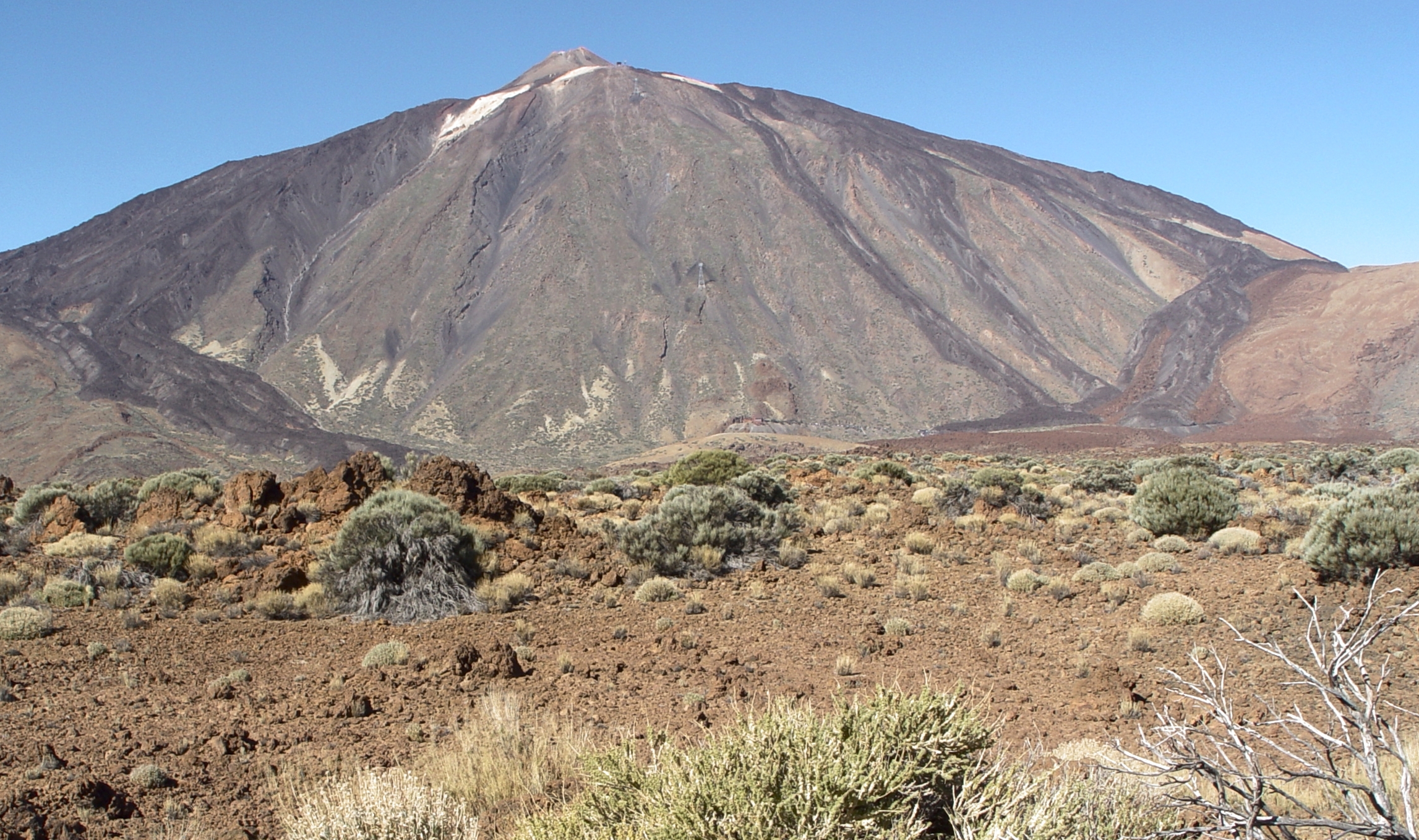
Teide on Tenerife is a famous volcanic landscape, while the Serra de Tramuntana is a cultural landscape on Mallorca. Those environments matter for education, tourism and conservation. This guide uses a genuine library image of Teide but does not imply that one mountain represents all of Spain.
How does Spain produce food and olive oil?
Agriculture includes olives, fruit, vegetables, cereals, livestock, wine and other products suited to different regions. Farming depends on land, climate, water, machinery, labour and markets. Processing, storage and transport determine how much value survives after harvest.
Consider olive oil. Olives are grown and harvested, then transported to a mill where oil is extracted and tested. It must be stored appropriately, packaged, sold and delivered to wholesalers or retailers. A successful orchard needs all these supporting capabilities.
Water scarcity, heat and market prices can affect growers and consumers differently. The presence of a famous agricultural export does not guarantee that every farm is profitable or that all households find nutritious food affordable.
Why do drought and water management matter?
Parts of Spain experience water scarcity, drought and intense summer heat. Agriculture, households, ecosystems, cities and tourism all require water. Reservoirs, groundwater, irrigation systems, treatment facilities and distribution networks must be managed over years rather than one rainy day at a time.
A dry period may affect a farmer’s irrigation allocation and also increase concerns about urban supply or ecosystem health. A local pipe leak has a different cause from long-term drought, so it needs a different repair. Water policy works best when the actual constraint is clearly identified.
Climate adaptation includes reducing waste, protecting catchments, improving efficiency and planning development around realistic water supplies. Technical investment needs environmental safeguards and community acceptance, not only a promise of greater capacity.
How does Spain’s renewable electricity system operate?
Spain produces electricity through a mix that includes wind, solar, nuclear, hydropower and other sources. Demand, weather and plant availability change over time. Reliable supply requires transmission networks, operators, grid balancing and maintenance, rather than a collection of power plants acting independently.
Solar generation can be strong during bright daylight while a household still needs electricity in the evening. Wind varies across locations and times. Storage, flexible supply, interconnections and demand management help keep the system stable. Investment in generation must be matched to investment in networks.
Energy prices affect factories, transport businesses and families. A stronger grid can support cleaner production, but a household judges the system by reliable electricity and bills it can pay. Technical success and affordability are connected objectives.
How do Spain’s public healthcare services work?
Spain has a public healthcare system with important responsibilities handled by its autonomous communities within national arrangements. A patient may use local primary care and specialist referrals according to the applicable rules. Different regions and providers can have different administrative pathways and waiting times.
A clinic depends on trained staff, medicines, information systems, safe buildings and transport. A family moving between communities should verify how registration and continuity of care work. Assuming that every public-health form or appointment rule is identical nationwide can lead to mistakes.
Healthcare also relies on water, sanitation, housing and public health. Good access is not proven by counting hospital buildings alone; what matters is whether people receive appropriate care in time.
How do schools differ across autonomous communities?
Spain’s education system follows national frameworks while autonomous communities have significant responsibilities for delivery and aspects of educational organisation. Language of instruction, school administration and practical requirements may depend on the region and programme.
A parent moving a child from Madrid to Catalonia should not assume every classroom uses identical linguistic arrangements or school procedures. The right questions concern the new school’s recognition, curriculum, relevant languages, support services, examination requirements and the child’s actual learning needs.
eduKateSG’s Spain education guide owns the detailed school-system discussion. This national guide explains why education must connect to regional governance, transport, housing and future employment to become a useful capability.
What is the housing affordability problem?
Some Spanish cities and popular coastal areas face major housing affordability pressures. Prices and rents can respond to supply, land-use rules, financing, employment and demand from residents or visitors. The problem differs between a major metropolitan district and a less populated inland town.
Imagine a skilled nurse offered a job in a city with expensive rentals. The healthcare system might have a funded position but find it difficult to recruit without affordable housing or a manageable commute. Housing becomes a public-service question as well as a property-market issue.
Solutions require more than one lever. Planning, renovation, transport, appropriate construction, legal clarity and local economic conditions all matter. A national headline describing average prices cannot tell a family what is available in its target neighbourhood.
How do language and cultural heritage travel across generations?
Spain has varied literary, architectural, musical and craft traditions. Language and culture help people understand their communities, public institutions and histories. They are carried through families, schools, museums, performers, local organisations and businesses.
Flamenco is associated with specific cultural histories rather than every corner of the country. The Silbo Gomero whistled language belongs to a particular Canary Island tradition. Our flamenco rhythm vocabulary and Silbo Gomero guide explain specialised ideas.
Responsible heritage learning preserves local knowledge without reducing people to a tourist performance. Cultural institutions need education, funding and maintenance just as technical infrastructure does.
A worked example: how does an Andalusian olive oil bottle reach a customer?
Imagine a consumer purchasing olive oil produced in Andalusia. A grower cultivates trees over years, plans harvest labour and manages water and soil. The olives travel to a mill, where processing and quality assessment determine the type and condition of the oil.
The producer packages and labels the oil, arranges sale through a distributor, and a freight operator moves it towards a shop or overseas customer. Each stage needs electricity, machinery, workers, reliable information and financing.
Suppose drought reduces the harvest. The production cost per bottle may rise. Suppose a road closure delays deliveries while the oil is safely stored elsewhere. The customer encounters a price or availability change caused by a distant link. These are illustrative possibilities, not claims about a named brand.
That one bottle explains how agriculture, climate, industry, trade and consumer protection connect. The final price is the visible result of many specialised decisions.
A second example: how does a family use regional public services?
Imagine a household moving from Madrid to Valencia. It finds a home, transfers a student to a suitable school and checks healthcare arrangements. Each task may involve a different authority, document and timeline because some services are administered by autonomous communities or municipalities.
The family also needs transport to work and school, a utility account, internet and clear local information. Even if all laws are understandable individually, coordination can be difficult when systems do not share accurate records or instructions.
Suppose the family completes a school application but the daily bus journey is unreliable. The school place alone does not create good access to education. Suppose a clinic transfer is delayed by missing documentation. An administrative problem can become a healthcare problem.
The example is hypothetical. It illustrates why national systems should be judged by how easily people can complete whole life events, not merely by the number of forms available online.
How should readers verify claims about Spain?
For national and territorial arrangements, use the Spanish government’s political-system portal and the territorial-policy explanation. For membership and currency, the European Union country page provides authoritative dates.
For the economic outlook, consult the OECD’s June 2026 projections. These are forecasts, not confirmed year-end results. For school, health or housing rules, identify the autonomous community and responsible institution before relying on advice.
Finally ask which place and person a claim describes. Spain’s islands, inland towns and major urban regions operate through common national structures but face different costs and opportunities. A useful country guide shows both the shared system and those real differences.
Frequently asked questions about Spain
Is Spain a monarchy or a democracy?
Spain is a parliamentary monarchy and democratic state. The monarch is head of state and the prime minister heads the government.
How many autonomous communities does Spain have?
Seventeen, plus two autonomous cities, Ceuta and Melilla.
What is Spain’s capital?
Madrid is the national capital.
Is Spain in the EU and euro area?
Yes. Spain joined the European Communities in 1986 and uses the euro.
What is the difference between an autonomous community and province?
An autonomous community has substantial self-governing institutions, while provinces and municipalities have distinct local functions.
Which languages are official in Spain?
Castilian Spanish is official nationwide; other languages are co-official in relevant autonomous communities under their statutes.
Why does Spain have high-speed trains?
High-speed rail links major urban centres, complementing conventional trains, buses and roads.
Why does water scarcity matter?
Drought, irrigation, tourism and urban demand create competing water needs across some regions.
Why are housing prices high in some cities?
Demand, land and construction supply, financing, tourist activity and regional conditions can all influence rents and prices.
How is Spain different from Singapore?
Both need public services and trade connections, but Spain has extensive regional autonomy, large agricultural areas and Atlantic and Mediterranean islands.
Continue through Spain’s connected country and learning guides
Follow these existing guides for specific academic subjects, culture and travel questions.
- Education in Spain
- How Spain Got So Rich
- Top 10 Things to Learn While Visiting Spain
- Flamenco rhythm vocabulary
- Silbo Gomero vocabulary
- Spanish architecture vocabulary
- Iberian Civilisation Atlas
- How Countries Work
- How Singapore Works
Editorial note, 20 October 2026: The olive-oil journey and family move are illustrative scenarios rather than reports of identifiable people. OECD 2026 figures are projections. The featured library photo shows Mount Teide in Tenerife, one part of Spain, not a visual representation of every region. Verify live regional rules through the relevant authority.