
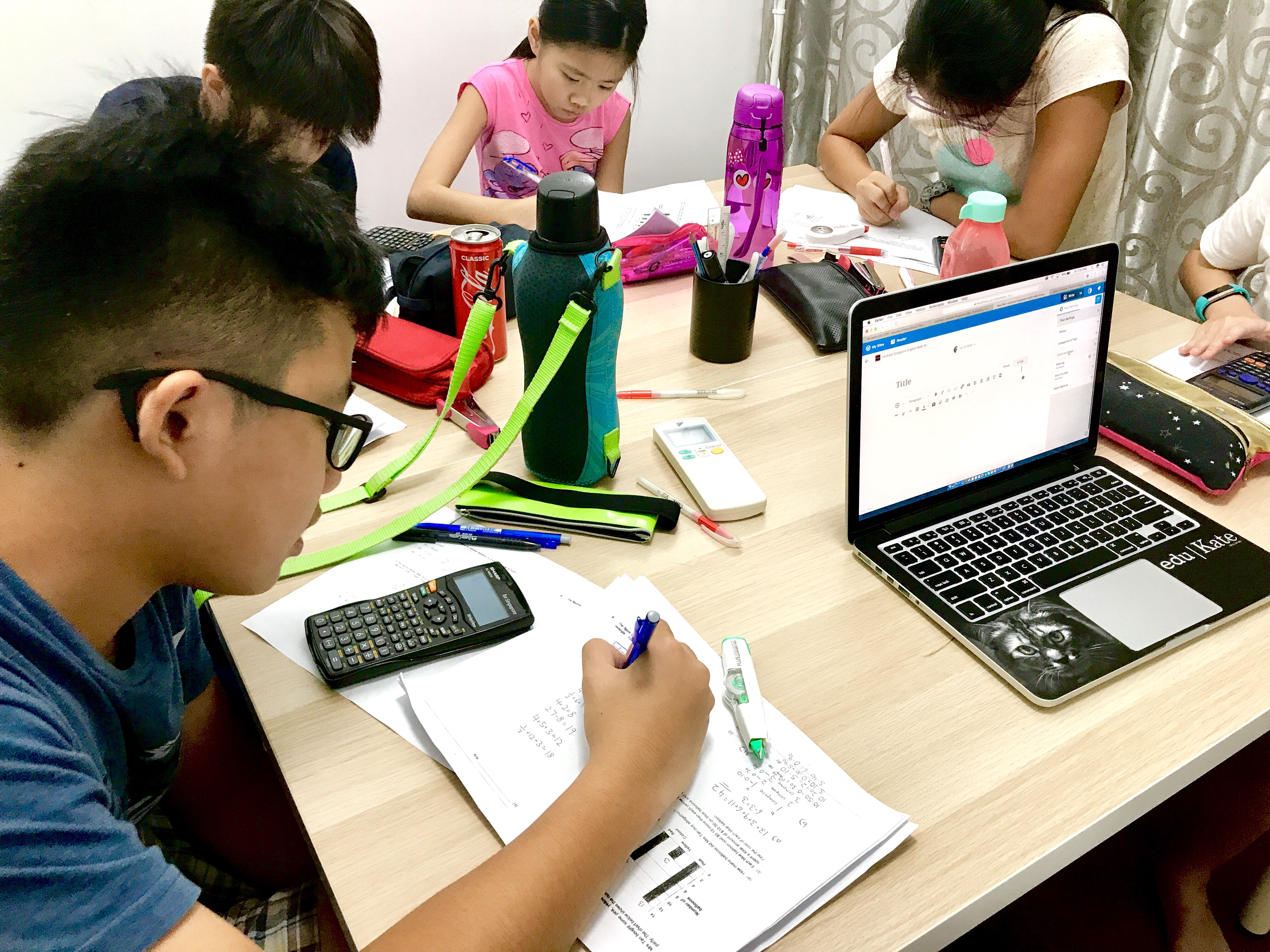
Did you know? A student can colour-code every hour of the evening, set five alarms and finish an impressive-looking checklist—yet arrive at tomorrow’s test unable to answer the questions that matter most. The schedule worked on paper. The purpose of the schedule did not.
That is one of the most common ways time management fails. We are often taught to fill the available hours, rather than decide what those hours must achieve, what is realistic and how to tell when the plan should change.
Quick answer: a schedule becomes ineffective when it ignores priorities, overestimates available attention, underestimates task difficulty or rewards time spent rather than useful progress. The repair is to identify one meaningful outcome, estimate honestly, protect a reasonable workload and use evidence from actual attempts to revise the plan.
A full calendar is not proof of progress
Imagine a Secondary 3 learner who schedules English, E-Math, A-Math, Science and History in five equal evening blocks. It seems fair. But tomorrow’s examination is Mathematics and the student is struggling specifically with factorisation.
Giving all subjects equal time can be inappropriate when one immediate need is urgent and another is already under control. Priorities do not mean ignoring long-term subjects or cramming everything at the last minute. They mean making a conscious choice about what deserves attention at a particular point.
The better question is: ‘What do I need to be able to do independently by the end of this session?’ A clear answer might be ‘Factorise three unfamiliar quadratic expressions and check each one by expansion.’ The plan now has a measurable learning target.
Six ways time management can go wrong
- Priority inversion: easy administrative tasks occupy the first and freshest hours while important work is repeatedly postponed.
- Optimistic estimates: the plan assumes a difficult task will take twenty minutes without accounting for finding and repairing misunderstandings.
- Attention mismatch: demanding cognitive tasks are placed where the learner is consistently tired or interrupted.
- No buffer: a late journey, a difficult homework question or a necessary family responsibility pushes every later task off schedule.
- Output confusion: ticking boxes, watching videos and rereading pages are counted as success without checking independent understanding.
- No feedback loop: the same unrealistic timetable is copied into each new week even though it repeatedly fails.
These mechanisms can reinforce one another. A student underestimates a worksheet, falls behind, abandons the difficult task to clear several easy items and ends the evening with more checkmarks but the original learning gap untouched.
Time management is partly the management of learning strategies
The Education Endowment Foundation’s review of metacognition and self-regulation finds that explicitly teaching students to plan, monitor and evaluate their learning is a promising, evidence-informed approach. The important point is that those strategies should be connected to real curriculum tasks, not taught only as generic productivity slogans.
A timetable is a planning tool. Monitoring asks whether the student can do the task. Evaluation asks whether that approach worked well enough to use again. If those latter steps are missing, time management becomes decoration.
The EEF’s 2025 Metacognition and Self-Regulated Learning guidance emphasises teachers modelling how to choose a strategy, check progress and revise it. Students often need this taught rather than being expected to invent an effective study method on their own.
The three-question test for any study block
- Before: What is the specific skill or problem I am going to work on?
- During: What evidence tells me whether this method is working, rather than merely consuming time?
- After: What can I now do on a fresh task, and what should the next session address?
A learner might plan thirty minutes of algebra. After ten minutes, they discover that their errors come from multiplying negative numbers. Rather than mechanically finishing twenty more algebra questions, they spend a short period repairing that prerequisite and return to a changed question.
The original plan has changed. That is not failure of discipline; it can be sensible self-regulation in response to new information.
An example: a beautiful revision chart that hides copying
Illustrative example. A student completes four twenty-minute ‘revision sprints’. During each, they watch worked examples with the solution visible. They can repeat the demonstrated steps immediately afterwards.
The next day’s exercise uses different wording. They cannot choose a method. The student may have managed study time well but did not manage the learning process effectively.
A better revision block includes an explanation, a short independent response with the model hidden, feedback and a second unfamiliar item. If there is no progress, the lesson needs a different explanation or more support.
See How Studying Stalls | Why More Hours Do Not Build Ability. This is the same distinction between time spent and skill gained, viewed through the design of a calendar.
Why underestimating a task makes the whole day fragile
A task estimate should reflect actual experience. Someone who regularly needs forty minutes to explain two difficult comprehension answers is unlikely to finish six similar answers perfectly in fifteen minutes just because a timetable says so.
A practical plan leaves space for checking, unexpected difficulty and necessary transitions. The right amount of buffer depends on the work. It is not a universal percentage or a trick that works for every student.
Instead of using every minute of the evening, plan essential blocks first, include realistic rest and keep a small amount of flexible time. If the day changes, decide consciously which task moves rather than treating a missed schedule as permission to abandon all priorities.
Energy and attention are not infinite resources
A learner may have three hours on a calendar but not three hours of equally strong concentration. After a full school day, a long commute and several other responsibilities, fatigue can affect the quality of some tasks.
This is not an argument that studying only when energetic is possible. Difficult obligations still need to be completed. It is an argument to allocate the most demanding work where feasible, break large tasks into meaningful pieces and protect adequate rest rather than treating exhaustion as evidence of effort.
The companion How Sleep Breaks explains how increasingly irregular and stressful schedules can create further difficulties. A plan that repeatedly depends on sacrificing sleep may undermine its own purpose.
The hidden trap of urgent but unimportant work
Notifications, formatting worksheets, organising colour-coded notes and answering nonessential messages can feel urgent because they are visible and quickly completed. A difficult foundational topic may be important but offer less immediate satisfaction.
Before adding an activity to a plan, ask what happens if it is delayed and what benefit completion creates. Some urgent tasks are genuinely necessary. The mistake is allowing urgency alone to determine the learning agenda.
For a student, finishing a school submission by the deadline is an important commitment. But adding decorative headings to an already adequate note may have less value than fixing a misconception that will appear in tomorrow’s exam.
A practical twenty-minute rescue for a derailed evening
- Minutes 1–3: identify the most important unresolved outcome, not the longest unfinished list.
- Minutes 4–6: choose one manageable subtask that directly contributes to it.
- Minutes 7–15: attempt that task with distractions reduced and necessary materials ready.
- Minutes 16–18: check the outcome independently; if it failed, identify the first obstacle.
- Minutes 19–20: record the next step and adjust the remaining schedule realistically.
The minutes are illustrative. This routine cannot solve every overload or learning difficulty in one session. Its purpose is to restore the link between limited available time and a worthwhile next action.
When a schedule should be changed rather than obeyed
- A prerequisite has been found missing, so the original task cannot be completed meaningfully yet.
- Important new evidence or an unavoidable obligation changes the priority order.
- The planned task consistently takes longer than expected across several attempts.
- The plan repeatedly pushes necessary sleep, safety or care responsibilities out of the day.
- The activity produces completion ticks but no measurable improvement in the intended skill.
A good planning habit should support adaptation, not punish it. There is a difference between avoiding every difficult task and revising a plan for a defensible reason.
How parents and tutors can support planning
Rather than imposing a perfect weekly schedule, ask the learner to name one important outcome, estimate a manageable practice block and describe how they will test progress. Then review the result together.
A tutor might demonstrate how to identify a weak algebra concept, select two appropriate questions and check the answer without prompts. Over time, the learner can take more ownership of choosing the goal, method and review.
The most useful sign of independence is not that a student never needs guidance. It is that they increasingly understand what they need to do, notice when a method is not working and seek appropriate help.
A simple weekly review
- What did I actually finish that mattered?
- What remained difficult, and why?
- Which estimates were consistently unrealistic?
- Which distractions or structural barriers could be changed?
- What one priority or method should the next week handle differently?
This check can fit on one page. It is a tool for learning from experience, not another productivity competition.
Frequently asked questions
Why does my timetable fail even when I follow it?
It may measure activity rather than useful outcomes, assign time to the wrong priorities or leave insufficient space for difficulties. Check what independent skill or deliverable improved.
Should students schedule every minute?
Not necessarily. Fixed commitments and useful study blocks are helpful, but realistic flexibility is important for difficult tasks, changes and recovery.
Is a productivity app better than a paper planner?
Either can work if it makes priorities and progress easier to manage. A more complex tool is not necessarily more effective than a simple written plan.
How do I help a child who always runs out of revision time?
Look at actual task duration, prerequisites and competing commitments. Focus first on one high-value skill and a realistic independent attempt rather than demanding a longer timetable.
The final idea
Time management fails when managing the schedule becomes more important than managing the outcome. Strong plans choose meaningful priorities, recognise limits, test the result and change when the evidence says they should.
More ways that systems stop working
- How Time Management Fails | When Schedules Ignore Priorities and Energy (current article)
- How Scientific Measurement Fails | When Calibration and Uncertainty Are Ignored
- How Tourism Stalls | When Visitor Growth Overwhelms Local Communities
- How Insurance Claims Break | When Coverage and Evidence Do Not Match
Also read How Strategy Fails and How Education Fails for larger systems perspectives. The unchanged Secondary 1 Mathematics Tutor Clementi | Small Groups Tutorials demonstrates the value of establishing the learner’s starting point before choosing an intervention.
Sources and further reading
- EEF: Metacognition and Self-Regulation Evidence
- EEF (2025): Metacognition and Self-Regulated Learning Guidance
- EEF (2026): Developing Independent Learners, Planning and Monitoring
- eduKateSG: How Studying Stalls
Examples are hypothetical teaching scenarios. Principles and suggested checks should be adapted to actual needs, responsibilities and conditions; the guidance is not a diagnosis or a guarantee.