
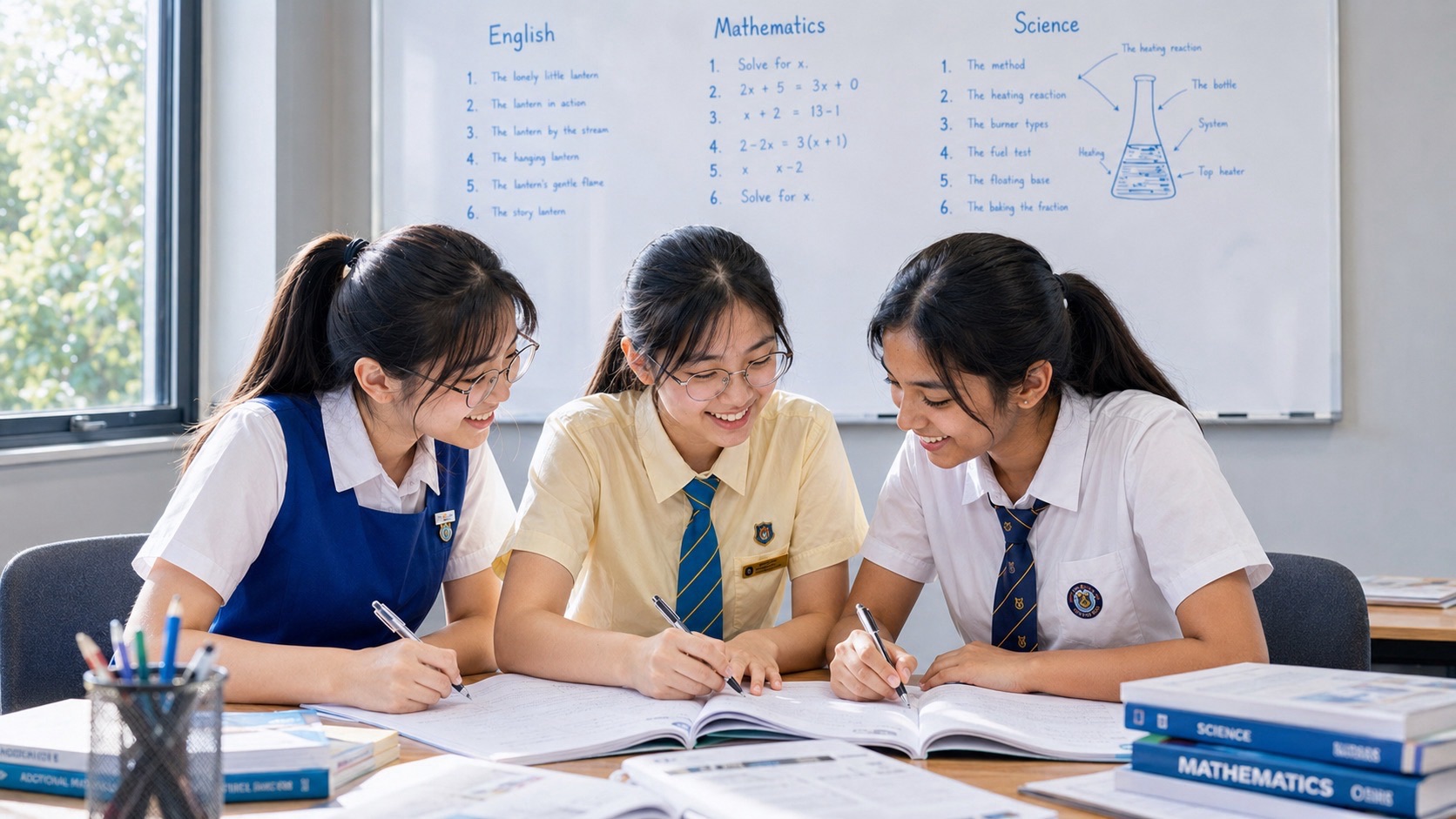
How to learn vocabulary at 14 years old is a question about how a Grade 8 or Secondary 2 learner develops the analytical vocabulary needed for increasingly complex reading, subject reasoning, essays, source evaluation and preparation for Secondary 3. At fourteen, a learner’s vocabulary should do more than make writing sound sophisticated. It must control nuance, evidence, argument, collocation, register, figurative meaning and disciplinary precision.
For families searching for 14 year old vocabulary, Grade 8 vocabulary, Secondary 2 vocabulary, academic vocabulary, high-utility words, morphology, analytical reading, essay vocabulary, figurative language or stronger writing, the core goal is lexical control. The learner should be able to choose among close alternatives, qualify claims, use evidence language accurately, interpret figurative language and transfer high-value words across subjects.
This page is the learner-side owner for How to Learn Vocabulary at 14 Years Old. The adult-action companion is How to Teach Vocabulary to a 14-Year-Old | Grade 8 and Secondary 2 Academic Vocabulary, Reading and Writing. It connects to the Secondary 2 High-Utility Academic Vocabulary owner, the Secondary 2 Vocabulary Words with Meanings route and the Vocabulary Learning Hub.
Quick Answer: Secondary 2 Vocabulary Is About Analysis, Nuance and Control
A strong fourteen-year-old vocabulary system combines high-utility academic words, morphology, phrase-level learning, analytical reading, retrieval and deliberate writing transfer. The learner should be able to infer and verify meaning, distinguish near-synonyms, use collocations naturally, control certainty and register, and explain why a word or phrase is appropriate in a particular argument or text.
High-utility academic vocabulary
Secondary 2 learners benefit most from words that recur across reading, writing and subjects. Relevant, significant, interpret, justify, consequence, indicate and perspective often have broad academic value.
At Secondary 2, the learner should be able to justify lexical choices with meaning, collocation, register, evidence or disciplinary function. Approximate knowledge increasingly produces visible errors in analytical reading and writing.
Later, track frequency and usefulness before deciding what deserves intensive study. Vocabulary becomes mature when it remains accurate across new texts, subjects and argumentative contexts.
Analytical vocabulary
Grade 8 reading increasingly requires language for analysing ideas, evidence and relationships.
Analyse, infer, evaluate, compare, contrast and synthesise-at-an-introductory-level should map onto clear thinking actions. Build one retrieval prompt and one discrimination task. If the learner knows the definition but chooses the wrong word in context, practise boundaries and collocations rather than rereading the definition.
A strong follow-up is to translate each command into a response plan. The aim is controlled analytical use.
Disciplinary terminology
Secondary 2 subjects develop denser technical vocabularies. A Science, Mathematics, Geography or History term may have a precise disciplinary meaning not captured by everyday synonyms. Ask the learner to identify one plausible but wrong alternative and explain why it fails.
This contrast work is important because Secondary 2 writing increasingly depends on fine distinctions in certainty, tone and argument.
Then learn the concept, examples and subject use together. Precise selection is the key skill.
Morphology
Affixes, bases and roots remain powerful for long academic words.
Try the idea inside a real Grade 8 or Secondary 2 passage, source or essay: Unsubstantiated, environmental, misrepresentation and interdependent can be decomposed into meaningful parts. Let the learner attempt analysis before correction so the error reveals which lexical layer is weak.
After feedback, reconstruct the whole meaning after analysis. Immediate re-attempt converts correction into retrievable knowledge.
Roots
Common Greek and Latin roots can support increasingly specialised vocabulary. This matters because Grade 8 texts contain denser argument, abstraction and figurative language than earlier school material.
Chron, geo, bio, therm, dict, port and struct-like roots may recur across subjects. Add one collocation, register note or evidence requirement where appropriate.
During later review, treat roots as clues and verify full modern meaning. Varied accurate use builds sophistication without artificiality.
Word families
Secondary 2 writing requires flexible movement across grammatical forms.
Analyse, analysis, analytical and analytically or conclude, conclusion and conclusive belong to families. Ask for a plain-language paraphrase first, then restore the academic precision or nuance that the paraphrase omits.
Once the learner can do both, choose the form that fits the sentence and genre. This balance supports comprehension and formal writing.
Nominalisation
Academic prose often compresses processes into abstract nouns. Decide becomes decision, regulate becomes regulation and respond becomes response.
At Secondary 2, the learner should be able to justify lexical choices with meaning, collocation, register, evidence or disciplinary function. Approximate knowledge increasingly produces visible errors in analytical reading and writing.
Later, notice when nominalisation makes a sentence denser or more formal. Vocabulary becomes mature when it remains accurate across new texts, subjects and argumentative contexts.
Multiple meanings
Polysemy becomes more important across disciplines.
Function, solution, model, current, source, power and volume can shift sense by context. Build one retrieval prompt and one discrimination task. If the learner knows the definition but chooses the wrong word in context, practise boundaries and collocations rather than rereading the definition.
A strong follow-up is to label senses explicitly when one word serves several subjects. The aim is controlled analytical use.
Connotation
Word choice often carries evaluation beyond dictionary definition. Determined and stubborn may describe persistence but frame it differently. Ask the learner to identify one plausible but wrong alternative and explain why it fails.
This contrast work is important because Secondary 2 writing increasingly depends on fine distinctions in certainty, tone and argument.
Then identify the attitude created by the word. Precise selection is the key skill.
Register
Students need control of conversational, formal, academic, technical and literary vocabulary.
Try the idea inside a real Grade 8 or Secondary 2 passage, source or essay: An informal phrase may be natural in dialogue but inappropriate in an analytical essay. Let the learner attempt analysis before correction so the error reveals which lexical layer is weak.
After feedback, select vocabulary according to audience and purpose. Immediate re-attempt converts correction into retrievable knowledge.
Collocations
Natural combinations become a major part of Secondary writing quality. This matters because Grade 8 texts contain denser argument, abstraction and figurative language than earlier school material.
Compelling evidence, significant impact, widespread concern, pose a risk and reach a conclusion are phrase-level units. Add one collocation, register note or evidence requirement where appropriate.
During later review, record the phrase when isolated word knowledge is insufficient. Varied accurate use builds sophistication without artificiality.
Lexical grammar
Prepositions and structural patterns belong to word knowledge.
Contribute to, result in, responsible for, associated with and capable of should be learned as sentence-ready patterns. Ask for a plain-language paraphrase first, then restore the academic precision or nuance that the paraphrase omits.
Once the learner can do both, retrieve the pattern with the word. This balance supports comprehension and formal writing.
Multiword expressions
Academic discourse relies heavily on reusable chunks. In contrast, as a consequence, with respect to and on the other hand organise argument and comparison.
At Secondary 2, the learner should be able to justify lexical choices with meaning, collocation, register, evidence or disciplinary function. Approximate knowledge increasingly produces visible errors in analytical reading and writing.
Later, learn the expression through function and context. Vocabulary becomes mature when it remains accurate across new texts, subjects and argumentative contexts.
Phrasal verbs
General and semi-academic phrasal verbs remain frequent.
Carry out, point out, bring about, set out and account for-like later uses require phrase-level knowledge. Build one retrieval prompt and one discrimination task. If the learner knows the definition but chooses the wrong word in context, practise boundaries and collocations rather than rereading the definition.
A strong follow-up is to distinguish formal suitability and grammar. The aim is controlled analytical use.
Idioms
Idioms occur in literature, speech and media but vary in register. Literal interpretation may fail completely. Ask the learner to identify one plausible but wrong alternative and explain why it fails.
This contrast work is important because Secondary 2 writing increasingly depends on fine distinctions in certainty, tone and argument.
Then explain phrase meaning and decide whether it belongs in formal writing. Precise selection is the key skill.
Figurative language
Secondary 2 analysis needs greater attention to effect.
Try the idea inside a real Grade 8 or Secondary 2 passage, source or essay: Metaphor, simile, personification, hyperbole and imagery influence tone, emphasis and perspective. Let the learner attempt analysis before correction so the error reveals which lexical layer is weak.
After feedback, connect the device to meaning rather than merely label it. Immediate re-attempt converts correction into retrievable knowledge.
Metaphor
Metaphors can frame complex ideas in compressed ways. This matters because Grade 8 texts contain denser argument, abstraction and figurative language than earlier school material.
A wave of criticism highlights volume and movement without literal water. Add one collocation, register note or evidence requirement where appropriate.
During later review, paraphrase literal meaning and discuss effect. Varied accurate use builds sophistication without artificiality.
Personification
Human qualities given to nonhuman entities shape atmosphere or attitude.
The city never sleeps creates a different effect from a literal statement about activity. Ask for a plain-language paraphrase first, then restore the academic precision or nuance that the paraphrase omits.
Once the learner can do both, identify what human quality is transferred. This balance supports comprehension and formal writing.
Hyperbole
Deliberate exaggeration can signal humour, frustration or emphasis. The claim is not meant as literal measurement.
At Secondary 2, the learner should be able to justify lexical choices with meaning, collocation, register, evidence or disciplinary function. Approximate knowledge increasingly produces visible errors in analytical reading and writing.
Later, separate rhetorical effect from factual meaning. Vocabulary becomes mature when it remains accurate across new texts, subjects and argumentative contexts.
Imagery
Sensory vocabulary should create a controlled mental experience.
Acrid, metallic, piercing, shadowed and humid appeal to different senses or atmospheres. Build one retrieval prompt and one discrimination task. If the learner knows the definition but chooses the wrong word in context, practise boundaries and collocations rather than rereading the definition.
A strong follow-up is to choose imagery that supports tone instead of crowding the sentence. The aim is controlled analytical use.
Lexical diversity
Secondary 2 writing should avoid needless repetition without forcing variation. Repeated academic key terms may be necessary for clarity, while repeated vague verbs may need revision. Ask the learner to identify one plausible but wrong alternative and explain why it fails.
This contrast work is important because Secondary 2 writing increasingly depends on fine distinctions in certainty, tone and argument.
Then distinguish cohesion from lexical laziness. Precise selection is the key skill.
Lexical sophistication
Sophistication means appropriate precise language, not simply rare words.
Try the idea inside a real Grade 8 or Secondary 2 passage, source or essay: A common accurate word can be better than an obscure near-synonym. Let the learner attempt analysis before correction so the error reveals which lexical layer is weak.
After feedback, judge vocabulary by fit, naturalness and function. Immediate re-attempt converts correction into retrievable knowledge.
Argument vocabulary
Claim, premise, evidence, reason, counterargument, rebuttal and conclusion support structured reasoning. This matters because Grade 8 texts contain denser argument, abstraction and figurative language than earlier school material.
These words become meaningful when applied to a real argument. Add one collocation, register note or evidence requirement where appropriate.
During later review, label the structure of a paragraph or debate. Varied accurate use builds sophistication without artificiality.
Evidence verbs
Show, indicate, suggest, imply and demonstrate express different levels of support.
The learner should not use demonstrate when evidence only weakly suggests something. Ask for a plain-language paraphrase first, then restore the academic precision or nuance that the paraphrase omits.
Once the learner can do both, match reporting verbs to evidential strength. This balance supports comprehension and formal writing.
Evaluation vocabulary
Effective, limited, reliable, valid, significant, appropriate and problematic support judgement. Each evaluative word needs explicit criteria.
At Secondary 2, the learner should be able to justify lexical choices with meaning, collocation, register, evidence or disciplinary function. Approximate knowledge increasingly produces visible errors in analytical reading and writing.
Later, state the criterion before giving the judgement. Vocabulary becomes mature when it remains accurate across new texts, subjects and argumentative contexts.
Qualification
May, tends to, generally, largely, partly, potentially and in some cases control certainty.
Nuanced writing avoids unsupported universal claims. Build one retrieval prompt and one discrimination task. If the learner knows the definition but chooses the wrong word in context, practise boundaries and collocations rather than rereading the definition.
A strong follow-up is to adjust certainty to match evidence. The aim is controlled analytical use.
Cause and correlation
Cause, contribute, influence, trigger, result and correlate-like introductory concepts should not be collapsed. Two events may move together without one directly causing the other. Ask the learner to identify one plausible but wrong alternative and explain why it fails.
This contrast work is important because Secondary 2 writing increasingly depends on fine distinctions in certainty, tone and argument.
Then choose causal language carefully. Precise selection is the key skill.
Comparison paragraphs
Similarly, whereas, conversely, unlike and in contrast should organise explicit criteria.
Try the idea inside a real Grade 8 or Secondary 2 passage, source or essay: A good comparison develops both sides rather than switching randomly. Let the learner attempt analysis before correction so the error reveals which lexical layer is weak.
After feedback, plan criteria before choosing connectives. Immediate re-attempt converts correction into retrievable knowledge.
Synthesis
Secondary 2 learners can begin combining information from more than one source or paragraph. This matters because Grade 8 texts contain denser argument, abstraction and figurative language than earlier school material.
Synthesis requires identifying relationships rather than merely summarising each source separately. Add one collocation, register note or evidence requirement where appropriate.
During later review, use vocabulary for agreement, difference and extension. Varied accurate use builds sophistication without artificiality.
Paraphrasing
Accurate paraphrase changes wording while preserving claim strength and scope.
Replacing some with all or may with will distorts the original. Ask for a plain-language paraphrase first, then restore the academic precision or nuance that the paraphrase omits.
Once the learner can do both, audit the paraphrase for semantic drift. This balance supports comprehension and formal writing.
Summarising
A summary selects central ideas, relationships and essential terminology. Technical nouns may need to remain unchanged for precision.
At Secondary 2, the learner should be able to justify lexical choices with meaning, collocation, register, evidence or disciplinary function. Approximate knowledge increasingly produces visible errors in analytical reading and writing.
Later, compress without weakening or exaggerating the source. Vocabulary becomes mature when it remains accurate across new texts, subjects and argumentative contexts.
Inference
More complex texts require inference about motive, attitude, cause and implication.
Strong inference answers separate evidence from conclusion. Build one retrieval prompt and one discrimination task. If the learner knows the definition but chooses the wrong word in context, practise boundaries and collocations rather than rereading the definition.
A strong follow-up is to state the textual clue before the interpretation. The aim is controlled analytical use.
Implication
Implication concerns what a statement or event suggests beyond its explicit wording. Learners should avoid treating implication as a direct quote. Ask the learner to identify one plausible but wrong alternative and explain why it fails.
This contrast work is important because Secondary 2 writing increasingly depends on fine distinctions in certainty, tone and argument.
Then explain the reasoning bridge. Precise selection is the key skill.
Tone
Tone vocabulary can become more nuanced: detached, sceptical, indignant, reflective, restrained, enthusiastic.
Try the idea inside a real Grade 8 or Secondary 2 passage, source or essay: Each tone label should be supported by diction, syntax or imagery. Let the learner attempt analysis before correction so the error reveals which lexical layer is weak.
After feedback, cite language that produces the effect. Immediate re-attempt converts correction into retrievable knowledge.
Stance
Writers can appear cautious, supportive, critical or dismissive. This matters because Grade 8 texts contain denser argument, abstraction and figurative language than earlier school material.
Modal verbs, adjectives and reporting verbs often reveal stance. Add one collocation, register note or evidence requirement where appropriate.
During later review, identify lexical markers before naming the stance. Varied accurate use builds sophistication without artificiality.
Bias and loaded language
Some words frame an issue positively or negatively.
Loaded vocabulary may influence readers without adding factual evidence. Ask for a plain-language paraphrase first, then restore the academic precision or nuance that the paraphrase omits.
Once the learner can do both, separate framing from information. This balance supports comprehension and formal writing.
Source vocabulary
Source, author, audience, purpose, context, reliability and relevance matter in research and Humanities. These terms should guide how information is evaluated.
At Secondary 2, the learner should be able to justify lexical choices with meaning, collocation, register, evidence or disciplinary function. Approximate knowledge increasingly produces visible errors in analytical reading and writing.
Later, apply them to real source material. Vocabulary becomes mature when it remains accurate across new texts, subjects and argumentative contexts.
Source reliability
Reliability depends on evidence, expertise, method and context, not merely professional appearance.
A source can be relevant but unreliable or reliable but irrelevant. Build one retrieval prompt and one discrimination task. If the learner knows the definition but chooses the wrong word in context, practise boundaries and collocations rather than rereading the definition.
A strong follow-up is to state which criterion is being judged. The aim is controlled analytical use.
Research vocabulary
Keyword, quotation, paraphrase, citation-like introductory concepts, reference and bibliography-like terms support projects. Use the language while carrying out real research. Ask the learner to identify one plausible but wrong alternative and explain why it fails.
This contrast work is important because Secondary 2 writing increasingly depends on fine distinctions in certainty, tone and argument.
Then connect every term to a concrete research action. Precise selection is the key skill.
Digital literacy
Algorithm-like awareness, source, platform, search result, sponsored, filter and privacy may appear in digital contexts.
Try the idea inside a real Grade 8 or Secondary 2 passage, source or essay: Vocabulary helps learners describe how information is found and presented. Let the learner attempt analysis before correction so the error reveals which lexical layer is weak.
After feedback, distinguish interface language from evidence quality. Immediate re-attempt converts correction into retrievable knowledge.
Media analysis
Headline, audience, purpose, framing, claim, advertisement and bias support media literacy. This matters because Grade 8 texts contain denser argument, abstraction and figurative language than earlier school material.
Ask how vocabulary choices shape reader reaction. Add one collocation, register note or evidence requirement where appropriate.
During later review, identify persuasive wording without assuming motive. Varied accurate use builds sophistication without artificiality.
Fiction reading
Secondary 2 fiction contains richer syntax, subtext, irony and figurative language.
High-value vocabulary often sits inside character psychology or atmosphere. Ask for a plain-language paraphrase first, then restore the academic precision or nuance that the paraphrase omits.
Once the learner can do both, discuss words central to interpretation. This balance supports comprehension and formal writing.
Nonfiction reading
Longer informational texts contain denser nominalisation and argument structure. Headings and diagrams support navigation, but vocabulary controls conceptual access.
At Secondary 2, the learner should be able to justify lexical choices with meaning, collocation, register, evidence or disciplinary function. Approximate knowledge increasingly produces visible errors in analytical reading and writing.
Later, integrate visual and verbal meaning. Vocabulary becomes mature when it remains accurate across new texts, subjects and argumentative contexts.
Poetry vocabulary
Speaker, persona, stanza, imagery, juxtaposition-like later concept, repetition and rhythm support analysis.
Terminology should be tied to observable textual features. Build one retrieval prompt and one discrimination task. If the learner knows the definition but chooses the wrong word in context, practise boundaries and collocations rather than rereading the definition.
A strong follow-up is to explain effect rather than label devices mechanically. The aim is controlled analytical use.
Drama vocabulary
Dialogue, stage direction, conflict, tension and dramatic irony-like introductory concepts can support plays. Words should help the learner read performance choices, not only printed lines. Ask the learner to identify one plausible but wrong alternative and explain why it fails.
This contrast work is important because Secondary 2 writing increasingly depends on fine distinctions in certainty, tone and argument.
Then connect terminology to scene effect. Precise selection is the key skill.
Character analysis
Nuanced traits such as evasive, cynical, compassionate, insecure or resolute can improve interpretation.
Try the idea inside a real Grade 8 or Secondary 2 passage, source or essay: Traits should be supported by patterns of action or speech. Let the learner attempt analysis before correction so the error reveals which lexical layer is weak.
After feedback, compare two plausible trait words before choosing. Immediate re-attempt converts correction into retrievable knowledge.
Theme language
Justice, identity, conformity, ambition, prejudice, loyalty and responsibility are abstract thematic terms. This matters because Grade 8 texts contain denser argument, abstraction and figurative language than earlier school material.
Theme claims should be tied to repeated events or choices in the text. Add one collocation, register note or evidence requirement where appropriate.
During later review, avoid single-word theme labels without explanation. Varied accurate use builds sophistication without artificiality.
Science explanation
Secondary 2 Science requires precise process, variable and causal terminology.
Vocabulary should support mechanisms, not replace understanding. Ask for a plain-language paraphrase first, then restore the academic precision or nuance that the paraphrase omits.
Once the learner can do both, explain the process using terms accurately and in order. This balance supports comprehension and formal writing.
Mathematics reasoning
Mathematics terms should appear in explanation of method, property and relationship. Correct vocabulary can make reasoning more concise and checkable.
At Secondary 2, the learner should be able to justify lexical choices with meaning, collocation, register, evidence or disciplinary function. Approximate knowledge increasingly produces visible errors in analytical reading and writing.
Later, use the term while justifying each important step. Vocabulary becomes mature when it remains accurate across new texts, subjects and argumentative contexts.
Geography analysis
Pattern, distribution, factor, impact, sustainability, resource and migration-like terms support data interpretation.
Maps, graphs and case studies give the vocabulary evidence. Build one retrieval prompt and one discrimination task. If the learner knows the definition but chooses the wrong word in context, practise boundaries and collocations rather than rereading the definition.
A strong follow-up is to link analytical terms to specific data. The aim is controlled analytical use.
History analysis
Cause, consequence, continuity, change, significance, perspective and reliability can structure historical answers. Abstract vocabulary should be grounded in events and sources. Ask the learner to identify one plausible but wrong alternative and explain why it fails.
This contrast work is important because Secondary 2 writing increasingly depends on fine distinctions in certainty, tone and argument.
Then distinguish cause from consequence and fact from interpretation. Precise selection is the key skill.
Literature essays
Analytical paragraphs need claim, evidence, explanation and precise literary vocabulary.
Try the idea inside a real Grade 8 or Secondary 2 passage, source or essay: The vocabulary should clarify interpretation rather than overwhelm it. Let the learner attempt analysis before correction so the error reveals which lexical layer is weak.
After feedback, use one strong analytical term accurately instead of several vague ones. Immediate re-attempt converts correction into retrievable knowledge.
Expository essays
Definition, cause, effect, example, comparison and qualification language organise explanations. This matters because Grade 8 texts contain denser argument, abstraction and figurative language than earlier school material.
Topic vocabulary should remain consistent across paragraphs. Add one collocation, register note or evidence requirement where appropriate.
During later review, maintain lexical cohesion while varying unnecessary repetition. Varied accurate use builds sophistication without artificiality.
Argumentative writing
Secondary 2 learners can begin developing claim, reason, evidence and counterpoint structures.
Certainty language and evaluative vocabulary should match evidence. Ask for a plain-language paraphrase first, then restore the academic precision or nuance that the paraphrase omits.
Once the learner can do both, avoid rhetorical intensity without support. This balance supports comprehension and formal writing.
Situational writing
Register, audience and purpose determine lexical choices. A formal request, public notice and peer message require different wording.
At Secondary 2, the learner should be able to justify lexical choices with meaning, collocation, register, evidence or disciplinary function. Approximate knowledge increasingly produces visible errors in analytical reading and writing.
Later, choose sentence-ready phrases appropriate to the relationship. Vocabulary becomes mature when it remains accurate across new texts, subjects and argumentative contexts.
Editing for precision
Revision should inspect vague nouns, weak verbs, awkward collocations and register shifts.
A correct sentence can still be lexically weak or unnatural. Build one retrieval prompt and one discrimination task. If the learner knows the definition but chooses the wrong word in context, practise boundaries and collocations rather than rereading the definition.
A strong follow-up is to diagnose before replacing. The aim is controlled analytical use.
Lexical cohesion
Repeated key terms, synonyms, pronouns and related words help a text stay on topic. Too much synonym swapping can obscure the main concept. Ask the learner to identify one plausible but wrong alternative and explain why it fails.
This contrast work is important because Secondary 2 writing increasingly depends on fine distinctions in certainty, tone and argument.
Then balance clarity and variety. Precise selection is the key skill.
Paragraph transitions
Transitions should signal real logical movement.
Try the idea inside a real Grade 8 or Secondary 2 passage, source or essay: However, consequently, furthermore and similarly are not interchangeable decorations. Let the learner attempt analysis before correction so the error reveals which lexical layer is weak.
After feedback, check the relationship before choosing the connector. Immediate re-attempt converts correction into retrievable knowledge.
Oral discussion
Secondary 2 discussion requires fast access to evidence and evaluation language. This matters because Grade 8 texts contain denser argument, abstraction and figurative language than earlier school material.
Students can practise clarifying, challenging and extending ideas politely. Add one collocation, register note or evidence requirement where appropriate.
During later review, move from sentence starters toward spontaneous use. Varied accurate use builds sophistication without artificiality.
Presentation language
Signposting, definition, comparison and conclusion phrases help oral organisation.
Rehearse ideas rather than memorising every sentence. Ask for a plain-language paraphrase first, then restore the academic precision or nuance that the paraphrase omits.
Once the learner can do both, keep vocabulary natural under live speaking conditions. This balance supports comprehension and formal writing.
Listening comprehension
Subject vocabulary may be missed when pronounced quickly or embedded in long explanations. Learners should connect known written forms with real spoken forms.
At Secondary 2, the learner should be able to justify lexical choices with meaning, collocation, register, evidence or disciplinary function. Approximate knowledge increasingly produces visible errors in analytical reading and writing.
Later, review unfamiliar pronunciation after lessons. Vocabulary becomes mature when it remains accurate across new texts, subjects and argumentative contexts.
Pronunciation
Longer academic words require stress and syllable accuracy.
Check uncertain pronunciation before repeated presentation or discussion use. Build one retrieval prompt and one discrimination task. If the learner knows the definition but chooses the wrong word in context, practise boundaries and collocations rather than rereading the definition.
A strong follow-up is to practise word, phrase and sentence. The aim is controlled analytical use.
Spelling
Secondary vocabulary should not be limited to easy spelling. Draft with the right word, then repair orthography. Ask the learner to identify one plausible but wrong alternative and explain why it fails.
This contrast work is important because Secondary 2 writing increasingly depends on fine distinctions in certainty, tone and argument.
Then track recurring spelling patterns and morphemes. Precise selection is the key skill.
Vocabulary notebook
A Secondary 2 notebook can track sense, morphology, collocation, register, phrase and original use.
Try the idea inside a real Grade 8 or Secondary 2 passage, source or essay: Entries should respond to actual weaknesses rather than follow a rigid template. Let the learner attempt analysis before correction so the error reveals which lexical layer is weak.
After feedback, review selectively and archive secure words. Immediate re-attempt converts correction into retrievable knowledge.
Dictionary independence
Learners should read multiple senses, grammar labels and examples efficiently. This matters because Grade 8 texts contain denser argument, abstraction and figurative language than earlier school material.
Dictionary use should answer a specific question about the word. Add one collocation, register note or evidence requirement where appropriate.
During later review, stop once the needed uncertainty is resolved. Varied accurate use builds sophistication without artificiality.
Thesaurus discipline
A thesaurus helps generate candidates, not final choices.
Every candidate needs checking for sense, collocation, register and connotation. Ask for a plain-language paraphrase first, then restore the academic precision or nuance that the paraphrase omits.
Once the learner can do both, reject impressive but unnatural replacements. This balance supports comprehension and formal writing.
Corpus-style awareness
Advanced learners can notice how often phrases recur in reputable examples. Even without formal corpus tools, repeated authentic patterns are useful evidence.
At Secondary 2, the learner should be able to justify lexical choices with meaning, collocation, register, evidence or disciplinary function. Approximate knowledge increasingly produces visible errors in analytical reading and writing.
Later, prefer common natural combinations over invented phrases. Vocabulary becomes mature when it remains accurate across new texts, subjects and argumentative contexts.
Retrieval practice
Productive vocabulary requires recall from meaning and task.
A learner may recognise significant but fail to produce it in an essay. Build one retrieval prompt and one discrimination task. If the learner knows the definition but chooses the wrong word in context, practise boundaries and collocations rather than rereading the definition.
A strong follow-up is to test both directions and several cues. The aim is controlled analytical use.
Spacing
Review should be distributed and performance-based. Strong items need fewer repetitions; unstable ones need earlier repair. Ask the learner to identify one plausible but wrong alternative and explain why it fails.
This contrast work is important because Secondary 2 writing increasingly depends on fine distinctions in certainty, tone and argument.
Then change examples when memory becomes tied to one sentence. Precise selection is the key skill.
Interleaving
Similar academic terms should be mixed after initial learning.
Try the idea inside a real Grade 8 or Secondary 2 passage, source or essay: Implication, inference, evidence, claim and assumption require discrimination. Let the learner attempt analysis before correction so the error reveals which lexical layer is weak.
After feedback, choose among them in unfamiliar contexts. Immediate re-attempt converts correction into retrievable knowledge.
Cumulative review
Older Secondary 1 and Primary vocabulary should remain accessible. This matters because Grade 8 texts contain denser argument, abstraction and figurative language than earlier school material.
High-utility academic words should accumulate rather than reset each year. Add one collocation, register note or evidence requirement where appropriate.
During later review, sample old items in new Secondary 2 tasks. Varied accurate use builds sophistication without artificiality.
Self-monitoring
Learners can track recognition, explanation, retrieval and accurate use separately.
A word can be strong in reading yet weak in writing. Ask for a plain-language paraphrase first, then restore the academic precision or nuance that the paraphrase omits.
Once the learner can do both, direct practice toward the weakest stage. This balance supports comprehension and formal writing.
Error diagnosis
Meaning, sense, morphology, grammar, collocation, register, spelling, pronunciation and retrieval require different repair. Generic repetition wastes time.
At Secondary 2, the learner should be able to justify lexical choices with meaning, collocation, register, evidence or disciplinary function. Approximate knowledge increasingly produces visible errors in analytical reading and writing.
Later, name the error layer before practice. Vocabulary becomes mature when it remains accurate across new texts, subjects and argumentative contexts.
Vocabulary selection
Secondary 2 learners should decide which words deserve deliberate study.
Priority rises with recurrence, academic utility, subject importance and writing value. Build one retrieval prompt and one discrimination task. If the learner knows the definition but chooses the wrong word in context, practise boundaries and collocations rather than rereading the definition.
A strong follow-up is to state the reason a word entered the study system. The aim is controlled analytical use.
Study goals
Vocabulary goals should be linked to performance. Examples include improve analytical writing, understand Geography texts or reduce vague repetition. Ask the learner to identify one plausible but wrong alternative and explain why it fails.
This contrast work is important because Secondary 2 writing increasingly depends on fine distinctions in certainty, tone and argument.
Then measure the change in real work. Precise selection is the key skill.
Secondary 3 preparation
The strongest Secondary 2 vocabulary prepares learners for denser analysis and exam writing ahead.
Try the idea inside a real Grade 8 or Secondary 2 passage, source or essay: High-utility academic language, morphology, evidence vocabulary and independent learning strategies have the greatest transfer value. Let the learner attempt analysis before correction so the error reveals which lexical layer is weak.
After feedback, carry secure vocabulary forward instead of restarting next year. Immediate re-attempt converts correction into retrievable knowledge.
A 30-Minute Secondary 2 Vocabulary Routine
Use seven minutes for cumulative retrieval, twelve minutes for reading or subject analysis, six minutes for two or three high-value vocabulary items and five minutes for transfer into an analytical paragraph, source response or oral explanation. Rotate the focus among morphology, collocation, evidence verbs, register and lexical choice.
Worked Example: Substantial
A text describes a substantial increase. The learner identifies substantial as large enough to be important in this context, records collocations such as substantial evidence and substantial change, and contrasts it with slight and significant. Then the learner uses the word in another subject context and checks whether the strength of the claim remains appropriate.
Worked Example: Imply and Infer
A writer or text may imply something; a reader infers it from clues. Build two sentences where the roles are unmistakable, then apply the distinction in comprehension. Later use infer in Science or History when evidence supports a conclusion. The contrast prevents a common academic vocabulary error.
Frequently Asked Questions
What vocabulary should a fourteen-year-old prioritise? High-utility academic words, subject terminology, evidence and evaluation language, morphology, collocations and vocabulary that improves actual analytical writing.
Should Secondary 2 students chase sophisticated synonyms? No. Sophistication means accurate, natural, context-appropriate language. Rare words are useful only when they genuinely improve meaning.
How should vocabulary prepare for Secondary 3? Strengthen independent learning, analytical commands, argument language, evidence vocabulary, morphology and the ability to transfer words across subjects.
Connect This Guide to the Wider System
Use Secondary 2 High-Utility Academic Words for a focused word bank, Secondary 2 Vocabulary Words with Meanings for printable review and the broader How to Learn Vocabulary in School and How to Learn Vocabulary Correctly systems for method.
Final Principle: At Fourteen, Vocabulary Becomes Analytical Control
At fourteen, vocabulary should help the learner analyse, qualify, compare, argue, evaluate and write with precision. The goal is not decorative sophistication. It is accurate language that survives changes in subject, genre and difficulty.
Choose high-utility words. Learn phrases and word families. Distinguish close meanings. Match certainty to evidence. Retrieve after gaps. Transfer vocabulary into essays and subject reasoning. That is how Secondary 2 vocabulary becomes preparation for the next analytical level.
Properly taught kids shine a bright light into the future.