
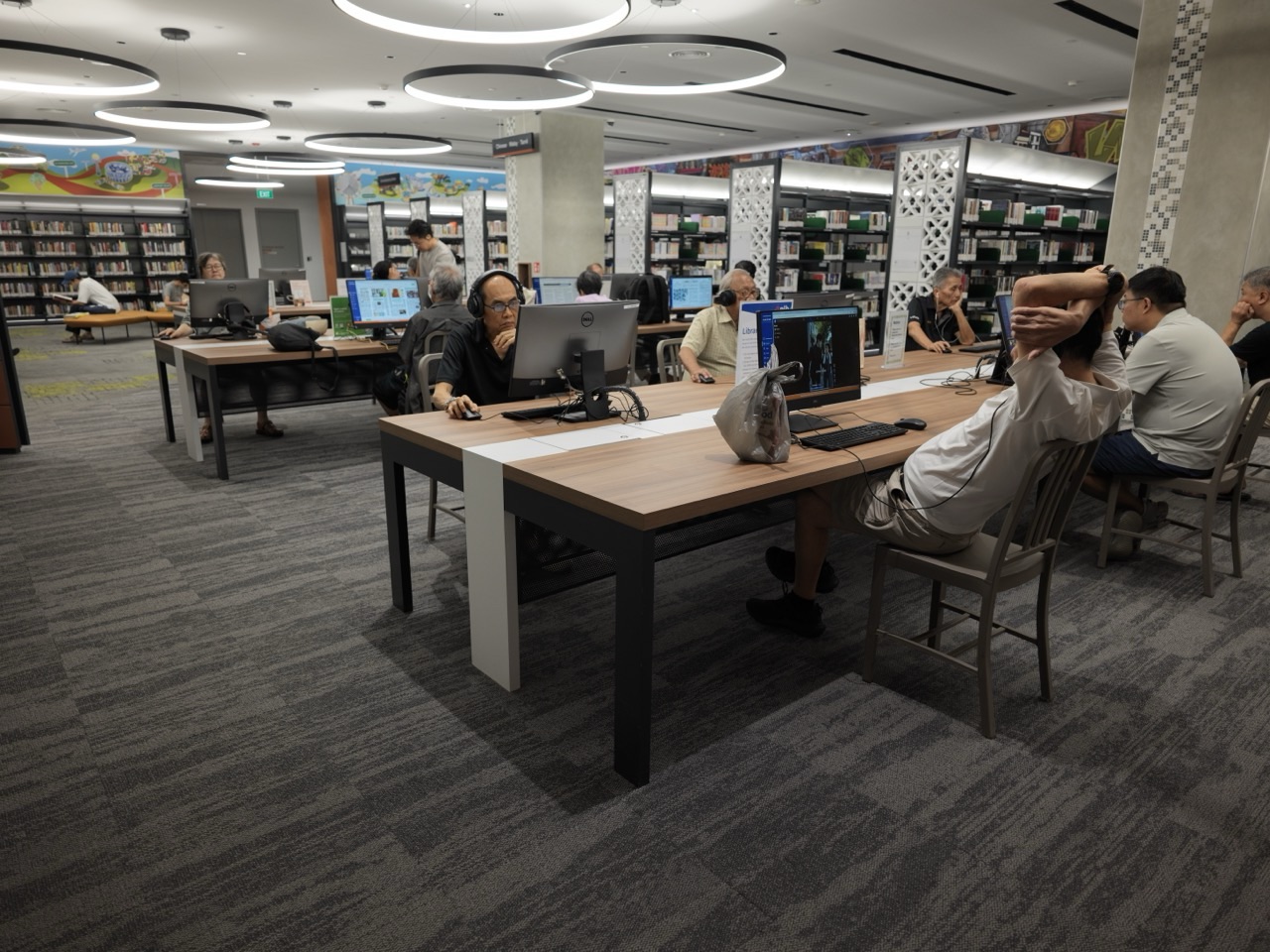
How to use a library with Google Scholar, library databases and full-text research access: begin with a clear question, search the scholarly landscape, then use the library to locate, verify and open the strongest sources. This guide shows students how to move from Google Scholar search results to journal articles, books, citations, library databases and reliable evidence without getting lost in dozens of tabs.
Google Scholar is useful because it can reveal academic articles, books, theses, conference papers, authors and citation trails. A library adds something different: organised catalogues, licensed databases, full-text pathways, reference collections and librarians who understand how information is described. Put the two together and research becomes faster, clearer and much more disciplined.
Did you know that the real skill is not typing more words into a search box? It is learning the route from question → concepts → keywords → discovery → source → full text → evidence → notes → citation. Once you can repeat that route, the library becomes a practical navigation system for topical mastery—and Google Scholar becomes one useful instrument inside it rather than the whole map.
How a Library Works | From Collection to Discovery, Trust and Return
How to use a Library | Research a Topic with Databases, Keywords and Credible Sources
The Fast Answer: Google Scholar Finds; the Library Confirms, Connects and Opens
Here is the simplest working model. Google Scholar is excellent for discovery across scholarly material. Your library is excellent for organised access, full-text routes and research support. You do not have to choose one. In serious research, you move between them.
- Write the research question in ordinary language.
- Pull out three to five important concepts.
- Create synonyms for each concept.
- Search those concepts in Google Scholar.
- Read titles, abstracts, dates, authors and publication details before clicking randomly.
- Identify one or two strong anchor sources.
- Use your library catalogue or databases to locate full text when needed.
- Follow references backward to earlier work.
- Use cited-by links to move forward to newer work.
- Record the claim, evidence and citation before opening the next source.
The goal is not to collect the maximum number of PDFs. The goal is to build a small, defensible body of evidence that helps you answer the actual question. Good research is selective. It knows what to keep, what to reject, and what to search next.
Google, Google Scholar, a Library Catalogue and a Library Database Are Different Tools
Many new researchers treat all search boxes as interchangeable. They are not. Each search environment exposes a different part of the information landscape and gives you different controls.
A general Google search is superb for orientation. It can help you find organisations, current webpages, public reports, definitions, news, government pages and background explanations. When a topic is unfamiliar, a normal web search can teach you the basic vocabulary quickly. But appearing in a web search does not automatically make a source scholarly, complete, authoritative or appropriate for an academic claim.
Google Scholar
Google Scholar is designed around scholarly literature and scholarly citations. It can reveal articles, books, theses, conference papers and related versions. Its great strength is discovery across many scholarly sources and the ability to trace citation relationships. Its weakness is that it does not replace the careful evaluation of sources, and it does not guarantee that every useful result is immediately available in full text.
The library catalogue
A library catalogue answers questions such as: Does the library hold this title? Which edition is available? Is it print, digital or both? Which branch or collection has it? What is the call number? Is the item on loan? Can it be reserved? The catalogue turns a bibliographic description into a route to an item.
How to use a Library | Find Books Fast with the Catalogue, Call Numbers and Shelves
Library databases
Library databases are structured research environments. Depending on the database, they may index journals, newspapers, books, reports, statistics, images or specialist collections. They often provide filters that are more precise than a general search engine, such as document type, publication date, subject heading, journal title, language or peer-reviewed status.
A happy rule to remember is this: use the tool that matches the job. Orient with the open web, discover scholarship with Google Scholar, locate holdings in the catalogue, and search specialist collections in databases.
Did You Know? A Search Box Is Only the Front Door
The visible search box makes research look like a typing task. It is actually a decision task. The quality of the results depends heavily on decisions you make before and after pressing Enter.
- What exactly am I trying to know?
- Which concepts must a useful source contain?
- Which words would an expert use for those concepts?
- What type of source would answer the question best?
- How recent does the evidence need to be?
- Do I need a primary study, review, book, historical source, dataset or policy document?
- Does the source deal with the population, place or period I care about?
- Can I read enough of the source to verify what it actually claims?
- What evidence supports the conclusion?
- What will I record so I can find and cite the source again?
If a student says, “There is nothing on my topic,” the problem is often not that nothing exists. The question may still be too broad, too vague or expressed in everyday words that researchers do not commonly use. Searching is partly the art of translating a human question into the vocabulary of a knowledge community.
Step 1: Turn the Topic Into a Researchable Question
Suppose the starting topic is simply social media and students. That is not yet a research question. The topic could lead to sleep, concentration, academic performance, cyberbullying, identity, friendships, advertising, language, attention, misinformation, digital literacy or mental wellbeing.
A more useful question might be: How does late-night social media use affect sleep quality among secondary-school students?
Now the search has shape. It contains a behaviour, an outcome and a population. From that sentence you can extract landmark concepts: social media use, sleep quality, adolescents or secondary-school students, and perhaps the timing of use at night.
This is a Rainbolt-style move in research: before trying to identify the whole landscape, identify the features that matter. In a search problem, those features are concepts. Once you can see them separately, you can test different combinations instead of repeatedly typing the same sentence.
Questions create boundaries
A researchable question also tells you what does not belong. A paper about university students may be interesting but less directly relevant. A paper about television use may help with background but not answer a question specifically about social media. A study about sleep duration may not answer a question about sleep quality unless those outcomes are clearly related in the study.
Boundaries protect your time. The better the question, the easier it becomes to reject attractive but irrelevant material.
Step 2: Build a Keyword Map Before You Search
Experts rarely use only one phrase for an idea. If your first wording produces weak results, do not conclude that the literature is missing. Build a small synonym map.
- social media → social networking sites, online social networks, platform use, digital media
- sleep → sleep quality, sleep duration, bedtime, sleep disturbance, insomnia
- students → adolescents, teenagers, youth, secondary-school students, high-school students
Now you can test combinations: social media sleep adolescents; social networking sites sleep quality teenagers; bedtime platform use high school students; or digital media sleep disturbance youth.
Quotation marks can be useful when an exact phrase matters, but quoting every concept can make a search too brittle. Begin broad enough to discover vocabulary. Tighten the search after you understand how the field describes the problem.
Use the vocabulary you discover
One of the fastest improvements in research happens when you stop insisting on your original wording. Suppose the papers repeatedly use the phrase “problematic social media use” rather than “too much social media.” That is a clue. Search the phrase researchers use. The library is teaching you a new language, and that language opens better doors.
Step 3: Search Google Scholar for Vocabulary, Authors and Patterns—not Just Answers
A beginner looks at a page of results and asks, “Which one gives me the answer?” A stronger researcher asks several questions at once: Which technical terms keep repeating? Which researchers appear often? Which journals publish this work? Which years seem important? Which methods keep appearing? Which paper is repeatedly cited? Which disagreements recur?
That is how a search becomes a map. Even a paper you do not eventually cite can be useful if it teaches you the field’s vocabulary, reveals an important author or points to a more suitable review.
Look for anchor sources
An anchor source is a paper, review, chapter or book that helps you orient yourself. It does not have to answer every part of the question. It simply needs to be strong enough to show you important terms, references and intellectual landmarks.
Once you find one good anchor source, research often becomes faster because the source contains its own map: references, key authors, theories, methods, datasets and claims that can be followed.
Step 4: Read the Result Before You Click It
Google Scholar search results contain useful signals before you open anything. Take a few seconds to inspect the title, author names, publication, year, visible snippet, links to copies, cited-by information and available versions.
This tiny pause reduces random clicking. A search result is not merely a door; it is a small bibliographic record. Learn to read the record.
Ask three questions from the result page
- Is this obviously about my question or only loosely related?
- Is the date appropriate for the purpose of my research?
- Does the publication information suggest a source worth inspecting more closely?
You are not judging the entire paper from the result page. You are triaging. The aim is to decide what deserves the next two minutes of your attention.
Step 5: Find Full Text Without Giving Up at the First Paywall
A blocked publisher page is not always the end of the route. Libraries exist partly because knowledge access has multiple layers.
- Look for a visible PDF or HTML copy beside the Scholar result.
- Check whether another version of the work is listed.
- Copy the exact article title.
- Search that exact title in your library catalogue.
- Search it in the relevant library database.
- Look for a legitimate institutional repository copy.
- Ask a librarian if you have the citation but cannot locate access.
- Where available, use interlibrary loan or document-delivery services.
Google provides a library-linking system for participating libraries so that users can move from some Google Scholar results to full text available through their library. The important principle is broader than any one interface: discovery and access do not have to occur in the same place.
Google Scholar Support for Libraries
Known-item searching
Once you know the exact source you want, change search mode. Stop searching the topic broadly. Search the exact title, then add the author’s surname or publication year if needed. This is known-item searching: the question is no longer “what exists?” but “where is this exact object?”
Step 6: Move Into Library Databases When Precision Matters
Google Scholar is excellent for breadth. A subject database can be better for precision. Once Google Scholar has taught you the vocabulary, take those stronger terms into the library database that best matches your subject.
Depending on the database, you may be able to filter by publication date, document type, subject heading, author, journal, language, discipline, full-text availability or peer-reviewed status. This is where research begins to feel less like throwing a net into the ocean and more like adjusting a microscope.
For Singapore readers, the National Library Board provides an eResources portal with many types of digital resources. Access conditions differ by resource, so follow the current instructions shown for the item you want.
Explore NLB eResources by type
How to use a Library | Use Databases, eBooks, Audiobooks and Digital Resources
Subject headings can reveal a hidden vocabulary
Some databases use controlled subject terms. These can be incredibly useful. A result may use a subject heading that is more precise than your original search. Click or reuse that heading and you may suddenly find a coherent cluster of relevant material.
This is another form of topical mastery: the information system is telling you how the collection has been organised. Instead of fighting the structure, learn from it.
Step 7: Use Cited By to Move Forward in Time
Imagine you find an important study from 2018. It answers part of your question, but you are researching in 2026. You need to know what happened after that paper appeared.
The “Cited by” trail in Google Scholar can help you find later works that reference the source. This is forward citation searching.
- Find newer evidence.
- See whether a result was replicated.
- Locate criticism or alternative explanations.
- Find a newer review.
- Discover researchers who continued the question.
- Trace how an idea changed over time.
Citation counts are useful signals, but they are not truth meters. A paper may be heavily cited because it is foundational, controversial, methodologically influential or simply old enough to accumulate attention. The count invites inspection; it does not replace reading.
Step 8: Use the Reference List to Move Backward
Every serious academic work sits inside a conversation. Its reference list tells you what came before it. This is backward citation searching.
When you find an excellent paper, scan the references for original theories, classic studies, major reviews, established methods, important datasets, earlier disagreements and definitions that shaped the field.
Research often accelerates after the first strong source because the source begins navigating for you. You stop returning to a blank search box and start following relationships.
A paper is a map of other papers
This is one of the happiest discoveries in library research. A strong source contains names, terms, references, methods, journals and disagreements that point onward. Instead of asking, “What do I search now?”, you can ask, “Who does this author cite?”, “Who cites this author?”, “Which phrase describes the phenomenon?”, and “Which journal keeps appearing?”
That is when searching becomes topical navigation rather than keyword guessing.
Step 9: Find a Review Before Reading Twenty Separate Studies
When a topic is unfamiliar, a good review article can be a powerful orientation tool. Reviews can show you major themes, common methods, important papers, repeated findings and disagreements. Systematic reviews and meta-analyses may use explicit methods to identify and synthesise prior studies.
A review does not replace the original research when you need primary evidence. It gives you a map. Once you know which claims matter, open the underlying studies and inspect them directly.
When reviews are especially useful
- When you are new to the vocabulary.
- When there are hundreds of individual studies.
- When you need to see the shape of a debate.
- When you want to identify foundational papers efficiently.
- When your first searches feel scattered and you need a coherent overview.
For a school or university assignment, this often solves the “I do not know where to begin” problem. Begin with orientation; then go deeper where the argument needs evidence.
Step 10: Decide Whether a Paper Is Worth Your Time
Do not read every result from the first line to the last. Triaging is a real research skill.
Start with the title
Does the title actually address your question? A nearby topic can still be interesting, but interesting and relevant are not the same thing.
Read the abstract
Identify the research question, population or material, method, major finding and limits. If the abstract does not connect to your purpose, move on.
Check the date
Fast-moving topics may require current evidence. Historical or theoretical questions may depend on older foundational work. “Newest” and “best” are not synonyms.
Check the study population
Evidence from university students may not automatically apply to Primary 6 pupils. Evidence from one country may require caution when applied to another. Context matters.
Check the method
Was it a survey, experiment, interview study, archival analysis, systematic review, meta-analysis, case study or another method? The method determines what kind of claim the evidence can support.
Read the limitations
Strong scholarship often states what the study cannot confidently conclude. Limitations are not embarrassing footnotes. They are boundaries around the claim.
Do Not Confuse a PDF with a Good Source
A source can look academic without being strong. A PDF icon, page numbers and formal vocabulary do not guarantee quality.
- Who wrote it?
- Where was it published?
- What evidence supports the claim?
- Is the method appropriate to the question?
- Can the claim be cross-checked?
- Is it a primary study, review, commentary or opinion?
- Are conflicts of interest or incentives relevant?
- Does the conclusion stretch beyond the data?
How to use a Library | Ask a Librarian, Discover Hidden Resources and Go Beyond Google
Use the Library as a Quality-Control Partner
The modern library is valuable not only because it stores information. It organises access, metadata, collections, research tools and human expertise.
A librarian can be especially useful when your keywords are too broad, the topic crosses several disciplines, you keep finding shallow sources, you need historical material, you have a citation but cannot locate the work, or you are unsure which database is appropriate.
Asking for help is not a failure of research independence. Serious researchers use specialised infrastructure. If a librarian can help you turn a vague topic into a better search strategy in ten minutes, that is intelligent use of time.
Capture the Claim, Not Just the Link
A common research failure is saving twenty links and remembering nothing about why they mattered. For every source worth keeping, record at least five things.
- Citation: enough bibliographic information to find it again.
- Question: which part of your research question it helps answer.
- Claim: the useful finding or argument.
- Evidence: what data, reasoning or sources support the claim.
- Use: where it might fit into your essay, report or project.
Add one more field if you want a stronger research habit: Uncertainty. Write what you should not overclaim from the source. That one sentence can prevent a surprising number of weak arguments.
Separate quotation from paraphrase
In your notes, mark exact quotations clearly. Put your paraphrase in different words. Keep your own interpretation separate. This protects you from accidental plagiarism and makes later writing easier because you can see which ideas belong to whom.
How to use a Library | Cite Books, Articles and Websites, Build a Bibliography and Avoid Plagiarism
Search Like a Scientist: Change One Variable at a Time
When a search fails, beginners often rewrite everything at once. Then they cannot tell which change helped. Instead, keep the main concept, change one synonym, check the result set, add or remove one limiter, and record the vocabulary that improves the search.
- climate education students
- climate literacy students
- “climate literacy” adolescents
- “climate literacy” secondary school
- “climate literacy” Singapore students
Each version teaches you something about the landscape. Search iteration should be deliberate, not random.
Ask what was measured
Science sources often become easier to evaluate when you identify variables and methods. If the topic is exercise and memory, ask: What kind of exercise? How long? What age group? What kind of memory? How was memory measured? Was the study experimental or observational? Was the effect immediate or long-term? Each answer generates better search terms.
Search Like a Historian: Names, Places, Dates and Variants Matter
Historical searching often behaves differently. Place names change. Political boundaries change. Institutions are renamed. Older sources may use vocabulary that is unfamiliar today.
- Search old and new place names.
- Try alternative spellings.
- Add specific date ranges.
- Search personal names and initials.
- Use historical job titles.
- Try street-name variants.
- Move into newspaper and archive databases.
- Look for maps, photographs, oral histories and primary documents when appropriate.
A modern keyword may fail to retrieve an older source simply because the people who created the source did not use that word.
Search Like an English Student: Follow Language, Theme, Method and Context
If you are researching literature, language or writing, search at several levels. You may combine an author, text, concept, theme, method and historical context.
A weak search might be Macbeth ambition essay. A stronger research search could become Macbeth ambition kingship legitimacy tragedy, and a more specialised version might be Macbeth political theology kingship early modern Scotland.
The shift is important. You are moving from “give me an essay” to “show me the intellectual conversation.” A library is far more powerful when you ask it the second question.
Search Like a Mathematics Student: Match the Source to the Need
Mathematics learning can require different source types. A student may need a definition, proof, worked example, visual explanation, historical account, application or graded practice.
Do not ask one source type to do every job. If you want to know why the quadratic formula works, a derivation may be more valuable than a worksheet. If you want to practise solving equations quickly, a graded problem set may be more useful than a research paper. Good library use starts by matching the information need to the right source.
Search for Disagreement on Purpose
A powerful research technique is to look deliberately for the strongest disagreement with your current view. Depending on the field, add terms such as criticism, limitation, replication, controversy, debate, null result, bias, challenge or alternative explanation.
Why? Because an argument becomes stronger when it survives contact with contrary evidence. If every source in your notes agrees perfectly, you may have found a genuine consensus—but you may also have searched too narrowly.
This habit improves evaluation. Instead of writing “research proves,” you learn to write more accurately: “several studies suggest,” “a review found,” “the evidence is mixed,” or “the effect appears stronger under these conditions.” Those are signs that evidence is shaping the sentence.
Build a Source Ladder from Easy to Difficult
Do not begin every subject with the hardest journal article you can find. Difficult papers may assume terminology, theory and methods you have not yet learned. Build a source ladder.
- Begin with a reliable overview to see the landscape.
- Use a reference work or textbook to stabilise definitions.
- Read a review to understand the research conversation.
- Open key primary studies for evidence.
- Move into specialist papers once you can follow the terminology and method.
This is not taking the easy way. It is sequencing. Good teachers do it. Good textbooks do it. Libraries make it possible because they hold multiple layers of explanation around the same topic.
Keep a Search Log
If a project lasts more than one sitting, keep a tiny search log. Record the date, search tool or database, search phrase, useful filters and one sentence about what happened.
- Search: screen time sleep teenagers — too broad.
- Search: social media sleep adolescents — useful review terms discovered.
- Search: bedtime social media use sleep quality adolescents — stronger studies.
- Database search: subject term + adolescents + sleep disturbance — more precise set.
The log prevents you from repeating the same weak searches three days later. It also shows how your vocabulary evolved. That evolution is evidence that you are learning the field.
The Full-Text Ladder
When you need one particular source, use a repeatable ladder rather than giving up after the first blocked page.
- Level 1: Open the result if legitimate full text is already available.
- Level 2: Check other versions.
- Level 3: Search the exact title in the catalogue.
- Level 4: Search relevant library databases.
- Level 5: Check a trusted institutional repository.
- Level 6: Ask a librarian.
- Level 7: Use an interlibrary-loan or document-delivery route where available.
The ladder is useful because research infrastructure is deliberately redundant. Discovery, ownership, licensing and delivery may be handled by different systems.
Respect Access Rules and Copyright
Libraries can provide access to licensed materials because they have arranged lawful access for eligible users. That does not mean every file can be redistributed freely.
- Read and download within the permitted terms.
- Cite what you use.
- Do not upload restricted copies publicly unless the licence permits it.
- Do not share login credentials.
- Ask the library when the access rules are unclear.
Information literacy includes lawful and responsible use, not merely successful discovery.
How to Avoid the Seven-Tab Trap
You know the feeling. Seven tabs become twenty-seven. Every title looks useful. Nothing gets read. Use a simple rule: for every five results you open, keep at most two unless there is a clear reason to retain more. Then write one sentence about each keeper.
- Keep: recent systematic review; strong orientation.
- Keep: Singapore dataset; directly relevant population.
- Reject: commentary summarising another article; use the original.
- Reject: topic too broad for this question.
- Reject: interesting, but it does not answer the research question.
This tiny habit changes research. You begin selecting evidence instead of accumulating browser history.
A 15-Minute Google Scholar + Library Workflow
- Minutes 1–2: write the research question.
- Minutes 3–4: identify three concepts and synonyms.
- Minutes 5–8: run two or three Scholar searches.
- Minutes 9–11: open the strongest overview or anchor source.
- Minutes 12–13: scan references and cited-by links.
- Minutes 14–15: save three promising sources with one-line notes.
You are not trying to finish the research in fifteen minutes. You are trying to build a map.
A 45-Minute Research Workflow
- 10 minutes: question and keyword map.
- 10 minutes: Google Scholar discovery.
- 10 minutes: library database search using improved vocabulary.
- 10 minutes: read abstracts and select five sources.
- 5 minutes: record citations, claims and next questions.
At the end, you should know more than when you started. More importantly, you should know what you still need to know.
A 90-Minute Deep Research Workflow
- Define the question and boundaries.
- Build the concept and synonym map.
- Search Scholar for anchor sources.
- Search the most relevant library database.
- Use citation chasing on the best sources.
- Resolve full-text access.
- Read at least one source beyond the abstract.
- Create structured notes.
- Separate evidence from your interpretation.
- Write a provisional answer.
If you cannot yet write a provisional answer, you may still be collecting rather than understanding.
How This Helps with Essays and School Projects
Students often imagine research happens first and writing happens later. Strong work is more interactive. You begin with a question, find evidence, discover that the evidence complicates the question, revise the claim, search again, and build a better paragraph.
That is not messy failure. It is thinking. A library helps because it gives you enough depth to let your idea become more precise.
Write from evidence, not from tabs
Before drafting a paragraph, look at your notes and ask: Which source supports the main claim? Which source provides a different view? Which source gives the best example or data? If no source supports the sentence you want to write, either search again or weaken the claim until it matches the evidence.
Use Google Scholar Without Letting the Ranking Write Your Question
Search engines rank results. That ranking can quietly influence what you think is important. Do not let the first page define the whole topic.
Vary keywords, date ranges, geographic terms, population terms, methods, source types and disciplinary perspectives. If you are researching artificial intelligence in education, do not search only for benefits. Search for limitations, assessment, bias, teacher workload, student agency, accessibility, academic integrity and evidence quality.
A good researcher does not only search for support. A good researcher searches for stress tests.
Use Singapore’s Library Infrastructure as a Research Accelerator
Singapore readers can move between physical library space and digital library infrastructure. A session can begin with a shelf, continue on a computer terminal, move into an ebook or database at home, and end with organised notes for an assignment.
NLB’s eResources portal groups many kinds of digital materials. Availability and access conditions vary, so check the current record for the resource you need.
National Library Board Singapore
Using a library in 2026 is therefore much more than borrowing a physical book. It is using a network of collections, metadata, discovery systems, digital access and human expertise.
The CivDJ View: Research Is Assembly
Think of modern research as an assembly desk. You are not asking one source to do every job.
- A textbook can explain a mechanism.
- A review can show the state of a field.
- A primary study can provide direct evidence.
- A government report can provide local data.
- An archive can provide historical material.
- A newspaper database can show contemporary reaction.
- A reference work can stabilise definitions.
- A librarian can help connect missing pieces.
Then you assemble. The quality of the final explanation depends on whether each piece is doing the job it is suited to do. Topical mastery is rarely one perfect source. It is a well-organised collection of sources that illuminate the problem from the right angles.
Advanced Move: Use Repeated Names to Map the Field
When the same author name appears again and again, pause. You may have found a researcher who has contributed substantially to the topic. Open the author profile or search the author’s name with your concept. Look at the progression of titles over time. Which questions remain stable? Which methods changed? Which collaborators recur?
Now do the same with journals. If several strong sources come from the same journal, search within that publication or use it as a clue to the discipline most interested in the question. This can reveal vocabulary that a general search never made obvious.
Repeated names are not proof of authority, but they are landmarks. Rainbolt-style research pays attention to landmarks because they help orient the next move. A cluster of authors, journals and terms can tell you where the centre of the conversation lies.
Follow the network, not the celebrity
Do not assume the most visible author is always correct. Use the network to discover competing groups, later replications and alternative methods. The point of author mapping is to navigate the literature, not to replace evaluation with reputation.
Advanced Move: Separate Discovery from Evidence Extraction
Discovery and reading are different cognitive jobs. During discovery, you are scanning titles, abstracts, keywords and citation trails. During evidence extraction, you slow down and ask what the source actually supports.
Mixing the two can make research feel exhausting. You discover a paper, read twenty pages, chase a citation, open three tabs, forget your original question and start reading something fascinating but irrelevant.
Try two passes. In the first pass, collect a small candidate set. In the second pass, read the candidates closely. For each, extract the exact claim, evidence, context and limitation. This creates a cleaner mental workspace.
A simple candidate table
- Source A — strong relevance, recent review, keep.
- Source B — useful method, but different age group, keep with caution.
- Source C — good background only, keep for introduction.
- Source D — repeats Source A without new evidence, reject.
- Source E — contradicts the leading claim with direct evidence, keep.
Now your research folder is doing intellectual work. It is not merely storing files.
Advanced Move: Test Whether You Can Explain the Field Without Looking
After a research session, close your tabs and explain the topic aloud in two minutes. Which concepts can you define? Which findings can you state? Which disagreements can you describe? Which names or sources can you remember?
This is retrieval practice applied to research. It reveals whether you have built understanding or merely recognised information while it was on screen.
If the explanation collapses, return to your notes and improve the structure. Write a five-sentence summary: the question, the main answer, the strongest evidence, the most important limitation, and the next thing you need to find.
This connects library research with learning. You are not collecting knowledge to admire it. You are building a model you can retrieve, explain and use.
A Library Research Checklist Before You Submit
- Can I state my research question in one sentence?
- Did I use more than one search wording?
- Did I identify the vocabulary experts use?
- Did I use the library catalogue or databases where appropriate?
- Did I read beyond snippets for the claims I rely on?
- Did I check dates and context?
- Did I distinguish primary evidence from commentary?
- Did I look for disagreement or limitations?
- Can I explain why each major source is in my bibliography?
- Did I verify citations against the actual source?
- Did I mark quotations clearly in my notes?
- Did I avoid making a stronger claim than the evidence supports?
- Could another reader follow my citation back to the source?
If you can answer yes to most of these, you are no longer simply searching the internet. You are doing organised research.
Common Mistakes When Using Google Scholar with a Library
- Searching a whole assignment question as one long sentence and never changing it.
- Trusting the first result because it is first.
- Treating citation counts as quality scores.
- Ignoring publication dates on fast-moving subjects.
- Using only sources that are immediately free to open.
- Giving up at a paywall without checking library access.
- Saving links without notes.
- Using a review when the assignment requires primary evidence.
- Using one study to make a universal claim.
- Searching only for evidence that agrees with an existing opinion.
- Copying a citation from a search result without checking the actual source.
- Assuming Google Scholar indexes every scholarly source.
- Reading one paper deeply before deciding whether it is relevant.
- Confusing a polished PDF with a strong source.
The fix for most of these mistakes is small: slow down at the decision points. Research speed comes from making fewer bad decisions, not from clicking faster.
Frequently Asked Questions
Is Google Scholar a library database?
No. It is a scholarly search and discovery service. A library database is a separate resource with its own coverage, filters and access conditions.
Can I use Google Scholar without a library?
Yes. You can search Google Scholar directly. Library access becomes especially valuable when you need full text, specialist databases, catalogue records, research support or material that is not openly available.
Why does Google Scholar sometimes show a PDF beside a result?
A copy may be available from a repository, institution, author page or another indexed source. Check that the version you read matches the work you intend to cite.
What does Cited by mean?
It helps you find works that cite the selected result. It is useful for forward citation searching, but the number itself should not be treated as a simple quality score.
Should I always choose the newest paper?
No. Current evidence can matter greatly, but older foundational work may still be essential. Choose according to the question and the role the source plays.
What if I find a citation but cannot access the article?
Search the exact title in the catalogue, relevant databases and trusted repositories. Check other versions and ask a librarian about access routes, including interlibrary services where available.
How many sources do I need?
Enough to answer the question responsibly. The number depends on the assignment, source types, depth and evidence needed. Five carefully selected sources can be better than twenty loosely related ones.
Can I cite Google Scholar itself?
Usually you cite the actual article, book, thesis or other source you discovered, not the search engine that helped you locate it.
How do I know when to stop searching?
Stop when new searches mostly repeat what you already know, your important claims have appropriate evidence, major disagreements are represented and further searching is unlikely to change the answer materially.
Should I trust an abstract?
Use the abstract for triage, not as a substitute for reading the full source when your argument depends on the result. Abstracts compress methods, evidence and limitations.
Helpful Reading: Build the Library Skill Stack
- How a Library Works | From Collection to Discovery, Trust and Return
- How to use a Library | Find Books Fast with the Catalogue, Call Numbers and Shelves
- How to use a Library | Research a Topic with Databases, Keywords and Credible Sources
- How to use a Library | Ask a Librarian, Discover Hidden Resources and Go Beyond Google
- How to use a Library | Cite Books, Articles and Websites, Build a Bibliography and Avoid Plagiarism
- How Library Classification Works | Turning a Collection Into a Navigable Map of Knowledge
- Google Scholar
- Google Scholar Support for Libraries
- National Library Board Singapore
- NLB eResources
How to Use a Library: Make Discovery a Repeatable Skill
A good library session should leave you with more than downloaded files. It should leave you with a better map of the topic. You should know the important terms, which authors and sources matter, where the evidence is strong, where people disagree and what to search next.
That is why Google Scholar and a library work so well together. Google Scholar gives you speed across a scholarly landscape. The library gives you structured access, catalogues, databases, collections and human help.
Together, they let a student move from “I found something” to “I understand why this source matters.” Once you can do that, research becomes much less mysterious. It becomes a sequence you can repeat: question, search, discover, access, evaluate, understand, cite, and then return to the question with a better answer.