
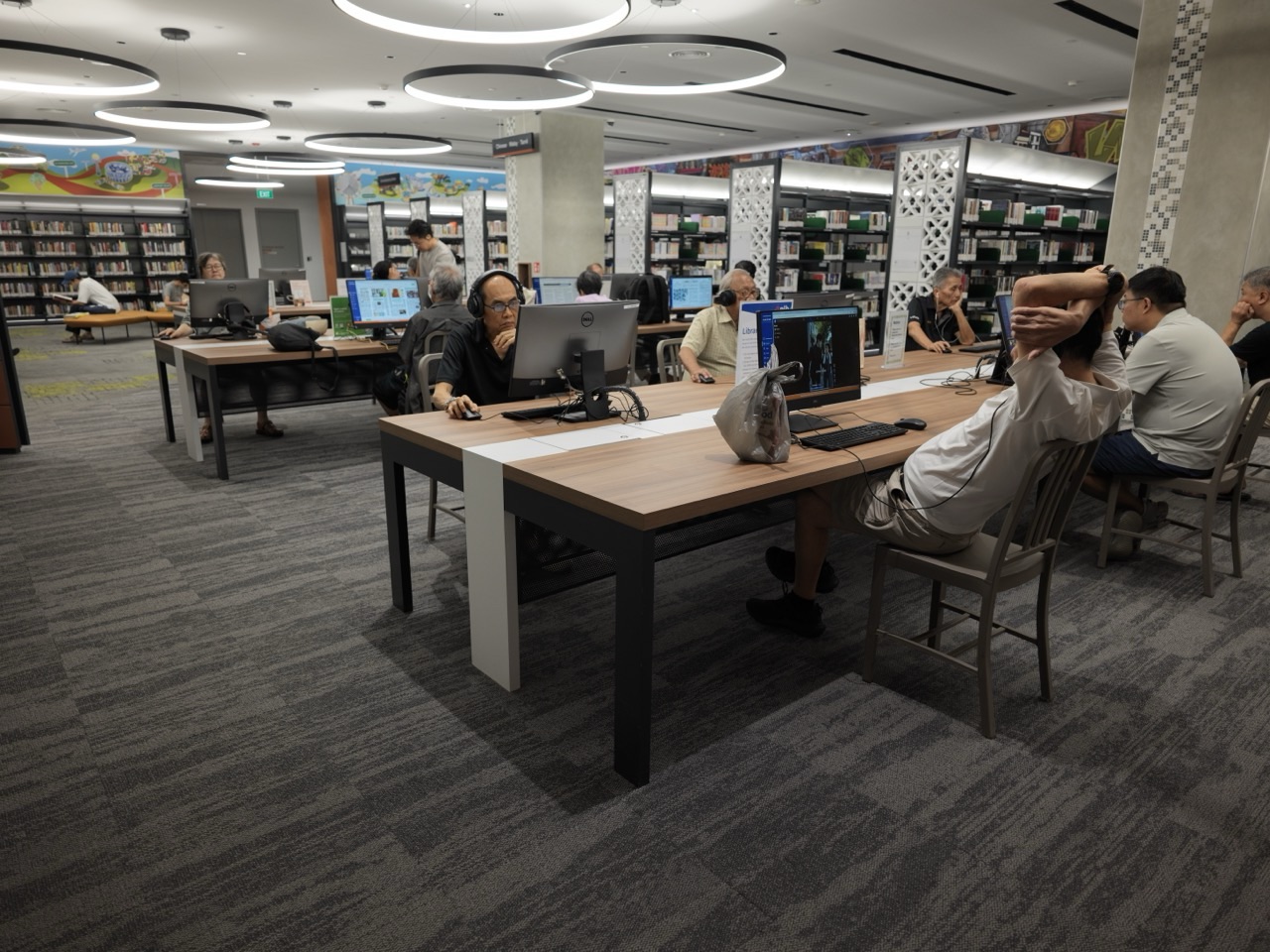
How to use a library for research begins by separating three jobs that students often mix together: finding a topic, finding trustworthy sources and turning those sources into an answer. A library helps with all three because its catalogues, databases, books, journals, archives and librarians are organised around discoverable evidence rather than random browsing.
If you are researching a school assignment, an essay, a project, a presentation or simply a question you care about, the fastest method is not to type one sentence into a search box and read whatever appears first. Build a search vocabulary, choose the right source type, compare evidence, keep useful citations and refine your question as your understanding grows.
This guide shows how to use library databases, keywords, subject headings, Boolean search, books, journal articles and source evaluation to move from “I need information” to a clear, evidence-based understanding of a topic.
Did you know that strong researchers usually change their search terms several times before they find the best sources?
That is not failure.
That is research working properly.
Read How to be Good at Research
Read The Gold Standard Of Information Literacy
Start With a Research Question, Not a Search Box
A search box is a tool.
It cannot decide what you are trying to understand.
Before you search, write one question.
Weak topic:
Climate change.
Better question:
How does climate change affect flooding in coastal cities?
Stronger question:
How are sea-level rise and extreme rainfall changing flood risk in dense coastal cities, and what adaptation strategies are being used?
Each version creates a different research task.
The stronger question tells you that you may need sources on:
- sea-level rise;
- extreme rainfall;
- urban flooding;
- coastal cities;
- climate adaptation;
- drainage;
- coastal protection.
Now you have search components.
That is the beginning of a research map.
Build a Keyword Family Before You Search
One concept can have several names.
Researchers who search only one phrase often miss good sources because the source uses different vocabulary.
For every important concept in your question, build a small keyword family.
For example:
- Flooding: flood, urban flood, pluvial flooding, coastal flooding, inundation.
- Climate change: climate change, global warming, climate risk, climate impacts.
- Adaptation: adaptation, resilience, mitigation measures, flood protection, risk reduction.
- City: urban, metropolitan, coastal city, dense city, city-state.
This does two useful things.
First, it prevents you from becoming trapped by one wording.
Second, it helps you recognise the technical language of the field.
Your vocabulary should improve as you research.
If it does not, you are probably collecting information without learning the structure of the subject.
Choose the Right Search Place for the Question
Not every question belongs in the same search tool.
A useful mental model is:
- Library catalogue: books, eBooks, audiovisual material and known items.
- Library databases: journal articles, newspapers, reports, reference works and specialised collections.
- Reference sources: definitions, background, dates, quick facts and topic orientation.
- Archives and special collections: original documents, photographs, manuscripts, maps and historical records.
- Web search: current public information, official sites, recent news and broad discovery.
Strong research moves between these layers.
A student may begin with a reference article to understand a topic, use the catalogue to find a good book, use a database for recent studies and use an archive or newspaper collection for primary evidence.
The mistake is not using Google.
The mistake is assuming one search environment can do every job equally well.
Books Give You the Map; Articles Give You the Edge
Books and journal articles are both useful, but they often serve different research functions.
Use books for orientation
A good book can explain the vocabulary, history, big debates and major concepts of a subject in one organised structure.
That makes books excellent when you are new to a topic.
Use the table of contents to see how the author divides the field.
Use the index to find specific ideas.
Use the bibliography to discover important sources.
Use journal articles for narrower questions
Journal articles are often more specialised.
They may focus on one experiment, one dataset, one case study, one theory or one argument.
They are especially useful when you need recent research or detailed evidence.
The smartest sequence for many students is:
- book or reference source for orientation;
- database search for recent and specific work;
- bibliography mining for deeper sources.
That sequence is much easier than opening a highly technical research paper before you understand the topic’s basic language.
How Library Databases Differ From Ordinary Web Search
A library database is a structured collection of information that may include academic journals, newspapers, magazines, reports, books, indexes or other specialised material.
Some resources are free to the public.
Others are subscribed to by the library and available to eligible members.
In Singapore, NLB eResources includes databases and digital publications that can be browsed by type, subject and audience, with access conditions depending on the resource.
Database searching feels different from ordinary web search because it rewards structure.
Instead of writing a natural-language paragraph, you often get better results by combining concepts deliberately.
Example:
urban flooding AND climate adaptation
That tells the database both ideas matter.
Then you can narrow by:
- publication date;
- document type;
- subject;
- language;
- peer-reviewed status where provided;
- full text;
- geographic area.
The result is not automatically “better” because it came from a database.
You still have to evaluate the source.
But the search environment gives you access to materials that ordinary search engines may not surface in the same way.
Learn Boolean Search Without Making It Complicated
Boolean operators help you control how ideas are combined.
AND narrows
climate change AND Singapore
This asks for records containing both concepts.
OR broadens
teenagers OR adolescents
This helps when different authors use different words for the same or similar ideas.
NOT excludes carefully
jaguar NOT car
This can remove an unwanted meaning, but use it carefully because you may accidentally exclude useful material.
Quotation marks can search phrases
“urban heat island”
This asks for the words together as a phrase in systems that support phrase searching.
NLB OneSearch guidance, for example, supports exact-phrase searching with quotation marks and OR to expand a search.
Use Subject Headings to Learn the Library’s Vocabulary
Keyword searching uses the words you already know.
Subject headings can introduce the words the library uses to organise the topic.
This is extremely useful when your first search is vague.
Suppose you search:
kids learning two languages
A useful record might reveal terms such as:
- bilingualism;
- second language acquisition;
- multilingual education;
- language learning;
- children — language.
You have just upgraded your research vocabulary.
Now search those terms.
This is one reason library research can produce deeper topical mastery than endlessly rewriting casual search phrases.
Do Not Read Every Search Result: Triage It
Search results are candidates, not obligations.
Use a quick triage process.
- Read the title.
- Check the date.
- Read the abstract, description or summary.
- Check the author or organisation.
- Look at subject terms.
- Decide whether it directly answers part of your question.
If not, move on.
Good researchers are not people who read everything.
They are people who decide intelligently what deserves deeper reading.
Evaluate Sources by Fit, Authority, Evidence and Currency
Source evaluation becomes easier when you ask four questions.
1. Fit: does this source answer my question?
A high-quality source can still be useless for your specific task.
Relevance comes first.
2. Authority: who made it?
Look at the author, institution, publisher, journal, agency or organisation.
Expertise matters differently in different contexts. A personal memoir may be excellent evidence for lived experience but poor evidence for a national statistical claim.
3. Evidence: what supports the claim?
Look for data, references, methods, examples, documents or clear reasoning.
A confident tone is not evidence.
4. Currency: how much does date matter?
For current technology, medicine, law, policy or statistics, recent material may be important.
For history, literature or philosophy, an older source may be foundational rather than obsolete.
Do not ask “Is old bad?”
Ask “Does the date fit the claim I am using?”
Use the Two-Source Rule Before You Trust a Surprising Claim
If a claim is important, surprising or controversial, verify it.
Find another independent source.
Better still, trace the claim back to the original study, report, dataset or document.
This is not because every source is dishonest.
It is because information changes as it is repeated.
A newspaper summarises a report.
A blog summarises the newspaper.
A social post summarises the blog.
By the end, the original caveats may have disappeared.
Libraries are powerful because they often give you routes back toward primary or authoritative material.
Citation Chaining: Let One Good Source Find the Next
When you find a genuinely useful source, do not treat it as an isolated object.
Use its references.
This is called backward citation searching: you look at what the source cited.
You can also search for newer sources that cite it. That is forward citation searching where databases or scholarly tools support it.
This technique is excellent for discovering:
- foundational studies;
- major authors;
- later debates;
- replications;
- new applications;
- contradictory findings.
One excellent article can therefore become a doorway into an entire research conversation.
Use Bibliographies as Hidden Maps
A bibliography is not decoration at the back of a book.
It is a record of where the author’s knowledge came from.
When several strong books repeatedly cite the same author or work, pay attention.
Repeated appearance is not proof that a source is correct, but it is a useful signal that the work may be influential within the topic.
Use bibliographies to identify:
- classic texts;
- important datasets;
- government reports;
- major theories;
- key case studies;
- specialist journals.
Then search the catalogue or databases for them.
This is how a reading list becomes a research network.
Take Notes That Preserve the Source
One of the most common research mistakes happens after the source is found.
The student takes notes but forgets where the information came from.
Then writing becomes painful.
For every source, record enough information to find it again.
- author;
- title;
- publication or publisher;
- year;
- page number for useful passages;
- URL, DOI or database record where relevant;
- your own summary of why the source matters.
Then separate three things in your notes:
- what the source says;
- what you think it means;
- how you may use it.
That separation reduces accidental plagiarism and makes later writing much clearer.
Research Is a Loop, Not a Straight Line
Beginners often imagine research like this:
Pick topic → search → collect sources → write.
Real research is usually:
question → search → read → learn new term → change question → search again → compare → notice gap → search again → write → verify.
This looping behaviour is a strength.
Your question should become more precise because the sources have taught you something.
If your final question is identical to your first vague thought, you may have gathered facts without actually refining your understanding.
A Practical Research Workflow for Students
Use this workflow for an essay, project or presentation.
Step 1: write the question
Make it specific enough that you know what counts as relevant evidence.
Step 2: build keyword families
List synonyms, technical terms, places, dates and related concepts.
Step 3: get orientation
Use a good reference source, introductory book or overview to understand the terrain.
Step 4: search the catalogue
Find books and inspect subject headings.
Step 5: search a relevant database
Use combinations of concepts rather than one giant sentence.
Step 6: evaluate before reading deeply
Check fit, authority, evidence and date.
Step 7: take source-linked notes
Record the citation while the source is open.
Step 8: chase citations
Use references to find stronger or more original sources.
Step 9: compare
Look for agreement, disagreement, different methods and missing evidence.
Step 10: rewrite your question if necessary
Better knowledge should produce better questions.
How to Use NLB OneSearch for Topic Discovery
Singapore researchers can use NLB OneSearch to search across multiple resource types including books, magazines and articles, audiovisual material, images, newspapers, records and papers, websites and eJournals.
That breadth makes it useful for a simple but powerful research habit: search the same topic across different evidence types.
Suppose the topic is “Singapore River.”
Do not stop at books.
- Find books for narrative history.
- Find old newspapers for contemporary reports.
- Find photographs for visual evidence.
- Find records and papers for archival context.
- Find journal material for interpretation.
Now the topic is no longer one-dimensional.
You are seeing the same subject through multiple evidence systems.
Use Newspapers Differently From Books
A newspaper article can tell you what was reported at a particular moment.
That does not mean it contains the final historical truth.
Use newspapers as evidence of:
- what people knew at the time;
- what was publicly discussed;
- how events were framed;
- what language was used;
- how information changed over days or months.
Then compare newspaper evidence with later historical analysis.
Different source types answer different questions.
Use Archives When You Need Primary Evidence
Primary sources are materials created close to the event, person or process you are studying.
They can include:
- letters;
- government records;
- photographs;
- maps;
- oral histories;
- diaries;
- meeting papers;
- speeches;
- original datasets.
Primary sources are powerful because they bring you closer to the evidence.
They are also demanding because they require interpretation.
A historical map is not self-explanatory.
You still need to ask who made it, when, why and what it leaves out.
Ask a Librarian When Your Search Starts Repeating Itself
There is a point in research where you keep seeing the same shallow results.
That is an excellent time to ask a librarian.
Bring your work with you.
Say:
“I am researching how urban green space affects heat. I have searched urban heat island, green roofs and urban trees, but I keep finding general articles. I need stronger sources on measured temperature effects.”
That gives the librarian a starting point.
They may suggest:
- a subject database;
- a better term;
- a review article;
- a government report series;
- a local collection;
- a different source type.
The important lesson is that asking for help is not abandoning research.
It is using the research infrastructure properly.
What AI Changes — and What It Does Not
AI can help you brainstorm keywords, explain unfamiliar terms, compare note structures and generate questions.
It does not remove the need to verify sources.
A useful approach is:
- use AI to expand your search vocabulary;
- use the library to locate evidence;
- read the original sources;
- verify claims;
- write from evidence you can trace.
The library becomes even more valuable in an AI-rich world because traceability matters.
You need to know where an idea came from, what evidence supports it and whether the source actually says what a summary claims.
Research for Topical Mastery: Build the Whole Shape, Not a Fact Pile
Topical mastery means understanding more than isolated facts.
You want to know:
- the core vocabulary;
- the main questions;
- the important evidence;
- the history of the topic;
- the current debates;
- the neighbouring fields;
- where experts disagree;
- what remains uncertain.
A library is unusually good at helping you assemble that shape because the sources come in layers.
Reference works orient you.
Books organise the field.
Articles sharpen the edge.
Archives deepen the evidence.
Bibliographies expose the network.
Librarians help you move across the system.
This is how research becomes an assembly process rather than a scavenger hunt.
A Worked Example: Researching “Why Students Procrastinate”
Suppose your project asks why students procrastinate.
Start with keyword families:
- procrastination;
- academic procrastination;
- self-regulation;
- motivation;
- task avoidance;
- time management;
- executive function;
- students.
Find a broad book or reference source on procrastination or self-regulation.
Use it to learn theories and major terms.
Then search a database for:
“academic procrastination” AND students
Read abstracts.
Notice recurring concepts such as task aversiveness, self-efficacy or temporal motivation.
Add those to your search.
Find a review article.
Use its references to identify foundational studies.
Compare different explanations.
Now your final essay can explain that procrastination is not simply “laziness.” It can compare mechanisms and evidence.
The research changed the question.
That is the point.
Common Research Mistakes and the Better Move
Mistake: using one keyword
Better move: build a family of synonyms and subject terms.
Mistake: searching everything in Google
Better move: choose the tool that fits the source type you need.
Mistake: reading every result
Better move: triage by title, abstract, authority, date and relevance.
Mistake: believing the first source
Better move: compare independent sources and trace major claims.
Mistake: taking notes without citations
Better move: capture source details at the same time as the note.
Mistake: collecting quotes instead of understanding
Better move: write your own summary of what the evidence shows and why it matters.
Mistake: refusing to change the question
Better move: let better evidence produce a better question.
Frequently Asked Questions
What is the best way to start library research?
Write one clear research question, identify its main concepts, build keyword families, then use a broad source to learn the basic vocabulary before searching deeply.
Should I search the library catalogue or a database first?
Use the catalogue when you want books or known items. Use a subject or general database when you need journal articles, specialised reports, newspapers or other indexed material. Many projects need both.
What is Boolean searching?
It is a way to combine search concepts using operators such as AND, OR and sometimes NOT. AND usually narrows, OR usually broadens, and NOT excludes.
How do I know whether a source is credible?
Check whether it fits your question, who created it, what evidence supports it, when it was produced and whether important claims can be verified elsewhere.
Are older books useless for research?
No. Their usefulness depends on the question. Older works can be foundational or valuable historical evidence. Current claims may require newer sources.
What should I do if I keep getting the same weak results?
Change your vocabulary, inspect subject headings, try a different database, search cited authors, use a review article or ask a librarian for a better route into the topic.
Can AI replace library research?
AI can help generate questions and search terms, but evidence still needs to be located, read and verified. Libraries provide traceable sources, structured collections and professional research support.
Helpful Reading
- How to be Good at Research
- The Gold Standard Of Information Literacy
- How Education Works | School Library Operations, Collection Development & Circulation
- NLB OneSearch
- NLB eResources
Build a Search Ladder: Broad First, Precise Later
Good research rarely begins with the perfect query.
It begins with a search ladder.
At the bottom of the ladder are broad searches that help you understand the territory. Higher up are precise searches that target one mechanism, one place, one population, one time period or one kind of evidence.
Suppose your assignment asks how social media affects teenagers.
A useful ladder might look like this:
- social media teenagers;
- social media adolescents mental health;
- social media sleep adolescents;
- night-time social media use sleep quality teenagers;
- longitudinal study adolescent social media sleep;
Notice what happened.
The first query discovers the field. The later queries test a specific relationship.
This matters because broad searches and precise searches solve different problems.
Use broad searches when you are learning the language.
Use precise searches when you are testing a claim.
If you begin too narrowly, you may not understand the context. If you stay broad for too long, you collect too much material to use.
Know Primary, Secondary and Tertiary Sources
These labels can sound formal, but the distinction is practical.
Primary sources
Primary sources are close to the original event, observation, experiment or creation.
- original scientific studies;
- survey data;
- government records;
- letters and diaries;
- photographs;
- oral histories;
- speeches;
- maps created at the time;
- artworks and literary texts.
Secondary sources
Secondary sources interpret, compare or explain primary material.
- history books;
- review articles;
- critical essays;
- scholarly analyses;
- many textbooks.
Tertiary sources
Tertiary sources organise established knowledge for quick reference.
- encyclopedias;
- dictionaries;
- handbooks;
- reference databases;
- some almanacs and fact books.
None of these is automatically “best.”
The correct source depends on the question.
If you need a definition, a reference source may be ideal.
If you need to know what a historical witness wrote, you need primary evidence.
If you need to understand how historians interpret the event, you need secondary analysis.
Use Review Articles to Enter a Difficult Field
When a topic is technical, look for a review article.
A review article surveys and organises existing research rather than reporting only one new experiment.
That makes a good review useful for three reasons.
- It explains the vocabulary.
- It summarises major findings and debates.
- Its references give you a map of important studies.
Search for your topic together with words such as review, systematic review or literature review where appropriate.
Then read the abstract and conclusion first.
Ask:
- What questions does this field keep asking?
- Which findings are well supported?
- Where is the evidence mixed?
- What limitations appear repeatedly?
- Which authors or studies keep appearing?
That turns a difficult field into a navigable structure.
Create a Source Matrix Instead of a Pile of Tabs
Once you have several sources, make them comparable.
A simple source matrix can contain:
- source;
- year;
- source type;
- main question;
- method or evidence;
- main finding;
- limitation;
- how you may use it.
This prevents a common problem: remembering that you “read something somewhere” but no longer knowing which source supported which idea.
It also makes disagreement visible.
If three studies report different outcomes, your matrix can reveal why.
Perhaps the age groups differed.
Perhaps the definitions differed.
Perhaps one study used self-reported data while another used direct measurement.
Contradiction becomes something to investigate rather than something to hide.
How to Handle Sources That Disagree
Students sometimes assume that if sources disagree, one must be wrong.
Sometimes that is true.
Often the disagreement is more interesting.
Ask:
- Are they studying the same population?
- Are they asking the same question?
- Were they produced in different years?
- Do they define the key concept differently?
- Do they use different methods?
- Is one describing correlation while another claims causation?
- Is the evidence strong enough for the conclusion?
A mature research answer can say, “The evidence is mixed,” and then explain why.
That is often stronger than forcing every source into one neat conclusion.
Keep a Search Log So You Stop Repeating Yourself
Research can become surprisingly repetitive.
You forget what you searched, which filter you used and why one route failed.
A tiny search log solves this.
- Date
- Database or catalogue
- Search string
- Filters
- Useful results
- New vocabulary
- Next search
This may feel unnecessary for a short assignment.
For a large project, it becomes extremely valuable.
You can see where the research has been and where it still needs to go.
Use Date Layers Instead of “Newest Is Always Best”
Current sources matter, but research becomes stronger when you understand time.
Try building date layers.
- Foundational: older works that established an idea or field.
- Developmental: work that changed, challenged or refined the foundation.
- Current: recent evidence, policy, technology or debate.
This is especially useful when a topic has changed quickly.
For example, research on artificial intelligence, climate adaptation, social media or genomic medicine may need very recent material.
But understanding the present may still require older foundational work.
History has direction.
Your source list should sometimes show that direction.
Different School Subjects Need Different Evidence
English and Literature
Start with the primary text. Then add literary criticism, author context, historical context and reference material. Do not let criticism replace your own reading of the text.
History
Combine primary evidence with later historical interpretation. Compare newspapers, speeches, photographs, records, maps and scholarly histories. Ask what each source could know at the time.
Geography
Look for maps, statistics, planning reports, environmental studies, case studies and current government or institutional data. Place matters, so be careful when transferring findings from one city or climate to another.
Science
Use textbooks and reference works for established concepts, then move into recent research for questions at the frontier. Pay attention to methods, sample size, measurement and whether a result has been replicated.
Social Science
Look carefully at population, definitions, survey instruments, cultural context and causation. A finding about one group may not automatically apply to another.
Turn Research Into an Evidence Map Before You Write
Before drafting, arrange your evidence around claims.
For each major point, write:
- claim;
- best supporting source;
- second supporting or contrasting source;
- important limitation;
- why the point matters to the research question.
This changes writing completely.
You are no longer staring at a blank page and trying to remember everything you read.
You are assembling a reasoned answer from an evidence map.
That is what a good library research process should produce.
Search for Evidence, Not Just for Answers
A subtle change in language can improve your research dramatically.
Instead of asking, “What is the answer?” ask, “What evidence would help me decide?”
Suppose you are researching whether school uniforms improve discipline.
A weak search may look for:
school uniforms are good
That wording already leans toward one conclusion.
A better evidence search might include:
- school uniform discipline study;
- school uniform student behaviour;
- uniform policy attendance;
- school uniforms academic outcomes;
- school uniform policy student perceptions.
Now you are searching for measurable outcomes, not confirmation.
This habit matters because search wording can quietly shape what you find.
Use a Stop Rule So Research Does Not Become Endless
Libraries can give you more material than you could ever read.
That is a gift and a problem.
You need a stop rule.
For a school assignment, a useful stop rule might be:
- I can explain the topic in my own words.
- I have evidence for every major point.
- I have more than one source for important claims.
- I understand at least one limitation or counterargument.
- New searches are mostly returning ideas I have already seen.
At that point, writing is probably more valuable than another hour of searching.
Research should reduce uncertainty enough to support a responsible answer.
It does not need to consume the whole library.
Use the “Claim–Evidence–Question” Note
When a source gives you something important, capture it in three lines.
- Claim: what does the source say?
- Evidence: what supports the claim?
- Question: what should I verify, compare or investigate next?
Example:
Claim: urban trees can reduce local surface temperatures.
Evidence: measurements comparing shaded and unshaded areas.
Question: how large is the effect in humid tropical cities, and does tree species matter?
That final question prevents the note from becoming dead storage.
It generates the next search.
Do Not Confuse a Popular Source With a Primary Source
A widely shared article may be useful for discovering a topic.
But if it reports a study, try to find the study.
If it reports a government statistic, try to find the original dataset or official report.
If it quotes a speech, try to find the full speech or official transcript.
This is source tracing.
Source tracing helps you recover:
- the original wording;
- the full context;
- the actual methodology;
- the caveats;
- the date and scope;
- the difference between what the source found and what someone later claimed it found.
This is one of the most important habits for responsible research.
How to Research a Local Singapore Topic
Local research becomes especially rich when you combine different kinds of evidence.
Suppose you are researching how a Singapore neighbourhood changed over time.
Your evidence map might include:
- books on Singapore history and planning;
- old newspaper reports;
- historical maps;
- photographs;
- government plans and statistics;
- oral histories;
- archival records;
- recent reporting and current maps.
Each source sees the place differently.
A map shows spatial change.
A newspaper shows public discussion at a particular moment.
An oral history shows lived experience.
A planning document shows intended change.
A photograph shows details that text may never mention.
Topical mastery appears when those perspectives begin to connect.
Explore Singapore resources through NLB OneSearch
Research Quality Is Visible in the Questions You Can Ask at the End
A beginner finishes research with more facts.
A stronger researcher finishes with better distinctions.
You begin to notice:
- which claims are well supported;
- which claims depend on one narrow study;
- which words have several meanings;
- which populations have not been studied enough;
- which historical accounts conflict;
- which variables are difficult to measure;
- which conclusions are still uncertain.
That is not a sign that research failed to give you a neat answer.
It is a sign that you can finally see the real shape of the question.
Read Abstracts Like a Researcher
An abstract is a compressed map of a research article.
Before opening the full text, use the abstract to answer five quick questions.
- What question did the researchers ask?
- Who or what did they study?
- What method did they use?
- What did they find?
- Does that finding help answer my question?
If the answer to the last question is no, you may not need the whole article.
This small habit saves enormous time.
It also teaches you to distinguish topic similarity from research relevance. Two articles may both mention climate change, for example, while only one actually studies the mechanism your assignment is about.
Use the Introduction and Conclusion Before the Middle
When a research article is difficult, do not always read it from the first word to the last.
Read strategically.
The introduction tells you why the question matters, what earlier work has found and what gap the study is trying to address.
The conclusion or discussion tells you what the authors think the findings mean, what limitations they recognise and what questions remain.
Once you understand those two ends, the methods and results sections become easier to interpret.
This does not mean ignoring the middle.
It means giving yourself a map before walking through the technical detail.
Build a Minimum Evidence Set for Every Major Claim
Before writing, look at each major claim in your outline.
Ask whether the evidence is strong enough to carry it.
A practical minimum evidence set is:
- one source that directly supports the claim;
- one independent source that supports, qualifies or challenges it;
- one note about scope or limitation.
For a simple school assignment, this may be enough to prevent unsupported overstatement.
For larger research projects, you can build a deeper evidence set.
The important habit is to make the claim and the evidence visible side by side.
If you cannot point to evidence, rewrite the claim.
The Best Search Result Is Sometimes a Better Question
Research becomes exciting when a source changes what you think the problem is.
You may begin with:
Why are cities hot?
Then discover the idea of the urban heat island.
Then discover that daytime and night-time heat behave differently.
Then discover that trees, building materials, street geometry and waste heat affect temperature in different ways.
Your final question may become:
Which urban design strategies reduce night-time heat most effectively in dense tropical neighbourhoods?
That question is far stronger than the one you started with.
The research did not merely give you an answer.
It taught you what was worth asking.
A Final Research Quality Check Before You Submit
- Can I state my research question clearly?
- Do I understand the important vocabulary?
- Have I used more than one kind of source where useful?
- Can I trace important claims to their sources?
- Have I distinguished fact, interpretation and opinion?
- Have I checked dates where currency matters?
- Have I looked for disagreement or limitations?
- Are my notes in my own words except for clearly marked quotations?
- Can I explain why each source is in my final work?
- Did the research improve my question?
If you can answer those questions well, you have done more than collect information.
You have built a research process that can be reused for the next topic.
Know When to Broaden and When to Narrow the Search
A search can fail in two opposite directions.
Sometimes it is too broad.
You search “education” and receive thousands of records covering every age, country, subject and policy issue imaginable.
Narrow by adding the part that matters: secondary education, Singapore, assessment, Mathematics, bilingual learning or a particular time period.
Sometimes the search is too narrow.
You use a long phrase containing six conditions and receive almost nothing.
Broaden by removing one condition, replacing an exact phrase with a concept, or joining synonyms with OR.
A useful diagnostic is simple.
- Too many irrelevant results: add a concept, subject filter, date, place or source type.
- Too few results: remove a concept, try synonyms, broaden the date range or search the parent topic.
- Relevant results but wrong level: add terms such as introduction, handbook, review, advanced or children depending on what you need.
- Same results repeatedly: inspect subject headings, citations and author names to open a new route.
Searching is therefore a control process.
You look at the result set, diagnose what is wrong with it and adjust the query.
This is much more powerful than repeatedly typing slightly different sentences and hoping the search engine guesses what you mean.
Once students learn to broaden and narrow deliberately, research becomes faster because each failed search still teaches them something about the shape of the topic.
How to Use a Library for Research
Start with a question.
Build the vocabulary.
Choose the right search environment.
Use books for the map and articles for the edge.
Follow references.
Compare evidence.
Keep the source attached to every important note.
Ask a librarian when the search starts circling.
And let every strong source improve the next question.
That is how a library turns research from information collection into understanding.