
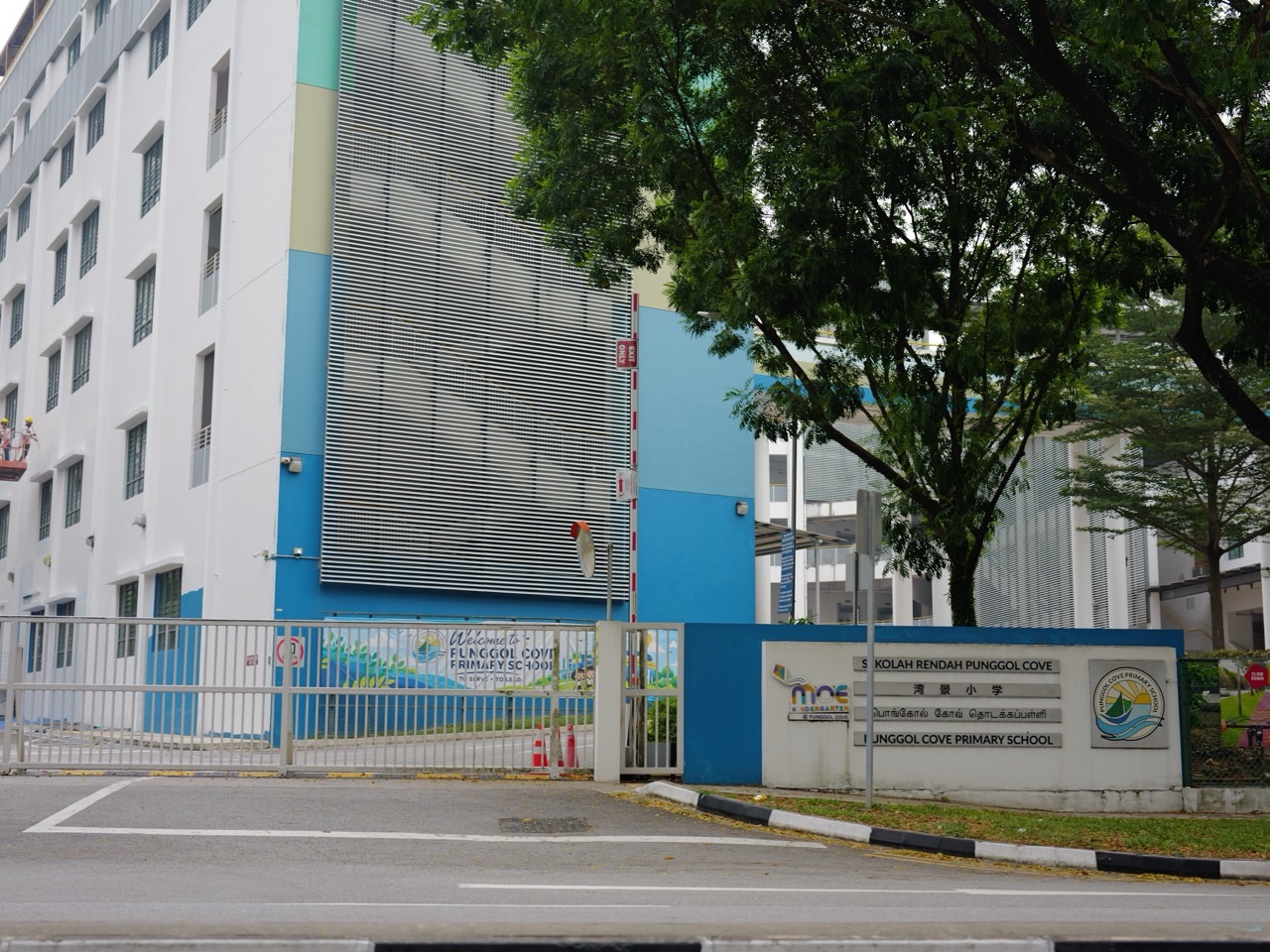
Is Punggol Cove Primary School a good school? It is a positive school to explore for a child who enjoys stories, sharing ideas or using digital tools to communicate. Its C3 ALP connects English with ICT and purposeful collaboration.
The school’s published examples include P3 podcasting on cyber safety and P4 digital stories for younger children. Its early-years PAL page also describes arts, sports and outdoor experiences for P1–P2.
The strongest verified basis for this review is the ALP and PAL information. The current LLP page is under construction, so parents should confirm that programme directly. A positive shortlist still needs a conversation about the child’s needs and the ordinary family routine.
Read this guide your way
This review focuses on English communication, digital collaboration and purposeful projects. Read Why go Punggol Cove Primary School? and explore the Parents & Pathways Hub.
Start with school fit · Check the published direction · Prepare your questions · Browse all chapters
| Parent’s lens | What to look at |
|---|---|
| Verified ALP | C3: Confident Communicators and Collaborators |
| Published examples | Podcasting and digital storytelling |
| Verified early-years provision | P1–P2 PAL modules |
| Evidence limit | Current LLP page is under construction; confirm directly |
Contents: eight chapters for parents
1. Why Punggol Cove deserves a closer look
2. C3: English and ICT used together
3. PAL: broad early-years experience
4. What the current LLP page cannot confirm
5. A fit for purposeful communication
6. Foundations, devices and daily routines
CHAPTER 1 OF 8 · Back to contents
Why Punggol Cove deserves a closer look
A child may be more willing to write or speak when there is a real audience and a useful message. Punggol Cove’s published direction gives parents a concrete way to explore that preference. The interest is communication with purpose, not simply time spent using a device.
Ask how teachers help pupils develop the message before choosing a format. A child can enjoy technology while still needing support with vocabulary, organisation or listening. A good fit depends on the learning around the tool, as well as the tool itself.
CHAPTER 2 OF 8 · Back to contents
C3: English and ICT used together
The ALP page describes C3 as Confident Communicators and Collaborators, connecting English and ICT with service and advocacy. Its examples include animal-conservation learning in P1, cyber-safety podcasting in P3 and values-based digital stories in P4.
These are published examples to discuss with the school. Ask what pupils prepare and how teachers help them communicate accurately and responsibly. Confirm the current level programme rather than treating a pictured task or software platform as a guarantee for a future cohort.
Previous chapter · Contents · Next chapter
CHAPTER 3 OF 8 · Back to contents
PAL: broad early-years experience
The PAL page describes P1 music, dance and sports-and-games modules, followed by P2 visual arts, outdoor education and drama. It presents teacher-designed, practical experiences with exploration and teamwork.
For parents of younger children, ask how these experiences help pupils participate and settle. Clarify how a child who needs more reassurance or clearer instructions is guided. Programme aims should be treated as intentions and practices to explore, not proof of the same benefit for every pupil.
Previous chapter · Contents · Next chapter
CHAPTER 4 OF 8 · Back to contents
What the current LLP page cannot confirm
The LLP page currently displays an under-construction image and does not provide a detailed programme description. This review therefore does not use it to promise a particular music, arts or leadership pathway.
An incomplete webpage is a limit on this review’s evidence, not evidence that the school has no programme. Ask the school for its current LLP overview, the relevant level experiences and any selected opportunities. Read older descriptions alongside that direct confirmation.
Previous chapter · Contents · Next chapter
CHAPTER 5 OF 8 · Back to contents
A fit for purposeful communication
A child who likes stories or explaining something may be interested in the ALP direction. A quieter child might enjoy preparing a digital story or recorded message before sharing it. These are possibilities to explore rather than predictions about individual confidence.
Describe where your child needs help: finding words, reading information, planning a message or working with peers. Ask how teachers separate those needs and provide guidance. A child’s interest in devices should not substitute for understanding their language and learning readiness.
Previous chapter · Contents · Next chapter
CHAPTER 6 OF 8 · Back to contents
Foundations, devices and daily routines
Ask how teachers communicate progress in reading, writing, Mathematics and the relevant Mother Tongue language. For digital tasks, clarify the current device expectations and what work, if any, is required at home. This helps the family plan an appropriate routine.
Test the journey and confirm collection, student-care and CCA arrangements. Leave time for rest, play and conversation away from a screen. A good school fit should make the ordinary week manageable as well as offer interesting projects.
Previous chapter · Contents · Next chapter
CHAPTER 7 OF 8 · Back to contents
Questions to bring to the school
Ask for a current C3 task at the prospective level and how pupils plan, receive feedback and improve their communication. Ask how a less confident pupil is included in PAL. Request the current LLP information directly because the public page is incomplete.
Then share one strength and one concern about your child. Clarify broad experiences and selected activities separately. Concrete answers about guidance and parent communication can give you a clearer picture than assuming every programme example applies to every pupil.
Previous chapter · Contents · Next chapter
CHAPTER 8 OF 8 · Back to contents
Our parent-first verdict
Yes, Punggol Cove Primary School is a worthwhile school to consider, particularly for families attracted to English communication, ICT collaboration and purposeful learning. Its ALP and PAL pages provide positive, school-specific reasons for a shortlist.
Confirm the LLP, current access and your child’s support needs before deciding. Check the family routine too. The strongest fit combines interesting opportunities with patient guidance, secure foundations and a week the child can sustain.
Continue the school-choice conversation
Read Why go Punggol Cove Primary School? and the Parents & Pathways Hub. For later learning support, our Secondary 1 Mathematics guide to groups of three discusses the next stage. eduKate is independent; this link does not imply a partnership with the school.
Editorial note: This is an independent parent-fit assessment. Official school pages support the linked programme descriptions. Advice about suitability, home practice and family routines is editorial guidance. This review does not rank schools or promise admission, individual results or programme benefits.