
Punggol Cove Primary School is at 52 Sumang Walk. Its current C³ Applied Learning Programme connects English with ICT and communication, giving parents comparing schools in Punggol a specific area to explore: how children use words and digital media to help an audience understand something.
Did you know that making a short message understandable to a younger child can be quite a demanding task? The speaker must decide what the listener knows, choose suitable words and remove confusing steps. That kind of audience awareness gives communication a practical purpose.
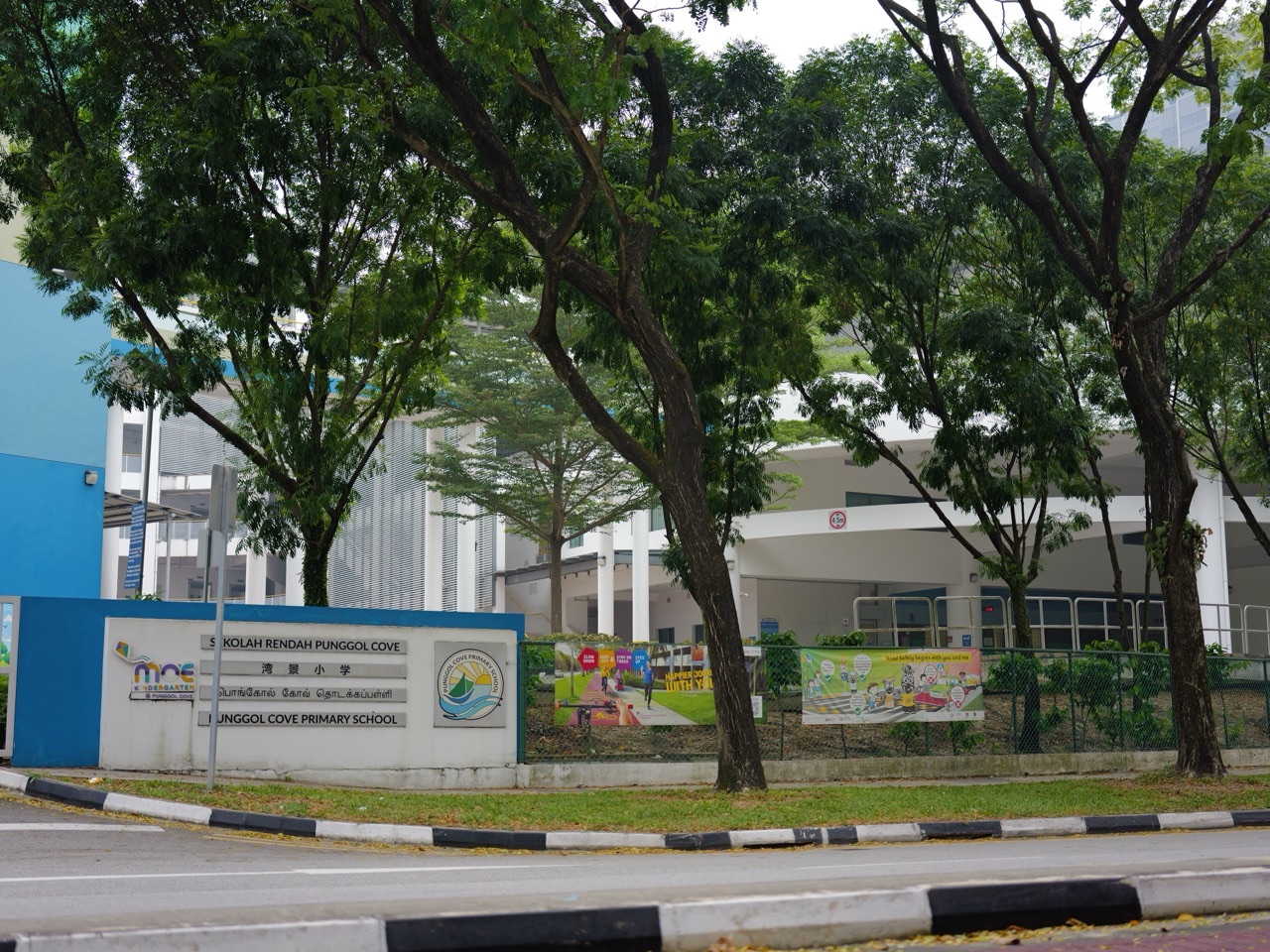
The new photograph shows the school frontage, entrance area and trees along the road. This guide moves from that local view to verified programme information, useful questions for families and an original home activity that makes communication visible.
Photograph: Exterior view of Punggol Cove Primary School in Singapore. Photo: eduKate.
Find the part your family needs
Start with the school’s published approach, check the daily routine, or go straight to the questions for your next visit.
Understand the school · Check the journey · Plan your next questions
Contents
4–6 · Questions, support and next steps
4. Ask about the learning behind digital work
| At a glance | Details |
|---|---|
| Institution | Punggol Cove Primary School |
| Stage | Primary education |
| Location | 52 Sumang Walk, Singapore 828674 |
| Focus in this guide | English, digital communication and purposeful collaboration |
The school’s official ALP page describes C³, Confident Communicators and Collaborators, as bringing English and ICT learning into purposeful community-related work. Published examples include animal-conservation communication, cyber-safety podcasting and digital stories for younger children.
The page distinguishes activities across primary levels and describes the use of problem solving and design thinking. Check which experiences will apply to the relevant cohort; a programme example is not a guarantee of an identical task every year.
Our practical interpretation is to look at the message before the technology. Does the child know who the audience is, what that audience needs and which details will help? A polished slide cannot repair an explanation that is unclear.
The trees and visible school sign provide an identifiable starting point for a visit. The photograph does not establish traffic conditions at school arrival time or the gate assigned to a particular group of pupils.
Confirm 52 Sumang Walk through the school’s contact page. Walk the proposed route with the school bag or a similar load, then discuss wet-weather arrangements and the collection plan.
Think about how the journey fits with the rest of the week. A convenient school is useful partly because it can leave room for meals, reading, play and family time. Evaluate the actual route from home, rather than assuming that every address in Punggol has the same convenience.
Try this optional eduKate activity: ask your child to explain a familiar board game to a younger family member. First, let them decide the three most important things the listener needs to know.
Record a short voice note if the child is comfortable, or let them explain it live. The listener should then try the first turn. If they are confused, ask which instruction needs to change. Avoid rewriting the whole explanation for the child.
An older pupil can create a three-panel guide: aim, first steps and one common mistake. A younger pupil can use pictures and short spoken sentences. The medium should serve the explanation, rather than becoming the main job.
Finally, ask, “What did you change because of your listener?” That question reveals whether the child has thought about the audience. This home suggestion is independent of the school’s programme and can be kept short and playful.
At an open house, ask what pupils are expected to plan, write or explain before producing digital media. How do teachers support children who are comfortable with devices but need help organising language?
Ask how collaborative tasks are shared and how each child’s contribution is noticed. What happens if one pupil produces most of the digital work while another has difficulty speaking up? The answer can help you understand participation beyond the final presentation.
Discuss transition, student care and communication with the school. Check the MOE registration guidance for the correct intake. Do not substitute previous vacancy patterns or a nearby home for confirmation of the current admission process.
The eduKate vocabulary hub offers a useful continuation for words such as audience, purpose, explain, evidence and revise. Ask the child to connect each word with the message they created.
The existing Punggol Cove school-fit guide and school-choice discussion can support a broader comparison. Read them alongside current school information and your own family constraints.
Communication also matters in Mathematics and Science. A pupil may recognise an answer yet struggle to explain the relationship that supports it. Try asking for a drawing, a spoken explanation and then a written sentence. Differences between those attempts can help reveal where support is needed.
If a difficulty persists, bring a small sample of actual work to the teacher or an eduKate consultation. The useful starting point is a particular task the child cannot yet manage independently.
Choose one question about the school’s programme and one about everyday arrangements. For example: how does a quieter pupil participate in a communication task, and what does collection look like on a day with an additional activity?
After the visit, invite the child to explain one thing they learned about the school. Their explanation may tell you what interested them and what remained unclear. It is a conversation, not an audition.
A strong school decision connects opportunity with readiness and routine. For Punggol Cove, explore how the communication emphasis could help your child grow, then confirm that the practical foundations of the week are in place.
Official sources and further checks
Checked on 10 October 2026. Programmes, operational arrangements and admission requirements can change; use the school or university’s current information for the relevant intake. This is an independent eduKate guide, not an official school publication or an endorsement by the institution.
Explore the photographed Punggol school series
This series covers the institutions in these photographs. For wider local context, continue to the existing Punggol schools and education overview.
Primary schools · Secondary schools · University
Punggol Cove Primary School — you are here
For a specific learning concern, bring recent schoolwork and the weekly timetable to an eduKate parent–student consultation. Begin with the child’s starting point and consider a suitable 3-pax arrangement where support is needed.