
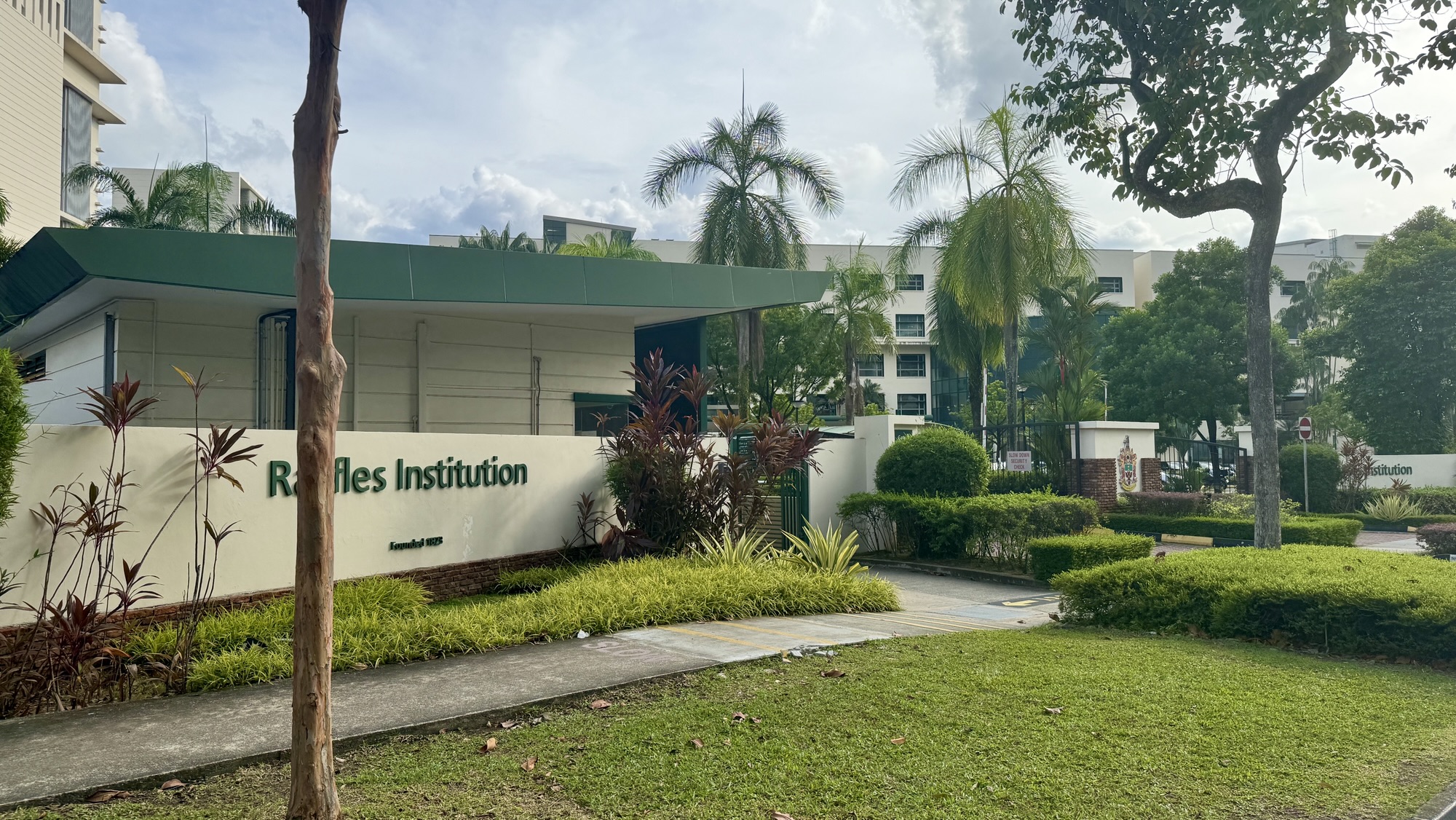
Is Raffles Institution (Secondary) a good school? It may suit a boy who enjoys exploring ideas, working through unfamiliar problems and reflecting on his contribution to others. Its FutureLearning programme, Raffles Playground and Character and Leadership Education offer three concrete starting points for a family’s enquiry.
Parents comparing Raffles Institution secondary school with other Singapore schools should look closely at the learning process and everyday expectations. A recognised name alone cannot tell you whether your child will enjoy the work, seek help comfortably and sustain the journey. This RI school review focuses on those questions.
Did you know? FutureLearning connects systems thinking, empathy and making. Its three strands are FutureComplexity, FutureConnect and FutureCreate, giving families more to investigate than a general description of academic enrichment.
eduKateSG · Secondary school fit
A good school is a good-fitting school
Read the three reasons, then take the questions to a school visit. This independent guide distinguishes school-published programme facts from our fit interpretation. It does not rank schools or promise individual results.
Read the sibling pair
Why go Raffles Institution (Secondary)? introduces the school. This companion helps you check the match with your child. Compare secondary-school sibling guides.
Reading index: reasons, parent questions and next steps
1. FutureLearning connects thinking, people and practical creation
2. Raffles Playground offers different routes into deeper interests
3. Character learning makes relationships part of the enquiry
Parent questions · Admission and daily routine · Learning support · Fit verdict · Official sources
REASON 1 OF 3 · SCHOOL FIT
FutureLearning connects thinking, people and practical creation
RI describes FutureComplexity through systems thinking and global challenges, FutureConnect through empathy and drama pedagogy, and FutureCreate through design thinking and prototyping for real needs.
This may appeal to a child who asks how a problem works and who else it affects. Our fit interpretation is about the opportunities these approaches suggest. It is not evidence that every student becomes a confident designer or communicator.
Ask what a typical task looks like and how a beginner receives feedback. Does your child enjoy trying a first version, listening to another perspective and improving an idea? A rough attempt can be more revealing than a polished display.
Find out how these strands fit the incoming cohort’s timetable. Published descriptions explain intended learning, but they do not show the frequency of every activity or how much independent preparation a particular student needs.
REASON 2 OF 3 · SCHOOL FIT
Raffles Playground offers different routes into deeper interests
The school describes Raffles Playground as enrichment alongside the core curriculum, with Talent Development, Research Education and Competition, and Play Electives. The areas include advanced learning, mentored research and hands-on exploration.
For families, the useful question is whether a child wants to return to an interest after the first exciting encounter. Ask what they would like to investigate when there is no prize or audience. Sustained curiosity is a better conversation starter than collecting programme names.
At a school visit, request examples of introductory activities and longer commitments. Ask how teachers help students choose an appropriate level, manage overlapping deadlines and respond when their first approach does not work.
Do not assume every student receives every research placement, advanced activity or competition opportunity. Confirm allocation, selection, prerequisites and workload for the strand your child values. The presence of an opportunity and individual access are separate questions.
REASON 3 OF 3 · SCHOOL FIT
Character learning makes relationships part of the enquiry
RI’s Character and Leadership Education page describes values and socio-emotional learning through lessons and assemblies, alongside relationships, nationhood and class or cohort community projects.
This gives parents a reason to ask about everyday conduct as well as academic challenge. How does a student learn to hear another view, repair a disagreement and contribute reliably? Those questions help a family consider the experience of belonging.
Invite your child to describe a group task that became difficult. What helped the group move forward? The aim is to understand a developing habit, not demand that a twelve-year-old already handles every disagreement calmly.
Ask who a new student approaches when friendship or adjustment becomes difficult. A programme’s values are useful starting points; the practical help-seeking route and the child’s willingness to use it deserve a direct conversation.
Questions to take to your school visit
1. How does FutureLearning appear in a normal Year 1 week?
2. How are Playground activities allocated, and which involve selection?
3. Who helps a new student with friendship or workload concerns?
4. What are the current admission, fee and progression arrangements?
After the visit, invite your child to complete two sentences: “I would like to try…” and “I would need help with…”. Both answers matter. Look for a believable next step and a clear way to ask for support.
Check admission and the everyday routine
Check MOE SchoolFinder and the school’s current admission information for the intended intake. Confirm the applicable route, eligibility, fees and subject or progression arrangements. Use current official guidance rather than an older score, an anecdote or assumptions drawn from another school.
Try the journey at the time your child would travel. Estimate arrival home after an ordinary day and after additional commitments. Discuss meals, homework, rest and family time. An appealing learning opportunity needs a weekly routine that your teenager can sustain.
If a particular programme is central to the choice, confirm whether access is baseline, subject-based, CCA-based or selected. Ask about the incoming cohort’s arrangements, costs and commitments. Do not build the family plan around an older photograph or an unconfirmed event.
Keep learning support specific
Bring a recent piece of work and one clear difficulty when discussing academic support. A mark can hide different needs: interpreting instructions, finding evidence, explaining a method or planning the next step. Ask how teachers provide feedback, what the student should practise and how progress is reviewed.
For a related transition guide, read Secondary 1 Mathematics Tutor Clementi | Small Groups Tutorials. Consider additional support once the starting difficulty and weekly capacity are clear.
The fit verdict
RI is worth investigating when your child enjoys intellectual exploration and can see himself developing responsibility alongside it. Make the decision around the work he wants to do, the help he can ask for and a sustainable family routine.
Official sources and scope
School programme facts checked on 10 October 2026 (Singapore time). Published aims describe intended learning; they do not establish measured results for every student. Confirm arrangements for the intended intake.
School programme source 1
School programme source 2
School programme source 3