
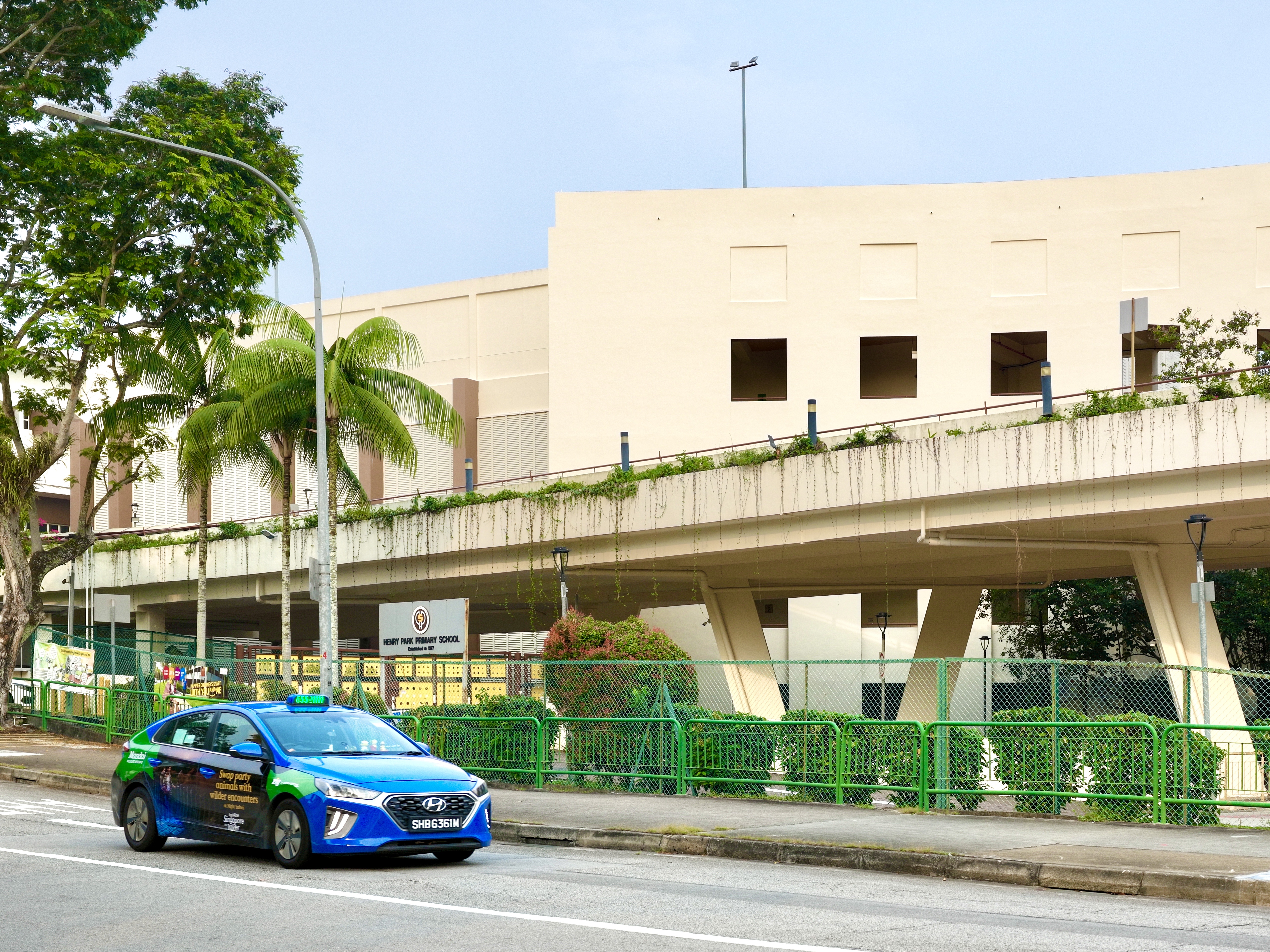
Updated 24 October 2026 | Bukit Timah, Singapore. Did you know? A family living 300 metres from a popular Bukit Timah primary school may no longer enjoy a Phase 2C priority over a family living 1.8 kilometres from the same school from the 2027 registration exercise. That is a real change—but only at specific schools and in a specific registration phase.
Imagine two parents comparing maps over breakfast. One has a home comfortably inside the old 1km circle. Another lives farther away, but still within 2km. In the new two-track system, both belong to the same within-2km Phase 2C pool at the affected schools. The rule is designed to broaden access, not to guarantee either child a place.
Quick answer: On 10 September 2026, MOE announced that the 2027 P1 Registration Exercise, for children entering Primary 1 in 2028, will reserve 60 Phase 2C places at most schools, up from 40. Schools with fewer than 180 P1 places keep a 40-place reserve. At 12 schools in predominantly private-housing neighbourhoods, including Nanyang Primary School, Raffles Girls’ Primary School, Methodist Girls’ School (Primary), Pei Hwa Presbyterian Primary School and Singapore Chinese Girls’ Primary School, Phase 2C available places are split equally between applicants living within 2km and those more than 2km away. Within each track, home-school distance priority no longer applies. Singapore Citizens retain priority over Permanent Residents. These rules concern Phase 2C; other phases have separate eligibility and priority.
This guide distinguishes a verified 2026 announcement from what begins in 2027 and what will happen afterward. A published government decision, a developer’s forecast and an opening date are different kinds of information.
Did you know? The five facts you need first
- Correct intake year: Register during 2027 to enter Primary 1 in 2028. This is not a change to places allocated in the completed 2026 exercise.
- More open-phase reserve: Most primary schools set aside at least 60 places for Phase 2C instead of 40; smaller-intake schools remain at 40.
- Twelve-school exception: Special two-track Phase 2C applies initially at 12 named schools, several in and around Bukit Timah.
- Two pools: Half of available Phase 2C places goes to the at-or-within-2km track, the other half to beyond 2km, with the government rules governing reallocations.
- No automatic place: If a track is oversubscribed, applications may be balloted; eligibility, citizenship and current official instructions still matter.
A quick 2026–2027 timeline
| Date | What was announced or what to check |
|---|---|
| 10 September 2026 | MOE announced the larger Phase 2C reserve and new two-track arrangement at 12 schools. |
| 7 October 2026 | MOE responded to parliamentary questions about the framework review and implementation. |
| October–December 2026 | Families can study the new rules and shortlist suitable schools without guessing the 2027 ballot outcomes. |
| 2027 registration period | Parents register under the year’s officially published P1 phases for admission in 2028; do not assume 2026 exercise dates repeat exactly. |
| 2028 school year | Children successfully admitted through the 2027 registration exercise begin Primary 1. |
| Later years | MOE may review the initial 12-school list as surrounding housing profiles change. |
Choose your reading route
- Why is MOE changing the Primary 1 rules?
- Which Bukit Timah schools are part of the first 12?
- Does the 1km advantage disappear completely?
- What do 30 places within 2km and 30 places beyond 2km mean?
- Does the 60-place reserve mean 60 total places?
- What should parents do between October 2026 and the 2027 exercise?
- How should property buyers interpret the changed distance rule?
- Why does this matter for education beyond Primary 1?
- The final 2027 registration checklist
- Frequently asked questions
- Official sources
Why is MOE changing the Primary 1 rules?
MOE’s announcement identifies access and social mixing as key concerns. In neighbourhoods with a high share of private homes, prioritising very short home-school distances can limit who has a realistic opportunity to join a popular school.
Phase 2C is the important open phase for children without an existing connection to the school. Raising its reserved places means more seats are kept for that phase rather than being used earlier, although families who qualify for earlier phases still have their own application routes.
At the 12 schools, the two-track method preserves a share of places for families within 2km while opening a separate share to those farther away. MOE selected schools where public housing accounts for less than 40% of homes within 2km.
This is not the removal of all proximity rules across Singapore. Most other schools continue to apply the standard home-school distance priorities in Phase 2C, with the increased reserve where applicable.
The policy announcement is in MOE’s 10 September 2026 press release.
Which Bukit Timah schools are part of the first 12?
Five relevant names in the wider Bukit Timah and Dunearn educational belt are Nanyang Primary School at King’s Road, Raffles Girls’ Primary School at Hillcrest Road, Methodist Girls’ School (Primary) at Blackmore Drive, Pei Hwa Presbyterian Primary School at Pei Wah Avenue and Singapore Chinese Girls’ Primary School at Dunearn Road.
The national list also includes Anglo-Chinese School (Junior), Anglo-Chinese School (Primary), CHIJ (Katong) Primary, Ngee Ann Primary, St. Margaret’s School (Primary), Tanjong Katong Primary and Tao Nan School.
Not all 12 schools are physically in Bukit Timah. A school appearing on the national two-track list does not make its catchment a Bukit Timah district, nor does it entitle a Bukit Timah resident to an automatic place.
MOE has said it will review the selected schools from time to time. Always verify the list applying to the actual registration exercise, especially if a school’s campus or surrounding housing changes.
MOE’s 2027 framework changes page should be treated as the controlling overview.
Does the 1km advantage disappear completely?
No. It disappears within each Phase 2C track at the 12 affected schools, not from every registration phase and not from the registration system nationwide.
At a two-track school, a family living 300m away and another living 1.8km away are both in the within-2km pool for Phase 2C. There is no additional within-1km priority between those two families in that track.
At schools outside the special arrangement, distance continues to matter under the ordinary priority structure when balloting is necessary. And earlier registration phases still follow their separate eligibility rules and relevant priorities.
Home-school distance is not something parents should estimate from a straight-line map screenshot. MOE’s official distance calculation and accepted residential address determine the applicant’s category.
A nearby address may still be more convenient for daily travel even when it does not give an extra 1km-ballot advantage. Admission and family logistics are related but different considerations.
What do 30 places within 2km and 30 places beyond 2km mean?
The easy teaching example is a school with 60 available Phase 2C places. The new arrangement divides them equally: 30 places for within 2km and 30 for more than 2km. If unused seats carry forward from earlier phases, the actual Phase 2C total can exceed 60, and the split applies to the seats available under MOE’s rules.
If one track has fewer Singapore Citizen applicants than places, remaining places can be reallocated to Singapore Citizen applicants in the other track. Permanent Residents are considered only after Singapore Citizen applicants across both tracks, following the announced arrangement.
If 40 Singapore Citizen applicants compete for 30 places in one track, a ballot may be necessary. That simple hypothetical illustrates how an increase in access does not remove competition.
No one can calculate a family’s exact 2027 probability from the 2026 totals alone, because the number of applicants and how many fall into each new track can change.
Think of the two-track method as a new way of distributing the available Phase 2C seats, not a promise that every family beyond 2km has a strong or weak chance.
MOE’s official explanation sets out the transfers and citizenship priority.
Does the 60-place reserve mean 60 total places?
No. The number is the initial reserved minimum for Phase 2C in most schools. Places left unfilled after earlier registration phases may flow through, so the actual number available in Phase 2C can be larger.
For schools with fewer than 180 Primary 1 places, the Phase 2C reserve stays at 40. A parent should therefore start with the school’s published intake and actual vacancies rather than applying one 60-seat calculation to every school.
MOE confirmed that the separate Phase 2B reserve remains 20 places. Creating an additional 20 reserved Phase 2C places can reduce the pool available earlier; it does not create 20 new classrooms at every primary school.
The sequence of phases matters. The changes do not mean that an eligible sibling in Phase 1 must now compete directly with every Phase 2C applicant.
When registration begins, the official MOE vacancies and balloting updates—not a static blog table—are the right source of current seat counts.
What should parents do between October 2026 and the 2027 exercise?
Begin with the child’s correct intake year. The changed 2027 registration exercise is for the cohort entering Primary 1 in 2028. A child already allocated a place in 2026 is not re-balloted because MOE updated the next year’s rules.
Make a shortlist with realistic travel arrangements. Check actual walking or public-transport options, school programmes, child-care needs and what the child would enjoy—not just whether a property listing advertises a prestigious school within 1km.
Identify the phase for which the family qualifies and read the relevant documentation requirements. Phase 2C is not the only application route, and earlier links to the school may change the appropriate registration phase.
Check the official home-school distance measure for the registered address. If a family intends to move house, follow MOE’s address and residency conditions carefully rather than relying on an agent’s projection.
Keep a backup school plan. Popular schools can be oversubscribed under either scheme, and the practical value of a school close to home matters throughout primary school, not just on ballot day.
- Confirm your child’s P1 admission year and the relevant registration exercise.
- Verify whether your target school is among the 12 two-track schools.
- Check the correct phase, address rules, citizenship order and distance category.
- Use MOE’s latest published school intake and vacancies during the actual exercise.
- Plan a realistic school-day journey rather than treating a kilometre figure as your entire decision.
How should property buyers interpret the changed distance rule?
School registration may influence housing decisions, especially near highly sought-after Bukit Timah schools. But purchasing within 1km no longer gives extra Phase 2C proximity priority over another within-2km household at the 12 named schools.
That does not mean a property loses or gains a predictable amount of value. Prices depend on many other factors, including tenure, transport, size, building condition and broader market conditions.
It also does not mean buying inside 2km guarantees admission. At a popular school, a within-2km applicant can still face a ballot under the new system.
If a housing advertisement uses ‘guaranteed school entry’, ask the seller for the legal and policy basis. The official registration framework does not support a generic promise of admission based only on a nearby address.
A sensible family evaluates housing on its own merits, checks the official school registration conditions and avoids making a large financial commitment based on a predicted ballot result.
Why does this matter for education beyond Primary 1?
The P1 framework can influence whom children learn alongside, how far families travel and which neighbourhoods share school communities. Its public purpose reaches beyond admission mathematics.
But admission to a particular primary school is not a guarantee of later PSLE marks or secondary-school placement. A student’s learning journey involves school, family support, motivation, wellbeing and many years of growth.
At the same time, the education system is undergoing another change later in the journey: the first Singapore-Cambridge SEC examinations take place in 2027, reflecting different subject levels at the end of secondary school.
These changes should not be confused. The 2027 P1 exercise is about children beginning school in 2028. The 2027 SEC examinations concern a different, much older student cohort.
Keeping the ages and timelines separate is the simplest way to make neighbourhood education news genuinely useful to parents.
The final 2027 registration checklist
Before applications open, check MOE’s current key dates. The traditional registration season provides context, but 2026 dates are not a substitute for the official 2027 exercise calendar.
During your eligible phase, submit for only one school and make sure the application details, contact information and supporting evidence are correct. MOE handles updates according to its online registration rules.
Watch the live vacancy and ballot notices once applications close. Any hypothetical table in an article becomes less useful as actual demand is reported.
If the chosen school is oversubscribed, follow MOE’s stated result and subsequent phase arrangements. Do not assume a ballot or a registration attempt can be repeated without observing the official process.
The essential question has changed from ‘Am I within 1km?’ to ‘Which phase and track actually apply, and what are the published vacancies this year?’
Frequently asked questions
Do the new rules begin in 2027 or 2028?
They begin with the 2027 P1 Registration Exercise, for children starting Primary 1 in 2028.
How many places are reserved for Phase 2C?
Most schools reserve at least 60 places; schools with fewer than 180 P1 places retain a 40-place reserve. Actual vacancies may include unfilled earlier-phase places.
Which Bukit Timah schools are on the two-track list?
The nearby affected schools include Nanyang Primary, Raffles Girls’ Primary, Methodist Girls’ School (Primary), Pei Hwa Presbyterian Primary and Singapore Chinese Girls’ Primary.
Does living within 1km still matter for Phase 2C at those schools?
Not as an extra priority within the two-track Phase 2C scheme. All qualifying applicants within 2km enter the same distance track, with citizenship rules applying.
Can a family more than 2km away apply?
Yes, subject to the phase and school rules. The 12-school scheme reserves a separate Phase 2C share for beyond-2km applicants.
Do Singapore Citizens and Permanent Residents ballot together?
Singapore Citizens have priority. Permanent Residents are considered after Singapore Citizen applicants across the two tracks under the scheme.
Can a school have more than 60 Phase 2C places?
Yes. Sixty is a reserve at most schools, not necessarily the final available total.
Are the 12 schools all in Bukit Timah?
No. The national list includes schools in other districts such as Marine Parade and the city fringe.
Does living within 2km guarantee a place?
No. Places can be oversubscribed and balloting can still be needed.
Where are the exact 2027 deadlines?
Use MOE’s 2027 P1 registration pages and live portal once the year-specific dates are officially released.
Official sources and further reading
These sources support the date-specific facts above. Information accurate as at 24 October 2026; check the original authority for revisions, eligibility and final opening schedules.
- MOE: 10 September 2026 P1 registration framework announcement
- MOE: The 2027 two-track and Phase 2C rule changes
- MOE: Official home-school distance rules
- MOE: 7 October 2026 parliamentary reply
- MOE: P1 registration portal and year-specific vacancies
- CNA: Detailed September 2026 explainer with the 12-school list
Related Bukit Timah guides: Bukit Timah 2027 SEC examinations and G1/G2/G3 · Turf City housing plans through 2027 · The latest Bukit Timah neighbourhood collection.
Explore the other latest Bukit Timah updates
- Dunearn House and the second Dunearn Road land parcel
- Holland Plain land sales and future neighbourhood greenery
- Bukit Timah Nature Reserve trails and visitor rules
Browse every Bukit Timah 2026–2027 neighbourhood update
Editorial note: The illustrative examples explain processes; they are not predictions about admission success, property values, project completion or government allocations. Where a date is not confirmed by the responsible authority, no exact date is inferred.