
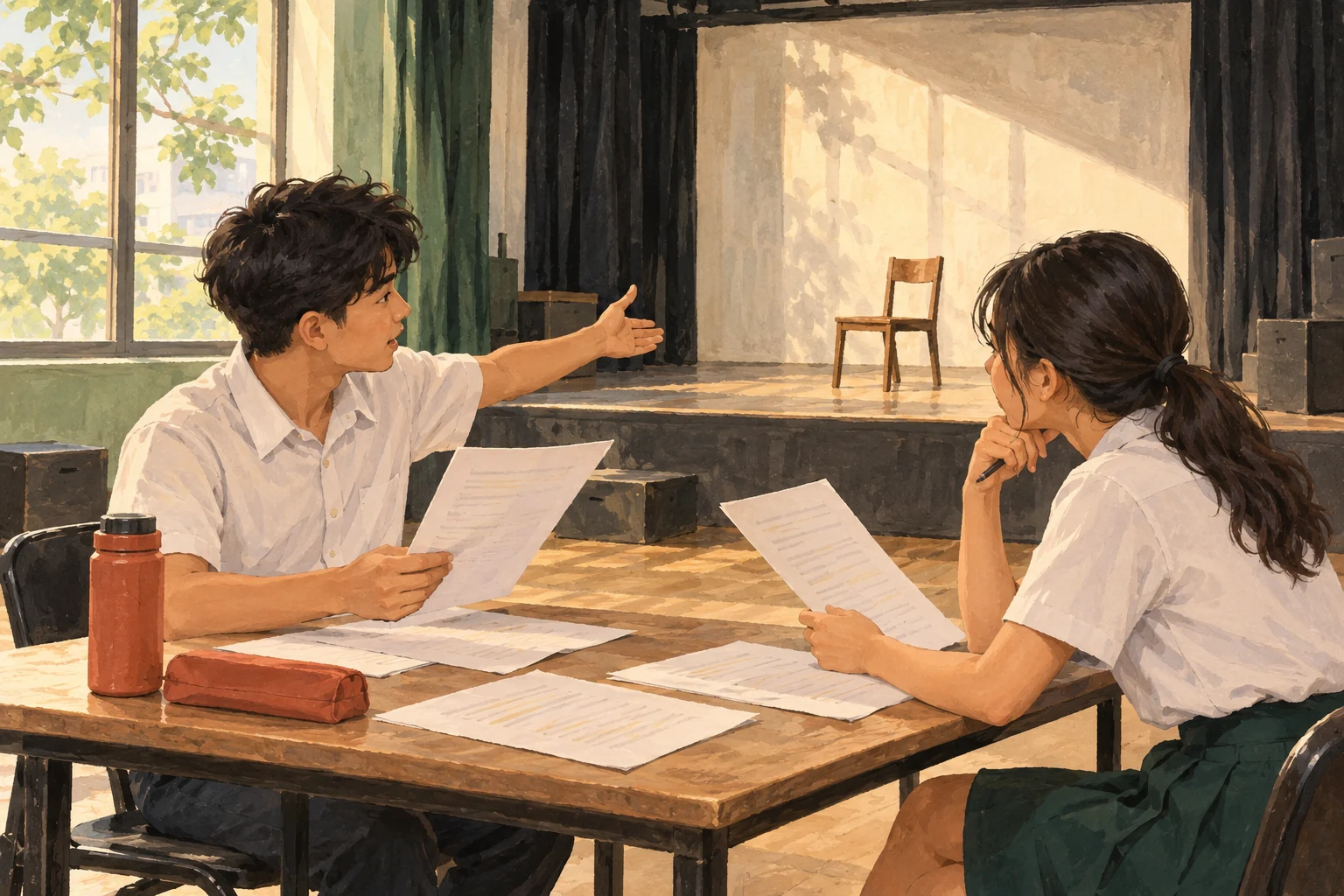
Do you know what G2 Literature in English really asks a secondary student to do? Literature is not simply remembering what happened in a novel or naming figures of speech. It asks how writers use form, structure and language to shape what readers understand and feel. A character may say one thing while their actions suggest another; the ending of a poem may transform an earlier image; and a play’s stage directions may communicate tension that dialogue alone does not reveal. Good literary study therefore develops close reading, empathy, reasoned interpretation and the ability to explain an idea with appropriate textual evidence.
For the 2027 Singapore–Cambridge Secondary Education Certificate (SEC), the separate subject is G2 Literature in English K228, not the Combined Humanities elective K231. It has two compulsory 50%-weighted papers held in separate sittings, with a total examination time of 3 hours 10 minutes. Paper 1 Prose and Unseen Poetry lasts 1 hour 40 minutes. Students answer one 25%-weighted question on their prescribed prose text and one 25%-weighted question on an unseen poem. Paper 2 Drama lasts 1 hour 30 minutes. Students answer two 25%-weighted questions on their selected play: one compulsory passage-based question and one essay question. Across both papers the candidate produces exactly four answers.
The 2027 prescribed prose list includes How We Live Now, All the Light We Cannot See, Lord of the Flies, Roll of Thunder, Hear My Cry and The Chrysalids. The drama options are “Master Harold” … and the boys, The Royal Hunt of the Sun, Romeo and Juliet and Everything but the Brain. Schools select the texts they teach; they are explicitly instructed not to use screenplays or abridged versions as substitutes. The 2027 texts also remain specified for candidates retaking the subject in 2028. This guide explains the assessed texts, passage and essay choices, unseen poetry, performance and stagecraft, typical misconceptions and practical revision.
Do you know why K228 is the separate Literature subject?
K228 is a standalone G2 Literature in English examination with two dedicated literature papers. It differs fundamentally from G2 Humanities (Social Studies, Literature in English) K231, where the other fifty-per-cent paper is Social Studies instead of Drama.
A student registered for K228 must prepare prose, unseen poetry and a prescribed play. A K231 candidate does not have the separate Drama paper. Families should confirm the code before selecting revision materials.
This prevents a costly mismatch: an excellent civic source-based response cannot substitute for K228’s drama examination, just as memorising play quotations does not replace K231’s Social Studies work.
Do you know why Literature is more than an English comprehension test?
English Language comprehension often assesses the meaning and structure of supplied texts. Literature asks for an interpretation of artistic decisions within an entire work or unfamiliar poem, including how form and language shape experience.
A fictional narrator who withholds information may be deliberately constructed to create uncertainty. The reader is not simply checking whether the narration resembles a reliable newspaper report.
Students need to move from what happened to how and why the writer presents it. That shift is the heart of literary analysis.
Do you know what the syllabus’s ethical aim means?
Literature invites readers to consider different human experiences and social concerns. The 2027 syllabus identifies empathy, awareness of multiple perspectives and global awareness among its ethical aims.
Reading about people in unfamiliar circumstances can challenge assumptions, but a student should not treat every character as representative of an entire community. The specific text and the character’s choices matter.
The best discussion is open to complexity while remaining grounded in what the work actually depicts.
Do you know what the aesthetic aim adds?
Aesthetic reading pays attention to artistic decisions: diction, images, form, rhythm, scene arrangement, narrative perspective and dramatic effects. The question is not simply whether the reader likes the story.
A quiet description can produce unease, while a repeated ordinary object can become significant across a novel. These effects come from deliberate choices that deserve explanation.
Practice asking what the writer selected and how that selection changes the reader’s experience. Naming a technique without an effect is an incomplete answer.
Do you know what the intellectual aim requires?
The syllabus emphasises reflective thinking, ambiguity and the ability to convince others through reasoning with evidence. Students should be willing to reconsider an initial interpretation when later details complicate it.
Two readers can offer differing supported interpretations of a poem. Neither is convincing merely because it is expressed forcefully; the words and structure of the text must support it.
Parents can ask which phrase most strongly supports the student’s view, and what evidence might challenge it. That develops thoughtful literary argument.
Do you know exactly how the papers are divided?
Paper 1 is 100 minutes and 50% overall, split into Section A prescribed prose at 25% and Section B unseen poetry at 25%. Paper 2 is 90 minutes and 50% overall, split into one passage-based drama response and one drama essay, each 25%.
The total of four answers is important. Spending all preparation time on the prose text leaves seventy-five per cent of the available weighting poorly covered, even if the student knows its plot thoroughly.
Balanced preparation addresses accurate set-text knowledge, flexible analysis of unfamiliar poetry and close attention to the play’s dialogue and staging.
Do you know why Paper 1 contains two choices rather than one free essay?
For the prescribed prose text, the exam offers one passage-based question and two essay questions for that work; students choose one. In unseen poetry, two poems are provided with one question on each, and students select one.
The choice is within each section, not permission to answer two prose questions while omitting poetry. Reading the instructions precisely prevents a major format mistake.
Practice making a short outline for several question styles so the learner can choose the one they can support, not only the one that looks familiar.
Do you know how Paper 2 Drama is different?
The Drama paper requires students to answer two questions on the play they studied: a compulsory passage-based question and one chosen essay question. This differs from the prose section, where one passage question is an alternative to essay questions.
A student cannot substitute two general play essays for the required passage-based answer. The actual printed extract needs close analysis alongside understanding of the full play.
Timed practice should include both drama tasks so a student can shift between an individual scene and an argument spanning different parts of the work.
Do you know why the two papers are held in separate sittings?
The syllabus specifies separate sittings for the one-hour-forty-minute Prose/Unseen paper and the one-hour-thirty-minute Drama paper, totalling three hours ten minutes of examination time.
The schedule should be checked with the school and examination entry information. Students should not assume there is one uninterrupted three-hour session or that one paper can be completed in the other paper’s time.
Practice each paper independently at first, then use the correct durations after comprehension and writing methods are dependable.
Do you know which five prose texts are prescribed?
The 2027 options are How We Live Now, edited by Yu-Mei Balasingamchow; All the Light We Cannot See by Anthony Doerr; Lord of the Flies by William Golding; Roll of Thunder, Hear My Cry by Mildred D. Taylor; and The Chrysalids by John Wyndham.
The school selects the work its candidates study. Students should know the actual assigned text closely rather than read generic plot outlines of all five at superficial depth.
Accurate editions matter because the paper may quote or refer to a passage, and the response needs the writer’s own wording, not a paraphrase from an unofficial film adaptation.
Do you know why the Singapore anthology is included?
How We Live Now provides prescribed prose with Singapore literary connections, broadening the experiences and settings candidates can encounter. It should not be reduced to a collection of generic national messages.
If the school selects the anthology, students need to study the actual relevant texts and analyse the choices made by individual writers. A setting or character may complicate as well as affirm expectations.
Ask the teacher which selections and edition are used and how the school organises close-reading practice.
Do you know why a novel’s title cannot be the essay?
Titles such as The Chrysalids or All the Light We Cannot See orient the reader but do not explain their texts fully. Candidates need actual character, structure and language evidence.
A summary can help recall events, yet a question may focus on a small moment of dialogue, narrative viewpoint or the significance of an ending. General familiarity with the title is insufficient.
Build notes around meaningful scenes, the concerns they illuminate and specific verified textual details rather than broad guesses based on the cover.
Do you know why whole-text knowledge matters?
A passage often gains significance from what came before or what follows. An apparently ordinary line may foreshadow an event or reveal a change in a character’s understanding.
Candidates should know the movement of the chosen work well enough to connect a quoted passage to wider character development or narrative structure.
Read the relevant chapter or story directly, then summarise its main function in the work. A movie synopsis may omit exactly the detail an examination question asks about.
Do you know how a passage-based prose question works?
The paper presents a passage from the prescribed prose text and asks for analysis connected to the extract. A successful answer addresses the printed language and the question, with appropriate awareness of the wider work.
A candidate who explains only the whole plot may ignore the specific detail the examiner chose. Conversely, describing each line in isolation may miss why the moment matters in the narrative.
Practice selecting two or three significant features, explaining their effect and connecting them to the text’s development.
Do you know how a prose essay differs?
An essay on the set prose work may ask about a theme, relationship, character or artistic feature across the work. Evidence can come from several appropriate moments rather than one supplied passage.
A strong essay has a focused interpretation and relevant selected scenes. Retelling every chapter in sequence can obscure the actual answer.
Outline two or three analytical points and attach precise evidence to each. The student’s explanation of why the detail matters is essential.
Do you know why a character is more than an adjective?
Characterisation occurs through actions, dialogue, thought, descriptions and relationships. Simply calling someone brave, selfish or kind does not show how the writer develops that impression.
A character may act generously in one episode and fearfully in another. Those contrasting moments can reveal complexity rather than inconsistency in the student’s notes.
Ask which scene best supports the quality and how the writer presents it. The result is an argument rather than a list of traits.
Do you know how character relationships develop?
Relationships can change as characters acquire information, face choices or respond to conflict. The writer’s sequence of events may encourage sympathy for more than one person.
An essay should identify what changed, what action reveals it and why the change matters to the work’s concerns. A summary of who is related to whom does not complete the analysis.
Practice comparing an early interaction with a later one and explaining the significance of the differences.
Do you know why narrative viewpoint matters?
Who tells a story affects what the reader knows and how people or events appear. A limited narrator can create uncertainty, while a broader narrative perspective may reveal connections hidden from individual characters.
The narrator is not automatically the author. A character’s mistaken impression may be part of the writer’s technique rather than the writer’s own belief.
Students should identify what is revealed or withheld and explain how that affects interpretation of the relevant event.
Do you know why setting can carry meaning?
Setting shapes what characters can do and how readers experience a scene. A home may represent security in one passage and confinement in another; a landscape can influence conflict or identity.
Merely naming the location provides description, not analysis. The learner should identify specific language and explain how place affects action, mood or the work’s larger concerns.
Ask what would change if the event occurred elsewhere, then ground the answer in the actual text.
Do you know what symbolism means?
An object or image can suggest meanings beyond its literal role when the work’s context supports such an interpretation. It may gain significance through repetition, contrast or association with a character.
A simple object could begin as an ordinary possession and later become connected to loss or memory. That does not mean every object in every text is automatically a symbol.
Choose the passage evidence carefully and explain how the image’s meaning develops, rather than relying on a fixed symbolism dictionary.
Do you know why a turning point matters?
A turning point can change a narrative’s direction, relationship or reader understanding. Its importance is revealed through what happens before and after it and how the writer frames the moment.
A student who only identifies the climactic event without explaining its consequences has not yet analysed its significance.
Practice creating a short before-and-after comparison and choosing the detail that makes the change visible.
Do you know how structure affects reading?
Structure includes order of scenes, chapters, shifts in time, repeated patterns and pacing. A writer may delay information to create suspense or juxtapose scenes to expose a contradiction.
An answer should identify which structural choice matters in the given work and what effect it creates. Naming flashback without showing what the change in chronology contributes is too general.
Ask why the writer revealed information at that particular point, and how the reader’s understanding changes as a result.
Do you know why dialogue is useful textual evidence?
Dialogue can reveal power, intimacy, conflict and misunderstanding without direct explanation. A repeated question or avoidance of an answer can communicate more than a character explicitly says.
When a scene shows one character refusing to respond, the silence may matter in relation to the surrounding words and action.
Choose a precise reference and explain the impact. Copying long stretches of conversation without interpretation is rarely an effective answer.
Do you know why quotation accuracy matters?
A short verified quotation is useful when it directly supports the claim. A long passage copied into an essay cannot substitute for explanation, and invented quotations are unreliable.
For prescribed works, check wording against the assigned unabridged edition. For a supplied extract, quote only the phrase whose details the analysis actually needs.
Practice connecting claim, evidence and significance. If an essay’s quotation has no explained relationship to its point, the paragraph remains incomplete.
Do you know why an interpretation can be nuanced?
Literary works can sustain more than one plausible reading. A character’s action may be generous in one respect and harmful in another. The ability to consider that tension can make an essay more thoughtful.
Nuance does not mean refusing to reach any conclusion. The learner should state a defensible interpretation and use evidence to show where it applies and where it becomes complicated.
Ask what in the text might challenge the first assumption. Good readers are willing to refine rather than protect an unsupported theory.
Do you know what the prescribed Drama choices are?
The 2027 Drama list names “Master Harold” … and the boys by Athol Fugard, The Royal Hunt of the Sun by Peter Shaffer, Romeo and Juliet by William Shakespeare and Everything but the Brain by Jean Tay.
The school selects one prescribed play for study. Students should read the actual play as drama, paying attention to dialogue, scene structure and stage directions.
The separate Drama paper is compulsory for K228 candidates, so identifying the correct play early prevents a major revision mismatch.
Do you know why a play is not simply a novel with dialogue?
A play is written for dramatic performance, even when the examination requires analysis on the page. Dialogue, movement, stage directions, pauses and audience knowledge can all shape meaning.
A scene may create tension because the audience knows something a character does not, or because a deliberate pause changes how a line sounds.
Ask how the moment might work when staged, then justify the answer through the prescribed text rather than inventing an unrelated production.
Do you know why stage directions matter?
Stage directions can indicate movement, gesture, position, pace and atmosphere. They help readers understand how an interaction may be performed and how the audience might interpret it.
A character turning away during an exchange can communicate reluctance or distance in context. The same movement should not be assigned one meaning in every play.
Use the stage direction together with nearby dialogue and the wider relationship. The effect emerges from their interaction.
Do you know why dramatic irony can be powerful?
Dramatic irony occurs when the audience has knowledge that certain characters lack, giving their words or actions an additional significance. The technique depends on what is known at the time and to whom.
A line that sounds optimistic to a character may feel ominous to the audience when they know an important danger. The response should explain that difference rather than merely name irony.
Practice identifying audience knowledge, character knowledge and resulting tension in an assigned scene.
Do you know how conflict works in a play?
Conflict can occur between characters, within a character or between a person and wider circumstances. It may appear through disagreement, competing commitments or unspoken tension.
A compelling answer identifies what each side wants and how the playwright reveals the tension. Labelling every argument as conflict without examining its implications remains shallow.
Ask how the scene changes the relationship or advances the play’s concerns. Contextual analysis is more useful than retelling the exchange.
Do you know why a monologue differs from a conversation?
A monologue can reveal how a character interprets events, addresses another figure or presents a public position, depending on the play. It can shape audience knowledge differently from a rapid dialogue.
A candidate should examine whom the speaker addresses, the language and the dramatic situation. An extended speech need not be an accurate summary of every other character’s motives.
Use evidence from the particular speech and the response of the wider scene to form an interpretation.
Do you know how scene order changes dramatic effect?
A play’s sequence can build expectation, reveal changes in power and alter how earlier dialogue is understood. A later confrontation may gain significance because a prior scene established a promise or fear.
Analysing one scene requires knowing what the audience has already learned. A passage may not carry its full meaning when treated as an isolated conversation.
Keep a short scene map that records the central action and why the sequence matters rather than only listing stage locations.
Do you know why performance interpretation should stay text-based?
A student may imagine how an actor could pause, move or emphasise a line, but the analysis should remain compatible with the actual script and stage directions. An elaborate imagined performance cannot replace evidence.
For example, a quiet delivery may be plausible where the surrounding dialogue suggests restraint. That possibility should be explained, not asserted as the only authorised staging.
When discussing alternatives, show how each would shape audience understanding and why the text allows it.
Do you know how to answer the compulsory Drama passage question?
Paper 2 always requires one passage-based response on the chosen play. The candidate must read the printed extract closely, select relevant words and dramatic features, and connect them to the larger play as required.
An answer about the general plot that never analyses the extract is incomplete. Equally, line-by-line paraphrase without considering dramatic effect may miss the question’s purpose.
Practice choosing a few strong details and explaining their significance to the relationship, theme or tension named in the prompt.
Do you know how the Drama essay question differs?
The second required Drama answer is an essay selected from the offered options on the same prescribed play. It may ask about a relationship, concern, development or the playwright’s methods across multiple scenes.
Students need accurate knowledge of several appropriate moments, not one memorised extract. A focused interpretation helps select the episodes that best answer the particular question.
Plan two or three analytical points with evidence and explanation. Avoid retelling the play from opening to final scene unless chronology directly serves the argument.
Do you know why a play’s context matters?
Historical and cultural circumstances may illuminate the tensions or references within a drama. Romeo and Juliet and a contemporary Singapore play, for example, come from different settings and theatrical traditions.
Context should help explain the actual words and actions; a general history paragraph cannot substitute for reading the scene. Do not assume every character represents an entire community or era.
Use teacher-verified background knowledge where relevant, then return to the evidence in the play.
Do you know why the Singapore Drama option matters?
Jean Tay’s Everything but the Brain is one of the prescribed play choices, demonstrating that the national course includes Singapore dramatic writing. Its inclusion is not permission to invent a universal local theme for every scene.
If the school chooses the text, students should examine the particular dramatic techniques and the characters’ relationships. The work must be studied as the prescribed play, not only through a synopsis of its storyline.
Singapore literary contexts are best understood through precise textual analysis and appropriate historical or social awareness.
Do you know what unseen poetry actually means?
Paper 1 Section B provides two unfamiliar poems with one question for each. Candidates choose one. There is no fixed poem list to memorise, though the syllabus specifies that one question in every examination year will be on a Singapore text.
The student must interpret the supplied language, speaker, imagery and structural development under timed conditions. Knowledge of a poet’s biography cannot replace the poem’s actual words.
Frequent short unseen exercises develop flexibility more reliably than memorising many model analyses of known poems.
Do you know how to approach an unseen poem’s first reading?
Begin with literal comprehension. Who seems to speak, to whom, and what situation or change is being presented? Identify words that are unclear without inventing an entire backstory.
Then examine significant images, contrasts, repetitions and the way the poem ends. The interpretation should account for the whole movement, not just one vivid phrase.
Read the actual question before finalising the response. A poem may support several themes, but the answer needs to focus on the aspect the examiner asks about.
Do you know how to choose between two unseen poems?
The shorter-looking poem is not automatically easier. A compact piece can be highly ambiguous, while a longer narrative poem may offer clearer developments. What matters is the learner’s grasp of the text and availability of evidence.
Read both choices and draft a potential central point with two supporting details. If one poem remains inaccessible, the other may offer a more defensible answer.
Practice this decision under increasingly realistic timing so the student does not choose automatically based on length or favourite genre.
Do you know why the poetic speaker is not the poet?
A poem creates a voice, which might be imagined, dramatic or partly autobiographical. The words of the speaker do not necessarily describe literal events in the poet’s life.
If a speaker addresses a distant figure, a candidate should explain the emotion or relationship suggested by the language, rather than invent a family history for the writer.
Use phrasing such as ‘the speaker suggests’ and support the interpretation with the poem’s actual details.
Do you know how imagery is interpreted?
Imagery can evoke sensory experience, associations or contrasts, but no object has one unchanging symbolic meaning. A window may suggest openness in one poem and separation in another.
Look at what the image is associated with, whether it repeats and how its meaning changes between stanzas. The details create the interpretation.
A strong paragraph explains the effect rather than declaring that every image of rain represents sadness.
Do you know why repetition may change tone?
Repeated sounds or phrases can create emphasis, rhythm, irony or a gradual shift in feeling. The function depends on how the repetition interacts with the poem’s subject.
A repeated statement might seem confident at first but become uncertain after new information appears. Merely naming repetition does not reveal that development.
Ask what changes between occurrences and why the poet may want the reader to notice that difference.
Do you know why structure includes the ending?
The arrangement of lines, stanzas, pauses and ideas shapes the reader’s experience. A final image or abrupt turn can reinterpret the opening.
If a poem begins with an ordinary observation but ends with uncertainty, the candidate should trace where and how the tone shifted.
An effective answer discusses the whole relevant movement rather than collect disconnected examples of literary devices.
Do you know why ambiguity is not failure?
Some poetry deliberately permits several plausible readings. A student can acknowledge an alternative while still making a clear claim supported by relevant evidence.
The challenge is to avoid both extremes: insisting one invented meaning is unquestionably correct, or refusing to interpret anything because the poem seems open-ended.
Ask which words make the preferred interpretation persuasive and which details complicate it.
Do you know what a good Literature paragraph contains?
A focused point answers part of the question, a chosen detail provides evidence and an explanation shows how the writer’s choice shapes meaning. A link returns to the particular demand.
For an invented poem about waiting, a repeated image of an empty seat may suggest absence or anticipation depending on the other lines. The answer should explain that context.
Simple precise analysis is preferable to advanced terminology disconnected from the words actually printed.
Do you know why plot retelling often underperforms?
The syllabus’s higher band descriptors expect awareness of the work’s concerns and how the writer conveys them, supported by apt textual evidence. Responses consisting mostly of narrative can remain below stronger analytical performance.
A student may recount every event in a scene while never explain what the sequence reveals about power or sympathy. The story is the material for interpretation, not the complete answer.
Highlight sentences that analyse effects and compare their number with plot-description sentences. Where analysis is missing, add reasoning rather than more summary.
Do you know how set-text and unseen marking differ?
Both value relevant understanding, evidence and coherent writing. Set-text questions also reward knowledge of the studied work, while unseen poetry assesses the candidate’s independent close engagement with an unfamiliar text.
A successful unseen answer cannot depend on a memorised character biography. A successful set-text essay cannot rely only on vague comments that could describe any novel.
Practice each skill separately, then work on accuracy, relevance and explanation across both.
Do you know why literary quotations must be verified?
Fabricated quotations undermine an otherwise plausible argument. For set texts, check the exact wording in the school’s unabridged edition or use a clear accurate reference where appropriate.
In a passage-based question and unseen poem the relevant words are provided. The learner still needs to select a meaningful phrase and explain its effect.
Evidence should do a specific job in the paragraph. A quotation that could be deleted without affecting the argument may be under-analysed.
Do you know why screen adaptations do not replace the original?
SEAB explicitly tells schools not to select screenplays or abridged versions for study in place of the prescribed texts. Film adaptations can alter dialogue, events, emphasis or character development.
A student who remembers a movie scene may misattribute a quotation or miss the play’s actual stage directions. This can weaken a passage-based answer.
Use the original assigned text as the authority; adaptations can be discussed critically as separate interpretations when teachers consider them suitable enrichment.
Do you know why 2028 retakers use the stated texts?
The K228 syllabus says that the listed 2027 prose and drama texts will continue to be set in 2028 for students who sat the G2 Literature examination in 2027 and are taking the G2 exam again in 2028.
This is a specific provision for those retakers; it does not establish an indefinite text list for every later cohort. New students should follow the syllabus and school assignments relevant to their own examination year.
Always confirm the text and edition before investing in a large set of notes or buying a different book.
Do you know how to manage Paper 1’s 100 minutes?
Candidates need to select a prose question, read the unseen options and complete two developed answers. A short plan can protect time for both sections instead of allowing the familiar novel to consume nearly everything.
Reading the unseen poem carefully before drafting reduces the risk of writing many paragraphs based on a mistaken literal interpretation.
Practice timing after the underlying analysis becomes reliable. Writing quickly is useful only if the response remains accurate and focused.
Do you know how to manage Drama’s 90 minutes?
The Drama paper needs two responses: a passage-based answer and an essay on the prescribed play. Both contribute equally to the national grade, so one should not be neglected.
Students should read the extract and question before selecting evidence, then plan the essay using different relevant moments from the play.
A good timed routine leaves room for checking that each answer responds to its own prompt rather than repeating one prepared discussion of the whole work.
Do you know how to choose between essay questions?
A familiar keyword can be misleading if the prompt’s actual focus is difficult to support. The best question is the one for which the learner can build a defensible interpretation with relevant evidence.
Before choosing, identify the central demand and two or three appropriate scenes or details. Avoid selecting solely because a memorised paragraph might fit the opening sentence.
Practice the selection process with changed questions before examination time becomes the main pressure.
Do you know how to build a set-text revision notebook?
For each relevant chapter, story or scene, record the central event, significant writer’s choice, one accurate detail and why the moment matters. Use a compact form that can be retrieved quickly.
Organise notes around relationships and concerns as well as sequence. This helps when an essay asks a question that cuts across several chapters.
Do not let the notebook replace rereading the actual prose or play. An inaccurate secondary summary can mislead the entire response.
Do you know what a weekly Literature routine looks like?
A sustainable week might include a close-reading session on the prescribed prose, one unseen poem, a scene from the play and one developed analytical paragraph. Some weeks can focus on a longer essay under teacher guidance.
After every writing task, review relevance, evidence and explanation rather than only grammar or word count. A revised answer should be followed by a different question to check transfer.
The routine should respect other subjects and rest. Thoughtful reading is not measured solely by total pages highlighted.
Do you know how to identify an initial difficulty?
A poor answer may result from misunderstanding literal events, selecting weak evidence, knowing the technique but failing to explain its effect, or organising paragraphs that do not address the question.
These errors need different remedies. A learner who misreads the scene needs comprehension before sophisticated analysis; one who knows the scene but retells it needs targeted analytical writing.
Ask the teacher for the first sentence where reasoning stopped being supported, then practise that operation on fresh material.
Do you know why a student may understand prose but struggle with plays?
Prose often guides readers through narration, while drama requires inference from spoken exchanges, stage directions and the audience’s knowledge. Students may need to visualise how an interaction works in performance.
Reading a short exchange aloud can clarify pace and emotion, but the formal answer must still use textual evidence and explain the playwright’s effects.
Practice identifying what the audience knows, what each character knows and how a particular line changes the tension.
Do you know why a student may understand plays but struggle with poetry?
A play’s dialogue can supply a clear immediate situation; a short poem may compress meaning through images and leave important details unstated. Some learners need specific practice with ambiguity and shifts in tone.
Begin with literal comprehension, then identify a meaningful repeated word or contrast and explain it. Do not demand a complete advanced essay before the student understands the speaker’s situation.
Gradually introduce unfamiliar poems with changed topics so the learner learns to interpret rather than predict.
Do you know how G2 Literature differs from G3?
G2 K228 and G3 Literature K331 share broad aims, but they have separate texts, examination expectations and marking schemes. Families should not assume a G3 model response is the necessary standard for every G2 learner.
The most useful method at G2 is a clear relevant interpretation with well-selected support. Greater complexity can be introduced as understanding grows.
Subject-level decisions and any progression should follow the school’s actual requirements and the correct syllabus.
Do you know when additional Literature help may be useful?
Extra instruction may help when repeated problems remain after school feedback, such as plot retelling, unsupported interpretation, inaccurate quotations or misunderstanding stage directions. A good teacher should diagnose the missing skill rather than only prescribe more memorisation.
The Clementi small-group tutorial reference illustrates the general idea of finding the first weak link and checking independent transfer. Literature requires its own subject-specific approach to craft and evidence.
Additional lesson time does not guarantee grades. Consistent reading and targeted feedback can often matter more than extra notes.
Do you know the common parent questions about K228?
Is G2 Literature in English K228 a separate subject? Yes. How many papers? Two, each 50%. How long? Paper 1 is 1 hour 40 minutes and Paper 2 is 1 hour 30 minutes, in separate sittings.
How many answers altogether? Four: one prose, one unseen poetry, one compulsory Drama passage and one Drama essay. Do candidates study every prose and play option? They prepare the school-selected prescribed works. Can abridged editions replace set texts? No, according to the syllabus.
Is the K231 Combined Humanities elective identical? No, K231 has no separate Drama paper and includes Social Studies instead.
Do you know what parents should ask at school?
Confirm the registered K228 code, the exact prescribed prose and drama texts and the editions used. Ask for feedback on set prose, unseen poetry, drama passage interpretation and the selected drama essay.
Find out whether the learner mainly struggles with reading comprehension, selecting relevant evidence, analysing writer’s craft or writing a coherent argument. The correction depends on that diagnosis.
Agree on one new passage or question to test the skill after practice rather than simply request a larger collection of model essays.
Do you know how a twelve-week improvement plan can work?
The first two weeks can review one short answer from each of the four required question types. Weeks three to six can address the most persistent errors with guided analysis and short independent responses.
Weeks seven to ten introduce unfamiliar questions on the prescribed works and genuinely unseen poems. The final two weeks can add representative timings and check whether earlier errors still appear.
This is an illustrative framework, not a promise of national results. School teaching, wellbeing and reading time should determine the real schedule.
Do you know what genuine Literature progress looks like?
A learner is progressing when they can explain a character’s development through evidence, interpret a new poem’s imagery, analyse a play’s stage directions and write a response that addresses a changed question.
The child becomes more willing to consider alternative readings while defending a thoughtful interpretation grounded in the text. Those habits build empathy, attention and reasoning useful beyond the national examination.
The practical approach is simple to describe but requires care: use the correct K228 syllabus, read the assigned works, diagnose a specific weakness and test the repair on unfamiliar material.
Official 2027 K228 Literature syllabus and connected guides
The definitive source is SEAB’s 2027 G2 Literature in English K228 syllabus, listed on the G2 school-candidate page. It contains all nine prescribed prose and drama options, the four-question assessment, marking descriptors and 2028 retaker provision. For the alternate combined qualification see G2 Humanities (Social Studies, Literature in English) K231. The wider SEC Literature in English overview offers a separate comparative guide.