
Living near Orchard Road in Singapore means more than having shopping malls at your doorstep. The district also includes private residences, mixed-use developments, MRT stations, groceries, schools to consider, restaurants, hotels and busy streets that change throughout the day. The best home is the one that fits your actual daily routine, not simply the property with the most prestigious Orchard-related marketing name.
Start by choosing the precise neighbourhood and transit route. Orchard MRT (NS22/TE14), Somerset MRT (NS23), Orchard Boulevard (TE13) and nearby Newton or Dhoby Ghaut serve different addresses. URA’s official planning guidance recognises residential and mixed-use sites within the retail belt and describes new community-oriented plans around Paterson, but proposed amenities should not be confused with those already completed. For property costs, use real URA transaction and rental data, not guessed neighbourhood averages.
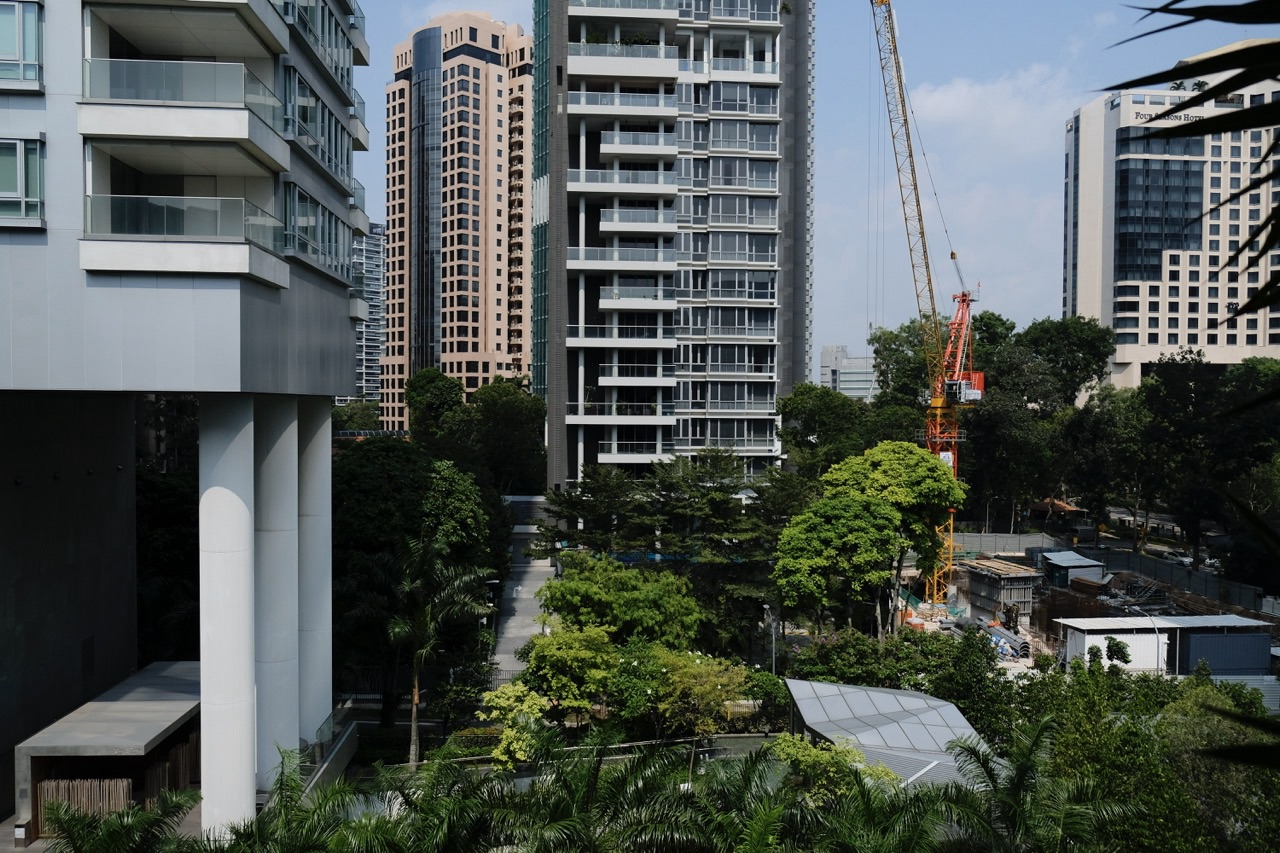
This guide uses eduKateSG’s October 2026 photograph of a high-rise condominium in the Orchard Road area, alongside genuine MRT, supermarket, Scotts Square and pedestrian-street photographs. We do not invent a development name from the image or pretend that an exterior photo proves an apartment’s price, school eligibility or amenities. The goal is a cheerful, practical introduction to living in this busy part of Singapore.
Living near Orchard Road: important points at a glance
- Neighbourhood: a mixed urban district, not only malls and tourist hotels.
- MRT: Orchard NS22/TE14, Somerset NS23, Orchard Boulevard TE13 and other nearby stations according to address.
- Housing: private residential and mixed-use developments in different parts of the Orchard precinct.
- Daily services: supermarkets, dining, retail, schools and healthcare depend on the exact building.
- Family planning: use MOE’s official SchoolFinder and Primary 1 distance and admission rules.
- Rent and sale prices: use URA’s recorded transaction searches, not unsupported averages.
- Buying: check IRAS BSD, ABSD and any relevant holding-period duties for your specific circumstances.
- Agents: verify registration and contact information through the CEA public register.
- Future amenities: read URA’s Master Plan, separating proposals from completed projects.
- Best decision: view the actual property and test the daily travel, noise and routes.

Is Orchard Road only for tourists and shoppers?
No. The Urban Redevelopment Authority describes Orchard Road as predominantly a lifestyle and retail belt, while also identifying residential and mixed commercial-residential sites that bring a live-in population into the district. That combination is important. People come to buy gifts, see movies or stay in hotels, but others simply live nearby and use the same trains, supermarkets and pavements.
URA’s 2026 urban design guidance frames Orchard as part of a connected tropical boulevard, linking major buildings and public spaces. It recognises different sub-precinct identities: Tanglin, Orchard, Somerset and Dhoby Ghaut. Each has a different atmosphere and set of uses, so the phrase ‘living on Orchard Road’ can refer to quite varied addresses.
A first step for someone considering housing is therefore to decide which part of the wider area they mean. A condominium overlooking a busy boulevard may feel very different from a home on a nearby side street.
The Orchard residential areas are not all the same
Within and around the wider Orchard precinct are areas influenced by Orchard Boulevard, Paterson Road, Scotts Road, Cuscaden, Grange Road, Cairnhill and neighbouring River Valley or Newton. Not every address in these areas belongs to the same planning district, school-distance category or station catchment, even when property marketing uses the word Orchard.
Compare the exact street and postal address rather than relying on broad neighbourhood branding. One development may connect easily to Orchard MRT, while another might be more convenient for Orchard Boulevard or Somerset. The surrounding street’s noise and character can differ substantially.
Spend time there outside a sales-gallery presentation. The experience of entering a residential lobby, walking to a supermarket or waiting for a crossing is often more informative than a general statement about prestigious city living.
The October 2026 Orchard condominium photograph
eduKateSG’s October 2026 media collection includes a high-rise condominium in the Orchard Road area. The image provides a genuine visual reference for city living among shopping and commercial buildings. However, it should not be used to identify a specific residential development without an authoritative building name or address.
A single exterior view cannot establish how many units a building has, its tenure, maintenance fees, resident facilities or the price of an apartment inside. Those details must come from official development records, managing agents or verified property listings.
Accurate imagery helps readers recognise the contrast between residential towers and commercial activity without turning a photograph into an unsupported property advertisement.
Scotts Square: a concrete mixed-use example
Scotts Square at 6 Scotts Road is a visible example of a mixed-use project in the Orchard area. It combines a retail podium with private residential components, so people can be shopping for groceries or dining while residents use separate private access areas.
The public retail frontage and FairPrice Finest supermarket make the development easy to recognise in a photograph. But those images do not reveal residents’ private facilities and should not be taken as permission to enter controlled spaces. Respecting that boundary is part of being a considerate visitor.
Mixed-use environments show how a central city location can combine housing and daily services on valuable land. They also require careful planning of entrances, deliveries, privacy and pedestrian circulation.

Which MRT stations matter for Orchard homes?
Orchard MRT is NS22 on the North South Line and TE14 on the Thomson–East Coast Line. Somerset MRT is NS23 on the North South Line. Orchard Boulevard is a separate station, TE13, farther along the Thomson–East Coast corridor, while Newton and Dhoby Ghaut serve different adjoining parts of the city.
The useful station depends on the actual home address and the direction of your commute. Two condominiums marketed as ‘near Orchard’ may have very different walking conditions. A station shown nearby on a map does not guarantee a sheltered route or an accessible exit suitable for every user.
Trace the journey door to door, including traffic lights, station concourses, transfers and the final walk at your workplace or school. A comfortable daily routine is more valuable than an impressive but misleading distance claim.

What does a convenient daily commute really mean?
A strong commute is predictable, comfortable and fits the household’s schedule. A person working near the CBD may value the Thomson–East Coast and North South Line interchange differently from someone whose workplace is near Newton, Stevens or another connection.
Consider the return trip as well as the morning route. Evening crowding, a change between lines and an exposed final walk in heavy rain can make a technically short journey tiring. If a family member uses a stroller or mobility aid, the exact lift access matters.
When comparing housing options, try the actual commute at a relevant time instead of relying only on a property brochure’s estimated walking minutes.
Living near Orchard MRT: convenience and intensity
The immediate Orchard MRT district offers exceptional access to large shopping centres, restaurants, hotels and offices. That can be exciting for someone who enjoys being close to city activity and wants to accomplish errands without lengthy travel.
However, proximity to a major station and shopping junction can also mean more pedestrians, road traffic, servicing activity and seasonal events. Those factors may affect noise, access and the feeling of the street at different hours.
A home is experienced on a weekday morning and an ordinary night, not just during a pleasant Saturday viewing. Consider how the area feels outside the busiest retail hours.
Living near Somerset: everyday shopping and food
The Somerset part of the shopping belt includes 313@somerset, orchardgateway and other retail or lifestyle venues. A resident may appreciate being able to reach a quick meal, a café or a practical shop after work without needing a car.
Somerset MRT is a useful transport anchor. If a housing advertisement highlights Somerset access, verify the actual street route from the relevant building and whether it remains comfortable when carrying groceries or travelling in rain.
The area can also be lively in the evening. Some households enjoy that energy; others prefer a quieter side street or a unit positioned away from the most active frontage.
Orchard Boulevard, Paterson and the next phase of city living
URA’s 2025 Master Plan materials describe plans to strengthen Paterson as a mixed-use neighbourhood close to Orchard MRT. They include an integrated development above the Orchard MRT interchange and improved walking and cycling links, with public spaces and new community facilities as part of the vision.
These are planning proposals and directions, not proof that every illustrated building or amenity has been completed in October 2026. When evaluating a home nearby, use the current URA Master Plan and official development updates to distinguish an existing facility from a proposed future one.
The potential for more residential and amenity uses makes the neighbourhood interesting to follow, but property decisions should not rest on an assumed completion date or a speculative claim about resale gains.
URA’s Orchard urban design guidelines: what residents can learn
The URA describes Orchard as a tropical boulevard with pedestrian spaces, retail and lifestyle activity. Its urban design guidance emphasises connectivity, high-quality building forms and public spaces. It also recognises that residential and mixed-use sites support activity beyond shopping hours.
For residents, these planning ideas relate to practical matters: shaded walking routes, how buildings meet the street, the position of entrances, public transport access and the balance between shops and quieter areas.
Urban design guidelines are not personal guarantees. A particular development must still be checked for actual permitted uses, surroundings and building works.
New greenery and public-space proposals
URA’s central-area plans discuss strengthening Orchard Road as a greener destination with additional shade trees, planting and new community-oriented spaces. They also describe broader improvements connecting parts of the central city through walking and cycling routes.
Such measures can support a more pleasant residential environment, but some are future plans rather than established amenities. Do not treat an attractive planning rendering as an existing park or an assured improvement outside a particular apartment.
Check the current project phase when the appearance or completion of a proposed open space matters to a housing decision.

Groceries: why everyday errands matter more than luxury stores
Orchard Road is known for designer fashion, but residents also need groceries, household items and quick meals. FairPrice Finest at Scotts Square is one documented everyday option in the Orchard/Scotts junction, alongside food halls and retail services elsewhere in the district.
A resident choosing a home should identify the nearest suitable supermarket, opening hours and actual walking route. Carrying heavy bags up a long flight of stairs is not made more pleasant by an expensive shopping neighbourhood.
A few practical errands reveal more about day-to-day life than the proximity of a flagship luxury brand. Prioritise the services your household genuinely uses every week.

Dining and cafés: a benefit with different budgets
The Orchard district offers food courts, bakeries, cafés and more formal restaurants. Nearby shopping centres such as ION, Wisma Atria, Ngee Ann City, Paragon and the Somerset cluster provide different choices, though menus and tenants change over time.
Living nearby can make meeting friends or arranging a quick meal easier. It can also encourage frequent spending, so a practical household budget remains helpful. The most expensive restaurant is not necessarily the most comfortable regular option.
For families, check dietary needs, accessibility and seating. A familiar, convenient café may become more valuable than a famous restaurant requiring a long queue.
Noise, light and the actual unit position
An Orchard Road address can sound glamorous, but a home may face traffic, late-night activity, delivery movements or neighbouring buildings. Noise is not identical across an entire development; it can vary with floor, orientation, glazing and nearby road arrangements.
During a viewing, listen with windows open and closed, observe external lighting and check whether the unit faces an active driveway or a quieter internal area. A high floor does not automatically eliminate all sound, and a low floor is not inherently unsuitable.
Use actual observations and building information rather than a generic assurance that ‘city condos are soundproof’. The correct choice depends on the household’s tolerance and routine.
Families with babies and young children
Parents often need suitable lifts, space for a stroller, nearby shops and a predictable route to school or childcare. A modern condominium may publish family facilities, but the actual layout, rules and maintenance should be checked. A pool listed in a brochure may still have age and supervision requirements.
Plan realistic daily journeys. A nursery that looks nearby on a map may require a busy road crossing or long detour. The best home is one where the routine works comfortably, not merely one with the greatest number of amenities.
Consider how often the family will use its building’s facilities versus external parks and services. Paying for impressive communal amenities makes sense only when they suit the household.
Schools near Orchard: verify each exact address
School choice is an important consideration for many families, but an Orchard Road postal address does not guarantee admission to a particular school. The Ministry of Education runs SchoolFinder and the Primary 1 Registration process with defined phases and distance-related priority rules.
Home-school distance is determined under MOE’s official rules, not by a property agent’s approximate walking estimate. Check the exact residential address, the child’s eligibility and the relevant registration phase. Families of international students may face a different process from Singapore Citizens and permanent residents.
Do not buy or rent a home based solely on a claimed ‘one kilometre to school’ statement without checking the official applicable distance and admission conditions.
Primary 1 registration: proximity is not certainty
MOE’s 2026 Primary 1 registration portal explains that certain phases take account of home-school distance and that balloting may still be necessary. Priority can vary by citizenship, phase, distance and places available. A short distance does not automatically guarantee a place.
Different rules may apply to future home addresses, resale properties, caregiver arrangements and residency obligations. These are important legal and administrative details, and families should read the current MOE instructions before making a housing decision linked to registration.
The better approach is to consider several suitable schools based on the child’s needs and the family’s routine rather than treating one prestigious name as the only acceptable outcome.
Teenagers and commuting for secondary education
Secondary-school students may travel independently by public transport, which makes Orchard’s MRT connections useful. Yet the actual school route depends on the institution’s location, start time, traffic crossings and any required transfers.
Think about after-school activities and the journey home as well as morning travel. A student attending CCA or enrichment may return after dark, when comfortable pedestrian routes and predictable transport become more important.
A family can use this discussion to build practical navigation and time-management skills rather than relying only on the prestige of the residential address.
Private condominium facilities: check what you are paying for
Buyers may be attracted by pools, fitness rooms, function areas, security and landscaped spaces. But the presence of a facility in an old brochure does not establish its present condition, access rules or maintenance obligations.
Ask about management fees, sinking fund considerations where relevant, renovation plans, by-laws and any major repairs. For renters, confirm whether the tenancy includes use of particular amenities and how guest access works.
A smaller development with facilities you actually use may suit you better than a larger complex with an impressive list that you rarely visit.
Living in a mixed-use development
Mixed residential-retail projects can make errands convenient, but they also combine different users and operational needs. Deliveries, visitor traffic, parking, waste management and common-area access must be planned carefully to maintain privacy and comfort.
Scotts Square is a visible example of housing and public-facing retail in the same wider development. The October 2026 photographs show the retail exterior and supermarket, not private residential facilities.
When evaluating such a home, check how residential entrances are separated from commercial activity and whether the routes and security arrangements suit your expectations.
Renting near Orchard Road: begin with your actual budget
A rental listing may advertise a prime location, but the actual financial commitment includes rent, deposit, utilities, applicable fees and transport or household costs. Compare the full terms rather than focus only on a promotional monthly figure.
URA provides searchable private residential rental contract data, which can help with historical comparisons by development or district. A past rental contract does not determine what a currently vacant unit should cost, but it is a more grounded source than an unsupported neighbourhood average.
Inspect the unit, understand maintenance responsibilities and read the tenancy agreement before paying or committing.
URA rental records: how to use them properly
URA’s private residential rental search covers contracts submitted for stamp-duty assessment within a rolling 60-month period. Results depend on available registered contracts, development and search filters, and do not necessarily include every privately discussed or informal quote.
Compare units carefully. Size, floor, furnishing, lease start date and building condition all influence rent. Two leases in the same development can differ enough that an unqualified average is misleading.
Use URA data as context alongside a real viewing and written terms. Do not use it to claim a specific listing is a bargain without comparing like-for-like conditions.
Buying a condo: past transaction data, not headlines
URA’s private residential transaction search includes reported new sale, resale and subsale transactions, generally covering a rolling 60-month period. The records come from developer options or lodged caveats depending on transaction type, and URA explains that not every resale deal necessarily appears because caveat lodgement is not universal.
This is a stronger basis for comparison than a claim that Orchard condos always rise in price. But a historical transaction is not a prediction of future performance, and its relevance depends on floor area, condition, unit orientation and transaction date.
Buyers should use the data for context and obtain suitable professional advice for valuation, legal matters and financing where appropriate.
Stamp duty: BSD and ABSD can change the real cost
Singapore’s Inland Revenue Authority distinguishes Buyer’s Stamp Duty from Additional Buyer’s Stamp Duty, which may apply depending on buyer profile, existing residential property ownership and other circumstances. The amount cannot be inferred from a single headline percentage without knowing the actual buyer’s situation.
IRAS publishes detailed calculations, rates, remissions and documentation rules. A buyer should check current law and seek qualified guidance before signing binding purchase documents, especially where multiple owners, foreign citizenship, trusts or entities are involved.
Do not make a property decision based only on the advertised price per square foot. Taxes, financing, legal costs and ongoing ownership expenses form part of the real commitment.
Seller’s Stamp Duty and a realistic holding period
IRAS also publishes Seller’s Stamp Duty rules for residential properties sold within certain holding periods. These have changed over time, including provisions affecting acquisitions from July 2025. The applicable liability depends on the date and circumstances of the acquisition and disposal.
A person intending to buy an Orchard condominium should not assume the property can be sold quickly with no additional transaction consequences. Read the relevant IRAS rules and consider whether the home meets longer-term living needs.
Property prices and policies can change. Buying for a genuinely suitable home is a different decision from pursuing speculative short-term gains.
Check the property agent in the CEA register
Singapore’s Council for Estate Agencies maintains a public register of licensed property agencies and registered agents. Its 2026 guidance advises consumers to verify an agent’s registration and to check the phone number actually used to contact them, helping reduce impersonation risks.
Do not transfer deposits in response to suspicious messages without verifying the agent, property and proper payment process. A beautifully photographed condominium listing does not guarantee that the advertiser is authorised to offer the unit.
CEA also provides consumer checklists and tenancy templates for renters and landlords. These are valuable tools even for people who have moved homes before.
Rental viewings: what to inspect in person
A useful viewing is not just a tour of the living room. Test practical concerns with appropriate permission: tap water, windows, air-conditioning, storage, mobile reception, light and noise. Ask what appliances and furniture remain, and check how maintenance responsibilities are written into the agreement.
Look at lift access, rubbish disposal, delivery arrangements and the actual trip to the nearest station. If you have a dog, ask whether the development’s by-laws and tenancy terms permit pets; general pet licensing does not override private estate restrictions.
Take your time and avoid making a deposit simply because someone says another buyer or tenant is waiting. A legitimate commitment deserves verified paperwork and a clear understanding of the terms.
Living with a dog in the Orchard area
An October 2026 photograph shows a person walking several dogs along Orchard Road, reminding readers that residential life exists alongside retail. But it does not establish whether any particular condominium permits those animals or whether ordinary pets may enter nearby malls.
AVS requires dogs to be licensed, leashed and properly controlled in public areas, while condominium management may have additional rules. A prospective owner or tenant should verify pet policies before choosing a unit.
Busy central streets may be stressful for some dogs. A convenient home should also allow the animal a safe, comfortable exercise routine rather than rely only on a picturesque shopping boulevard.

Weekends: what can residents do nearby?
Orchard’s shopping and entertainment uses create many possibilities. Residents might browse a bookstore at Ngee Ann City, see a film at Shaw House, meet friends for food or simply enjoy an architectural walk between malls.
Not every outing needs to involve a purchase. Public-facing art, street photography and the neighbourhood’s heritage can make a pleasant break. The National Heritage Board’s Orchard Heritage Trail provides background about earlier plantations, communities and commercial development.
The value of a central neighbourhood partly lies in being able to choose small, spontaneous activities rather than plan each visit as a special journey from elsewhere.

Evenings and the city economy
Orchard Road becomes lively after dark as workers, shoppers, hotel guests and diners use its public spaces. For residents, that can be attractive because shops, transport and social activity remain nearby. It may also introduce light, crowd and noise considerations for certain apartment orientations.
Visit the immediate area at the times that matter to your household. A weekday night may feel quite different from a weekend promotion or Christmas light-up period.
Do not assume a condominium’s marketing photograph captures the full range of evening conditions. A careful home decision includes the ordinary street rhythm.

Safety, crossings and accessibility
A convenient neighbourhood must work for everyday journeys. Check where marked crossings, kerb ramps, lifts and weather shelter actually exist between the residential entrance and essential destinations. Some Orchard MRT underpasses and mall links include changes of level.
For households with older adults, mobility aids or strollers, trace the entire route rather than rely on a straight-line distance. A short walk with an unexpected staircase can be less practical than a slightly longer accessible path.
Road safety is just as relevant to residents as tourists. A busy pedestrian crossing is a place to follow signals, not an opportunity to save time by cutting across traffic.
How future plans might change Orchard living
URA’s 2025 Master Plan and more recent central-area guidance describe efforts to bring more residential activity, greenery and community spaces into parts of the city centre. Paterson is identified as an area for improved neighbourhood connections and mixed-use activity.
Such plans can inform a buyer’s understanding of the wider district, but they do not provide a guaranteed completion date or financial return for a particular apartment. Planned facilities may change during implementation.
Read official planning documents and development updates before assigning value to something that exists only in an illustration.
A simple monthly budget for Orchard living
Imagine a fictional household paying S$5,000 in monthly rent, S$300 for utilities and internet, S$700 for groceries and S$250 for local transport. Those items total S$6,250 before dining, insurance, school needs, personal spending and any other obligations. These are hypothetical planning amounts, not real market rates for Orchard.
A useful budget includes irregular costs such as moving, household maintenance, furniture and healthcare. A home near an MRT station may reduce some transport needs, but individual preferences differ.
Good financial decisions come from comparing actual numbers and obligations. A prestigious street name does not make an unaffordable budget sensible.
A resident’s one-day test of the neighbourhood
Before buying or renting, spend a normal day in the part of Orchard you are considering. Arrive at the time you would normally commute, walk to a supermarket, have an ordinary meal and observe the street at a quieter hour. The experience can reveal factors a listing does not mention.
Check how the area feels after rain, how far you must travel for daily errands, and whether outdoor noise changes at night. If the home is inside a mixed-use development, look for separate residential and commercial entrances and appropriate delivery arrangements.
The neighbourhood should fit a life, not merely a photograph. A practical day-long observation can be more useful than a short sales appointment.

Frequently asked questions about living near Orchard Road
Are there condominiums near Orchard Road?
Yes. URA identifies residential and mixed residential-commercial sites within the wider Orchard district, alongside retail and hotels.
Is Orchard Road only a shopping area?
No. Residents, offices, hotels, community uses and transport are part of the wider district.
Which MRT stations serve Orchard homes?
Orchard, Somerset, Orchard Boulevard and nearby Newton or Dhoby Ghaut may be relevant depending on the exact address.
Is the photographed condo identifiable?
The eduKateSG image is labelled as an Orchard-area condominium, but its precise development name is not verified from the image.
Where can residents buy groceries?
FairPrice Finest at Scotts Square is one documented example; check the current supermarkets closest to your address.
Is living on Orchard Road noisy?
Conditions vary by street, building, orientation and hour. Inspect the actual unit rather than assume one answer applies everywhere.
How do I compare condo rental prices?
URA publishes searchable private residential rental contracts, with recorded data for the previous 60 months.
Where can I check recent sale prices?
URA’s residential transaction data provides reported new sale and resale information, subject to its coverage limitations.
Does a condo near a school guarantee Primary 1 admission?
No. MOE admission depends on formal phases, priority rules, distance checks and available places.
Is Orchard convenient for families?
It can be, but check schools, accessibility, noise, childcare and the day-to-day route for the specific home.
Can residents have dogs?
Pet licensing and condominium by-laws both matter. Check estate rules rather than assume every private development has the same policy.
Is Scotts Square residential?
Its wider mixed-use development includes private residential components above public retail activity.
What is URA planning for Paterson?
Its master-plan materials describe future mixed-use neighbourhood connections and an integrated development around Orchard MRT.
Are proposed parks already open?
Do not assume so. A plan or rendering requires current project-status verification before it becomes an existing amenity.
Do foreigners pay extra tax to buy residential property?
ABSD may apply based on the buyer’s actual profile; consult current IRAS rules and any applicable reliefs or exceptions.
How do I check a property agent?
Use the Council for Estate Agencies public register and verify the actual contact number.
Should I buy a condo based on the MRT walk alone?
No. Compare the full daily routine, property condition, price, fees, future needs and exact accessible routes.
Orchard living is about the everyday experience
Orchard Road is an extraordinary shopping destination, but a resident experiences it differently from a tourist. The routine involves getting to work, feeding a family, carrying groceries, choosing a school and returning home after a long day. A successful housing decision balances those needs with the excitement of living close to the city.
Be curious about the neighbourhood, use verified property and school information, and explore the real streets at different times. The best Orchard-area home is the one that helps the people living there feel comfortable and connected.
Official planning, property, education and Orchard resources
URA Orchard urban design guidelines, updated September 2026
URA central-area Master Plan: Orchard and Paterson changes
URA private residential transactions, rentals and property data
URA recorded residential sale transactions
URA recorded residential rental contracts
MOE Primary 1 Registration official portal, 2026
IRAS Additional Buyer’s Stamp Duty
Council for Estate Agencies: verify an agent
CEA: renting private residential property
Orchard Road wheelchair and stroller guide
Orchard Road MRT and transport guide
Updated October 2026. This is a neighbourhood guide, not legal, tax, mortgage or investment advice. Rental listings, transaction comparables, admission rules and proposed developments require current official verification. Photographs show named Orchard-area scenes without claiming unverified building identities or property-specific prices.