
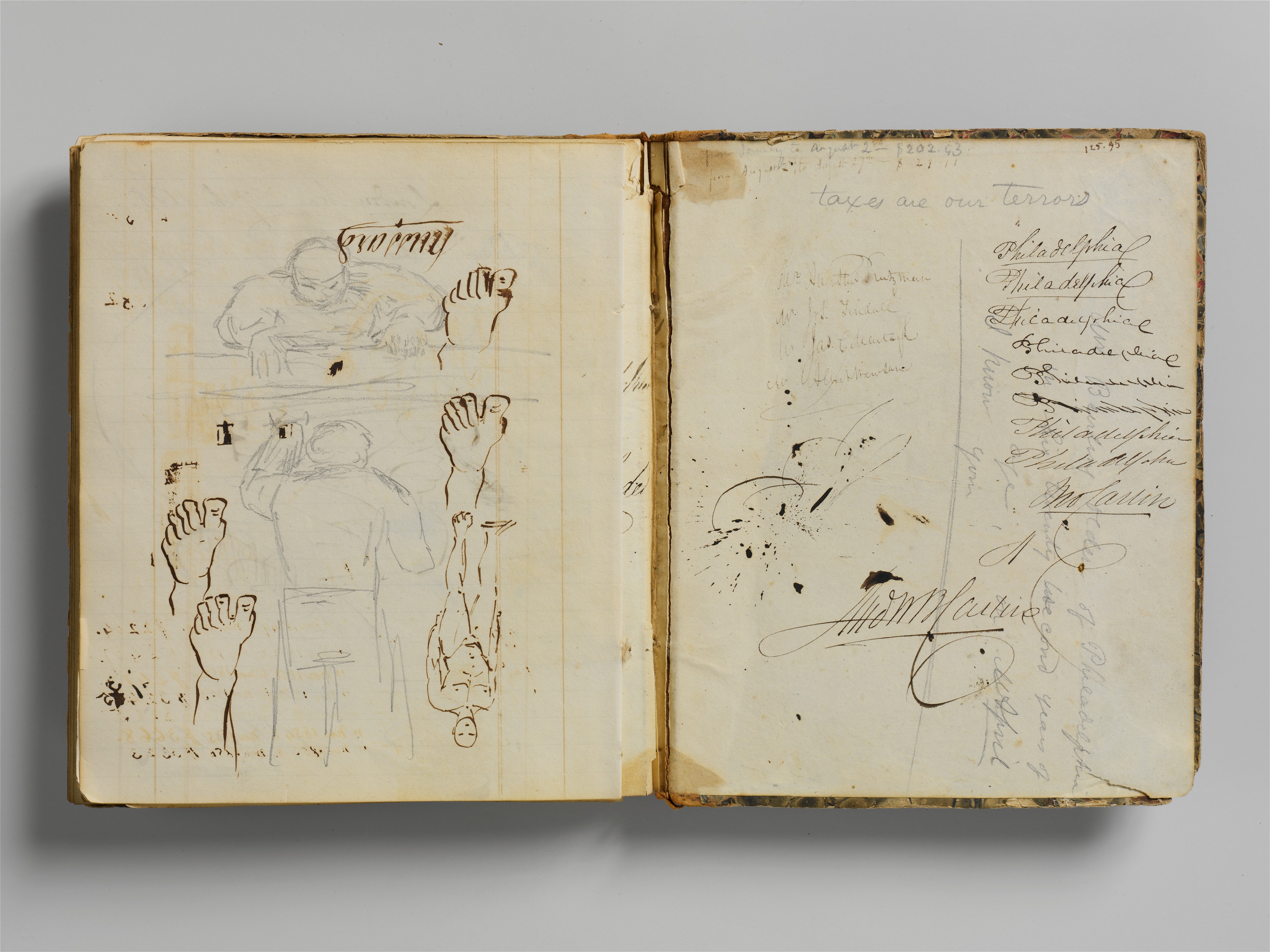
Historical source literacy means asking what a record can actually establish, who made it, when it was made, why it exists and what other evidence can test its account. A photograph can confirm that something was visible when the picture was taken; it cannot automatically explain every motive behind the scene. Two accounts can disagree without either being worthless. A careful student learns to investigate rather than rush to declare a source true or false.
Ministry of Education V3.0 Reference 192 develops historical inquiry for Singapore learners through provenance, context, chronology, inference, corroboration, contradiction and balanced judgement. It includes a twelve-stage investigation protocol, original fictional source packets, model answers, a classroom workshop, parent questions and eduKate Depth–Load–Transfer checks. The same habits help students evaluate family stories, community histories, online historical claims and conflicting reports about the past.
This is independent eduKateSG educational material, not an official MOE or SEAB marking scheme. The school, people, records and historical episodes in the worked case studies below are invented and labelled fictional; no quotation from them should be presented as an authentic archive. For the 2027 Singapore-Cambridge Secondary Education Certificate, verify the subject and level from the official SEAB syllabus lists. Historical reasoning varies by the question, age group and assessment requirements.
1. Why a Historical Source Is Not a Ready-Made Answer
A source is a surviving trace, representation or account of the past. It could be a letter, receipt, speech, building plan, newspaper report, photograph, interview, diary entry, government document or later historian’s interpretation. None arrives with the whole past attached. Each captures an observer’s perspective within a particular setting, purpose and set of constraints.
Imagine an undated photograph showing twenty children reading at a table. It gives immediate visual evidence that a group was photographed reading. Without reliable metadata, it does not tell us whether the picture was staged for publicity, which year it was taken, whether every child could use the room or whether the reading programme succeeded. A responsible interpretation records the difference between what is visible and what is being inferred.
2. Singapore School History and the 2027 SEC Context
Singapore’s History education includes chronological understanding, historical interpretation and evaluation of evidence. At the 2027 G3 level, SEAB lists History as K330 and Humanities (Social Studies, History) as K336. The G2 list provides its own subjects, including History K227 and Humanities (Social Studies, History) K230. These are distinct subject offerings, not interchangeable codes or identical papers.
The correct task always follows the student’s current syllabus and school instructions. Source-based questions may ask about inference, purpose, comparison, support, reliability or how convincing a source is. A student should not force every source question into one memorised paragraph. Official lists are available at SEAB G3 2027 and SEAB G2 2027.
3. The Eight Rooms of a Historical Investigation
The first room is the question: what specific historical issue are we trying to understand? The second is the record: what is the actual document, image or object? The third is provenance: how did that record come into being? The fourth is context: what was happening at the time? The fifth is interpretation: what meaning reasonably follows? The sixth is comparison: what do independent records support, dispute or leave silent? The seventh is judgement: how strong is the answer? The eighth is revision: what evidence would change it?
These rooms are connected. Strong contextual knowledge with no source evidence can become a memorised story. Close quotation with no context can become a misleading fragment. Corroboration without independence can become an echo chamber. Historical thinking requires a route through all three: accurate knowledge, careful evidence and explanation.
4. Twelve-Stage Source Investigation Protocol
Stage 1 — Rewrite the question as an answerable enquiry
The question ‘Was the programme successful?’ is too broad until the student identifies the programme, people, dates and success measure. Does success mean a room opened, children attended, books were borrowed or reading improved? A source may address only one of these. Define the claim before searching for supporting phrases.
Stage 2 — Identify the type of surviving record
An announcement, attendance register, editorial, family memory and museum interpretation are not identical forms of evidence. Explain what each form was built to do. A register can record attendance without explaining every absence. A personal diary can reveal experience without reliably representing every student. Naming the type helps select the correct questions.
Stage 3 — Establish who produced it and for whom
Origin concerns the creator, position and immediate knowledge. Audience affects what a speaker chooses to include or conceal. An internal report to a principal may emphasise operational problems; a celebratory speech may emphasise achievements. Neither feature alone makes the source useless, and both can be investigated.
Stage 4 — Fix the date, place and sequence
Place the source on a timeline. Distinguish the time of the event from the time of the account. A 1985 recollection of a 1978 event was produced in 1985, even if the memory concerns 1978. Check if the date in a modern image caption belongs to the photograph itself or the date of its digital upload.
Stage 5 — Extract what is explicitly stated
Before interpreting emotion, motives or impact, identify precise words, numbers and descriptions. If a notice says ‘the reading room will open in July’, it expresses a plan. It is not proof that the room opened. If minutes say ‘seventy chairs were ordered’, they establish an order, not necessarily delivery or use.
Stage 6 — Supply only justified historical context
Context explains how the evidence fits wider circumstances. It should come from reliable background knowledge, not stereotypes or invented backstory. If local transport, school size or language policy may matter, verify them through appropriate records rather than treating modern assumptions as facts about an earlier decade.
Stage 7 — Distinguish evidence from an inference
An inference is a conclusion drawn from evidence and context, not a synonym for a quotation. ‘Students valued the room’ might follow from repeated voluntary use, letters requesting longer hours and testimony about unmet demand. It does not follow automatically from a single photograph of smiling students.
Stage 8 — Compare independent sources
Independent corroboration is more valuable than repeated copying. Three articles repeating one press release may represent only one underlying claim. Ask whether the second document has its own records, observation or firsthand testimony. Agreement strengthens a bounded proposition; disagreement directs the next enquiry.
Stage 9 — Identify contradiction, silence and selection
Two witnesses can describe different parts of the same event. One may report a crowded opening; another may report low attendance later. They can both be accurate. Silence is not automatic disproof. If an annual report omits a small event, the event might still have occurred; investigate whether that report would normally mention it.
Stage 10 — Evaluate purpose without declaring automatic bias
A promotional leaflet may exaggerate success, but it can still be excellent evidence that an organisation wanted to recruit participants. A hostile editorial might distort a numerical claim yet reveal contemporary opposition. Evaluate reliability for the particular claim being tested, not by branding a source universally trustworthy or untrustworthy.
Stage 11 — Make a proportional judgement
A robust answer states what the evidence supports, how far the evidence reaches and what remains unknown. Distinguish strongly supported, plausible and speculative claims. The correct conclusion may be ‘The programme began and attracted some users, but these records do not establish its long-term effect on literacy.’
Stage 12 — Transfer the method to an unseen source
Practice with a different medium, era or viewpoint. If the method works only for the fictional school-reading case studied in class, the learner has memorised details rather than mastered historical reasoning. Use photographs, oral testimony, press reports and public records with increasing independence.
5. Original Fictional Source Packet: The Riverview Reading Room
The following miniature archive is fictional, created solely for teaching. Riverview School, its officers, dates and programme are not real historical claims. The question is: ‘How far do these four sources show that the proposed reading room was established and widely used between 1978 and 1981?’
Source A is a notice dated 12 June 1978 from the fictional school committee: ‘We intend to convert an unused classroom into a supervised reading room, subject to the delivery of shelves and books. Families will receive an opening announcement when arrangements are complete.’ Source B is a fictional attendance ledger, apparently kept from August to December 1979: it lists 18, 23, 14, 27 and 25 attendance entries for five sample afternoons. Source C is a fictional photograph dated November 1979 in a private album: six pupils are seated beside two shelves. Source D is a fictional reminiscence recorded in 2001 from a former student: ‘I remember the room becoming busy after examinations. We did not always find the books we wanted.’
These sources have different evidential strengths. A is a plan, B is a series of counted entries, C depicts one moment and D is a later recollection. Their details must not be fused into a single unqualified claim. The fact that the room was intended in 1978 is established by A within the invented exercise. Later use is supported more directly by B and C. ‘Widely used’ requires a denominator, attendance pattern and comparison with the school’s population or operating hours.
6. Worked Example A: Intended Opening Versus Actual Operation
Question: Does Source A prove that the reading room opened on 12 June 1978? No. It is a statement of intention made on that date. The opening was conditional on books and shelving. A concise answer explains that the notice is useful for the school’s plans, but another dated record is required to establish when pupils first entered the room.
Suppose the student writes, ‘The school opened the reading room in June 1978 because Source A says they would.’ This answer confuses intention with completion. A corrected response is, ‘Source A shows an intention to establish the room in 1978. Its conditional language cannot demonstrate actual operation. The later ledger and photograph suggest operation by 1979, but they do not establish the opening date.’ The improved response is both more cautious and more informative.
7. Worked Example B: Attendance Numbers Need a Denominator
Source B’s five fictional afternoon entries total 107 recorded attendances: 18 + 23 + 14 + 27 + 25 = 107. Divide by five to obtain 21.4 entries per sampled afternoon. This does not mean exactly 107 unique children attended; the same child may appear on multiple days. It also does not prove that the programme was typical throughout the year.
If the entire school had 120 pupils, that mean would tell a different story from a school with 1,200 pupils. Neither hypothetical school size has been established. A strong answer uses the ledger to show some recorded participation, notes the limited sample and avoids a vague claim of widespread popularity. The History student is borrowing denominator discipline from Mathematics and statistics.
8. Worked Example C: Photograph and Caption Are Separate Evidence
Source C shows six pupils and two shelves in a particular image. Even if the album’s date is accurate, the photograph cannot tell us whether the children attended voluntarily, how long the room stayed open or how many other pupils used it. A photograph may be cropped; an archival reproduction may lose context; a caption may have been added years later.
The caption and picture should therefore be evaluated as separate elements. Students can describe the image directly, check whether other images exist and compare the photographic date with records. If a student treats the caption as automatically contemporaneous with the image, they may mistake later interpretation for original evidence.
9. Worked Example D: Oral Memory and Temporal Distance
Source D says the room became busy after examinations and that desired books were sometimes unavailable. It might help reveal the student’s experience of demand. Yet it was recorded in 2001, more than twenty years after the purported period. Memory may compress separate occasions, misplace dates or foreground especially vivid episodes.
The correct response is not ‘oral history is unreliable’. It is ‘this testimony is useful for remembering experience and perceived shortages; the long interval suggests checking its chronology and representativeness against records’. The National Heritage Board provides practical guidance for responsibly conducting oral-history interviews and preserving context.
10. Worked Example E: Corroboration Without Double Counting
Suppose an invented school newsletter quotes the committee notice word for word. It would not independently prove that a reading room opened. Both documents could trace back to the same original statement. A pupil who counts them as two independent confirmations mistakes repetition for corroboration.
By contrast, a dated borrowing register, a separately maintained maintenance log and an interview with an individual who personally used the room could support different facets of operation. The historian still asks whether the documents are genuine and correctly dated. Independence strengthens evidence only when it exists in the underlying production chain.
11. Worked Example F: A Balanced Final Judgement
A considered response might read: ‘The four sources make it reasonable to conclude that the fictional Riverview reading room existed and had some users by late 1979. Source A records a proposal, not an opening. The ledger gives sample attendance entries and the photo captures a small group using the space. The 2001 memory adds a personal account but may be affected by the long interval. The evidence does not establish a precise opening date, school-wide usage rate or lasting improvement in reading achievement.’
Notice how the judgement does more than count positive quotations. It integrates support, limits and the missing evidence needed to take the enquiry further. Historical reasoning becomes convincing when its confidence is proportionate to the records.
12. Chronology: Before, During, After and Later Remembering
Historical claims often fail because students confuse one of four clocks: the event’s occurrence, the source’s production, the source’s later publication and the researcher’s present-day reading. A recollection published online in 2026 about an event in 1965 is not a contemporary 1965 document, although it may preserve testimony from someone who lived through the event.
Build a four-column timeline: event date; record creation date; later copying or editing date; current access date. Use ‘unknown’ when the evidence does not permit certainty. This habit is especially important with family photographs, digitised newspaper scans and images recirculated on social media without their original captions.
13. Primary and Secondary Are Relationships, Not Awards
A primary source generally comes from the time, event or experience under study; a secondary account analyses, synthesises or interprets existing evidence. But classification depends on the question. A textbook written in 2020 is secondary for an enquiry into life in 1970. The same textbook is primary evidence for a study of how 2020 authors represented 1970.
Students should not write ‘primary means true, secondary means doubtful’. A forged contemporary letter can be useless or deceptive for its claimed event. A careful modern historian can be highly reliable for a specific conclusion. The issue is provenance, competence, evidence and relevance rather than a prestige ranking of categories.
14. Causation Is Different From Sequence
Two events occurring in order do not establish that the first caused the second. Imagine a school introduced a library and recorded better test marks the following year. Possible explanations include new teaching, differences in the tested pupils, changed assessments, extra reading time and a genuine library effect. Establishing cause requires more evidence than before-and-after chronology.
Historical analysis also distinguishes immediate triggers from deeper conditions, intended from unintended consequences and short-term from long-term change. In an essay, a student should explain mechanisms: how would access to books lead to more reading, and how would reading practice lead to measured outcomes? An unsupported causal leap remains unsupported even when the dates are right.
15. Conflicting Viewpoints Can Both Be Partially Useful
One student may describe a school scheme as generous; another may report it excluded pupils who needed to work after class. Instead of voting for one witness, ask what each experienced and what rules controlled access. Both may be telling the truth about different groups.
Avoid false balance, however. A strongly documented claim does not deserve equal evidential weight to an unsupported denial merely because both can be quoted. Perspective matters, but evidence quality matters too. Distinguishing open-mindedness from indiscriminate equivalence is a core historical skill.
16. Source Purpose, Audience and Silences
A public opening speech is often crafted to celebrate, justify or persuade. A maintenance invoice exists to document a purchase or service. A student’s letter could seek a change. Ask which facts the form was designed to preserve, which it had incentives to omit and what its authors could reasonably know.
Silence must be interpreted carefully. A school report that usually lists all clubs but never mentions a proposed reading room creates one kind of question. A bus timetable that never mentions the reading room tells us almost nothing about it. Whether absence is meaningful depends on expected coverage, not simply on the lack of a keyword.
17. Historical Maps, Images and Digital Provenance
A historical map is an interpretation of space with a date, purpose and cartographic choices. Labels, borders and routes can change. The date when a map was digitised is not necessarily the date it depicts. Map scale affects the precision of a claim about distance or location. An attractive online image without an archive reference is a starting lead, not sufficient documentation.
For a digital picture, retain the archive or collection identifier, page title, publication date if known and the actual original caption. Use reverse-image investigation where appropriate, but remember that finding a visual match does not itself establish its historical interpretation. See also Reference 187 on visual provenance.
18. Evidence Strength Is Question-Specific
An old ticket can be excellent evidence about the price printed on a particular ticket, weaker evidence about how many people attended and almost useless evidence about why the event was popular. A newspaper advertisement can establish what an organiser promised; it cannot independently establish that the promise was delivered.
Train students to add the phrase ‘for the claim that…’ to every evaluation: reliable for the claim that a campaign was announced, less reliable for the claim that it improved lives; useful for public attitudes, less useful for private policy deliberations. This small linguistic discipline prevents automatic and overly broad source verdicts.
19. A Source-Based Answer: Claim, Evidence, Reasoning, Qualification
A useful response structure is a clear inference, a precise source detail, an explanation of how that detail supports the inference and a measured qualification where the question calls for it. The first sentence should answer the question. Quotations should be short and purposeful. The explanation should do the intellectual work.
For a comparison question, identify the relevant shared issue before comparing tone or content. For an evaluation question, use other knowledge or evidence when appropriate rather than repeating the question stem. An elegant paragraph with a misread source is still a weak historical answer. Precision beats ornamental complexity.
20. The Error Ledger: What Commonly Goes Wrong
Error one: treating a proposed plan as an accomplished fact. Repair: locate evidence of implementation. Error two: treating one witness as everyone. Repair: identify sample and vantage point. Error three: claiming every source is biased merely because someone wrote it. Repair: evaluate how purpose affects the specific claim. Error four: calling repeated copies independent corroboration. Repair: trace where the information originated.
Error five: confusing the time depicted with the date of later upload. Repair: construct a source timeline. Error six: inventing context that is not supported by knowledge or evidence. Repair: mark a hypothesis clearly and seek verification. Error seven: writing a long summary with no answer to ‘how far’. Repair: make a bounded judgement that states both support and limits.
21. Classroom Workshop: An Evidence Table
Give pupils the four fictional Riverview sources and ask each group to make an evidence table with columns for source, date of creation, claim directly established, inference, limitation and next source to consult. The intended outcomes are not four identical paragraphs. They are a set of defensible inferences and a plan for testing the unresolved claims.
Then rotate roles. One learner argues that the room existed by 1979; another asks whether widespread usage has been shown; a third checks timeline and provenance. Each must point to a record rather than defend a position emotionally. On the second round, provide one new piece of hypothetical evidence and ask students to revise their conclusion. Changing a conclusion in response to better evidence is a strength.
22. Transfer Task: A Community Heritage Claim
A family says that a neighbourhood footpath ‘has always been there’. Ask what ‘always’ means. An old street plan, present-day photograph, oral recollection and construction record could establish different intervals. The student should identify which feature is being discussed, look for the oldest defensible evidence and use ‘at least since’ if the earliest origin remains uncertain.
Singapore pupils can practise the same habit with reputable collections associated with the National Archives, National Library Board and National Heritage Board. Do not copy or circulate restricted images without permission; keep accurate captions, access links and credit. Heritage enquiry should be both curious and responsible.
23. eduKate Depth–Load–Transfer Diagnostic
Depth checks understanding: can the student explain why a photograph and its caption are different evidential elements? Can they distinguish an intention from proof of action? Can they tell whether corroboration is genuinely independent? A confident answer should use evidence, not recite a memorised slogan about bias.
Load checks how much the student can manage without losing accuracy: start with one source, then a pair, then four sources and a background paragraph. Transfer checks an unseen source from another setting, perhaps an oral history or public notice. Record the error type, repair it immediately, revisit it after a delay and check whether the improvement survives the new example.
24. Parent and Tutor Questions
A useful parent question is ‘What does the source actually show?’ rather than ‘What is the right answer?’ Ask what detail supports the child’s claim, whether the source was made at the time and what else could test the account. These questions train reasoning without requiring parents to know every historical fact in the syllabus.
A tutor can diagnose whether difficulty comes from vocabulary, chronological confusion, weak contextual knowledge, inappropriate answer structure or insufficient comparison. Small-group discussion helps when each learner is required to defend one inference and then improve it. More model answers are not a substitute for learning where an argument obtains its evidence.
25. Frequently Asked Questions
Is a primary source always more reliable than a secondary source?
No. Primary and secondary describe a source’s relationship to the enquiry, not automatic quality. An accurate modern study may explain the question better than a contemporary rumour. Evaluate the particular claim, records and author’s competence.
Can two historical accounts disagree and still both be useful?
Yes. They may cover different experiences or times. A disagreement is also useful for identifying what needs further checking. If one account has significantly stronger evidence, do not pretend their conclusions deserve equal weight.
Does a photograph prove the whole event happened exactly as described?
No. It records a view under particular circumstances. Date, location, selection, caption and staging may require separate verification. Use photographs with other source types where possible.
What is corroboration in a History source question?
Corroboration is support for a claim from other evidence. The support is stronger when sources are independently produced and relevant to the same claim. Mere repetition of the same press release is not independent corroboration.
Should a student always call a source biased?
No. Purpose or perspective may affect selection, but ‘biased’ is not an answer by itself. Explain why that characteristic matters for the specific conclusion being evaluated.
Are the Riverview source quotations real Singapore records?
No. They are entirely fictional learning materials invented for this article. Real research must use authentic and properly cited records.
Can AI summarise historical material for school assignments?
AI may assist with study planning and exploratory questions where school rules permit, but fabricated references and uncited generated claims are unacceptable. Verify factual assertions in authentic documents and follow the school’s academic-integrity requirements.
26. Closing Principle
Ask a precise question. Locate the record. Identify its origin and purpose. Interpret the detail in historical context. Corroborate independently. Separate certainty from possibility. A good historical answer is neither cynical nor gullible; it knows exactly what the evidence allows it to say.
Related eduKateSG References and Official Sources
Continue with Reference 191: Weather and Climate Data, Reference 190: Textual Evidence, Reference 187: Visual Provenance, and the MOE V3.0 library. The Clementi teaching reference illustrates foundation-to-transfer instruction.
For authoritative subject context, consult SEAB 2027 G3 syllabuses, SEAB 2027 G2 syllabuses, NLB S.U.R.E. for Schools, NHB history and oral-history resources, and NHB’s historical research-resource directory.