
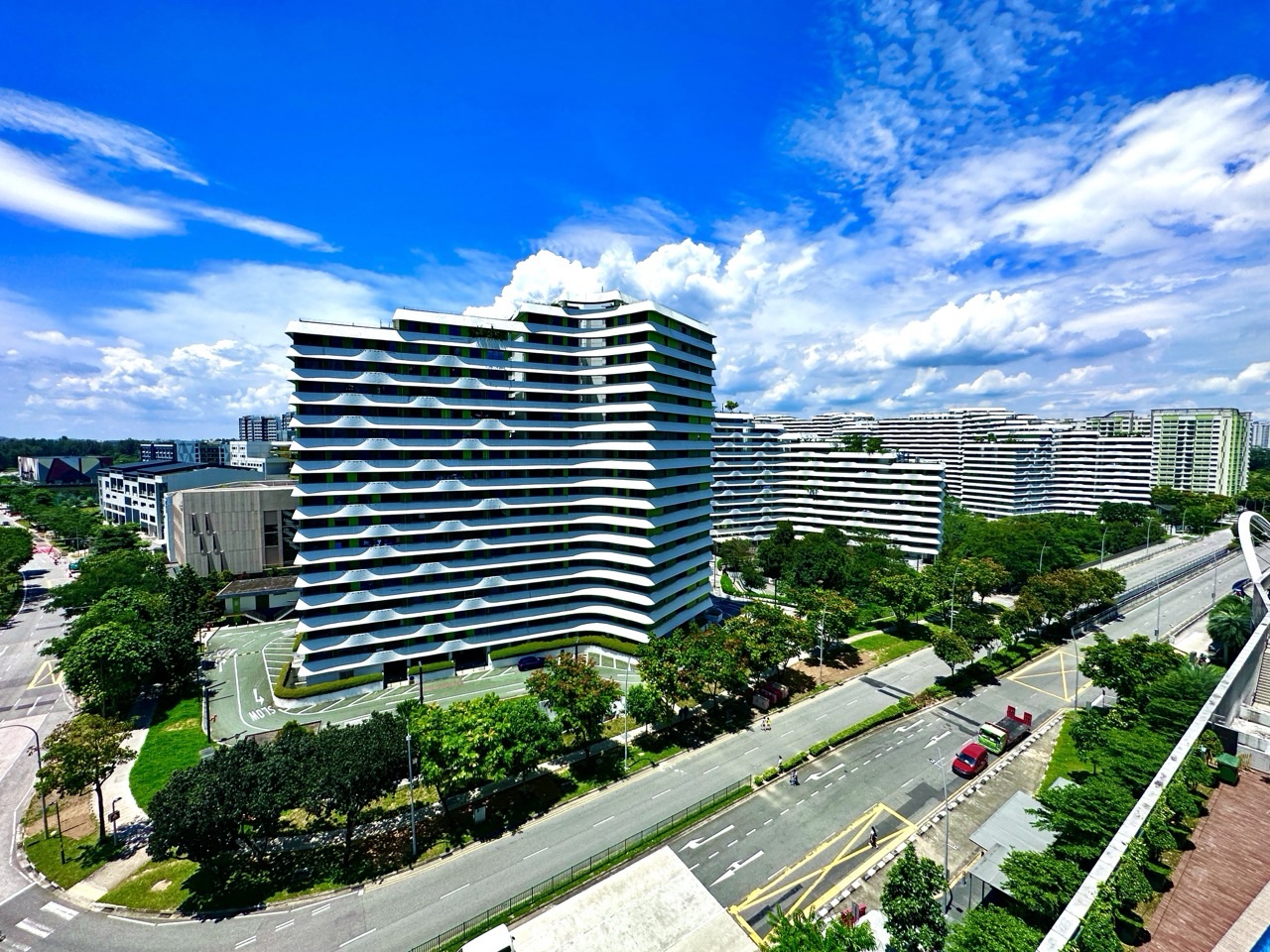
Coral Edge LRT Station (PE3) is a practical place to explore everyday Punggol rather than a major tourist attraction. Its clearest destination is Punggol Plaza, at Block 168 Punggol Field, where residents go for food, groceries, services and fresh produce. The nearby Punggol 21 Community Club adds another reason to visit the area. If you want an easy meal, a relaxed market browse or a small outing with family, Coral Edge is a sensible stop.
This guide explains where to go near Coral Edge LRT station, what to do, what you can expect to spend, and when it would be better to travel to another Punggol station. It separates confirmed local landmarks from assumptions about opening hours, specific shops or activities.
Coral Edge PE3: quick guide
- Station: Coral Edge (PE3), Punggol LRT East Loop.
- Nearest useful destination: Punggol Plaza, Block 168 Punggol Field, Singapore 820168.
- What to do: browse the fresh-produce market, shop for essentials, eat in the mall, and observe the neighbourhood.
- Community stop: Punggol 21 Community Club, 80 Punggol Field, Singapore 828815, near Punggol Plaza.
- Best visitors: residents, visiting relatives, budget-conscious families and anyone who prefers a small practical outing.
- Not the best station for: One Punggol Regional Library, Oasis Terraces or the newer Punggol Coast district.
- Before travelling: check the hours and availability of the specific market stall, shop, clinic or community-club event.
Why Coral Edge can be interesting without being a tourist hotspot
Coral Edge is useful because real neighbourhood life is visible at street level. Instead of expecting a famous landmark, you can see how people combine shopping, food, errands and community activities. An LRT ride to a local shopping centre can be rewarding when the purpose is simple and the expectations are accurate.
HDB describes Punggol Plaza as a one-stop shopping mall near Coral Edge LRT. Its description identifies a supermarket, a fresh-produce market and places to eat. HDB also says Punggol 21 Community Club is close by. That is enough to design a meaningful short visit; there is no need to invent secret attractions or exaggerate the mall’s scale.
1. Visit Punggol Plaza for an everyday Singapore neighbourhood experience
From Coral Edge, look for the pedestrian route towards Punggol Plaza at 168 Punggol Field. The area is accessible as part of the ordinary residential and shopping district. Use the entrance signs and crossings rather than assuming the shortest straight line on a map is a legal or accessible walking route.
Punggol Plaza is most rewarding for people who like practical local destinations: you can find grocery shopping, places to eat, and a mix of daily-needs shops and services. It is not necessary to buy anything simply to look around the public retail areas. If you have young children, one purposeful stop—a meal, groceries or an errand—is usually enough.
If you are visiting from another part of Singapore, the mall gives you a more ordinary view of Singapore than a waterfront attraction or large destination shopping centre. That does not mean it is ‘better’ than a major mall. It means it serves a different purpose. An honest guide tells you what type of place you are visiting.
2. Explore the fresh-produce market without treating it as a guaranteed bargain
A useful part of Punggol Plaza is its market-style shopping. HDB refers to a dry market serving people who want fresh produce. Other local operator descriptions may use different terms for the fresh-food market area. For visitors, the important distinction is not the label; it is that a market and a regular supermarket may offer different selections and buying experiences.
Start with something familiar, such as vegetables, fruit or a common ingredient. Look at the displayed price, quantity and quality before deciding what to purchase. If the same item is sold elsewhere, compare by weight or unit rather than by package appearance. Do not assume a lower sticker price means better value, and do not pressure traders for a discount.
Market stalls have individual trading patterns. Some may close earlier than the centre’s general hours or not open every day. If you are making the journey for a particular product, verify the retailer’s trading status first. A market visit works best as a flexible browse, not as a guaranteed list of specific stall names.
3. Choose a simple food stop instead of searching for a famous dish
Punggol Plaza includes eating places and a food court according to HDB. The simplest food plan is to arrive, check what is actually trading and choose a meal that fits your group. A person with an allergy, dietary requirement or a need for halal-certified options should verify that status with the outlet; the existence of a food court does not make all its stalls suitable for everyone.
Good food outings do not require long queues. A quiet neighbourhood lunch can be useful for a family with a child, grandparents or someone with only an hour. Set a realistic food budget, check the printed menu price and find somewhere appropriate to sit. If your preferred outlet is closed, be willing to choose another or eat elsewhere.
For visitors with children, make the meal part of the learning: talk about menu choices, how to read prices, and the difference between wanting a treat and needing a meal. Keep the conversation enjoyable rather than turning it into an unwanted lesson.
4. Find Punggol 21 Community Club near the plaza
Punggol 21 Community Club is at 80 Punggol Field, close to Punggol Plaza. It is not the same venue as One Punggol Community Club next to Sam Kee LRT. That naming difference is important: a person attending a class or meeting could travel to the wrong part of town if they search only for the words ‘Punggol community club’.
Community clubs are useful because they run programmes and provide spaces for different age groups, but a visitor should not assume that a class can be joined without registration. If you are interested in a sports, arts, language or other activity, check the current programme on the People’s Association’s OnePA service before arranging the trip. Some facilities may be reserved for registered users or have restrictions.
If you have a community-club appointment, use the complete address, arrival time and room information in the booking. You can then add a meal or quick shop at Punggol Plaza, rather than making the community-club trip into a complicated tour.
5. Take a short look at the surrounding residential precinct
Coral Edge also serves nearby housing blocks and everyday public paths. A brief neighbourhood walk can be interesting if you want to understand how the LRT station meets homes, crossings, shops and community space. Use lawful pedestrian routes and take care around driveways, roads and shared paths.
There is no need to turn private residential common areas, school compounds or building corridors into informal attractions. Respect residents’ privacy and keep noise low. For an outdoor nature destination, consider a station that serves a specific waterway or park entrance rather than assuming that every block near Coral Edge leads directly to a scenic waterfront.
Three manageable plans from Coral Edge
A 20–30-minute errand: the smallest useful trip
- Alight at Coral Edge and follow the signed route to Punggol Plaza.
- Buy one essential item, browse the public shopping area or have a simple drink.
- Return to the station without adding a long neighbourhood walk.
This is a useful way to learn the route with an older relative or a child. It keeps decisions and walking demands modest.
A 45–60-minute visit: market and meal
- Begin with the market or supermarket while you are still fresh.
- Compare one or two prices or look at what is available; purchasing is optional.
- Eat at an open outlet if you wish and return via the same safe public route.
This plan works well for visitors who enjoy local food and household shopping but do not need a full-day tourist schedule.
A 90-minute visit: shopping, community and neighbourhood
- Start at Punggol Plaza for food or shopping.
- Walk to Punggol 21 Community Club only if you have a confirmed reason to visit or are checking an accessible public information point.
- Add a brief public-street walk around the precinct if the weather allows.
- Finish at Coral Edge rather than trying to visit every East Loop station in one outing.
The community-club step is deliberately conditional. If there is no programme or appointment to attend, spend the time at the mall or go home early.
How to reach Coral Edge LRT Station
From elsewhere in Singapore, take the North East Line to Punggol MRT (NE17). Transfer to the Punggol LRT East Loop, check the station list and train’s direction, and alight at Coral Edge (PE3). From the station, follow signs and legal crossings to Punggol Plaza or Punggol 21 Community Club.
Coral Edge is an LRT stop, not an MRT interchange. If you approach from another Punggol neighbourhood, there may be a more convenient bus, walk or loop connection than returning to the main MRT first. Confirm the route with current information rather than assuming every Punggol train uses the same platform.
The exact fare depends on the origin, payment method and concession eligibility. Use SimplyGo’s official fare information and LTA’s LRT network information rather than relying on a copied price or journey time.
Should you visit Coral Edge, Oasis, Sam Kee or Punggol MRT?
- Coral Edge (PE3): choose it for Punggol Plaza, fresh-produce shopping and Punggol 21 Community Club.
- Oasis (PE6): choose it for Oasis Terraces, the polyclinic and an optional nearby waterway walk.
- Sam Kee (PW1): choose it for One Punggol, the regional library, hawker centre and SAFRA Punggol.
- Punggol MRT (NE17): choose it for Waterway Point and the central MRT transfer.
- Teck Lee (PW2): choose it for the entrance to Punggol Digital District that suits your exact destination.
This comparison matters because a neighbourhood guide should help you avoid unnecessary transfers. The best station is not necessarily the one with the most intriguing name; it is the one whose exit reaches your real destination sensibly.
Budget, weather and accessibility: what to plan
Budget: browsing public retail areas can cost nothing beyond transport. Food, purchases, classes and activities are optional. A small budget and a single purpose often produce a better outing than trying to sample every shop.
Weather: this outing works as a short indoor-centred plan, but you still need to manage the station-to-mall pedestrian approach. In heavy rain or lightning, do not add an unnecessary outdoor circuit.
Access: check lift and step-free directions if using a wheelchair or pram. The route that is shortest for an able-bodied walker may not be suitable for everyone. Allow extra time for road crossings and the station’s vertical circulation.
Timing: a market stall, clinic, community-club counter and food outlet can all keep different schedules. Confirm the schedule of the service you actually need. This is particularly important on public holidays.
Safety and courtesy: keep children close to roads, respect traders and their products, and do not photograph market workers or residents in ways that intrude on privacy. A simple neighbourhood outing should leave the place as welcoming as you found it.
A short learning activity for children: how a neighbourhood works
Give a child three questions to answer while visiting. First, why does the LRT stop near homes and a shopping centre? Second, which part of the plaza helps people meet essential needs rather than just spend money? Third, how does the community club serve residents differently from a retail shop? These questions develop observation without demanding a worksheet.
You can also compare two prices properly: if one pack contains a different amount, work out the cost for a common unit before choosing. Let the child see that a useful shopping decision requires more than noticing the biggest discount sign.
Frequently asked questions about Coral Edge LRT
What is near Coral Edge LRT Station?
Punggol Plaza is the main nearby destination. Punggol 21 Community Club and the surrounding residential neighbourhood are also close.
Which line is Coral Edge on?
Coral Edge is PE3 on the Punggol LRT East Loop. Punggol MRT (NE17) is the interchange with the North East Line.
Is Punggol Plaza next to Coral Edge?
HDB identifies Punggol Plaza at 168 Punggol Field as being near Coral Edge LRT. Follow the station’s signed pedestrian route and crossings.
Is there a market at Punggol Plaza?
Yes. HDB identifies a fresh-produce market as well as a supermarket. Terminology in different directories may vary; individual stalls and opening times should be checked.
Are there places to eat at Punggol Plaza?
Yes. HDB describes a food court and restaurants. The current outlets and their hours may change.
Is Punggol 21 Community Club the same as One Punggol?
No. Punggol 21 Community Club is near Coral Edge at 80 Punggol Field. One Punggol is a different civic hub near Sam Kee LRT.
Is Coral Edge good for a tourist wanting a scenic waterfront?
It is better for an everyday neighbourhood outing than a dedicated waterfront visit. Choose a station and route that directly serve the park or waterway section you actually want to see.
Do I need to pay to explore the area?
No admission fee is generally needed for ordinary public shopping areas or pedestrian streets. Purchases, classes and specific activities can have separate charges.
Official sources and further reading
- HDB: Punggol Plaza — location, supermarket, fresh-produce market, food and neighbouring community club.
- OnePA — verify community-club courses, registration and current programmes.
- LTA: Sengkang–Punggol LRT — East Loop station information.
- eduKate Punggol: Things to Do Along Punggol LRT East Loop — comparison with the six other East Loop stops.
- eduKate Punggol: Punggol Plaza and Market Guide — a more detailed shopping and services guide.
- LRT Guide: Oasis (PE6) — another East Loop option for food and waterside walks.
Reviewed 31 October 2026. This guide describes real neighbourhood destinations without promising specific tenants, prices, activities or access times. Check official operating information before travelling for one particular service.