
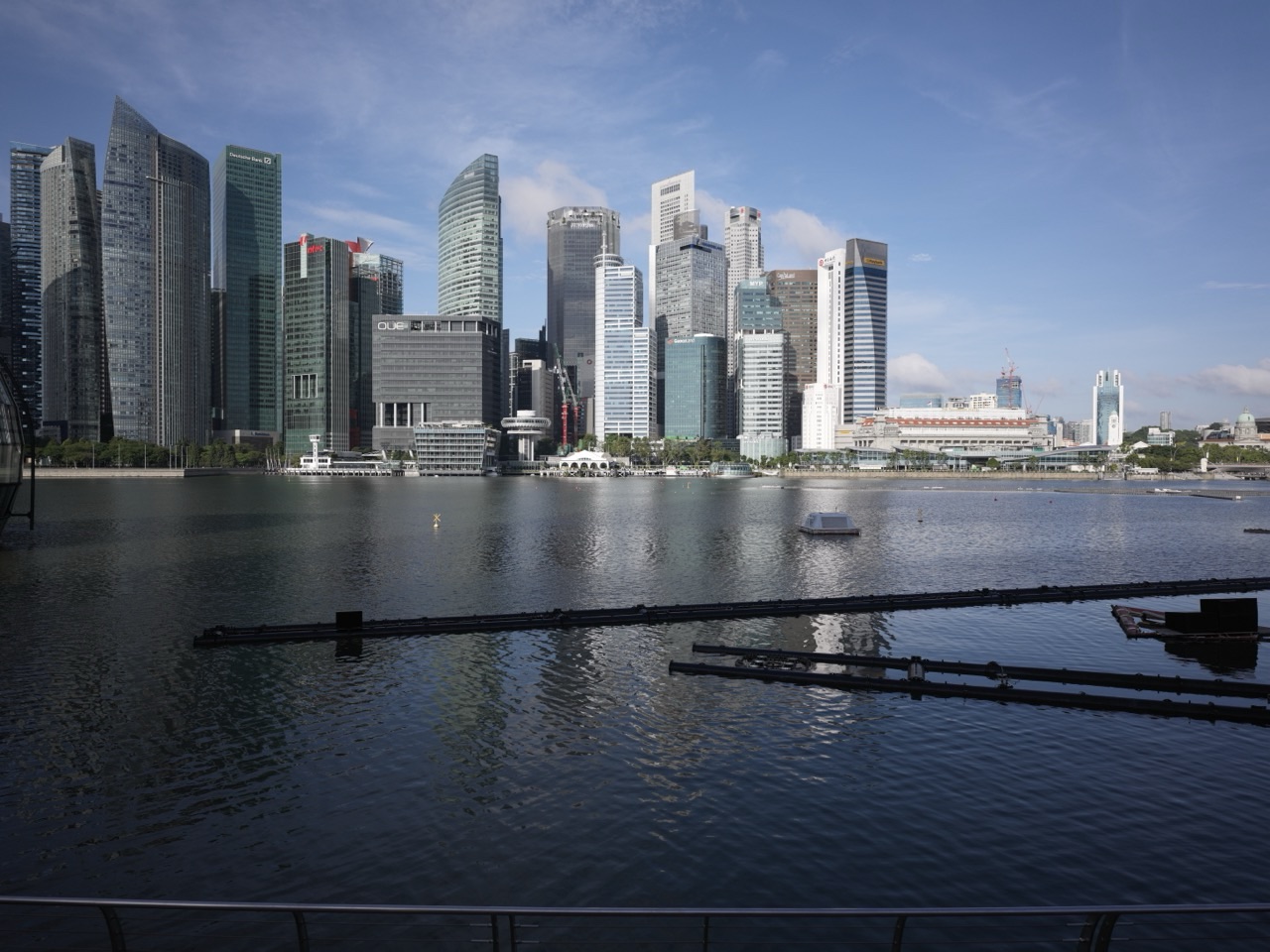
Making Singapore rich is partly about what local firms build.
It is also about convincing global firms to build important parts of their future here.
Did you know that foreign direct investment is different from a foreign investor simply buying a share on a stock exchange?
Direct investment is about establishing a lasting economic interest in a business, operation or productive asset.
This article targets the search ideas foreign direct investment Singapore, Singapore regional headquarters, business hub Singapore, invest in Singapore and Singapore headquarters.
Singapore’s FDI in 2025: A Scale Check
SingStat reported that foreign direct investment flows into Singapore rose by 8.4% in 2025 to about S$197 billion.
That figure measures investment flows during the year rather than the total stock of foreign investment accumulated over time.
Official current reference: SingStat — Foreign Direct Investment in Singapore, 2025.
Did You Know? FDI Imports Capability as Well as Capital
A new investment may bring money.
It can also bring equipment, management systems, customers, intellectual property, supplier relationships, technology and global operating experience.
The quality of the spillover depends on how strongly the foreign operation connects to local workers and companies.
Capital is useful.
Capability transfer is even more interesting.
Singapore Is a Regional Headquarters Hub
EDB describes Singapore as the most popular regional headquarters destination in Asia, citing the Orbis Crossborder Investment Database.
Global companies use Singapore to coordinate operations across Southeast Asia and wider Asia-Pacific markets.
The headquarters function can include strategy, finance, treasury, legal, marketing, technology, supply-chain management and regional leadership.
Official reference: EDB — Headquarters in Singapore.
Why Headquarters Create High-Value Service Jobs
A headquarters usually does not manufacture physical goods.
It coordinates decisions.
Which markets should receive investment?
Where should inventory move?
How should risk be managed?
Which products should launch?
Where should new staff be hired?
Those decisions require senior management, finance, legal, analytics, HR, technology and other professional capabilities.
Coordination itself becomes an economic product.
2025 Investment Commitments Show the Forward Pipeline
EDB’s 2025 year-in-review reported S$14.2 billion in fixed asset investment commitments and S$8.9 billion in total business expenditure per year.
EDB estimated that, when the commitments are fully realised, they could create about 15,700 jobs and around S$18 billion in annual value added.
These are commitments rather than completed outcomes.
But they indicate what companies plan to build, operate and spend in Singapore over future years.
Official reference: EDB — 2025 Year in Review.
Why Global Firms Choose a Hub
A headquarters location has to solve many problems at once.
- access to talent;
- air connectivity;
- legal certainty;
- financial services;
- digital infrastructure;
- quality of life;
- regional market access;
- professional services;
- political and operating stability;
- tax and regulatory clarity;
- schools and healthcare for mobile talent; and
- connections to customers, suppliers and partners.
That is why the headquarters decision sits at the intersection of almost every other article in this series.
Changi Airport Helps the Headquarters Economy
Regional executives need to move between markets.
Direct flights reduce coordination friction.
A strong aviation hub therefore makes Singapore more useful as a management base.
The air-hub mechanism is mapped in Making Singapore Rich | Changi Airport and the Aviation Hub.
Finance Helps Headquarters Move Capital
Regional operations need banking, treasury, foreign exchange, insurance and capital markets.
Singapore’s financial hub therefore reinforces its headquarters role.
A company can manage regional cash, risk and investment from the same city in which senior management sits.
Read the financial layer in Making Singapore Rich | Singapore Financial Hub.
Digital Infrastructure Lets Regional Operations Coordinate in Real Time
Headquarters are information machines.
They need reliable cloud services, communications, cybersecurity and data systems.
A regional business becomes harder to manage if the digital backbone is weak.
That is why Making Singapore Rich | Digital Economy, AI and Data Centres belongs inside the headquarters story.
Manufacturing FDI Is Different From Headquarters FDI
A headquarters may concentrate management and professional services.
A manufacturing investment anchors physical assets, plants, equipment and production jobs.
Singapore attracts both.
That combination matters because management, R&D and production can reinforce one another.
A company may manage Asia from Singapore while also operating a factory or research centre here.
Foreign Investment Can Create Supplier Spillovers
A multinational company may buy from local engineering firms, software vendors, logistics providers, consultants and service companies.
Those relationships can help local firms upgrade quality and enter wider supply chains.
The spillover is stronger when local companies learn rather than merely transact.
One demanding customer can force a supplier to become better.
Talent Spillovers Matter Too
People move between organisations.
A manager trained in a global company may later join a local firm.
An engineer may start a company.
A specialist may teach others.
Experience diffuses through the labour market.
That means one investment can leave capability behind even after individual workers move on.
FDI Can Also Leave an Economy Shallow
Foreign investment is not automatically beneficial in every form.
If an operation has weak local links, imports most of its capability and creates little learning, the spillover may be limited.
The deeper goal is therefore not simply to maximise the amount of investment.
It is to attract investment that builds durable capability.
Quality matters as much as quantity.
The Headquarters Economy Depends on Human Capital
Regional roles require communication, judgement, financial literacy, technical understanding and cross-cultural coordination.
This is why the education system is upstream of the business hub.
Read the capability layer in Making Singapore Rich | Education, Skills and Human Capital.
Why Stability Has Economic Value
Long-term investments are easier when firms believe contracts will be respected, infrastructure will work and policies will remain understandable.
That does not eliminate uncertainty.
But it reduces some forms of avoidable risk.
Predictability lowers the friction of planning.
That can be economically valuable even though it is difficult to see on a balance sheet.
Singapore’s Small Domestic Market Is Not the Main Product
For many global companies, Singapore is not attractive because of the number of customers inside the island.
The value is access.
Access to Southeast Asia.
Access to capital.
Access to talent.
Access to transport.
Access to trusted institutions.
Access to a regional operating platform.
The city becomes an interface to a much larger market.
FDI Links Directly to R&D
Some global firms establish research and innovation operations in Singapore.
That creates a deeper form of anchoring because the company is not only selling or coordinating from Singapore.
It is creating new knowledge here.
The research mechanism is mapped in Making Singapore Rich | Research, Innovation and R&D.
What Can Weaken the FDI and Headquarters Wealth Machine?
- loss of international trust;
- weak air connectivity;
- skills shortages;
- high operating costs without matching productivity;
- poor digital infrastructure;
- regulatory uncertainty;
- regional competitors becoming more useful;
- foreign investment with weak local spillovers;
- geopolitical fragmentation;
- tax or trade changes;
- insufficient housing or quality-of-life capacity for talent; and
- local firms failing to connect to multinational supply chains.
A business hub stays competitive only while it continues solving real problems for companies.
A Simple Systems Formula
Trust + connectivity + talent + finance + infrastructure + market access → headquarters and investment value.
When the investments connect deeply to local workers and firms, the resulting capability can compound.
Frequently Asked Questions
How much FDI flowed into Singapore in 2025?
SingStat reported about S$197 billion in foreign direct investment flows into Singapore in 2025.
Why do companies use Singapore as a regional headquarters?
Singapore combines connectivity, talent, finance, professional services, digital infrastructure, legal certainty and access to Asian markets.
What is the difference between FDI and portfolio investment?
FDI generally involves a lasting interest and meaningful influence in an enterprise, while portfolio investment usually involves financial securities without the same degree of operational control.
How does FDI make Singapore richer?
It can bring capital, jobs, technology, management capability, supplier demand, R&D and access to global markets.
Can FDI have weak benefits?
Yes. The local value is lower when an investment creates few linkages, little learning or limited capability spillovers.
What were EDB’s 2025 investment commitments?
EDB reported S$14.2 billion in fixed asset investment commitments and S$8.9 billion in total business expenditure per year.
Why is Changi Airport relevant to headquarters?
Regional headquarters benefit from fast connections to customers, subsidiaries, suppliers and partners across Asia and beyond.
How does education connect to FDI?
Companies invest where they can find workers and managers with the skills needed to run sophisticated regional and global operations.
Helpful Reading and Singapore Graph Connections
- SingStat — Foreign Direct Investment in Singapore, 2025
- EDB — Headquarters in Singapore
- EDB — 2025 Year in Review
- Singapore in the 1990s | Globalisation, the Regional Hub and the External Wing
- Making Singapore Rich | Singapore Financial Hub
- Making Singapore Rich | Research, Innovation and R&D
- Making Singapore Rich | Education, Skills and Human Capital
Making Singapore Rich: The Best Investment Leaves Capability Behind
Did you know that the deepest value of a global company arriving in Singapore may not be the capital it brings on day one?
It may be what the ecosystem learns afterwards.
A supplier upgrades.
A manager gains experience.
An engineer learns a global standard.
A university finds a new research partner.
A local firm enters a larger market.
A regional team grows.
The investment becomes valuable when capability spreads.
Money arrives once.
Learning can compound for decades.