
Making Singapore rich sounds like a story about money.
It is actually a story about capability.
Did you know that a country can have a large GDP and still face difficult questions about productivity, living costs, inequality, resilience and whether growth can last?
That is why this series does not treat “rich” as one number. We follow the machine underneath the number: people, skills, firms, infrastructure, trade, finance, technology, institutions, capital and the ability to keep producing useful things that other people are willing to pay for.
This first article uses the high-intent search ideas Singapore economy and Singapore GDP as the front door. Then we connect them to the wider eduKateSG Singapore graph.
Did You Know? GDP Is the Scoreboard, Not the Engine
Gross domestic product measures the value of final goods and services produced within an economy over a period of time.
It is useful because it lets us ask whether the economy is growing, shrinking, accelerating or slowing.
But GDP is not the same thing as national capability.
A factory, a port, a bank, a school, a laboratory and a software company can all contribute to GDP. The deeper question is what allows them to keep functioning tomorrow.
That deeper layer is where Singapore becomes interesting.
Singapore’s Economy in 2026: A Useful Snapshot
As of 3 October 2026, the latest final national-account data available from the Singapore Department of Statistics show that Singapore’s economy grew 5.9% year on year in the second quarter of 2026. GDP at current market prices was about S$216.3 billion in 2Q 2026. For 2025 as a whole, GDP at current market prices was about S$789.5 billion.
On 11 August 2026, the Ministry of Trade and Industry upgraded Singapore’s full-year 2026 GDP growth forecast to 4.5% to 5.5%, citing stronger-than-expected first-half performance and stronger global AI-related capital expenditure.
Those numbers matter. But they are the visible output of many linked systems.
Official current data: Singapore Department of Statistics — National Accounts.
So What Actually Makes Singapore Rich?
A useful answer is: Singapore becomes richer when it can repeatedly turn limited land, labour, time and resources into higher-value output.
That sounds abstract, so let us make it concrete.
- workers learn more valuable skills;
- firms use better machines, software and processes;
- capital is directed into productive assets;
- ports and airports connect local activity to world markets;
- financial systems move savings toward investment;
- research turns knowledge into products and methods;
- standards, law and trusted administration reduce transaction friction;
- education makes advanced technology usable by more people; and
- reliable utilities keep the whole machine running.
Wealth is therefore not one treasure chest.
It is a network that keeps converting capability into value.
Productivity Is the Quiet Core of the Story
Imagine two teams with the same number of people and the same number of hours.
Team A produces ten units of useful output.
Team B produces twenty because it has better tools, better skills, better organisation and fewer delays.
Team B is more productive.
That difference matters enormously for a small country.
Singapore cannot grow indefinitely by simply adding more land or endlessly increasing labour input. Long-run prosperity depends heavily on producing more value from the same scarce inputs.
That is why this article connects directly to How Productivity Works | How Economies Create More Value From the Same Time, Labour and Resources.
Capital Turns Today’s Resources Into Tomorrow’s Output
A machine tool, a cleanroom, a warehouse, a data centre, a laboratory and a rail line are all examples of productive capital.
They cost resources today because people expect them to create value later.
The same is true for less visible forms of capability such as software systems, technical standards, research platforms and organisational know-how.
This is why investment matters.
In 2025, Singapore recorded about S$174.4 billion in gross fixed capital formation at current prices, according to SingStat.
The important question is not simply how much money is spent. It is whether investment creates durable productive capacity.
For the deeper mechanism, read How Capital Works in Singapore.
Trade Lets a Small Domestic Market Reach a Very Large World
Singapore’s resident market is small compared with the global economy.
Trade changes the scale of what local firms can serve.
A company located here can sell into regional and global markets, import specialised inputs, combine them with local expertise and move the result onward.
That makes global demand part of Singapore’s economic opportunity set.
It also creates exposure to global shocks.
That duality is important: connectivity creates both opportunity and dependency.
The trade mechanism is mapped in How Trade Works | Why Economies Exchange, Specialise and Depend on One Another.
Finance Helps Decide Which Ideas Receive Fuel
Savings become economically powerful when they can be channelled into useful investment.
Banks, capital markets, asset managers, insurers and payment systems help move money through the economy.
They do not create real wealth by magic.
They can, however, help productive activity happen sooner, spread risk, make transactions possible and direct capital toward projects that might otherwise remain unrealised.
That is why Singapore’s financial sector is not separate from manufacturing, trade or technology. It is one of the systems that helps fund and coordinate them.
See How Finance Works | The Machine.
Education Is Economic Infrastructure
Did you know that a semiconductor fab, financial institution, hospital, airline or software company is partly an education system wearing a different uniform?
Every advanced industry depends on people who can read specialised language, reason with numbers, use technology, communicate precisely, diagnose faults and learn new systems.
This is where eduKate’s education graph meets the national economy.
English is not only a school subject. It is part of documentation, contracts, research, management and global communication.
Mathematics is not only an examination subject. It is embedded in finance, engineering, data, logistics and scientific modelling.
Science is not only a syllabus. It becomes laboratories, medicines, electronics, materials and industrial process control.
Education improves the human interface to technology.
That is the education Ouroboros in practical form: stronger learning enables better technology use; better technology expands what learning can do next.
The Singapore Graph: Towns Are Economic Nodes Too
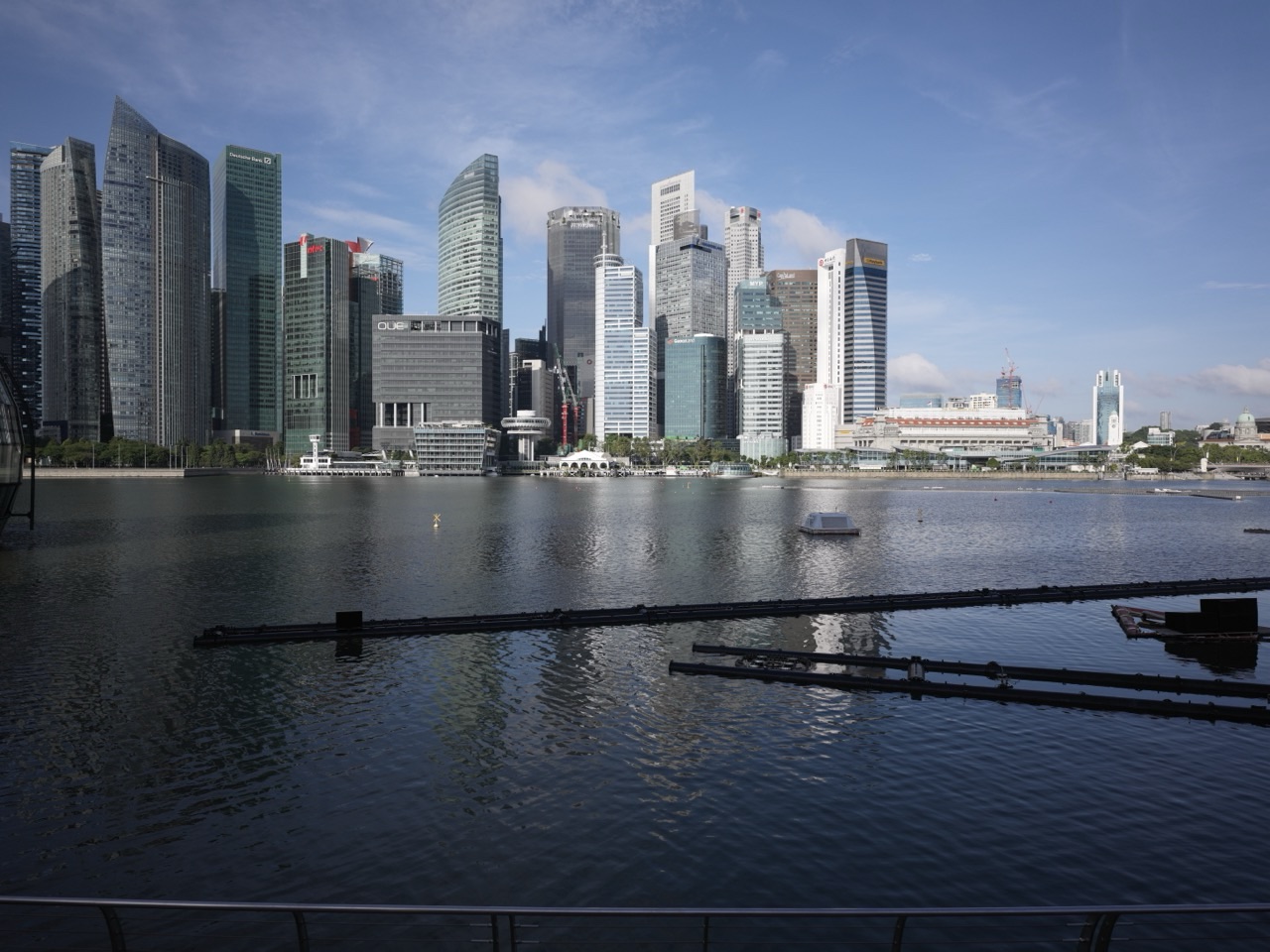
National wealth is not produced only in Marina Bay or Jurong Island.
It is distributed through a territorial graph.
Schools train people. Housing towns organise daily life. MRT lines move labour. Industrial estates concentrate production. Commercial centres bring services closer to households. Hospitals preserve human capability. Universities and research institutes create new knowledge.
This is why eduKateSG’s area, school, transport, history and education articles belong in the same graph.
A neighbourhood article may look local.
But local capability is what the national economy is made of.
Rich Is Not the Same as Comfortable
A growing GDP does not automatically mean every household feels richer.
People experience the economy through wages, job stability, housing costs, transport, healthcare, education, prices and the opportunities available to them.
That is why GDP should be read with other indicators rather than used as a universal wellbeing score.
Our guide How Economic Indicators Work | How to Read an Economy Without Being Fooled by One Number explains this distinction.
What Can Make the Wealth Machine Weaker?
- productivity growth that stalls;
- skills that do not keep up with technology;
- capital invested in low-value or fragile activities;
- global trade disruption;
- loss of business trust or operating reliability;
- weak innovation pipelines;
- critical infrastructure bottlenecks;
- energy, water or logistics constraints;
- financial misallocation; and
- growth that raises headline output without building durable capability.
A strong economy is therefore not a trophy.
It is a maintenance problem.
A Simple Systems Formula
Capability → productivity → valuable output → trade and income → savings and investment → stronger capability.
That loop is not automatic.
It can break at any stage.
But when the connections work well, each generation inherits more tools, more knowledge and a larger platform from which to build.
Frequently Asked Questions
What is Singapore’s GDP?
For 2025, Singapore’s GDP at current market prices was about S$789.5 billion. The latest final quarterly data available on 3 October 2026 show GDP of about S$216.3 billion in 2Q 2026.
How fast is Singapore’s economy growing in 2026?
Singapore’s economy grew 5.9% year on year in 2Q 2026. MTI’s 11 August 2026 forecast was for full-year growth of 4.5% to 5.5%.
Does a higher GDP mean everyone is richer?
No. GDP measures aggregate production. Household wellbeing depends on how income, prices, housing, employment, public services and opportunities are distributed and experienced.
Why is productivity important to Singapore?
Because land, labour and time are limited. Productivity allows more value to be produced from the same scarce inputs.
How does education make Singapore richer?
Education builds the reading, mathematical, scientific, technical and learning capabilities that allow people to operate advanced systems and adapt to new ones.
Why is trade so important?
Trade connects a small domestic economy to much larger world markets and gives firms access to customers, inputs, technologies and specialised services.
Why is finance part of the wealth story?
Finance helps move savings toward productive investment, enables transactions and spreads or prices risk.
What is the main idea of this series?
Singapore becomes richer by building systems that repeatedly turn knowledge, capital, infrastructure and connection into useful, tradable, high-value output.
Helpful Reading and Singapore Graph Connections
- SingStat — National Accounts
- MTI — 2026 GDP Growth Forecast Update, 11 August 2026
- Singapore | How the Country Works and Holds Together
- History of Singapore | Singapore Atlas
- How Productivity Works
- How Finance Works
- How Trade Works
- How Capital Works in Singapore
Making Singapore Rich: The Economy Is the Whole Machine
Did you know that the richest part of an economy may be invisible?
It is the accumulated ability to do difficult things reliably.
A port call completed on time.
A student who learns to reason clearly.
A factory that produces with fewer defects.
A bank that moves capital efficiently.
A laboratory that turns research into a process.
A transport network that gets people to work.
A legal and standards system that lets strangers trust a transaction.
A society becomes richer when these capabilities connect, repeat and improve.
GDP records part of the result.
The machine underneath is the real story.