
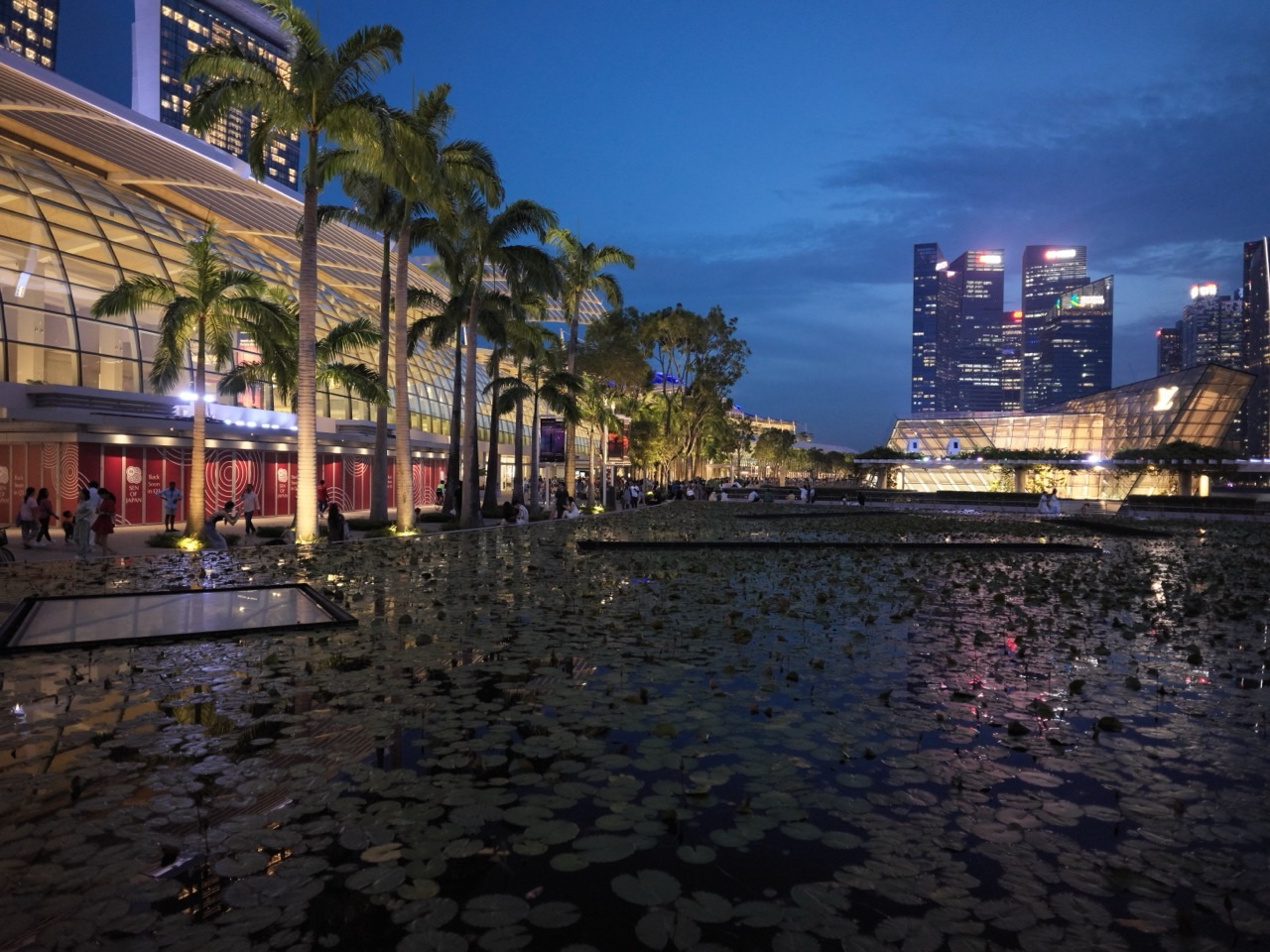
How Singapore got so rich is not a story about one miracle, one leader or one lucky decade. Singapore (新加坡) became wealthy by turning a vulnerable trading port with almost no natural resources into a dense system of ports, factories, finance, housing, education, infrastructure, reserves, global talent and trusted institutions. The remarkable part is not simply that the country became rich. It is that Singapore learned how to build abundance when almost every obvious starting condition looked like a constraint.
The modern Singapore economy grew through civilisation building: first survival, then industrialisation, then connectivity, then higher-value manufacturing and services, then the careful accumulation of public and private capital. By 2025, Singapore’s GDP at current market prices reached about S$789.5 billion, while GDP per capita was about S$129,194. The deeper question is therefore not merely “Why is Singapore rich?” It is: how did a tiny island city-state build enough capability, trust and productive density to create wealth far beyond its physical size?
Explore Singapore by place: Crazy Rich Singapore | Biggest to Smallest HDB Towns & Estates connects this national abundance story to all 27 estate deep dives. Continue to the Singapore country hub, Crazy Rich World, or the eduKate Ecosystem Hub.
The short answer is very Singaporean: if you cannot be large, become useful to the whole world.
Did You Know? Singapore Was Rich in Location Before It Was Rich in Money
Singapore sits beside the Strait of Malacca, one of the great maritime routes linking the Indian Ocean with the South China Sea and the wider Pacific.
That location made Singapore useful long before it became affluent.
Ships needed a place to stop, trade, provision, repair, refuel and exchange cargo. Merchants needed rules, warehouses, finance, information and networks. A port therefore became more than a shoreline.
It became an interface between continents.
But geography only creates an opportunity.
Civilisation begins when people build systems that make the opportunity dependable.
Stage 1: Become a Trusted Trading Port
Singapore’s early growth depended on trade because the island had little agricultural land, no great mineral endowment and no large domestic market.
So value had to come from movement.
Goods moved through the port.
People moved through the city.
Information, capital and contracts followed.
This built an early lesson that still defines Singapore: connectivity can substitute for natural resources.
A country does not need to own the world’s commodities if it becomes one of the best places through which commodities, ships, money and decisions move.
Stage 2: Independence Turned Survival into an Engineering Problem
When Singapore became independent in 1965, the country faced unemployment, housing shortages, security anxieties and a very small domestic market.
There was no comfortable hinterland to absorb shocks.
There were no oilfields to finance mistakes.
There was no large internal consumer market that could sustain industrial growth by itself.
Singapore therefore treated development like an engineering problem: identify the constraints, build institutions around them, measure outcomes and keep upgrading.
Scarcity became a design requirement.
Stage 3: Build Jobs Before Waiting for Wealth
The Economic Development Board was established in 1961 to spearhead industrialisation.
In the 1960s, Singapore began with industries that look modest by today’s standards: garments, toys, simple electronics and other labour-intensive manufacturing.
That was not a weakness.
It was a ladder.
Every factory trained workers, created supervisors, built supplier relationships, improved logistics and taught the country how industrial production actually works.
By 1968, National Semiconductor had begun operations in Singapore. Other multinational manufacturers followed.
The strategy was clear: use foreign capital and global companies not just as sources of money, but as accelerators of skills, technology and market access.
Read Crazy Rich Singapore | Jurong Innovation District and the Advanced Manufacturing Cluster Economy.
Stage 4: Jurong Proved that Land Can Be Designed for Productivity
Jurong is one of the great physical symbols of Singapore’s economic transformation.
Industrial land, roads, utilities, ports and factories were planned together so that companies could arrive and start producing.
This sounds obvious now.
It was not obvious in a young state with limited capital.
The important move was to build the platform before every individual company existed.
Infrastructure reduced friction.
Lower friction attracted investment.
Investment created jobs.
Jobs created skills.
Skills made more sophisticated industries possible.
That feedback loop is one of the main reasons Singapore did not remain a low-cost manufacturing centre.
Stage 5: Move Up the Value Chain Before Wages Become a Problem
As Singapore became more successful, wages rose.
That could have destroyed the original manufacturing model.
Instead, the country kept moving toward higher-value activities.
Electronics became more sophisticated.
Precision engineering expanded.
Petrochemicals, aerospace, pharmaceuticals and semiconductors deepened.
By 2025, manufacturing still accounted for more than 17% of Singapore’s GDP according to EDB material on the country’s industrial transformation.
That matters because Singapore did not simply “graduate” from making things.
It upgraded what it made.
Did You Know? Singapore Became Rich by Combining Factories with Finance
Some economies specialise in manufacturing.
Others specialise in banking.
Singapore built both.
That combination is unusually powerful because factories create trade flows while finance helps fund, insure, hedge and invest around those flows.
Today Singapore is a major asset-management centre. The Monetary Authority of Singapore reports about S$6.7 trillion in assets under management and 1,320 licensed fund managers.
As of the end of December 2025, more than 2,000 single family offices were receiving tax incentives under Singapore’s relevant fund structures.
The financial centre is therefore not separate from the real economy.
It is one of the systems that makes the real economy easier to operate at global scale.
Stage 6: Make the Port Larger Than the Country
Singapore’s maritime strategy is a perfect example of productive density.
The Port of Singapore handled a record 44.66 million TEUs of container throughput in 2025.
It is connected to more than 600 ports worldwide and is home to more than 200 international shipping groups.
Those numbers tell us something profound.
The economic usefulness of a port is not limited by the number of people living beside it.
A globally connected port can serve factories, consumers and supply chains across an entire region.
Singapore therefore earns value from being a node in other countries’ trade.
Read Crazy Rich Singapore | Singapore Registry of Ships, Ship Finance and the Maritime Services Economy and Crazy Rich Singapore | Greater Southern Waterfront, Port Relocation and the Waterfront City Economy.
Stage 7: Turn an Airport into a Global Time Machine
Changi Airport does something economically similar to the port.
It compresses distance.
In 2025, Changi recorded about 70.0 million passenger movements.
For a small island, that level of connectivity changes everything.
- Executives can reach regional markets quickly.
- High-value cargo can move fast.
- Tourists can enter easily.
- Talent can relocate.
- Companies can coordinate Asia-Pacific operations from one base.
Read Crazy Rich Singapore | Changi Airport and the Global Aviation Hub and Crazy Rich Singapore | Changi Terminal 5 and the Airport Megaproject Economy.
Connectivity is not a luxury for Singapore.
It is part of the production system.
Stage 8: Housing Became Economic Infrastructure
One of Singapore’s most important civilisation choices was to treat housing as more than shelter.
Housing created stability.
Stable communities made industrialisation easier.
Transport could be planned around towns.
Schools, markets, parks and clinics could be integrated into neighbourhoods.
At end-March 2025, about 76% of Singapore’s resident population lived in HDB flats.
The scale matters because housing affects labour markets. Workers who can live within a functioning transport-and-town system can reach jobs more reliably and build household wealth over time.
Read Crazy Rich Singapore | HDB Upgrading, Estate Renewal and the Ageing Housing Economy.
Stage 9: CPF Turned Wages into Long-Term Capital
The Central Provident Fund began in 1955 as a retirement savings system.
From 1968, members could use CPF savings for HDB housing.
Over time, CPF evolved into a broader social-security system covering retirement, housing and healthcare.
The economic importance is easy to miss.
Regular compulsory savings create long-term household capital.
Capital supports housing.
Housing creates stability and assets.
Stable households are better able to invest in education, careers and future consumption.
Read Crazy Rich Singapore | CPF, Retirement Savings and the Long-Term Capital Economy.
Stage 10: Education Turned People into the Main Natural Resource
Singapore could not rely on oil, minerals or farmland.
So human capability became the critical resource.
Schools, technical institutes, polytechnics and universities were not merely social institutions.
They were economic infrastructure.
When industry changed, the skills system had to change with it.
Factory workers became technicians.
Technicians became engineers.
Engineering, finance, computing, biomedical science, logistics and professional services all depended on a continually upgraded workforce.
This is where the eduKate ecosystem fits naturally: education is not separate from civilisation building. It is one of the ways a country converts each generation into greater future capability.
Stage 11: Reclaim Land When Geography Says No
Singapore’s physical map is partly an economic strategy.
Land reclamation expanded industrial zones, port areas, airports and the central city.
Jurong Island combined offshore islands into an integrated energy and chemicals hub.
Marina Bay turned reclaimed waterfront into a new business, residential and tourism district.
Changi grew outward to support aviation.
Tuas is being built into the long-term home of Singapore’s container port.
Read Crazy Rich Singapore | Marina Bay, Luxury Condominiums and Prime City Property.
When land is scarce, engineering becomes economic policy.
Stage 12: Save During Good Years So Crises Do Not Reset the Country
Many countries become richer and then spend every new dollar.
Singapore built a different habit: accumulate reserves and protect part of the returns for future generations.
Under the Net Investment Returns Contribution framework, the Government can spend up to 50% of the expected long-term real returns on relevant reserves.
The Ministry of Finance says investment returns from reserves fund about 20% of annual Government spending. The estimated NIRC for FY2026 is S$28.48 billion.
That is an extraordinary civilisation achievement because the country has effectively built a financial asset that helps pay for education, healthcare, transport, research and other public needs.
Singapore did not discover oil underground.
It built a financial resource above ground.
Stage 13: Trust Became an Invisible Export
Companies do not only choose Singapore for tax rates or airport connections.
They choose it because contracts can be enforced, infrastructure works, rules are comparatively predictable and public administration is designed for execution.
Trust lowers the cost of doing business.
When firms believe that the rules tomorrow will broadly resemble the rules today, they are more willing to invest in factories, offices, research centres and regional headquarters.
Trust is difficult to photograph.
But it may be one of Singapore’s most valuable exports.
Stage 14: Keep Reinventing the Economy Before the Old One Stops Working
Singapore’s wealth has never been static.
Entrepôt trade gave way to industrialisation.
Low-cost manufacturing gave way to higher-value manufacturing.
Manufacturing was joined by finance, aviation, logistics, tourism and professional services.
Today the next layers include advanced semiconductors, biomedical science, artificial intelligence, green finance, digital services and deep technology.
The country’s great economic habit is not choosing one winning sector forever.
It is building the capacity to choose again.
Singapore Did Not Get Rich from One Policy
The useful way to understand Singapore is as a stack.
- Geography created the trading opportunity.
- Ports and airports converted geography into global connectivity.
- Industrial policy converted labour into manufacturing capability.
- Foreign investment imported capital, markets and technology.
- Education upgraded workers into technicians, engineers and professionals.
- Housing and CPF converted incomes into household stability and long-term capital.
- Finance connected regional capital with global markets.
- Land planning and reclamation multiplied the productivity of limited space.
- Reserves converted past surpluses into future fiscal capacity.
- Institutional trust kept the entire system investable.
Remove several layers and the model becomes much weaker.
That is why “Singapore got rich because of trade” is incomplete.
Trade started the machine.
Civilisation building kept upgrading it.
The Abundance Test: Can Wealth Become Capability?
eduKate’s Civilisation | Abundance idea is especially useful for Singapore.
Abundance is not simply having a high GDP.
It is having enough productive capacity, savings, infrastructure and institutional competence to create choices beyond immediate survival.
A society reaches a deeper form of abundance when it can invest in parks, research institutes, public transport, healthcare, libraries, cultural institutions, climate resilience, education and future industries without abandoning the systems that already work.
Singapore’s modern abundance is visible in skyline wealth.
But it is also visible in less glamorous places: water pipes, hawker centres, industrial estates, MRT tunnels, laboratories, schools, logistics parks and data networks.
Luxury is visible.
Capability is what makes it sustainable.
What Can Other Countries Learn from Singapore?
Singapore cannot simply be copied.
Its geography, size, political history and regional position are unusual.
But several principles travel well.
- Start with the constraint. Scarcity tells you what must be designed better.
- Build platforms before waiting for perfect demand. Ports, roads, industrial land and education systems allow industries to emerge faster.
- Use global markets as your domestic market. Small countries can grow far beyond local demand if they integrate into world trade.
- Upgrade before success becomes complacency. Move from low-value to high-value activity continually.
- Turn savings into future capability. Household savings and national reserves can provide resilience and investment capacity.
- Protect trust. Predictability, competence and rule credibility are economic assets.
The Singapore lesson is not “become Singapore”.
It is “design an economy around what your geography, people and institutions can do unusually well”.
English–中文 Vocabulary for Understanding Singapore’s Rise
1. Entrepôt — 转口贸易港
A trading port where goods are imported, stored, processed or redistributed for onward export.
2. Industrialisation — 工业化
The development of manufacturing capacity, factories, infrastructure and industrial skills.
3. Productivity — 生产力
The amount of useful economic output produced from labour, capital, technology and time.
4. Connectivity — 互联互通
The ability to connect efficiently to other places through transport, trade, communications and networks.
5. Transshipment — 转运
The transfer of cargo from one vessel or transport route to another on its way to a final destination.
6. Reclamation — 填海造地
The creation of usable land from coastal or marine areas through engineering.
7. Reserves — 储备金
Assets saved and invested for future needs, fiscal stability and resilience.
8. Hub — 枢纽
A central point through which people, goods, capital or information connect and move.
9. Human capital — 人力资本
The knowledge, skills, health and experience that make people productive.
10. Abundance — 富足
A condition in which a society has enough productive capacity and surplus to support resilience, choice and higher-order goals.
Frequently Asked Questions
Why is Singapore so rich?
Singapore combines a strategic trading location with world-class ports and aviation, export-oriented manufacturing, foreign investment, finance, high human capital, dense infrastructure, public housing, compulsory savings, institutional trust and long-term reserves.
Did trade alone make Singapore rich?
No. Trade created the original opportunity, but industrialisation, manufacturing, finance, education, housing, infrastructure and public saving transformed that opportunity into a much more diversified economy.
How large is Singapore’s economy?
Singapore’s GDP at current market prices was about S$789.5 billion in 2025, with GDP per capita of about S$129,194 according to Singapore Department of Statistics data.
Why is Singapore’s port so important?
The port allows Singapore to serve global trade far beyond its domestic economy. In 2025 it handled a record 44.66 million TEUs and connected with more than 600 ports worldwide.
How important is finance to Singapore?
Very important. MAS reports roughly S$6.7 trillion in assets under management, while the broader financial ecosystem includes banking, insurance, wealth management, capital markets, legal services, accounting and fintech.
Why are Singapore’s reserves important?
The reserves provide resilience during crises and generate investment returns that support the annual Budget. MOF says NIRC funds about 20% of annual Government spending.
Can another country copy Singapore?
Not exactly. Singapore’s size, geography and history are unusual. But countries can adapt the principles of connectivity, human-capital development, infrastructure, institutional trust, long-term saving and continuous upgrading.
Helpful Reading Across the Crazy Rich Singapore Graph
- Crazy Rich World | Countries, Culture, Wealth, Travel and How the World Works
- Crazy Rich Singapore | Jurong Innovation District and the Advanced Manufacturing Cluster Economy
- Crazy Rich Singapore | Changi Airport and the Global Aviation Hub
- Crazy Rich Singapore | CPF, Retirement Savings and the Long-Term Capital Economy
- Crazy Rich Singapore | Greater Southern Waterfront, Port Relocation and the Waterfront City Economy
- Civilisation | Abundance
References and Current Sources
- Singapore Department of Statistics, National Accounts — latest data.
- Singapore Economic Development Board, Made in Singapore: 60 years of manufacturing.
- Maritime and Port Authority of Singapore, Singapore Retains Position as World’s Leading Maritime Centre for 13th Consecutive Year.
- Changi Airport Group, Traffic Statistics.
- Monetary Authority of Singapore, Asset Management.
- Monetary Authority of Singapore, Written reply on Single Family Offices, 5 August 2026.
- Housing & Development Board, HDB Key Statistics 2024/2025.
- Central Provident Fund Board, 70 years of CPF and the evolution of housing use.
- Ministry of Finance, Net Investment Returns Contribution and What are the reserves used for?.
How Singapore Got So Rich: It Made Smallness Useful
Singapore did not escape geography.
It learned to make geography productive.
It had little land, so it intensified and reclaimed land.
It had no large domestic market, so it sold to the world.
It had no natural-resource windfall, so it invested in people, infrastructure and reserves.
It was vulnerable to global trade, so it became indispensable to global trade.
That is how a small island moved from survival to industrial capability, from capability to prosperity, and from prosperity toward abundance.
Did you know? Singapore’s greatest asset may not be the port, the skyline or the financial district. It may be the civilisation habit of repeatedly turning limits into systems.
Series navigation: How Countries Got So Rich | World Country Directory · Luxury | World Directory · Crazy Rich World