
Why haze does not affect every Malaysian family equally
The same regional haze warning can create very different problems for different households. Some families have air-conditioned, filtered rooms and flexible work. Others depend on open-air jobs, shared housing, public transport or childcare arrangements that are harder to change. Children, older adults and people with certain illnesses may also face additional health considerations. This difference between measured pollution and people’s ability to protect themselves is an important question of community resilience.
What can a Malaysian community do first? Use the official local API/IPU, communicate its time and location clearly, protect vulnerable people according to Malaysian health advice and identify realistic indoor alternatives. Do not assume that every household can buy an expensive air cleaner or that all workplaces can send staff home.
UNICEF’s 2025 East Asia and Pacific analysis highlights wider inequalities in children’s air-pollution exposure, including households close to roads or industries. Those are regional findings, not a claim that every Malaysian family or district has identical conditions.
The inequality checklist in 60 seconds
- Pollution: Which official station is relevant, and when was the reading published?
- Exposure: Who must spend time outdoors because of work, travel, school or care?
- Vulnerability: Who has health needs requiring an established care plan or greater caution?
- Housing: Can the home stay cool and maintain suitable air without unnecessary smoke entry?
- Equipment: Is appropriate filtration available, affordable and maintainable?
- Transport: Does a person have to queue outdoors or make multiple exposed connections?
- Education: Are home-learning options accessible if a school changes operations?
- Income: What happens if a daily-wage worker loses part of a shift?
- Communication: Can residents receive and understand timely official advisories?
- Support: Which realistic services or community arrangements are available and authorised?
Exposure is not the same as vulnerability
Exposure describes the pollution encountered and the pattern of contact with it. Vulnerability describes factors that may make harm more likely or protection more difficult, including relevant medical conditions, age and circumstances.
An outdoor worker can face substantial exposure even without a diagnosed illness. A patient with a lung condition may need caution even during a shorter period outside. A person with few resources may have limited choices about the setting in which they spend time.
These dimensions should be assessed separately. An elevated API alone does not prove someone has developed a disease, and an individual’s income does not tell us their exact air-pollution dose.


The geography of Malaysian households matters
Malaysia includes dense urban districts, coastal towns, high-rise housing, terrace homes, rural settlements and communities across Borneo. Building type and climate conditions vary, as do the local emission sources and ability to limit smoke infiltration.
A naturally ventilated home is not automatically an unhealthy home; it may be comfortable under ordinary weather yet difficult to manage during severe smoke. A mechanically cooled condominium may have better environmental control but still admit particles or have inadequate filtration.
For practical advice, look at the building and local conditions rather than assuming that one housing label describes every family’s air quality.
Why ‘just stay indoors’ can fail as a complete instruction
Staying in a suitably managed indoor space can lower some exposure when smoke is elevated, but people still need food, healthcare, work and transport. Some cannot work remotely, and some live in buildings where shutting windows causes uncomfortable heat.
A complete public message therefore includes what activities to modify, who needs additional protection, how to find accurate information and when to seek professional advice.
The message should avoid giving the impression that people who cannot remain indoors for an entire week have ignored the hazard or chosen it voluntarily.
Air conditioning is not a universal household resource
Air conditioning can reduce reliance on open windows, but its presence does not guarantee effective particle filtration. Some families may not have air conditioning, may face high electricity costs or may share a room with several people.
A portable air cleaner also involves purchase, maintenance and electricity costs. Where it is unavailable, practical risk reduction can still include avoiding indoor smoke generation and managing necessary exposure according to local authority guidance.
The Malaysia home-air guide explains HEPA and CADR while stressing that a room must remain safe and cool. No equipment should be advertised as a universal guarantee.
Heat and smoke can create competing risks
Closing openings can reduce direct entry of polluted outdoor air, but it can also trap heat or worsen indoor ventilation when no suitable cooling system exists. Malaysia’s climate makes that trade-off particularly important.
Public instructions should not tell a naturally ventilated household to seal every opening indefinitely without acknowledging heat and other indoor pollutant risks. Safe operations depend on the building and occupants.
This is an example of why environmental policy needs actual building knowledge and practical alternatives, not only a colour-coded air-quality alert.
People working outdoors often have fewer choices
Construction workers, delivery riders, cleaners, roadside teams, market traders, farm workers and port employees may spend hours outside. Many such activities cannot become remote work simply because office employees can use laptops.
Employers and relevant authorities should follow applicable Malaysian workplace safety requirements, review strenuous tasks and provide suitable protection and communication. The 2026 DOSH guidance addresses action levels and occupational risk assessment.
A fair response recognises the operational reality of each job while maintaining the responsibility to protect staff. It should not transfer every burden to employees.
A daily wage makes an interrupted shift more complicated
Imagine a worker whose income depends on completing an outdoor shift. A weather or pollution-related change may reduce exposure, but it may also affect income, transport costs and household arrangements.
The legal and employment consequences depend on actual contracts and applicable rules; no article should invent a universal wage or leave entitlement arising from an API category.
Organisations can improve clarity through timely notices, fair procedures and discussing practical alternatives. The situation needs more than a message telling staff to stay home without information about their job.
Delivery and commute time increase exposure
A family may travel by walking to a bus stop, waiting beside heavy traffic, using an open-air station and reaching an indoor workplace. Outdoor exposure is spread through the journey, not concentrated only at the destination.
Accurate arrival information, sheltered routes and efficient connections can reduce unnecessary time outdoors, but a roof does not filter PM2.5. Someone who cannot afford private transport deserves usable public information, not the assumption that everyone can drive.
The Malaysia urban-planning guide explains transport and building design, while current local API and weather data support daily decisions.
Children have both health and education needs
Children may be more susceptible to some air-pollution effects and spend time outdoors at school, on journeys and during play. The UNICEF regional report discusses health and learning impacts in East Asia and the Pacific.
But the practical effect of a school closure also depends on the household: who cares for the child, whether home-learning resources are available and whether the child has an individual medical plan.
A sensible school response safeguards both health and continuity of learning rather than assuming that the same arrangements work for every family.
Home learning is not equally accessible
Some households have a quiet study room, several devices and reliable broadband. Others may share a phone or have multiple children using the same space. When schools change activities during haze, those differences can affect learning participation.
Teachers can consider appropriate accessible formats within their institution’s procedures and communicate a manageable workload. This article does not override Malaysian curriculum or examination policy.
The Malaysia haze schools guide provides dated operational context. Its educational goal is to maintain learning while respecting current official health and school instructions.
Parents who provide care may also lose work time
A school schedule change can affect a parent or guardian who needs to organise care. That might require time away from work, a different pickup arrangement or help from another household member.
These are genuine household costs even when the national pollution index is the same for families in different income groups. They should not be treated as proof of one fixed monetary loss per child.
Clear and early school communication can reduce avoidable disruption. Parents need to know whether school is open, which activities changed, how learning continues and when the next update will arrive.
Older adults and chronic illness: think beyond the general index
People living with asthma, cardiovascular disease or other conditions may need individual care plans. Some older people may require help getting medicines, attending appointments or arranging indoor support.
The Malaysian Ministry of Health publishes haze precautions, while clinical decisions belong to healthcare professionals. Serious symptoms require timely medical assessment.
An equitable programme communicates in ways people can access and considers who needs assistance rather than assuming everybody sees and understands an online dashboard.
Disability access and clean-air facilities
A public room with filtration is not useful to someone who cannot reach it safely or enter with a mobility aid. Distance, ramps, lifts, accessible toilets, seating and current opening hours all affect whether a facility can genuinely help.
Another person may have sensory or communication needs requiring a different type of announcement. Environmental accessibility is broader than installing a filter.
The Malaysia public-buildings guide explains cleaner-air facilities and the importance of explicit authorisation. An arbitrary shopping mall must not be advertised as a government shelter.
Rural settlements: the city-centre model may not fit
Rural communities in Peninsular Malaysia, Sarawak and Sabah can have different housing designs, transport routes, healthcare access and electricity arrangements from major urban centres.
It would be inaccurate and disrespectful to assume all rural or Indigenous households have the same resources or exposure patterns. Local assessment and community participation matter more than stereotypes.
Air-quality plans should be adaptable to the actual settlement, culture, environment and services, with communication through appropriate trusted local channels.
Orang Asli communities and the need for respectful local design
Some Orang Asli communities in Peninsular Malaysia maintain distinct relationships with nearby forests and land. Their circumstances differ widely across groups and locations; an account should not automatically depict every community as poor, isolated or uniformly exposed.
Where smoke or forest fires affect a community, planning should be informed by local voices, verified needs, land conditions and responsible services. Solutions imposed without consultation may be less effective than co-designed arrangements.
This is also relevant to Borneo’s diverse Indigenous communities, whose livelihoods and settlement patterns cannot be reduced to one ‘remote’ category.
Outdoor livelihoods and landscape stewardship can interact
People who manage farms, forests or fire-prone landscapes may face both income concerns and smoke exposure. Preventing fire can require equipment, water-management knowledge and viable alternatives to burning.
ASEAN’s haze-free land-management investment framework explicitly considers supporting smallholder practices and rural livelihoods. Community support is part of prevention, not an optional afterthought.
An equitable approach avoids accusing every smallholder of illegal burning while supporting evidence-based enforcement against verified harmful practices.
The role of languages, trust and clear public messages
An environmental advisory is only useful when recipients can understand its source, location, time and requested action. Malaysia’s multilingual communities may need communication across different languages and channels.
A short message should identify the nearest relevant official station, the actual guidance and the next update. It should avoid vague phrases such as ‘the entire country is hazardous’ when readings differ.
Trusted local organisations can help transmit confirmed information, but they should not become channels for unverified claims or sensitive individual medical details.
What a local community centre can realistically provide
A properly assessed facility could offer an accessible cool indoor place during smoky periods if its systems, capacity, staffing and permissions support that use. But a centre is not automatically a certified shelter because it has walls.
Building operators must consider filtration, thermal comfort, fire exits, toilets, opening hours and arrangements for visitors with additional needs.
The aim is realistic support, not a poster promising that every community hall has completely clean air.
Who benefits from an air-cleaner distribution programme?
A subsidised or shared air-cleaner programme might help some households, but its design should consider room volume, electricity costs, filter replacements, equipment maintenance and whether users receive proper instructions.
Giving a small device to a large, open-sided room may achieve little. Supplying equipment without replacement filters can also reduce sustained value.
A useful evaluation measures actual benefits and accessibility rather than counting boxes handed out at a launch event.
Environmental inequality should be measured, not just described
Claims about which Malaysian groups have the highest exposure need appropriate local data. Income, occupation, building type, location and health needs could all contribute, but a stereotype about a neighbourhood is not a measurement.
An ethically designed study would compare relevant air-quality and housing observations, survey participation and access to services while protecting personal privacy.
Research should report limits clearly. UNICEF’s regional findings raise important questions but should not be quoted as a precise percentage for a Malaysian state unless Malaysian data support it.
Worked example: two household options, one city index
Hypothetical scenario: A district’s official API is Unhealthy. Household A can spend much of the afternoon in a comfortably cooled, suitably filtered room. Household B relies on natural ventilation and has a family member working outdoors for a long shift.
Both have the same published local API context, but their likely actual exposures and choices differ. You cannot assign numerical personal doses without measuring relevant conditions.
The example shows why a public index is necessary but insufficient for understanding unequal everyday impacts.
Worked arithmetic: time exposed and limits of calculation
Illustrative schedule: Worker A spends 90 minutes outdoors, while Worker B spends 240 minutes outside in the same general district. Worker B’s scheduled outdoor time is 150 minutes greater, or approximately 2.67 times Worker A’s.
That does not establish that B inhaled 2.67 times the particle mass, since concentrations, breathing rates, routes and protective conditions may differ.
An ethical analysis uses the result to ask about possible protections and working arrangements rather than treating it as a medical-risk ratio.
Worked budget: household equipment costs
Imaginary budget: A suitable air-cleaning option has an initial price of RM500 and replacement filters costing RM120 per year. Over two years, the simple equipment-and-filter sum is RM500 + 2 × RM120 = RM740, excluding electricity and other costs.
That arithmetic helps explain why a ‘buy an air purifier’ message may not be equally practical for all households. It is not a price quotation or a recommendation of any product.
A useful programme considers ongoing affordability and the alternative of properly managed shared indoor spaces where available.
A community readiness audit in five stages
Stage 1 identifies reliable air-quality and health sources. Stage 2 maps which necessary services and outdoor routines expose people. Stage 3 checks suitable shared facilities and communications. Stage 4 creates fair decision procedures for activities and staff. Stage 5 reviews what actually happened after the episode.
Community participation matters throughout. A council may discover that older residents struggle with mobile-only notices, workers lack convenient rest spaces, or children need accessible school-work arrangements.
The process does not require inventing exact illnesses or incomes; it requires learning what residents need and verifying what institutions can provide.
Why regional prevention and local fairness belong together
Households can reduce some exposure but cannot individually prevent distant peat fires. Governments and land managers have responsibilities for prevention, and regional programmes need finance, enforcement and community involvement.
The ASEAN treaty and Malaysia law guide explains the cooperation framework; the peat carbon guide explains why land conditions also matter for climate.
Environmental resilience is strongest when immediate protection and upstream prevention reinforce one another.
An exposure map is not a map of someone’s income
A monitoring station measures a defined air-quality condition. It cannot identify a family’s income, employment flexibility, chronic illness or ability to maintain filtered indoor air. Those characteristics require other ethically obtained information, and they do not follow automatically from a person’s address.
A useful equity study overlays carefully aggregated environmental and service information while protecting individual privacy. It should avoid stigmatising neighbourhoods as inherently unhealthy and should communicate clearly what its data can and cannot establish.
Why a community hotline should not depend on one smartphone app
Many official resources are online, but some residents may have limited device access, data plans, literacy or familiarity with government dashboards. A local centre might consider additional authorised channels, such as noticeboards, accessible telephone information or trusted community organisations.
The message must remain linked to official, date-stamped evidence. Repeating unverified social-media screenshots through more channels does not improve access to trustworthy information. Accessibility means reaching people without reducing the quality of the information.
Caregiving can amplify economic disruption
If a child’s outdoor programme changes or a school closes under official instructions, an adult may need to arrange pickup, home supervision or alternative learning materials. These demands are not distributed equally between households or occupations.
A clear notice with the affected date, learning plan and a useful contact can reduce avoidable confusion. Researchers should record actual household effects rather than invent one fixed financial loss for every parent. Protecting children’s health and supporting family routines are both relevant to a fair response.
Support for outdoor workers must be operational
It is easy to tell an employee to work indoors, but construction, fishing, farming and street services may not have indoor substitutes for every task. Employers should use competent risk assessment and the current DOSH guidelines to decide what must stop, what may change and what can continue with suitable controls.
A worker also needs to know whom to contact, what happens if symptoms develop and how the decision affects scheduled duties. Clear procedures protect people more effectively than a vague instruction that all employees must solve exposure individually.
Community centres need access as well as filters
Even a well-managed cleaner-air room is of limited value if it is too far away, lacks accessible entrances or requires hours of outdoor waiting. Planners should consider actual transport, hours, capacity, toilets, cooling and staff support alongside the building’s filtration performance.
A local authority should not declare every library a shelter by default. Verify which facilities have been assessed and authorised, publish realistic limitations and keep a way for residents to obtain current information.
Worked evaluation: measure access, not just equipment count
Suppose a hypothetical programme installs suitable air-cleaning equipment in five facilities. Four are open during a relevant afternoon, but only two have accessible routes for residents who need mobility assistance. The number of installed facilities is five; the number meeting the complete access requirement in this scenario is two.
A fair evaluation would record opening hours, travel time, occupancy and user feedback. Counting installed devices alone could misleadingly suggest that every resident had a usable option during the episode.
A neighbourhood action plan that avoids stereotypes
Invite input from families, employers, schools, healthcare providers and residents with different accessibility needs. Ask practical questions: where does outdoor waiting occur, what indoor spaces exist, and who cannot easily adapt their work or caregiving arrangements?
Use the responses to develop realistic changes, then evaluate whether they were used. Do not infer needs from ethnicity, language or income alone. The strongest environmental support is specific to actual circumstances and designed with the people affected.
Frequently asked questions about unequal haze impacts
Does every household with the same API receive the same dose? No. Indoor conditions, activities, duration and personal circumstances differ.
Does low income automatically prove high PM2.5 exposure? No. It can constrain some choices, but actual exposure requires evidence.
Can every Malaysian simply work from home? No. Many essential and outdoor roles cannot move to remote work.
Is a community hall automatically a clean-air shelter? No. Facilities need suitable systems and official operating arrangements.
Why may children face additional difficulty? They have developing bodies and school routines; family learning resources and care arrangements also vary.
How should an air-cleaner subsidy be judged? By real suitability, affordability, maintenance, access and outcomes—not product count alone.
Are all rural communities equally exposed? No. Their geography, housing, livelihoods and local services vary.
Can a school closure have economic consequences? It can affect caregiving and work arrangements, but a fixed household loss cannot be assumed.
Does Malaysia API show a person’s health diagnosis? No. It is an environmental index, not clinical data.
What can communities do now? Use accurate local monitoring, follow official guidance, coordinate realistic help and identify needs respectfully.
Read the connected eduKate haze and fairness articles
Public health, community and policy sources
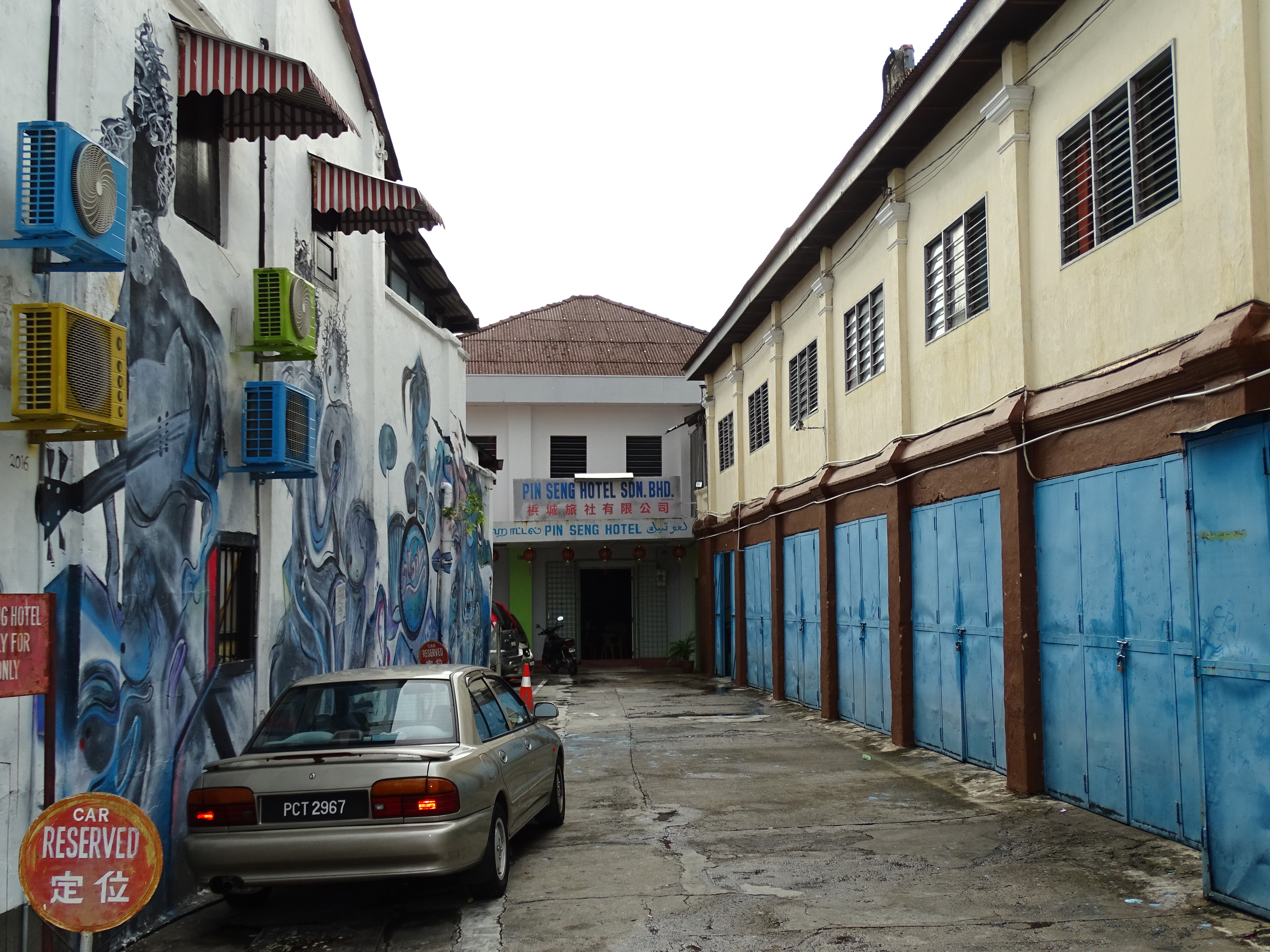
Editorial checkpoint: 18 October 2026. Regional UNICEF and WHO evidence must not be mistaken for a quantified Malaysian local survey. Scenarios are illustrative and respect individual circumstances. The featured George Town photograph is a general urban scene, not a survey of household income or exposure.